


Peas good for dogs: Understanding peas good for dogs and safe feeding
Ever found yourself in the kitchen, a few stray peas rolling off the counter, and your dog giving you that look? It's a common scene, and the question is always the same: "Can my dog eat this?"
When it comes to peas, the simple answer is yes! In moderation, peas are a fantastic, healthy treat for most dogs. They're a low-calorie, nutrient-packed snack you can feel good about sharing.

Think of peas not as a meal, but as a wholesome bonus to their regular diet. For dog owners, learning which "human foods" are safe is a huge part of keeping your pet happier and healthier. Adding a few peas to the mix is one of the easiest ways to do just that.
A Quick Look at the Benefits
So, what makes these little green orbs such a great choice for a canine snack? They're more than just tasty green dots; they bring some serious nutritional value to your dog's bowl.
- Low-Calorie Goodness: Peas are perfect for a guilt-free treat, especially if you're watching your dog's weight. They offer a satisfying little pop without packing on the pounds.
- Vitamins and Minerals: They’re a source of vitamins like A and K, plus a range of B vitamins. These support everything from your dog's vision to their energy levels and bone health.
- Full of Fiber: The fiber in peas is great for digestive health. It helps keep things moving along smoothly and contributes to a happy gut.
The golden rule here is moderation. Treats, including healthy ones like peas, should never make up more than 10% of your dog’s daily calorie intake. Their main meals need to be a balanced, complete dog food.
To make it even easier, here's a quick cheat sheet for sharing peas safely.
Quick Guide to Feeding Your Dog Peas
This table gives you a simple overview of the do's and don'ts when it comes to sharing peas with your furry friend.
| Guideline | Recommendation |
|---|---|
| Portion Size | Keep it small. A tablespoon for small dogs or a couple for larger breeds is plenty. |
| Best Types | Fresh, frozen, or steamed plain green peas are the safest bet. |
| Forms to Avoid | Canned peas (high in sodium) and pea pods (choking hazard) should be avoided. |
| Preparation | No salt, butter, or seasonings. Simply steam, boil, or offer them frozen. |
| Introduction | Start with just a few peas to see how your dog’s system handles them. |
Sticking to these simple guidelines ensures that peas remain a healthy, enjoyable snack rather than a source of potential problems.
This guide will walk you through all the details, from the risks of certain pea types to the best ways to prepare them. We'll give you the confidence you need to make this nutritious veggie a fun part of your dog's treat routine.
So, What's the Big Deal with Peas Anyway?
You might see those little green peas as just another vegetable, but for your dog, they're like tiny, edible multivitamins. Think of them less as a meal and more as a healthy, low-calorie treat that actually does some good. When you understand what’s packed inside, you’ll see why they can be a great addition to your pup's diet.
First off, peas are brimming with essential vitamins. They're a solid source of Vitamin A, which is a powerhouse for your dog's eyesight, skin health, and immune system. They also deliver a good dose of Vitamin K, a crucial nutrient that helps with blood clotting and keeps bones strong. That means better healing from little nicks and a sturdy frame for all that running and jumping.
On top of that, peas offer a handful of B vitamins, which are like the spark plugs for your dog's metabolism. They help turn food into energy, making peas a fantastic little pick-me-up snack.
A Closer Look at Minerals and More
It doesn't stop with vitamins. Peas also provide some key minerals your dog needs to thrive day-to-day.
- Iron: This is vital for carrying oxygen through the bloodstream, keeping your dog's energy levels up and preventing them from getting sluggish.
- Magnesium: Ever wonder what keeps your dog's muscles and nerves firing correctly? Magnesium plays a big part in that.
- Potassium: This mineral helps manage fluid balance and is essential for a healthy heart and proper muscle function.
This mix of vitamins and minerals is a fantastic team, supporting everything from a strong immune defense to the energy needed for a good game of fetch. While peas are a great supplement, remember they're just one part of a balanced diet. If you're curious about other great options, check out our guide on the best vegetables for dogs.
It's this nutritional punch that has made peas such a common ingredient in many commercial dog foods. When dried, peas contain about 22–25% protein, providing some of the essential amino acids dogs need for building and maintaining strong muscles. They also add complex carbohydrates for slow-release energy and a beneficial mix of fiber.
The Goodness of Plant Protein and Fiber
Now, your dog absolutely needs high-quality animal protein as the main event in their diet. But the plant-based protein from peas serves as a valuable sidekick. It helps supplement their intake, giving their body extra resources for maintaining lean muscle.
Think of the protein in peas as a helpful assistant to the main protein sources in your dog’s meals. It complements their diet by providing extra building blocks for a strong, healthy body.
Finally, let's talk about fiber—one of the biggest wins when it comes to peas. Fiber is the unsung hero of your dog’s digestive tract. It adds bulk to their stool, which promotes regular, healthy bowel movements and can help keep constipation at bay. A happy gut is the cornerstone of overall health, and the fiber in peas is a simple way to support it.
Picking the Right Peas for Your Dog
Walking through the grocery store can feel like a pop quiz when you have a dog at home. When it comes to peas, not all forms are created equal, and knowing which ones are safe is crucial. I like to think of it with a simple stoplight system: some get a green light, some yellow, and others are a definite red.
The best and safest options are always the simplest ones. Fresh, frozen, or steamed plain green peas are your best bet. These common types—like garden peas, English peas, or even sugar snap peas—are packed with nutrients and easy for your dog to eat. They get the green light because they're served in their most natural state.
Peas to Be Cautious With
Now for the yellow light. Some peas are fine, but you need to be careful with how you serve them. Raw pea pods, for example, can be pretty tough and fibrous. While the peas inside are great, the pods can be a choking hazard, especially for smaller dogs, and might be hard for them to digest. It’s always a good idea to shell the peas first.
Dried peas, like the split peas you'd use for soup, also fall into this category. They are way too hard for a dog to chew safely and absolutely must be cooked until soft before serving. Tossing your dog an uncooked dried pea is asking for a dental or digestive problem.
The Peas to Avoid Completely
This brings us to the red light: canned peas are a hard no. They're almost always loaded with sodium and preservatives to keep them shelf-stable. All that extra salt is really bad for dogs and can lead to dehydration or even more serious health problems down the road.
Always serve peas plain. The salt, butter, garlic, onions, or other seasonings we add for our own plates can be toxic to dogs. When it comes to feeding your pup, simple is always safest.
This visual guide breaks down why choosing the right kind of pea is worth it for your dog's health.
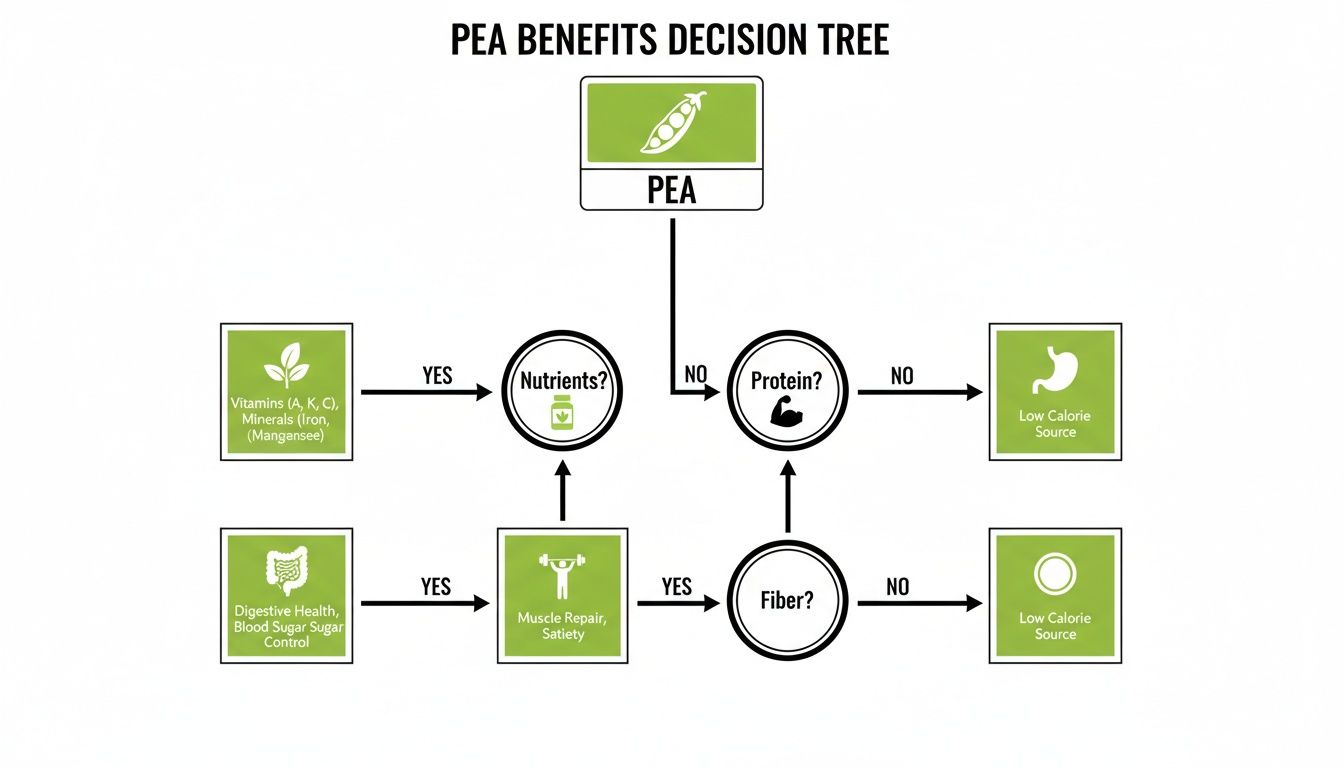
As you can see, the right peas deliver a fantastic mix of essential nutrients, plant-based protein, and gut-friendly fiber. When served correctly, they make a fantastic, well-rounded treat. By sticking to these simple guidelines, you can feel confident knowing that peas are good for your dog and add a nutritious little green veggie to their snack rotation.
The Whole Grain-Free Diet Controversy
If you've spent any time looking into dog food, you've probably stumbled right into the grain-free diet debate. For a long time, the common wisdom was that grain-free was the healthier choice. But then the conversation took a sharp turn when a potential link between these diets and a serious heart condition in dogs came to light.
It's a topic that can feel heavy and confusing, but the real story isn't as scary as it first sounded. Let's walk through what actually happened and what it means for your dog and those little green peas.
What Was the FDA Investigation All About?
Back in 2018, the U.S. Food and Drug Administration (FDA) announced it was looking into a possible connection between certain diets and a heart condition called canine dilated cardiomyopathy, or DCM. Vets had noticed an uptick in cases, and many of the affected dogs were on grain-free diets that were heavy on peas, lentils, and other legumes.
This news, understandably, sent a wave of panic through the dog owner community. The big question became: are peas causing heart failure in our dogs? The initial reports showed a correlation—a pattern where two things happen at the same time—but that's not the same as causation, where one thing directly causes the other.
It's like noticing that more ice cream is sold on days when more people drown. The ice cream isn't causing people to drown; the summer heat is causing both things to happen. Researchers had a similar puzzle to solve: were peas the culprit, or was something else at play?
Correlation vs. Causation: Finding the Real Issue
As the research evolved, the conversation started to shift away from pointing the finger at a single ingredient. The real concern seems to be the overall nutritional makeup of some of these grain-free foods, not the peas themselves.
Many of these formulas replaced traditional grains with huge amounts of legumes. This dramatic shift in ingredients may have messed with the absorption of other critical nutrients, like the amino acid taurine, which is vital for heart health. So, the problem likely wasn't the pea itself, but the complex science of building a complete and balanced diet from scratch using novel ingredients.
Thankfully, newer research is clearing things up. A 2023 study from the University of Guelph—the longest controlled feeding trial on this topic so far—gave healthy adult dogs food containing up to 45% peas and other pulse ingredients. The result? No negative impact on their heart function or overall health. This adds to the growing evidence that when part of a properly formulated diet, peas are good for dogs.
So, What Does This Mean for Your Dog?
The big takeaway from this whole complicated saga is actually pretty simple: focus on nutritional balance, not just the ingredient list. A well-formulated dog food, designed by qualified veterinary nutritionists, is what matters most—whether it contains peas or grains.
This controversy really just highlights how crucial it is to choose a dog food brand that invests in research and conducts feeding trials. If you're weighing different options for your pup, our guide on whether grain-free dog food is better can help you sort through the noise. At the end of the day, making sure your dog's diet is complete and backed by science is the best thing you can do for their long-term health.
How to Safely Prepare and Serve Peas
So, you're ready to add some peas to your dog's treat rotation? That’s great! It’s easy to do, but a few simple ground rules will make sure they get all the good stuff without any of the bad.
The most important one to remember is the 10% rule. This is a cornerstone of smart canine nutrition. It just means that all treats—even healthy ones like peas—shouldn't make up more than 10% of your dog’s total daily calories.
Think of your dog's main food as their complete and balanced meal, covering all their essential nutrient bases. Peas are just a fun, healthy bonus—the garnish, not the main course. Following this rule helps prevent weight gain and keeps their diet from getting out of whack.
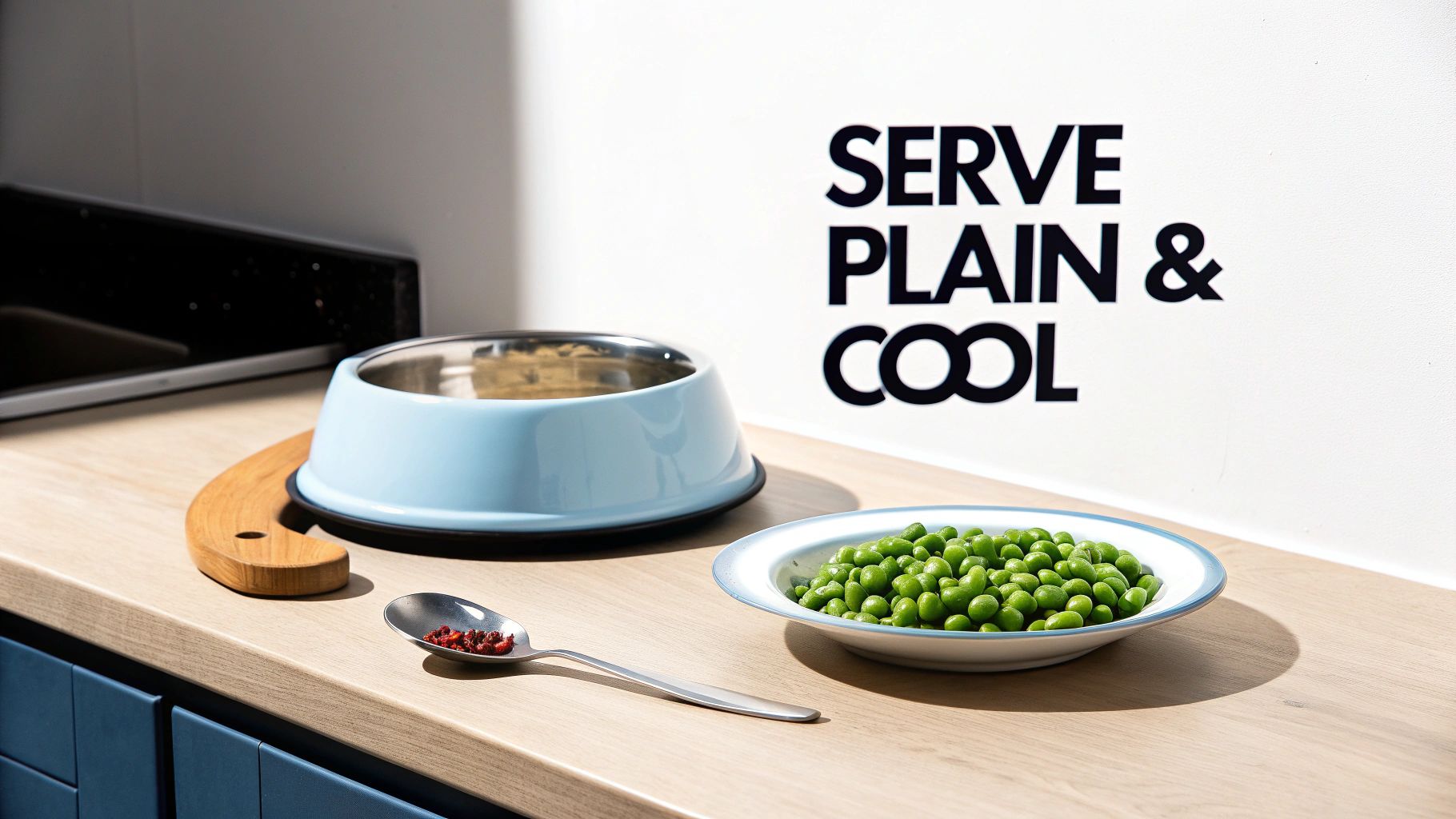
Simple Preparation for a Healthy Treat
When it comes to preparing peas, less is definitely more. The goal is to make them easy to digest and to avoid any sneaky, harmful ingredients. Always serve them plain, and let them cool down completely before your pup starts sniffing around.
- Steaming or Boiling: This is the best way to go. Gently cooking fresh or frozen peas softens them up, which is much easier on your dog's digestive system.
- No Seasoning: This is a big one. Never add salt, butter, oil, onions, or garlic. These are staples in our kitchens but can be downright toxic for dogs. Plain and simple is the only way.
- Mashing: If you have a small dog or a speed-eater who inhales their food, mashing the cooked peas is a smart move to prevent a choking hazard.
Smart Serving Ideas and Portion Control
Once the peas are prepped, you can have some fun with how you serve them. Just remember that portion size is key—a Chihuahua's treat is just an appetizer for a Great Dane.
As a general guideline, think one teaspoon of peas for small dogs, one tablespoon for medium dogs, and a couple of tablespoons for the big guys. This is a daily amount, and it still needs to fit within that 10% treat budget.
Here are a few ways to dish them out:
- As a Food Topper: Mixing a few peas into their regular kibble is an easy way to boost flavor and add a little textural excitement to mealtime.
- A Frozen Summer Snack: On a hot day, a few frozen peas make a fantastic, crunchy, low-calorie treat. My dogs go nuts for the cool, popping sensation.
- In a Puzzle Toy: Stuffing some peas into a puzzle toy or treat ball is a win-win. Your dog gets a healthy snack and some much-needed mental exercise trying to get it out.
Potential Risks and When to Avoid Peas
Even though peas pack a nutritional punch for most dogs, they're not a one-size-fits-all treat. For some pups, especially those with certain health issues, these little green veggies can cause more trouble than they're worth. Knowing when to skip the peas is key.
The biggest red flag is for dogs with kidney problems. Peas contain natural compounds called purines, which break down into uric acid. A healthy dog's kidneys have no problem filtering this out, but struggling kidneys can't keep up. This can lead to painful kidney or bladder stones and make existing kidney conditions even worse.
Spotting an Intolerance
Even if your dog is perfectly healthy, peas can sometimes cause a bit of digestive chaos. This usually happens if you introduce them too quickly or offer too many at once. Their high fiber content, while normally a good thing, can be a lot for a dog's system to handle.
If your dog's gut doesn't agree with peas, you might notice a few classic signs:
- Excessive Gas: This is often the first (and smelliest) clue that something is off.
- Diarrhea or Loose Stools: Too much fiber can act like a laxative for some dogs.
- Vomiting or Stomach Upset: A clear sign that the new food just isn't sitting right.
If you spot any of these symptoms, it’s a good idea to hold off on the peas and see if things improve. If the tummy troubles stick around, it might be helpful to learn more about what causes gas in dogs to pinpoint other possible dietary culprits.
Remember: Any time you introduce a new food, start small. Watching how your dog reacts is the best way to know if a treat is right for them.
Despite these potential issues, it's worth noting that broader research still points to peas being a safe ingredient in properly formulated diets. For example, one year-long study found that dogs on a pea-protein-based diet maintained fantastic health, showing no signs of heart problems or amino acid issues. You can read more about these study findings on petfoodindustry.com. This just goes to show that while they aren't for every single dog, peas are a solid nutritional choice when part of a balanced meal plan.
Common Questions About Dogs and Peas
Even when you have all the facts, you're bound to have a few more specific questions. Let's tackle some of the most common things pet parents ask about peas so you can feel totally confident sharing this little green veggie with your pup.
Can My Dog Eat Pea Pods?
It's best to skip the pods. While the peas themselves are great, the pods are tough and fibrous, which can be a real problem for a dog's digestive system. At best, they might cause an upset stomach; at worst, they could lead to an intestinal blockage.
For smaller dogs, there's also a serious choking hazard. To keep things safe and fun, just stick to serving the shelled peas.
Are Frozen Peas a Good Treat for Dogs?
They sure are! Frozen peas make a fantastic, super-convenient treat. Many dogs absolutely love the crunchy texture, and they're a wonderful low-calorie alternative to regular dog biscuits, especially on a hot day.
Pro Tip: Don't just hand them over! Toss some frozen peas into a puzzle toy or a slow feeder. It's an easy way to give your dog a little mental workout that ends with a healthy, delicious reward.
How Many Peas Can I Give My Dog?
When it comes to treats, moderation is key. Even healthy snacks like peas should follow the 10% rule: they should never make up more than 10% of your dog’s total daily calories.
So, what does that look like? For most dogs, it's a pretty small amount.
- Small Dogs: A teaspoon of peas is a good place to start.
- Medium to Large Dogs: A tablespoon is usually plenty.
If you're trying them for the first time, just offer a couple of peas and see how your dog’s stomach handles it. Of course, being a great dog owner is about more than just nutrition—it's about creating a happy life full of adventure. If you're planning a vacation, why not check out some of the best dog beaches in Florida?
At Joyfull, we believe that a healthy life is a happy life. Our treats are crafted with clean, high-quality ingredients, ensuring your pet gets the very best. Explore our better-for-you snacks at https://joyfullpet.com.