Finding the Best Protein Source for Dogs
When it comes to the best protein for your dog, there's no single right answer, but there is a best answer for your dog. Generally, a high-quality, easily digestible animal protein is the gold standard. For most healthy dogs, ingredients like chicken, beef, and fish are fantastic choices because they provide the essential amino acids that fuel everything from muscle growth to a robust immune system.
The tricky part? The absolute best protein really hinges on your dog's specific needs—their age, how active they are, and whether they have any food sensitivities.
Deciphering Your Dog’s Protein Needs
Picking the right protein for your dog can feel overwhelming, but it gets a lot easier when you break it down. A busy Border Collie rounding up the kids in the backyard has very different dietary needs than a senior Pug who prefers to nap. And a growing puppy needs a lot more protein to build their body than a healthy adult dog does just to maintain it.
Think of protein as the fundamental building blocks and the fuel for your dog's body. The right kind gives them the energy for a game of fetch, the strength to leap onto the couch, and the internal tools to stay healthy and vibrant. The wrong kind, or one they're sensitive to, could lead to an upset stomach or itchy skin.
To make things simpler, here’s a quick way to think about it.
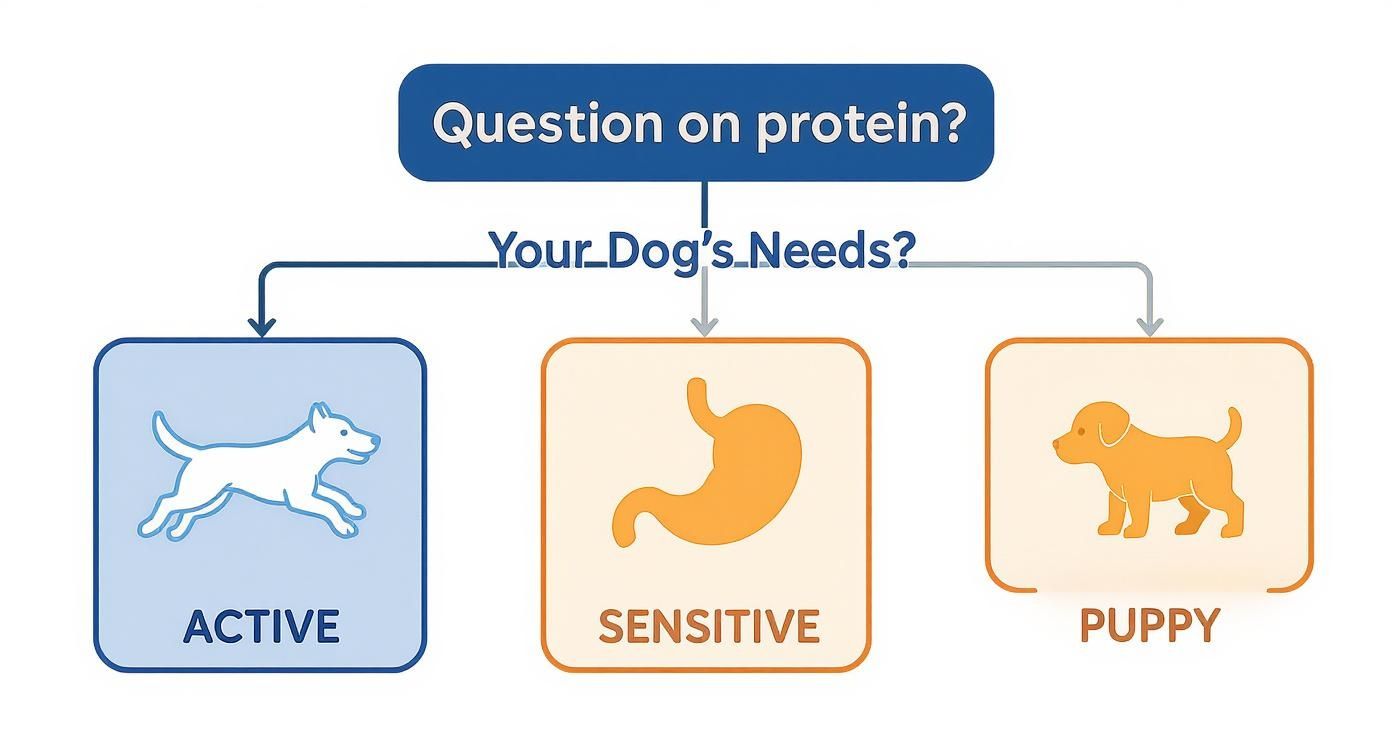
This flowchart helps you match your dog’s profile—active, sensitive, or a growing puppy—to the protein sources that will serve them best.
Comparing Popular Protein Sources
While the pet food aisle is packed with options, a few key animal-based proteins consistently rise to the top for their nutritional punch. Chicken, for example, has been a go-to for decades, and for good reason. In fact, over 70% of commercial dog foods in the U.S. feature chicken, making it the most common protein by a long shot. You can dig into more pet food protein trends on Statista.
But just because it's popular doesn't mean it's the perfect fit for every single dog. Beef is a powerhouse of iron, while fish delivers a healthy dose of anti-inflammatory omega-3 fatty acids.
The goal is to find a protein source that is not only rich in essential amino acids but is also highly digestible for your dog. A high-quality protein is one that your dog’s body can easily break down and use efficiently.
To help you see the differences at a glance, here’s a quick comparison of some of the top animal proteins you'll find in dog food.
Quick Comparison of Top Dog Food Proteins
This table gives you a high-level summary of the most common protein sources, highlighting what they're great for and what you might need to keep in mind.
| Protein Source | Key Benefit | Best For | Potential Consideration |
|---|---|---|---|
| Chicken | Lean muscle mass support; highly digestible. | Most healthy adult dogs and puppies. | A common allergen for some sensitive dogs. |
| Beef | Rich in iron and zinc; great for energy. | Active dogs needing high-calorie diets. | Higher fat content; also a common allergen. |
| Fish (Salmon) | High in Omega-3 fatty acids for skin & coat. | Dogs with skin issues or joint inflammation. | Can be more expensive than other options. |
| Lamb | Often considered a "novel" protein. | Dogs with sensitivities to chicken or beef. | Some formulas can be higher in fat. |
Getting familiar with these key differences is the first real step toward choosing a food that will help your dog truly thrive. Now, let's get into why protein is so critical to their health in the first place.
Why Protein Powers Your Dog's Health

Think about building a house. If you run out of bricks halfway through, you’re left with a weak, unstable structure that can’t do its job. A dog's body without enough high-quality protein is in a similar spot. Protein is the absolute cornerstone, the essential building material for their entire system.
But protein is so much more than just muscle fuel. It’s a core component of every single cell in your dog's body. From their paw pads to the tip of their tail, protein is the nutrient doing the heavy lifting—building and repairing tissues, running a healthy immune system, and creating the hormones and enzymes that keep everything in working order.
Without the right amount, a dog can't grow a shiny coat, develop strong muscles, or even heal properly from a small scrape. This is why choosing the best protein source for dogs isn't about just filling a bowl; it's about fueling their health for years to come.
The Role of Amino Acids
To really get what protein does, we have to talk about amino acids. Picture a protein as a long chain, with amino acids as the individual links. When your dog eats, their digestive system gets to work, breaking down that protein chain into its separate amino acid links.
Their body then takes these links and reassembles them into brand-new protein chains, each built for a specific job. Some might be dispatched to repair muscles after a game of fetch, while others are used to make keratin for that healthy, glossy coat.
It’s important to know there are two types of amino acids:
- Non-essential amino acids: Your dog's body can make these on its own, so they don't need to come from food.
- Essential amino acids: These are the ones your dog must get from their diet. There are 10 essential amino acids for dogs, and if even one is missing, it can cause serious health issues.
This is the key difference between a high-quality protein and a low-quality one.
A "complete" protein source is one that delivers all 10 essential amino acids in the right amounts. This is where high-quality animal proteins like chicken, beef, and fish really shine.
Why Animal Proteins Are the Biological Gold Standard
Dogs are what we call facultative carnivores. That’s a scientific way of saying that while they can eat and digest plants, their bodies are built to get the most nutrition from animal sources. Their digestive tracts are shorter and more acidic than an herbivore’s—a setup perfectly designed to break down animal protein and absorb its nutrients efficiently.
This biological reality is why animal-based proteins are widely considered the gold standard. They naturally provide a "complete" amino acid profile that matches a dog’s needs, which makes them highly bioavailable. Bioavailability is just a measure of how easily your dog’s body can actually use the nutrients from what they eat.
Plant proteins, like those from peas or soy, can certainly be part of a balanced diet, but they often come up short on one or more essential amino acids. While it's possible to combine different plant sources to fill in the gaps, it’s a much trickier nutritional puzzle to solve. For the vast majority of dogs, a diet centered around a high-quality animal protein is the most straightforward path to fantastic health.
A Closer Look at Animal-Based Proteins for Your Dog
Walk down any dog food aisle, and you’ll see the same familiar faces: chicken, beef, lamb, and fish. There's a good reason these proteins are the cornerstone of most high-quality diets. They're biologically what a dog's body is designed to use, packed with a complete set of essential amino acids that are easy to absorb and put to work.
Getting to know what each source brings to the bowl is the first step in picking the perfect food. Let's break down the "big four" to see how their unique profiles can support your dog's health, energy, and overall happiness.
Chicken: The Lean Muscle Builder
Chicken is the undisputed king of the dog food world, and for good reason. It’s a fantastic source of lean protein, perfect for building and maintaining strong muscles without piling on extra fat. This makes it a great go-to for everyone from bouncy puppies to active adult dogs.
For most dogs, chicken is also incredibly easy to digest. Their bodies can efficiently break it down to access not just amino acids, but also naturally occurring glucosamine and chondroitin for healthy joints. Wondering about the full story? We dive deeper into the pros and cons in our guide on if chicken is good for dogs.
The Bottom Line: Chicken is a reliable, lean, and highly digestible protein that supports muscle development and joint health, making it a staple in many well-balanced canine diets.
The only catch? Its popularity has also made it one of the more common culprits behind food allergies. If your dog is constantly scratching or dealing with an upset stomach, chicken might be the trigger.
Beef: The Iron-Rich Energizer
If chicken is the lean builder, beef is the powerhouse. It’s known for its rich, savory flavor and a seriously robust nutritional profile. Beef is loaded with iron, which is crucial for healthy red blood cells that carry oxygen all over the body—in other words, it fuels your dog’s energy. It’s also an excellent source of zinc for a strong immune system and a healthy coat.
Beef boasts a high biological value, delivering all the essential amino acids needed for muscle growth and repair. In fact, in 2023, beef-based proteins made up about 25% of all animal proteins used in dog food formulas globally, second only to chicken.
Because it's naturally higher in fat and calories, beef is a fantastic choice for active or working dogs who burn through a ton of energy. For a less active pup or one that needs to watch their weight, it might be a bit too rich.
Lamb: The Sensitive Stomach Solution
Lamb is often the vet’s first recommendation for dogs with itchy skin or tummy troubles. Why? It's frequently considered a "novel protein." This just means it's an ingredient most dogs haven't eaten before, which dramatically lowers the chances of it triggering an allergic reaction to more common proteins like chicken or beef.
But it’s not just for sensitive dogs. Lamb is a top-notch source of protein and healthy fats. It’s also rich in B vitamins like B12 and niacin, which are vital for a healthy nervous system and converting food into energy. This makes it a gentle yet powerful option for any dog.
One thing to watch for: some lamb formulas can be higher in fat. A quick scan of the "Guaranteed Analysis" on the bag will tell you if it aligns with your dog’s daily calorie needs.
Fish: The Skin and Coat Superstar
Fish, especially oily types like salmon, is in a league of its own. It's famous for its sky-high levels of omega-3 fatty acids, particularly EPA and DHA. Think of these as anti-inflammatory superheroes with a whole host of benefits.
Here’s why fish is such a fantastic choice:
- Skin and Coat Health: Omega-3s are the ultimate skin food. They help reduce dryness and itchiness while promoting a glossy, beautiful coat.
- Joint Support: Those same anti-inflammatory properties can help soothe stiff, achy joints, making fish a wonderful option for senior dogs or breeds prone to arthritis.
- Brain Function: DHA is a primary building block for brain tissue. It supports cognitive development in puppies and helps keep older dogs mentally sharp.
Like lamb, fish is another excellent choice for hypoallergenic diets. It’s a nutrient-dense protein that does more than just build muscle—it delivers a dose of true wellness from the inside out.
What About Plant and Novel Protein Alternatives?
While high-quality animal proteins like chicken and beef are the gold standard for most dogs, the world of canine nutrition is getting a lot bigger. Sometimes, the best protein for a dog is one that’s a little outside the box, especially for pups dealing with sensitivities or specific health needs.
These alternative proteins aren't just a trend; they solve real problems. For a dog with a stubborn allergy, a less common protein can bring incredible relief. For others, plant-based ingredients can round out a diet with valuable nutrients. Knowing what's out there gives you more tools to build the perfect meal plan for your best friend.
The Deal with Plant-Based Proteins
When you scan a dog food label, you'll almost always spot ingredients like peas, lentils, or soybeans. These plant-based proteins are there to bump up the overall protein percentage while adding fiber, vitamins, and minerals. Think of them as excellent supporting actors in a well-formulated diet.
But they have their limits. Unlike animal proteins, most individual plant sources are “incomplete.” This means they’re missing one or more of the ten essential amino acids your dog absolutely needs to thrive. A food that leans too heavily on a single plant protein just won't cut it.
Looking at something like a detailed comparison of pea protein versus whey protein shows just how different these sources are in terms of their nutritional makeup and how the body uses them.
Key Takeaway: Plant proteins are great secondary ingredients in a balanced dog food, but they can't replace a high-quality, complete animal or novel protein as the main event.
The Power of Novel Proteins
For dogs caught in the cycle of food allergies, novel proteins can be a total lifesaver. A novel protein is simply a protein source your dog has probably never eaten before. Food allergies develop from repeated exposure, so switching to something new can stop the allergic reaction cold.
It’s ironic, but the most common food allergens for dogs are the most common ingredients in their food: chicken and beef. By introducing something completely different, you give your dog's immune system a much-needed break from whatever is causing the trouble.
Here are some popular novel proteins that are making a real difference:
- Duck: A rich, tasty poultry option that’s often a great fit for dogs sensitive to chicken. It’s also packed with iron and amino acids.
- Venison: A lean, gamey meat that's naturally lower in fat and cholesterol. It’s a fantastic choice if you’re looking for a less common red meat.
- Kangaroo: An incredibly lean protein that’s high in iron and B vitamins. This is a go-to for dogs with a long list of food sensitivities.
- Insect Protein: A sustainable and hypoallergenic option that's quickly gaining ground. Protein from crickets or black soldier fly larvae offers a complete amino acid profile and is super easy to digest.
These options are the backbone of most hypoallergenic or limited-ingredient diets. If your dog is dealing with chronic itchy skin, ear infections, or an upset stomach, a veterinarian will often recommend an elimination diet built around a novel protein. Finding the right one can completely turn around your dog's health and happiness.
How to Read a Dog Food Label for Protein Quality

Stepping into the pet food aisle can be overwhelming. The shelves are packed with bags covered in flashy designs and appealing claims. But to find the best protein for your dog, you need to become a label detective. Forget the pretty pictures on the front; the real story is always on the back.
Your best tool is the ingredient list. It’s organized by weight before cooking, so the first five ingredients give you a fantastic snapshot of what your dog is actually eating.
What you want to see is a specific, named animal protein right at the top of that list—think "deboned chicken," "lamb," or "salmon." This is a clear sign that whole meat is the star of the show, which is exactly what a high-quality food should deliver.
Decoding the Ingredient List
When you're scanning that list, the specific wording makes a world of difference. Pet food manufacturers use precise terms, and knowing what they mean is your secret weapon for judging protein quality.
For instance, "chicken" and "chicken meal" aren't the same thing. "Chicken" refers to the whole meat, which naturally contains a lot of water. "Chicken meal," on the other hand, has been rendered—a process that cooks it down to remove water and fat, leaving behind a highly concentrated protein powder.
Both can be great. Seeing "chicken meal" high on the list means you're getting a dense source of protein. Seeing "chicken" as the first ingredient, followed by other quality whole foods, is also a hallmark of a premium product.
A quality dog food label is all about transparency. Be wary of vague terms like "meat meal" or "animal by-product." These are red flags because they hide the true source and quality of the protein.
If you want to dive deeper, our complete guide on how to read dog food labels breaks down every part of the bag.
Understanding the Guaranteed Analysis
Next to the ingredients, you'll find a box labeled "Guaranteed Analysis." This table shows the minimum percentages of crude protein and crude fat, along with the maximums for crude fiber and moisture.
The "crude protein" number is a decent starting point, but it doesn't paint the full picture. This figure just measures the total nitrogen in the food, which can come from highly digestible animal protein or from less-useful plant fillers. That’s why you must look at the Guaranteed Analysis and the ingredient list together.
To get a true "apples-to-apples" comparison, especially between wet and dry food, you need to calculate the protein on a dry matter basis. It’s simpler than it sounds.
Here's how you do it:
- Find the moisture percentage on the label (e.g., 10%).
- Subtract that number from 100% to get the dry matter (100% - 10% = 90% dry matter).
- Divide the crude protein percentage by the dry matter percentage (e.g., 26% protein / 90% dry matter = 28.9%).
This quick calculation strips out the water weight and reveals the true protein percentage. Armed with this insight, you can confidently walk down that pet food aisle and choose a food that will genuinely fuel your dog’s health and happiness.
Matching Protein to Your Dog's Age and Activity
Picking the right protein for your dog goes way beyond just grabbing a bag with a high-quality ingredient on the label. It’s really about matching that protein to your dog's specific chapter in life. A lanky, growing puppy and a wise, gray-muzzled senior have completely different nutritional blueprints, and protein is at the heart of both.
Think of it like an athlete's diet. A sprinter gearing up for a race needs a different kind of fuel than a marathon runner, and both need something different from a retiree focused on staying healthy. Your dog's protein requirements shift in much the same way, adapting to the demands of growing, maintaining, and aging.
This way of thinking ensures you're not just choosing a good protein, but the right protein for the dog you have right now.
Protein for Puppies: The Growth Phase
Puppies are basically little construction zones, and their main job is to grow—and fast. This explosive development of muscles, bones, organs, and their immune system requires a whole lot more protein than an adult dog needs. They need a steady stream of amino acids to build their bodies from scratch.
During this critical stage, the protein you choose should be both packed with nutrients and easy to digest. A puppy’s digestive system is still getting the hang of things, so a gentle, easy-to-process protein like chicken or fish makes sure they absorb every last bit of nutrition without putting stress on their gut. This is why you'll see puppy-specific formulas typically containing 28-32% protein on a dry matter basis.
A puppy’s diet is the foundation for their entire adult life. Providing ample high-quality, digestible protein during this phase is one of the most important investments you can make in their long-term health and vitality.
Protein for Adult Dogs: The Maintenance Years
Once your dog hits adulthood, the nutritional game plan changes from rapid growth to steady maintenance. Protein is still crucial for repairing tissues, keeping muscle mass strong, and fueling daily adventures, but they generally need less of it than they did as a pup.
The best protein for an adult dog really comes down to their lifestyle.
- For the Couch Companion: A less active dog who’s more into leisurely strolls and long naps will thrive on a high-quality, lean protein like chicken or turkey. This helps maintain their muscle tone without piling on extra calories that can lead to weight gain.
- For the High-Energy Athlete: If you have a working dog or a canine athlete who spends weekends on the trail, they'll need a more robust, calorie-dense protein. Beef is a great option here, as it delivers the iron and energy required to power through intense activity and help muscles recover afterward.
Striking the right balance is key to supporting a long, healthy, and active adult life.
Protein for Senior Dogs: The Golden Years
As dogs move into their senior years, their bodies start to change. Their metabolism slows down and they often become less active, which can unfortunately lead to muscle loss—a condition called sarcopenia. To fight this, older dogs need a diet rich in highly digestible protein to help hold onto their muscle mass and strength.
For seniors, quality is much more important than quantity. Their kidneys might not be as efficient as they once were, so the protein they eat has to be easy for their body to break down and use. Easily digestible options like fish—which is also full of anti-inflammatory omega-3s for joint health—or lean lamb can be fantastic choices.
The right protein at this stage can make a world of difference in keeping them strong, mobile, and comfortable well into their golden years.
Common Questions About Protein in Dog Food
Alright, we've covered a lot of ground. But I know you probably still have a few questions swirling around. When it comes to our dogs' health, the details matter, and it's easy to get stuck on the "what ifs."
Let's tackle some of the most common questions I hear from dog owners. Think of this as a final myth-busting session to help you feel completely confident in your choices.
Can My Dog Be a Vegetarian or Vegan?
This one comes up a lot. While it's technically possible to create a plant-based diet for a dog, it’s a risky path and generally not something I'd recommend. Here's why: dogs are what we call facultative carnivores. Their bodies are built to thrive on nutrients from animal sources.
Plant-based diets often fall short on critical amino acids like taurine and L-carnitine, which are non-negotiable for a healthy heart. Trying to build a complete vegetarian diet from scratch is incredibly complex and requires perfect supplementation—a job that should only ever be handled by a board-certified veterinary nutritionist.
Is It Possible to Feed My Dog Too Much Protein?
Absolutely. It’s a classic case where more isn't necessarily better. The real focus should always be on quality over quantity.
Bombarding your dog's system with excessively high levels of protein can put a real strain on their kidneys and liver. This is especially true for older dogs or those with underlying health issues. For most healthy adult dogs, a diet with 20-30% protein (on a dry matter basis) is the sweet spot. Of course, needs change with age, and you can find specific guidance on the best foods for senior dogs.
The Takeaway: A balanced diet with highly digestible protein is far more beneficial than an overloaded one. Always aim for the right amount for your dog’s specific needs.
How Do I Know if My Dog Has a Protein Allergy?
Food allergies in dogs usually show up in two main ways: on their skin or in their gut. You might notice constant itching, rashes, and chronic ear infections, or you might see digestive upset like vomiting and diarrhea. Ironically, the most frequent culprits are the most common proteins—beef and chicken.
If you see these signs, your first call should be to your veterinarian. To get a head start, you can learn more about the symptoms and how vets diagnose the issue in our guide on what causes food allergies in dogs.
At JoyFull, we're all about making the right choice an easy one. We formulate our recipes with high-quality, easily digestible proteins because we know that true health starts from the inside out. See our thoughtfully crafted products for yourself at https://joyfullpet.com.