


Yes, chicken can be an excellent addition to your dog's diet, but with a few important ground rules. It’s a fantastic source of lean protein, which is essential for building muscle and keeping energy levels up. The key, however, is that it must be prepared correctly: plain, cooked, boneless, and without any seasonings.
Why Chicken is a Canine Kitchen Staple
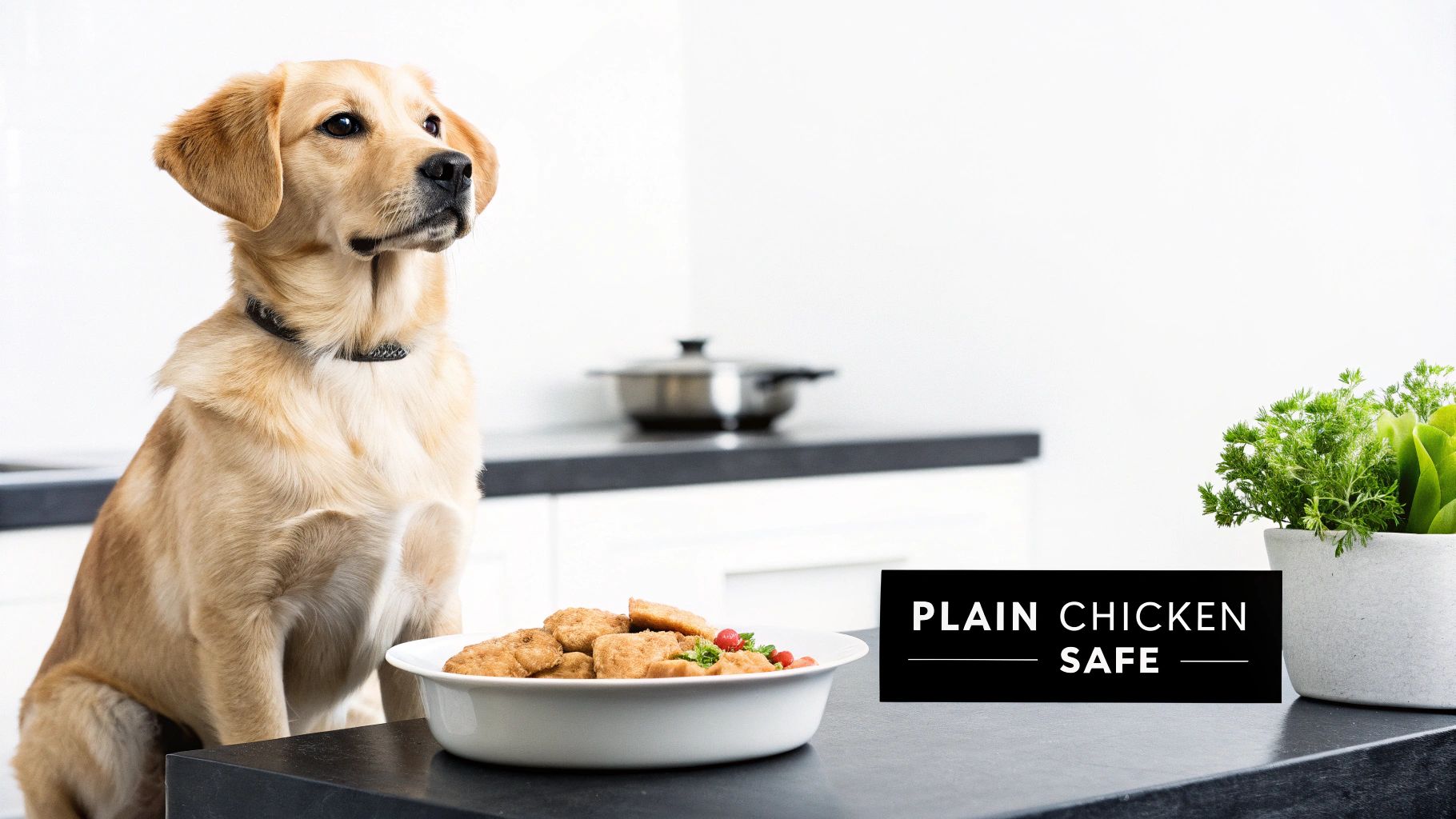
When pet owners ask me, "Is chicken good for dogs?" my answer is almost always a big "yes," but I always follow it up with some crucial advice. Think of plain, cooked chicken as a foundational building block for your dog's health. It’s simple, easy for them to digest, and packed with nutrients that support everything from a shiny coat to strong muscles.
There's a reason chicken is a cornerstone ingredient in so many high-quality commercial dog foods. Its high protein content and digestibility make it a top choice for pet food manufacturers trying to create a nutritious product. It's not just a filler; it's a powerhouse. In fact, industry data shows that about 38% of dog owners actively seek out premium, meat-rich foods, where chicken is often the star protein. You can explore more about pet nutrition trends and protein sources to see how popular it is.
Before we get into the nitty-gritty of preparation, let's quickly summarize the pros and cons.
Chicken for Dogs At a Glance
| Benefit or Risk | Key Takeaway |
|---|---|
| PRO: Excellent Protein Source | Provides essential amino acids for muscle growth and energy. |
| PRO: Rich in Nutrients | Contains Omega-6 for skin/coat and glucosamine for joints. |
| PRO: Highly Digestible | Gentle on the stomach, making it ideal for a bland diet. |
| RISK: Raw Chicken | Can carry harmful bacteria like Salmonella and E. coli. |
| RISK: Cooked Bones | Splinter easily, posing a choking and internal injury hazard. |
| RISK: Seasonings & Skin | Often contain ingredients toxic to dogs (e.g., onion, garlic). |
| RISK: Potential Allergen | Chicken is a common food allergen for some dogs. |
This table gives you a quick snapshot, but understanding the "why" behind each point is what truly helps you make the best decisions for your dog.
The Core Benefits of Chicken
So, what exactly makes this bird so beneficial for our four-legged friends? It all comes down to a nutritional profile that’s nearly perfect for a dog's dietary needs.
Here are the main advantages:
- High-Quality Lean Protein: Chicken is loaded with essential amino acids—the fundamental building blocks for developing muscle, repairing tissue, and maintaining overall physical strength. This is just as important for a growing puppy as it is for an active adult dog.
- A Source of Essential Nutrients: It’s not just about protein. Chicken is also a great source of Omega-6 fatty acids, which are key for maintaining healthy skin and a glossy coat. It also naturally contains glucosamine, a compound famous for supporting joint health and mobility.
- High Digestibility: For the vast majority of dogs, plain, cooked chicken is very easy on the digestive system. This is why veterinarians so often recommend it for dogs recovering from an upset stomach or for those who temporarily need a simple, bland diet.
Preparation Is Everything
While the benefits are clear, whether chicken is a healthy treat or a potential hazard comes down entirely to how you prepare it. The rules are simple, but they are absolutely non-negotiable for your dog's safety.
The most important thing to remember is this: chicken for dogs must always be plain, cooked, and boneless. Deviating from this can quickly turn a healthy snack into a dangerous mistake.
Later in this guide, we'll dive deeper into the dos and don'ts of cooking, proper portion sizes, and how to spot the signs of a potential allergy. Getting these details right is the key to safely making chicken a healthy and happy part of your dog's diet.
What Makes Chicken a Go-To Choice for Dogs?
When you see "chicken" listed as the first ingredient on a dog food bag, it's there for a good reason. But what does that really mean for your dog's health? Let's break it down.
Think of protein as the ultimate construction crew for your dog's body. The individual workers on this crew are called amino acids, and chicken is loaded with the most critical ones your dog needs to thrive.
After a long run at the dog park or a vigorous game of fetch, it's these amino acids that get to work repairing and building strong, lean muscles. They're also essential for creating hormones, enzymes, and antibodies—all the behind-the-scenes stuff that keeps your dog's immune system in top shape.
It's More Than Just Muscle Fuel
But chicken's benefits don't stop with protein. This lean meat is packed with other nutrients that contribute directly to your dog's vitality, from their shiny coat to their happy trot.
One of the stars of the show is Omega-6 fatty acids. While Omega-3s get a lot of attention, Omega-6s are just as crucial for dogs. They play a huge role in maintaining the skin's natural moisture barrier, keeping it supple and resilient.
Ever wonder what the secret is to an incredibly soft, glossy coat? A diet rich in these fatty acids is a major part of the puzzle. It helps prevent dry, flaky skin and gives their fur that healthy, head-turning sheen.
Key Takeaway: Chicken delivers a powerful trio of benefits: essential amino acids for muscle health, Omega-6 fatty acids for a brilliant coat, and natural glucosamine for joint support. This makes it a fantastic all-around nutritional base for many dogs.
Keeping Them Spry and Mobile
Another powerhouse nutrient found naturally in chicken is glucosamine, especially in the cartilage. This is a game-changer for older dogs and breeds susceptible to joint problems like Labs or German Shepherds.
Glucosamine helps build and maintain healthy cartilage, the spongy tissue that cushions your dog's joints. Think of it like the lubricant that keeps a well-oiled machine running smoothly. By supporting cartilage, it helps your dog stay mobile and comfortable, letting them enjoy their daily walks and playtime well into their senior years.
This impressive nutritional lineup is precisely why chicken is a cornerstone of so many high-quality dog foods. It’s not just a filler ingredient to add flavor; it’s a functional food that supports your dog’s entire body. Of course, it's just one of many great choices. To see how it compares to other options, check out our guide to the best protein sources for dogs.
Chicken's Nutritional Hits: A Quick Look
To give you a clearer picture, here’s a simple breakdown of what a serving of plain, cooked chicken brings to your dog’s bowl:
- Essential Amino Acids: These are the building blocks for just about everything—muscle, organs, and a robust immune system. Without enough of them, a dog can become weak and lethargic.
- Omega-6 Fatty Acids: The key to healthy skin and a beautiful coat. These fats help lock in moisture, preventing itchiness and creating that enviable shine.
- Glucosamine and Chondroitin: Naturally present in chicken cartilage, these compounds are your dog's joint-health allies, promoting lubrication and structural support.
- Vitamins and Minerals: Chicken also provides B vitamins like B6 and B12, which are vital for nerve function and converting food into energy, plus essential minerals like phosphorus and selenium.
How to Safely Prepare Chicken for Your Dog
Turning a perfectly good piece of chicken into a safe, delicious treat for your dog all comes down to how you prepare it. The rules are simple but non-negotiable, and they're what make this protein a benefit instead of a risk. The golden rule? Keep it plain and cook it all the way through.
Think of it like you're preparing food for a toddler—your goal is to remove anything that could be harsh, hard to digest, or downright harmful. That means no oils, no butter, no seasonings, and absolutely no bones. When it comes to your dog, the simplest methods are always the safest.
The Best Cooking Methods
When you're cooking chicken for your dog, forget the fancy techniques. The methods we use to add flavor for ourselves often rely on ingredients that can make dogs sick. Stick to these two foolproof options.
-
Boiling: This is, hands down, the easiest and safest way. Just drop a plain, boneless, skinless chicken breast into a pot of water and boil it until it’s cooked through. There’s no need to add salt or anything else to the water.
-
Baking: You can also bake the chicken without any trouble. Place the boneless, skinless breast on a baking sheet (parchment paper makes for easy cleanup) and cook it until it’s done. Again, skip the oil and spices.
A huge part of safe prep is making sure you've killed off any nasty bacteria like Salmonella. For a deeper dive, learning about effective food safety temperature control is a great way to ensure every meal is safe. No matter how you cook it, the chicken's internal temperature must hit 165°F (74°C).
This visual shows exactly how those key nutrients in properly cooked chicken get to work supporting your dog's body.
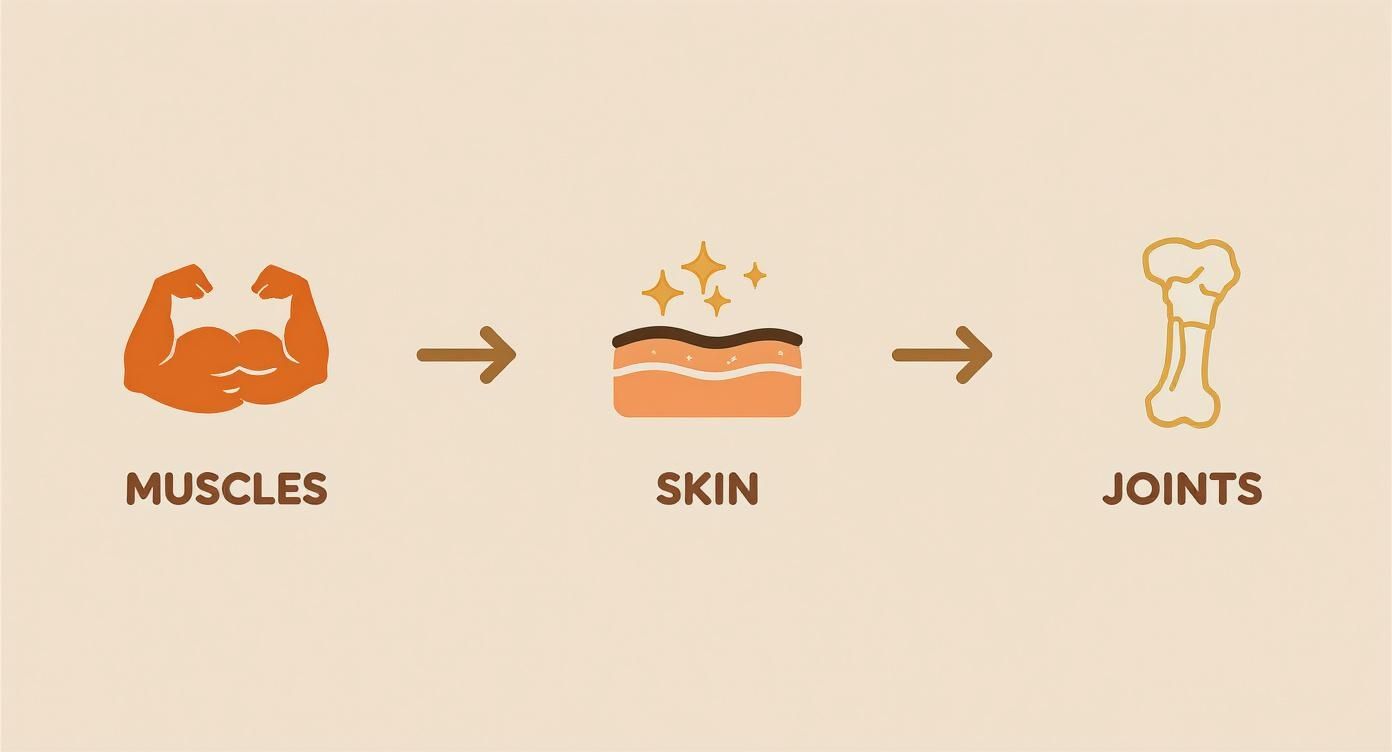
As you can see, the amino acids are direct building blocks for muscle repair, while other nutrients help keep their skin healthy and their joints moving smoothly.
The Dangers of Bones and Seasonings
While cooking the meat correctly is key, what you don't add is even more important. The two biggest hazards when feeding chicken to dogs are the bones and the seasonings we humans love.
The rule about bones is an absolute: never give a dog cooked bones. The cooking process makes them brittle and weak. When your dog chews on one, it can splinter into sharp, dagger-like fragments.
These splinters are a serious threat. They can cause choking, slice up your dog’s mouth and gums, or even puncture the esophagus, stomach, or intestines, which is a life-threatening emergency. The risk is just too high. For more on this, our guide on whether dogs can eat turkey leg bones goes into greater detail.
Likewise, many of the ingredients we use to spice up our own meals are toxic to dogs.
-
Onions and Garlic: These are part of the Allium family and are poisonous to dogs. They can destroy red blood cells and lead to anemia. This goes for all forms—raw, cooked, or powdered.
-
Salt: Dogs need a tiny bit of sodium, but the amount in our seasoned food can cause salt poisoning. This can trigger vomiting, diarrhea, and even seizures.
-
Oils and Fats: Rich, fatty foods—like chicken skin or anything fried—can cause major stomach upset or, in worse cases, pancreatitis. This is an incredibly painful inflammation of the pancreas that can be fatal.
A Simple Preparation Guide
Let’s keep it simple. Here's a quick checklist for preparing chicken your dog will love and that you can feel good about.
| Do's | Don'ts |
|---|---|
| Do use boneless, skinless chicken breasts or thighs. | Don't ever feed cooked bones of any kind. |
| Do cook the chicken all the way through. | Don't add any salt, pepper, or other seasonings. |
| Do let it cool completely before serving. | Don't include onions, garlic, or other aromatics. |
| Do shred or dice the meat into easy-to-eat pieces. | Don't serve chicken skin or greasy, fried chicken. |
Stick to these guidelines, and you can be confident that the chicken you’re sharing is a healthy, welcome addition to your dog's diet. Safe prep is what unlocks all the nutritional good stuff, turning a simple ingredient into a wholesome, tail-wagging treat.
How to Spot a Chicken Allergy in Your Dog
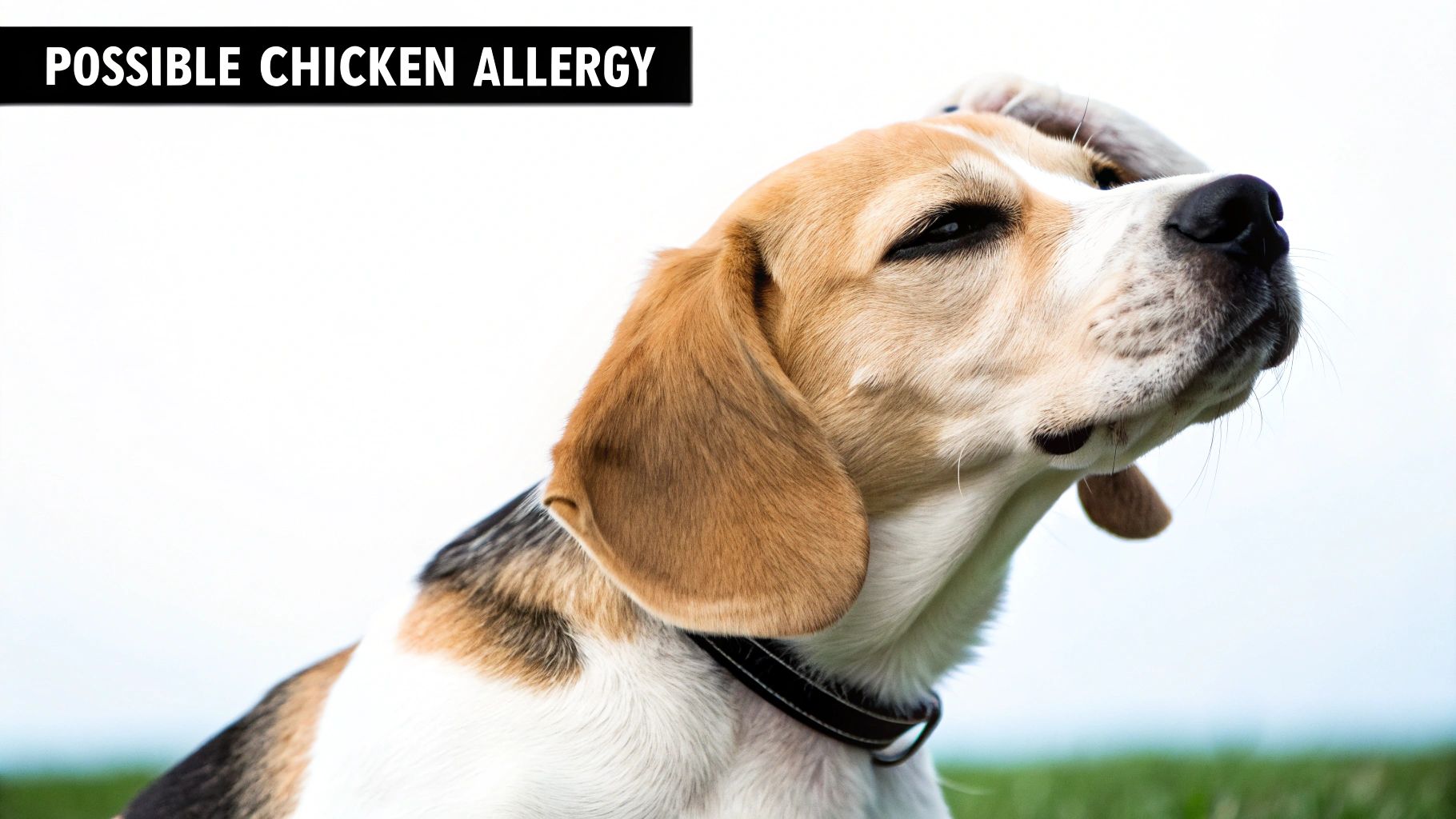
While tons of dogs do great on chicken, it’s also one of the most common food allergens out there. Just because it's a popular choice doesn't automatically make it the right one for your dog. The key is learning to spot the signs of a bad reaction early so you can keep your best friend happy and comfortable.
Think of yourself as a health detective for your dog. The clues for a food allergy often start small, looking like minor issues before they snowball into chronic problems.
Common Red Flags for a Chicken Allergy
When a dog reacts to food, the evidence usually shows up on the outside, especially on their skin. If you see your dog doing any of these things over and over, chicken might just be the culprit.
- Non-Stop Itching and Scratching: This is the big one. If your dog is constantly scratching—especially at their face, paws, or ears—and you know it isn't fleas, a food allergy is a very likely suspect.
- Chronic Ear Infections: Feel like you're always dealing with smelly, red, or gunky ears? Food allergies can inflame the ear canals, creating the perfect breeding ground for stubborn yeast and bacterial infections.
- Obsessive Paw Licking: Many dogs will chew or lick their paws raw trying to soothe the itch from an allergic reaction. This often leads to red, swollen "hot spots" and even secondary infections.
- General Skin Problems: Keep an eye out for rashes, hives, bald patches, or inflamed patches of skin. These are often a direct result of the body's over-the-top immune response to an allergen.
Allergy vs. Intolerance: What's the Difference?
It's easy to mix up a food allergy and a food intolerance, but they’re two very different things happening inside your dog’s body.
A food allergy is a case of mistaken identity. Your dog's immune system wrongly flags the chicken protein as a dangerous threat and goes on the attack. This immune system freak-out is what causes all the intense itching and skin drama.
A food intolerance, however, is just a digestive problem. The immune system isn't involved at all. It simply means your dog’s gut can't process chicken properly.
A dog with a chicken intolerance will likely get gassy, bloated, or have diarrhea or vomiting. It's definitely uncomfortable, but it doesn't cause the full-body inflammatory reaction you see with a true allergy.
What to Do If You Suspect a Problem
If any of these signs sound familiar, the first and most important step is to talk to your vet. They can help you rule out other common culprits like parasites or environmental allergies (pollen, I'm looking at you).
If a food allergy seems likely, your vet will probably suggest an elimination diet. This involves switching your dog to a food with a "novel" protein—something they've never eaten before, like venison or duck—for a solid 8-12 weeks.
Once the symptoms have cleared up, you’ll slowly reintroduce old ingredients one at a time to see which one causes a reaction. Learning about what causes food allergies in dogs can give you a better understanding of the entire process.
This method takes patience, but it's the most reliable way to get a real answer. It lets you figure out exactly what to avoid so you can build a diet that helps your dog feel fantastic for years to come.
The Environmental Paw Print of Chicken
When we're deciding what to feed our dogs, our first thoughts are usually about nutrition and safety. But there’s another piece to the puzzle: the impact our choices have on the planet. So, when we ask, "is chicken good for dogs?" it’s also worth exploring the environmental cost.
This isn't about making you feel guilty for feeding your dog chicken. It’s about being more mindful of where that food comes from.
Like any kind of farming, raising poultry takes a lot of resources. Producing enough chicken for the massive pet food industry requires huge amounts of land for housing the birds and growing their feed, not to mention significant water and energy for processing and transport. It all adds up.
Understanding the Scale of Impact
It’s easy to forget that the food in our dogs' bowls, when multiplied by millions of pets, has a real environmental effect. The footprint of chicken-based dog food becomes pretty significant when you add up all the land use and greenhouse gas emissions involved.
In places like the USA and the EU, dog food made with animal proteins is responsible for 25% to 30% of the environmental impact of all meat consumption. That's a huge number. It works out to roughly 64 million tons of CO2 equivalent emissions every year—about the same as 13.6 million cars driving for a year. If you're curious to learn more, you can read up on the environmental footprint of meat consumption of cats and dogs.
Seeing the data really puts our individual choices into perspective. It shows how what we do at home contributes to a much bigger environmental story and underscores why making conscious decisions is so important—not just for our dogs, but for the planet we all share.
Making More Sustainable Choices
Just being aware of this "paw print" is a great first step. It empowers you to make small, thoughtful changes that can really add up. You don't have to give up chicken completely. It's more about being deliberate in how you use it.
Here are a few practical things you can do:
- Support Sustainable Brands: Do a little research on your pet food brands. Look for companies that are open about where they get their ingredients. Those that prioritize ethically raised chicken or use renewable energy are making a positive difference.
- Diversify Protein Sources: You don't have to stick to just one protein. Try rotating different options into your dog's diet. Fish can have a lower carbon footprint, and even incorporating some high-quality plant-based proteins can ease the reliance on chicken.
- Minimize Waste: Pay close attention to portion sizes so you aren't overfeeding or throwing food away. You can also get creative with leftovers. Making a simple, unseasoned broth with leftover bits of meat is a great way to use every part of the chicken and honor the resources it took to produce.
Thinking critically about where our dog's food comes from makes us more responsible pet owners. It turns the simple act of filling a bowl into a conscious choice—one that reflects our care for our dogs and the world we live in.
Got Questions About Feeding Your Dog Chicken? We've Got Answers.
Even when you know the basics, real-life questions always come up. Is raw chicken really that bad? What about those rotisserie chicken bones? Getting straight, practical answers helps you make smart choices for your dog without the guesswork.
Here are some of the most common questions I hear from pet owners, answered simply and directly.
Can I Feed My Dog Raw Chicken?
This is a hot topic in the dog world, but for most veterinarians and food safety experts, the answer is a firm "no." The risk of bacterial contamination is just too high. Raw chicken is often a carrier for nasty bacteria like Salmonella and Campylobacter, which can make your dog seriously ill.
An infection can lead to vomiting, severe (and sometimes bloody) diarrhea, fever, and just feeling awful. What's even more concerning is that an infected dog can shed these bacteria in their feces, putting the people in your home at risk—especially kids, older adults, or anyone with a compromised immune system.
While some people champion raw diets as being more "natural," the threat of foodborne illness is very real and well-documented. The only truly safe way to prepare chicken for your dog is to cook it thoroughly to an internal temperature of 165°F (74°C). This kills off any dangerous pathogens and gives you peace of mind.
Are Chicken Bones Safe for Dogs to Chew?
Let's be blunt: never give your dog cooked chicken bones. The cooking process dries them out, making them incredibly brittle. When a dog chews on a cooked bone, it can easily splinter into sharp, dangerous shards.
Think of these fragments like little daggers moving through your dog's digestive tract. They can cause a whole host of horrible problems:
- Choking: A piece of bone can get stuck in their throat, cutting off their airway.
- Mouth Injuries: Splinters can cut your dog's tongue, gums, and the roof of their mouth.
- Internal Punctures: This is the most frightening risk. A sharp fragment can puncture the stomach or intestines, leading to a life-threatening internal infection that requires emergency surgery.
Raw bones aren't a great alternative, either. They still pose a choking hazard, can break teeth, and carry the same bacterial risks we just discussed. Your best bet is to stick with chew toys and dental treats specifically designed for dogs.
Veterinarian's Insight: The risks of feeding any kind of bone, especially cooked ones, just aren't worth it. There are so many safer, commercially-made chews that will satisfy your dog's need to chew without landing you in the emergency vet clinic.
How Much Cooked Chicken Can My Dog Eat?
The right amount really depends on how you're using it. Is it a high-value training treat, a little something extra on top of their dinner, or a core part of a homemade diet?
For most people using chicken as a treat or a meal topper, the 10% rule is your best guide. This guideline simply means that treats—chicken included—shouldn't make up more than 10% of your dog's total daily calories. This ensures they're still getting the bulk of their nutrition from their balanced dog food.
But if you're thinking about making chicken a staple in a homemade diet, you absolutely must work with a veterinarian or a board-certified veterinary nutritionist. A diet of just chicken and rice, for example, is dangerously incomplete. It's missing crucial minerals like calcium and a host of other vitamins. A professional can help you create a recipe that's properly balanced for your dog's age, weight, and lifestyle.
Is Store-Bought Chicken Broth Safe for Dogs?
Almost always, the answer is no. That can of chicken broth or carton of stock in your pantry is made for human taste buds, and it's usually packed with ingredients that are harmful to dogs.
Watch out for these common culprits:
- High Sodium: The salt content is way too high for a dog's system and can lead to serious issues like sodium ion poisoning.
- Onions and Garlic: These are staples in human broths but are toxic to dogs. They can damage red blood cells and lead to anemia, even in powdered form.
- Other Seasonings and Preservatives: You'll often find a mix of other spices, MSG, and chemicals that can easily cause an upset stomach.
The good news? Making your own dog-safe broth is incredibly easy. Just boil some plain, boneless, skinless chicken in water. Once it's cooked, strain the liquid, and you've got a pure, unseasoned broth that's perfectly safe. You can pour a little over their kibble to entice a picky eater or freeze it in ice cube trays for a cool, hydrating treat on a hot day.
At Joyfull, we believe that a healthful life isn’t just for humans. Our snacks are made with clean ingredients and high-quality proteins, all reviewed by our in-house veterinary advisor, because your pets deserve the best. Explore our better-for-you pet products at https://joyfullpet.com.
0 comments