


A Guide to Finding the Best Natural Cat Treats
When you're on the hunt for the best natural cat treats, the secret is to look right past the flashy packaging. Focus on what really matters: simple, recognizable ingredients. A truly natural treat is built around high-quality animal protein and is completely free from artificial junk like preservatives, colors, and fillers that do absolutely nothing for your cat's health.
What Makes a Cat Treat Truly Natural
Walking down the pet food aisle can be a little overwhelming. "Natural" is slapped on just about every bag, but what does that word really mean for your cat? Don't think of it as just another marketing buzzword. Instead, think of it as a clean-eating philosophy designed specifically for a carnivore.
At its core, a genuinely natural treat is made from whole ingredients you can actually identify. The idea is simple: give your cat snacks that actually contribute to their health, not just empty calories. That means putting real, named animal proteins—like chicken, turkey, or salmon—at the top of the list to fuel their instincts. It’s all about choosing treats that are as close to their original, natural state as possible.
Beyond the Label
It's clear we're all starting to think differently about our pets, and the demand for better food options proves it. The numbers don't lie: global cat ownership has jumped to 27.3% across 18 key countries, a noticeable climb from 23.6% in 2019. This boom is fueling a massive global pet food and treat market, which is on track to hit a staggering $152.9 billion by 2025. If you're curious, you can explore more pet industry insights to see just how big this market has become.
This shift isn't just about us; it's pushing brands to be way more transparent and thoughtful about what goes into their products. A truly natural approach isn't just about what's listed first on the ingredient panel—it’s also about what's been intentionally left out.
A natural treat isn't just about what's in it; it's also about what's left out. The absence of artificial colors, chemical preservatives, and cheap fillers is just as important as the presence of high-quality protein.
The Foundation of Feline Wellness
Picking the right natural cat treats is an active choice to support your cat's health from the inside out. Once you grasp this core idea, you're in a much better position to see past clever marketing and find products that genuinely align with what your cat needs. Think of this as step one. It sets you up perfectly to start dissecting ingredient labels, understanding what makes a protein "good," and making choices that keep treat time both fun and healthy.
How to Read a Cat Treat Label Like a Pro
Flipping over a bag of cat treats and trying to decipher the ingredient list can feel a bit like reading another language. But trust me, it’s the single most important skill you can develop to find the best for your cat. The ingredients are listed by weight, so whatever’s at the top of the list makes up the bulk of the treat.
Once you know what you’re looking for, you can see right past the flashy marketing on the front of the bag. You'll be able to spot the genuinely healthy snacks and leave the junk food on the shelf, making sure every treat you give is a good one.
Spotting the Good Stuff: Green Flags on the Label
The first few ingredients tell you almost everything. Cats are obligate carnivores, which is just a fancy way of saying they’re built to eat meat. So, the very first ingredients should always be high-quality, named animal proteins. These are the "green flags" you're searching for.
You want to see specific, easy-to-understand terms. Things like:
- Deboned chicken: Pure muscle meat, exactly what your cat needs.
- Salmon: A great source of protein that’s also packed with healthy omega-3s.
- Turkey: Another fantastic, lean protein that's easy for them to digest.
When you see a real, named meat as the #1 ingredient, you know the treat has a solid nutritional foundation. This is what helps your cat maintain lean muscle and keep their organs healthy. To get even more detail on this, check out our guide to the best cat food ingredients.
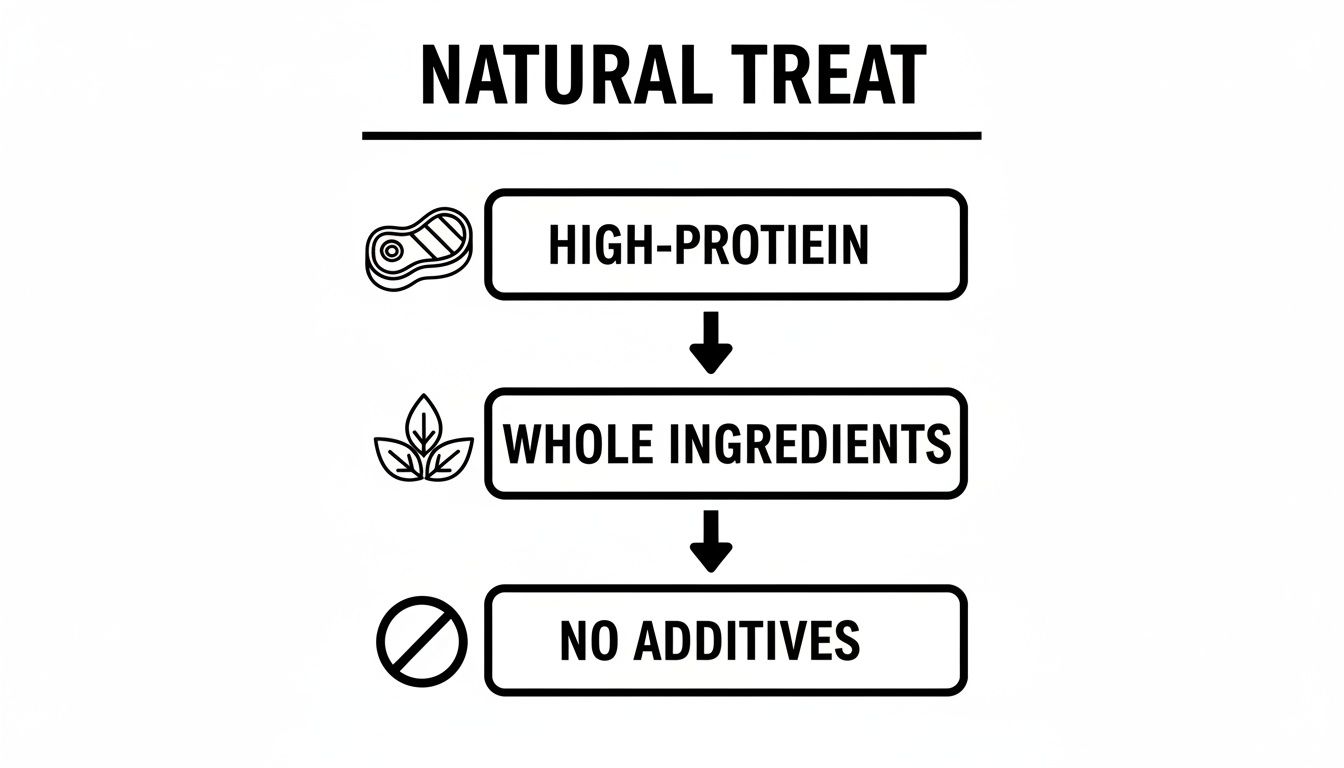
As you can see, it all comes down to a simple formula: start with high protein, use whole ingredients, and skip all the unnecessary additives.
Avoiding Red Flags and Unnecessary Fillers
Knowing what to avoid is just as critical as knowing what to look for. A lot of popular cat treats are loaded with "red flag" ingredients—cheap fillers that add bulk but offer zero nutritional benefit. Some can even cause digestive upset or allergies.
Here are the big offenders to watch out for:
- Vague Meat Terms: Words like "meat by-products" or "animal digest" are a major red flag. You have no way of knowing what kind of animal it came from or the quality of the source. Stick to named proteins.
- Grain Fillers: Corn, wheat, and soy are cheap fillers that cats have no biological need for. Their digestive systems are short and designed for meat, not for breaking down these complex carbs.
- Artificial Additives: Keep an eye out for artificial colors (like Red 40 or Yellow 5), flavors, and chemical preservatives. They serve no purpose other than making the treat look or taste a certain way, and they can be harmful in the long run.
Sometimes, the best sign of a quality treat is what’s not on the ingredient list. That means no artificial preservatives like BHA, BHT, or ethoxyquin. Instead, look for natural preservatives like tocopherols (a form of Vitamin E) or rosemary extract. They keep the treats fresh without adding nasty chemicals to your cat's diet.
To make it even easier, here's a quick cheat sheet you can use the next time you're shopping.
Green Flags vs Red Flags on a Cat Treat Label
| Ingredient Category | Green Flags (Look For These) | Red Flags (Avoid These) |
|---|---|---|
| Protein Source | Specific meats like 'chicken', 'salmon', or 'turkey' listed first. | Vague terms like 'meat by-products' or 'animal digest'. |
| Carbohydrates | Easily digestible options like sweet potatoes or peas (in small amounts). | Corn, wheat, and soy used as primary ingredients or fillers. |
| Preservatives | Natural options like 'mixed tocopherols' (Vitamin E) or 'rosemary extract'. | Chemical preservatives like BHA, BHT, or ethoxyquin. |
| Colors & Flavors | Natural flavors derived from the meat source itself. | Artificial colors (Red 40, Yellow 5) and 'artificial flavors'. |
By keeping these simple green and red flags in mind, you can quickly and confidently find treats that are genuinely good for your cat.
Why Protein Quality Is Your Top Priority
When you're navigating the cat treat aisle, it's easy to get sidetracked by fun shapes and trendy flavors. But if you want to give your cat something that’s genuinely good for them, one thing matters more than anything else: high-quality animal protein. Getting this right all comes down to a simple, non-negotiable fact about your cat's biology.
Cats are obligate carnivores. That’s not just a fancy scientific term; it’s the master key to understanding their health. Unlike dogs or people, who can get by on a mix of plants and meat, a cat’s body is hardwired to thrive on animal protein. Their entire system, from their short digestive tract to their unique liver enzymes, is built to break down and use meat for fuel.
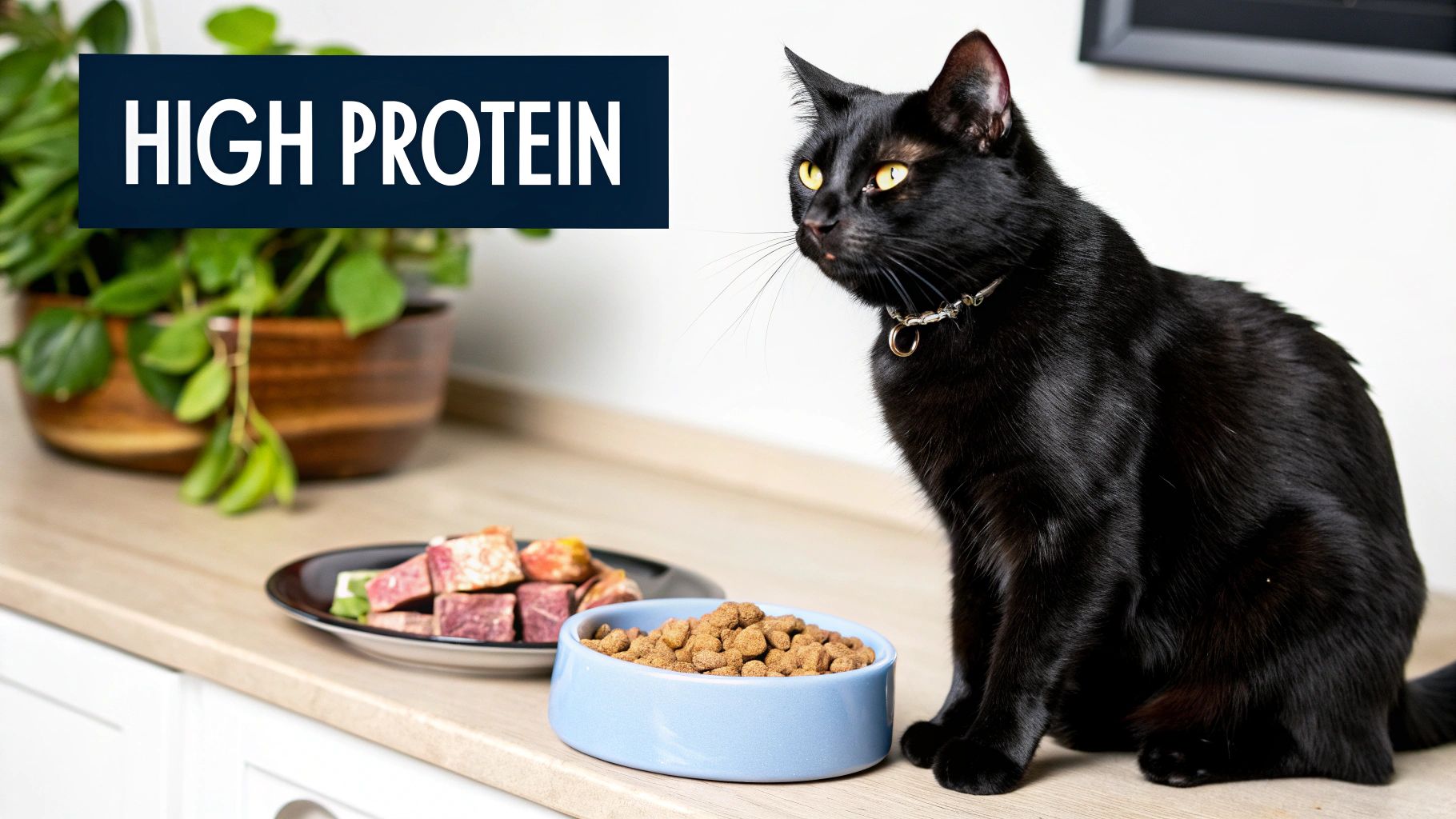
For a cat, protein isn't just part of a balanced diet—it's the main event. It provides the essential energy and raw materials they need to build and maintain a healthy body.
The Building Blocks of Feline Health
Think of high-quality animal protein as the premium construction material for your cat. It’s responsible for just about every part of their physical health, supplying the essential amino acids their bodies can't make themselves.
These compounds are the MVPs of feline nutrition, working behind the scenes to:
- Maintain Muscle: Protein builds and repairs the lean muscle that keeps your cat pouncing, climbing, and living their best agile life.
- Fuel Their Energy: Cats are designed to run on protein. A high-protein diet is what powers their zoomies and keeps them playful.
- Nourish Skin and Coat: That soft, shiny coat you love to pet? It's a direct result of a diet rich in the right amino acids from animal sources.
- Support the Immune System: The antibodies that protect your cat from getting sick are made of protein, making it the cornerstone of a strong defense system.
If a cat doesn't get enough high-quality protein from their food, their body will start to break down its own muscle to compensate. It's a survival mechanism you definitely want to avoid.
Going Beyond Basic Nutrition With Functional Treats
As we've gotten smarter about what cats need, the world of natural treats has evolved, too. We're now seeing more and more functional treats—snacks designed not just to be tasty, but to deliver a specific health boost. They still use top-notch protein as their base but add extra ingredients to tackle certain wellness goals.
Functional treats turn snack time into a health-boosting opportunity. They're designed to give your cat targeted support, making a daily indulgence part of their overall wellness routine.
For instance, you can now find treats specifically made to:
- Support Dental Health: Many have a crunchy texture that helps scrub away plaque as your cat chews.
- Promote Joint Mobility: Ingredients like glucosamine can be added to support joints, which is especially helpful for older cats.
- Aid Digestion: Some treats include probiotics or fiber to keep their gut happy and digestion running smoothly.
- Enhance Skin and Coat: Added omega fatty acids are a popular choice for reducing shedding and boosting that beautiful shine.
Choosing a functional treat means you're making treat time work harder for your cat's long-term health. The trick is to make sure those extra benefits are built on a solid foundation of excellent, easy-to-digest protein. To learn more about what makes some protein sources better than others, it's worth exploring the world of high-protein cat treats. By keeping protein first, you ensure every treat is a powerful, positive addition to their diet.
Choosing Treats for Cats with Sensitivities
For a cat with a sensitive stomach or allergies, treat time can feel like walking on eggshells. What’s a perfectly fine snack for one cat can send another one running for the litter box or scratching uncontrollably. Figuring this out takes a little detective work, but it’s absolutely key to keeping your cat happy, healthy, and comfortable. The whole point is to find out exactly what triggers their sensitivity so you can choose the best natural cat treats without a second thought.
It helps to know what you’re up against. Is it a food allergy or a food intolerance? An allergy is a full-blown immune system response, usually to a protein, and it often shows up on their skin as itching, redness, or even hair loss. An intolerance, on the other hand, is all about digestion—think gas, vomiting, or diarrhea. Both are miserable for your cat.
Identifying Common Culprits
While any ingredient could technically be the problem, experience shows us that a few common proteins are usually the main offenders. Knowing which ones to watch for can help you narrow down the list much, much faster.
Keep an eye out for these common triggers:
- Chicken: It’s a great protein, but it’s everywhere in pet food. That constant exposure makes it a top allergen for many cats.
- Beef: Just like chicken, this is another popular protein that some cats develop a sensitivity to over time.
- Dairy: Most adult cats are actually lactose intolerant. They just don't have the enzyme needed to digest milk products properly.
- Fish: Certain types of fish can also be problematic for some feline friends.
If you think your cat has a sensitivity, try keeping a simple food diary. Jotting down their meals, treats, and any symptoms you notice can be incredibly revealing. Plus, that log is gold when you go to discuss the issue with your vet.
The Power of Limited Ingredient Diets
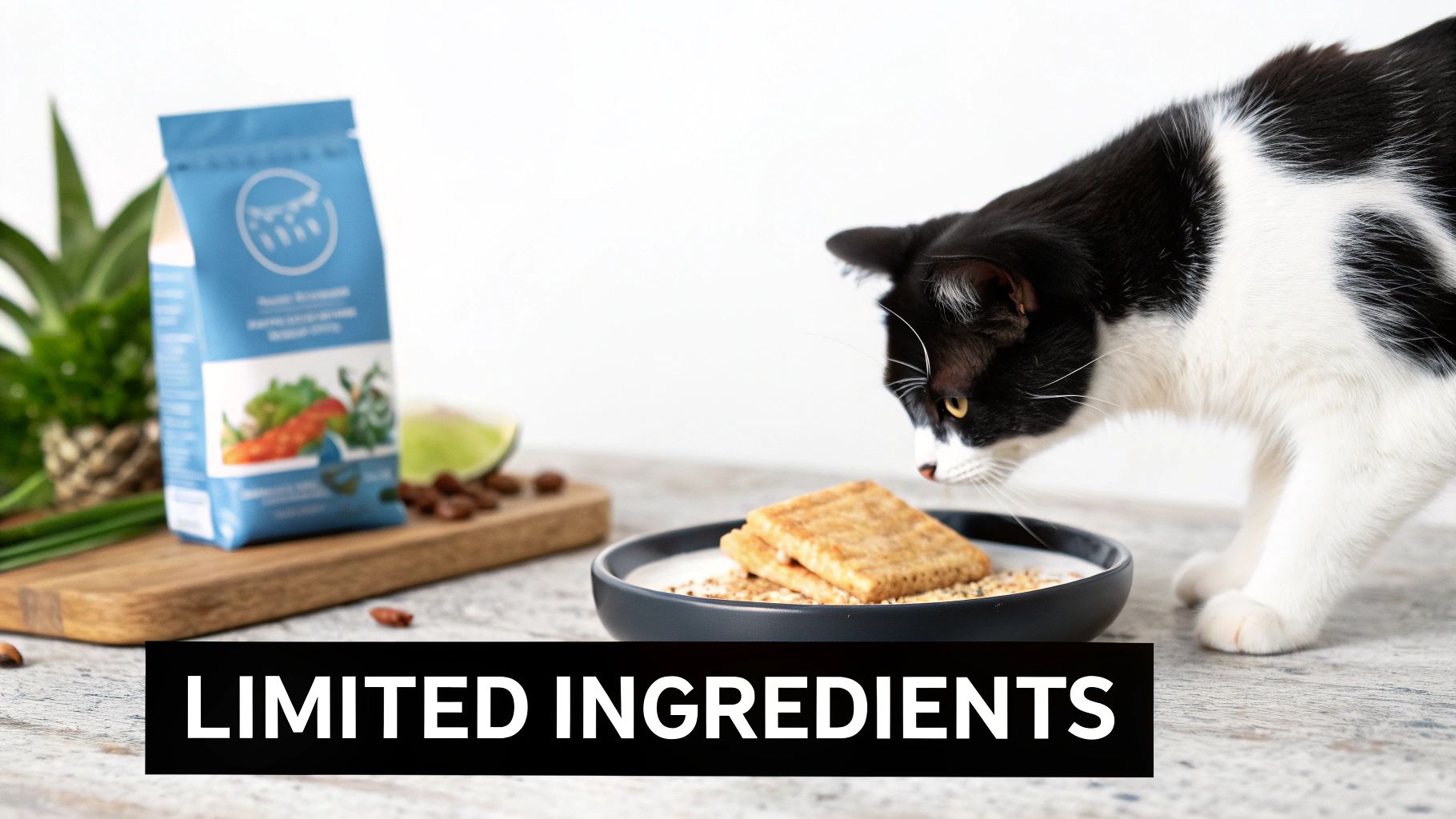
This is where Limited Ingredient Diet (LID) treats become your secret weapon. An LID treat is basically a super-simplified recipe. Instead of a laundry list of ingredients, it focuses on just a few—usually a single, less-common protein and one or two carbohydrates that are easy on the gut. It's a minimalist approach designed to sidestep a reaction.
The big idea behind LID treats is beautifully simple: by limiting the number of potential triggers, you can easily figure out what your cat can handle. This makes them the perfect tool for an elimination diet.
For instance, if you're suspicious of chicken, you could try a treat made only with duck or rabbit. By isolating ingredients like this, you can systematically solve the puzzle. For cats with tummy troubles, learning more about selecting appropriate food for cats with sensitive stomachs can offer a bigger picture of how to build a comfortable diet.
How to Safely Introduce New Treats
When you’re dealing with a sensitive cat, you have to introduce new treats slowly and carefully. The "one at a time" rule is non-negotiable. If you introduce more than one new food at once, you’ll have no idea what caused a reaction if one pops up.
Just follow these simple steps:
- Start Small: Offer just one tiny piece of the new treat and then wait 24-48 hours.
- Monitor Closely: Keep a close eye on them. Look for any changes in their litter box habits, any extra scratching, or even shifts in their mood.
- Gradually Increase: If everything looks good after two days, you can try giving them a slightly bigger piece.
- Stay Consistent: Keep up this slow-and-steady approach for about a week before you make the treat a regular thing.
This careful process helps ensure treat time stays fun, not stressful. If you're navigating this journey, our guide on the best cat treats for sensitive stomachs has even more targeted advice. By choosing thoughtfully and introducing new snacks with care, you absolutely can find the perfect natural treats your sensitive cat will adore.
The Veterinarian's Guide to Safe Treating Habits
You've done the hard work of picking out a great, natural treat for your cat. That's a huge step! But how you give those treats is just as important as what's in them.
Think about it like this: a kale salad is fantastic for you, but if you eat a five-gallon bucket of it every day, it stops being so healthy. The same logic applies to our cats. Safe treating isn't just about dodging bad ingredients; it's about building healthy habits that actually boost their well-being.
When you create a responsible routine, treats become a wonderful tool for training and bonding—not a shortcut to weight gain or other health problems. A few simple, vet-approved guidelines can ensure every snack you offer is a positive part of your cat’s long and happy life.
Mastering the 10 Percent Rule
If you take away just one thing from this section, let it be the 10 percent rule. This is the golden rule of treating, recommended by virtually every veterinarian out there.
It’s beautifully simple: treats should never make up more than 10% of your cat’s total daily calories. This single guideline is your best defense against pet obesity, a serious issue that now affects nearly 60% of cats in the United States and opens the door to problems like diabetes and arthritis.
So, how do you actually use this rule? It starts with knowing how many calories your cat needs in a day. An average 10-pound indoor cat usually needs around 200-250 calories, but this is just a ballpark figure—your cat's age, activity level, and metabolism will change the math.
- Step 1: Get the Total. First, ask your vet for a specific daily calorie goal for your cat. They'll give you the most accurate number.
- Step 2: Do the Math. Multiply that daily number by 0.10. So, for a 250-calorie diet, that’s 25 calories from treats. Easy.
- Step 3: Check the Label. Now, just look at the calorie count on the treat package to figure out how many treats fit into that daily "budget."
This little bit of math is a game-changer. It keeps your cat’s diet balanced and ensures those fun treats aren't pushing out the essential nutrients they need from their main meals.
Safety Beyond the Calories
Portion control is king, but the physical safety of the treat is just as vital. The right size, the right texture, and the right ingredients can be the difference between a fun snack and an emergency vet visit.
The most common mistake? Sharing human food. Many of our favorite snacks are downright dangerous for cats.
Crucial Safety Warning: Never, ever give your cat foods like chocolate, onions, garlic, grapes, raisins, or alcohol. You also need to watch out for the artificial sweetener xylitol, which is hiding in more products than you’d think. These are all highly toxic and can cause devastating illness or even death.
Beyond what’s in the treat, think about its shape and size. A treat that’s too big or rock-hard can be a serious choking hazard, especially for a small cat or one who tends to inhale their food. Always pick treats that are an appropriate size for your cat, and don't hesitate to break larger ones into smaller, safer pieces.
Finally, always have a quick chat with your vet before introducing a new treat. This is especially true if your cat has a known health issue like kidney disease, diabetes, or even just a sensitive stomach. They have very specific dietary needs, and your vet is the best person to recommend treats that won't cause a flare-up.
Getting this expert advice is more important than ever. The pet treat market is exploding—it's expected to hit USD 15.05 billion by 2035, mostly because pet owners are demanding healthier, more natural options. You can read the full pet treat market analysis to see just how much this space is growing.
Common Questions About Natural Cat Treats
Stepping into the world of natural cat treats can feel like learning a new language. You’ve got the basics down, but practical questions always pop up. How many treats are too many? Is “grain-free” always better?
Let's clear up some of the most common points of confusion. Think of this as your go-to FAQ for treating your cat the right way—with confidence, care, and a little bit of inside knowledge. Getting these details right is what turns a good treat into a great one for your cat's health.
How Many Natural Treats Can I Give My Cat Each Day?
This is the big one, and thankfully, there’s a simple rule of thumb: the 10% rule.
Veterinarians agree that treats should make up no more than 10% of your cat's total daily calories. This isn't just an arbitrary number; it's the sweet spot that prevents weight gain and ensures they get the bulk of their nutrition from their main meals.
So, what does that look like? If your cat eats 250 calories a day, a maximum of 25 of those calories should come from treats. It's not about the number of treats but the total calories they add up to. Always check the package for the calorie count and you'll be set.
Are Grain-Free Cat Treats Automatically Healthier?
It’s easy to see "grain-free" and think "healthy." And often, you'd be right. Cats are carnivores who thrive on meat, and they have zero biological need for filler grains like corn, wheat, or soy. A great grain-free treat puts animal protein first, which is exactly what we want.
But here’s the catch: "grain-free" isn't a magic bullet. Some brands just swap out grains for other starchy fillers like potatoes or peas, which aren't much better.
The real key to quality is a high-protein, low-carb formula with a named meat as the very first ingredient. The best natural cat treats are almost always grain-free, but the quality of the protein source is what truly matters.
Can My Kitten Eat the Same Treats as My Adult Cat?
It's best to pump the brakes on this one. Kittens are growing at an incredible rate, and their little bodies have very specific dietary needs for calories, protein, and other nutrients to support that growth. Adult treats can easily throw this delicate balance out of whack.
While a tiny shred of a single-ingredient meat treat on a rare occasion is probably fine, many adult treats are too big, too hard, or nutritionally inappropriate for a kitten. It's much safer to stick to treats made just for them or, better yet, wait until they're fully grown. When in doubt, a quick call to your vet is always the best move.
What Is the Difference Between Natural and Organic?
These two words get thrown around a lot, but they aren't the same. Knowing the difference helps you understand exactly what you're buying for your cat.
-
Natural: This usually means the ingredients come from plant or animal sources and aren't chemically synthesized. The definition is a bit loose, though, so quality can vary.
-
Organic: This is the one with strict rules. To earn the "certified organic" label from the USDA, ingredients have to be grown and processed without pesticides, synthetic fertilizers, hormones, or antibiotics.
In short, "organic" is a verifiable, high standard of purity. All organic treats are natural, but not all natural treats are organic.
Why Do Some Treats Use Novel Proteins?
Ever see treats made with duck, rabbit, or venison and wonder why? These are called novel proteins, which is just a fancy way of saying it's a protein your cat probably hasn't eaten before. They are a game-changer for cats with food allergies or sensitivities.
Food allergies often develop from long-term exposure to common proteins like chicken or beef. Switching to a novel protein can give their system a break and stop the allergic reaction in its tracks. These treats are also a great tool for elimination diets, helping you figure out what’s causing the trouble in the first place.
They offer a fantastic way to treat a sensitive cat without worrying about an upset stomach or itchy skin. And for those looking to ensure their pets' overall well-being, exploring a wider range of beneficial broader pet wellness products can be highly informative.
At Joyfull, we focus on creating treats that are simple, clean, and built on the high-quality protein your cat is designed to eat. We believe that a healthful life isn’t just for humans—our pets deserve it, too. Check out our approach to pet wellness at https://joyfullpet.com.