


If you've got a cat with a sensitive stomach, you know the drill. Finding a treat that won't trigger an upset can feel like an impossible task. The best options almost always share a few key traits: a limited ingredient list, a novel protein source (think duck or rabbit), and carbohydrates that are easy on the gut.
These carefully crafted formulas steer clear of the usual suspects—common irritants and artificial junk—that often cause digestive drama, making them a much safer bet for your furry companion.
Your Quick Guide to Gentle Cat Treats
Walking down the pet food aisle can be overwhelming. The bright bags and tempting flavor names are designed to catch your eye, but they often hide ingredient lists packed with potential troublemakers. It’s easy to feel stuck, worried that the treat you pick might do more harm than good.
But here’s the good news: you don’t need a degree in animal nutrition to make a great choice. The secret is simplicity. When it comes to sensitive bellies, less is almost always more. Focus on treats made with high-quality, recognizable ingredients, and you're already on the right track.
A Simple Framework for Finding Safe Treats
Instead of getting bogged down by flashy marketing, you can use a simple mental checklist to vet any treat. This approach puts your cat's digestive wellness first by looking at what’s actually in the bag, not just the claims on the front.
Here’s what to look for:
- Limited Ingredient Diets (LID): These recipes are intentionally simple. With fewer ingredients, there’s a much lower risk of your cat encountering something that irritates their system.
- Novel Proteins: Food sensitivities in cats often trace back to common proteins like chicken and beef, which they've eaten for years. Switching to a novel protein—one your cat has likely never had before, like duck, rabbit, or venison—can make a world of difference.
- Easily Digestible Carbs: Not all carbs are created equal. Gentle fibers from pumpkin or sweet potato can actually help soothe the digestive tract. On the other hand, heavy grains like corn and wheat can be tough for some cats to break down.
The "best" treat isn't one specific product. It's any treat defined by what it doesn't contain: common allergens, artificial colors, chemical preservatives, and mysterious fillers.
To quickly summarize what to look for, here's a table breaking down the key features of a good sensitive-stomach treat.
Key Features of Sensitive Stomach Cat Treats
| Attribute | Why It Matters for Sensitive Stomachs | Example Ingredients to Look For |
|---|---|---|
| Limited Ingredients | Reduces the likelihood of an allergic reaction or intolerance by minimizing potential triggers. | Single-source protein, one or two digestible carbs. |
| Novel Protein Source | Avoids common allergens like chicken or beef that many cats develop sensitivities to over time. | Duck, rabbit, venison, lamb. |
| No Artificial Additives | Artificial colors, flavors, and preservatives can be harsh on the digestive system and offer no nutritional value. | Natural preservatives like mixed tocopherols (Vitamin E). |
| Grain-Free or Gentle Grains | Heavy grains like corn, wheat, and soy can be difficult for cats to digest and may cause inflammation. | Pumpkin, sweet potato, peas. |
| Probiotics/Prebiotics | Supports a healthy gut microbiome, which is essential for proper digestion and nutrient absorption. | Chicory root, dried fermentation products. |
This table can serve as your quick-reference guide next time you're shopping.
Ultimately, choosing the right snack is about a shift in mindset. Think of treats not just as a reward, but as another small, thoughtful way to support your cat’s digestive health. For more ideas on what makes a snack truly beneficial, you can explore our guide to healthy treats for cats. It's a great starting point for finding a gentle, enjoyable option your cat will love.
Understanding Your Cat's Digestive Distress
To find the right treats for a cat with a sensitive stomach, we first have to get a handle on what's actually going on inside their body. I like to think of a cat's digestive system as a finely-tuned engine. When all the parts are working together, it just purrs. But it doesn't take much to throw it off balance—an unfamiliar ingredient here, a sneaky artificial additive there—and suddenly the whole system starts to sputter.
This kind of disruption isn't always a five-alarm fire. In fact, the signs can be so subtle that it’s easy to write them off as just a weird quirk. But those little signals are your cat's way of telling you something isn't right with their internal engine.
Learning to recognize these signs is the first, most crucial step. Paying close attention to the small shifts in their daily routine can make you a much better advocate for their health and comfort.
Spotting the Subtle Signs of an Unhappy Tummy
Unlike a loud, obvious illness, digestive sensitivity often whispers before it shouts. You’re not looking for a major crisis, but rather a pattern of minor issues that chip away at your cat’s well-being. This is where being a keen observer really pays off.
Here are some of the most common—and often overlooked—symptoms to watch for:
- Intermittent Vomiting: We're not talking about the occasional hairball. This is when a cat brings up food or bile more than once a month without any obvious reason.
- Consistently Soft Stool: A healthy cat’s litter box deposits should be well-formed and solid. If you’re consistently seeing soft or mushy stool, that’s a red flag that their digestive tract is struggling.
- Excessive Gas: An occasional toot is one thing, but if your cat is frequently gassy, especially if it's particularly foul-smelling, it often means food isn't being digested properly and is starting to ferment in their gut.
- Changes in Appetite: This one can go either way. A cat might suddenly become a picky eater, turning their nose up at food they used to love. Or, they might seem ravenously hungry all the time because they aren't actually absorbing the nutrients from their meals.
- Lethargy or Hiding: A cat in discomfort often retreats. If your normally playful companion becomes withdrawn or starts spending more time hiding under the bed, stomach pain could be the culprit.
If you start noticing a consistent pattern of these behaviors, it’s a clear signal to start playing detective, and the food bowl is the first place to look.
Uncovering the Common Culprits
Once you’ve spotted the signs, the next question is obvious: what’s causing the problem? Several things can throw that finely-tuned digestive engine out of whack. The issue could be a true food allergy, where the immune system itself overreacts, or it could be a more common food intolerance, which is purely a digestive issue.
Think of it this way: a food intolerance is like having a key that doesn’t quite fit the lock. The body struggles to process the ingredient, leading to irritation. An allergy is when the body treats that same ingredient like a dangerous intruder and launches a full-scale immune response.
Some of the most frequent offenders might surprise you:
- Common Proteins: It’s ironic, but the proteins cats eat most often—like chicken and beef—are some of the biggest triggers for sensitivities. Over years of exposure, some cats simply develop an intolerance.
- Dairy Products: That classic image of a cat happily lapping up a saucer of milk? It's mostly a myth. The vast majority of adult cats are lactose intolerant, and dairy can cause significant digestive upset.
- Artificial Additives: Things like chemical preservatives, artificial colors, and synthetic flavors have zero nutritional value. For a sensitive gut, they’re nothing more than potential irritants.
- Low-Quality Fillers: Ingredients like corn, wheat, and soy are often used to bulk up pet foods and treats on the cheap. Unfortunately, they can be very difficult for a cat's digestive system to break down properly.
This isn't just something a few cat owners are noticing; it's a massive shift in the pet food industry. The global market for sensitive stomach cat food was valued at around USD 3.2 billion in 2023 and is expected to climb to nearly USD 5.8 billion by 2032. That huge jump shows just how many people are looking for better digestive solutions for their cats. You can dive deeper into these market trends in feline digestive health if you're curious.
By understanding both the signs and the likely culprits, you can move from a place of confused frustration to one of empowered action. Now, you’re ready to start looking for real solutions, beginning with the ingredients in the treats you offer every day.
The Building Blocks of a Gut-Friendly Treat
Once you start noticing the signs of a sensitive stomach in your cat, the next logical step is to look at what they’re eating. When it comes to treats, finding the right one is less about the brand on the bag and more about what’s actually in it. Think of it like being a chef for a very picky (and delicate) client—the quality of the final dish depends entirely on the ingredients you choose.
Some ingredients are fantastic; they build up your cat's digestive health and keep things running smoothly. Others can throw a real wrench in the works, causing all sorts of trouble for an already sensitive system. Learning to tell the difference is the most important skill you can develop for your cat's well-being.
This handy map breaks down the whole issue, connecting the dots between the signs you see, the potential causes, and the best path toward a solution.
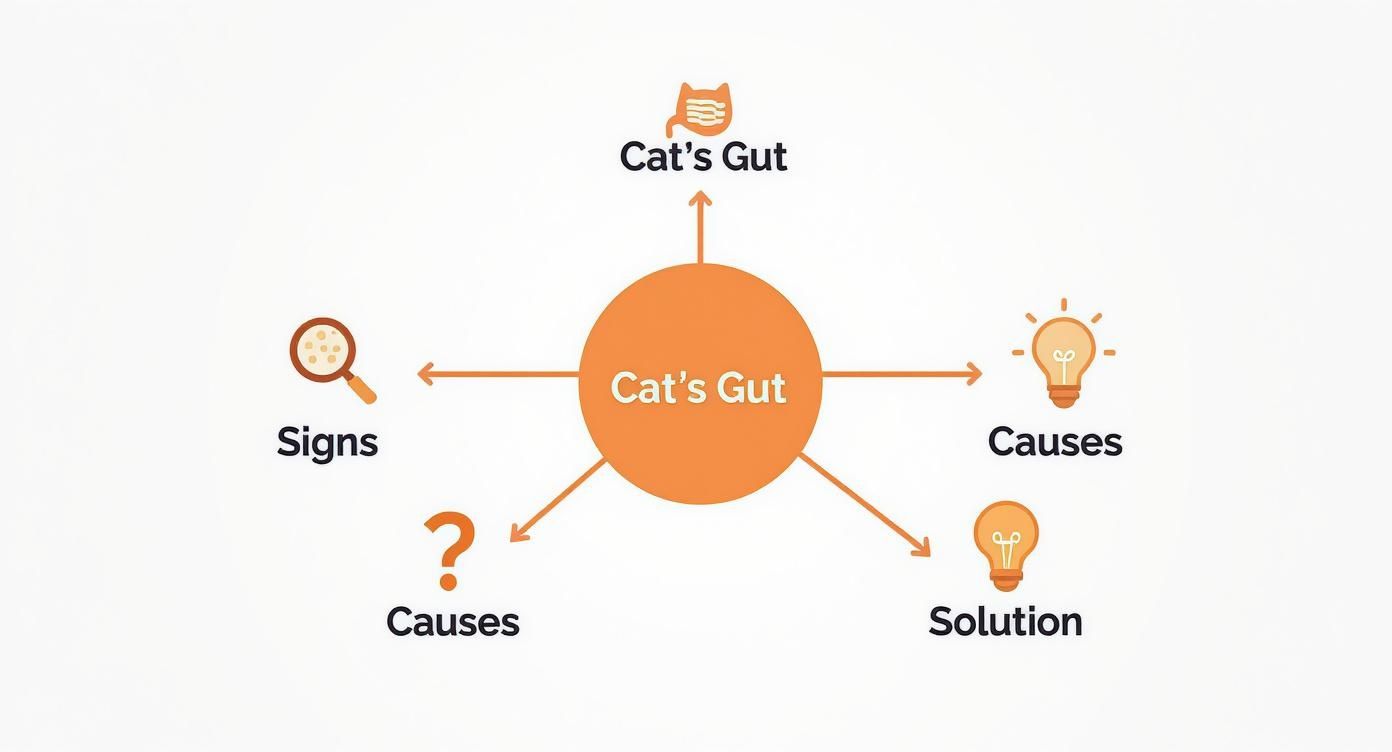
As you can see, what goes into your cat directly impacts how they feel. Making smarter choices at the ingredient level is where real change begins.
Ingredients to Embrace for a Happy Tummy
When you turn over a bag of treats, you want to see ingredients that are simple, clean, and easy for a cat’s system to process. These are the components that work with their natural digestion, not against it.
A great place to start is with novel proteins. Food sensitivities in cats often pop up after they've been eating the same old proteins, like chicken or beef, for years. Introducing a protein source their body has never encountered before can completely sidestep that immune response.
Here’s what to look for:
- Novel Proteins: Think outside the box with proteins like duck, rabbit, or venison. Because your cat's system is unfamiliar with them, it's far less likely to have a negative reaction.
- Easily Digestible Fibers: Ingredients like pumpkin and sweet potato are your best friends here. They offer gentle, soluble fiber that helps firm up stool and nourishes the good bacteria already living in your cat's gut.
- Limited Ingredients: This is a classic case of "less is more." A short ingredient list means there are fewer things that could possibly cause a problem, making it much easier to figure out what agrees with your cat.
A truly gut-friendly treat doesn’t need a complicated recipe. Its strength lies in its simplicity—a clean formula that delivers nutrition without forcing a sensitive stomach to work overtime.
Some of the best formulas also include beneficial extras. Probiotics, for example, are fantastic for rebalancing the gut microbiome. You can even find specialized supplements like Purrlys® Dental Probiotics that support both digestive and oral health.
Ingredients to Avoid at All Costs
Knowing what to look for is only half the battle. You also need to know which ingredients are red flags. Unfortunately, many of the most popular cat treats on the shelves are loaded with fillers and junk that can spell disaster for a sensitive kitty.
These ingredients are often cheap, so they’re used to bulk up the product without adding any real nutritional value. Becoming a vigilant label-reader is your best defense.
Common Triggers to Watch For
- Vague or Unnamed Meats: If you see terms like "meat by-products" or "animal digest," put the bag down. You have no idea what kind of animal that is, which makes it impossible to avoid specific protein triggers.
- Heavy Grains: Many cats struggle to digest common fillers like corn, wheat, and soy. These can be a source of low-grade inflammation and digestive upset.
- Dairy Products: The classic image of a cat happily lapping up a bowl of milk is a myth. Most adult cats are lactose intolerant, and dairy is a fast track to gas and diarrhea.
- Artificial Additives: Look out for artificial colors (like Red 40), chemical preservatives (BHA, BHT), and synthetic flavors. They do nothing for your cat’s health and can be major gut irritants.
To make it even clearer, let’s look at a side-by-side comparison of the good guys versus the bad guys when it comes to ingredients.
Good vs Risky Ingredients for Sensitive Cats
This table quickly shows you which ingredients are friends to a sensitive gut and which are foes.
| Ingredient Category | Embrace These (Good for Digestion) | Avoid These (Potential Triggers) |
|---|---|---|
| Protein Sources | Duck, rabbit, lamb, venison, single-source fish like salmon or cod. | "Meat by-products," "animal digest," common allergens like beef and chicken. |
| Carbohydrates & Fiber | Pumpkin, sweet potato, peas, lentils. | Corn, wheat gluten, soy, white rice. |
| Additives & Preservatives | Natural preservatives like mixed tocopherols (Vitamin E), rosemary extract. | BHA, BHT, ethoxyquin, artificial colors (e.g., Yellow 5), artificial flavors. |
| Fats & Oils | Named animal fats (e.g., salmon oil, chicken fat), flaxseed oil. | Unnamed "animal fat," vegetable oil, lard. |
| Other Ingredients | Probiotics, prebiotics (like chicory root), antioxidants. | Dairy products (milk, cheese), added sugars (corn syrup, sucrose). |
Once you have this knowledge, you're no longer just guessing in the pet food aisle. You become an empowered advocate for your cat. You can confidently scan any label and know almost instantly if it's going to help your cat feel good or risk another night of tummy troubles. That simple skill makes all the difference.
How to Read Cat Treat Labels Like an Expert
Walking down the cat food aisle is overwhelming. Every package seems to scream about how healthy, natural, and delicious its contents are. But here's a little secret from those of us who live and breathe pet nutrition: the real story is never on the front of the bag.
The front is just marketing—a flashy movie poster designed to catch your eye with pretty pictures and buzzwords. The real script is on the back, tucked away in the ingredient list and the guaranteed analysis. Learning to read that fine print is the most important skill you can have when looking for treats that won't upset your cat's stomach.
Decoding the Ingredient List
This is your most powerful tool, and it operates on one simple, unshakeable rule: ingredients are listed by weight, from most to least. That means whatever you see listed first, second, and third makes up the majority of that treat.
For a cat with a sensitive system, you want to see a specific, named animal protein right at the top of that list.
- What to look for: Things like "Deboned duck," "rabbit," or "salmon." These are clear, high-quality, and easy to identify.
- What to watch out for: Vague, mystery-meat terms like "meat by-products" or "poultry meal." These are generic, low-quality fillers that could be sourced from anywhere, making it impossible to know if you're feeding your cat a trigger ingredient.
Also, keep an eye out for a clever trick called ingredient splitting. A manufacturer might use a ton of corn, but instead of listing "corn" as a top ingredient, they'll break it up into "ground corn," "corn gluten meal," and "corn flour." This pushes each one further down the list, hiding how much filler is really in there. If you see multiple versions of the same grain, it's a huge red flag.
When you're trying to figure out what's what, it helps to get a broader perspective on understanding preservatives in different products, as many of the same principles apply.
Making Sense of the Guaranteed Analysis
Right next to the ingredients, you'll spot a small box called the "Guaranteed Analysis." This gives you the bare-bones nutritional stats—the minimums and maximums for protein, fat, fiber, and moisture.
Don't be put off by the word "crude." It doesn't mean the nutrient is bad or low-quality. It's just a scientific term for the lab method used to measure the nutrient content.
Here’s a quick rundown of what to look for:
- Crude Protein (Min): As carnivores, cats thrive on protein. This number should be nice and high, showing that the treat is packed with the good stuff they need.
- Crude Fat (Min): Fat is a great source of energy, but too much of a good thing can be rough on a sensitive tummy. Look for a moderate fat percentage.
- Crude Fiber (Max): A little fiber is good for digestion, but a high percentage often means the treat is loaded with cheap, plant-based fillers instead of quality meat.
- Moisture (Max): This simply tells you how much water is in the treat. Crunchy, kibble-style treats will have low moisture (around 10%), while soft treats will naturally be higher.
When you put these two pieces of the puzzle together—the ingredient list and the guaranteed analysis—you get a full picture of what you're actually buying. You can cut right through the marketing hype and make a choice that truly supports your cat's health.
For a closer look at common troublemakers, check out our guide on cat food ingredients to avoid. With this knowledge, you'll be able to pick out the perfect treat with confidence.
You've done all the hard work. You've researched the ingredients, scrutinized the labels, and finally picked out a treat that looks perfect for your cat. But here’s a crucial detail that’s easy to miss: even the best, most gut-friendly treat can backfire if you introduce it too quickly.
A cat’s digestive system is a finely tuned machine that thrives on routine. Any sudden change—even a good one—can throw a wrench in the works and cause the exact tummy troubles you’re trying to prevent.
Think of it like starting a new workout program. You wouldn’t jump from the couch straight into a marathon. You’d start slow, maybe with a light jog, and see how your body responds before ramping up. The same "start low and go slow" approach is the golden rule for introducing new treats to a cat with a sensitive system. This careful method is your best bet for making the transition a smooth and happy one.
The Step-by-Step Introduction Playbook
Having a clear plan takes all the guesswork out of the process. This slow-and-steady method gives your cat's digestive system time to adapt and lets you spot any potential issues before they become real problems. Rushing things now could undo all your careful research.
Here’s how to get it right:
- Start with a Single, Tiny Piece: On the first day, offer just one tiny piece of the new treat. If you can break a normal-sized treat in half, even better. And that's it for the day.
- The 48-Hour Watch: Now it's time to play detective. For the next 24 to 48 hours, don't give any other new foods or treats. Just observe. Keep an eye on your cat's energy, behavior, and—most importantly—what’s happening in the litter box.
- Look for Green Lights: If two days go by and everything is normal (no vomiting, diarrhea, or unusual gassiness), you’ve got the green light to proceed. The next day, you can try offering one or two small pieces.
- Gradually Increase: Continue this pattern for about a week, slowly working your way up to the recommended serving size. If you notice any hint of an upset stomach at any point, stop immediately. Let their system rest for a few days before you try again with an even smaller amount or a different treat altogether.
Patience here is your secret weapon against triggering an accidental flare-up.
Mastering Portion Control
Once you’ve successfully added a new treat to the rotation, the next challenge is all about portion control. Treats are just that—a treat. They're a bonus, not a meal replacement. One of the most common mistakes we make as pet parents is showing our love with too many goodies, which can easily throw a cat's digestion off-kilter and lead to weight gain.
The 10% rule is the golden standard in feline nutrition. Treats should make up no more than 10% of your cat’s total daily calories. The other 90% needs to come from their complete and balanced meals.
So, if your cat's daily diet is around 250 calories, their treats should total no more than 25 calories for the whole day. Depending on the treat, that might only be a few small pieces. Always check the calorie count on the package and dole them out accordingly.
Keeping treats special and limited is fundamental to your cat's long-term digestive health. This mindful approach is a growing trend; the U.S. pet snacks and treats market was valued at USD 40.52 billion in 2024, with formulas for sensitive pets fueling much of that growth. You can see more about the trends in the pet treats market and how the demand for healthier options is changing things.
When to Partner with Your Veterinarian
Finding the right treats can make a world of difference for your cat’s comfort and digestion. But it’s crucial to know where the line is between a simple dietary tweak and a genuine medical issue. Think of yourself as the first responder—your role is to provide comfort and recognize when it's time to call in the professionals.
While you can often manage a mild food intolerance at home, some symptoms are too serious to ignore. A vet can run tests to rule out underlying conditions that often masquerade as a sensitive stomach, like Inflammatory Bowel Disease (IBD), pancreatitis, or severe food allergies. These require a specific diagnosis and a treatment plan that goes far beyond just switching treats.
Red Flags That Require a Vet Visit
An occasional upset tummy isn't usually cause for alarm. However, if you spot any of the following persistent or severe signs, it’s time to schedule a vet appointment right away. These are your cat’s way of telling you that home remedies just aren't going to cut it.
- Chronic Vomiting or Diarrhea: If it lasts for more than a day or two or keeps coming back, it’s a clear signal something is wrong.
- Sudden or Significant Weight Loss: This is almost always a serious sign in cats. It means their body isn't absorbing nutrients correctly or there's a bigger problem at play.
- Lethargy or Extreme Hiding: A cat who is unusually tired, withdrawn, or hiding more than usual is often in pain or feeling sick. Don't just brush it off as a mood swing.
- Complete Loss of Appetite: If your cat turns their nose up at food for more than 24 hours, it's a medical concern that needs immediate attention.
- Blood in Stool or Vomit: Any sign of blood is an automatic red flag. A professional evaluation is non-negotiable.
Acting quickly on these symptoms can have a huge impact on your cat's long-term health and well-being.
Preparing for Your Vet Appointment
To get the most out of your vet visit, a little prep work goes a long way. The more detailed information you can share, the easier it will be for your vet to connect the dots and figure out what’s going on.
Being a proactive partner in your cat's healthcare means bringing clear observations to your vet. You know your cat's daily habits better than anyone, making your insights invaluable for an accurate diagnosis.
Before you go, jot down some notes about the symptoms, how often they occur, and any patterns you've noticed. This shift toward proactive pet parenting is part of a larger movement. Consumer data reveals that 85% of pet owners globally believe nutrition is as vital for pets as it is for humans. On top of that, 77% of U.S. pet owners are willing to spend more on healthier, science-backed options. You can discover more insights about pet wellness trends to see how this focus is shaping modern pet care.
During the appointment, your vet might also bring up supportive therapies. For instance, this could be a great time to learn about the best probiotics for cats and how they can help restore a healthy gut balance. By working together, you and your vet can create a comprehensive care plan that's perfectly suited to your cat's needs.
A Few Common Questions
When you're trying to figure out what's best for a cat with a tricky tummy, a lot of questions pop up. It's completely normal to want the best for your furry family member. Let's walk through some of the most common things pet parents ask.
Can My Cat Have a Little Bit of My Food as a Treat?
It’s tempting, but it’s best to avoid this. A cat's digestive system is built for a specific carnivorous diet, and many human foods can throw it completely out of whack. Things like onions, garlic, and chocolate are even toxic to them.
Sure, a tiny morsel of plain, unseasoned cooked chicken or turkey might be okay once in a blue moon, but you're always better off sticking to treats made just for cats. That way, you know the ingredients are safe and designed for their unique needs. When in doubt, a quick call to your vet is always the smartest move before sharing your plate.
How Quickly Will I Know if a New Treat Is a Problem?
You’ll usually see signs of trouble within 24 to 48 hours of introducing a new treat. Your cat's body is pretty quick to tell you when something isn't right, so just keep a close eye on them.
Here’s what to look out for:
- Tummy Troubles: This is the most obvious one. Think vomiting, diarrhea, or even just noticeably softer poop in the litter box.
- Extra Gassiness: If your cat seems more gassy than usual, it's a classic sign their digestion is off.
- Behavioral Shifts: Is your cat suddenly lethargic, hiding, or losing interest in food? That can be a sign of discomfort.
- Itchy Skin: Sometimes, food sensitivities show up on the skin. Be on the lookout for new scratching, excessive licking, or little bald patches.
If you spot any of these signs, stop giving the new treat right away. This gives your cat's system a chance to calm down and reset.
When your cat has a sensitive stomach, simplicity is your secret weapon. If they have a bad reaction to a new treat, you know one of the ingredients is to blame. By choosing treats with very few ingredients, it’s so much easier to figure out what the problem-causer is.
Does "Grain-Free" Automatically Mean It's Good for a Sensitive Stomach?
Not always. "Grain-free" has become a huge marketing term, but it's not a magic bullet for every cat with digestive issues. It's true that some cats don't do well with heavy grains like corn or wheat, but many others have no problem at all with small amounts of high-quality, gentle grains.
What really matters is a simple, limited ingredient formula that steers clear of common protein allergens and artificial junk. A treat with a bit of a digestible carbohydrate like pumpkin, for instance, could be much kinder to your cat's system than a grain-free one packed with weird fillers or a protein they can't handle. It's better to focus on the overall quality and simplicity of the ingredients rather than getting hung up on a single marketing claim.
At JoyFull, we don't think finding a gentle, healthy snack for your cat should be a stressful experience. Our recipes are built on clean ingredients and top-notch proteins, all carefully reviewed to support your pet's health from the inside out. See how we're committed to better pet nutrition at https://joyfullpet.com.
0 comments