

Best Dog Treats for Sensitive Stomachs Gentle Gut-Friendly Picks
When you're dealing with a sensitive stomach, the best dog treats are always the ones with a short, simple list of high-quality ingredients. Think easily digestible proteins like fish or duck. The goal is to find formulas that steer clear of common triggers—like artificial additives, corn, wheat, and soy—to make sure treat time is a source of joy, not discomfort.
Why Finding the Right Treat Matters for Your Dog
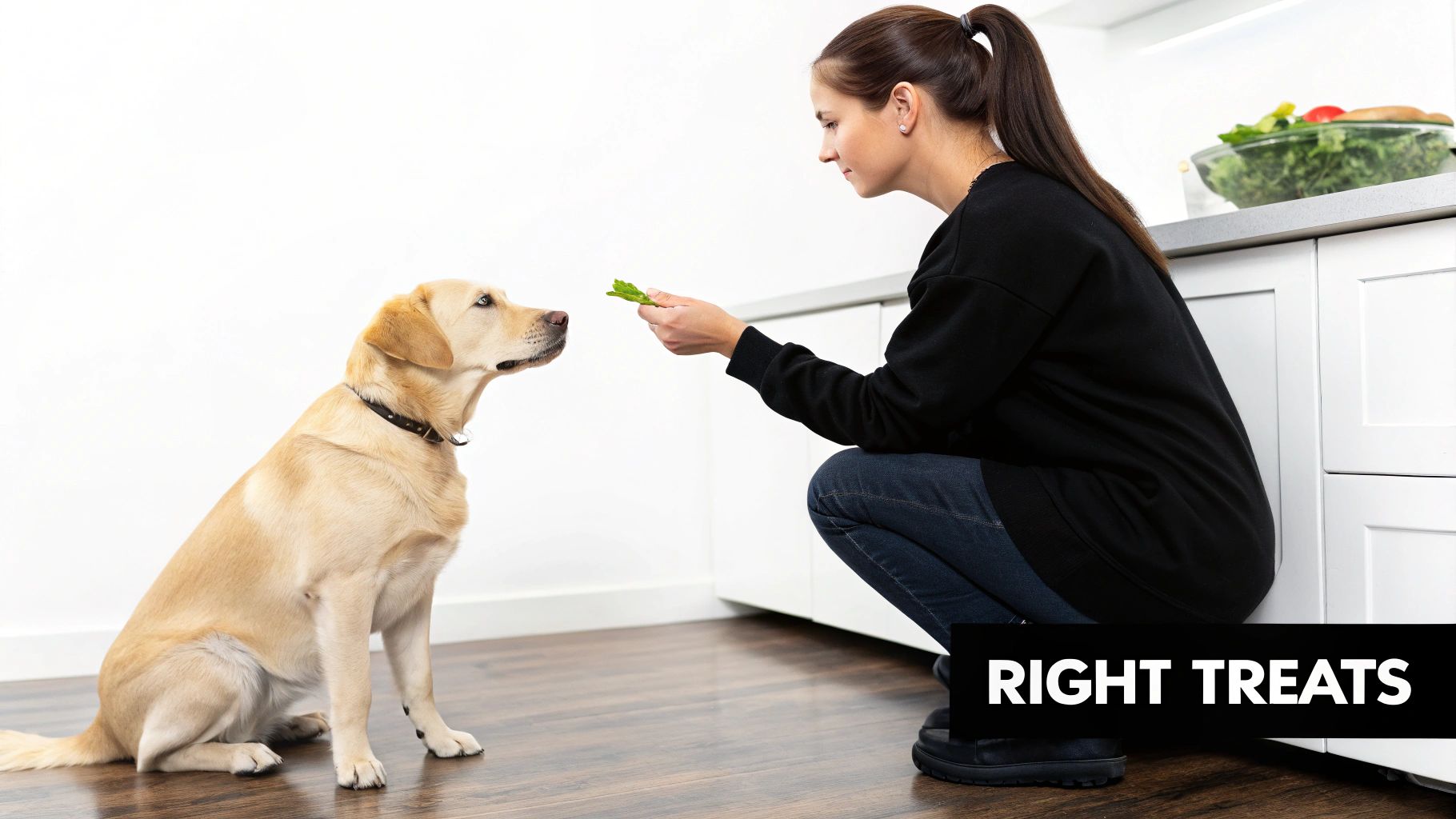
If you're reading this, you've probably had that moment of worry. You give your pup a snack, only to see them deal with an upset tummy later. It's a stressful feeling, but it's an incredibly common—and solvable—problem. This guide is all about turning that concern into confidence.
I like to think of a dog's digestive system as a finely tuned engine. It needs clean fuel to run smoothly. The wrong ingredients can gum up the works, causing everything from mild gas to full-blown digestive distress. But the right ingredients? They can actually support good gut health, making treats a tool for wellness, not just a reward.
The Impact of Daily Treating
Let's be honest, treats aren't just an occasional thing. They're a huge part of our dogs' daily routine and a cornerstone of the bond we share with them. With the US pet treats market expected to hit USD 10.5 billion by 2025 and dog treats alone accounting for a 54.7% market share, their impact is clear.
Since most of us give our dogs two or three treats a day, those little snacks add up fast. That's why it's so important to find gut-friendly options that support their digestive health instead of disrupting it. You can see more on this trend by checking out the full market analysis.
This guide will walk you through it all, from recognizing the signs of a sensitive stomach to reading an ingredient label like a pro. Once you know what to look for—and what to avoid—you can make choices that bring the fun back to treat time. And remember, a dog’s well-being goes beyond food. Little things like selecting the right dog bowls can also contribute to their overall health and comfort.
Key Takeaway: Choosing the best dog treats for sensitive stomachs isn't about depriving your dog. It's about making smarter, more intentional choices. A little know-how about ingredients can make a huge difference in your dog's daily comfort and long-term health.
2. Recognizing the Signs of a Sensitive Stomach

The first step to helping your dog feel better is learning to read their signals. Think of yourself as a detective investigating your dog’s digestive health—they provide the clues, and it's your job to piece them together to solve the puzzle.
Some signs of an upset stomach are impossible to miss. They’re the loud, obvious symptoms that have you searching online for answers at midnight. But many other clues are much quieter and can easily be written off as just "a weird dog thing."
Learning to spot both is key. It helps you tell the difference between a simple, one-off tummy ache and a persistent sensitivity that requires a real change in their diet.
The Clear Red Flags
These are the most common signs that point directly to a sensitive stomach. If you see these popping up regularly, especially after meals or treat time, you have a strong suspect: something in their food isn't sitting right.
- Loose Stools or Diarrhea: This is usually the first and most obvious sign. Consistently soft or runny poop means their digestive tract is inflamed and unhappy.
- Excessive Gas: Sure, all dogs pass gas. But if your dog is suddenly clearing the room more often or the odor is particularly foul, it’s a good sign their gut is in turmoil.
- Vomiting or Regurgitation: Throwing up shortly after eating a new food or treat is a direct message from their stomach: "I don't like this!"
These symptoms are your dog's most direct way of telling you something is wrong. It's a clear signal to start taking a closer look at what they're eating, especially those rich, high-value treats.
The Subtle Clues You Might Be Missing
Beyond the obvious, dogs have much quieter ways of showing their discomfort. These are the signs we often miss because they seem unrelated or just part of our dog's personality.
Think of these as the whispers of an upset stomach. They aren’t shouting for attention, but they're critical pieces of the puzzle.
Here are a few of the more subtle clues to watch for:
- Loud Stomach Gurgling (Borborygmi): We're not talking about a gentle rumble. Frequent, loud, watery noises from their abdomen often point to excessive gas and digestive upset.
- Loss of Appetite: Is your usually food-crazed dog suddenly turning their nose up at their dinner? A sudden drop in appetite can be a sign of nausea or abdominal pain.
- Frantic Grass Eating: A little nibble on grass is normal for many dogs. But if they're eating it frantically, like they need it, they might be trying to soothe an upset stomach or even induce vomiting.
- Scooting or Licking Their Rear: While this is often linked to anal gland issues, those very same issues can be caused or worsened by the chronic soft stools that come from a poor diet.
Spotting the signs of a sensitive stomach involves looking at the whole picture—from the obvious messes to the subtle shifts in behavior. The table below can help you quickly identify what to watch for.
Common vs. Subtle Signs of a Sensitive Stomach
| Symptom Category | Specific Signs to Watch For | What It Might Indicate |
|---|---|---|
| Gastrointestinal | Diarrhea, loose stools, vomiting, excessive gas, loud stomach gurgling. | Direct irritation or inflammation in the stomach or intestines. |
| Behavioral | Sudden pickiness, loss of appetite, frantic grass eating, lethargy. | Nausea, discomfort, or an instinctual attempt to self-soothe. |
| Physical/Other | Scooting, excessive licking of the rear end, dull coat, itchy skin. | Poor nutrient absorption, or secondary issues like allergies or anal gland irritation. |
By keeping an eye out for both the loud and the quiet clues, you get a much clearer understanding of your dog’s digestive health and can take action sooner.
Become a Digestive Detective: Start a simple "digestive diary." Use a notebook or a notes app on your phone to log the treats you give your dog each day and any symptoms you notice.
For example, you might write, "Monday PM: 1 new chicken jerky treat. Tuesday AM: Very soft stool, gurgling stomach before breakfast." Over just a week or two, you'll start to see patterns emerge, making it so much easier to pinpoint the exact ingredient causing the trouble.
This log is also an incredibly valuable tool to share with your veterinarian. It gives them concrete information to help diagnose the problem and recommend the right plan, empowering you to make the best choices for your dog's health.
How to Read an Ingredient Label Like a Pro
Walking down the pet store aisle can be a little overwhelming. You're faced with dozens of bags, all claiming to be the absolute best for your dog. So, how do you cut through the marketing noise? The secret is on the back of the bag, in that small block of text: the ingredient label.
Learning to scan and understand that label is probably the most powerful skill you can have when shopping for your sensitive dog.
I like to think of it as a quick "red light, green light" game. The goal is to spot the good stuff (green lights) and immediately recognize the potential troublemakers (red lights). This simple method turns a confusing chore into a quick, confident decision.
Red Light Ingredients to Avoid
When you're dealing with a sensitive stomach, some ingredients are just more likely to cause trouble. These are your "red lights"—the things that should make you stop and reconsider. They often add zero nutritional value and can work against your goal of a calm, happy tummy.
Here are the top offenders I always watch out for:
- Artificial Colors and Flavors: If you see ingredients like Red 40, Yellow 5, or a generic "bacon flavor," put the bag down. These are just for show, designed to appeal to us humans, and can be a source of needless chemical irritation for a sensitive dog.
- Chemical Preservatives: Keep an eye out for BHA, BHT, and ethoxyquin. These synthetic preservatives give products a longer shelf life, but they've been linked to health concerns. It's much better to find treats preserved naturally with mixed tocopherols, which is just a form of vitamin E.
- Common Fillers: Corn, wheat, and soy are often used as cheap binders and fillers in treats. While they aren't bad for every single dog, they are very common allergens and can be tough for a sensitive digestive system to handle.
- Meat By-Products or Meals: Vague terms like "meat and bone meal" or "animal by-product" are major red flags. You have no way of knowing what's actually in there. You always want to see specific, named proteins like "duck" or "salmon" so you know exactly what your dog is eating.
Spotting any of these ingredients should give you pause. For a dog with a delicate system, a clean, simple label is always the safest bet.
Expert Tip: Ingredients are listed by weight, from heaviest to lightest. The first 3 to 5 ingredients make up the bulk of the treat, so pay the most attention to what's at the top of the list.
Green Light Ingredients to Look For
Now for the good stuff. "Green light" ingredients don't just avoid causing problems; they can actively support your dog's digestive health. They're typically easy to process, full of nutrients, and can even help soothe the gut. Seeing these on a label is a fantastic sign.
These are the all-stars you want to see front and center:
- Limited, Recognizable Ingredients: Honestly, the shorter the ingredient list, the better. When you can actually recognize and pronounce everything on the label—think "duck, sweet potato, ginger"—it tells you the formula is simple and less likely to hide a trigger.
- Single-Source or Novel Proteins: Instead of a mystery mix of "chicken and beef flavor," look for a single, high-quality protein. Things like lamb, venison, or fish are often much easier on the stomach than the more common proteins that dogs are exposed to constantly.
- Digestible Carbohydrates: Gentle carbs give your dog energy without overloading their system. Pumpkin and sweet potato are my go-to examples; they're packed with fiber that helps regulate digestion and firm up stools. This is a big reason why you see ingredients like chickpeas and lentils so often in grain-free foods. You can learn more about trends in pet treat ingredients if you're curious about what's driving these changes.
- Soothing Additions: Some ingredients provide a little extra digestive support. Ginger and fennel, for example, are known to help with nausea and gas, making them a wonderful addition to treats for a sensitive pup.
Finding treats that are built around these green light ingredients is the key to making snack time a happy, worry-free experience. If you want to get even more confident, check out our guide on how to read dog food labels for a deeper dive. By focusing on simple, whole-food ingredients, you can choose treats that truly nourish your dog and keep their sensitive stomach feeling great.
Choosing the Best Protein and Treat Type
When you're on the hunt for the best dog treats for sensitive stomachs, the protein source is usually the star of the show. But sometimes, it's the villain. Just as important, though, is the type of treat you choose. The format, texture, and how it’s made all have a huge impact on how well your dog’s system will handle a new snack.
Think about it this way: if a person has digestive issues, a simple grilled chicken breast is far easier on their system than a complex, heavily seasoned casserole. The same logic applies to our dogs. A single-ingredient jerky is a completely different ballgame than a multi-ingredient baked biscuit, even if the main protein is the same.
Why Novel Proteins Are a Game Changer
If your dog has been eating the same chicken or beef-based food for years, their immune system can sometimes get a little...overzealous. It can start to flag those common proteins as a problem, which leads to inflammation and all the classic signs of an upset stomach.
This is exactly where novel proteins come in. A "novel" protein is just one your dog has never, or very rarely, eaten before. Introducing something new can give their digestive system a much-needed break from the usual suspects.
- Duck: A fantastic lean option that’s easy to digest and rich in iron.
- Venison: Naturally lean and less likely to trigger an inflammatory response.
- Fish (like Salmon or Cod): Packed with omega-3 fatty acids, which are superstars at helping to reduce gut inflammation.
- Lamb: Another great alternative for dogs who don't do well with more common meats.
By switching to a treat built around one of these proteins, you're removing the potential trigger. Often, that alone is enough to resolve the digestive drama. Finding the right protein is a foundational step, and you can learn more about the best protein source for dogs in our detailed guide.
Matching the Treat Format to Your Dog’s Needs
Once you’ve landed on a promising protein, the next step is picking the right treat format. Different types come with their own unique benefits, especially for a dog with a delicate gut.
Single-Ingredient Freeze-Dried or Jerky Treats
For sensitive dogs, these are often the gold standard. Why? Because they contain just one thing—like duck breast or salmon fillet. There are no hidden fillers, weird binders, or artificial additives to worry about. The freeze-drying process is also incredibly gentle, preserving nutrients without needing a bunch of chemical preservatives.
This minimalist approach is really catching on with pet parents. Freeze-dried and jerky treats are seeing a huge surge in popularity, growing at a rapid 8.8% compound annual growth rate. People value them for their clean labels and how well they hold onto nutrients, making them a perfect fit for dogs with digestive issues.
Soft and Chewy Treats
These are a lifesaver for senior dogs or pups with dental problems who might struggle with harder snacks. The trick is to look for formulas that use natural, gut-friendly binders like pumpkin or sweet potato instead of things like corn or wheat flour. Their soft texture also makes them super easy to break into smaller pieces for training or just managing portions.
Crunchy Baked Treats
While some baked biscuits are loaded with fillers, a high-quality version can be a great option. The key is to find one with a limited ingredient list. The crunch is satisfying for dogs and can even help gently scrape away plaque from their teeth, giving a little boost to their dental health.
Subscription Services for Variety
Beyond buying individual bags, many owners are trying out services like dog subscription boxes that deliver different goodies right to their door. It can be a great way to discover new brands and treat types, but you have to be diligent. It's crucial to vet each product's ingredient list to make sure it's a good fit for your sensitive pup.
At the end of the day, choosing the right treat is a two-part strategy: pick a gentle, novel protein and match it with a simple, minimally processed format. This combination gives you the best shot at finding a delicious reward that keeps your dog’s tail wagging and their tummy happy.
Safely Introducing New Treats to Your Dog
So, you’ve done the hard work. You’ve sifted through countless options and found the perfect treat—one with clean ingredients and a gentle, novel protein. But the final step is just as critical as the selection. How you introduce that new snack can mean the difference between a happy pup and an unfortunate setback.
Think of your dog's gut as a finely tuned ecosystem. Suddenly dropping in a full-sized, unfamiliar treat is like a cannonball into a calm pond—it makes waves. A slow, gentle introduction, on the other hand, gives that internal environment time to adjust, preventing a system shock. It's a process that calls for a little patience, but it takes all the guesswork out of the equation.
This little flowchart breaks down the whole process, from picking the right protein and treat style to that all-important first bite.
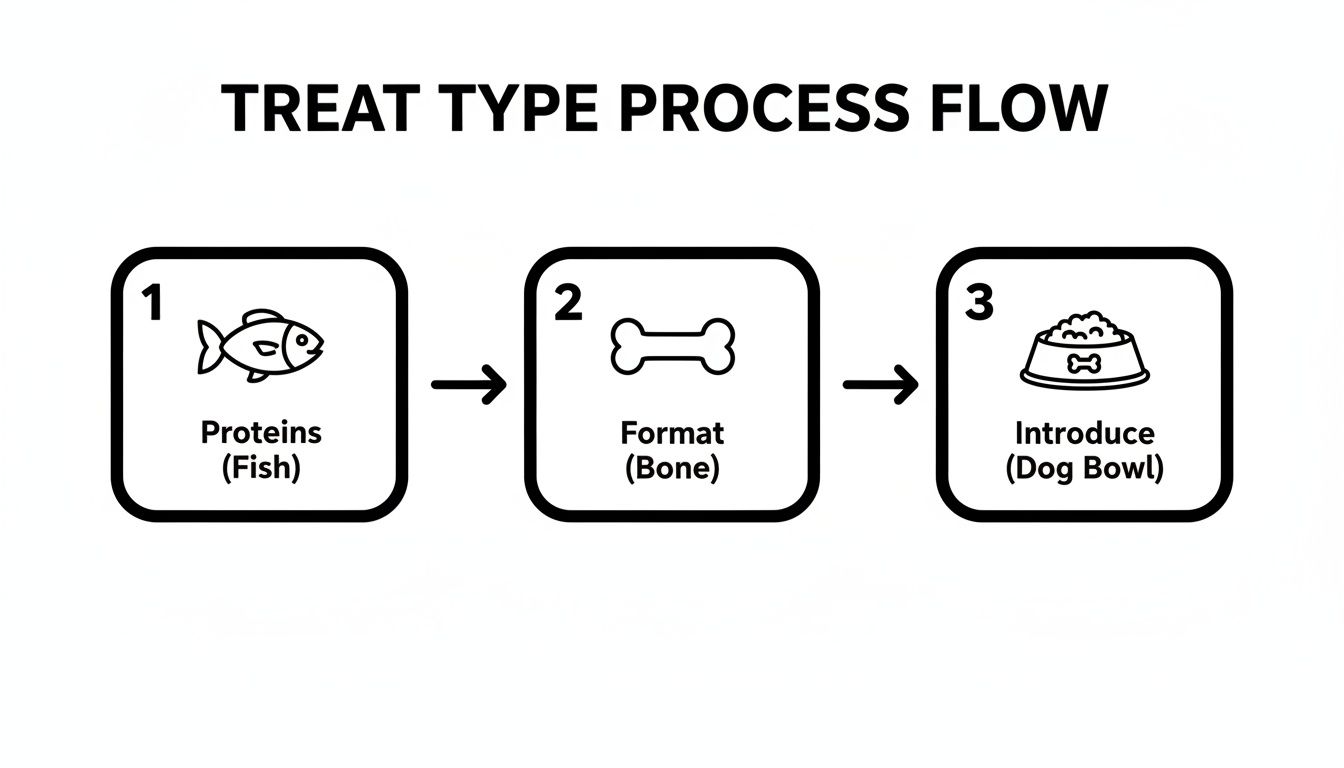
It’s a great reminder that success comes from a deliberate, step-by-step approach, not just the product itself.
The One-at-a-Time Rule
If you remember one thing, make it this: never introduce more than one new food or treat at a time. It’s the golden rule. If you give your dog a new kibble and a new jerky on the same day and he gets an upset stomach, you have no way of knowing which one was the culprit.
By sticking to one new item, you’re essentially running a controlled experiment. It’s the only way to know for sure what agrees with your dog’s unique system. This is becoming a bigger focus for pet food makers, too. By 2025, hypoallergenic proteins are expected to capture a 24% slice of the market, a clear sign that brands are shifting toward simpler formulas that make it easier to pinpoint sensitivities.
Your Slow Introduction Schedule
Ready to begin the feeding trial? The secret is to go slow. This is very similar to transitioning to a new food, just on a much smaller scale. (If you need a refresher on that, our guide on how to transition your dog to new food is a great resource).
Here’s a simple, proven schedule to follow:
- Day 1: Start with a tiny crumb, about the size of your pinky nail. It’s just a little taste test for their digestive system.
- Day 2: If everything looks good, offer a slightly bigger piece—maybe a quarter of a single treat.
- Day 3: Double yesterday's amount, moving up to half of a full-sized treat.
- Day 4 & Beyond: If you've seen zero negative signs after 72 hours, you can feel confident giving a whole treat.
Throughout this entire process, your most important job is to be a keen observer.
Key Takeaway: Keep a close watch on your dog for at least 48-72 hours after that first tiny piece. A reaction isn't always instant; sometimes it takes a day or two for an upset stomach or itchy skin to show up.
What to Watch For
During the trial period, be on the lookout for any of the symptoms we covered earlier. It’s about noticing both the obvious red flags and the more subtle signs of discomfort.
- Digestive Signs: Keep an eye out for any changes in stool consistency, more gas than usual, or any vomiting.
- Behavioral Signs: Has your dog suddenly become picky? Are they acting lethargic or frantically eating grass?
- Physical Signs: Look for new or increased scratching, hot spots, or other signs of skin irritation.
If you spot any of these signs, stop giving the new treat immediately and let your dog’s system reset. This careful, methodical approach not only protects your dog from unnecessary discomfort but also empowers you with clear answers. It truly makes you the expert on your dog's digestive health.
When You Should Talk to Your Veterinarian
Trying to find the right treats for a dog with a sensitive stomach can feel overwhelming, but you don't have to go it alone. Your veterinarian is your single most important ally in this process. While it’s helpful to manage mild issues at home, you need to know when it’s time to pick up the phone and call in a professional.
Think of it as a partnership. You're the expert on your dog’s day-to-day quirks and behaviors, but your vet is the expert on what's happening inside. A little gas after trying something new is one thing; some symptoms, however, are major red flags.
When to Seek Immediate Veterinary Care
Certain signs can point to something more serious than a simple food sensitivity—like an infection, pancreatitis, or a severe allergic reaction. Don't hesitate to call your vet immediately if you notice any of these issues:
- Persistent Vomiting or Diarrhea: One upset tummy isn't a crisis, but if it happens repeatedly over 24 hours, your dog is at risk for dehydration and needs professional care.
- Lethargy or Weakness: If your normally playful pup is suddenly weak, exhausted, or has zero interest in their favorite toys, it's a clear signal they don't feel well.
- Blood in Stool or Vomit: This is never normal. Any sign of blood warrants an immediate trip to the clinic.
- Signs of Abdominal Pain: Watch for a hunched-over stance, a bloated or hard-feeling belly, or yelping when you touch their stomach. These are all signs of serious discomfort.
Trying to "wait out" these symptoms can delay critical treatment, so it's always better to be safe and get a proper diagnosis.
Preparing for Your Vet Appointment
When you schedule that visit, a little prep work goes a long way. This is where your 'digestive diary' becomes incredibly useful, giving your vet a clear, factual history to work with. Bring your notes and be ready to walk them through everything you've observed.
This level of detailed care is becoming the new normal. In fact, 67% of millennial pet owners view their dogs as part of the family and are willing to spend 40-60% more on clean, healthy food options. It’s a commitment vets see every day. You can discover more insights about premium pet market trends and see how this dedication is shaping the industry.
Key Takeaway: Your vet isn't just for emergencies; they're your partner in keeping your dog healthy for the long haul. By working together, you can create a complete wellness plan that covers everything from diet to diagnostics, ensuring your best friend stays happy and thriving.
Got Questions About Treats for a Sensitive Stomach? We Have Answers.
Even when you’ve done your research, picking out the best dog treats for sensitive stomachs can feel like a bit of a guessing game. Let's clear up some of the most common questions that pop up for dog parents.
How Quickly Can a New Treat Upset My Dog's Stomach?
A reaction can show up surprisingly fast—sometimes within a few hours—or it might take a day or two to become obvious. You'll often see the first signs, like a gurgly tummy or loose stool, pop up within the first 24 to 48 hours.
This is precisely why taking it slow is non-negotiable. Whenever you introduce something new, you'll want to be a bit of a detective for at least 72 hours afterward, just to make sure the treat is a good fit for your dog.
Are Grain-Free Treats Always the Best Option?
Not always, and this is a big misconception. While a small number of dogs do have issues with grains, the real culprit behind most food sensitivities is actually the protein source—think common ingredients like chicken or beef.
In fact, many dogs with delicate digestive systems handle healthy, easily digestible grains like oatmeal and brown rice just fine. So while a grain-free treat made with sweet potato or pumpkin is a great choice, it's not a magic bullet. The real goal is to figure out your dog's specific trigger.
Can I Make My Own Treats for a Sensitive Stomach?
You absolutely can! Going the homemade route is a fantastic way to take back control, giving you 100% certainty about what’s going into your dog’s body. No more worrying about hidden fillers or preservatives.
Often, the simplest recipes work best. Think about combining a single, novel protein (like cooked, shredded duck), a bit of pureed pumpkin for fiber, and maybe some oat flour to hold it all together.
Just be sure to double-check that every single ingredient is safe for dogs. Things we use all the time, like xylitol, onions, and garlic, are toxic for them. It never hurts to run your recipe by your vet, either, just to get their professional opinion.
Are Dental Chews Safe for Dogs with Sensitive Digestion?
This one truly comes down to the specific product. A lot of the dental chews you see on supermarket shelves have ridiculously long ingredient lists packed with things that can easily upset a sensitive gut.
The good news is that many newer brands are creating dental chews with digestive health in mind, using simple, natural ingredients. Your best strategy is to read that ingredient panel like a hawk. When you find one that looks promising, introduce it slowly and carefully, just like any other treat, before making it a daily habit.
At Joyfull, we believe that a healthful life isn’t just for humans—our pets deserve it too. That's why every one of our formulas is created with clean ingredients, high-quality proteins, and undergoes rigorous review by our in-house veterinary advisor. Explore our thoughtfully crafted products at https://joyfullpet.com.