


That all-too-familiar, silent-but-deadly cloud that just cleared the room is a common puzzle for pet owners. The short answer for what causes flatulence in dogs is that it's almost always tied to what they eat, how they eat, or a potential underlying health problem. It's basically your dog's digestive system sending up a little flare to signal that something's off.
Understanding Why Your Dog Has Gas
You're finally relaxing on the couch, your best furry friend snoozing at your feet. Then it hits you—an unmistakable odor that has you looking straight at the likely culprit. While a little gas is totally normal for any mammal, when it becomes a frequent or exceptionally foul-smelling event, it’s natural to wonder what’s going on in your dog's gut.
Canine flatulence is just the medical term for excess gas hanging out in your dog's stomach or intestines. When that gas builds up, it has to go somewhere. The result? A burp or a toot. It might be a bit embarrassing (or, let's be honest, a little funny), but it’s just your dog's body doing what it needs to do to relieve digestive pressure.
The Big Three Causes of Dog Gas
To really get to the bottom of your dog's gassiness, it helps to look at the three main culprits. Pretty much every case of excessive gas can be traced back to one of these areas:
-
Dietary Causes: This is the number one offender, hands down. What your dog eats is what fuels the bacteria in their gut. Some ingredients are just tougher to digest, which leads to fermentation and, you guessed it, gas.
-
Behavioral Causes: It’s not just what they eat, but how fast they eat it. A dog that inhales its food in seconds is also swallowing a ton of air. This is a condition known as aerophagia, and all that air has to come out eventually.
-
Medical Causes: Sometimes, constant gas can be a red flag for a deeper health issue. It could point to anything from a food intolerance to intestinal parasites or even a gastrointestinal disease.
Gas is really just a byproduct of digestion. When food doesn't get broken down properly in the stomach and small intestine, it moves on to the colon. There, the gut bacteria have a field day, fermenting the undigested bits. This process releases gases, including hydrogen sulfide—the source of that infamous rotten-egg smell.
We'll dive into each of these causes throughout this guide. We’ll look at specific ingredients to watch out for, explore how your dog's breed and eating style play a part, and help you know when it's time to call the vet. The whole journey from kibble to energy—or gas—is a fascinating one. For a closer look at the timeline, you can learn more about how long dog digestion takes in our other article.
By understanding the "why" behind the whiff, you can make simple, effective changes to bring some fresh air back into your home.
What’s in the Bowl? How Your Dog’s Diet Fuels Flatulence
When you’re trying to get to the bottom of your dog’s gas, the first place to look is almost always their food bowl. I like to think of a dog's gut as a little fermentation factory. The ingredients you put in determine whether that factory runs smoothly or goes into overdrive, churning out a whole lot of stinky byproducts.
Here’s why: your dog’s gastrointestinal tract is home to trillions of bacteria. When food isn’t fully digested in the stomach and small intestine, it moves on down to the colon. That's where these bacteria get to work, fermenting the leftovers. Gas is a natural result of that process.
The problem is, certain ingredients are much tougher for a dog to break down, which essentially serves up an all-you-can-eat buffet for those gas-producing microbes.
This diagram shows the big picture of what causes gas in dogs, and it really puts diet front and center.
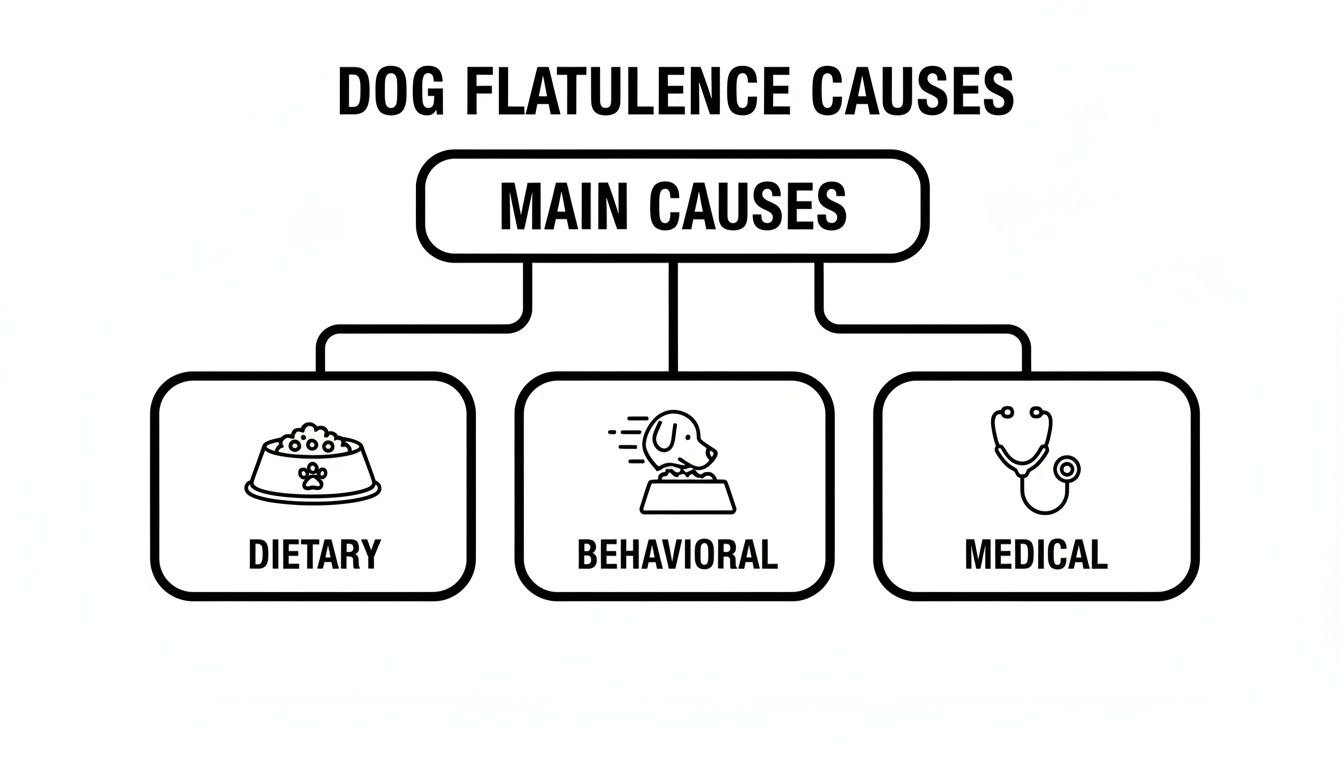
As you can see, while things like how they eat and underlying medical issues play a role, what's in their bowl is a huge piece of the puzzle—and often the easiest one to fix.
The Usual Suspects: Common Dietary Offenders
So, what exactly are these troublesome ingredients? They usually fall into a few key categories, and you’d be surprised how often they show up in commercial dog foods. Knowing what to watch for is your first step toward a less gassy home.
-
Hard-to-Digest Carbs and Fillers: Ingredients like soy, corn, peas, and beans are packed with complex carbohydrates and fermentable fibers. A dog's digestive system just isn't built to handle large amounts of these, so they arrive in the colon largely undigested, ready for fermentation.
-
Low-Quality Proteins: Not all protein is created equal. Highly processed or tough-to-digest protein sources can also lead to some seriously foul-smelling gas. When these proteins aren't properly absorbed, they putrefy in the gut. This process releases sulfur compounds, which are the source of that classic rotten-egg smell.
-
Dairy Products: Just like many humans, a lot of adult dogs are lactose intolerant. They don't produce enough of the enzyme lactase, which is needed to break down the sugar in milk. A little cheese or milk might seem like a nice treat, but it can quickly lead to gas, bloating, and diarrhea.
Common Dietary Culprits and Gut-Friendly Alternatives
Switching out just a few key ingredients in your dog's diet can make a world of difference. Here’s a quick look at some common gas-causing culprits and the much more digestible alternatives you should look for on the food label.
| Gas-Inducing Ingredient | Why It Causes Gas | Gut-Friendly Alternative |
|---|---|---|
| Corn, Soy, Wheat | These are classic fillers high in fermentable fiber and common allergens that are difficult for many dogs to digest properly. | Sweet Potatoes, Pumpkin, Brown Rice |
| Vague Meat Meals ("Meat Meal") | Low-quality, unspecified protein sources are harder for the gut to break down, leading to putrefaction and smelly gas. | Named Animal Proteins ("Deboned Chicken") |
| Dairy (Cheese, Milk) | Many dogs are lactose intolerant and lack the enzyme needed to break down the sugar (lactose) in milk products. | Dairy-Free Probiotic Treats (Yogurt-Free) |
| Legumes (Peas, Lentils) | While a source of protein, they are high in fiber and starches that fuel gas-producing bacteria in the colon. | Well-Cooked Animal Proteins, Easily Digestible Veggies |
Making the swap to ingredients that are easier on the gut means less work for the digestive system and fewer "leftovers" for those gas-producing bacteria to feast on.
Food Allergies and Intolerances: A Deeper Issue
Sometimes, the problem goes beyond a simple hard-to-digest ingredient. It could be a genuine food allergy or intolerance. There's a slight difference: a true allergy triggers an immune response (think itchy skin and hives), while an intolerance is a purely digestive issue.
Either way, both can cause major GI upset, including chronic flatulence.
Common culprits for dogs include proteins like beef, chicken, and dairy, as well as grains like wheat. If your dog’s gas is constant and comes with other signs like loose stools or relentless scratching, an underlying sensitivity might be the real problem. Pinpointing the trigger usually requires a strict elimination diet, which should always be done with your vet's guidance.
Becoming a Savvy Shopper at the Pet Store
This isn't about blaming certain brands. It's about empowering you to make the best choice for your dog. The trick is to learn to ignore the flashy marketing on the front of the bag and become an expert at reading the ingredient list on the back.
Look for foods that list a high-quality, named animal protein (like "deboned chicken" or "lamb meal") as the very first ingredient. Steer clear of foods that lead with vague terms like "meat and bone meal" or are loaded with fillers like corn, wheat gluten, and soy.
Making a switch to a formula with clean, highly digestible ingredients can completely transform your dog's gut health. To get more confident with this, check out our guide on how to read dog food labels.
By understanding how different foods work inside your dog’s personal "gut factory," you can make smarter choices that cut down on fermentation, boost digestion, and lead to a much, much fresher-smelling home.
The Impact of Behavior and Breed on Gas
It’s easy to blame the food bowl when a foul smell wafts through the room, but your dog's diet is only one piece of the puzzle. Often, the real reason behind your dog’s gas has less to do with what they eat and more to do with how they eat. Even their genetics can play a surprisingly big role.
Think about what happens when you gulp down a can of soda. You swallow a bunch of air along with the liquid, and that air has to go somewhere—usually out as a burp. The exact same thing happens to dogs at mealtime. The technical term for this is aerophagia, which is just a fancy way of saying "swallowing too much air."
When a dog inhales their dinner in seconds, they're not just swallowing kibble. They're also taking in a huge amount of air that gets trapped in their digestive system. Some of that air might come back up as a burp, but a lot of it continues its journey south, making a gassy exit later on.
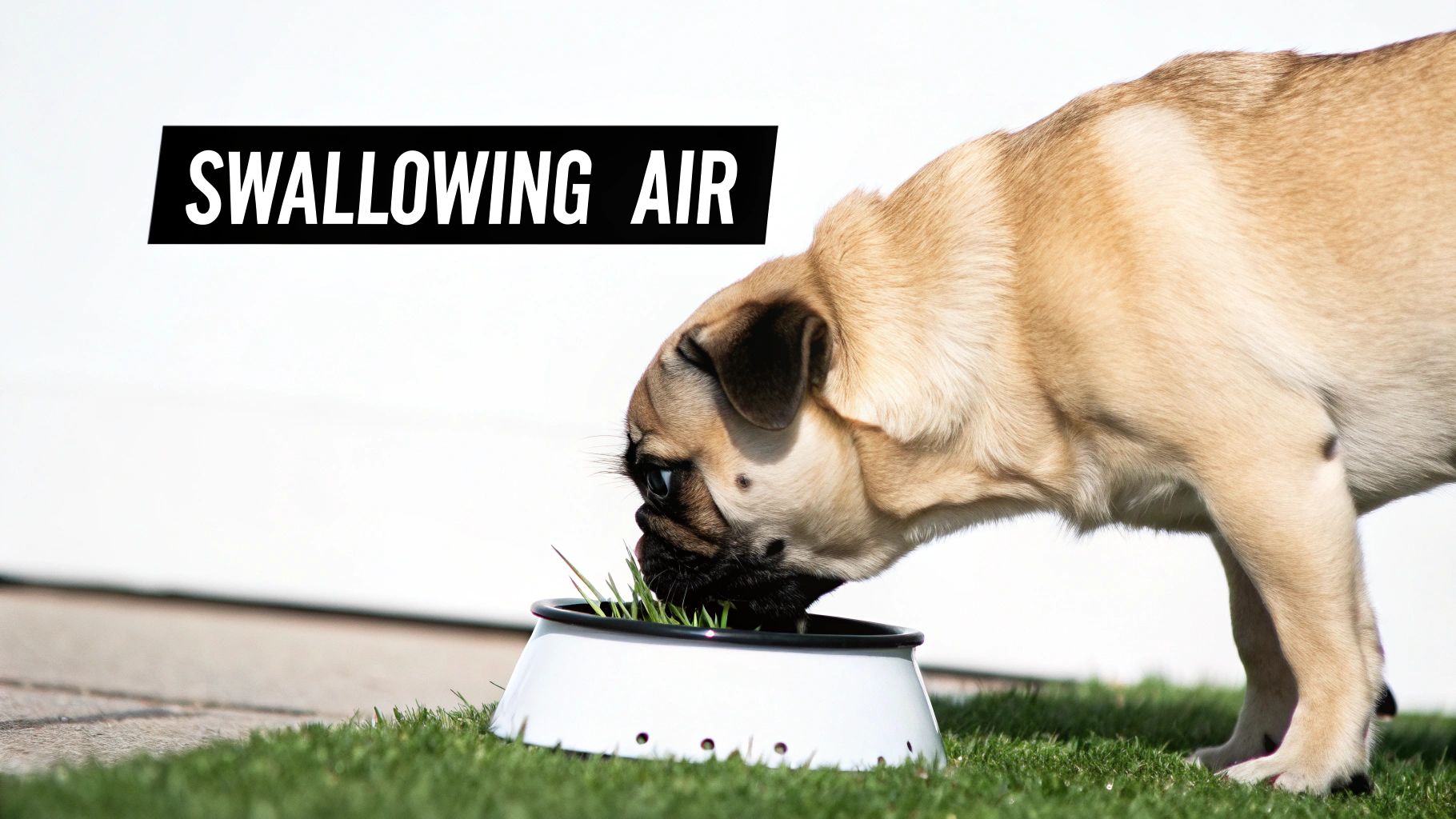
This frantic eating style is especially common if you have more than one dog. A little friendly competition can quickly turn dinner into a speed-eating contest. Anxiety or even just pure, unadulterated love for food can also cause a dog to eat way too fast.
How Breed Anatomy Influences Air Swallowing
Some dogs are just built to be gassy. For certain breeds, it's not their personality but their anatomy that makes them natural-born air gulpers. I'm talking about brachycephalic breeds—those adorable, flat-faced dogs like Pugs, French Bulldogs, and Boxers.
Their unique short snouts and compressed airways mean they have to work a lot harder just to get food into their mouths. In the process, they can't help but swallow a ton of air. It means that even on a perfectly digestible diet, these guys can still be exceptionally gassy. They are, in a sense, professional air-swallowers.
But it's not just the flat-faced crew. Breeds famous for their bottomless stomachs, like Labrador Retrievers, are also known for being gassy. Their tendency to wolf down food at lightning speed directly contributes to that air buildup in their gut.
Ever wonder why some dogs seem to turn your living room into a gas chamber more than others? Breed and eating habits are massive factors in canine flatulence. Take brachycephalic breeds like Boxers, French Bulldogs, Bulldogs, and Pugs—they're predisposed due to their flat faces, gulping more air while eating and drinking.
This is why two dogs eating the exact same food can have completely different levels of flatulence. One might be a slow, careful eater, while the other is a Pug who can't help but gulp air with every single bite.
The Sedentary Lifestyle and Sluggish Digestion
Another factor that often gets overlooked is exercise—or the lack of it. A lazy afternoon on the couch doesn't just affect your dog's waistline; it slows down their entire digestive system.
Regular physical activity is key for promoting good gastrointestinal motility, which is the natural movement that pushes food through the gut. When a dog is inactive, their digestion becomes sluggish. Food and gas hang around in the colon for much longer, giving gut bacteria more time to ferment it and produce even more gas.
Think of it like a flowing river versus a stagnant pond. A daily walk gets things moving, helping to push food and gas through your dog's system efficiently. In fact, one study found that flatulence was reported far more frequently in less active, indoor dogs. If you're curious about this connection, you can read about the gassiest dog breeds and lifestyle factors.
Simply addressing these behavioral and breed-specific tendencies can make a huge difference. The solution might be as simple as swapping out their food bowl or adding an extra walk to your daily routine.
When Gas Is a Red Flag for a Bigger Health Problem
A little toot from your dog is perfectly normal. But when the gas becomes constant, or the smell is suddenly powerful enough to clear a room, it might be more than just a funny moment. Think of it as your dog's gut sending up a flare, signaling that something more serious could be brewing under the surface. The trick is knowing when to pay attention.
An occasional bout of gas, especially after your dog has taste-tested the cat's food or gotten into something they shouldn't have, usually isn't a cause for panic. It's when excessive flatulence becomes the new normal—and shows up with other symptoms—that you need to start connecting the dots. This shift often means the root cause isn't just a simple dietary oops, but a potential medical issue.
Recognizing the Warning Signs
Your dog can't use words to tell you they feel sick, so it's on us to spot the signs that their gas is part of a bigger picture. If your dog's gassiness is happening alongside any of the following symptoms, it’s a clear signal to call the vet.
Don't Ignore These Red Flags:
- Vomiting or Diarrhea: When gas is accompanied by an upset stomach, it points to significant gastrointestinal distress.
- Changes in Appetite: A sudden disinterest in food is a major warning. On the flip side, a dog that’s suddenly ravenous but isn't gaining weight could have a malabsorption problem.
- Weight Loss: If your dog is losing weight for no obvious reason, it’s a classic sign that their body isn't getting the nutrients it needs from its food.
- Lethargy or Weakness: Is your normally playful pup suddenly sluggish and tired? This can be a sign of a systemic illness that's draining their energy.
- Bloating or Abdominal Pain: A swollen, hard, or tender belly is a serious concern. This requires immediate veterinary attention.
When you see these symptoms together, you're looking at a dog that isn't just gassy—they're genuinely unwell. Waiting it out can allow a manageable condition to become much more serious.
Potential Medical Causes of Chronic Gas
If the gas is chronic and severe, your veterinarian will start looking for underlying medical conditions. These issues throw the whole digestive process out of whack, leading to the fermentation and gas buildup that you're noticing (and smelling).
While diet is often the first culprit, persistent flatulence can sometimes be a clinical sign of a deeper gastrointestinal disease. Conditions like inflammatory bowel disease (IBD), small intestinal bacterial overgrowth (SIBO), and exocrine pancreatic insufficiency (EPI) often have excessive gas as a primary symptom. This is why it's so important to get a professional opinion if the gas comes with other signs like diarrhea or weight loss. For a closer look at these issues, you can learn more about the medical reasons behind canine flatulence.
Let's break down some of the most common underlying problems in simpler terms:
- Inflammatory Bowel Disease (IBD): Imagine the lining of your dog’s intestines is constantly irritated and inflamed. This makes it nearly impossible to absorb nutrients properly, leaving undigested food for gas-producing bacteria to have a field day with.
- Exocrine Pancreatic Insufficiency (EPI): With EPI, the pancreas just doesn't produce enough digestive enzymes. Without them, your dog can't break down fats, proteins, or carbs, which leads to horrible gas, weight loss, and characteristically greasy stools.
- Intestinal Parasites: Nasty little invaders like Giardia or roundworms can wreak havoc on a dog's gut, causing inflammation, diarrhea, and, you guessed it, a ton of gas.
- Small Intestinal Bacterial Overgrowth (SIBO): The name says it all. This is a condition where the wrong kind of bacteria take over the small intestine, leading to poor digestion and a whole lot of fermentation.
"Chronic, foul-smelling gas is not something to dismiss as 'just a dog thing.' When paired with other symptoms like weight loss or changes in stool, it warrants a thorough diagnostic workup. It's often one of the first clues to a significant gastrointestinal disorder."
This isn't meant to scare you, but to empower you. By being a sharp-eyed advocate for your pet's health, you can catch these problems early. A vet's diagnosis is the only way to get to the true root of the issue and get your dog the treatment they need to feel good again.
Actionable Steps for a Less Gassy Dog
Alright, you know why your dog might be clearing the room, so now it’s time for the "what to do about it" part. This is where we get practical. Think of these next steps as your toolkit for bringing some fresh air back into your home—simple, effective strategies you can start using today.
You’d be surprised how much of a difference small tweaks to your dog's daily routine can make. We’re not talking about a massive lifestyle overhaul here. It’s all about small, consistent changes that lead to a happier gut and a less gassy companion.
Master Mealtime Management
One of the biggest impacts you can have starts with how your dog eats, not just what they eat. If your dog inhales their food in seconds, they’re also swallowing a ton of air, which is a major ticket to Gassytown. The fix is simple: slow them down.
- Slow-Feeder Bowls: These are a game-changer. The built-in mazes and obstacles force your dog to take their time, which can slow eating by up to 10 times. Less gulped air means less gas later.
- Consistent Feeding Schedule: A predictable meal schedule helps get their digestive system into a rhythm. Feeding them at the same times every day makes digestion more efficient and less prone to upsets.
Another fantastic strategy is to divide their daily food into a few smaller meals. This prevents their gut from getting overwhelmed by one giant food dump. The research backs this up, showing just how effective this simple change can be.
One study found that dogs fed a single large meal per day averaged 13.5 gassy episodes. But when that same amount of food was split into two smaller meals, the number dropped to just 9.9 episodes.
It’s a straightforward adjustment that reduces both fermentation and air-swallowing, tackling two major causes of gas at once.
Make Smart Food Choices
If you’re pretty sure your dog’s food is the culprit, making a switch is the next logical step. Moving to a high-quality, easily digestible food can work wonders, but you have to do it the right way. A sudden change will only make things worse.
Abruptly swapping foods can shock their system, causing even more gas, diarrhea, or vomiting. The key is a slow and steady transition over 7-10 days.
A Step-by-Step Food Transition Plan:
- Days 1-3: Mix 75% old food with 25% new food.
- Days 4-6: Move to a 50/50 split.
- Days 7-9: Change the ratio to 25% old and 75% new.
- Day 10: You’re all in! Go with 100% new food.
This gradual approach gives the good bacteria in your dog's gut time to adjust to the new ingredients. For a more detailed guide, check out our post on https://joyfullpet.com/blogs/news/how-to-transition-dog-to-new-food.
Promote an Active Lifestyle
Exercise does more than just keep your dog trim—it’s fantastic for their digestion. Physical activity gets the whole gastrointestinal system moving, which helps push food and gas along the tract.
Even a brisk walk after meals can help prevent gas from building up. It’s like giving their digestive system a gentle nudge to keep things flowing smoothly. Aim for consistent, moderate exercise every day to keep everything on track.
Consider Gut-Supporting Supplements
Sometimes, a dog's gut just needs a little extra support to find its balance. This is where supplements like probiotics and digestive enzymes can come in handy, though they each have a different job.
- Probiotics: These are the "good guys"—beneficial bacteria that help restore a healthy balance in the gut microbiome, pushing out the pesky gas-producing bacteria.
- Digestive Enzymes: These supplements help your dog’s body more efficiently break down fats, proteins, and carbs. Better digestion means less undigested food making it to the colon to ferment.
Curious about which might be right for your dog? You can learn more about the differences between digestive enzymes and probiotics. But always, always talk to your vet before adding any new supplement to your dog’s diet to make sure it’s a safe and smart choice for them.
What to Expect During a Vet Visit for Gas
If your dog's gas has become a constant, unwelcome presence, making an appointment with your vet is the smartest move. It's easy to feel a little anxious walking into the clinic, but knowing what's coming can help you feel prepared and have a much more helpful conversation.
The visit will almost certainly start with a good, old-fashioned chat. Think of your vet as a detective piecing together clues. They'll want to know everything: what your dog eats (including treats!), how fast they eat, their exercise habits, and the specifics of the gas itself.
Be ready to get into the details—how often is it happening? Does it clear a room? Is it happening after meals? This conversation is the foundation for everything that follows. After the talk, your vet will give your dog a thorough physical exam, gently feeling their belly for any signs of pain, bloating, or anything that feels out of place.
The Diagnostic Journey
Based on that initial chat and physical exam, your vet will figure out the next best steps. It’s a process of elimination, really. They'll start by looking for the most common culprits and then dig deeper if needed.
This methodical approach makes sure that no underlying health problems get overlooked. If a food sensitivity seems likely, a food trial using a special hypoallergenic or easily digestible diet is often the first recommendation. If that doesn't solve the puzzle, the investigation might expand to include a fecal test to check for parasites, blood work to see how their organs are functioning, or even X-rays to look for blockages. You can learn more about the vet's approach to investigating dog flatulence from VCA Animal Hospitals.
Remember, each test is just another piece of the puzzle. A fecal test can quickly rule out parasites, while blood work can point to bigger issues like problems with absorbing nutrients.
When you understand the "why" behind each step, you become a true partner in your dog's care. Together, you and your vet can get to the bottom of what’s causing the gas and find the right solution to bring some fresh air back into your home.
Common Questions About Dog Flatulence
Even after you've got a handle on the basics, a few specific questions always seem to pop up. Every dog is different, and sometimes you just need a quick, clear answer for your particular situation. Let's tackle some of the most common questions we hear from fellow dog owners.
Is It Normal For Puppies To Be Extra Gassy?
Yes, it's incredibly common for puppies to be little gas machines! Their digestive systems are still under construction and can be very sensitive to new foods, treats, or even the stress of moving into a new home.
Puppies also have a habit of taste-testing everything they find, and swallowing things they shouldn't is a surefire way to get a gassy tummy. As they grow up and their gut matures, this usually settles down. But if your puppy's gas seems extreme or comes with diarrhea or vomiting, a trip to the vet is in order to check for parasites or other common puppy problems.
Can Healthy Treats Like Vegetables Cause Gas?
They absolutely can. We think of vegetables like broccoli, cauliflower, and cabbage as healthy, but they're also packed with fiber and specific sugars that are tough for a dog's gut to break down. This leads to fermentation in the colon, and fermentation means gas. A lot of it.
The key with any treat, healthy or not, is moderation. A tiny piece of broccoli is a great snack for most dogs, but a whole bowl of it is asking for a stinky night.
If you love sharing veggies with your pup, try sticking to small portions of easier-to-digest options like carrots or green beans. They'll still get a nice nutritional boost without the gassy aftermath. Just like with foul odors from accidents, prevention is often better than trying to figure out how to get rid of dog urine smells or other lingering scents.
Does A Dog's Age Affect How Much Flatulence They Have?
Age definitely plays a role. As dogs enter their golden years, their metabolism and entire digestive process tend to slow down. Food moves more slowly through their system, giving it more time to ferment and create gas.
On top of that, senior dogs are more prone to developing health issues that can cause gas, like inflammatory bowel disease (IBD) or reduced pancreatic function. A less active lifestyle, which is common in older dogs, also contributes by slowing down digestion even further.
How Long Does It Take For A Diet Change To Reduce Gas?
This is where you need a little patience. After switching your dog to a new, more digestible food, you should start to see a real difference in their gas levels within about two to four weeks. Of course, this can change depending on your dog’s unique digestive tract and how sensitive they were to their old food.
Remember to make the switch gradually over 7-10 days. A sudden change can actually make the gas worse for a little while as their gut bacteria struggle to adapt. If you’ve passed the one-month mark and haven't seen any improvement, it’s a good idea to check back in with your vet.
At Joyfull, we believe a healthy gut is the secret to a happy dog. Our formulas are made with clean, highly digestible ingredients to support your dog’s well-being from the inside out. See our better-for-you options at https://joyfullpet.com and help your best friend feel great.
0 comments