


A Guide to Prebiotic Foods for Dogs
The best and safest prebiotic foods for your dog are probably already in your kitchen—think pumpkin, sweet potato, chicory root, and oats. These aren't just filler ingredients; they're packed with special fibers that act as fuel for the good bacteria living in your dog's gut, paving the way for better digestion and overall health.
It's helpful to see them less as a "supplement" and more as a natural way to cultivate a thriving internal ecosystem.
The Secret to a Happy Gut: Prebiotics for Dogs Explained
Think of your dog's gut as a vibrant, living garden. This internal world, called the gut microbiome, is home to trillions of tiny organisms, including the beneficial bacteria we know as probiotics. For this garden to truly flourish, it needs the right kind of nourishment—a high-quality fertilizer that helps all the good stuff grow strong.
That's exactly what prebiotics do.
Prebiotics are unique types of dietary fiber that your dog's body can't digest. Instead of being broken down, these fibers travel all the way to the colon, where they become the perfect meal for the friendly bacteria that live there.
By feeding these beneficial microbes, prebiotics help them multiply and thrive. The result is a healthier, more balanced gut environment. This simple act of "fertilizing the garden" has some seriously profound effects on your dog's well-being.
Why Gut Balance Is So Important
A balanced gut is the foundation of your dog's health, and its influence goes far beyond just digestion. A healthy microbiome is directly linked to:
- A Stronger Immune System: Did you know that around 70% of your dog’s immune system is actually located in the gut? A well-fed microbiome helps keep their natural defenses sharp.
- Smoother Digestion: Prebiotics support regular bowel movements and can improve stool quality, which is a game-changer for dogs with sensitive stomachs.
- Better Nutrient Absorption: When the good bacteria are thriving, they help your dog get more vitamins and minerals out of their food.
- A Calmer Demeanor: The gut-brain axis is a real and powerful connection. A happy, comfortable gut can lead to a more balanced and relaxed temperament.
A simpler, more natural approach to canine health focuses on adding wholesome, prebiotic-rich foods to their diet rather than relying solely on complex supplements. You can make a significant, positive impact with just a few clean ingredients.
It's clear that dog owners are catching on. The pet biotics market, which includes these essential prebiotics for dogs, is expected to hit USD 1,232.5 million by 2030. This boom is being led by pet parents who are making digestive health a top priority, with 32% of dog owners having purchased a pet supplement in the last year alone. You can discover more insights on the pet biotics market trends and what it means for our furry friends.
In this guide, we'll walk you through exactly how to add these powerful, natural prebiotic foods to your dog's routine, setting them up for a lifetime of vitality.
Why Your Dog's Inner Garden Needs Prebiotics
Let's get straight to the gut of the matter. To really grasp why prebiotic foods for dogs are a game-changer, you have to picture what’s happening inside your dog’s digestive system. Think of their gut as a bustling inner garden. The good bacteria—the probiotics—are the dedicated gardeners, working tirelessly to keep everything healthy.
But even the best gardeners need the right tools and nourishment to do their job. That's where prebiotics come in. They are essentially the premium fertilizer for this inner garden.
When you add prebiotic-rich foods to your dog's bowl, you're not just feeding your dog; you're feeding those tiny, beneficial gardeners. These special fibers make their way down to the colon untouched, and that’s where the magic really begins. They start to ferment, creating powerful compounds called Short-Chain Fatty Acids (SCFAs).
These SCFAs are the real superstars. They're the energy source for the cells lining your dog's colon, and they kick off a chain reaction of health benefits that ripple through their entire body.
The Power of a Well-Fed Microbiome
A gut microbiome that’s well-fed with prebiotics is a diverse, resilient, and hard-working community. All those SCFAs make the colon slightly more acidic, which is fantastic news because it creates an environment where harmful bacteria, like Salmonella and E. coli, just can't thrive.
This balanced ecosystem quickly translates into real-world health benefits you can actually see.
- Better Nutrient Absorption: A healthy gut lining, fueled by SCFAs, is much better at pulling essential minerals like calcium and magnesium from your dog’s food. This means they get more goodness out of every bite.
- A Stronger Immune System: Did you know that around 70% of your dog’s immune system is located in their gut? A well-fed microbiome is their first line of defense, making them more resilient against illness.
- Improved Poops: This is often the first thing owners notice. Prebiotics help regulate water in the colon, leading to more consistent, well-formed stools. It’s a simple fix for everything from constipation to diarrhea.
The benefits don't stop at the gut, either. New research even shows a surprising link between prebiotics and better dental health. For our dogs, prebiotic-rich treats can slash dental plaque by up to 28%—a huge deal when you consider that over 80% of dogs have some form of gum disease. You can learn more about the benefits of prebiotics for pets and their role in overall wellness.
Think of it this way: a well-tended garden produces healthy plants. Similarly, a well-fed gut microbiome produces a healthier, more vibrant dog from the inside out. The connection is direct and powerful.
Fueling Long-Term Vitality
By consistently giving your dog's gut the right fuel, you're doing so much more than just preventing the occasional upset tummy. You are laying the foundation for a lifetime of good health. A balanced gut helps keep inflammation in check throughout the body, which is a major factor in many chronic health issues.
And let's not forget the gut-brain axis. A happy, comfortable digestive system often leads to a calmer, less anxious dog. This is especially relevant for the nearly 30% of dogs in urban areas who show signs of stress-related behaviors.
Ultimately, adding prebiotic foods for dogs to their diet is one of the simplest and most effective things you can do for their health. It's a proactive way to nurture their digestive system, boost their immunity, and give them the internal support they need to live a long, happy, and energetic life. This small dietary tweak pays off in big ways for their overall well-being.
The 7 Best Prebiotic Foods for Your Dog
So, how do we put all this gut science into practice? It's actually much simpler than you might think. You don't need complicated supplements to start nurturing your dog's microbiome. In fact, some of the best tools are probably already in your kitchen.
Adding small amounts of these whole, prebiotic-rich foods is a fantastic way to fertilize that inner garden and support your dog’s long-term health. Think of it as feeding the good guys. This visual breaks it down perfectly, showing how plant fibers become fuel for a healthier, happier pup.
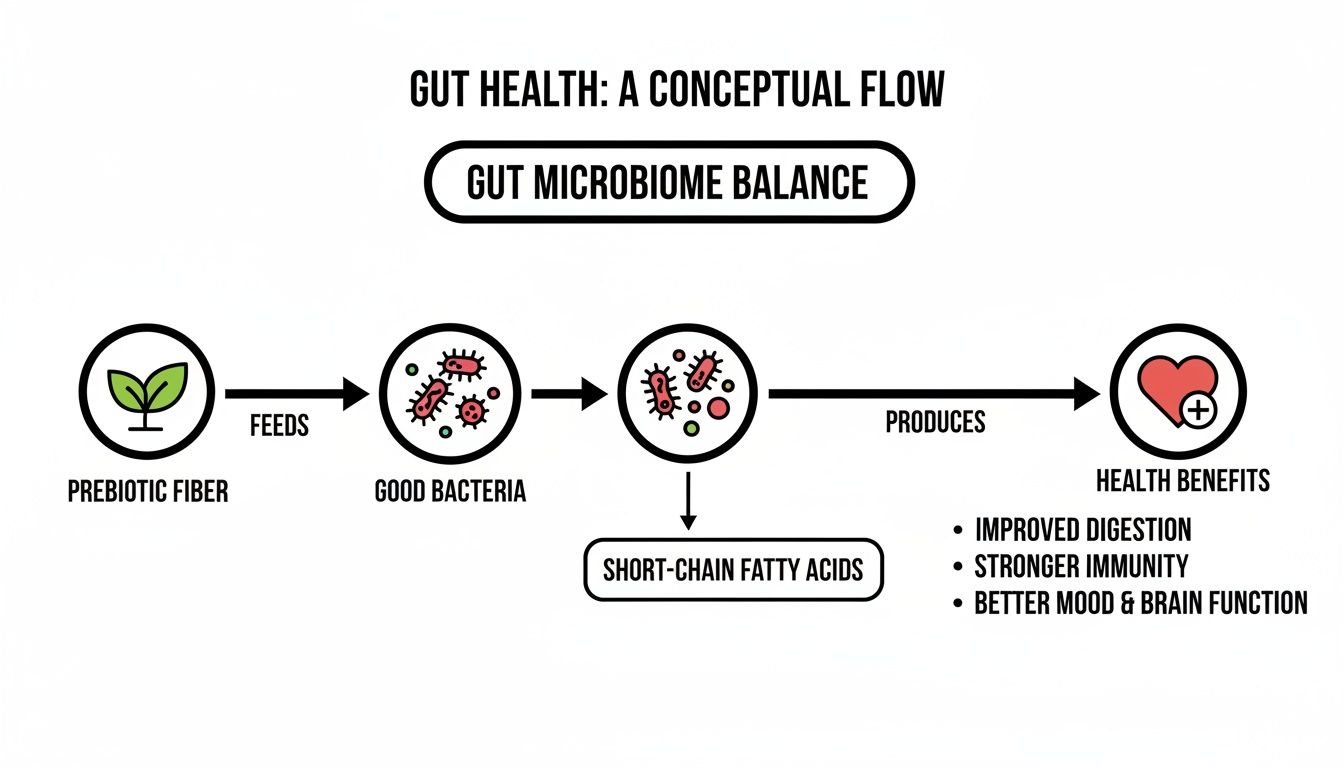
As you can see, those humble plant fibers are the starting point for a cascade of benefits, from better digestion to a stronger immune system. Here are some of the safest and most effective options you can introduce today.
1. Pumpkin and Sweet Potatoes
There’s a reason vets and seasoned dog owners have been recommending pumpkin for years. It works! Both pumpkin and sweet potatoes are packed with soluble fiber that acts like a sponge in the digestive tract, absorbing excess water to firm up loose stool or adding bulk to relieve constipation. It’s a true digestive regulator.
Beyond their fiber content, they’re also a great source of vitamins A, C, and E, plus potassium, giving your dog more than just gut support.
2. Chicory Root
You probably don’t have this one in your spice rack, but you've likely seen chicory root on the ingredient panel of high-quality dog foods or treats. There's a good reason for that: it’s one of nature's most concentrated sources of inulin, a true prebiotic superstar.
Inulin is especially good at feeding beneficial gut bacteria like Bifidobacteria. Because it’s so powerful, you only need a tiny amount. It usually comes in a powdered form, making it easy to sprinkle over your dog's food.
3. Oats
That simple bowl of oatmeal you enjoy can be a wonderful, gut-friendly meal for your dog, too. Oats contain a unique soluble fiber called beta-glucan, which is fantastic for nourishing good gut bacteria and helping to keep blood sugar levels stable.
Research also shows that beta-glucans can give the immune system a helpful boost. Just make sure you serve them cooked and completely plain—no sugar, salt, or other additions needed.
Remember the golden rule of introducing new foods to your dog: start low and go slow. A small spoonful mixed into their regular meal is the perfect way to begin. This gives their digestive system time to adapt without causing any tummy troubles.
4. Bananas
Looking for a quick, convenient, and healthy treat? Look no further. Bananas offer a sweet prebiotic punch thanks to their fructo-oligosaccharides (FOS), another type of fiber that serves as a preferred food source for beneficial gut microbes.
They’re also loaded with potassium and vitamin C. Just remember that bananas are higher in sugar, so moderation is key. A few small slices are the perfect portion for most dogs.
5. Apples
It turns out an apple a day might help keep the vet away! Apples are a great source of pectin, a soluble fiber that’s a fantastic prebiotic. Pectin is a champ at encouraging the production of those all-important Short-Chain Fatty Acids (SCFAs) that nourish the cells lining the colon.
Plus, they’re crunchy, fun to eat, and full of antioxidants. Just be absolutely sure to remove the core and all the seeds before sharing, as the seeds contain trace amounts of cyanide.
6. Dandelion Greens
Don't be so quick to pull those "weeds" from your yard! Dandelion greens are a surprisingly powerful, nutrient-dense prebiotic for dogs. Much like chicory root, they are loaded with inulin, making them an incredible food source for your dog’s good gut bugs.
They also offer vitamins A, C, and K and can help support liver function. To serve, just finely chop a small amount and mix it right into their food for an easy prebiotic boost.
7. Asparagus
Asparagus is another veggie that delivers a solid dose of inulin. While its distinct flavor isn't a hit with every dog, those that enjoy it get a great gut-health benefit. It's also a good source of vitamins K, A, C, and E, along with iron and other key minerals.
To make it easier on your dog’s digestion, it's best to lightly steam or blanch asparagus spears and chop them into small, bite-sized pieces.
Comparing Top Prebiotic Foods for Your Dog
Feeling a bit overwhelmed by the options? Don't be. This table provides a quick comparison of the best natural prebiotic foods, outlining their primary fiber type, key benefits, and serving suggestions to help you choose the right options for your dog.
| Prebiotic Food | Key Fiber Type | Primary Benefits | Best For |
|---|---|---|---|
| Pumpkin/Sweet Potato | Soluble Fiber | Regulates stools, rich in vitamins A & C | Dogs with occasional digestive upset |
| Chicory Root | Inulin | Highly concentrated prebiotic, feeds Bifidobacteria | Adding a potent prebiotic boost |
| Oats | Beta-Glucan | Supports gut health, helps regulate blood sugar | Dogs needing gentle, immune-supporting fiber |
| Bananas | Fructo-oligosaccharides (FOS) | Feeds good bacteria, good source of potassium | A sweet, moderate-sugar prebiotic treat |
| Apples | Pectin | Produces SCFAs, rich in antioxidants | A crunchy, vitamin-rich snack |
| Dandelion Greens | Inulin | Nutrient-dense, supports gut and liver health | A powerful, low-calorie green boost |
| Asparagus | Inulin | Feeds gut flora, packed with vitamins | Dogs who enjoy a variety of green veggies |
Ultimately, the best prebiotic food is the one your dog enjoys and digests well. Start with one or two, and don't be afraid to rotate them to provide a wider variety of nutrients for their microbiome.
How to Safely Add Prebiotic Foods to Your Dog's Diet
So, you’ve got a pantry stocked with gut-friendly goodies for your pup. Fantastic! But before you start mixing them into their bowl, it's crucial to get the introduction right. Adding new, fiber-rich foods requires a bit of finesse to avoid sending their digestive system into a tailspin.
The key to success is a simple philosophy that I tell every dog owner: start low and go slow.
This gradual approach gives your dog’s microbiome the time it needs to adapt to the new fuel. Think of it this way: you wouldn't go from a sedentary lifestyle to running a marathon overnight. A sudden flood of prebiotic fiber, even with the best intentions, can cause gas, bloating, or loose stools. Taking your time makes the whole experience a positive one.
The Golden Rule: Start Low and Go Slow
This isn’t just a catchy phrase—it’s the cornerstone of any successful dietary change for your dog. The goal is to gently ramp up, allowing the good bacteria in their gut to adjust and learn how to use these new fibers effectively. A measured pace is your best friend here.
For a little extra help navigating any dietary shift, our guide on how to transition your dog to new food offers a complete roadmap that works perfectly alongside these tips.
The "start low and go slow" approach is the single most reliable way to prevent digestive upset. A dog's gut thrives on consistency. By respecting its natural rhythm with gradual changes, you allow for a seamless and comfortable adaptation to healthy new ingredients.
Following this simple rule means you can confidently add these powerful foods without causing your best friend any unnecessary tummy troubles.
Serving Suggestions by Dog Size
When it comes to prebiotics, portion control is everything. What’s right for a Great Dane will be way too much for a Chihuahua. Use these suggestions as a starting point, but always watch your individual dog to see how they respond.
Here are some general daily guidelines for common prebiotic-rich foods:
-
Small Dogs (under 20 lbs):
- Pumpkin/Sweet Potato Purée: 1 teaspoon
- Cooked Oats: 1 teaspoon
- Mashed Banana or Apple Slices: 1-2 small slices
-
Medium Dogs (20-50 lbs):
- Pumpkin/Sweet Potato Purée: 1-2 tablespoons
- Cooked Oats: 1-2 tablespoons
- Mashed Banana or Apple Slices: 3-4 small slices
-
Large Dogs (over 50 lbs):
- Pumpkin/Sweet Potato Purée: 3-4 tablespoons
- Cooked Oats: 3-4 tablespoons
- Mashed Banana or Apple Slices: Half a banana or a quarter of an apple
For the really potent stuff like chicory root powder or dandelion greens, start with just a tiny pinch—we’re talking less than 1/8 of a teaspoon—mixed thoroughly into their meal.
Monitoring for Side Effects
As you begin, become a bit of a detective. Your dog’s body will give you clear signals if you’re moving too fast or offering too much.
Keep an eye out for these common signs of adding fiber too quickly:
- More Gas Than Usual: A little toot here and there is normal, but if your dog suddenly becomes a gas machine, it’s a sign to reduce the serving size.
- Loose Stools: If their poop becomes soft, mushy, or watery, you’ve probably added too much fiber at once. Dial it back to a smaller amount or take a break for a day or two.
- Bloating or Discomfort: Look for a swollen belly, restlessness, or signs of stomach pain. If you notice any of this, stop the new food immediately and give your vet a call.
If you see these signs, don’t panic! Just scale back the amount you’re feeding or pause for a few days before trying again with a much smaller portion.
Important Safety Precautions
While these whole foods are wonderful, some need a little prep work to be safe. Your dog's safety should always be the top priority.
- No Apple Seeds or Cores: Apple seeds contain trace amounts of cyanide and, along with the core, are a serious choking hazard. Always slice apples and remove the entire core.
- Cook Fibrous Veggies: Tougher vegetables like sweet potatoes and asparagus, as well as oats, should always be cooked to make them digestible and gentle on the stomach.
- Keep it Plain: Never add sugar, salt, spices, or artificial sweeteners. Xylitol, found in many human products, is extremely toxic to dogs.
- Chop or Mash It Up: Cut foods into bite-sized pieces to prevent choking, especially if you have a dog who inhales their food.
Finally, and this is a big one, always talk to your veterinarian before making significant changes to your dog's diet. This is especially true if your dog has a pre-existing health condition like pancreatitis, IBD, or food allergies. They can give you personalized advice to make sure you’re helping, not hurting, your furry friend.
The Big Picture: How Prebiotics, Probiotics, and Diet Work Together
Adding prebiotic-rich foods to your dog's bowl is a fantastic move, but it’s just one piece of the puzzle. To really get that gut garden flourishing, you need to see how prebiotics, probiotics, and your dog’s main diet all work together. They don't operate in silos; they're a team.
Think of it like this: probiotics are the hard-working players on the field—the good bacteria doing all the important jobs. The prebiotics are their specialized nutrition plan, the fuel that lets them perform at their absolute best. You can have the best players in the world, but if they're not getting the right fuel, they’ll eventually burn out.
When you put both together, you get a powerhouse effect. This winning combo is often called a synbiotic, and it's the gold standard for creating a balanced and resilient gut. To learn more about the star players you can recruit, check out our guide on the best probiotics for dogs.
Your Dog's Daily Meals Matter
Whether your dog eats kibble, fresh food, or a raw diet, their primary meals are the foundation of their gut health. High-quality, digestible ingredients set the stage for a healthy microbiome, while low-quality, highly processed foods can sometimes throw things off balance. Adding prebiotic foods for dogs simply enhances what’s already there.
- If you feed kibble: The high-heat cooking process used to make most kibble can diminish some of the naturally occurring good stuff. Topping their bowl with fresh prebiotic foods helps reintroduce whole-food fiber and key nutrients that their gut will love.
- If you feed fresh or raw: These diets are often packed with gut-friendly ingredients already. But you can still boost the benefits by adding specific prebiotics like a pinch of inulin from chicory root or some chopped dandelion greens to further diversify the fuel for their microbiome.
The idea isn't to overhaul their entire diet, but to elevate it. A spoonful of pumpkin puree or a few banana slices is a simple, effective way to make sure their gut microbes are getting the varied fuel they need to thrive, no matter what their main meal consists of.
It’s best to think about your dog’s nutrition holistically. Instead of searching for one "magic" ingredient, focus on building a complete wellness plan where every component—from their main meal to their treats—works in harmony to support their gut.
This shift in thinking is catching on. The global market for pet probiotic foods, which almost always includes prebiotics, is expected to jump from US$1.62 billion in 2024 to US$3.09 billion by 2033. This isn't just a trend; it's driven by a growing focus on preventative health, backed by studies showing dogs on prebiotic-rich diets have 25-30% better stool quality and 15% fewer vet visits for digestive issues. Learn more about the pet food market's focus on gut health.
Simple Homemade Gut-Boosting Dog Treat Recipes
Ready to put all this prebiotic knowledge to work? Making your own gut-boosting snacks is way easier than it sounds, and it's incredibly rewarding. When you make treats in your own kitchen, you get total control over the ingredients. That means no weird fillers or additives—just simple, clean fuel for your dog.
These recipes are designed to be quick, easy, and full of the prebiotic fiber your dog’s gut bacteria will love. Think of it as a delicious way to show them you care, from the inside out.
Pumpkin and Oat Gut-Booster Bites
These no-bake bites are my go-to for a quick, fiber-packed reward. The pumpkin and oats deliver a fantastic dose of soluble fiber that’s gentle on the tummy and great for keeping things regular.
Ingredients:
- 1 cup of plain, unsweetened pumpkin purée
- 1/2 cup of rolled oats (uncooked is fine)
- 2 tablespoons of natural, xylitol-free peanut butter
Instructions:
- In a medium bowl, give the pumpkin purée and peanut butter a good mix until they're smoothly combined.
- Slowly stir in the rolled oats. You're looking for a thick mixture that holds its shape.
- Roll the dough into small, bite-sized balls and pop them on a tray lined with parchment paper.
- Let them chill in the fridge for at least 30 minutes to firm up. You can store them in an airtight container in the fridge for up to a week.
Pro Tip: Want to add a little extra crunch and some healthy fats? Try rolling the finished bites in ground flaxseed or chia seeds before they go into the fridge.
Frozen Banana and Sweet Potato Swirls
For a warm day, nothing beats a frozen treat. These swirls are a brilliant and refreshing way to serve up prebiotics. The banana provides a natural source of FOS fiber, while the sweet potato adds another layer of digestive goodness.
Ingredients:
- 1 ripe banana
- 1/2 cup cooked and mashed sweet potato (make sure it's cooled)
- 1/4 cup plain, unsweetened yogurt (optional, but adds a nice probiotic boost!)
Instructions:
- Toss the banana, mashed sweet potato, and yogurt (if you're using it) into a blender.
- Blend away until the mixture is perfectly smooth.
- Carefully pour the purée into silicone molds or a standard ice cube tray.
- Freeze for at least 2-3 hours, or until they're solid.
Simple, homemade treats like these make it a breeze to work prebiotic-rich foods into your dog's daily life. You could even get creative with things like DIY dehydrated fruit snacks for more healthy treat ideas. By making snacks at home, you're embracing the JoyFull philosophy: that top-tier pet wellness can be both achievable and delicious.
Frequently Asked Questions About Prebiotics for Dogs
Diving into the world of canine nutrition can bring up a lot of questions. If you're wondering about the practical side of adding prebiotic foods to your dog's diet, you're not alone. Here are some straightforward answers to the most common queries we hear from pet parents.
Can I Just Give My Dog My Own Prebiotic Supplement?
That's a hard no. It's a question we get a lot, but human prebiotic supplements are a big risk for dogs. They’re formulated for our bodies, not theirs, so the dosages and ingredient blends just aren't right.
The biggest danger? Many human supplements contain xylitol, an artificial sweetener that is extremely poisonous to dogs, even in tiny amounts. To keep your best friend safe, always stick to products made specifically for canines.
How Long Until I See a Difference?
When it comes to gut health, patience really is a virtue. You’re nurturing a whole living ecosystem inside your dog, and that takes time.
You might see improvements in stool quality in a week or two, which is a great early sign. But bigger changes, like a more robust immune system, often take several weeks to become noticeable. Consistency is what really counts here.
Think of it like tending a garden. Gut health improvements are a marathon, not a sprint. A steady supply of prebiotic fiber allows the good bacteria to flourish, creating a healthier, more balanced microbiome over time.
Are Prebiotics Safe for Every Dog?
Natural prebiotic-rich foods are perfectly safe for most healthy dogs, but they aren't a one-size-fits-all solution. If your dog has a sensitive stomach, IBD, pancreatitis, or another chronic health condition, you'll want to be extra careful.
Sometimes, adding fiber too quickly can cause a bit of temporary gas or tummy upset. If that's a concern, you can learn more by reading our guide on what causes gas in dogs. As with any big dietary shift, it's always best to chat with your vet first, especially if your dog has a pre-existing medical issue.
At JoyFull, we believe that making pet wellness simple and delicious go hand-in-hand. Explore our better-for-you snacks to support your dog's health from the inside out at https://joyfullpet.com.