

Natural Supplements for Cats A Complete Guide
When we talk about "natural supplements" for cats, we're really talking about ingredients that come from nature—things like whole foods, plants, and minerals. Think of them as concentrated health boosters designed to fill any nutritional gaps left by your cat's regular diet.
They’re a way to take a proactive, rather than reactive, approach to your cat’s well-being, targeting specific areas like joint mobility, skin health, or digestive balance.
Why Are We All Talking About Natural Cat Supplements?
If you've ever felt overwhelmed staring at a wall of pet products, you're not alone. More and more cat owners are looking for gentle, natural ways to support their feline friends. It's part of a bigger shift in how we think about pet care—moving away from just fixing problems as they arise and toward actively maintaining good health from the start.
This isn't just a feeling; the numbers back it up. The global pet supplements market was valued at over USD 2.4 billion in the mid-2020s and is only expected to keep growing. That's a huge investment from pet parents who are clearly prioritizing preventive wellness for their animals.
What Does "Natural" Actually Mean?
So, what makes a supplement "natural"? It's not just a feel-good label. It means the active ingredients are sourced directly from nature, not created synthetically in a lab.
I like to think of a cat's health like a sturdy house:
- A balanced diet is the solid foundation. It's non-negotiable.
- Natural supplements are like adding support beams where they're needed most—maybe reinforcing the roof (for a healthy skin and coat) or oiling the door hinges (to support their joints).
It's important to remember they aren't medications meant to cure diseases. Instead, they’re tools we can use to help our cats' bodies function at their best.
What’s the End Goal?
The whole point of using a supplement is to complement a healthy diet and proper vet care, not replace them. They're there to fill in any potential nutritional gaps or deliver a concentrated dose of a beneficial compound that's hard to get from food alone. A great example is an older cat who might get extra glucosamine for their joints, even if their diet is already top-notch.
The core idea behind using natural supplements is to support the body’s innate ability to stay healthy. It’s about providing the right building blocks so your cat's system can function optimally, from a glossy coat to a resilient immune system.
This trend is all part of a larger movement toward comprehensive well-being for our pets. By understanding what supplements are—and what they aren't—you'll be able to make informed choices for your cat's long-term health, and you can always find further pet care information to continue learning.
The Most Common Natural Supplements for Feline Health
Walking down the pet supplement aisle can feel overwhelming. With so many bottles and promises, where do you even start? The trick is to stop thinking about individual ingredients and start thinking about specific health goals. Each category of supplements is like a different tool in a toolbox, designed for a particular job.
Let's cut through the noise and break down the most common and effective types of natural supplements. We’ll look at what they do, why they work, and which health concerns they’re best suited for. This way, you can confidently match the right support to your cat's unique needs.
Think of it this way: supplements are one piece of the wellness puzzle, working alongside a great diet and regular vet care.
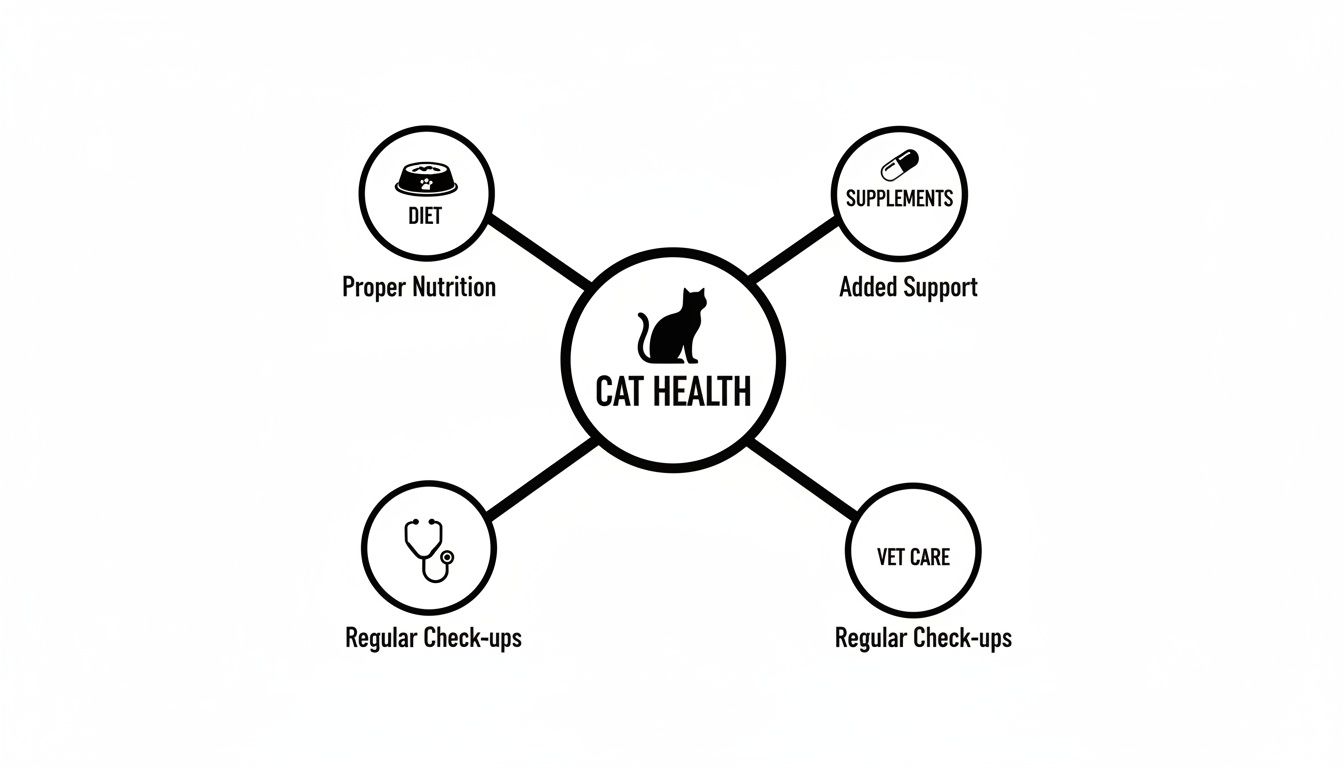
This just shows that while a solid diet is the foundation, targeted supplements can provide a real boost, especially when you’re working with your vet.
To give you a quick overview, here's a look at the most popular supplement categories and what they're used for.
Common Natural Supplements for Cats and Their Primary Uses
| Supplement Category | Key Natural Ingredients | Primary Use Case |
|---|---|---|
| Omega-3 Fatty Acids | Fish Oil (EPA & DHA), Krill Oil, Algae Oil | Skin and coat health, reducing inflammation, joint support, cognitive function. |
| Probiotics | Lactobacillus, Bifidobacterium, Saccharomyces | Digestive issues (diarrhea, gas), immune support, restoring gut balance. |
| Joint Support | Glucosamine, Chondroitin, Green-Lipped Mussel | Arthritis, stiffness, mobility issues, preventive care for senior cats. |
| Calming Aids | L-Theanine, L-Tryptophan, Chamomile, Valerian Root | Stress from travel, vet visits, new pets; anxiety-related behaviors. |
Now, let's dive a little deeper into what makes each of these so effective for our feline friends.
H3: Omega-3 Fatty Acids for Skin and Coat
A cat’s coat is a great barometer of their internal health. A shiny, soft coat usually means a healthy cat, while dull, flaky fur can be a sign that something is off. This is often where Omega-3 fatty acids come into play.
These aren't just any fats; they're essential fats like EPA and DHA, typically found in fish oil. They act as a powerful, natural anti-inflammatory from the inside out. They nourish skin cells, help dial down itchiness, and give your cat that silky, strokable fur.
A few key benefits of Omega-3s:
- Soothes Irritated Skin: They can help calm the inflammatory response tied to allergies.
- Builds a Stronger Skin Barrier: This helps lock moisture in and keep allergens out.
- Supports Joints and Brains: DHA, in particular, is also crucial for brain health and keeping joints moving smoothly.
It's like watering a plant. You can mist the leaves, but watering the roots provides deep, foundational nourishment. Omega-3s do that for your cat’s skin and coat.
H3: Probiotics for a Balanced Gut
Your cat's gut is like a tiny, bustling ecosystem, home to trillions of bacteria—some good, some not-so-good. When the good guys are in charge, your cat's digestion is smooth and their immunity is strong. But things like stress, a course of antibiotics, or a sudden diet change can throw that delicate balance out of whack.
That’s where probiotics come in. Think of them as reinforcements for the good bacteria. They help repopulate the gut with beneficial microbes, which in turn improves digestion, helps your cat absorb more nutrients from their food, and supports their immune system.
A healthy gut doesn't just mean fewer tummy troubles. It creates a ripple effect of wellness that can improve everything from your cat's skin to their energy levels.
Since so much of a cat's health starts in the gut, getting this right is key. For a more detailed look, our guide on the best probiotics for cats can help you choose the right one for your furry friend.
H3: Joint Support for Mobility and Comfort
As cats get older, the cartilage cushioning their joints can start to wear thin, much like the tread on a tire. This can lead to stiffness and discomfort, making it harder for them to leap onto their favorite sunny spot or chase after a toy.
That’s why supplements containing glucosamine and chondroitin are so popular for senior cats. You can think of them as a joint repair crew.
- Glucosamine provides the raw materials needed to help rebuild and repair worn-down cartilage.
- Chondroitin acts like a sponge, helping cartilage hold onto water. This keeps it elastic and shock-absorbent.
Working together, these ingredients can help slow down joint degeneration and ease inflammation, keeping your older cat more comfortable and active. Other natural ingredients, like New Zealand green-lipped mussel, are also fantastic for their anti-inflammatory properties. This is a big reason why joint, skin, and probiotic supplements are leading the pet wellness market.
H3: Calming Aids for a Serene State of Mind
Cats thrive on routine. Anything that disrupts it—a trip to the vet, a new baby in the house, or even just loud construction next door—can trigger stress and anxiety. This might show up as hiding, excessive grooming, or peeing outside the litter box. Natural calming aids can offer a gentle way to help them feel more secure.
These aren't sedatives that will knock your cat out. Instead, they work with your cat's body to support its own natural relaxation mechanisms.
Common Calming Ingredients:
- L-theanine: An amino acid from green tea that promotes a sense of calm without causing drowsiness.
- L-tryptophan: This amino acid is a building block for serotonin, the "feel-good" brain chemical that helps regulate mood.
- Herbal Blends: Calming herbs like chamomile or passionflower can also have a gentle, soothing effect.
These natural supplements for cats can help take the edge off during a stressful event, giving your cat the support they need to cope and feel safe again.
How to Choose a Safe and Effective Supplement
Let's be honest: the supplement aisle, whether virtual or in-person, can be overwhelming. With so many options, how do you sort the good from the questionable? The good news is, you don’t need a veterinary degree to become a savvy product detective. By learning how to read labels and spot a few key quality indicators, you can confidently choose a supplement that’s both safe and effective for your cat.
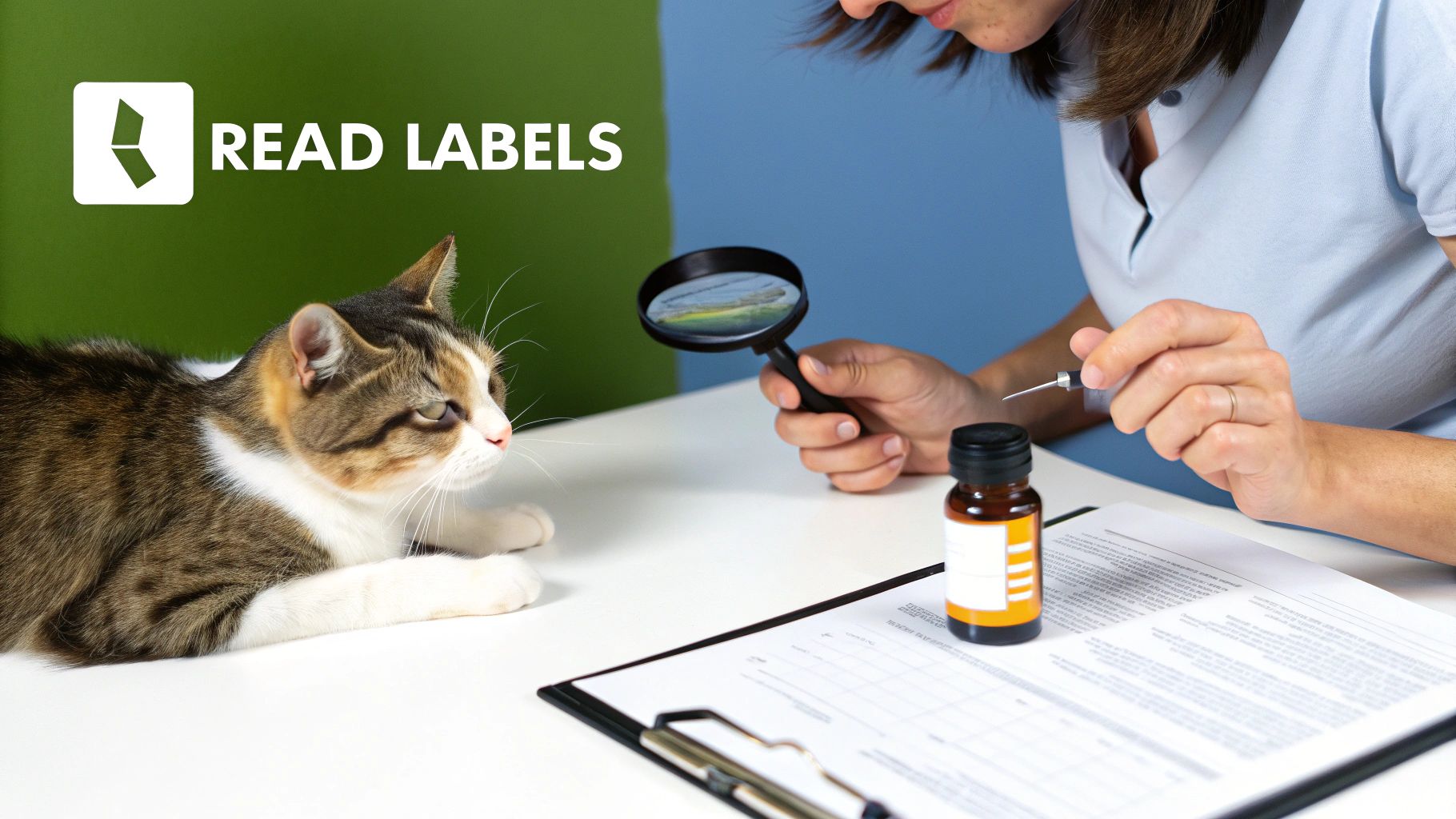
Think of it just like reading a food label for yourself. You probably ignore the flashy marketing claims on the front of the box and flip it over to see what’s really inside. We need to bring that same discerning eye to our cats' supplements to make sure we're giving them the best.
Reading the Label Like a Pro
The product label is your map, but it can be filled with jargon. The trick is knowing what to focus on. To get a clear picture of a product's quality, zero in on these areas.
1. Active vs. Inactive Ingredients
- Active Ingredients: This is the good stuff—the components doing the actual work, like glucosamine, fish oil, or L-theanine. A quality label will tell you exactly how much of each active ingredient is in a single serving.
- Inactive Ingredients: These are the supporting players. They’re the binders, fillers, and flavorings that create the final product. Look for wholesome, natural ingredients (like sweet potato or chicken broth) and steer clear of artificial colors, flavors, or sketchy preservatives like BHA and BHT.
2. Watch Out for Red Flags
- Vague phrases like "proprietary blend" that hide the exact amount of each ingredient.
- Over-the-top health claims that sound too good to be true, such as "cures arthritis."
- Any ingredients known to be toxic to cats, like the artificial sweetener xylitol.
The Importance of Third-Party Verification
Because the supplement industry isn’t regulated as tightly as prescription drugs, the best brands voluntarily seek out third-party certifications to prove their products are legit. This is one of the easiest ways for you to spot a trustworthy company.
The gold standard here is the NASC Quality Seal from the National Animal Supplement Council. This little seal is a big deal. It means the manufacturer has passed a tough, independent audit of its facility and quality control systems.
Think of the NASC seal as a "Good Housekeeping Seal of Approval" for pet supplements. It tells you the company follows ethical manufacturing practices, has a quality control system in place, and labels its products accurately and transparently.
Choosing a product with this seal dramatically lowers the risk of contamination or incorrect dosages, giving you invaluable peace of mind.
Why Dosage Is Not One-Size-Fits-All
Getting the dose right is critical for both safety and results. Too little, and you won’t see any benefit. Too much, and you could cause an upset stomach or worse. The correct dose is almost always based on your cat's weight, though age and health status can play a role, too.
Always, always follow the dosing instructions on the package unless your vet gives you different advice. Never just guess that a "small" cat gets half the dose of a "large" cat. This precision is what helps your cat get the full benefit without any unnecessary risk.
Getting a Picky Eater to Cooperate
We all know it: the best supplement in the world is completely useless if your cat refuses to eat it. Cats are notoriously fussy, so getting them to take something new can feel like a battle. Luckily, many supplements are designed with picky eaters in mind.
Here are a few tips that actually work:
- Choose Palatable Forms: Look for tasty chews, powders designed to be mixed into wet food, or flavorless liquids.
- Mix it Well: Don't just sprinkle it on top! Thoroughly mix the supplement into a small amount of something they love, like a lickable treat or the juice from a can of tuna.
- Start Small: Introduce just a tiny bit of the supplement at first. Over several days, you can gradually work up to the full dose as they get used to the new smell and taste.
Knowing your options helps, too. For instance, if you're looking to reduce inflammation and boost skin health, you can learn more about the best omega-3 for cats to find a format that works for your picky kitty. In the end, consistency is what gets results. And if you're thinking about supplements for a specific situation like travel, it's also smart to be prepared with other safe pet travel items to ensure their overall comfort and well-being.
Working with Your Vet to Create a Supplement Plan
While it’s fantastic to be proactive about your cat’s health, adding supplements to their diet shouldn't be a solo mission. Think of your veterinarian as your essential partner—your co-pilot on this journey. You know your cat's quirks and daily habits better than anyone; your vet brings the medical expertise to the table.
This partnership is the single most important step in making sure any supplement you choose is genuinely helpful and, above all, safe. A choice made with the best intentions can sometimes backfire if it isn’t the right fit for your cat’s unique health profile.
Before a single drop or crumb of a new supplement goes into your cat's bowl, a chat with your vet is an absolute must. Their guidance is what protects your cat from potential harm and makes sure your efforts actually support their well-being.
Why This Conversation Is So Critical
A vet's input is so much more than a simple "yes" or "no." They see your cat's health as a complete puzzle, understanding how every piece—from their diet to their existing medications—fits together. This holistic view is vital for a few crucial reasons.
First off, your vet is your first line of defense against potential drug interactions. Something that seems totally harmless, like a natural herb, can sometimes interfere with prescription medications. For instance, certain supplements can throw off how blood pressure or anti-inflammatory drugs work, which could have serious consequences.
They can also spot hidden health conditions. Your cat might have an underlying issue, like the very early stages of kidney disease, that isn't showing any obvious symptoms just yet. The wrong supplement could accidentally put more strain on their system and make a hidden problem worse. Your vet has the diagnostic tools and expertise to see what you can't.
Consulting your veterinarian isn't just a box to check; it’s a strategic move to safeguard your cat's health. They can help you connect the dots between your cat's needs, their current health status, and the specific action of a supplement.
Finally, they can help you avoid giving your cat something they don't need. A high-quality, complete-and-balanced cat food might already be providing plenty of certain vitamins and minerals. Your vet can take a look at your cat’s diet and tell you if a supplement is actually necessary or just redundant.
Questions to Ask Your Veterinarian
To get the most out of your appointment, it pays to be prepared. Walking in with a list of questions turns a quick chat into a productive strategy session and ensures you leave with a clear, actionable plan.
Here are some key questions to guide the conversation:
- Based on my cat's age and health, do you think this supplement is a good idea? A growing kitten’s needs are a world away from a senior cat’s, and a cat with a sensitive stomach requires a totally different game plan.
- Could this interact with any of the medications or other supplements my cat is already on? It's a great idea to bring a complete list of everything your cat currently takes.
- Is my cat’s current food already giving them enough of this nutrient? This is the best way to avoid over-supplementing.
- What’s the right dose for my cat’s specific weight? Never just go by the package instructions alone—your vet might recommend a different starting dose.
- What positive changes should I be looking for? Knowing what success looks like, whether it’s a shinier coat or less stiffness, helps you gauge if it's working.
- Are there any side effects I need to watch out for? This helps you know what's normal and when to call them if something seems off.
- How long should we give it before we decide if it's helping? Setting a timeline manages expectations and creates a natural point for a follow-up.
When you work hand-in-hand with your vet, you’re no longer just a concerned owner; you become an informed advocate for your cat's health. This collaborative approach is the best way to ensure every natural supplement you introduce is a safe, smart, and beneficial part of their life.
Recognizing Potential Risks and Side Effects
The word “natural” feels wonderfully safe, doesn't it? And for the most part, natural supplements are a gentle way to support your cat. But it’s a big mistake to assume that natural automatically means risk-free.
After all, plenty of plants in the wild can be harmful. It's the same idea here. Some supplements just aren't the right fit for every cat’s unique health situation, and it's our job as responsible pet parents to know what to look for. This isn't about being scared to try something new; it's about being observant and empowered.

Common and Mild Side Effects
Let's start with the most common scenario. If you see any side effects, they'll most likely be mild and pop up right when you introduce something new. Usually, it's a bit of minor digestive upset as your cat's system gets used to the new addition.
Think about it like when you try a new cuisine; your stomach might need a day or two to adjust. For your cat, this might look like:
- Loose Stools or Diarrhea: This is hands-down the most frequent sign of a little tummy trouble.
- Vomiting: Some cats have sensitive stomachs and might vomit if a supplement just doesn't sit right.
- Gas or Decreased Appetite: You might notice they're a bit gassy or seem less interested in their dinner.
Often, these little hiccups happen because we start with a full dose right out of the gate. A great trick is to start with just a quarter or half dose and slowly build up over a few days. If the tummy troubles stick around, it's also worth investigating the signs of food allergies in cats, as the symptoms can sometimes overlap.
More Serious Risks to Be Aware Of
While far less common, some natural supplements can carry more significant risks, especially if they’re used incorrectly or without a vet's okay. This is where we need to be smart about contraindications—those specific situations where a supplement should absolutely be avoided.
Overdosing on Certain Vitamins
With supplements, more is definitely not better. Fat-soluble vitamins, like A, D, and E, get stored in the body’s fat. If you give too much, they can build up to toxic levels over time, causing a dangerous condition called hypervitaminosis that can lead to organ and bone damage. This is a key reason you should never, ever give your cat a human multivitamin.
Interactions with Medications
This is a huge one. A seemingly harmless natural supplement can completely change how a prescription medication works.
- Certain herbs can mess with blood pressure medications.
- Some ingredients can affect how a cat metabolizes anesthesia—something your vet needs to know before any surgery.
- Even something as common as high-dose fish oil can sometimes amplify the effects of anti-inflammatory drugs (NSAIDs).
Always give your veterinarian a complete list of every single supplement your cat is taking, no matter how “natural” it seems. Being totally transparent is the only way to prevent dangerous drug interactions.
Worsening Hidden Health Problems
A supplement can also make an undiagnosed health issue worse. For instance, an ingredient that slightly affects kidney function might be fine for a healthy cat, but it could spell trouble for a cat with early-stage kidney disease that hasn't been diagnosed yet. This is exactly why a check-up with your vet before starting supplements is so important.
Potential Side Effects of Common Cat Supplements
To help you stay vigilant, here is a quick-reference table outlining what to watch for with some of the most popular supplement types.
| Supplement Type | Potential Side Effect to Monitor | When to Consult a Vet |
|---|---|---|
| Omega-3s | Loose stools, "fishy" breath, oily coat, lethargy. | If digestive upset persists for more than 48 hours or if you notice bruising. |
| Probiotics | Initial gas, bloating, or mild diarrhea as gut bacteria adjust. | If symptoms are severe or last longer than a week. |
| Joint Support | Mild digestive upset (Glucosamine/Chondroitin). | If your cat seems more lethargic or stops eating. |
| Calming Herbs | Drowsiness, sedation, or, paradoxically, excitability. | If your cat is overly sedated, disoriented, or has an extreme behavioral change. |
| Vitamins | Vomiting, loss of appetite, changes in urination (with overdose). | Immediately if you suspect an overdose or notice any serious neurological signs. |
This table isn't meant to be exhaustive, but it gives you a solid starting point for being an observant and informed pet parent.
When to Call Your Veterinarian
Knowing the difference between a minor adjustment period and a real problem is key. While a day of soft stool might not be a big deal, you should call your vet immediately if you see any of these red flags:
- Vomiting or diarrhea that lasts for more than 24 hours.
- A complete refusal to eat or drink.
- Any signs of an allergic reaction, like a swollen face, hives, or labored breathing.
- Extreme lethargy or any sudden, dramatic change in behavior.
By staying informed and keeping a close eye on your furry friend, you can use natural supplements to boost their health while keeping them perfectly safe. It’s all about finding that responsible, balanced approach that works best for your cat.
Got Questions About Natural Cat Supplements? We've Got Answers.
Stepping into the world of cat supplements can feel a little overwhelming. If you have questions, that’s a good thing! It means you’re a thoughtful pet parent. To help clear things up, we've tackled some of the most common questions we hear from cat owners.
Let's get you the straightforward information you need to make smart, confident choices for your furry family member.
Can I Just Give My Cat My Own Supplements?
That’s a hard no. It's a question that comes up a lot, but you should absolutely never give your cat supplements formulated for humans. Our bodies and our cats' bodies work in completely different ways. What's beneficial for us can be ineffective or even downright toxic for them.
A perfect example is xylitol, an artificial sweetener found in countless human products, from vitamins to peanut butter. It's incredibly poisonous to pets. Always, always stick to products specifically designed for a cat's unique biology. Their safety depends on it.
How Long Will It Take to See a Difference?
When it comes to supplements, think marathon, not sprint. The timeline for seeing results really hinges on what you’re trying to support and the supplement you're using. You're not likely to see an overnight miracle.
Here’s a rough idea of what to expect:
- Joint Support: For things like glucosamine, you’ll want to give it at least 6 to 8 weeks of consistent use before you can expect to see your cat moving with a bit more ease.
- Skin and Coat: Omega-3s need time to work their magic from the inside out. It typically takes about 4 to 6 weeks before you notice that tell-tale healthy shine in their coat.
- Digestive Health: Probiotics often work a bit faster. You might see improvements in your cat's digestion in as little as a few days.
The key to success with any supplement is consistency. Stick with the recommended dose every day.
If It Says "Natural," It's Safe, Right?
Not necessarily. The word "natural" sounds great, but it isn’t a regulated term in the pet industry, which means it doesn't guarantee a product is safe or effective.
Plenty of things found in nature, like certain plants and essential oils (lilies and tea tree oil come to mind), are extremely toxic to cats. A "natural" label doesn't automatically mean it's good for your feline.
The real mark of quality and safety is the National Animal Supplement Council (NASC) Quality Seal. Seeing that seal means the company is serious about quality control. And, as always, run any new supplement by your veterinarian first.
What's the Difference Between a Supplement and a Medication, Anyway?
This is a really important distinction. Let's think of it like taking care of a garden.
Supplements are the nutrient-rich soil and compost. Their job is to support the body's normal functions, fill in any nutritional gaps, and help everything grow strong. They are all about promoting overall wellness and maintaining good health.
Medications, on the other hand, are like a targeted treatment for a specific pest or disease attacking your plants. They are prescribed by a vet to diagnose, treat, or prevent a specific illness. They're designed to fix a problem, not just support the system.
At JoyFull, we’re focused on providing that foundational support with clean, high-quality ingredients you can actually trust. Our scientifically reviewed formulas are made to work with your cat’s diet to promote their long-term health and happiness. Explore our products and see what a difference honest, no-BS pet nutrition can make. Learn more at JoyFull.