

how to stop cat scratching furniture: Quick guide that works
To get your cat to stop scratching the furniture, you first have to get inside their head. The key isn’t punishment; it’s about understanding their instinct and then redirecting it. It really boils down to a two-part strategy: make your furniture an unattractive scratching spot while offering an alternative they simply can't resist.
Why Your Cat Scratches Everything But the Post

If you’ve ever felt like your cat is personally targeting your brand-new sofa, you're in good company. But trust me, those shredded corners aren't an act of rebellion. They're a sign of your cat acting on powerful, ingrained instincts. The first step to saving your furniture is understanding why they feel the need to scratch in the first place.
Scratching is a complex, natural behavior for cats. Think of it as their version of a multi-tool—it’s communication, a manicure, and a yoga session all in one.
The Instinct Behind the Shredding
A major reason for scratching is to mark territory. Cats have scent glands in their paws, so every time they drag their claws down a surface, they're leaving behind a unique scent message that says, "This spot is mine." This explains why they so often target prominent pieces like the arms of a couch or a favorite chair—they're marking the center of their world.
It's also about claw maintenance. Scratching helps them shed the dead outer husks of their claws, keeping them sharp and ready for action. It’s their way of getting a manicure. On top of that, it provides an incredible full-body stretch that keeps their muscles in their back, legs, and shoulders toned and limber.
When Instinct Becomes Destructive
Scratching is completely normal, but a few things can turn this natural behavior into a destructive problem. The most common issue? A simple lack of good, cat-approved places to scratch. If you don't provide something better, they'll find the next best thing, and your sturdy, perfectly-located furniture fits the bill.
Stress and anxiety are also huge factors. A 2023 study found a strong link between environmental stress and an increase in scratching. The research showed cats in homes with children were 35% more likely to scratch furniture, and those in households with high activity levels showed a 42% increase. You can dig deeper into these behavioral triggers on YouTube.
A cat doesn't scratch your furniture to spite you; they scratch it because it perfectly meets an instinctual need that isn't being met elsewhere. The solution lies in providing a better option, not in punishment.
Sometimes, what looks like stress scratching might actually be a sign of physical discomfort. It’s always smart to rule out any underlying health problems. If you notice other changes in their behavior, you might want to look into the signs of food allergies in cats, as skin irritation can definitely lead to stress and more scratching. The goal is to work with your cat's nature, not fight against it.
Making Your Furniture a Scratch-Free Zone
While you’re teaching your cat where to scratch, you need to protect your furniture now. The fastest way to do this is by making their favorite scratching spots completely unappealing. It’s all about temporarily changing the texture and scent of those surfaces so your cat thinks, "Nah, I'll pass."
Think like your cat for a moment. They're drawn to the satisfying shred of upholstery or the solid resistance of a wooden table leg. Our goal is to interrupt that satisfaction. This isn't about punishment; it's about making the couch corner a boring, unpleasant place to be until the awesome new scratching post becomes their go-to spot.
Change the Texture, Change the Behavior
Cats have incredibly sensitive paws, and certain textures are a major turn-off. Sticky or slippery surfaces are at the top of their "dislike" list, and you can use that to your advantage.
- Double-Sided Sticky Tape: This is my go-to recommendation for a reason—it works. Applying strips of pet-safe sticky tape to the corners of your couch or chair legs creates a tacky sensation cats can't stand. After a few encounters, they'll learn to give that area a wide berth.
- Plastic Shields: For bigger trouble spots, clear plastic furniture protectors are a game-changer. They're basically flexible vinyl panels that pin onto your sofa, creating a slick surface their claws can't dig into. No grip, no satisfaction, no scratching.
- Aluminum Foil: Need a quick and cheap fix? Wrap the furniture legs in aluminum foil. Most cats hate the crinkly noise and the weird, smooth feel under their paws. It’s not the most stylish look, but it’s a great temporary solution.
For wooden pieces, taking proactive steps is key. You can find some excellent long-term strategies in this ultimate guide to protecting wood furniture from scratches and stains.
Use Scents to Create an Invisible Barrier
A cat's sense of smell is about 14 times stronger than ours, which makes scent a powerful, invisible tool for directing their behavior. Certain smells we find pleasant, like citrus, are often overwhelming and unpleasant for them.
The Point of a Deterrent: Remember, the goal isn't to scare your cat. It's to make the furniture a less appealing choice than the amazing scratching post you've provided. You're simply nudging them toward a better option.
You can find plenty of commercial deterrent sprays that use scents like citrus or herbal blends. Just be sure to pick a formula that’s non-toxic and safe for your furniture—always do a spot test on a hidden area first to check for discoloration. A light spritz on the problem areas is all you need. You'll have to reapply it regularly at first to keep the message consistent: this sofa is officially a no-scratch zone.
Furniture Protection Methods At A Glance
To help you decide which approach is best for your situation, here's a quick breakdown of the most common methods.
| Method | How It Works | Best For | Considerations |
|---|---|---|---|
| Sticky Tape | Creates an unpleasant, tacky sensation on paws. | Couch corners, chair arms, and specific fabric spots. | Needs to be pet-safe. Can collect dust and hair over time. |
| Plastic Shields | Creates a smooth, impenetrable surface claws can't grip. | Large fabric areas on sofas and armchairs. | Visible, but clear versions are unobtrusive. Secured with pins. |
| Aluminum Foil | Cats dislike the crinkly sound and slick texture. | Furniture legs, flat surfaces, and quick, temporary fixes. | Not aesthetically pleasing. Can be noisy when touched. |
| Scent Sprays | Uses scents cats dislike (like citrus) to repel them. | Any surface, especially for cats who avoid sticky textures. | Requires consistent reapplication. Must be pet-safe. |
Ultimately, combining a few of these tactics is often the most effective strategy. A little sticky tape on the couch corners paired with a great scratching post nearby can solve the problem faster than you'd think.
Choosing a Scratching Post Your Cat Will Actually Use
Let's be honest: just bringing home any old scratching post won't cut it. Cats are picky, and if their designated scratching spot doesn't feel right, they'll stick with what they know—your furniture. The real trick is to find an alternative so perfect that your cat happily chooses it over the arm of your sofa every single time.
This means getting inside your cat's head and thinking about everything from the texture of the material to how stable the post is when they really lean into it.
The Anatomy of a Perfect Scratching Post
Have you ever seen those short, wobbly scratching posts? They're a complete waste of money. A huge part of the satisfaction a cat gets from scratching comes from a full-body stretch, all the way from their paws through their shoulders and back. A flimsy post just can't deliver that.
When you're shopping, look for a post that is:
- Tall: It needs to be at least 30 inches high. This allows your cat to get that full, satisfying vertical stretch, much like they would against a tree trunk.
- Sturdy: The base has to be wide and heavy. If the post tips over or even wobbles when your cat puts their weight on it, they’ll lose trust in it and probably never use it again.
- Covered in the Right Material: While carpeted posts are everywhere, most cats actually prefer something rougher and more shreddable. Sisal rope is the gold standard here—it’s tough, durable, and provides the perfect resistance for keeping their claws in top shape. Corrugated cardboard is another huge hit, especially for cats who like to scratch on the ground.
Vertical Climbers Versus Horizontal Loungers
Take a moment to watch your cat. Where and how are they scratching now? Do they stretch way up on the side of the couch, or do they prefer to drag their claws across the rug? Their current habits are the biggest clue you'll get.
- Vertical Posts: Perfect for the "stretch-up" scratchers. A multi-level cat tree with sisal-wrapped poles is a fantastic investment because it combines scratching with two other feline favorites: climbing and perching.
- Horizontal Scratchers: These are for the cats who like to scratch flat surfaces. Cardboard scratching pads or sisal mats that lie on the floor are great options. They're usually inexpensive and easy to move around to find the perfect spot.
A global survey of over 4,000 cat owners revealed a powerful strategy: more is better. In homes with over ten scratching options, unwanted scratching dropped to just 32.4% of cases. That’s a massive improvement from the 60.2% seen in homes with fewer posts. The research also found that younger cats often go for vertical posts, while senior cats might appreciate a softer, carpet-like surface. You can discover more insights about what cats want when they scratch.
This flowchart gives you a simple way to think about protecting your furniture while you introduce these much better scratching options.
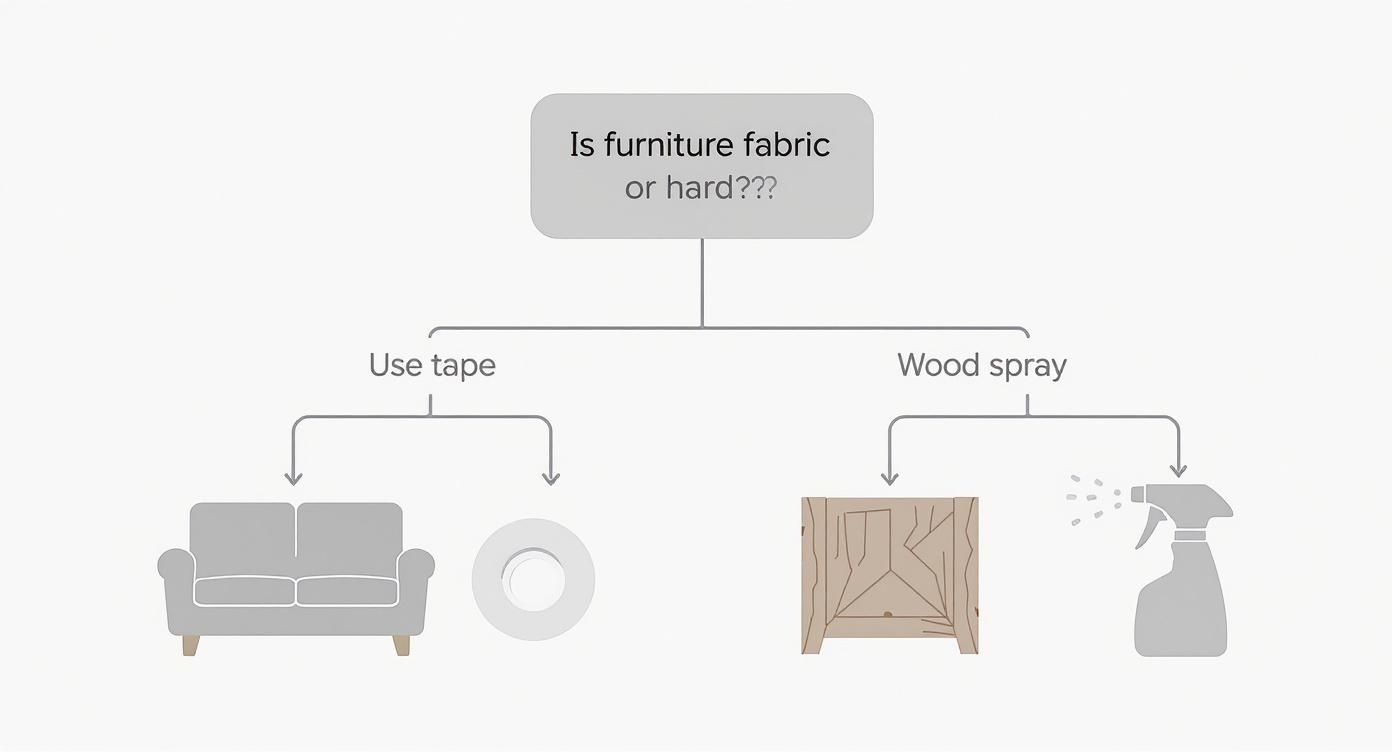
The idea is to use temporary deterrents on your furniture—making those spots unappealing—while simultaneously redirecting your cat's attention to their fantastic new scratching posts.
Strategic Placement Is Everything
Where you put the scratching post is just as important as which one you buy. Tucking it away in a spare room is a surefire way to ensure it never gets used. Scratching is a form of communication and territory marking for cats, so their post needs to be right in the middle of the action.
Start by placing the new post directly next to the furniture your cat has been targeting. This is a classic "intercept" move. When they head for the sofa, the more enticing sisal post is right there, offering a better choice.
Other prime locations include:
- Near their favorite napping spots, since many cats love a big stretch-and-scratch session the moment they wake up.
- Close to doorways or in high-traffic hallways where they naturally feel the urge to leave their scent marks.
By picking a tall, stable post with a texture your cat loves and putting it in a spot that makes sense to them, you're doing more than just offering an alternative. You're offering a serious upgrade they won't be able to resist.
A Practical Guide to Claw Care and Maintenance
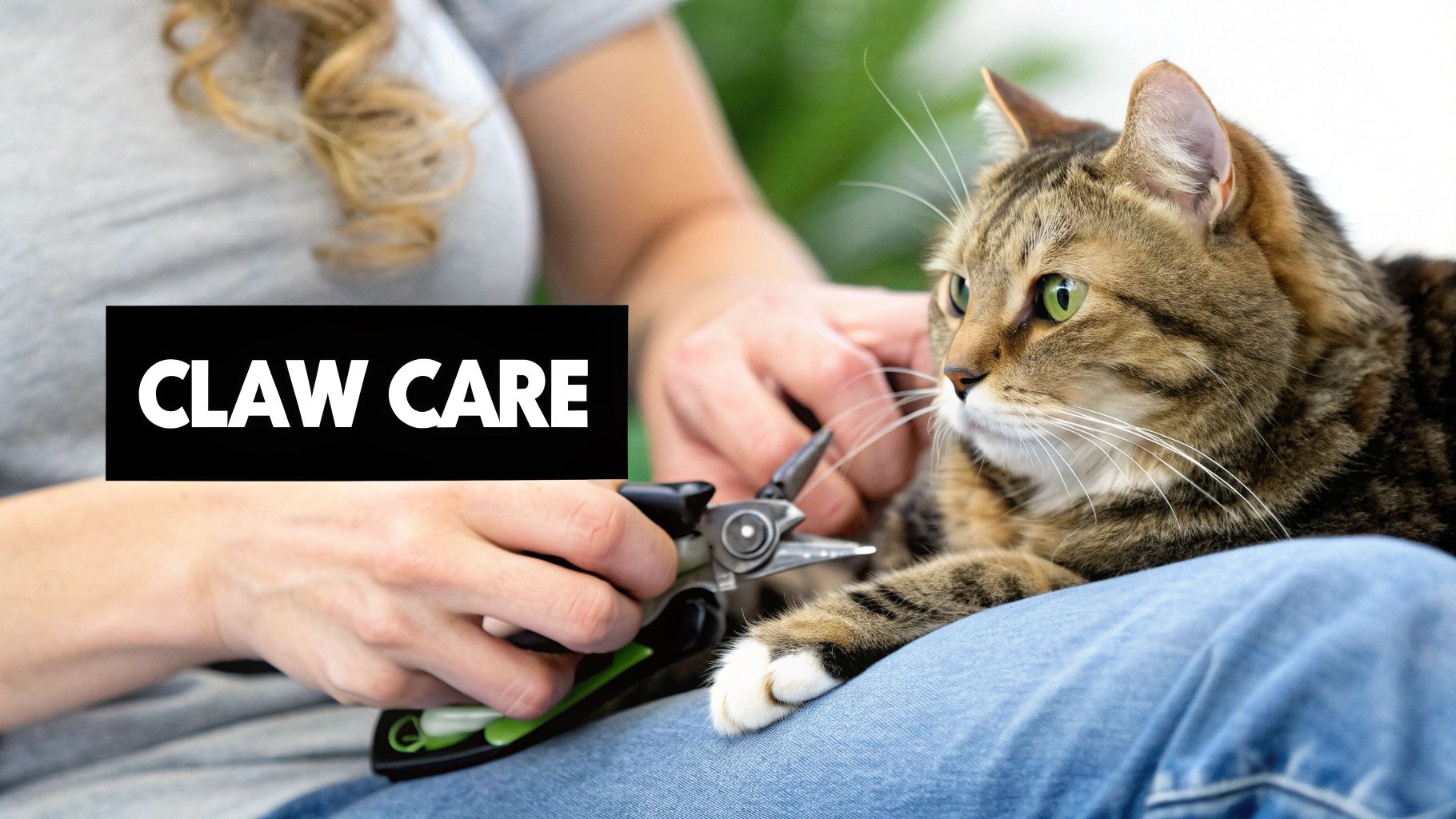
Even with the best scratching posts in the world, direct claw care is a game-changer for protecting your furniture. A cat with duller claws will do far less damage during a momentary lapse in judgment. Keeping their nails trimmed is honestly one of the simplest yet most effective tools you have.
I get it—the thought of trimming your cat’s nails can be intimidating. But with a bit of patience, it's a totally manageable skill to learn. The secret is to make paw-handling a normal, positive experience long before you ever whip out the clippers.
Start small. Gently touch and massage your cat’s paws for just a few seconds each day, followed immediately by a treat and praise. Once they're cool with that, you can graduate to gently pressing on their paw pads to extend a single claw. This slow, steady process helps turn what could be a stressful event into just another calm, routine interaction.
Getting the Trim Right
When it's time to trim, the right tool makes all the difference. Get a pair of sharp clippers made specifically for cats. Find a spot with good lighting, gently extend a claw, and identify the quick—that's the pinkish part inside the nail containing nerves and blood vessels.
You only want to snip off the sharp, clear tip of the nail. Stay well clear of the quick to avoid causing any pain or bleeding. If you're feeling nervous, it's always better to trim off too little than too much.
Aim to trim their claws every two to three weeks. This keeps the tips from becoming razor-sharp and is a great habit for their overall paw health, much like how conscientious owners research the best supplements for cats to support their well-being.
Considering Soft Nail Caps
For an extra layer of defense, soft nail caps are a fantastic solution. This is especially true if you have a particularly persistent scratcher or very delicate furniture. These are just tiny vinyl caps that you glue right over your cat’s trimmed claws.
Nail caps are a fantastic, humane alternative to declawing. They don't stop a cat from extending or retracting their claws; they just create a soft, blunt barrier that renders scratching harmless.
Applying them is pretty simple:
- Trim First: Give the very tip of the claw a quick snip.
- Add Adhesive: Squeeze a drop of the included adhesive into the nail cap.
- Slide It On: Gently slide the cap over the claw and hold it for a few seconds while the glue sets.
Most caps stay on for four to six weeks before falling off naturally as the outer layer of their nail sheds. They come in different sizes and even fun colors, offering a safe and effective way to put a stop to destructive scratching.
Using Positive Training to Redirect Scratching
Now that you’ve made your furniture a less-than-ideal scratching spot and introduced a fantastic new post, it’s time to show your cat exactly what you want them to do. It can be tempting to scold a cat caught in the act, but punishment almost always backfires. It just creates fear and anxiety, which can actually ramp up the very behavior you’re trying to stop.
The real secret is positive reinforcement. You’re not just stopping an old habit; you’re building a new, better one. By making the scratching post the most rewarding place in the room, you teach your cat to choose it over the couch. This not only saves your furniture but also strengthens your bond.
Making the Scratching Post Irresistible
Think of that new scratching post as a blank canvas. To your cat, it’s just a strange object until you give it some appeal. Your job is to make it the hub of feline fun.
- Add a Dash of Catnip: If your cat goes wild for catnip, sprinkling some on the base and sides of the post is a great way to spark their curiosity. It encourages them to explore it on their own terms.
- Play Around It: Grab a feather wand or laser pointer and make the post the star of your next play session. Entice your cat to chase, pounce on, and climb it. This gets their scent all over the post, marking it as their own fun territory.
The best training doesn't feel like training at all—it feels like a game. You're not forcing your cat to use the post; you're just making it the most interesting and rewarding thing in the room.
The Art of Interruption and Redirection
So, what do you do the moment you see claws sinking into your new armchair? Your reaction in that split second is everything. Forget shouting—that only teaches your cat to be sneakier. Instead, use a calm, two-part approach.
First, interrupt gently. A soft but distinct noise, like a quick clap or a sharp "Ah-ah," is usually enough to make them pause. You’re just trying to break their concentration, not scare them.
Next, redirect immediately. The second they lift their paws, cheerfully call them over to their scratching post. You can lead them with a toy or just use an encouraging tone.
The instant their paws touch the right spot—even if they just give it a sniff—lavish them with praise and a high-value treat. Finding the right motivator is crucial, and exploring the best cat treats for training can give you some fantastic ideas. This immediate reward forges a powerful link in their mind: touching this post gets me good stuff.
Consistency is the name of the game here. Every single time you successfully redirect them, you're laying down another brick in the foundation of a new habit. Before long, your cat will realize that scratching the post gets them treats and love, while scratching the couch just gets them... interrupted. It’s an easy choice, and most cats are smart enough to go for the reward.
Common Cat Scratching Questions Answered
Even with the best game plan, you're bound to run into a few snags. It’s completely normal to hit a hiccup or two when you’re trying to redirect a behavior as deeply wired as scratching. Let's dig into some of the most common questions and frustrations cat owners face.
My Cat Ignores the Expensive Post I Bought
This is one of the most common—and frustrating—scenarios. You bring home a beautiful, top-of-the-line cat tree, and your cat gives it a passing sniff before returning to the threadbare arm of your couch. What gives?
Nine times out of ten, the problem boils down to stability, material, or location.
A wobbly post is a useless post in your cat's eyes. If it moves or tips even slightly when they put their weight on it, they’ll write it off for good. The post also needs to be tall enough for a full, satisfying stretch. If the basics are covered, look at the material. Some cats are absolutely wild for sisal rope, while others prefer the shreddable satisfaction of cardboard. Pay attention to what they’re already scratching for clues.
Finally, a scratching post hidden in a back room might as well not exist. It needs to be where the action is. Place it in a high-traffic area of your home or, even better, right next to the piece of furniture they’ve been targeting.
Is It Cruel to Use Deterrents Like Sticky Tape?
Not at all. When used correctly, deterrents like pet-safe sticky tape or citrus-based sprays are perfectly humane. They aren't designed to cause pain or harm; they just create a weird texture or an unpleasant smell that makes the furniture a less appealing place to hang out.
The point of a deterrent isn't punishment. It's about making the wrong choice less appealing and the right choice—the awesome scratching post—way more attractive. Think of it as a gentle nudge in the right direction.
You're essentially setting a clear, simple boundary in a language your cat understands: "this surface is weird and not fun, but this sisal post right here is amazing for your claws."
Can I Train a Cat Who Has Scratched Furniture for Years?
Yes, absolutely! It is never too late to change a cat’s habits, even if they've been shredding the same armchair since they were a kitten. The core strategy is exactly the same: make the old spot unattractive and the new spot completely irresistible.
What you will need, however, is an extra dose of patience. A long-term habit is more deeply ingrained, so your efforts have to be consistent and persistent. Reapply deterrents regularly, and be over-the-top with praise, treats, and affection every single time your cat even looks at their new scratching post. With a little time, even the most stubborn cat can learn new tricks.
If you're dealing with lingering marks from past scratching sprees, knowing how to clean upholstery stains can help you restore your furniture while you work on the new routine.
Should I Just Declaw My Cat?
Declawing is a major, invasive surgery, not just a permanent nail trim. The procedure involves amputating the last bone of each of your cat's toes.
It's widely considered inhumane by major veterinary organizations because it often leads to chronic pain, arthritis, and even new behavioral issues like biting. The humane strategies in this guide are far more effective and kind.
Research from International Cat Care shows that simply providing a variety of scratching surfaces is the most effective solution. In their study, homes that offered options like rope, cardboard, and wood saw a 60% reduction in unwanted scratching. You can read the full research about these findings for a deeper look.
At Joyfull, we believe in solutions that honor your pet’s well-being and natural instincts. Our commitment to high-quality, scientifically-backed products is designed to help you build a happy, healthy life with your beloved companions. Discover our approach to pet wellness at https://joyfullpet.com.