


How Do You Keep Dogs from Shedding A Practical Guide for Pet Parents
Look, you're never going to stop a dog from shedding completely. That's just a fact of life with our furry friends. But you can absolutely get a handle on it.
The secret isn't some magic trick; it's a simple, consistent routine. We're talking regular brushing, the right nutrition packed with omega fatty acids, and the occasional bath using a quality de-shedding shampoo. This straightforward approach tackles loose fur right at the source, which means a cleaner house and a healthier coat for your dog.
So, Why Is My Dog Shedding Everywhere?
Before you start a full-on war against the fluff, let's get one thing straight: shedding is a totally normal, healthy process for most dogs. It's how their body clears out old, dead fur to make room for a new, healthy coat. Trying to stop it would be like trying to stop your own hair from falling out—it's just not going to happen.
The real goal here is management, not elimination. Once you understand the why behind all that fur, you can set some realistic goals and start working with your dog's natural biology instead of fighting it.
The Natural Shedding Cycle
A dog's hair has a life cycle: it grows, it rests for a bit, and then it falls out. How long this takes depends a lot on the breed, the dog's age, and even where you live.
For a lot of dogs, especially double-coated breeds, this cycle is tied to the seasons. You'll see two major shedding periods—in the spring and fall. This is what people call "blowing coat." In spring, they ditch their heavy winter undercoat for a lighter summer version, and in the fall, they do the opposite to prepare for the cold.
Of course, dogs that spend most of their time indoors under artificial light and in a climate-controlled home might not have such dramatic seasonal sheds. Instead, you might notice a more consistent, low-level shedding all year round.
Key Takeaway: Shedding isn't a bug; it's a feature. Your goal should be to control where that fur ends up (ideally, in a brush, not woven into your couch cushions) and make sure the amount of shedding is normal for your specific dog.
What Makes Some Dogs Shed More Than Others?
A few key things dictate just how much fur you'll be sweeping up.
- Genetics: This is the big one. A Siberian Husky, German Shepherd, or Golden Retriever is just built to shed—a lot. On the flip side, breeds like Poodles or a Maltese are low-shedders. Your dog's breed is hands-down the biggest factor.
- Health and Nutrition: A poor diet that’s missing key nutrients, especially essential fatty acids, can cause dry skin and a brittle, weak coat. The result? Way more shedding than normal.
- Skin Conditions: Sometimes, excessive shedding is a red flag for an underlying problem. Things like allergies, parasites (hello, fleas!), or skin infections can all cause a dog to lose more hair. If the shedding comes with bald spots, redness, or non-stop scratching, you need to address the root cause of the irritation. If you're seeing a lot of scratching, a good first step is to learn how to soothe an itchy dog to give them some immediate relief.
Building Your At-Home Grooming Routine
If you want to get a handle on all that loose fur, the single best thing you can do is create a consistent, proactive grooming routine. This is your number one strategy. We're not talking about aimless brushing, but a smart approach using the right tools at the right time to catch hair before it ends up all over your house.
A well-stocked grooming kit is non-negotiable. Don't just grab one all-purpose brush; think of it as a specialized toolkit where each item has a specific job. To really get ahead of loose fur and prevent mats, a quality tool like a double-sided pet grooming brush can make a world of difference.
While the sheer number of tools on the market can seem overwhelming, most dogs really only need a combination of a few key types to stay looking their best.
Choosing the Right Tools for the Job
Your dog's coat is the ultimate guide to picking the right tools. A short-haired Vizsla has completely different grooming needs than a fluffy, double-coated Bernese Mountain Dog. Matching the tool to the coat is the real secret to an effective—and efficient—grooming session.
- Slicker Brush: These brushes have fine, short wires packed closely together. They're fantastic for grabbing loose surface hair, working through small tangles, and are a great starting point for most coat types, especially those with medium-to-long fur.
- Undercoat Rake: This is an absolute must-have for any double-coated breed like a Husky, German Shepherd, or Golden Retriever. The long, sturdy teeth are designed to get past the topcoat and gently pull out all that dead, fluffy undercoat without damaging the healthy guard hairs on top.
- De-shedding Tool: Think of this as your heavy-hitter. These tools have fine-toothed, blade-like edges built to remove huge amounts of loose undercoat quickly. They're incredibly effective during those big seasonal "coat blows" in the spring and fall when the shedding really kicks into high gear.
As you can see, shedding is influenced by a few key things.
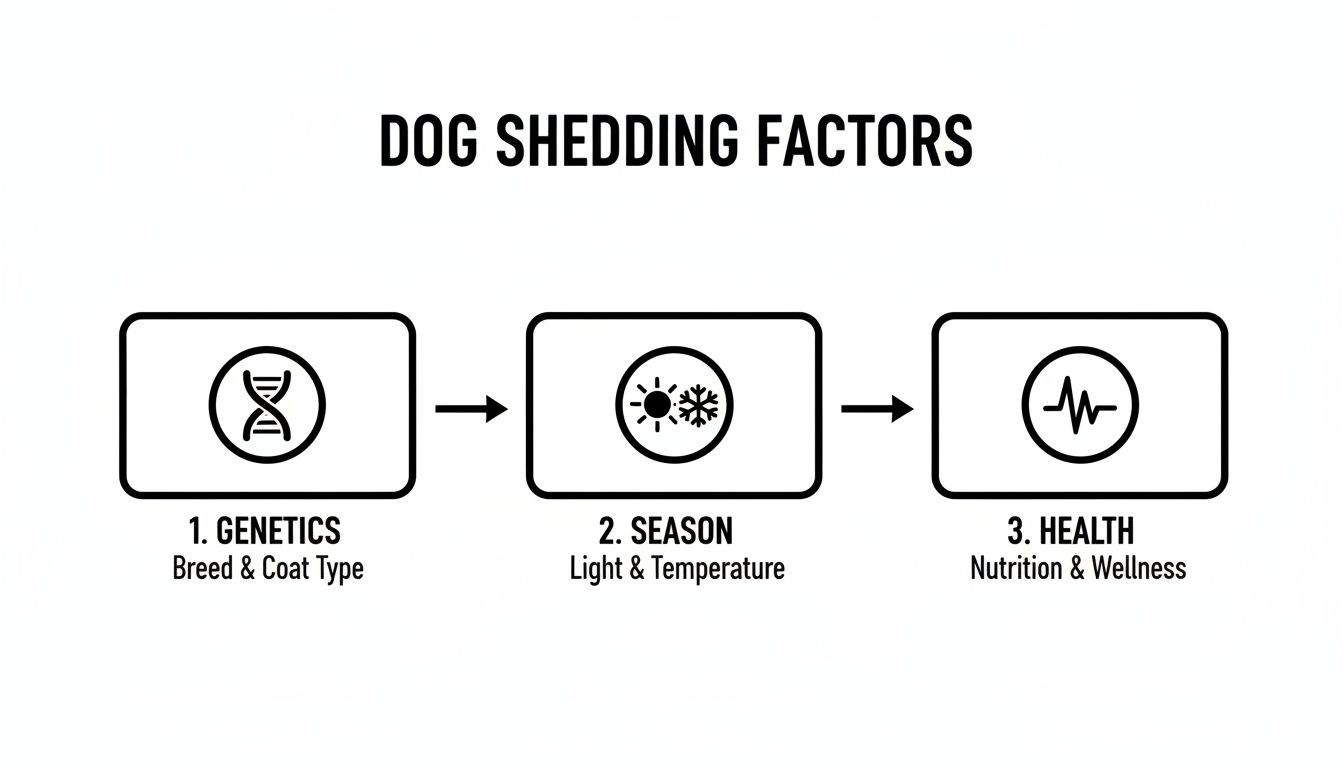
Knowing that genetics, the changing seasons, and your dog's overall health all play a part helps you build a grooming routine that truly fits their needs.
Here’s a quick-reference guide to help you choose the most effective grooming tools based on your dog's coat.
Matching Grooming Tools to Your Dog's Coat
| Coat Type | Primary Tool Recommendation | Secondary Tool | Frequency |
|---|---|---|---|
| Short & Smooth (Boxer, Vizsla) | Bristle Brush or Grooming Mitt | N/A | 1-2 times weekly |
| Double-Coated (Husky, Shepherd) | Undercoat Rake | Slicker Brush | 2-3 times weekly (more during season) |
| Long-Haired (Golden Retriever, Collie) | Slicker Brush | Undercoat Rake or De-shedding Tool | 3-4 times weekly |
| Wire-Haired (Terriers, Schnauzers) | Slicker Brush | Stripping Knife/Comb | 2-3 times weekly |
| Curly/Wavy (Poodle, Doodle) | Slicker Brush | Metal Comb (for tangles) | Daily to prevent matting |
This chart should give you a solid starting point. Don't be afraid to experiment a little to see what works best for your specific dog.
The Power of a Simple Weekly Schedule
When it comes to brushing, consistency beats intensity every time. A quick, 10-minute session every other day is far more effective than one long, arduous session on a Saturday. A manageable routine not only keeps the shedding under control but also helps your dog get more comfortable with being handled.
Think about this: owners who brush their dogs just twice a week can cut down on the visible hair in their homes by 30–60%. It’s a game-changer. Regular brushing simply gets that dead undercoat and loose guard hair out before it has a chance to fall out on its own.
Pro Tip: Grooming isn't just about the fur! It's the perfect chance to give your dog a quick once-over. You can check their skin for any lumps, bumps, or irritations that you might otherwise miss. It also helps distribute their natural skin oils, which is key for a healthy, shiny coat.
Making Baths Count
Bathing plays a huge, though less frequent, role in managing shedding. While you never want to over-bathe a dog and dry out their skin, a well-timed bath with the right products can work wonders.
Using a de-shedding shampoo and conditioner is a pro move. These products are formulated to help loosen up that dead undercoat. The physical act of washing and rinsing then dislodges a ton of that fur, sending it down the drain instead of into your brush or onto your couch.
The real magic happens after the bath. Once your dog is completely dry, a thorough brushing session with an undercoat rake or de-shedding tool will be more productive than you can imagine. This "bathe and brush" one-two punch is your secret weapon for tackling heavy seasonal shedding, effectively resetting the coat for weeks to come.
How Nutrition Impacts Your Dog's Coat Health
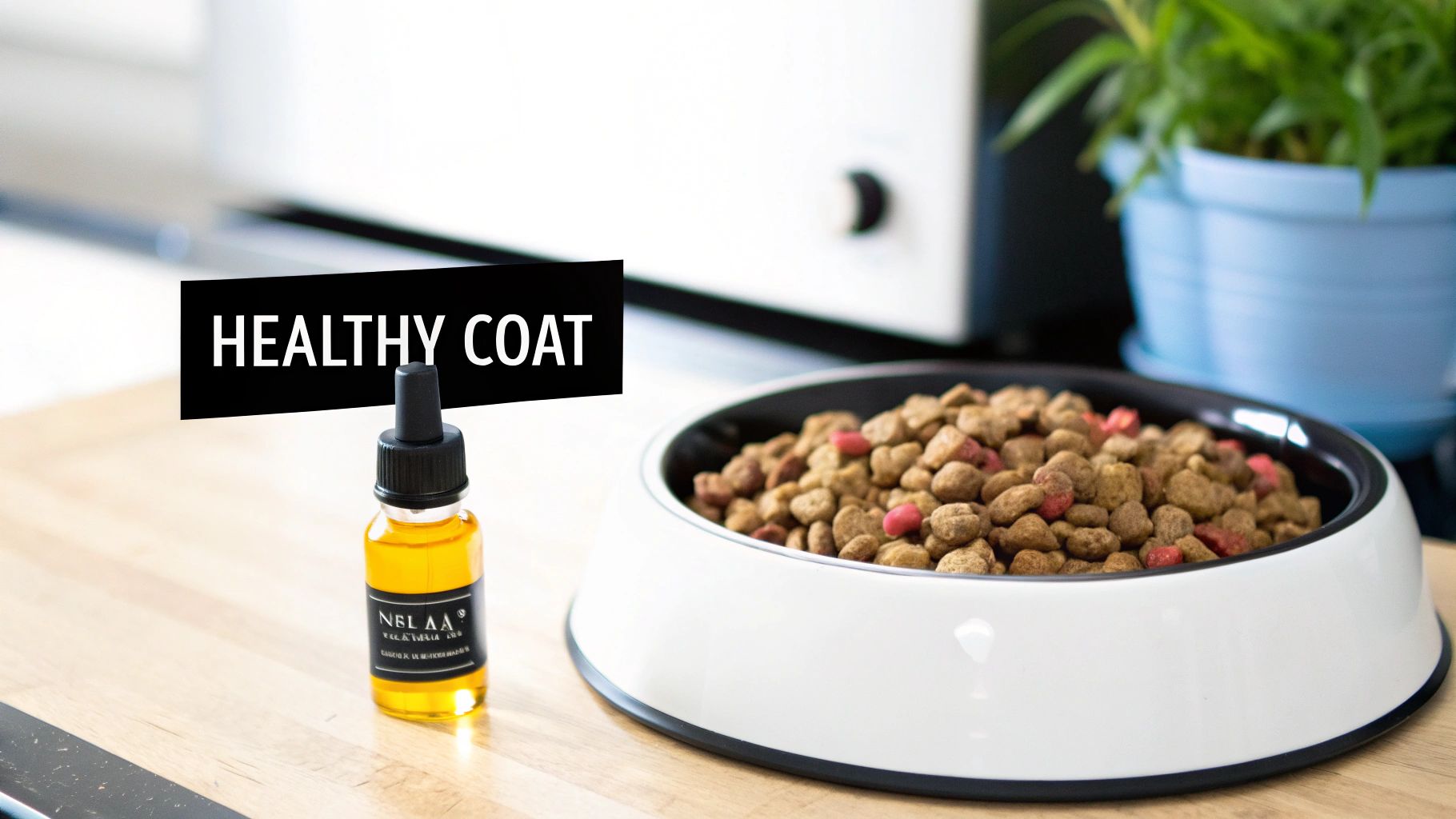
A shiny, healthy coat with minimal shedding doesn't just happen with a good brush. It’s built from the inside out. What you put in your dog's bowl is probably the most powerful tool you have for getting shedding under control, since their diet directly fuels the health of their skin and fur.
When a dog isn't getting the right nutrients, one of the first places you'll see it is in their coat. It can become dull, dry, and brittle, which almost always leads to more hair on your floor.
Think of it this way: each strand of fur is like a tiny plant. For it to grow strong and stay rooted, it needs good soil and the right kind of fertilizer. In this case, your dog's skin is the soil, and their food provides all the essential building blocks.
The Power of Protein and Healthy Fats
When you're trying to figure out how to keep dogs from shedding through diet, two nutrients are the real heavy hitters: high-quality protein and essential fatty acids. A dog’s hair is made of about 95% protein, so a diet packed with digestible, animal-based proteins like chicken, beef, or fish is completely non-negotiable for strong hair follicles.
Just as important are the fats—specifically Omega-3 and Omega-6 fatty acids. These are the true superstars for skin and coat health.
- Omega-3 Fatty Acids: You'll find these in things like fish oil and flaxseed. They're amazing anti-inflammatory agents that help soothe dry, itchy skin, which is often a major trigger for excess shedding.
- Omega-6 Fatty Acids: Found in sources like chicken fat and certain vegetable oils, these are critical for maintaining a healthy skin barrier, keeping it hydrated and strong.
Getting the right balance of these two omegas helps fortify the hair follicle itself, locking the hair in place longer and giving your dog that glossy sheen that just screams "healthy."
What to Look for on the Food Label
I know the pet food aisle can be overwhelming. To cut through the noise, a few key things on the label can point you toward a great choice for your dog's coat. First, look for a whole meat source (like "deboned chicken" or "salmon") as the very first ingredient. Try to steer clear of foods that start with corn, wheat, or soy, as these can sometimes trigger skin irritation in sensitive pups.
Next, check out the guaranteed analysis section, which lists the minimum percentages of protein and fat. For most adult dogs, a protein content of at least 25% and a fat content around 15% (on a dry matter basis) is a solid benchmark for supporting a healthy coat. If you want a deeper dive, our detailed guide on dog food to reduce shedding has more specific recommendations.
When nutritional gaps are the root cause of shedding, like a deficiency in essential fatty acids, the right diet can make a huge difference. Fixing these issues can cut down on abnormal shedding by 40–70% for many dogs in just 6 to 12 weeks.
Can Supplements and Treats Help?
Absolutely. While a complete and balanced diet is always the foundation, supplements can give a targeted boost, especially for dogs with particularly dry skin or those prone to allergies. Fish oil is one of the most popular and effective supplements out there for delivering a concentrated dose of Omega-3s.
Even your choice of treats can play a part. Instead of empty calories, look for treats made with high-quality, single-source proteins and other beneficial ingredients. Many modern, better-for-you snacks are now fortified with the same skin-supporting nutrients you'd find in premium dog food, turning every reward into another chance to nourish your dog's coat.
Keeping Your Home Clean Amidst the Fur
Let’s be honest: even with the best grooming routine and diet, dog hair is just a part of life. You're going to find it. But that doesn't mean you have to surrender your home to the fluff. This is your battle plan for keeping things clean without it feeling like a full-time job.

The trick is to be smart about it. By combining a few preventative measures with the right tools, you can trap and remove hair efficiently, giving you more time to actually enjoy your dog.
Arm Yourself with the Right Cleaning Arsenal
If you're still using a standard vacuum, you're probably fighting an uphill battle. Investing in a vacuum designed specifically for pet hair is a total game-changer. They have stronger suction and specialized brushes that don't get tangled easily.
Look for models with HEPA filters. These are fantastic because they don’t just suck up hair; they trap tiny dander and allergens, which really helps with air quality.
A few low-tech tools can also make a huge difference:
- Rubber Brooms: You'd be amazed at how well the static from a rubber broom pulls hair out of carpets and rugs. It clumps it all together, making it easy to pick up.
- Squeegees or Rubber Gloves: Got fur woven into your couch? Grab a window squeegee or a damp rubber glove and run it over the fabric. The hair lifts right off. It’s surprisingly effective.
- Lint Rollers: An old-school classic for a reason. Keep extra-sticky ones in a few key places for quick touch-ups on clothes, pillows, or even lampshades right before company comes over.
When it's time for a deep clean on your carpets, always be mindful of the products you use. It's crucial to stick with safe carpet cleaning methods for homes with pets to avoid exposing your dog to harsh chemicals.
Strategic Prevention to Minimize Mess
The easiest hair to clean is the hair that never gets there in the first place. A few simple habits can drastically cut down on how much fur ends up on your floors and furniture. Being proactive is the secret to winning this fight.
Pro Tip: Identify your dog's favorite napping spots and cover them with machine-washable throws or blankets. Tossing a blanket in the wash once a week is a whole lot easier than de-furring an entire sofa.
Washable furniture covers are another great option, especially if you have light-colored furniture and a dark-haired dog. It also helps to place durable, easy-to-clean mats at all your entryways to trap loose fur and dirt right at the door.
Finally, don't underestimate the power of a good air purifier. It can be an unsung hero, quietly pulling airborne hair and dander out of the air before it even has a chance to settle. This keeps your surfaces cleaner and is a massive bonus for anyone in the house with allergies.
Knowing When to Call in the Pros: Groomers and Vets
Even with the best at-home grooming routine, sometimes you need to bring in the big guns. A professional groomer can be your secret weapon in the war against shedding, especially if you have a double-coated breed going through a massive seasonal "coat blow."
They have tools and techniques that are just tough to replicate at home, like high-velocity dryers that blast out loose undercoat and intensive de-shedding treatments. A single session can remove an unbelievable amount of dead fur, meaning you'll see a whole lot less of it on your couch for weeks to come.
It's a worthwhile investment. In fact, according to the latest research, households that use a professional groomer every 4–8 weeks often see 25–50% less hair around the house. It's no wonder the global pet grooming market has grown so much—it really works.
Spotting Red Flags: When It's a Vet Issue, Not a Grooming One
This is the most important part: knowing when shedding has crossed the line from "normal" to a symptom of a health problem. A little fur on the floor is one thing, but your dog's coat is a direct reflection of their overall health.
Keep a close eye out for these warning signs:
- Bald Patches: If you find distinct bald spots (alopecia), that's never normal shedding.
- Irritated Skin: Look under the fur for any redness, rashes, sores, or flaky, dandruff-like skin.
- Constant Itching or Licking: A dog who can't stop scratching, chewing, or licking a specific spot is telling you something is wrong.
- A Sudden, Major Increase: If your dog suddenly starts losing clumps of fur outside of their regular seasonal shed, pay attention.
- Dull, Brittle Fur: A healthy coat should have some shine. If it becomes dry, coarse, and breaks easily, it often points to an internal issue.
Any of these symptoms could be a sign of anything from allergies and parasites (like fleas or mites) to skin infections or hormonal imbalances. Brushing won't fix the root cause, and waiting could delay critical treatment.
Making the Right Call
If you see any of the red flags we just talked about, it’s time to call the vet. Don't just book another grooming appointment.
Your veterinarian can run the right tests to figure out what's really going on. They can diagnose the underlying medical condition and prescribe a targeted treatment to fix it.
This is also a great time to talk about nutrition. If you've been doing everything right with grooming and food but are still seeing issues, your vet can offer expert guidance. You can get a head start by reading up on the best skin and coat supplement for dogs. Knowing whether you need a groomer or a vet is key to keeping your dog healthy, comfortable, and happy.
Your Top Questions About Dog Shedding, Answered
Even when you have a good system in place, questions always come up. When you're in the thick of managing dog hair, it's easy to wonder if you're doing things right. Let's tackle some of the most common things people ask so you can get a better handle on all that fur.
Can You Stop Shedding Completely?
In a word? No. For almost every dog out there, shedding is a totally natural and healthy process. It’s how they ditch old, dead hair to make way for a healthy new coat. While you can't hit a magical "off" switch, you absolutely can dramatically reduce the amount of fur floating around your home with the right grooming, nutrition, and cleaning routines.
Think of it as management, not elimination. The real goal is to get that loose hair out on your terms—with a brush—before it ever has a chance to decorate your couch.
How Often Should I Bathe My Dog to Control Shedding?
It's tempting to think more baths equal less hair, but it's not quite that simple. Bathing your dog too often can strip their skin and coat of essential oils, which leads to dryness, irritation, and sometimes even more shedding. For most dogs, a bath every 4 to 6 weeks is a great starting point.
The trick is to make every bath count. Use a good de-shedding shampoo and conditioner to help loosen up that undercoat. This turns bath time into a powerful de-shedding session, so you don't need to increase the frequency.
Expert Tip: The absolute best time to brush is right after a bath, once your dog is completely dry. A good session with an undercoat rake or de-shedding tool at this point will pull out a shocking amount of fur that was loosened by the wash.
Will Shaving My Double-Coated Dog Help?
This is a huge misconception that can actually do more harm than good. I can't stress this enough: please don't shave a double-coated dog like a Husky, Golden Retriever, or German Shepherd. That fluffy undercoat isn't just for warmth in the winter; it's a brilliant insulator that helps keep them cool in the summer, too.
Shaving ruins this natural temperature regulation system. Worse, the coat often grows back patchy and coarse, and it might never regain its original texture.
Instead of reaching for the clippers, try this:
- Brush, Brush, Brush: An undercoat rake used two or three times a week is your best friend.
- Call in the Pros: A professional de-shedding treatment during peak seasons can work wonders.
- Feed the Coat: Make sure their diet is packed with nutrients that support healthy skin.
Shaving is a temporary fix that creates long-term problems. You're far better off working with their natural shedding cycle to keep them comfortable and their coat healthy all year long.
At Joyfull, we know a vibrant, healthy coat is built from the inside out. Our better-for-you snacks are made with clean, simple ingredients and high-quality proteins that nourish your dog's skin. Every treat becomes a small step toward a healthier coat and a less furry home. See how great nutrition can make a difference at https://joyfullpet.com.