

Dog Treats for Senior Dogs: dog treats for senior dogs - Safe, Tasty Picks
When it comes to the best dog treats for senior dogs, we're looking for a few key things: a softer texture for older teeth, a lower calorie count to help manage their weight, and often, some bonus ingredients like glucosamine for joint support. Picking treats made just for your aging friend isn't just a nice thought—it's a crucial part of keeping them healthy and happy.
What Makes a Great Treat for a Senior Dog
As your dog moves into their golden years, their body changes. It's a natural process. Their metabolism slows down, joints might get a little creaky, and their dental health isn't what it used to be.
This means those super crunchy, high-calorie biscuits they adored as a puppy might not be the best option anymore. Think of it like a classic car—it's a wonderful machine, but it needs a specific kind of fuel and a gentler touch to keep it running smoothly.
That’s where specialized dog treats for senior dogs come in. They aren't just smaller versions of regular adult treats; their entire formula is different, designed with an older dog's needs in mind.
Key Qualities of Senior Dog Treats
The best treats for an older pup do more than just taste good. They actively support your dog's well-being by tackling common age-related challenges. These aren't just marketing gimmicks; the differences are real and can make a big impact.
- Softer Texture: Older dogs often have sensitive teeth and gums. A hard, brittle treat could easily crack a tooth, leading to pain and expensive vet bills. Soft, chewy treats are much safer and far more enjoyable for them.
- Lower Calorie Count: Senior dogs aren't usually as active as they once were, which makes them prone to gaining weight. Those extra pounds put a lot of strain on their joints. Low-calorie treats, especially those with fiber, help them feel satisfied without packing on the pounds.
- High-Quality Protein: Keeping muscle mass is so important for keeping senior dogs strong and mobile. Easily digestible proteins from sources like chicken or fish help maintain their muscles without putting a strain on their aging digestive system.
- Functional Ingredients: This is where senior treats really shine. Many are boosted with added goodies like glucosamine and chondroitin for joint health or omega-3 fatty acids to help reduce inflammation and even support brain function.
A Growing Market for Senior Wellness
It’s clear that pet owners are looking for better options for their aging companions. The global pet snacks market was valued at an estimated USD 50.84 billion in 2025, and a big part of that growth is coming from manufacturers creating specialized senior formulas. They’re focusing on things like joint-support ingredients and low-calorie recipes to meet the real-world needs of older pets.
Choosing the right treat is an act of preventative care. It's a simple, daily opportunity to support their aging body, from their joints to their digestion, ensuring they stay comfortable and happy.
This shift shows just how vital it is to match your dog's treats to their life stage. If you want to dive deeper into what makes any treat a good choice, check out our guide on what are healthy dog treats.
To see just how different these treats can be, take a look at the table below. It breaks down why making a specific choice for your senior really matters.
Senior Dog Treats vs Standard Adult Treats at a Glance
This quick comparison highlights the key formulation differences you'll find between treats made for seniors and those for the average adult dog.
| Feature | Ideal for Senior Dogs | Standard for Adult Dogs |
|---|---|---|
| Texture | Soft, chewy, or easy to break apart | Often hard, crunchy, and dense |
| Calories | Lower calorie count to prevent weight gain | Higher calorie count for active lifestyles |
| Key Ingredients | High-quality protein, joint support (glucosamine) | Protein, carbohydrates, and fats for energy |
| Purpose | Supports specific health needs (joints, dental) | Primarily for training, reward, or boredom |
As you can see, the goals are completely different. One is designed for maintenance and energy, while the other is all about support and comfort in their later years.
Why Your Aging Dog Has Different Nutritional Needs
You’ve probably noticed your old friend is taking more naps these days, maybe a little slower to greet you at the door. Those visible signs of aging are just the tip of the iceberg. Under the surface, their entire body is changing how it works—from processing food to maintaining strength.
Think of your senior dog like a classic car. It's still a beautiful machine, but you wouldn’t put high-octane racing fuel in its tank. In the same way, the high-energy diet and treats that fueled your dog's puppy and adult years just aren't the right fit anymore.
Their internal engine has shifted into a new gear. To keep them running smoothly for years to come, we need to understand these changes and choose the right kind of fuel, and that absolutely includes their treats.
The Slowdown of Metabolism and Muscle
One of the biggest shifts in a senior dog is a much slower metabolism. Just like us, older dogs simply don't burn calories as quickly as they used to. This is a double whammy: they're naturally less active, and their body composition is changing, favoring fat over muscle.
This metabolic slowdown makes them much more prone to obesity. A treat that was once a harmless little reward can now contribute to weight gain, putting a ton of extra stress on their already aging joints.
At the same time, seniors start to lose muscle mass. It’s a natural process called sarcopenia, and our goal is to slow it down as much as possible. Keeping that muscle is key to their mobility and overall strength. This is why their nutritional needs pivot from high-energy fuel to high-quality, supportive ingredients.
A senior dog's body is in preservation mode, not growth mode. Their diet should focus on maintaining muscle, supporting joints, and providing easy-to-use energy without packing on the pounds.
Every single calorie counts now, and where it comes from matters more than ever.
Prioritizing High-Quality Protein
To fight back against muscle loss, your older dog needs protein that is both top-notch and easy for their body to use. Think of protein as the repair crew for their muscles. As their body gets less efficient at rebuilding, you have to give it the best possible materials to work with.
- Easily Digestible Sources: Look for treats where the first ingredient is a named meat source like chicken, turkey, or fish. These are far more available to their body than vague terms like "meat by-products."
- Amino Acid Profiles: Quality proteins provide all the essential amino acids—the building blocks for maintaining lean muscle, supporting their immune system, and keeping their coat and skin healthy.
- Lower Strain on Organs: Easy-to-digest proteins are also much gentler on aging kidneys and livers, which can struggle to process lower-quality ingredients.
Focusing on protein quality gives their body the direct support it needs to stay strong and mobile, helping to counteract the effects of sarcopenia.
The Importance of Fiber and Calorie Control
With that slower metabolism we talked about, managing your dog's weight is one of the most important things you can do for their health. A less active lifestyle means they just don't need the same number of calories. Treats, which are often packed with calories, can quickly tip the scales in the wrong direction.
This is where fiber becomes an unsung hero. Ingredients like pumpkin, sweet potato, or carrots are rich in fiber, which helps your dog feel full and satisfied without adding a lot of calories. It’s a fantastic way to manage their appetite, and it also supports a healthy digestive system, which can get a bit more sensitive with age.
Choosing low-calorie dog treats for senior dogs is one of the easiest ways you can show them love without accidentally harming their health. Once you understand the changes happening inside their body, you can provide the targeted support they need to feel their best.
How to Read a Senior Dog Treat Label Like a Pro
Walking down the pet food aisle can feel pretty overwhelming. You're hit with a wall of colorful bags and flashy marketing slogans, all promising the best for your old friend. But the real story isn't on the front of the package—it's in the fine print on the back.
Learning to decode that ingredient label is the single most powerful skill you can develop when choosing the best dog treats for senior dogs. It’s your secret weapon.
Think of it like reading the nutrition facts on your own food. You wouldn't just grab a cereal box because it says "healthy" on the front, right? You’d flip it over to see how much sugar is really in there. We need to do the same for our dogs, especially our seniors, whose bodies are far more sensitive to what they eat.
The good news? You don’t need a degree in veterinary nutrition to get good at this. Just focus on a few key areas, and you'll quickly learn how to spot the truly great treats from the cleverly disguised junk food.
The First Five Ingredients Tell the Real Story
When you pick up a bag of treats, your eyes should go straight to the first five ingredients. Why? Because ingredients are listed by weight, from heaviest to lightest. This means the first few items make up the vast majority of what's inside that treat.
This is your most important checkpoint. You want to see high-quality, recognizable whole foods leading the charge.
Look for a named, whole-food protein source as the #1 ingredient. This immediately tells you the treat is built on a solid foundation of quality nutrition, not cheap fillers.
A treat label is an open book about a company's priorities. When a whole meat like chicken or fish is the first ingredient, it signals a commitment to quality protein for muscle support. If the first ingredient is corn or a vague "meat by-product," it signals a focus on lower-cost fillers.
Spotting the Good Stuff: Beneficial Ingredients to Look For
Once you've confirmed the protein source is solid, scan the rest of the list for what I call "green flag" ingredients. These are the powerful extras that can actively support your senior dog's health, turning a simple reward into something truly beneficial.
Keep an eye out for these powerhouse additions:
- Glucosamine & Chondroitin: These are the superstars for joint health. They help support cartilage and can ease the discomfort that often comes with arthritis in older dogs.
- Omega-3 Fatty Acids: Often listed as fish oil, salmon oil, or flaxseed, these healthy fats are fantastic for reducing inflammation, supporting brain function, and keeping their skin and coat healthy.
- Antioxidants: Ingredients like blueberries, cranberries, and spinach are loaded with antioxidants that help fight cellular damage from aging and support a strong immune system.
- Natural Fiber Sources: Look for pumpkin and sweet potato. They are excellent sources of gentle fiber, which helps with digestion and keeps your dog feeling full—a big plus for weight management.
Knowing What to Avoid: Red Flag Ingredients
Just as important as knowing what to look for is knowing what to run from. Many commercial treats are packed with ingredients that offer zero nutritional value and can even trigger health issues in a sensitive senior dog.
Here are the most common red flags to watch out for.
It can be a lot to remember, so here’s a quick cheat sheet to help you sort the good from the bad when you're in the store.
Beneficial vs Harmful Ingredients in Senior Dog Treats
| Look for These Ingredients (Green Flags) | Avoid These Ingredients (Red Flags) |
|---|---|
| Whole, named proteins (e.g., chicken, beef, salmon) | Vague "by-products" or "animal meal" |
| Glucosamine & Chondroitin | Artificial Preservatives (BHA, BHT, ethoxyquin) |
| Omega-3s (fish oil, salmon oil, flaxseed) | Artificial Colors & Flavors (Red 40, Yellow 5) |
| Antioxidant-rich fruits/veggies (blueberries, pumpkin) | Hidden Sugars (corn syrup, sucrose, fructose) |
| Natural Preservatives (mixed tocopherols / Vitamin E) | Cheap Fillers (corn, wheat, soy) |
Learning to spot these ingredients becomes second nature after a while. The more you practice, the faster you'll get at identifying the high-quality options on the shelf.
Becoming a confident label-reader is a journey, but it starts with these simple steps. For a more detailed breakdown of every part of the label, you can learn more about how to read dog food labels in our complete guide. By arming yourself with this knowledge, you can ensure every treat you give your old friend is a choice you can feel great about.
Matching Treats to Common Senior Dog Health Issues
As our dogs enter their golden years, treat time can become so much more than just a reward. It's an opportunity. The right dog treats for senior dogs can actually support their bodies and help manage the common health challenges that come with age.
Think of it like this: you might take a vitamin C supplement when you feel a cold coming on. In the same way, we can choose treats that give our older dogs targeted support where they need it most. By matching the treat to the problem, every snack becomes a small, proactive step toward better health for everything from creaky joints to a sensitive tummy.
Treats for Stiff Joints and Mobility
One of the first things many of us notice in our senior dogs is a little stiffness, especially when they get up from a nap. This is often a sign of arthritis. While no treat can cure it, some are packed with ingredients that offer fantastic nutritional support to help manage discomfort.
The goal is to find treats fortified with specific joint-supporting compounds that work to maintain cartilage and ease inflammation.
- Glucosamine and Chondroitin: These are the natural building blocks of healthy cartilage. Adding them back in helps cushion the joints, making movement more comfortable.
- Omega-3 Fatty Acids: Usually sourced from fish oil or flaxseed, these are powerful anti-inflammatories that can help reduce joint swelling and pain.
- Turmeric (Curcumin): This spice is famous for its natural anti-inflammatory properties. A little turmeric in a treat can give their joints some extra love.
Choosing a treat with these ingredients is like giving your dog’s joints a bit of oil to keep things moving smoothly.
Softer Options for Sensitive Teeth
A lifetime of chewing and playing can take a toll on a dog's teeth. Many seniors have sensitive gums, worn teeth, or have even had a few removed. That rock-hard biscuit they used to love might now be a painful, or even dangerous, choice.
For these dogs, texture is everything. Soft, pliable treats are gentle on their mouths and much easier to chew, which sidesteps the risk of a painful tooth fracture. We're seeing this shift across the pet food industry, with a huge growth in softer, functional chews, a trend you can learn more about by checking out these insights on pet treat trends from Mordor Intelligence.
Pro Tip: When in doubt, use the "thumbnail test." If you can't make a small dent in the treat with your thumbnail, it's probably too hard for a senior dog's delicate mouth.
This simple check can spare your dog from a lot of pain and save you an emergency trip to the vet.
This decision guide can help you quickly scan a treat label for the good stuff and avoid the red flags.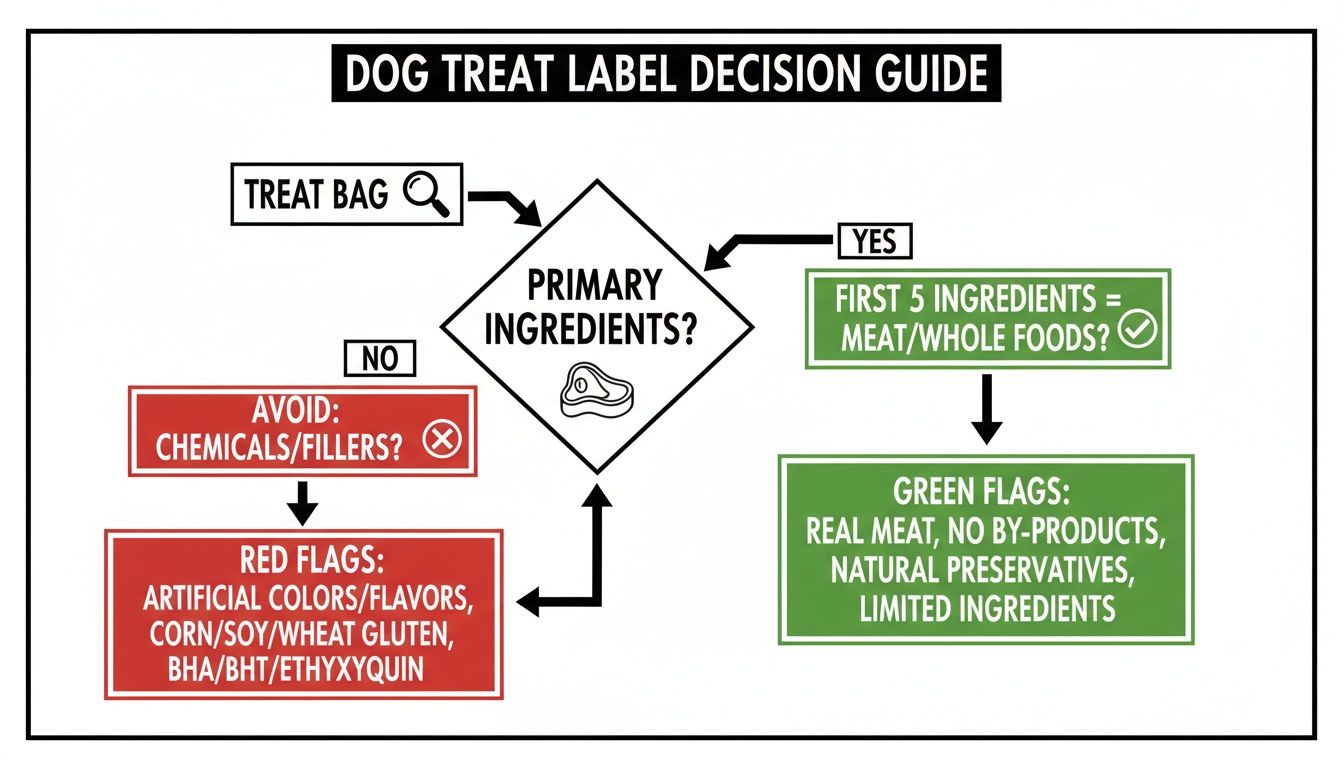
The main takeaway? Look for treats where the first few ingredients are real, whole foods, and steer clear of anything with artificial additives or vague fillers.
Managing Weight with Low-Calorie Choices
A slower metabolism combined with less activity means senior dogs can pack on the pounds easily. Even a little extra weight puts a massive strain on their joints and vital organs, so keeping them at a healthy weight is a top priority.
Treats can be a sneaky source of calories, but they don’t have to derail your dog’s diet. The best options are low in calories but still feel like a satisfying reward.
Look for treats that are:
- Low-Calorie: Many treats designed for seniors are formulated to be under 10 calories a pop.
- High in Fiber: Ingredients like pumpkin or sweet potato help your dog feel full without adding empty calories.
- Lean Protein-Based: Treats made from lean proteins like chicken breast or fish are a much better choice than those made with high-fat meats.
Being mindful of treat calories means you can keep spoiling your best friend without compromising their health.
Gentle Treats for Sensitive Stomachs
Just like ours, a dog's digestive system can get more sensitive with age, leading to an upset stomach or new food intolerances. If you have a dog with a finicky tummy, simplicity is your best friend.
Look for treats with Limited Ingredient Diets (LID). These products contain just a few ingredients—often one protein and one carbohydrate—which dramatically lowers the chance of triggering a reaction.
You might also consider hypoallergenic options. These often use "novel" proteins like duck or venison, which are proteins your dog probably hasn't eaten before. This makes an allergic reaction far less likely.
Homemade Treats for Your Senior Companion
When it comes to treats for your senior dog, the choice between store-bought and homemade can be a tough one. Commercial treats offer convenience and are often formulated by animal nutritionists. But making them yourself? That puts you in complete control.
There’s really no wrong answer here. It all comes down to what works for you, your lifestyle, and your dog’s specific needs. In fact, many of us land somewhere in the middle—we rely on trusted store-bought treats for everyday rewards but whip up a special homemade batch when we have the time. This way, our old friends get the best of both worlds.
The Benefits of Baking at Home
The number one reason to bake for your dog is simple: you know exactly what's in their treats. No more squinting at labels trying to decipher mystery ingredients or wondering about hidden fillers and artificial preservatives. This is a game-changer if your senior has food allergies, a sensitive stomach, or needs a special diet, like low-fat or low-phosphorus meals.
Making treats from scratch means you can customize everything. Need something extra soft for their aging teeth? You can adjust the texture. Want to add a little turmeric for joint support? Just sprinkle it in. Dealing with a new food intolerance? Swap out the protein. That's a level of personalization you just can't find in a bag on a shelf. If you're looking for inspiration, we have several vet-approved healthy dog treat recipes that are easy to adapt for your golden-years companion.
Simple Ideas for Senior-Friendly Treats
You don’t need to be a professional baker to make something your senior will love. The best recipes for older dogs are often the simplest ones, built around soft textures and ingredients that are easy on the tummy. You might be surprised to find you already have everything you need.
Here are a few easy, vet-approved ideas to get you started:
- Soft Pumpkin Puffs: All you need is some plain canned pumpkin, an egg, applesauce, and a bit of flour. They bake into a wonderfully soft, puffy little treat. Plus, pumpkin is a fantastic, low-calorie source of fiber for digestive health.
- No-Bake Peanut Butter Bites: Just mix some xylitol-free peanut butter, plain yogurt, and rolled oats together. Roll them into small balls and pop them in the fridge to set. It's that easy—no oven required!
- Steamed Veggie Cubes: Lightly steam and puree some carrots or sweet potatoes, then pour the mixture into an ice cube tray to freeze. These are cool, refreshing, and naturally low in fat.
A quick but crucial note: Always double-check that every ingredient is safe for dogs. For instance, use plain canned pumpkin, not sugary pie filling. And always make sure your peanut butter is free of xylitol, a sweetener that is extremely toxic to dogs.
This kind of care and attention to detail shows how much our dogs have become part of the family. Research has found that many pet owners are willing to spend 40–60% more for premium products that actively support their pet’s well-being. This mindset applies whether you’re buying a commercial treat packed with joint-support supplements or sourcing organic pumpkin for a homemade recipe. You can see more about this consumer trend on factmr.com. It's this commitment to quality that makes both high-end commercial treats and thoughtful homemade ones so valuable for our aging friends.
Common Questions About Senior Dog Treats
As our dogs enter their golden years, a lot of the old rules go out the window. What was once a simple reward now comes with new questions and considerations. We've all been there, wondering if we're doing the right thing for our aging best friend.
Think of this as a conversation about those common "what if" moments. Here are straightforward answers to the questions we hear most often from owners of senior dogs.
How Many Treats Can My Senior Dog Have Each Day?
When it comes to treats for older dogs, the golden rule is the "10% rule." It’s a simple but crucial guideline: treats should make up no more than 10% of your dog's total daily calories. Sticking to this is especially important for seniors, whose slower metabolisms and less active lifestyles make them prone to weight gain.
First, you’ll need to figure out your dog’s daily calorie goal. Your vet is the best person to give you this number, as they'll base it on your dog's ideal weight, age, and activity level. For instance, if your vet suggests a 500-calorie diet, then all treats combined for the day shouldn't add up to more than 50 calories.
Get in the habit of checking the calorie count on the treat package. You might be surprised to find that a single large biscuit can blow that entire 50-calorie budget! Breaking treats into smaller pieces is a great trick—it makes the reward last longer and helps you stay on track. This simple habit is one of the best ways to prevent obesity, which can make conditions like arthritis so much worse.
Are Dental Chews Safe for Older Dogs?
Dental chews can be a great tool for senior dogs, but you have to choose them with care. The rock-hard chews a younger dog might power through can pose a real fracture risk for an older dog with more brittle teeth or underlying gum issues.
The trick is to find softer dental treats made specifically for seniors. One of the best signs of a trustworthy product is the Veterinary Oral Health Council (VOHC) Seal of Acceptance. This seal tells you the product has been scientifically proven to help control plaque and tartar.
Here’s a great way to check a chew's safety: the "thumbnail test." Press your thumbnail firmly into the surface. If you can't make a dent, it's almost certainly too hard for your senior's teeth.
No matter how soft it seems, always watch your dog while they have a chew. Supervision is key to making sure they chew it safely and don't try to swallow large pieces, minimizing any choking risk.
Can I Give My Senior Dog Scraps from the Table?
It’s so tempting to share a bite of your dinner, but this is an area where you need to be cautious. While some human foods are perfectly fine as an occasional treat, many common ingredients are either toxic or can cause serious digestive problems for your dog.
If you want to share, stick to safe, low-fat options.
- Lean Proteins: A tiny piece of unseasoned, cooked chicken or turkey makes for a high-value reward.
- Fresh Veggies: Steamed green beans or a baby carrot can provide a satisfying crunch without the calories.
- Certain Fruits: Slices of apple (no core or seeds!) or a few blueberries are packed with healthy antioxidants.
The list of dangerous foods, however, is long. You absolutely must avoid giving them toxic items like grapes, raisins, onions, garlic, chocolate, and anything made with the artificial sweetener xylitol. Rich, fatty foods like cheese or bacon can also trigger pancreatitis, a painful and serious inflammation of the pancreas. Just remember to stick to the 10% rule and introduce any new food slowly.
When Should I Talk to My Vet About Treats?
A quick chat with your vet about treats is never a bad idea, but it becomes essential in a few key situations. Your vet can help you choose treats that support your dog's health instead of accidentally working against it.
It's absolutely critical to consult your vet if your dog has a pre-existing health condition.
- Kidney Disease: These dogs need carefully controlled levels of phosphorus and protein, and the wrong treat can do real harm.
- Diabetes: Treats can send blood sugar on a rollercoaster. Your vet can point you to snacks that won't interfere with their insulin regulation.
- History of Pancreatitis: Dogs prone to this condition must be on a strict low-fat diet, and most commercial treats are far too rich.
- Food Allergies: If your dog is on a special diet, you can't just grab any treat off the shelf. Giving them something unapproved could trigger a miserable allergic reaction.
Finally, trust your gut. If you introduce a new treat and notice anything off—vomiting, diarrhea, or just acting sluggish—stop giving it immediately and give your vet a call. They are your best partner in keeping your senior companion happy and healthy for years to come.
At Joyfull, we understand that a healthful life isn’t just for humans. That's why we create treats with clean ingredients and high-quality proteins, all reviewed by our veterinary advisor. Explore our better-for-you snacks designed for the pets you love at https://joyfullpet.com.