

Can Dogs Eat Pickles? A Guide for Concerned Pet Owners
So, can dogs eat pickles? Let's get straight to it: no, it's not a good idea. While a tiny nibble of a plain pickle probably won't cause a major issue, the ingredients swimming in that jar make them a risky and unhealthy snack for our pups.
Why Pickles and Dogs Don't Mix
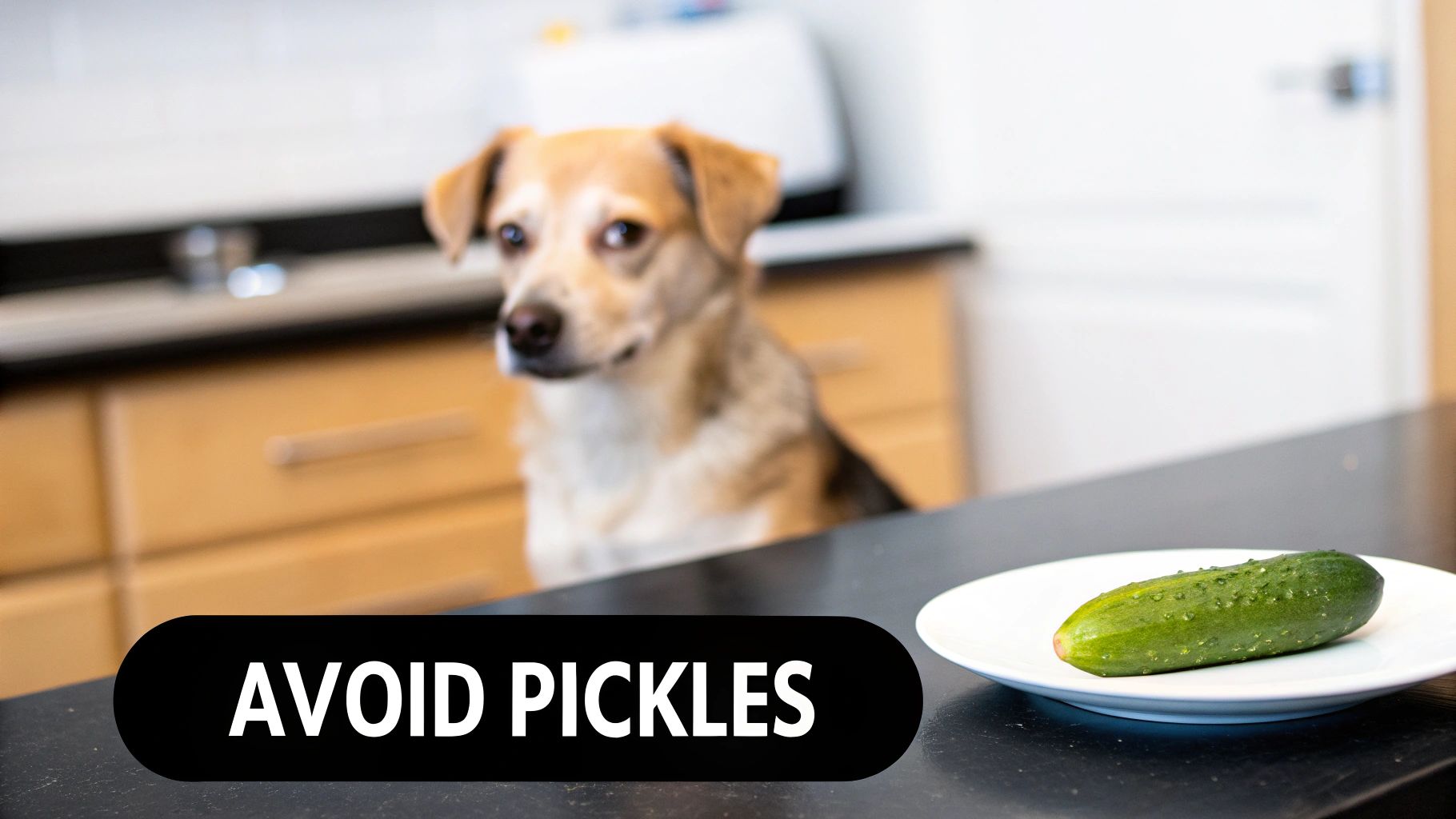
When we see a pickle, we see a humble cucumber. But from a dog's perspective, that cucumber is more like a sponge that’s been marinating in a brine full of things their bodies just can't handle. The real problem isn't the cucumber itself—it’s the salty, acidic solution it's been soaking in.
Think about the salt content for a second. Just one medium-sized dill pickle can pack hundreds of milligrams of sodium. For a small dog, that single bite could easily blow past their entire recommended daily salt intake. This kind of sodium shock can cause serious dehydration, spike their blood pressure, and in worst-case scenarios, lead to sodium ion poisoning.
Beyond the massive salt hit, the brine often contains ingredients that are straight-up toxic to dogs. Many pickling recipes call for garlic and onions (or their powders), both of which can damage a dog’s red blood cells and lead to severe health problems. This is why you always have to look past the cucumber and consider what's really lurking in that jar.
To break it down, here are the main red flags:
- Sky-High Sodium: This can trigger extreme thirst, vomiting, and diarrhea. Over time, it can contribute to kidney damage or even sodium poisoning.
- Dangerous Spices: Ingredients like garlic and onion powder are toxic to dogs, even in small amounts. Some "hot" or "spicy" pickles contain peppers that can also cause major stomach upset.
- Vinegar's Acidity: The high acid content in vinegar is often too harsh for a dog's digestive system, leading to an upset stomach and other gastrointestinal issues.
To give you a quick visual summary, here’s a look at why pickles and pups are a poor pairing.
Pickles for Dogs at a Glance
This table breaks down the individual components of a typical pickle and why they make it an unsuitable treat for your dog.
| Component | Potential Risk or Benefit | Recommendation |
|---|---|---|
| Cucumber | Minimal benefit (hydration, low-cal) | Not Recommended in Pickle Form |
| Salt (Sodium) | High Risk: Dehydration, sodium poisoning | Avoid |
| Vinegar | Moderate Risk: Stomach upset, GI issues | Avoid |
| Spices (Garlic, Onion) | High Risk: Toxicity, red blood cell damage | Avoid |
As you can see, the cucumber itself is the only harmless part, but once it's pickled, any benefits are completely overshadowed by the risks. It's much safer to stick to plain, fresh veggies.
Why Most Vets Recommend Against Pickles
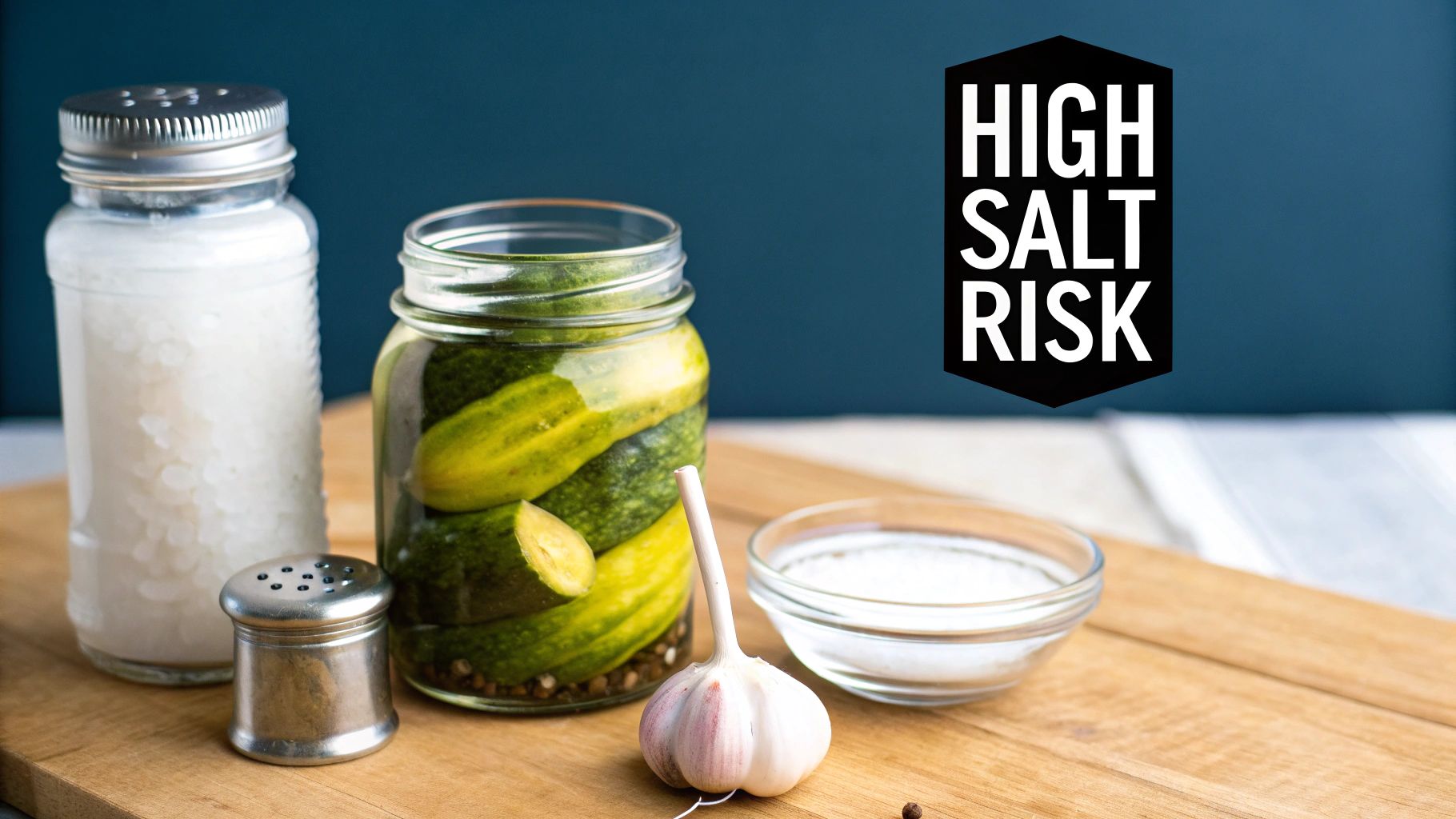
If you ask your vet if you can share a pickle with your dog, you'll likely get a quick, firm "no." This isn't just an overcautious opinion—it comes from a solid understanding of how a dog's body works. The cucumber itself is harmless, but the pickling process completely changes the game, turning a simple veggie into a potential health hazard for your pup.
The number one problem is sodium. That tangy, delicious brine that makes pickles so irresistible is absolutely loaded with salt. Dogs only need a tiny amount of salt in their diet, and their food is formulated to provide it. Tossing them a pickle can easily push them way over their daily limit.
The Problem with High Sodium Content
Think of your dog’s daily sodium requirement as a small thimble. Their high-quality dog food is designed to fill that thimble perfectly. Now, think of a pickle spear as a big bucket of saltwater. Giving them that pickle is like dumping the entire bucket into the thimble—it’s an instant, messy overflow.
That’s a good way to picture how a single pickle can overwhelm a dog's system. While the original cucumber has some minor perks like Vitamin K and a bit of fiber, they’re completely overshadowed by the massive salt content. A medium pickle can pack 500 to 1,100 milligrams of sodium. For a dog, a toxic dose of salt is generally considered anything over 2 grams per kilogram of body weight, so you can see how quickly it adds up.
Even a small piece can trigger immediate issues like intense thirst, vomiting, or diarrhea as your dog’s body frantically tries to deal with the salt overload.
A dog’s body is finely tuned for a low-sodium diet. A sudden influx of salt from a food like a pickle can disrupt their fluid balance, putting unnecessary strain on their kidneys and heart.
Over time, a high-sodium diet can lead to much bigger problems like high blood pressure and kidney disease. This is especially risky for dogs who already have underlying health issues. That momentary crunch just isn't worth the long-term gamble.
Hidden Dangers Lurking in the Jar
Beyond the salt, the pickle jar itself is often a minefield of ingredients that are dangerous for dogs. That flavorful brine isn't just salt and vinegar; it’s usually swimming with spices and aromatics that can be downright toxic to your furry friend.
Here are a few of the usual suspects that pose a serious threat:
- Garlic and Onions: It doesn’t matter if they’re fresh, powdered, or in flakes—garlic and onions are toxic to dogs. They belong to the Allium family and contain compounds that can destroy a dog's red blood cells, potentially causing a life-threatening condition called hemolytic anemia.
- Spicy Ingredients: Ever see "hot & spicy" or "zesty" on the label? That usually means chili peppers or red pepper flakes are involved. These can severely irritate a dog’s digestive system, leading to pain, vomiting, and awful diarrhea.
- High Acidity: The vinegar that preserves the pickles is extremely acidic. While it's what keeps them from spoiling, that same acidity can wreak havoc on your dog's stomach, often causing acid reflux and general digestive upset.
Because the recipe can vary so much from one brand to another, it's almost impossible to be certain a pickle is free of these hidden dangers. A good first step is to familiarize yourself with the common ingredients to avoid in dog treats.
Vets often caution against human foods in general, not just because of specific ingredients but also due to food safety risks. For everyone's well-being, it's wise to practice general food safety and kitchen hygiene tips in the kitchen. Ultimately, the safest and smartest choice is to skip the pickles and stick with treats made just for them.
Understanding Different Types of Pickles
Not all pickles are created equal. Walk down the grocery store aisle and you'll see a whole wall of them, from classic dills to fiery spears. They all start out as humble cucumbers, but the brining liquid they soak in is what makes all the difference—and what creates a different level of risk for a curious dog.
Knowing what sets them apart is the key to understanding why the answer to "Can dogs eat pickles?" is almost always a firm "no." Let’s take a look at the most common types you'll find and the specific dangers hiding in each jar.
Classic Dill Pickles
When you think of a pickle, you're probably picturing a classic dill. The brine is flavored with dill weed or dill seed, which are perfectly safe for dogs on their own. The real trouble lies in everything else floating around in that jar.
Most dill pickle recipes call for whole cloves of garlic and plenty of peppercorns. As we've already covered, garlic is toxic to dogs and can cause serious damage to their red blood cells. While a single clove might not send a Great Dane to the emergency vet, it’s a risk you should never take, especially with smaller dogs. And, of course, the high sodium content is still a major problem.
Sweet Pickles and Bread-and-Butter Pickles
Next up are the sweet varieties, like bread-and-butter pickles. To get that signature taste, they swap out some of the savory spices for a whole lot of sugar—another huge red flag for your dog's health. Dogs simply aren't built to handle added sugars in their diet.
Feeding your dog sugary foods can quickly lead to:
- Unhealthy weight gain and obesity.
- Dental issues like cavities and tooth decay.
- A greater risk of developing diabetes over time.
Worse yet, many sweet pickle recipes use onions or onion powder for that classic sweet-and-savory flavor profile. Onions are in the same toxic family as garlic and are just as dangerous for dogs. The combination of salt, sugar, and potential toxins makes sweet pickles an especially bad idea.
When you're thinking about sharing human food with your dog, you have to look past the main ingredient. The real danger is often in the additives—the spices, sugars, and salts we use for flavor can easily turn a safe vegetable into a serious health risk.
Spicy and Hot Pickles
Finally, we have spicy pickles, which are deliberately infused with ingredients that pack a fiery punch. These are easily the most hazardous variety for a dog to get ahold of.
These pickles are loaded with things that will wreak havoc on a dog’s digestive system. Common additions like hot peppers (think jalapeños or habaneros), red pepper flakes, and mustard seeds are known irritants. If your dog eats one, you can expect some serious tummy trouble, like intense stomach pain, vomiting, and severe diarrhea. It's a recipe for a very unhappy pup.
In the end, it doesn't matter what kind of pickle it is. The pickling process itself makes cucumbers a bad snack for dogs. Each variety just adds its own unique layer of risk—from toxic garlic and onions to unhealthy sugar and gut-wrenching spices—all on top of the dangerously high sodium found in every single jar. The best and safest choice is to keep all pickles far away from your dog.
What to Do If Your Dog Eats a Pickle
So, you turned your back for a second and your dog snagged a pickle off your plate. It's a startling moment for any pet owner, but don't panic. In most situations, a single, tiny bite of a pickle isn't an emergency. The first thing to do is take a deep breath and figure out what happened.
Your next steps will really depend on two things: how much your dog actually ate and what kind of pickle it was. A nibble of a plain dill pickle is one thing; scarfing down a whole spicy or sweet pickle is a completely different story.
First Steps: What to Do Right Away
First things first, make sure your dog can't get any more. Put the rest of the pickles and the jar somewhere safe and out of reach.
Next, get them a big bowl of fresh, clean water. The salt in the pickle will almost certainly make them thirsty, and encouraging them to drink is a great way to help flush out their system and stave off dehydration.
For the next 24 hours, you'll want to be on high alert. Keep a close eye on your dog for any sign that they're not feeling well.
A dog's reaction can be anything from a little tummy gurgle to a serious case of salt poisoning. Watching them closely in the hours after they eat the pickle is the best way to know if you need to call the vet.
Here are the key warning signs to look out for:
- Excessive Thirst and Urination: This is their body's natural way of trying to get rid of all that extra salt.
- Vomiting or Diarrhea: The vinegar and spices can be really harsh on a dog's stomach.
- Lethargy or Weakness: They might just seem tired, sluggish, and not like their usual self.
- Loss of Appetite: If your dog turns their nose up at their next meal, it's a clear sign their stomach is upset.
You might also notice some bloating or gas. That's pretty common when a dog eats something their system isn't used to. If you're curious about what causes this, it can be helpful to understand the common reasons why a dog has gas.
This little chart breaks down why the most common types of pickles just aren't a good idea for our dogs.
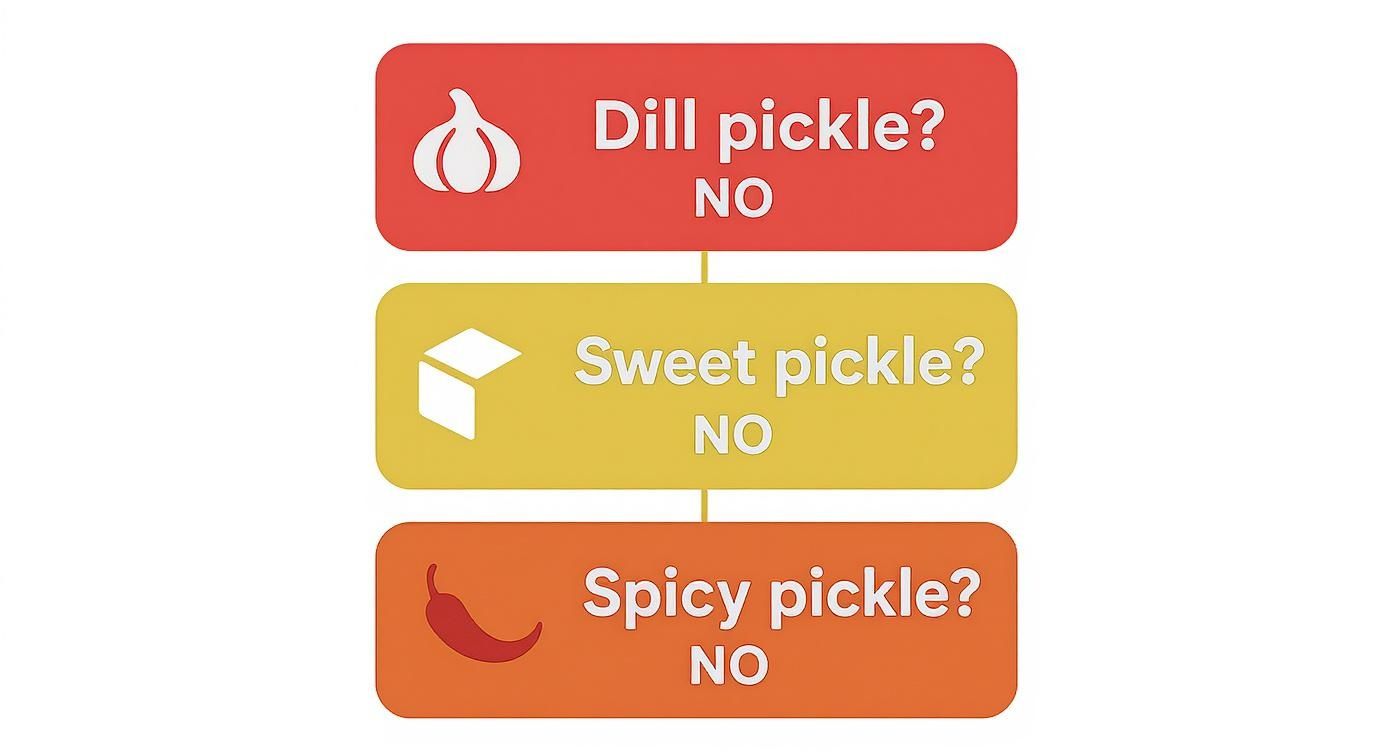
As you can see, whether it’s a dill, sweet, or spicy pickle, the other ingredients packed into that jar are what make it a problem for dogs.
When You Need to Call the Vet Immediately
While a little stomach upset can often be managed at home, some symptoms are red flags that you need professional help right away. If you see any of the following, don't wait—call your vet or an emergency animal hospital immediately. These could be signs of serious toxicity from the salt, garlic, or onions in the pickle brine.
- Stumbling or seeming uncoordinated (ataxia)
- Seizures or muscle tremors
- Extreme weakness or collapsing
- Severe or non-stop vomiting
- Pale gums
It's a sobering fact that sharing our food is a major cause of vet emergencies. Cases of sodium toxicity make up about 7% of all poisoning visits related to human food, and salty items like pickles are definitely part of that problem. With over 60% of owners admitting they share table scraps, it's so important to know the risks. When in doubt, always play it safe. Your veterinarian is your best partner in keeping your dog healthy and out of harm's way.
Safe and Crunchy Treat Alternatives for Your Dog
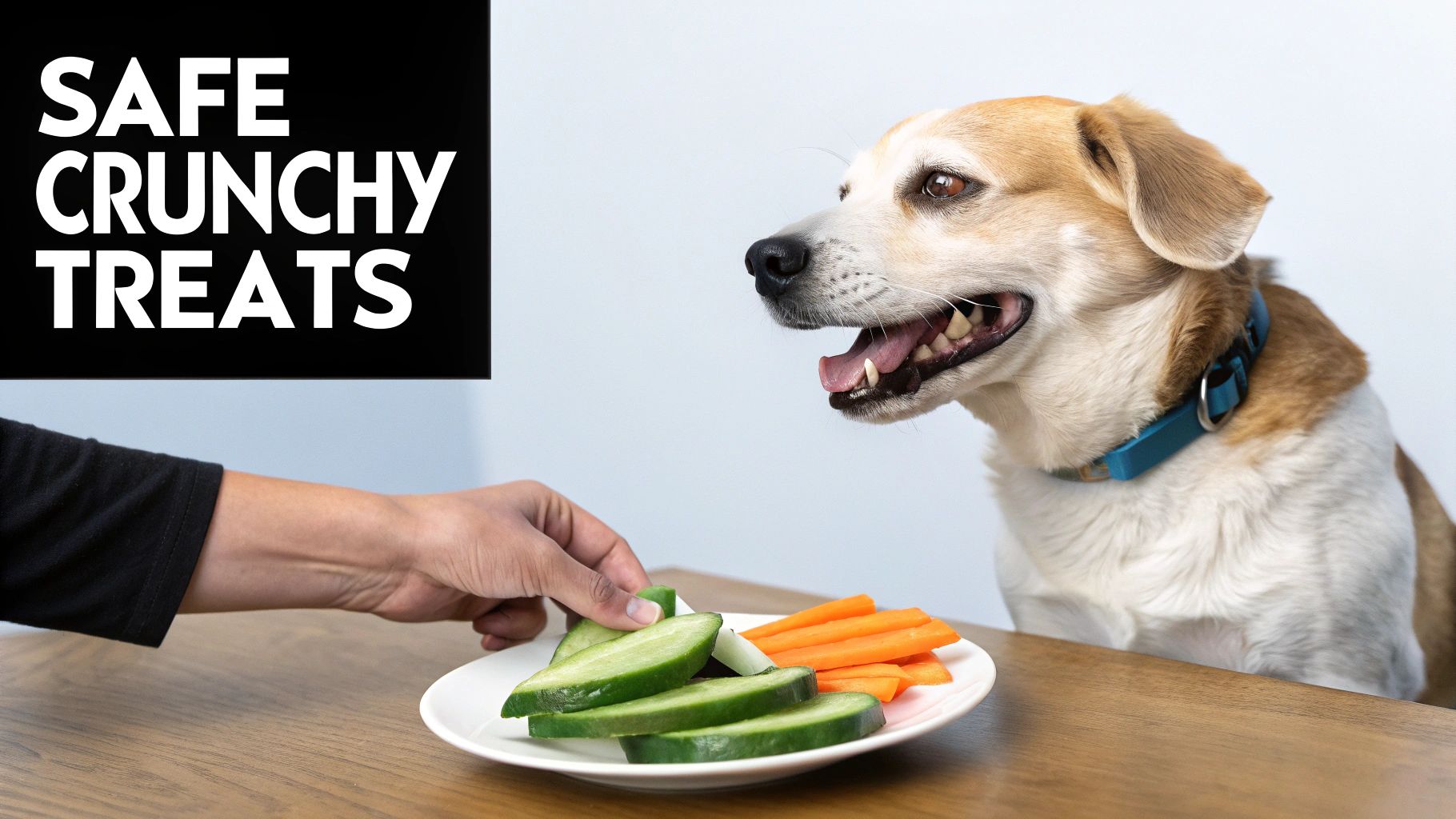
So, we've established that the pickle jar is pretty much a no-go zone for your furry friend. But that doesn't mean you have to deny them that satisfying crunch they love so much! Thankfully, there's a whole world of safe, healthy, and delicious options that deliver all the crispy fun without the risky sodium or toxic spices.
The most obvious place to start? The pickle's original form: a fresh cucumber. Sliced cucumbers are a fantastic, low-calorie treat for dogs. They’re mostly water, which is great for hydration, and they have that same crisp texture that makes pickles so appealing. Think of it as the ultimate pickle substitute, minus all the bad stuff.
Vet-Approved Crunchy Snacks
Beyond cucumbers, plenty of other fresh fruits and veggies make for excellent, tail-wag-worthy treats. These natural snacks don't just provide a fun texture; they're also loaded with valuable nutrients that contribute to your dog's overall health, from giving their teeth a little scrub to delivering a vitamin boost.
Here are a few vet-approved favorites you can feel good about sharing:
- Carrot Sticks: A classic for a reason. Carrots are packed with beta-carotene (which the body converts to Vitamin A), and their firm texture is great for helping to clean your dog’s teeth as they chew.
- Celery Stalks: Low in calories and full of fiber and water, celery is another fantastic crunchy option. Just make sure you chop it into bite-sized pieces to avoid any choking risks.
- Seedless Apple Slices: For a touch of sweetness, apples are a great choice. They're a good source of vitamins A and C. Always remember to remove the core and seeds first, as apple seeds contain trace amounts of cyanide.
When it comes to treats, my philosophy is always "simple and fresh." The best snacks for your dog are usually single-ingredient foods, straight from nature. They don't need the salt, sugar, and spices that make our own snacks so risky for them.
To help you visualize the difference, here’s a quick comparison of why swapping pickles for whole foods is a smart move.
Safe Snack Swaps for Pickles
| Snack Option | Key Benefits | Preparation Notes | Risk Level |
|---|---|---|---|
| Pickles | Minimal nutritional value for dogs. | High in sodium; may contain toxic ingredients. | High |
| Cucumber Slices | Hydrating, low-calorie, and crunchy. | Wash and slice into appropriate sizes. | Very Low |
| Carrot Sticks | Rich in Vitamin A, good for dental health. | Wash and cut into manageable sticks. | Very Low |
| Apple Slices | Source of vitamins A & C; sweet treat. | Remove seeds and core before serving. | Low |
| Celery | Low-calorie, high in fiber and water. | Cut into small, non-choking pieces. | Low |
As you can see, the choice is pretty clear. These natural alternatives provide all the enjoyment with none of the worry.
Simple Prep for Safe Snacking
Getting these healthy snacks ready for your pup couldn't be easier. The number one rule is to wash everything thoroughly to get rid of any lingering pesticides or dirt. After that, just chop the fruits or veggies into bite-sized pieces that are right for your dog's size. This simple step ensures they can chew and swallow safely.
By swapping risky human foods for these simple, wholesome alternatives, you can reward your dog with complete confidence. Keeping a variety of healthy snacks for dogs on hand makes treat time both exciting and beneficial. If you're looking to learn more about responsible pet ownership, including diet and safety, you can find more essential pet care resources to guide you.
Got More Questions About Dogs and Pickles?
Even when you know the risks, there are always those "what if" scenarios that pop into a pet parent's head. Let's clear up some of the most common questions so you can feel confident about what's safe for your dog.
Can Dogs Drink Pickle Juice?
That's a definite no. The pickle juice is actually the most hazardous part of the jar. Think of it as a super-concentrated shot of salt, vinegar, and spices, which is a recipe for disaster for a dog's system.
Swallowing that much salt at once can quickly lead to sodium poisoning and severe dehydration. Plus, the intense acidity from the vinegar can be incredibly rough on their stomach lining. It's best to keep that pickle jar sealed and well out of your dog's reach.
What If My Dog Ate a Tiny Piece of Pickle?
Okay, deep breath. If your dog snatched a tiny dropped sliver of a plain dill pickle, it’s probably not a five-alarm fire, especially if you have a larger dog. The key is to stay calm and observe.
For the next 24 hours, just keep a close eye on them. Make sure they have plenty of fresh water available to help their system process the extra salt. You'll want to watch for any signs of tummy trouble—things like vomiting, diarrhea, or drinking way more water than usual. If a day goes by and they're acting completely normal, you're likely in the clear.
But, if they ate a spicy or garlic-heavy pickle, or if you notice any symptoms that worry you, don't hesitate. A quick call to your vet is always the smartest move.
Are Other Fermented Foods Like Sauerkraut Safe?
This is another hard pass. Foods like sauerkraut and kimchi are a lot like pickles—they're made with a huge amount of salt. That high sodium content is essential for the fermentation process, but it makes them totally inappropriate for dogs.
Beyond the salt, many fermented foods contain ingredients that are flat-out toxic to dogs, like onions and garlic. It's a simple rule to live by: if a human food has been brined, pickled, or heavily seasoned, keep it away from your dog.
When you want to give your pup a crunchy treat, stick with fresh, plain vegetables. They get that satisfying crunch you know they love, but without any of the hidden dangers. A simple, whole-food snack is always the best way to show them you care.
At JoyFull, we believe a healthful life isn’t just for humans. That's why we create better-for-you snacks with clean ingredients and high-quality proteins, so you can reward your pet with complete peace of mind. Explore our treats and see the difference for yourself.