


Best Dog Treats for Sensitive Stomachs
When your dog has a sensitive stomach, the best treats are simple ones. Think limited, high-quality ingredients, easily digestible proteins like duck or lamb, and maybe a little gut-soothing pumpkin. The key is to avoid common triggers—artificial fillers, high-fat content, and known allergens—to keep your dog’s digestive system happy and calm.
Understanding Your Dog’s Sensitive Stomach
Imagine your dog's digestive system is like a finely-tuned instrument. When everything is in harmony, it runs beautifully. But if you introduce one wrong note—like a rich, fatty treat or a strange new ingredient—the whole thing can go off-key, leading to gas, diarrhea, or just plain discomfort. This is the daily reality for so many of us trying to navigate our dogs' digestive issues.
The first step is to become a bit of a "digestive detective." The signs of an upset stomach are usually pretty obvious, but figuring out the why can be tricky. Understanding what triggers your dog’s tummy troubles is the only way to make smart choices about what they eat, especially when it comes to treats.
Is It an Intolerance or an Allergy?
It's easy to lump all tummy troubles together, but it’s important to know the difference between a food intolerance and a food allergy. They’re not the same thing.
-
Food Intolerance: This is a straightforward digestive problem. Think of a person who gets bloated after eating dairy—their body just has a hard time processing a particular ingredient. It’s uncomfortable, causing things like gas and loose stools, but it doesn't trigger an immune response.
-
Food Allergy: This is a full-blown immune system reaction. The body incorrectly flags a food protein (often from common sources like chicken or beef) as a threat and attacks it. This can cause digestive upset, but you’ll also likely see skin issues like constant itching, hives, or even chronic ear infections. You can learn more about the complexities of a sensitive stomach in dogs in our detailed guide.
Why the Right Treat Matters So Much
Choosing the right treat is about so much more than just preventing a mess on the rug. It's about actively supporting your dog's daily comfort and long-term health. With the pet snack market expected to hit a staggering USD 79.23 billion by 2030, the sheer number of options on the shelf can feel overwhelming. This explosion in choices is actually a good thing, though—it shows that pet owners are demanding better, healthier products for their furry family members. You can find more insights on the growing pet treat market at grandviewresearch.com.
When you carefully select treats that work with your dog’s digestive system, you’re doing more than just giving a reward. You’re reinforcing their health, one happy, gut-friendly bite at a time.
This guide will be your roadmap through that crowded market. We’ll break down exactly what to look for on an ingredient label, compare different types of treats, and give you the confidence you need to choose the best dog treats for a sensitive stomach. Every snack should be a step toward a happier, healthier pup.
Decoding the Ingredient Label for Gut Health
Think of the ingredient list on a bag of dog treats less like a boring nutrition panel and more like a treasure map. For a dog with a sensitive stomach, this map can lead you straight to a happy, settled tummy—or into a minefield of digestive upset. Learning to read it quickly and confidently is the single most important skill you can have.
This visual guide breaks down what's really going on inside your dog's gut, connecting common causes to the simple solutions you can find right on the treat label.
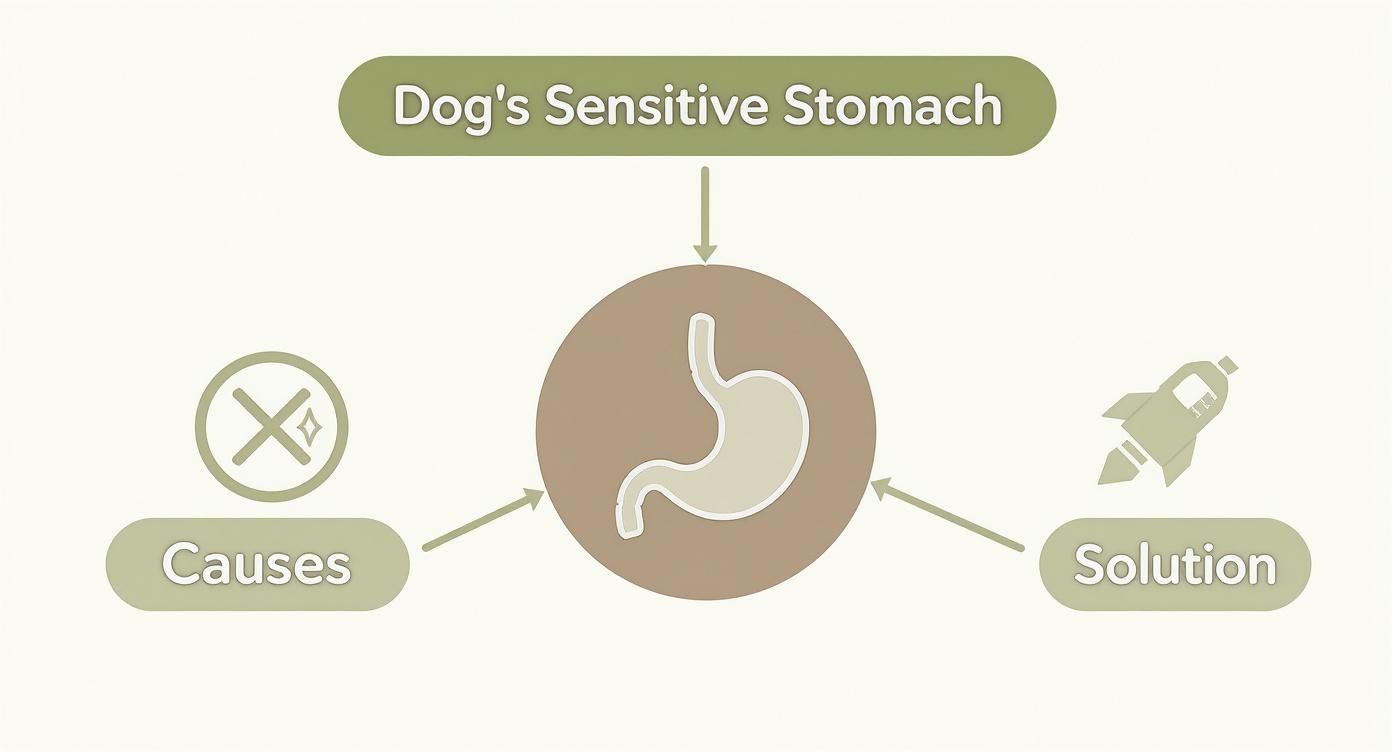
As you can see, the path to feeling better starts with figuring out the root cause. Once you know what you're up against, you can start looking for the right ingredients to help.
Gut-Friendly Heroes to Look For
When you're scanning that ingredient list, certain words should make you pause and take a closer look—in a good way. These are the ingredients that actively soothe and support your dog's digestive system.
- Limited Ingredients: This is huge. The shorter the ingredient list, the better. Fewer ingredients mean far fewer potential triggers for a sensitive system.
- Novel Proteins: If you suspect common proteins like chicken or beef are the problem, look for something new. Treats made with duck, lamb, rabbit, or fish are considered novel proteins and are much less likely to cause a reaction.
- Digestible Carbohydrates: Gentle, fiber-rich carbs are your friend. Pumpkin is a classic tummy-soother that helps firm up or loosen stool as needed, and sweet potatoes are packed with vitamins and easy on the gut.
- Soothing Herbs: Don't overlook the power of nature. Calming ingredients like chamomile or ginger have natural anti-inflammatory properties that can help an irritated digestive tract.
For any pet parent just starting this journey, taking the time to learn how to read dog food labels is a game-changer. It’s the difference between guessing at the store and making a confident, informed choice for your best friend.
Common Tummy Troublemakers to Avoid
Just as there are hero ingredients, there are definitely villains lurking on those labels. Spotting these is your cue to put that bag right back on the shelf. These culprits often add zero nutritional value and can easily throw a sensitive dog's system out of whack.
An ingredient label should be simple and clear. If you can't pronounce half the words or it reads more like a chemistry experiment, it's probably not the best choice for a dog with a sensitive stomach.
Being a little bit of a detective here can make a world of difference in your dog's daily comfort and happiness.
An At-A-Glance Comparison Guide
To make your shopping trips a little easier, I've put together a quick cheat sheet. Think of this table as your mental checklist for sorting the good from the bad.
Gut-Friendly Heroes vs. Common Tummy Troublemakers
| Ingredient Category | Look For (Gut-Friendly Heroes) | Avoid (Common Tummy Troublemakers) |
|---|---|---|
| Protein Source | Single or novel proteins (duck, lamb, fish). | Unidentified "meat by-products" or common allergens like chicken or beef if you know your dog is sensitive. |
| Carbohydrates | Easily digestible sources like pumpkin, sweet potato, or oats. | Cheap fillers like corn, wheat, and soy, which are common allergens and offer little nutritional value. |
| Fats | Healthy, named fats like salmon oil or flaxseed. | High-fat content, generic "animal fat," or greasy additives that can trigger pancreatitis. |
| Additives | Natural preservatives like mixed tocopherols (Vitamin E). | Artificial colors (e.g., Red 40), fake flavors, and chemical preservatives like BHA or BHT. |
| Dairy & Sugars | Treats without any dairy or added sugars. | Milk, cheese, or sweeteners like corn syrup. Most adult dogs are lactose intolerant. |
Ultimately, it comes down to this: prioritizing treats with a short list of recognizable, whole-food ingredients drastically cuts the risk of a bad reaction. This isn't just about avoiding a mess on the carpet; it's about choosing snacks that actively contribute to your dog's long-term health and well-being.
Choosing the Right Type of Dog Treat
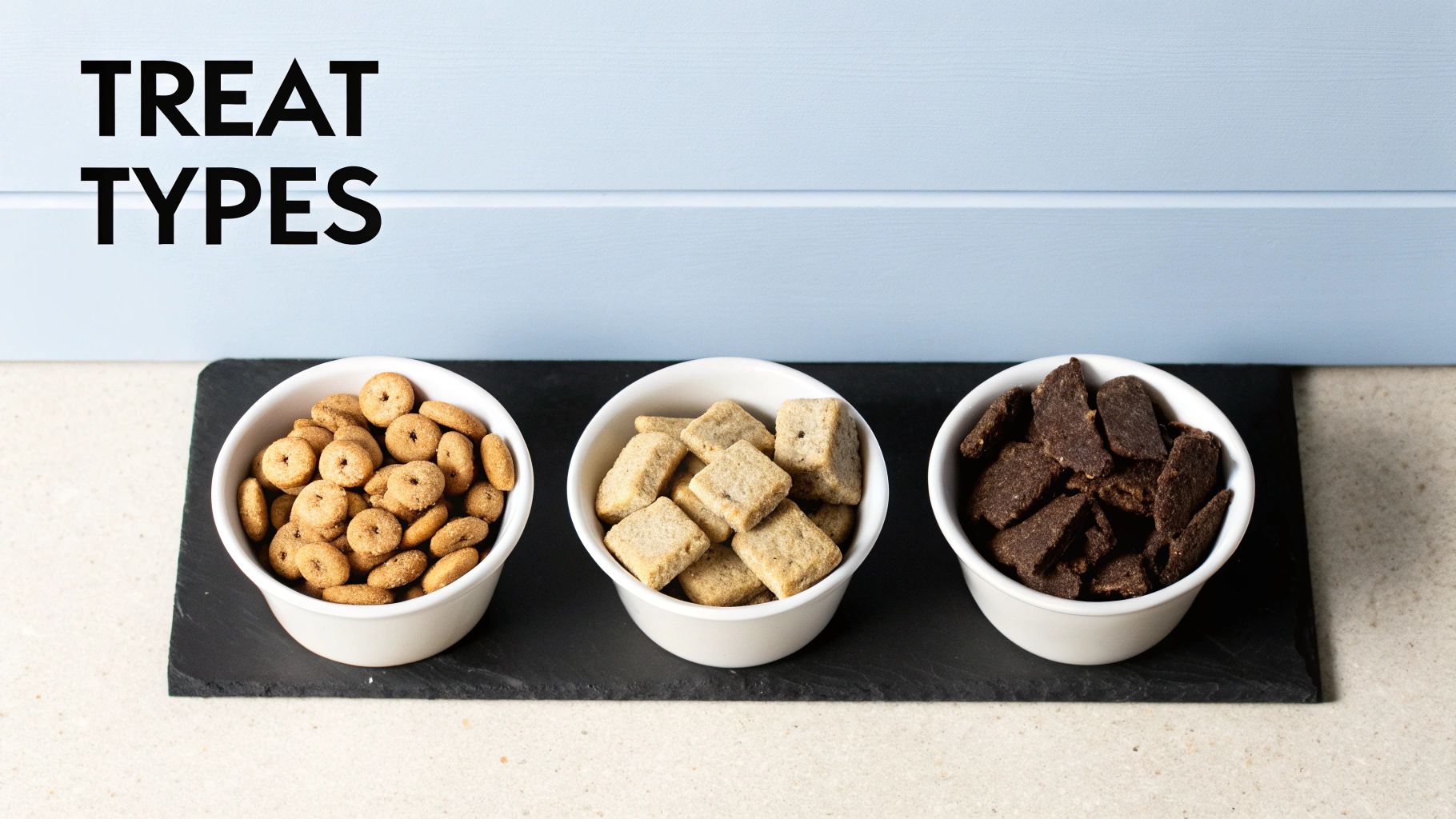
Once you've gotten the hang of reading ingredient labels, the next piece of the puzzle is the treat's form and function. How a treat is made can completely change how easy it is to digest. Think about it like this: a steamed vegetable is much gentler on your system than a deep-fried one, even though they started as the same thing.
For a dog with a tricky tummy, picking the right type of treat is just as important as the ingredients inside. Some formats are naturally easier on a delicate digestive system. Let's walk through the options so you can find the perfect match for your pup.
Limited Ingredient Treats: The Power of Simplicity
When you're dealing with a sensitive gut, the simplest path is often the best one. Limited Ingredient Diet (LID) treats are built on this very idea. They contain just a handful of ingredients, which drastically cuts down the odds of your dog eating something that will trigger an upset.
It’s a bit like detective work. If a treat has a dozen ingredients and your dog gets sick, good luck figuring out the culprit. But with only three or four ingredients, it's so much easier to connect the dots and figure out what works—and what definitely doesn't.
Single Protein Treats: Finding the Problem Ingredient
Taking that "less is more" concept a step further, single protein treats can be a real breakthrough for dogs who might have a protein allergy. These treats stick to just one animal source—like duck, lamb, or fish—which gets rid of the guesswork that comes with mixed-protein formulas.
If you switch your dog to a duck-only treat and their itching or tummy troubles clear up, you’ve just found a major clue that chicken or beef might be the problem. Our guide on the best single ingredient dog treats dives deeper into how this super-focused approach can help. This clarity is exactly why they are one of the best dog treats for a sensitive stomach.
Freeze-Dried Treats: Maximum Nutrition, Minimum Processing
You’ve probably seen freeze-dried treats everywhere lately, and there’s a good reason for their popularity. This preservation method is incredibly gentle. It removes moisture at a very low temperature, which locks in all the vital nutrients and natural flavor without needing high heat or a bunch of chemical preservatives. What you're left with is a treat that's about as close to its natural, raw state as you can get.
Because they are so minimally processed, they're typically very easy to digest. They’re often single-ingredient and don't have the fillers or binders you find in so many traditional biscuits, making them an excellent choice for a sensitive dog. The market agrees, with premium freeze-dried treats projected to grow at an 8.8% CAGR through 2030. A recent survey found that 70.1% of owners choose them because their dogs go crazy for the taste, while 6.3% specifically pointed to health improvements they noticed.
Freeze-dried treats give you the nutritional benefits of raw food with the convenience of a dry snack. They are a pure, powerful, and gut-friendly choice for sensitive dogs.
Soft and Baked Treats: Gentle and Easy to Chew
For some dogs, especially older pups or those with dental problems, a hard, crunchy biscuit can be a real challenge. Soft or gently baked treats are a fantastic, gentler alternative. Their texture is easier to break down, both in the mouth and later in the stomach.
When you're looking at baked treats, seek out ones that are air-dried or cooked at low temperatures, as this helps hold onto more of the good stuff. Just make sure to double-check the label—you want to be sure they aren't hiding the same fillers and artificial junk as their crunchy cousins. The goal is simple: a treat that's soft on the teeth and simple on the stomach.
Exploring Novel and Alternative Proteins
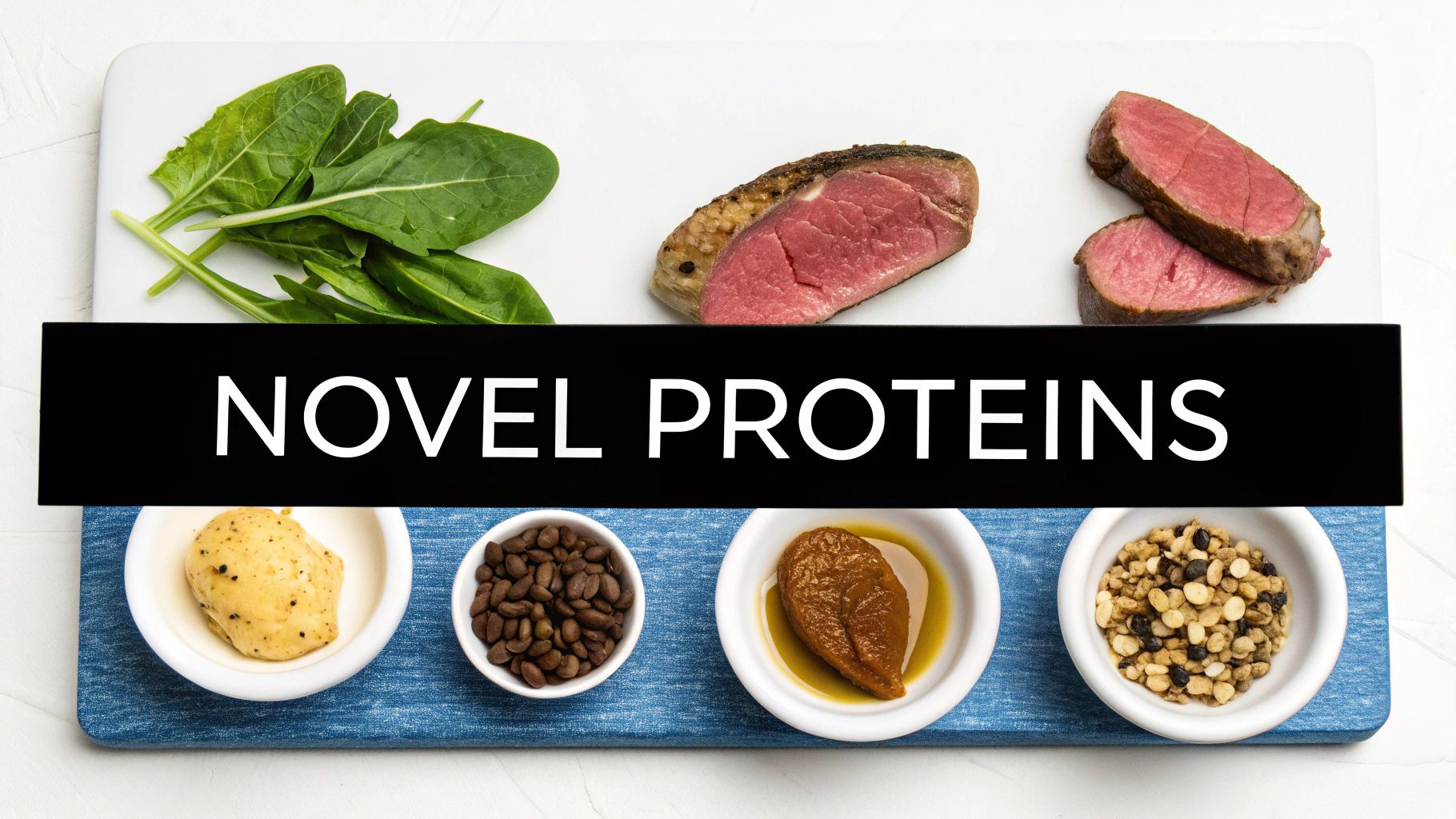
When you realize your dog can't handle common proteins like chicken or beef, it’s easy to feel stuck. With the most popular ingredients suddenly off-limits, where do you even begin? The answer might be in the exciting world of novel and alternative proteins.
Imagine your dog’s immune system is like an overeager bouncer at a club. It's seen chicken and beef so many times that it's started flagging them as trouble, sparking an allergic reaction. A novel protein is like a new face the bouncer has never seen before, so it gets a free pass without setting off any alarms. This simple concept is why these ingredients are a cornerstone of the best dog treats for a sensitive stomach.
By using a protein your dog's body isn't familiar with, you can sidestep the usual triggers. This gives their immune system—and their gut—a well-deserved break.
What Are Novel Proteins?
At its core, a novel protein is just what it sounds like: a protein source that is new to your dog. By introducing a meat they haven't been exposed to before, you can often get around the digestive upset and itchy skin that plague so many dogs with food sensitivities.
Some fantastic novel protein options to look for include:
- Duck: A rich and tasty poultry option that's far less likely to cause a reaction than its cousin, chicken.
- Rabbit: An incredibly lean, highly digestible protein that’s naturally gentle on the stomach.
- Venison: A top-tier choice for dogs with multiple food allergies because it’s so rarely found in commercial pet foods.
- Lamb: While it's become more common, lamb can still be a novel choice for many dogs raised on a diet of chicken and beef.
Making the switch to treats made with just one of these single proteins can be a game-changer. It helps you zero in on what works while still giving your pup a reward they'll love.
The Rise of Alternative Proteins
Beyond just swapping one meat for another, the pet food world is buzzing with some truly different protein sources. Driven by concerns for sustainability and the need for hypoallergenic options, these alternatives pack a powerful nutritional punch and are often even gentler on a dog’s system.
The goal isn't just to find something new for your dog. It's to find a protein that's also highly digestible and loaded with the nutrients they need to feel their best. Alternative proteins nail both of these requirements.
One of the most promising newcomers is insect protein. I know, it sounds a little strange at first, but insect-based proteins are nutritionally complete and incredibly easy for dogs to digest.
This isn't just a gimmick; the market is booming for good reason. Alternative proteins, especially those from insects, have seen a staggering 46% year-over-year growth in North America and Europe. For instance, black soldier fly (BSF) protein has shown 92% digestibility in dogs, making it a true superstar for sensitive systems. With hypoallergenic proteins on track to make up 24% of the market by 2025, it's clear they are a serious solution for worried pet parents. For a deeper dive into these market trends, you can check out some of the insights from Future Market Insights.
By opening your mind to both novel and alternative proteins, you unlock a whole new menu of safe, tasty, and gut-friendly choices. You can finally give your dog a treat with confidence, knowing you're supporting their health from the inside out.
How to Introduce New Treats Without Upsetting the Apple Cart
So, you’ve done your homework and found what looks like the perfect, gut-friendly snack for your pup. Fantastic! But hold on—even the highest-quality dog treats can backfire if you introduce them too quickly. A dog's digestive system is a creature of habit, and any sudden change, no matter how healthy, can throw that delicate internal ecosystem for a loop.
Think of it this way: you wouldn't go from the couch to running a marathon overnight. Your dog’s gut needs a similar training period to get used to new ingredients. A slow, careful introduction is your best bet for making this a win for everyone involved, especially your dog’s tummy.
Start Low and Go Slow
This is the golden rule for any new food, and it’s non-negotiable for sensitive dogs: start low and go slow. The whole point is to avoid overwhelming their digestive tract while giving you a chance to spot any red flags. Tossing them a full-sized treat on day one is just asking for gas, bloating, or loose stools.
Instead, start with just a tiny piece. Break the treat into smaller bits and offer only a fraction of what a normal serving would be. For the first few days, that little taste is all they need. Right now, it’s not about the size of the reward; it’s about letting their body get acquainted with the new ingredients safely.
A Foolproof Introduction Timeline
A structured schedule really takes the guesswork out of the process. When you follow a clear plan, you can confidently increase the amount over time while keeping a close eye on how your dog is handling it. This method gives their system plenty of time to adapt.
Here’s a simple, vet-approved schedule that works like a charm:
- Days 1-3: Offer just one-quarter of a single treat each day. This is your initial test run.
- Days 4-6: If all is well (no upset tummies!), you can bump it up to one-half of a treat per day.
- Days 7-9: Still smooth sailing? Great! You can now offer one full-sized treat each day.
- Day 10 and Beyond: Once you’ve made it through a week and a half with zero issues, you can officially add this treat to their regular snack rotation.
This gradual ramp-up is the most reliable way to sidestep the very digestive drama you’re trying to prevent.
Don't Forget the 10 Percent Rule
As you start adding the new snack into your dog’s daily life, it's essential to stick to the 10 percent rule. This is a cornerstone of canine nutrition: treats should never make up more than 10% of your dog’s total daily calories.
Even the healthiest treats can throw a balanced diet out of whack or overload their system if you overdo it. A treat is just that—a treat. It should complement their main meals, not compete with them.
For instance, if your dog’s daily diet is around 400 calories, then a maximum of 40 of those calories should come from treats. Going over this limit can lead to weight gain and shortchange them on the essential nutrients they get from their balanced, complete meals. Always check the calorie count on the package and do the math.
The First 72 Hours Are Critical
Pay close attention for the first 72 hours after that very first taste. This is the prime window for a reaction to pop up if an ingredient just isn't sitting right with your dog. Put on your detective hat and be a keen observer during this time.
You're looking for any changes, even subtle ones. Key things to watch for include:
- Stool Consistency: Is it firmer, looser, or the same as always?
- Gas: Any more toots than usual?
- Vomiting or Regurgitation: Any sign of food coming back up.
- Behavior: Do they seem sluggish, uncomfortable, or just not themselves?
- Itching: Have they started scratching or licking more than normal?
If you spot any of these warning signs, hit the pause button on the new treat immediately and let their system calm down. If the symptoms don't clear up, a call to your vet is always the best move. This careful monitoring helps you catch a small issue before it becomes a big problem.
Still Have Questions? Let's Talk Treats
It’s completely normal to have a few lingering questions, even after you’ve found the perfect treat and nailed the slow introduction. Taking care of a dog with a sensitive tummy can feel like walking a tightrope, but you're not in this alone.
Think of this section as your go-to reference for those practical, everyday concerns. We've covered the why and the how; now, let's clear up some of the common questions that pop up for pet parents just like you.
How Many Treats Can I Actually Give My Dog Each Day?
This is a big one, and the answer is simple: follow the 10% rule. Vets stand by this guideline, which states that treats should make up no more than 10% of your dog's total daily calories. Anything more can lead to weight gain and throw off the nutritional balance of their main meals.
Let's break it down. If your dog needs 500 calories a day to stay in shape, only 50 of those should come from treats. When you're trying a new treat for the first time, start even smaller—just one or two tiny pieces a day. This gives you a chance to see how their system reacts before you work up to that 10% ceiling.
Always glance at the calorie count on the package. If you give a few extra treats, you might need to slightly reduce their kibble for that day. It’s a balancing act, and even the "best" sensitive stomach treats can cause trouble if you overdo it.
What's the Real Difference Between a Food Allergy and an Intolerance?
This is a fantastic question because people mix these terms up all the time, but they describe two totally different issues inside your dog's body. Knowing the difference helps you get to the root of the problem.
-
A food allergy is a full-blown immune system overreaction. The body wrongly flags a protein—often something common like chicken or beef—as a dangerous invader and launches an attack. This causes the classic digestive upset (vomiting, diarrhea), but it’s also the culprit behind skin problems like non-stop itching, hives, or those frustratingly chronic ear infections.
-
A food intolerance, on the other hand, is much simpler. It's a digestive problem, plain and simple. Your dog’s gut just can't process a specific ingredient correctly. Think of it like a person who is lactose intolerant—eating dairy causes gas, bloating, and an upset stomach, but it doesn't trigger an immune response.
This is exactly why limited ingredient treats are so helpful. By keeping the ingredient list short and sweet, you dramatically reduce the chances of including a trigger, whether it's an allergen or an intolerance.
Are Grain-Free Treats Always the Best Bet?
Not necessarily, and this is a huge misconception in the dog world. While it's true some dogs react poorly to grains like wheat or corn, the real troublemaker is often the protein source, not the grain. In reality, many dogs thrive on healthy, easy-to-digest grains like brown rice or oatmeal.
Sometimes, grain-free formulas create new problems. To replace grains, manufacturers often load up their recipes with legumes like peas and lentils, which can leave some dogs feeling gassy and bloated. The goal shouldn't be to blindly cut out an entire food group. Instead, focus on finding high-quality, simple ingredients that your specific dog can handle.
The smartest strategy is to pinpoint your dog's actual trigger. A grain-free treat won't do any good if your dog's real problem is with chicken.
When Should I Call the Vet About My Dog's Stomach?
Carefully chosen food and treats can work wonders for mild sensitivities, but some symptoms are serious red flags. Don't hesitate to call your veterinarian if you see any of the following, as they could signal a deeper medical issue.
Book an appointment right away if your dog has:
- Chronic diarrhea that doesn't clear up in a day or two.
- Repeated vomiting, especially if it happens often or you see any blood.
- Lethargy or a sudden disinterest in playing or going for walks.
- Unexplained weight loss, even if they're still eating well.
- Blood in their stool, which can look like bright red streaks or dark, tarry stools.
Symptoms like these could point to bigger problems like inflammatory bowel disease (IBD), pancreatitis, or other gastrointestinal conditions. Your vet is the only one who can run the right tests to figure out what's really going on and create a treatment plan that goes beyond simply switching treats. When it comes to your dog's health, it's always better to be safe and get a professional opinion.
At Joyfull, we believe that a healthy life isn't just for humans—our pets deserve it, too. That’s why we create better-for-you snacks with clean ingredients and high-quality proteins, all reviewed by our in-house veterinary advisor. Explore our formulas and give your pet the genuinely beneficial treats they deserve by visiting us at https://joyfullpet.com.