


If you want your dog to have a truly beautiful, shiny coat, the secret isn't just in the grooming brush—it's in their food bowl. The right diet, packed with high-quality protein, essential fats like Omega-3s and Omega-6s, and a powerhouse of vitamins and minerals, is what truly makes a difference. Think of ingredients like salmon, flaxseed, and biotin as the ultimate team for turning dull fur into a vibrant, glossy coat.
After all, that lustrous sheen isn't just for looks; it’s one of the clearest signs that your dog is healthy from the inside out.
Your Dog's Coat Is a Window to Their Health
Have you ever stopped to wonder what makes one dog’s coat feel so soft and look so radiant? It’s far more than just a good bath. A dog's skin and fur are a direct reflection of their internal health, offering powerful clues about what’s going on beneath the surface.
A brittle, flaky, or dull coat is often one of the first red flags pointing to a nutritional shortfall. On the flip side, a strong, shimmering coat is one of the best indicators of a well-nourished, thriving companion. Simply put, diet is the cornerstone of great fur.
The Building Blocks of a Flawless Coat
To get that head-turning shine, a dog’s body needs a specific set of nutritional tools. When they get these in the right amounts, the results speak for themselves. The most important players are:
- High-Quality Proteins: Hair is made almost entirely of protein. Ingredients like chicken, salmon, or lamb provide the essential amino acids needed to construct strong, resilient hair strands from the follicle up.
- Essential Fatty Acids: Omega-3 and Omega-6 fatty acids are the undisputed champions of coat health. They help manage skin inflammation, lock in moisture, and are directly responsible for that signature glossy look.
- Vitamins and Minerals: Key nutrients like Vitamin E, Biotin (a B-vitamin), and Zinc are critical for skin cell turnover and supporting the hair follicles where all that beautiful fur begins.
A dog’s skin and coat are a true mirror of the nutrition they receive. Choosing a balanced diet with these key nutrients is the single most important step you can take toward a healthy, beautiful coat.
This isn't just a niche concern anymore; pet parents everywhere are catching on. The global dog food market, valued at roughly USD 69.44 billion, is expected to climb to USD 99.01 billion by 2033. A huge driver of that growth is the demand for functional foods that target specific health benefits, like improving skin and coat. You can find more details on these trends in reports from research firms like Mordor Intelligence.
To help you keep track, here's a quick rundown of the most important nutrients we'll be discussing.
Key Nutrients for a Shiny Dog Coat at a Glance
This table breaks down the core building blocks for a healthy coat, explaining what they do and where you can find them.
| Nutrient | Why It's Important for Coat Health | Common Food Sources |
|---|---|---|
| High-Quality Protein | Forms the structural basis of hair, ensuring strength and resilience. | Chicken, Lamb, Fish (Salmon, Tuna), Eggs |
| Omega-3 Fatty Acids | Reduce inflammation, support skin health, and add a glossy sheen. | Fish Oil (Salmon, Sardines), Flaxseed, Algae |
| Omega-6 Fatty Acids | Maintain the skin's moisture barrier, preventing dryness and flakiness. | Chicken Fat, Sunflower Oil, Corn Oil |
| Biotin (Vitamin B7) | Essential for healthy skin and hair growth, preventing hair loss. | Liver, Eggs, Salmon, Sweet Potatoes |
| Zinc | Aids in skin cell production and helps maintain a healthy skin barrier. | Red Meats, Fish, Poultry, Legumes |
| Vitamin E | An antioxidant that protects skin cells from oxidative damage. | Leafy Greens, Seeds, Plant Oils, Fish |
Think of these nutrients as the dream team for your dog’s coat. Getting them in the right balance is what creates that visible, touchable difference.
Understanding the Building Blocks of a Brilliant Coat
Ever wonder what makes a dog’s coat truly shine? It’s not just about grooming—it all starts from the inside out. Think of it like building a house: you can't end up with a beautiful, sturdy structure if you're using subpar materials. The same goes for your dog's coat.
The best dog food for a shiny coat is one that gets the formula right, combining all the essential nutrients your dog needs to look and feel their best. Let's break down exactly what those nutritional building blocks are and why they matter so much.
Protein: The Foundation of Every Hair
First things first: protein is the absolute, non-negotiable foundation for a healthy coat. This isn't just a hunch; it's science. Your dog's hair is made up of about 95% protein, mostly a tough, fibrous kind called keratin.
If you don't give your dog enough high-quality protein, their body simply can't produce strong keratin. The result? Weak, brittle hair that breaks easily and looks dull and lifeless. It's like trying to build a brick wall with crumbling, low-quality bricks—it just won't hold up.
That's why real protein sources like chicken, salmon, and lamb are so crucial. They deliver the essential amino acids—the individual components of protein—that your dog’s body assembles into strong, resilient strands of hair. Getting this right is the most important step toward that lustrous sheen. To learn more about what makes an ingredient truly high-quality, check out our guide on the best ingredients in dog food.
Omega Fatty Acids: The Secret to Shine and Softness
If protein builds the hair, Omega-3 and Omega-6 fatty acids are what make it shine. These essential fats are responsible for maintaining healthy skin and a glossy coat, handling everything from moisture retention to reducing inflammation.
Omega-6 fatty acids, often found in chicken fat and certain plant oils, are vital for maintaining the skin's natural barrier. This barrier works like a seal, locking in moisture to prevent dry, flaky skin while keeping environmental irritants out.
Omega-3 fatty acids, which are plentiful in fish oil from sources like salmon, are famous for their anti-inflammatory power. They help soothe skin irritation from the inside and are directly responsible for that deep, healthy gleam in your dog's coat.
It's the balance between Omega-6 and Omega-3s that really makes the magic happen. This synergy is what takes a coat from just being "healthy" to being truly head-turning and radiant.
This visual map helps tie together the core nutrients that work together for a brilliant coat.
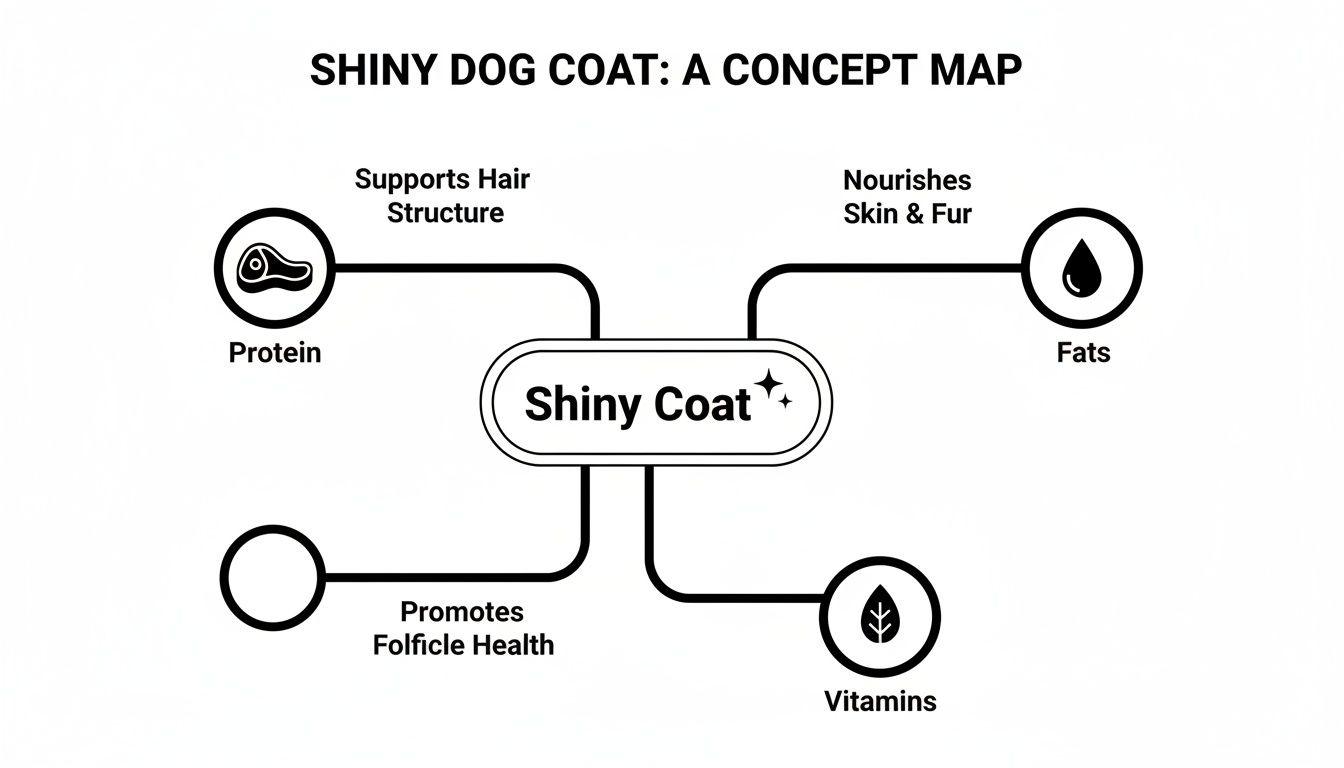
As you can see, a shiny coat isn't a happy accident. It’s the direct result of top-tier proteins, healthy fats, and key vitamins and minerals all working in perfect harmony.
Vitamins and Minerals: The Finishing Touches
Finally, let's talk about the micronutrients. Vitamins and minerals are the unsung heroes of coat health. Think of them as the support crew—the electricians and plumbers who make sure everything in the house runs smoothly.
Without these essential vitamins and minerals, the body can't properly use the proteins and fats you're providing. They are the catalysts that unlock the full potential of the other nutrients.
Here are a few of the most important players:
- Biotin (Vitamin B7): Known as the "beauty vitamin," biotin is crucial for metabolizing fats and proteins. It plays a direct role in strengthening hair and supporting healthy skin cell turnover.
- Zinc: This mineral is a true workhorse for skin health. It's essential for cell repair and supports the hair follicles where new growth begins, keeping the skin barrier strong and resilient.
- Vitamin E: A powerful antioxidant, Vitamin E acts like a personal bodyguard for skin cells. It protects them from damage caused by free radicals, helping to keep skin healthy and better able to support a thick coat.
When you choose your dog's food, you're hand-picking the raw materials for their entire body. By making sure that food is packed with high-quality protein, a healthy balance of omegas, and a full spectrum of vitamins and minerals, you're giving them everything they need for a coat that's not just beautiful, but a true reflection of their vibrant health.
How to Read Dog Food Labels Like a Pro
Ever feel overwhelmed in the pet food aisle? The shelves are stacked with brightly colored bags, each one shouting promises of a healthier, happier dog. It's a lot to take in. But the real story isn't on the front of the bag—it's in the fine print on the back.
Learning to decode a dog food label is the single most important skill you can have when you're aiming for that glossy, show-stopping coat.
Think of the ingredient list like a recipe. Everything is listed by weight, starting with the heaviest ingredient. The first five ingredients are your North Star because they make up the vast majority of what’s in the bag. Right there, you can usually tell a premium food from a mediocre one.
The First-Five-Ingredients Rule
When you flip that bag over, make a beeline for the top of the ingredient panel. For a diet that’s going to make your dog’s coat shine, you want to see specific, high-quality animal proteins right at the top. These are the building blocks for strong, healthy hair follicles.
Here’s what you want to see:
- Named animal proteins: Look for clear terms like "deboned chicken," "lamb meal," or "salmon." This tells you exactly what kind of protein is being used.
- Healthy fats: Seeing "chicken fat" or "salmon oil" high on the list is a great sign. These are rich sources of the Omega fatty acids that give a coat that beautiful sheen.
And here are some red flags:
- Vague terms: Be cautious of phrases like "meat by-products" or "poultry meal." These non-specific terms can come from a mix of lower-quality sources.
- Carb-heavy fillers: If the first few ingredients are corn, wheat, or soy, you're looking at a primarily plant-based food. It's likely lacking the powerful animal-based nutrients your dog’s coat really needs.
This quick scan is your first-pass filter. For an even more detailed walkthrough, check out our complete guide on how to read dog food labels.
Decoding the Dog Food Label for Coat Health
To make it even simpler, here's a quick cheat sheet for what to look for and what to avoid when you're scanning that label with coat health in mind.
| Label Component | Look For (Signs of Quality) | Avoid (Red Flags) |
|---|---|---|
| Protein Source | Named animal proteins (e.g., "chicken," "salmon," "lamb meal") listed first. | Vague terms like "meat meal" or "animal by-products." |
| Fat Source | Named animal fats ("chicken fat") or fish oils ("salmon oil"). | Unnamed fats ("animal fat") or vegetable oils low in omegas. |
| Carbohydrates | Whole grains (brown rice, oats) or complex carbs (sweet potatoes). | Fillers like corn, wheat gluten, and soy in the top ingredients. |
| Omega Sources | Explicitly listed fish oils, flaxseed, or chia seeds. | No clear sources of Omega-3 or Omega-6 fatty acids. |
| Vitamins/Minerals | Zinc, biotin, and Vitamin E listed in the supplement section. | Formulas missing these key skin-supportive micronutrients. |
| Preservatives | Natural preservatives like mixed tocopherols (a form of Vitamin E). | Artificial preservatives like BHA, BHT, or ethoxyquin. |
Using this table as a guide helps you quickly cut through the marketing fluff and get right to the nutritional facts that matter for your dog's skin and coat.
Understanding the Guaranteed Analysis
Next up is the "Guaranteed Analysis" box. This section gives you the minimum percentages of crude protein and fat, along with the maximums for fiber and moisture. While these numbers are a starting point, they don't paint the full picture of quality.
A high protein percentage is great, but the source of that protein is what really counts. A 25% crude protein level from salmon meal is worlds apart from the same percentage derived from corn gluten meal, especially when it comes to coat health.
The Guaranteed Analysis tells you how much of a nutrient is there, but the ingredient list tells you where it comes from. You need both to make a smart choice.
Pet parents are catching on. According to the American Pet Products Association, spending on pet food and treats hit a staggering $65.8 billion, with projections to climb to $67.8 billion. This surge shows a clear trend: owners are actively seeking out premium foods to get tangible benefits, like a healthier skin and coat.
Identifying Coat-Boosting Powerhouses
Once you’ve vetted the main ingredients, scan the rest of the list for the supporting cast—the specific nutrients that take a good food and make it great for that glossy sheen.
Look for these key players further down the list:
- Fish Oils: Salmon oil, herring oil, or menhaden fish oil are Omega-3 goldmines.
- Flaxseed: A fantastic plant-based source of both Omega-3 and Omega-6 fatty acids.
- Biotin and Zinc: Often added as supplements to directly support healthy skin and strong hair follicles.
- Vitamin E Supplement: This powerful antioxidant helps protect skin cells from damage.
By learning to read the label, you're no longer relying on marketing claims. You become your dog's personal nutritionist, armed with the knowledge to choose a food that builds a beautiful coat from the inside out—a true reflection of their overall health.
Choosing the Right Food for Your Unique Dog
There’s no magic bullet food that works for every single dog out there. Just like people have their own unique dietary needs, so do our dogs. The real secret to unlocking a truly brilliant, head-turning coat isn't finding a generic "good" food—it's about finding the perfect match for your dog's individual biology.
Think about it this way: a world-class marathon runner and a professional weightlifter are both elite athletes, but you'd never give them the same meal plan. The same logic applies to dogs. Factors like their breed, how old they are, and any sensitivities they might have play a huge role in what their body actually needs to thrive.
Consider Your Dog's Breed and Coat Type
A dog's breed is essentially its genetic blueprint, and that blueprint dictates everything from their size to the specific texture and needs of their coat. This means different breeds have very different nutritional demands.
-
Dense Double Coats: If you have a Siberian Husky or a German Shepherd, you know all about that thick, weather-resistant fur. Maintaining that incredible double coat requires a steady supply of high-quality proteins and healthy fats to support the constant cycle of shedding and regrowth.
-
Silky or Long Coats: For breeds like Yorkshire Terriers or Afghan Hounds, the goal is to keep those long, flowing locks from becoming dry and brittle. They need plenty of Omega fatty acids to maintain that signature silky shine and prevent breakage.
-
Sensitive Skin Breeds: Pups like French Bulldogs and Boxers are often prone to skin issues. For them, a diet with highly digestible, single-source proteins can make a world of difference, reducing the chance of irritation that leads straight to a dull, unhappy coat.
When you match the diet to your dog's specific coat type, you're giving them the precise tools they need for their fur to flourish.
The ideal diet isn't a one-size-fits-all solution. It's a personalized plan that respects your dog's individual genetic makeup, age, and health status, providing the exact nutrients their coat needs to shine.
Adjusting Nutrition for Every Life Stage
A dog's dietary needs are a moving target, changing dramatically from puppyhood to their golden years. The high-energy food that fuels a bouncing puppy simply isn't the right formula for a graceful senior.
A puppy’s body is a construction zone, building everything from strong bones to their very first adult coat. They need food with higher concentrations of protein and calories to keep up with that explosive growth. Getting this right from the start lays the foundation for a lifetime of healthy skin and fur.
Once a dog enters their senior years, their metabolism naturally slows down. The focus shifts to a diet that's lower in calories to prevent weight gain but richer in specific nutrients like antioxidants and Omega-3s, which help combat inflammation and support aging skin. For every stage of life, the best dog food for a shiny coat is one that evolves right along with them.
Addressing Allergies and Sensitivities
Ever feel like you're doing everything right—providing a great diet, grooming regularly—but your dog's coat is still looking lackluster? A hidden food sensitivity might be the culprit.
Food allergies and intolerances are a common cause of skin inflammation, maddening itchiness, and a dull, unhealthy coat. When a dog's immune system overreacts to an ingredient, the skin is often the first place you'll see the fallout.
Common triggers are often proteins a dog has been exposed to for years, like chicken or beef. The first step is learning to spot the signs:
- Constant scratching or obsessive licking
- Red, irritated skin or "hot spots"
- Recurring ear infections
- A greasy, flaky, or dull-looking coat
If this sounds familiar, your vet might suggest an elimination diet. This involves switching to a food with a completely new protein source and fewer ingredients to pinpoint what’s causing the trouble.
This is where Limited Ingredient Diets (LID) come in. These formulas keep things simple, often containing just one novel protein (like venison or duck) and a single carbohydrate. This minimalist approach dramatically lowers the chance of triggering a reaction and gives your dog's system a chance to calm down.
By carefully looking at your dog's breed, age, and any potential sensitivities, you can stop guessing. You can confidently pick a food that doesn’t just fill their bowl but is truly customized for them, giving their unique body everything it needs for that radiant, healthy shine.
Beyond the Bowl: A Whole-Dog Approach to a Healthy Coat
Getting that head-turning, brilliant coat on your dog isn't just about what you put in their food bowl. While the right food lays the groundwork, a truly radiant coat comes from a more holistic approach. It’s the combination of great nutrition with consistent, simple care routines that really makes their fur shine.
Think of it like tending a garden. The food is the high-quality soil—absolutely essential. But it's the watering, sunlight, and careful pruning (think supplements, hydration, and grooming) that make the plants truly flourish. Each piece supports the others, creating a result that no single element could achieve alone.
The Power of Supplements and Hydration
Even with a fantastic diet, some supplements can give your dog’s skin and coat an extra, targeted boost. Fish oil is a classic for a reason; it's packed with Omega-3 fatty acids that are famous for reducing inflammation and bringing out that glossy sheen. A high-quality fish oil supplement can really amplify the benefits of an already balanced diet.
If you want to take it a step further, exploring the best skin and coat supplement for dogs can introduce you to other key players like biotin and zinc for even more targeted support.
Just as crucial, though, is something much simpler: water. Proper hydration is the bedrock of supple, healthy skin. When a dog is dehydrated, their skin gets dry and flaky, which directly sabotages the health and appearance of their coat. Always make sure your dog has easy access to fresh, clean water—it’s a non-negotiable.
Connecting Diet to Grooming
Your dog's diet helps their body produce wonderful natural oils that moisturize and protect their skin. But those oils need a little help traveling from the skin all the way to the tips of the fur. That’s where a good grooming routine comes in.
- Brushing: This does so much more than just detangle fur and get rid of shedding. Regular brushing is what physically spreads those healthy oils throughout the entire coat, creating that uniform, polished look from root to tip.
- Bathing: Baths are necessary, but too many can backfire. Over-bathing, especially with harsh soaps, strips away those beneficial oils you're working so hard to cultivate, leaving behind dry skin and a dull coat.
A great diet provides the building blocks for a shiny coat. Grooming is the craftsmanship that puts those blocks into place, ensuring every single strand of fur reflects your dog's inner health.
When bath time does roll around, reach for a gentle, soap-free shampoo. You want something that cleans effectively without stripping away all that essential moisture. The goal is to work with your dog’s natural skin balance, not against it.
Creating a Healthy Environment
A holistic view also has to include your dog's lifestyle. Regular exercise gets the blood pumping, which improves circulation and helps deliver all those vital nutrients to the skin. Part of supporting your dog's health is ensuring they have a place for safe and fun exercise. Looking into things like creating safe and clean artificial turf dog runs can give you great ideas for a dedicated play space that keeps them active and happy.
By putting it all together—a nutrient-rich diet, smart supplementation, proper hydration, and a consistent grooming schedule—you create a complete system of support. This well-rounded approach ensures every aspect of your dog’s care is working in harmony for the ultimate sign of wellness: a vibrant, beautiful, and undeniably shiny coat.
When a Dull Coat Means It’s Time to See the Vet
While the right diet works wonders, sometimes a persistently dull, brittle, or thinning coat is your dog's way of telling you something more is wrong. It's important to know when to stop tweaking their food and start dialing your vet.
Think of your dog's coat like a check engine light on your car's dashboard. Sure, it might be a minor issue, but it could also signal a serious problem that needs a professional's eye. Knowing how to spot the difference makes you your dog's best health advocate.
Key Warning Signs to Watch For
If you notice a lackluster coat along with any of the symptoms below, it’s a clear sign to schedule a vet visit. These issues often mean that even the best food in the world isn't enough to fix the underlying problem.
- Excessive Shedding or Bald Patches: We're not talking about the usual seasonal "fur-nado." If you see noticeable thinning or actual bald spots (alopecia), something else is likely going on.
- Constant Itching or Licking: A dog that can't stop scratching isn't just a little itchy. They're seriously uncomfortable, and diet alone may not be the cause.
- Severe Dandruff or Flaky Skin: A few flakes here and there can be normal, but a full-on snowstorm of dandruff, especially on red or irritated skin, is a red flag.
- Funky Odor or Greasiness: A healthy dog shouldn’t have a strong, foul, or musty smell. An overly greasy coat can also point to a skin infection.
These symptoms can be the tip of the iceberg, hinting at conditions that need a vet’s diagnosis and treatment.
A healthy coat should feel soft and look vibrant. If you're seeing persistent brittleness, hair loss, or intense itchiness that doesn’t get better with a top-notch diet, your veterinarian is your most valuable partner.
A vet can help you get to the bottom of what's really happening. These signs could point to a number of medical issues, such as:
- Parasites like fleas, ticks, or mites
- Bacterial or fungal infections
- Hormonal imbalances, including hypothyroidism or Cushing's disease
- Autoimmune disorders that affect the skin
If your vet uncovers a deeper health issue, they might prescribe specific treatments. These can often be prepared through specialized veterinarian compounding pet pharmacy services to meet your dog's exact needs. Acting quickly on these warning signs is the best way to get your furry friend the care they need to feel better and get their beautiful, glossy coat back.
Frequently Asked Questions
When you're trying to give your dog that show-stopping shiny coat, a lot of questions can pop up. Let's tackle some of the most common ones I hear from pet parents.
How Long Until I See a Difference in My Dog's Coat?
You'll need a little patience here. It typically takes about 6 to 8 weeks to see a real change in your dog's coat after switching to a better food. Think about it: the body needs time to use those new nutrients to grow healthy hair from the follicle up.
The new, shiny coat has to physically grow in and push the old, dull fur out. Sticking with the new diet consistently is the only way to see that beautiful, lasting result.
Can I Just Add Fish Oil to Their Current Food?
Adding a fish oil supplement can absolutely give their coat a boost, but it's not a magic bullet. Think of it as putting premium fuel in a car that also needs an oil change and new tires. The supplement helps, but it can't make up for a diet that’s lacking in other essentials like high-quality protein or key vitamins.
A supplement is a fantastic enhancer for an already great diet, but it can't single-handedly fix a food that's nutritionally incomplete.
Are Grain-Free Diets Better for a Shiny Coat?
Not always. The real secret to a glossy coat isn't about avoiding grains; it's about getting the right nutrients. We're talking high-quality animal protein, omega fatty acids, and essential vitamins.
Sure, a dog with a true grain allergy will see huge improvements on a grain-free diet, but that's a specific health issue. For the vast majority of dogs, the quality of the ingredients is what really moves the needle. The best dog food for a shiny coat will always be one that puts premium proteins and healthy fats first, regardless of whether it contains grains.
What Human Foods Can Boost My Dog's Coat?
A few human foods can serve as excellent, coat-healthy treats, as long as they're given in moderation. Remember, these are extras, not meal replacements.
- Cooked Salmon or Sardines: A small piece is a fantastic source of Omega-3s.
- Plain Yogurt: A dollop offers probiotics, which are great for gut health (and a healthy gut means healthy skin!).
- Blueberries: These little berries are full of antioxidants that help protect skin cells.
Just make sure whatever you share is plain—no salt, spices, or oils—and given as a small treat, not a full meal.
At JoyFull, we know that a truly healthy coat is built from the inside out. That’s why our formulas start with clean ingredients and high-quality proteins to provide the nutrition your dog needs to shine. Explore our vet-advised recipes today.
0 comments