


Benefits of spinach good for dogs: Risks and Safe Prep Tips
Ever wonder if your pup can have a bite of your spinach salad? The short answer is yes, but with a few important caveats. For most healthy dogs, cooked spinach is good for them in moderation and can be a fantastic, nutritious little treat.
It’s all about knowing how to prepare it and how much to give.
The Truth About Spinach For Your Dog
It's smart for any pet parent to get familiar with the dos and don'ts of human foods for your dog. When it comes to spinach, we're essentially weighing its powerhouse nutritional benefits against a couple of potential risks.
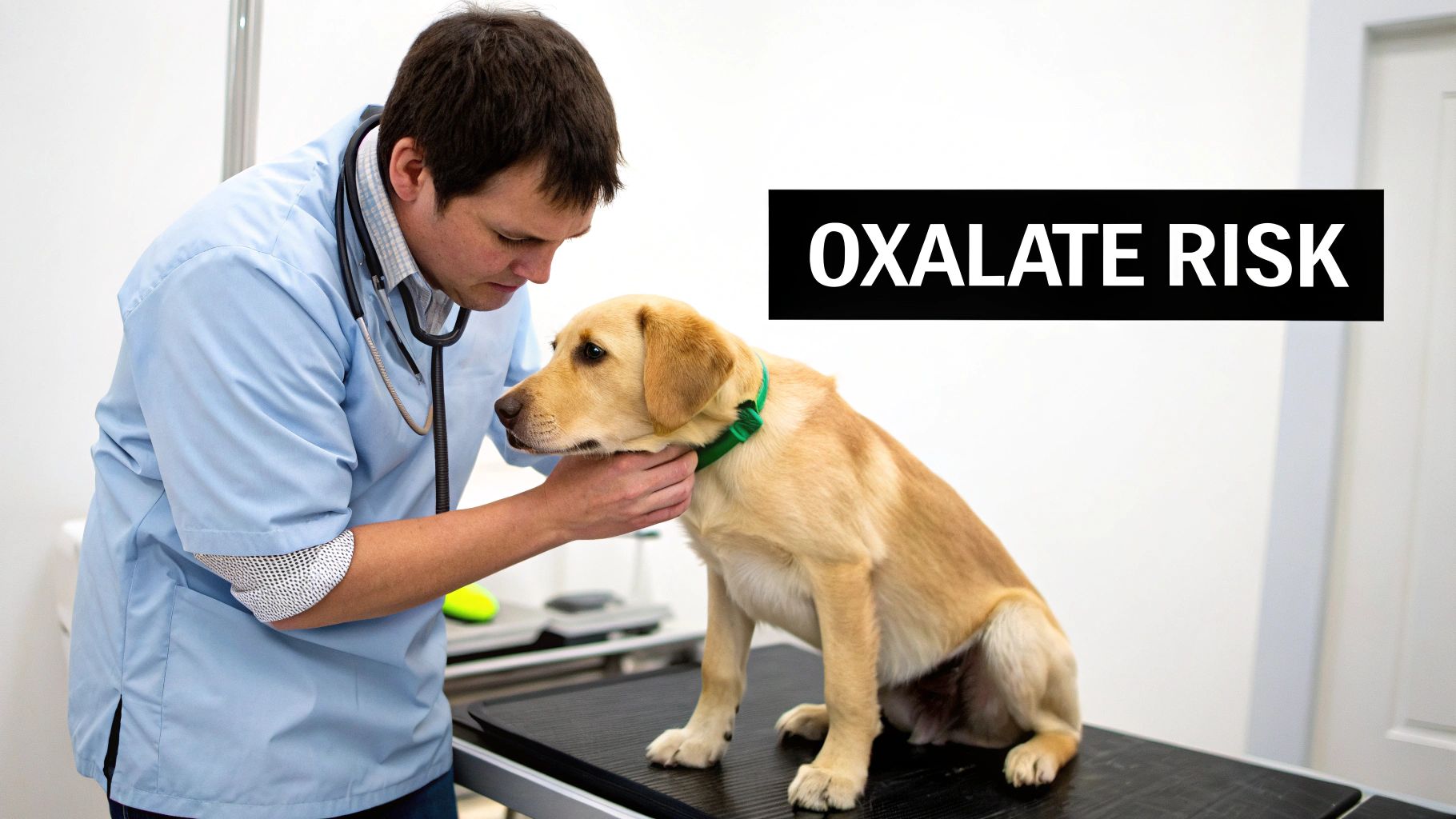
The biggest concern you'll hear about is oxalates. These are naturally occurring compounds in spinach that can interfere with how your dog absorbs minerals. In very large amounts or for a dog with specific health issues, they could potentially contribute to kidney or bladder stones. This is a real concern, but primarily for dogs who already have kidney problems or a history of urinary stones.
For an otherwise healthy dog, a little bit of properly prepared spinach isn't going to cause any trouble. The key is cooking it. Steaming or blanching the spinach first helps break down a good portion of the oxalates and makes all those great nutrients much easier for your dog's system to access.
Spinach for Dogs at a Glance
To make it simple, here's a quick rundown of the pros and cons to keep in mind when considering spinach for your dog.
| Aspect | Benefit or Risk | Key Takeaway |
|---|---|---|
| Vitamins & Minerals | Benefit | Packed with vitamins A, C, and K, plus iron, potassium, and magnesium for overall health. |
| Oxalates | Risk | Can bind with minerals and may lead to kidney/bladder stones in susceptible dogs. |
| Digestibility | Risk (if raw) | Raw spinach can be tough for dogs to digest; cooking is essential. |
| Low-Calorie | Benefit | A great, low-calorie way to add nutrients without contributing to weight gain. |
| Fiber Content | Benefit | Contains fiber that aids in healthy digestion. |
Ultimately, this table shows that when prepared correctly for a healthy dog, the benefits of spinach easily outweigh the risks.
Quick Decision Guide
This simple flowchart can help you decide if sharing some spinach is a good idea for your specific dog.
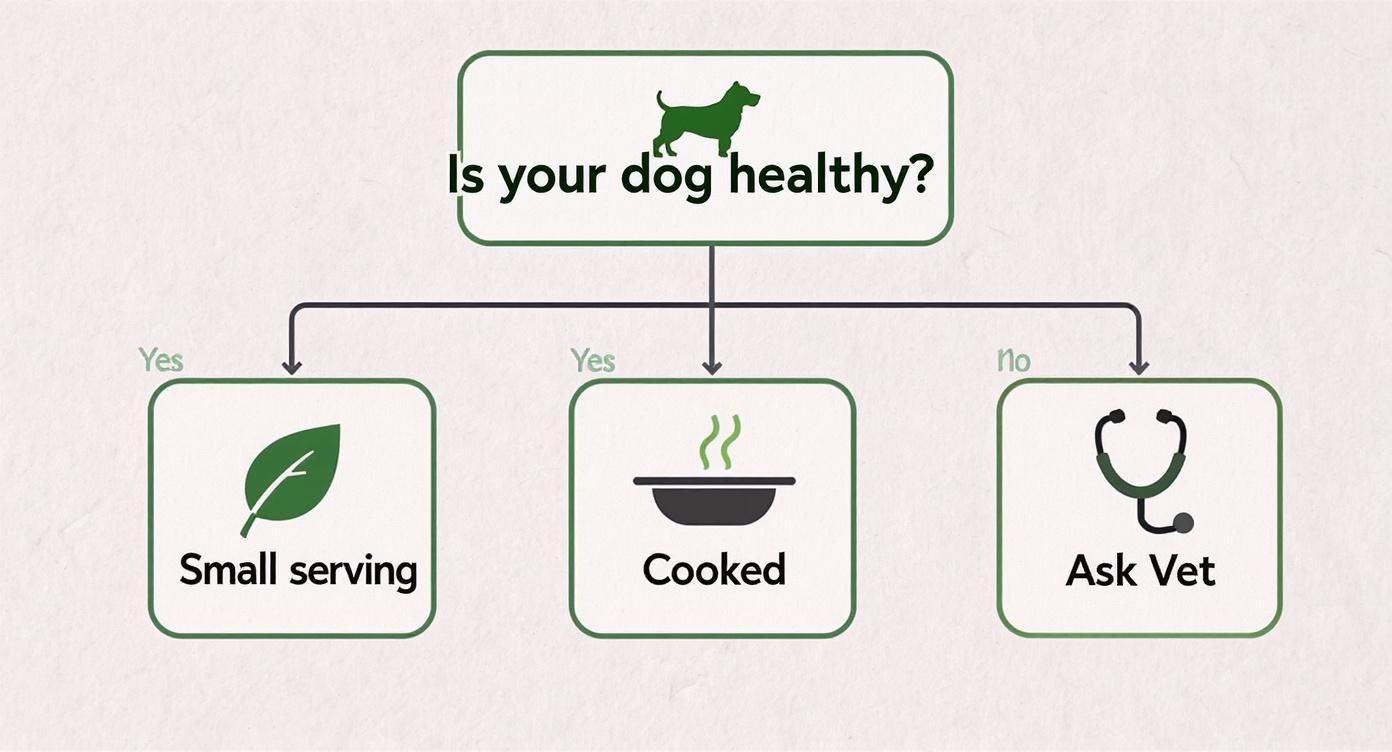
As you can see, the path is pretty clear: if your dog is healthy, a small serving of cooked spinach is generally fine. But if there are any underlying health issues, checking with your vet is always the smartest move.
Balancing The Good With The Bad
Spinach is a nutritional powerhouse, no doubt. But it's not the right fit for every single dog. Beyond the oxalate issue, some dogs might just have a sensitive stomach.
Allergies to spinach are incredibly rare in dogs, but it's always good practice to know the signs of any dietary intolerance. If you're curious about this topic, we have a helpful guide explaining what causes food allergies in dogs.
The verdict is clear: when served correctly to the right dog, spinach can be a healthy, low-calorie addition. The trick is understanding that preparation and portion size are what separate a nutritious snack from a potential problem.
So, What Are the Health Benefits of Spinach for Dogs?
When you hear people call spinach a "superfood," they aren't kidding. This little leafy green is absolutely loaded with vitamins and minerals, and a lot of that goodness can directly support your dog's health. So, is spinach good for dogs? It's more than a simple yes or no—it's about understanding why it can be a fantastic addition to their diet.
Think of spinach as nature's multivitamin. It's a powerhouse of essential nutrients that work together to keep your dog's body firing on all cylinders. From their immune system to their energy for a game of fetch, every leaf is packed with something beneficial.

Key Vitamins and What They Do
Let’s get into the nitty-gritty of the vitamins in spinach and how they help your pup. Imagine them as a team of tiny workers, each with a special job to do.
- Vitamin A (The Vision Guardian): This is the vitamin you hear about for good eyesight, and for good reason! It's crucial for sharp vision, especially at dusk. It also plays a huge role in keeping their immune system strong and maintaining healthy skin and a shiny coat.
- Vitamin C (The Immune Booster): Just like for us, Vitamin C is a fantastic antioxidant for dogs. It helps neutralize nasty free radicals in the body, which can dial down inflammation and support their cells from the inside out.
- Vitamin K (The Bone Builder): This vitamin is absolutely essential for blood clotting, which is critical anytime your dog gets a little scrape. But it also helps their body use calcium properly, which is key for building and maintaining strong, healthy bones.
These vitamins don't just work alone; they team up to create a solid foundation for your dog's health. It’s a great example of why whole foods can be so powerful. If you're curious to learn more about building a top-notch diet, check out our guide to the best ingredients in dog food.
Essential Minerals for Energy and Strength
It's not just about the vitamins. Spinach is also a treasure trove of minerals that fuel your dog's everyday life. These are the real building blocks for vitality and strength.
Spinach is especially rich in iron. Think of iron as the oxygen delivery service for your dog’s body. It’s a core part of red blood cells, which carry oxygen from the lungs to every single muscle and tissue. That’s what gives your dog the energy to run, jump, and play.
And there's more where that came from. Spinach also contains:
- Magnesium: This mineral is a true multitasker, involved in hundreds of bodily functions, from muscle movements and nerve signals to keeping their heartbeat steady.
- Potassium: Super important for managing fluid balance, muscle contractions, and nerve impulses, potassium helps make sure your dog's entire cardiovascular system runs smoothly.
When you mix a little cooked spinach into your dog's bowl, you’re doing more than just adding some greens. You're giving them a complex blend of nutrients that can lead to a glossier coat, a stronger immune system, and the boundless energy every happy dog deserves.
The Real Deal on Spinach and Oxalates
So, while spinach is a nutritional powerhouse, it contains one compound that legitimately makes pet parents hesitate: oxalates. This is the single biggest reason why the "spinach for dogs" conversation always comes with a big asterisk about moderation. Let's break down what that actually means, without getting too bogged down in the science.
Think of oxalates as tiny, naturally occurring particles in spinach leaves. When your dog digests spinach, these particles can latch onto important minerals floating around in their system, especially calcium. This creates tiny, insoluble crystals, and that’s where potential trouble can start.
This binding process can do two things. First, it can prevent your dog's body from absorbing all the calcium it needs for healthy bones and other functions. Honestly, this is mostly a concern only if you're feeding them huge, frequent portions of spinach.
Which Dogs Need to Be Cautious?
The bigger issue is what happens to those crystals. In a healthy dog with strong kidneys, a small amount of spinach is no big deal. Their system is perfectly capable of filtering out these oxalate compounds and getting rid of them through urine.
But for some dogs, the story is a bit different. The risk goes up considerably for pups that fall into these categories:
- Dogs with existing kidney problems: Their kidneys are already working overtime, so asking them to process a bunch of extra oxalates could make their condition worse.
- Dogs with a history of bladder stones: Some breeds are just more prone to developing calcium oxalate stones. For these dogs, adding more oxalates into the mix is simply not a good idea.
- Small breed dogs: Their little bodies can be more easily overwhelmed by disproportionately large servings of high-oxalate foods.
This is the most important part to remember. We're not trying to paint spinach as a villain. It’s just a food that’s best reserved for healthy dogs who don't have these underlying vulnerabilities.
What's Actually Happening Inside?
If a dog eats way too much spinach on a regular basis, these tiny crystals can build up and clump together, forming bladder or kidney stones. These can be incredibly painful and cause urinary blockages or serious kidney stress.
Even with all its green goodness, spinach contains oxalates—compounds that can mess with calcium absorption and, in very large amounts, potentially harm the kidneys. When oxalic acid binds with minerals like calcium and magnesium, it essentially takes them out of circulation. A healthy dog's body can handle this just fine in small doses. However, chronic, high-volume feeding—where spinach makes up more than 10% of their total diet—is linked to a higher risk of complications like stone formation. You can find more expert advice on canine nutrition on the American Kennel Club's website.
The bottom line is this: the risk is all about quantity and frequency. A spoonful of cooked spinach for a healthy dog is a great little nutrient boost. A big scoop every single day? That’s where you could run into trouble.
Ultimately, knowing about oxalates just helps you make a smarter, safer choice for your dog. Once you understand the risk and who it applies to, you can feel confident that a little bit of this leafy green can be a perfectly healthy treat for the right pup.
How to Prepare Spinach Safely for Your Dog
So, you've weighed the pros and cons and decided to let your dog try some spinach. Great! Preparing it the right way is simple, but there's one golden rule you can't skip: always cook the spinach.
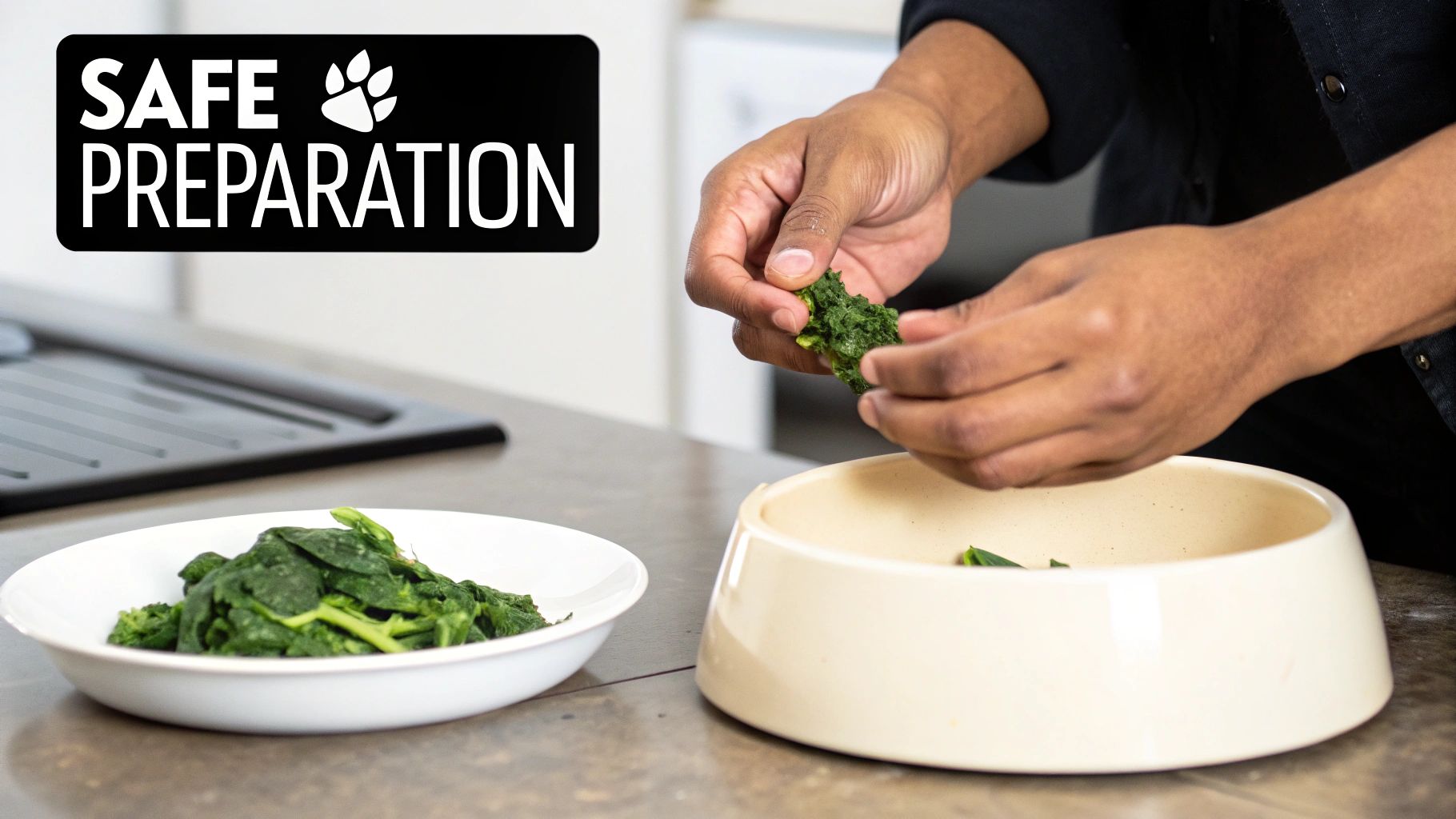
Raw spinach leaves are tough on a dog's digestive system. More importantly, cooking is what helps reduce that oxalate content we talked about. Think of it as unlocking all the good stuff inside—cooking is the key that makes those vitamins and minerals available for your dog to actually absorb.
The best methods are light steaming or blanching. This softens the leaves and helps neutralize some of the oxalates without destroying all the delicate nutrients.
What to Avoid During Preparation
When you're cooking for your dog, what you don’t add is just as critical as what you do. A dog's system is far more sensitive than ours, and common kitchen staples can cause real harm.
Never add these to your dog's spinach:
- Salt or Spices: Dogs don't need the extra sodium, and many common spices can lead to an upset stomach.
- Oils or Butter: These are just empty fats and calories that can contribute to weight gain or even pancreatitis.
- Onions or Garlic: This is a big one. Both are toxic to dogs and can cause serious damage to their red blood cells.
Plain and simple is always the safest bet. After it's cooked, give it a fine chop to make sure it's easy to swallow and digest, eliminating any choking risk.
Your goal is to serve pure, unadulterated spinach. This ensures your dog gets all the nutritional benefits without any of the dangerous additives commonly found in human food preparations.
Getting the Portion Size Right
With any treat, moderation is everything. Spinach should be a small "topper" for their regular meal or a tiny snack, never a meal in itself. A good rule of thumb is that all treats combined—including healthy veggies—should make up no more than 10% of your dog’s total daily calories.
Here are a few simple guidelines to get you started, based on your dog's size:
- Extra Small Dogs (under 20 lbs): About 1/2 teaspoon of chopped, cooked spinach.
- Medium Dogs (30-50 lbs): 1-2 teaspoons of chopped, cooked spinach.
- Large Dogs (over 50 lbs): 1-2 tablespoons of chopped, cooked spinach.
Always introduce any new food with a tiny amount first to see how your dog handles it. By following these simple rules, you can safely share the goodness of this leafy green. For more fun ideas, check out some of our favorite healthy dog treat recipes.
Healthy and Creative Ways to Serve Spinach
Plain, steamed spinach is fine, but let's be honest—it's not exactly exciting. If you want to turn this nutritional powerhouse into a treat your dog actually gets excited about, a little creativity goes a long way. Getting inventive with how you serve spinach makes it a fun addition to their diet while keeping preparation safe and simple.
Here are a few easy, vet-approved ideas to get you started. Just remember, these are treats and toppers, so keep the portions small and suited to your dog's size.
Green-Topped Meatballs
This one is a surefire hit. It combines high-value protein with a pop of green, making for an irresistible meal topper that even picky eaters tend to love.
- Cook the Protein: Grab some plain ground turkey, chicken, or lean beef. Cook it thoroughly, but make sure you skip any oils, salt, onions, or garlic.
- Prep the Spinach: While the meat cooks, lightly steam a small amount of fresh spinach and chop it up finely.
- Combine and Serve: Once the meat has cooled down, roll it into bite-sized meatballs. Then, just press a little of the chopped spinach onto the top of each one.
The moisture from the meat helps the spinach stick and makes the greens much more appealing. It’s a perfectly balanced bite!
Frozen Veggie Bites
On a hot day, nothing beats a cool treat. These frozen bites are hydrating, nutrient-dense, and incredibly easy to make.
- Blend It Up: Toss a small handful of washed spinach into a blender with a splash of water. Add a few dog-friendly fruits like blueberries or a small chunk of banana for a touch of sweetness.
- Pour and Freeze: Pour the smoothie-like puree into an ice cube tray.
- Serve Chilled: Let it freeze solid. When your dog needs to cool off, pop one out for a refreshing, healthy snack.
This method is fantastic because blending completely breaks down the spinach's cell walls. That process unlocks the nutrients and makes them super easy for your dog’s system to absorb. It's a no-cook win.
Spinach and Pumpkin Puree
Talk about a dynamic duo for digestive health. Mixing spinach with pure pumpkin puree (the plain kind, not the spiced pie filling!) creates a fiber-rich, vitamin-packed boost for your dog's gut.
It couldn't be simpler. Just stir a small amount of finely chopped, steamed spinach into a spoonful of plain canned pumpkin. You can serve it as is, mix it into their regular food, or stuff it inside a KONG or other chew toy to give them a fun challenge.
Frequently Asked Questions About Dogs and Spinach
Even after going through all the benefits and risks, you probably still have a few lingering questions. That's completely understandable—when it comes to our dogs' health, we want to get it right. Let's tackle some of the most common questions pet parents ask about feeding dogs spinach.
Think of this as the final piece of the puzzle, giving you the clarity you need to make confident choices for your furry friend.
Can Puppies Eat Spinach?
It's best to hold off on giving spinach to puppies. Their digestive systems are still under construction, and their nutritional needs are incredibly precise to support all that growing they have to do. A puppy's tiny kidneys are also not quite ready to process things like oxalates efficiently.
At this critical stage, the safest bet is sticking to a high-quality, vet-approved puppy food. That’s the best way to guarantee they get the balanced nutrition they need to thrive. If you’re really keen on introducing fresh foods, have a chat with your vet first. They can point you toward safer, age-appropriate options that won’t get in the way of their development.
Signs a Dog Has Eaten Too Much Spinach
If your dog gets into a large amount of spinach, the first thing you'll likely see is some digestive upset. Think vomiting or diarrhea. Their system is simply struggling to handle that much fiber and oxalates all at once.
Over the long term, consistently feeding too much can lead to more serious issues from oxalate buildup. Keep an eye out for:
- Trouble urinating or a change in potty habits
- Bloody urine
- Unusual weakness or lethargy
- A sudden change in their thirst or appetite
If you spot any of these signs, especially anything related to urination, call your vet right away. For a healthy adult dog, a small, properly prepared serving here and there is perfectly fine and won't cause any trouble.
Key Takeaway: The goal is an occasional, small serving of cooked spinach. Overdoing it, even with healthy foods, can throw your dog’s digestive system out of whack and potentially lead to health issues down the road.
Are There Better Vegetable Alternatives?
Yes, absolutely! While spinach certainly has its perks, other vegetables are often considered safer for regular snacking because they're low in oxalates and generally easier on the tummy. If your dog has a history of urinary tract issues or you just want a worry-free veggie treat, these are fantastic choices.
Some top-tier alternatives include:
- Carrots: Awesome for dental health when served raw, and they're loaded with Vitamin A.
- Green Beans: A great low-calorie, high-fiber snack, perfect if you're watching your dog's weight.
- Pumpkin Puree: A go-to for healthy digestion. Just make sure it’s 100% pure pumpkin and not sugary pie filling.
- Sweet Potatoes: Packed with fiber and vitamins, but they must be cooked and served plain.
These veggies offer a nice nutritional boost without the specific concerns that come with spinach.
Should I Choose Organic Spinach?
If it fits into your budget, going organic is a great choice. Spinach often shows up on lists of produce with higher levels of pesticide residue, so buying organic is a good way to minimize your dog’s exposure to those chemicals.
That said, the most important step is a thorough wash. Whether you buy organic or conventional, always rinse spinach leaves well before you cook and serve them. This simple step does a great job of removing surface contaminants, ensuring the treat is as clean as can be. Beyond what you feed them, overall wellness involves staying on top of preventative care. For instance, it's a good idea to keep up with understanding your dog's vaccination needs.
At JoyFull, we believe a healthy life isn’t just for people. It's why we craft our formulas with clean ingredients and high-quality proteins, all carefully reviewed by our in-house veterinary advisor. Check out our better-for-you snacks and give your pet the quality they deserve.