


A Pet Owner's Guide to Rosemary Extract in Dog Food
Let's cut through the noise and get straight to what matters. When you see rosemary extract on a dog food label, it’s there for one primary reason: it's a natural preservative.
Think of it like squeezing a bit of lemon juice over a freshly sliced apple. The lemon juice stops the apple from turning brown and mushy—that's oxidation. Rosemary extract does the same thing for the fats and oils in your dog's food, keeping them from going rancid. It’s simply a concentrated form derived from the rosemary plant, used to maintain freshness and protect the food's nutritional quality.
Why You See Rosemary Extract in Dog Food
If you're an avid label-reader, you've probably seen rosemary extract listed time and time again. But it's not there to make the kibble taste like a Sunday roast. Its role is purely functional and incredibly important. The fats in dog food are a crucial source of energy, but they're also delicate and prone to breaking down.
This breakdown process is called oxidation, and it's what causes fats to become rancid. Rancid fat doesn't just smell and taste awful; it also loses its nutritional value and can even be harmful for your dog to eat. Rosemary extract acts as a natural antioxidant, stepping in to stop this process in its tracks. It essentially protects the fats and oils, ensuring the kibble you pour into the bowl is as fresh and nutrient-packed as the day the bag was sealed.
This move toward natural preservatives is part of a much bigger shift in the pet food world. Pet owners are more educated than ever, and they’re demanding "clean labels" with ingredients they can recognize. That means moving away from synthetic preservatives like BHA (butylated hydroxyanisole) and BHT (butylated hydroxytoluene) in favor of natural alternatives.
The demand is so strong, in fact, that the global market for rosemary extract was valued at a staggering $874.8 million in 2023 and is only expected to climb. If you're curious, you can learn more about the market drivers behind this trend.
To quickly break down its purpose, here’s a simple table summarizing the key points.
Rosemary Extract in Dog Food at a Glance
| Aspect | Summary |
|---|---|
| Primary Function | A natural preservative and antioxidant. |
| Main Job | Prevents fats and oils in dog food from oxidizing (going rancid). |
| Key Benefit | Extends shelf life and maintains the food's nutritional integrity. |
| Industry Trend | Replaces synthetic preservatives like BHA and BHT for a "clean label." |
In short, rosemary extract is a workhorse ingredient that ensures the food stays safe, fresh, and nutritious from the factory to your dog's bowl.
The Role of Rosemary Extract in Detail
So, what does this all mean for the food itself? The job of rosemary extract can be broken down into a few key responsibilities:
- Preserves Freshness: First and foremost, it significantly extends the shelf life of dog food by stopping the fats and oils from spoiling.
- Maintains Nutritional Quality: By preventing oxidation, it makes sure that essential fatty acids and fat-soluble vitamins (like A, D, E, and K) don't degrade and lose their power.
- Provides a Natural Alternative: For owners who prefer to avoid synthetic chemicals, it offers a plant-based solution for keeping food fresh.
- Delivers Antioxidant Support: The active compounds in rosemary, such as carnosic acid, are potent antioxidants that shield the food's components from damage.
How Rosemary Works as Nature's Preservative
To see why a simple plant extract is so good at protecting a whole bag of dog food, you first have to meet the food’s biggest enemy: oxygen.
The moment fats and oils in kibble are exposed to air, a chemical reaction called oxidation kicks off. It's the very same process that makes a sliced apple turn brown or causes old cooking oil to get that funky, stale smell.
When the fats in dog food oxidize, they go rancid. Not only does this ruin the taste and make the food unappealing, but it also destroys essential fatty acids and vitamins. The food literally loses its nutritional punch. This is where rosemary extract comes to the rescue.
The Antioxidant Bodyguards
Think of the fat molecules in dog food as tiny VIPs that need constant protection. The powerful antioxidants in rosemary extract—specifically compounds like carnosic acid and rosmarinic acid—act like a team of dedicated bodyguards for these fats.
Here’s how it works: when an oxygen molecule (a "free radical") comes along to attack a fat molecule, these antioxidant compounds jump in front of it. They essentially sacrifice themselves, reacting with the oxygen first. This heroic act neutralizes the threat before it can ever damage the fat, keeping it fresh and stable.
By intercepting and neutralizing oxygen molecules, the antioxidants in rosemary extract preserve the integrity of the fats, ensuring the dog food remains fresh, palatable, and nutritious for longer.
This process is incredibly efficient. It only takes a tiny amount of rosemary extract to shield all the fats in an entire bag of food, extending its shelf life without messing with its nutritional profile.
Natural Defense Versus Synthetic Chemicals
For years, the go-to solution for preserving pet food involved synthetic chemicals. You might recognize names like BHA (butylated hydroxyanisole) and BHT (butylated hydroxytoluene) from ingredient lists of the past. While they get the job done, many pet owners have become wary of these lab-made additives.
The rise of rosemary extract in dog food marks a huge shift toward using nature's own solutions. Instead of relying on artificial compounds, manufacturers can use a plant-based ingredient to do the same critical job. This lines up perfectly with what today's pet parents want: ingredient lists they can actually understand and trust.
Here's a quick side-by-side look:
| Feature | Natural Preservatives (e.g., Rosemary Extract) | Synthetic Preservatives (e.g., BHA, BHT) |
|---|---|---|
| Source | Derived from plants like rosemary. | Created synthetically in a laboratory. |
| Mechanism | Uses natural antioxidants to stop oxidation. | Uses chemical compounds to inhibit oxidation. |
| Label Appeal | Seen as "clean label" and natural. | Can be a red flag for health-conscious pet owners. |
| Effectiveness | Highly effective at preserving fats and oils. | Also highly effective at preservation. |
By choosing formulas with rosemary extract, brands can offer a product that stays fresh on the shelf while appealing to a modern pet owner’s desire for natural ingredients. If you want to dive deeper, our guide to natural dog food preservatives covers even more ground.
Ultimately, rosemary extract is a perfect example of science working with nature. It provides a smart, effective, and plant-derived way to make sure the food you buy is just as fresh in your dog’s bowl as it was when it left the factory.
Is Rosemary Extract Actually Safe for Dogs? Let's Break It Down
https://www.youtube.com/embed/wH-wSmhSfFg
When it comes to our dogs, we don't mess around. Safety is always priority number one. So, when an unfamiliar ingredient like rosemary extract in dog food pops up on the label, it’s natural to feel a bit concerned, especially with all the heated debates you can find online.
It's time to cut through the noise. Let's look at the real evidence and figure out if this ingredient is genuinely safe for our four-legged family members.
The best place to start is with the regulatory bodies that actually oversee pet food safety. Their job is to evaluate ingredients based on hard science, not internet rumors. This gives us a solid, unbiased foundation for understanding what’s really going on.
The Official Regulatory Stamp of Approval
For any ingredient to be used so widely in pet food, it has to have a proven safety record. Major regulatory agencies have a clear stance on rosemary extract.
The U.S. Food and Drug Administration (FDA), for instance, lists it as Generally Recognized As Safe (GRAS) for use as a flavoring in animal diets. This isn't a status they hand out lightly. It means that based on a long history of use and a whole lot of scientific data, experts agree the substance is safe when used the way it's intended.
Specifically, the FDA typically green-lights its use at levels not exceeding 50 milligrams per kilogram of product. While manufacturers often use it for its antioxidant power, that GRAS status provides a strong safety baseline at the tiny concentrations you'll find in dog food. You can get more details on the FDA's perspective on rosemary in pet diets.
This official recognition is precisely why you see rosemary extract on so many ingredient lists—it’s a trusted, approved, and effective natural solution.
Addressing the Seizure Myth Head-On
Okay, let's tackle the big one. Despite its GRAS status, a persistent myth links rosemary extract to seizures in dogs. This is probably the biggest source of anxiety for pet owners, so it's critical to understand where this idea comes from and what the science says.
The confusion all boils down to a misunderstanding between two completely different forms of rosemary: rosemary essential oil and rosemary extract.
-
Rosemary Essential Oil: This is the super-concentrated, potent oil distilled from the plant. It's packed with compounds like camphor, which in large doses are known to be neurotoxic and could potentially trigger seizures. This stuff should never be fed to your dog.
-
Rosemary Extract: This is a much gentler, far less concentrated version. The extraction process is designed to pull out the beneficial antioxidant compounds (like carnosic acid) while leaving the volatile, problematic oils behind. The amount used in dog food is minuscule—just enough to act as a preservative.
Here’s a simple way to think about it: A drop of pure peppermint oil is incredibly strong and can even irritate your skin, but a single peppermint leaf steeped in a cup of tea is perfectly gentle and harmless. The form and the dose make all the difference. The trace amount of rosemary extract in a bowl of kibble is a world away from the potent punch of an essential oil.
The scientific consensus is clear: there is no credible link between the tiny, controlled amounts of rosemary extract used in dog food and seizures in otherwise healthy dogs.
When a Little Extra Caution Makes Sense
While the ingredient is perfectly safe for the vast majority of dogs, being a responsible pet owner means always considering your dog's individual health. There are a few rare situations where it's smart to have a conversation with your vet.
This mostly applies to dogs with pre-existing and poorly controlled seizure disorders, like idiopathic epilepsy. In these specific cases, some veterinary neurologists might suggest avoiding any potential neuro-active substances just to be on the safe side, even if the risk is purely theoretical.
It's really important to get this part right: this advice isn't because rosemary extract causes seizures. It's about eliminating every possible variable when trying to manage a very complex neurological condition. For the average, healthy dog, this is simply not a concern.
Here’s a quick summary of the key differences:
| Form of Rosemary | Concentration | Use in Dog Food | Safety Consideration |
|---|---|---|---|
| Rosemary Extract | Very Low | A natural preservative. | Considered safe for the general dog population. |
| Rosemary Oil | Highly Concentrated | Never used internally. | Can be toxic if ingested; contains neurotoxic compounds. |
At the end of the day, the evidence overwhelmingly shows that rosemary extract in dog food is safe when used correctly by reputable brands. It’s a functional, natural ingredient with an official GRAS designation. The fears surrounding it are almost entirely based on confusing it with its potent essential oil cousin.
And as always, if your dog has a specific health condition, your veterinarian is your best partner in making confident and safe dietary choices.
Reading Pet Food Labels Like an Expert
Stepping into the pet food aisle can feel overwhelming, with every bag making a different promise. To cut through the noise, you need to become a bit of an ingredient detective. Honestly, learning how to read and interpret the label is the most powerful tool you have as a pet owner.
When you're looking for rosemary extract in dog food, don't expect to see it at the top of the ingredient list. Its job is to be a preservative, so it’s only needed in very small, effective amounts. Where it sits on the label tells you a lot.
Finding Rosemary on the Ingredient List
Dog food ingredient lists are always arranged by pre-cooked weight, from the heaviest ingredient down to the lightest. You’ll almost always find rosemary extract hanging out near the very bottom. That's a good thing!
Its placement way down the list confirms it’s there to do a specific job—preserving freshness—not to be a primary source of nutrition. Think of it like the pinch of salt you add to a batch of cookies; it's a critical component for the final result, but it’s not a main ingredient. Understanding this principle is a huge part of learning how to read dog food labels.
You might also see it listed under a few different names, as manufacturers sometimes use slightly different terms for the same thing.
Keep an eye out for these common variations:
- Rosemary Extract: The most direct and popular term.
- Natural Flavor: Occasionally, rosemary extract might be included in a proprietary blend that falls under this umbrella term.
- Rosemary Oleoresin: This is just a more technical name for the oil-soluble extract.
Natural vs Synthetic Preservatives on Dog Food Labels
Recognizing natural preservatives like rosemary extract is much easier when you know what you're looking for—and what you're trying to avoid. Synthetic preservatives have been the industry standard for decades, but many pet parents now prefer a more natural approach. The table below breaks down some common examples you'll see on ingredient lists.
| Preservative Type | Common Examples On Labels | Primary Function |
|---|---|---|
| Natural | Rosemary Extract, Mixed Tocopherols (Vitamin E), Ascorbic Acid (Vitamin C), Green Tea Extract | Protect fats and oils from rancidity (antioxidants) |
| Synthetic | BHA (Butylated Hydroxyanisole), BHT (Butylated Hydroxytoluene), Ethoxyquin, Propyl Gallate | Extend shelf life and prevent spoilage (antioxidants) |
Knowing the difference helps you quickly scan a label and understand the manufacturer's philosophy on ingredients. Seeing names like rosemary extract and mixed tocopherols is a great sign they're committed to natural preservation.
The Preservation Power Couple: Tocopherols and Rosemary
Rosemary extract is a great team player. You’ll rarely see it working alone. It's almost always paired with another natural preservative champion: mixed tocopherols. That might sound like a complex chemical, but it’s simply a blend of different forms of Vitamin E.
Together, rosemary and mixed tocopherols create a synergistic antioxidant system. They protect the fats and oils in the kibble from going rancid far more effectively than either one could on its own. They're the dynamic duo of natural pet food preservation.
When you see "mixed tocopherols" and "rosemary extract" together on a label, it's a strong indicator that the manufacturer has opted for a robust, natural preservation system instead of synthetic alternatives.
This kind of transparency and commitment to clear labeling is a hallmark of a responsible brand. It's a principle that extends beyond just pet food; understanding labels for product safety is key for consumers in all aspects of life, from food containers to household goods.
This knowledge empowers you to look right past the flashy marketing on the front of the bag and get to the truth on the back. By recognizing natural preservatives at a glance, you can feel much more confident that you're choosing a food that prioritizes your dog's well-being with safe, plant-based ingredients.
When to Consider a Rosemary-Free Dog Food
While the evidence overwhelmingly shows rosemary extract in dog food is perfectly safe for the vast majority of dogs, being a savvy pet owner means knowing when to take a closer look. For a small number of dogs with specific health conditions, a more cautious approach might be needed.
This isn't about creating fear around a beneficial ingredient. It's about providing nuanced guidance for those rare cases where a different dietary path might be a better fit for your dog's unique needs.
Dogs with Poorly Controlled Seizure Disorders
The biggest conversation around rosemary involves dogs with pre-existing, poorly managed seizure disorders like idiopathic epilepsy. This is where most of the online chatter comes from, and it's important to look at it with clarity, not alarm.
Let's be clear: the scientific consensus does not show that the tiny amounts of rosemary extract used in commercial dog food cause seizures. However, some veterinary neurologists play it extra safe. They might recommend avoiding it for dogs whose seizures aren't well-controlled by medication.
The thinking here is all about eliminating variables. When you're managing a complex neurological condition, the goal is often to simplify everything—diet, environment, you name it—to rule out any potential triggers, even purely theoretical ones. It's a "better safe than sorry" strategy for a very specific and sensitive group of dogs.
This recommendation isn't an admission of risk for the general dog population. Think of it as a specialized management tactic for a small subset of dogs facing severe, ongoing neurological challenges. Always talk to your vet before making health-based dietary changes for your dog.
Identifying Potential Sensitivities or Allergies
Just like people, dogs can have unique sensitivities to almost any ingredient out there, and rosemary is no exception. True allergies to rosemary are incredibly rare, but a sensitivity could show up as mild tummy trouble or itchy skin.
If you’ve just switched to a new food with rosemary extract and notice any of these signs, it’s worth a call to your vet:
- Digestive Upset: New or persistent diarrhea, vomiting, or extra gas.
- Skin Issues: More scratching than usual, new rashes, or hot spots.
Remember, these signs could point to any new ingredient in the food, not just the rosemary. This is exactly why we always recommend a slow transition to a new diet over 7-10 days. If symptoms stick around, your vet can help you play detective. For dogs with known sensitivities, exploring the best limited ingredient dog food options is a great way to simplify their diet and pinpoint triggers.
How to Find a Rosemary-Free Alternative
If you and your vet decide a rosemary-free diet is the best move, finding one is pretty straightforward. You just need to become a skilled label reader.
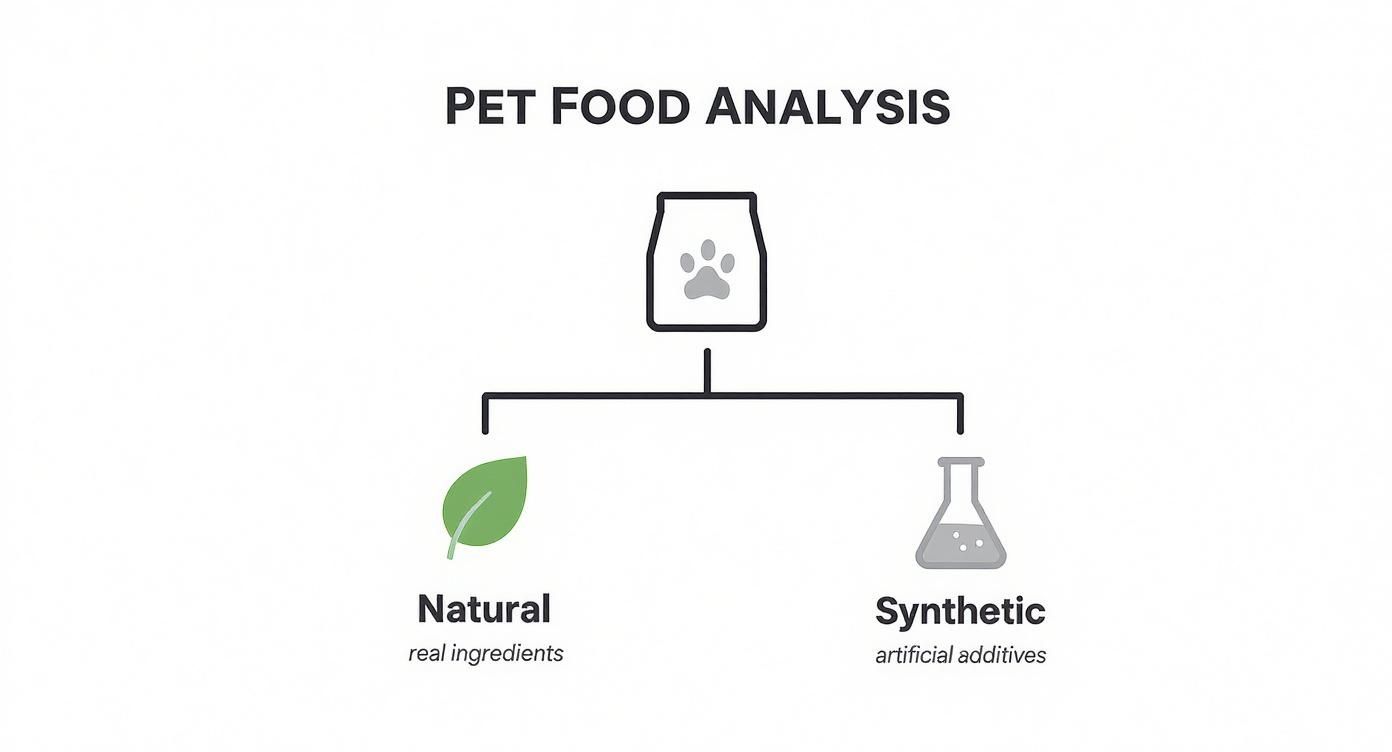
This visual guide helps break down the difference between natural preservatives like rosemary and their synthetic cousins, making it easier to see what's what when you're in the pet food aisle.
When you start looking for alternatives, you'll generally find foods preserved with:
- Other Natural Preservatives: Many great formulas rely on mixed tocopherols (a form of Vitamin E) or other plant-based antioxidants. These are fantastic, effective options.
- Synthetic Preservatives: Some foods, especially older formulas or certain prescription diets, might still use synthetic options like BHA or BHT.
The pet food antioxidants market is big business—valued at around $139.3 million in 2025 and growing—largely because pet owners want effective, natural options. Rosemary extract is a major player, but its popularity has also pushed brands to be much clearer about their preservative systems, which actually makes it easier for you to find exactly what you need. In the end, the decision to avoid rosemary extract in dog food should be made with your veterinarian, keeping your dog’s health and happiness as the top priority.
Making an Informed Choice for Your Dog
Navigating the pet food aisle can feel overwhelming, but when you understand ingredients like rosemary extract, you're in a much better position to make a confident choice for your dog. We've seen how it's primarily used as a natural preservative—its main job is simply to keep the fats in your dog’s food from going rancid.
We’ve also confirmed its official "Generally Recognized as Safe" (GRAS) status and put some of the online chatter about its risks into the proper scientific context. The goal isn't to get bogged down in fear-mongering but to look at the facts and what they mean for your individual dog.
Your Most Powerful Tools
At the end of the day, two things will serve you and your dog best: a balanced perspective and a solid relationship with your veterinarian. They’re the only ones who can give you personalized advice based on your dog’s specific health history and needs.
A well-informed owner is a pet’s best advocate. Your commitment to understanding ingredients, combined with professional veterinary guidance, forms the foundation of excellent care for your companion.
Of course, making smart choices goes beyond just one ingredient. Many owners also think about adding extras to their dog's diet. If that's you, it's worth learning how to choose effective dietary supplements for your dog.
Remember, every dog is an individual. What works beautifully for one might not be the right fit for another. By arming yourself with good information and working alongside your vet, you can feel confident you’re making the best possible decisions for your furry family member.
Questions Pet Owners Often Ask About Rosemary in Dog Food
When you're digging into dog food labels, it's easy to get tangled up in questions. Rosemary extract is one of those ingredients that people talk about a lot, so let's clear up some of the most common confusion with straightforward answers.
Is Rosemary Extract the Same as Rosemary Essential Oil?
No, and this is probably the most important thing to understand. They are two completely different things. Rosemary extract is specifically made to pull out the plant's antioxidant parts, like carnosic acid, while leaving the volatile oils behind. It's used in minuscule amounts just to keep the food fresh.
Rosemary essential oil, on the other hand, is a super-concentrated liquid full of volatile compounds like camphor. You should never, ever let your dog ingest essential oils, as they can be toxic. The form used in dog food is the safe, non-volatile extract.
Can My Dog Be Allergic to Rosemary Extract?
A true allergy to rosemary is incredibly rare, but just like people, dogs can have sensitivities to just about anything. If you've just switched to a new food with rosemary extract and see your dog scratching or having a bit of an upset stomach, it could be a reaction to any of the new ingredients.
Pro Tip: Always switch to a new food gradually over a 7-10 day period. This lets your dog's digestive system get used to it and helps you spot which ingredient might be causing an issue.
If you think your dog is having a reaction, your vet is your best resource. They can help you figure out what’s going on and suggest the right food for your furry friend.
Why Do I Always See It Listed with Mixed Tocopherols?
Good eye! You’ll almost always see rosemary extract and "mixed tocopherols" together on an ingredient list. Mixed tocopherols are just a natural source of Vitamin E, which is another great antioxidant. They're a classic team.
- Better Together: When combined, they create a much more powerful and effective natural preservative system than either one could on its own.
- Complete Protection: This dynamic duo helps protect both the healthy fats and the fat-soluble vitamins in the food from going bad.
Seeing this pairing is actually a great sign. It usually means the pet food company is serious about using a thoughtful, natural system to keep the kibble fresh and potent.
Does It Make My Dog's Food Taste Like Herbs?
Nope, not at all. The amount of rosemary extract used is tiny—just enough to do its job as a preservative. The concentration is far too low for your dog (or you) to ever taste or smell it in the food. Its purpose is purely functional, not for flavor.
What Do the Regulators Say About It?
All the major regulatory bodies give rosemary extract a thumbs-up for use in animal food. For example, the U.S. Food and Drug Administration (FDA) lists it as Generally Recognized As Safe (GRAS). This is a formal designation that means, based on solid scientific evidence and a long history of use, the ingredient is considered safe when used as intended. It's this official safety status that allows reputable brands to use it with confidence to keep their products fresh for your dog.
At Joyfull, we’re all about being open and honest, using only top-quality ingredients backed by science. We rely on a natural preservation system to make sure every meal is as fresh and nourishing as it is tasty. After all, a healthy life isn't just for us—our pets deserve it, too. Explore our commitment to clean ingredients at JoyfullPet.com.