


Natural Supplements for Dog Anxiety a Complete Guide
When you see your dog trembling during a thunderstorm or hear them whining desperately as you leave the house, it's heartbreaking. You just want to make them feel safe, but it's not always clear how. If this sounds familiar, know that you’re not alone. Our modern world, with its loud noises and busy schedules, can be genuinely tough on our four-legged friends.
Natural supplements offer a gentle way to help restore your dog's emotional balance. Think of ingredients like L-theanine, chamomile, and tryptophan. These natural aids can help take the edge off stress from separation, startling sounds, or car rides, promoting a calmer state of mind without jumping straight to harsh medications. They work by supporting the brain's own calming pathways.
Understanding Your Dog's Anxiety
It's crucial to remember that canine anxiety isn't just "bad behavior"—it's a genuine emotional response to things they find scary or overwhelming. Seeing it for what it is—a cry for help, not an act of defiance—is the first real step toward helping your dog feel secure again.
While some signs of anxiety are obvious, others are much more subtle.
Recognizing the Signs of Stress
Learning to read your dog’s body language is like learning their native tongue. An anxious dog might do things that are easy to misinterpret as simple boredom or even excitement. The key is to look for patterns that point to underlying stress.
- Destructive behavior, especially chewing up door frames or window sills when you're out.
- Excessive barking or howling that really only happens when they're left alone.
- Pacing or restlessness and a complete inability to settle down.
- Accidents in the house, even if your dog is perfectly house-trained.
- Compulsive licking or chewing on their paws, legs, or tail.
Noticing these signs is the first step. The sheer number of owners looking for gentle solutions tells a story. The global market for pet calming products is valued at around USD 18.36 billion, which shows just how many of us are searching for answers. Dogs make up a huge 58% market share of these products, mostly because they're so prone to separation anxiety and noise phobias. This isn't just a fad; it's a real shift toward prioritizing our pets' mental well-being. You can find more insights on the growing pet calming market and see just how big this movement is.
Quick Guide to Anxiety Triggers and Natural Aids
Once you have an idea of what’s triggering your dog’s anxiety, you can start looking for more targeted support. This table connects common stressors with behaviors you might see and the natural supplements that could help. It's a great starting point for finding the right natural supplements for dog anxiety based on your dog's specific needs.
| Anxiety Trigger | Common Behaviors | Potential Natural Aids |
|---|---|---|
| Separation | Pacing, howling, destructive chewing | L-Tryptophan, Chamomile |
| Thunderstorms/Fireworks | Hiding, trembling, panting | L-Theanine, Valerian Root, CBD |
| Travel/Car Rides | Whining, drooling, restlessness | Melatonin, Chamomile |
| General Unease | Hyper-vigilance, irritability | L-Theanine, Tryptophan (daily) |
Think of this chart as a quick-reference guide. It helps you draw a line from the problem (like a thunderstorm) to a potential solution (like L-theanine), making the world of supplements feel a lot less overwhelming.
A Closer Look at the Top Natural Calming Ingredients
Stepping into the world of natural supplements for your dog’s anxiety can feel a bit like learning a new language. You see all these different ingredients on the labels—L-theanine, chamomile, CBD—and it's easy to get overwhelmed. Let's break down the most popular and effective natural calming aids so you know exactly what they are, how they work, and what situations they’re best for.
Think of these ingredients as different tools in your toolkit. Some are perfect for quick, in-the-moment relief, like when a thunderstorm rolls in unexpectedly. Others are designed for the long haul, working best when given daily to build a solid foundation of calm. Once you understand the "why" behind each one, you'll feel much more confident picking the right one for your dog.
To help you get started, here's a simple flowchart that walks you through the decision-making process. It’s a great visual guide for figuring out where to begin.
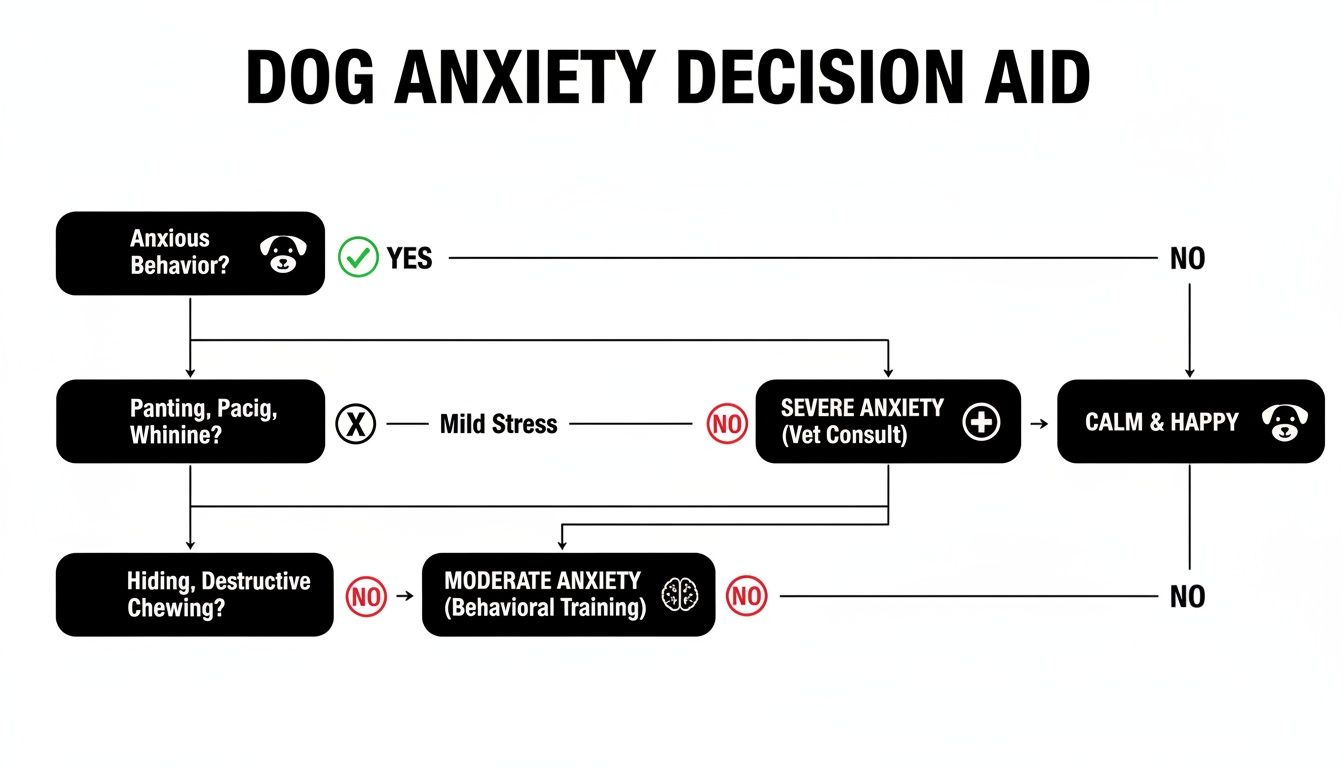
This decision aid helps map out the journey from first noticing anxious behaviors to finding the right supportive solutions. It’s all about taking a thoughtful, measured approach.
L-Theanine: The Focus Promoter
You’ll find L-theanine naturally in green and black tea leaves. It’s an amino acid celebrated for its ability to create a sense of "calm alertness." What’s great about it is that it doesn’t cause drowsiness, making it a fantastic choice for dogs who need to stay sharp during training but could use a little help staying relaxed.
Imagine your dog's brain is a busy radio station, with a dozen channels all blasting at once. L-theanine acts like a good sound engineer, skillfully turning down the volume on the "stress" and "anxiety" static while keeping the "focus" channel crisp and clear. It does this by boosting calming brain chemicals like GABA, serotonin, and dopamine.
- Best For: Situational stress like vet visits, car rides, and thunderstorms. It’s also great for promoting focus during training.
- How It Helps: It can dial back stress behaviors like frantic barking or pacing without knocking your dog out. You’ll typically see an effect within 30 to 90 minutes.
Chamomile: The Gentle Soother
Everyone knows chamomile tea is relaxing, and it turns out this gentle herb works wonders for our dogs, too. For centuries, it's been the go-to for calming upset stomachs and soothing frayed nerves.
Think of chamomile as a warm, cozy blanket for your dog's nervous system. Its magic comes from a compound called apigenin, which latches onto certain receptors in the brain to gently dial down anxiety and encourage relaxation. It's a mild, safe option that’s perfect for general unease.
Chamomile is often the first thing people reach for when dealing with mild, generalized anxiety or stress-related tummy troubles. Its gentle nature makes it an excellent starting point if you're new to natural supplements.
Tryptophan: The Mood Stabilizer
L-tryptophan is an essential amino acid, which just means dogs need to get it from their diet. Its main job is to act as a precursor to serotonin—the famous "feel-good" neurotransmitter that governs mood, sleep, and appetite. When a dog has healthy serotonin levels, they’re just more likely to feel content and less reactive.
Think of tryptophan as the raw building material for a happy brain. By giving your dog a steady supply, you’re making sure their mood-regulating system is always well-stocked. This isn’t a quick fix; it’s about building emotional resilience over time.
- Best For: General anxiety, separation anxiety, and dogs who seem a bit moody or irritable.
- How It Helps: With consistent daily use, it can lead to a more stable and predictable temperament over several weeks.
Valerian Root: The Sedative Herb
Valerian root is a much heavier hitter. This potent herb is known for its sedative qualities and is best reserved for dogs who experience intense panic or fear from specific triggers, like fireworks or severe thunderstorms.
If chamomile is a warm blanket, valerian root is a weighted blanket. It creates a much more profound calming effect by boosting GABA levels in the brain, which basically tells the nervous system to quiet down. Because it's so strong, it's really only for acute situations, not daily support.
This growing interest in natural options is clear from market trends. Pet owners are actively looking for cleaner, more transparent solutions, and the demand for products with chamomile, valerian root, and CBD has skyrocketed. These botanicals now make up a huge piece of the market pie. In fact, about 40% of the pet calming products market is dominated by supplements, particularly chews and CBD-infused options. You can learn about the expanding pet calming market to see just how much consumer preferences are shifting.
CBD: The System Balancer
Cannabidiol, or CBD, is a non-psychoactive compound from the hemp plant. It works by interacting with the endocannabinoid system (ECS), a complex network of receptors inside all mammals that helps keep things like mood, sleep, pain, and immunity in check.
Think of the ECS as your dog's internal master control panel. CBD helps make sure all the switches and dials on that panel are working smoothly, promoting a state of internal balance called homeostasis. By supporting the ECS, CBD can help calm an overactive stress response, which makes it useful for a whole range of anxiety issues.
- Best For: A wide spectrum of anxieties, from situational phobias (like fear of the vacuum cleaner) to more persistent, general anxiety.
- How It Helps: It can help pull a dog out of that "fight or flight" mode, helping them feel more grounded and less reactive. Just make sure you only buy products that show a third-party Certificate of Analysis (COA) to prove they're free of THC.
Comparing Top Natural Calming Supplements for Dogs
With all these options, how do you choose? This table breaks down the top ingredients to give you an at-a-glance comparison, helping you select the best natural supplements for dog anxiety based on what your dog truly needs.
| Supplement | Primary Use (e.g., Situational vs. General Anxiety) | Form of Delivery | Key Consideration |
|---|---|---|---|
| L-Theanine | Mostly situational; great for acute stress. | Chews, powders, liquids | It's non-drowsy, making it ideal for training or daytime use. |
| Chamomile | Both; excellent for mild general or situational stress. | Chews, tinctures, dried herb | Very gentle and often combined with other calming ingredients. |
| Tryptophan | General anxiety; needs daily use to work best. | Chews, powders, fortified foods | Builds up over several weeks to stabilize mood long-term. |
| Valerian Root | Strictly situational; for severe, acute panic. | Tinctures, capsules, chews | Can be quite sedating; not meant for daily use. |
| CBD | Both; versatile for situational and general anxiety. | Oils, tinctures, chews | Quality is everything; always demand third-party lab results. |
Each ingredient offers a unique benefit, and understanding their strengths is the first step toward finding a natural solution that brings your dog some much-needed peace and quiet.
How to Choose a High-Quality Supplement
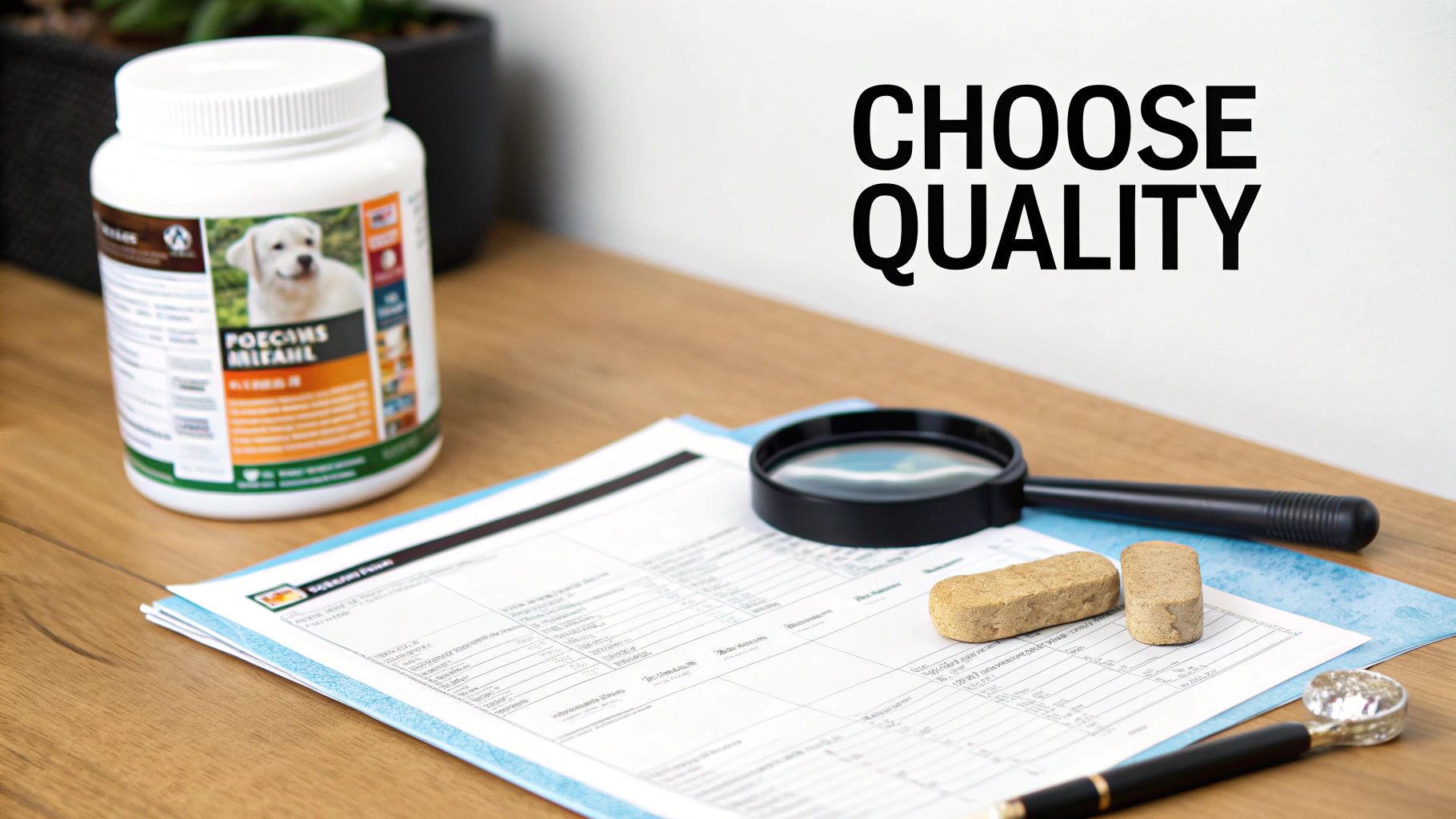
Walking down the supplement aisle—virtual or physical—can be completely overwhelming. Every bottle seems to promise the world. So, how do you cut through the noise and find a product that will actually help your dog?
Learning to read a label is your single most important skill. It’s the only way to know you're choosing a safe and effective natural supplement for your dog's anxiety. Think of the label as the product’s resume. You wouldn't trust a resume that's vague or confusing, and the same rule applies here. A truly great supplement will be transparent about what’s inside.
Decoding the Ingredient List
Your first stop should always be the ingredient panel. This is where the truth lies. It's usually split into two parts: "Active Ingredients" and "Inactive Ingredients." Knowing the difference is key.
-
Active Ingredients: These are the heavy lifters—the L-theanine or chamomile that provide the calming effect. A good label won't just list them; it will state the exact amount per serving (e.g., "L-Theanine... 50 mg"). This tells you precisely what dose your dog is getting. No guesswork.
-
Inactive Ingredients: These ingredients are what hold the chew together or make the powder palatable. They're things like binders, flavorings, and preservatives. Look for natural, wholesome ingredients here, like sweet potato or flaxseed. They're necessary, but they shouldn't be the main event.
Of course, even the best ingredients won't do much good if your dog's system can't absorb them properly. A healthy gut is foundational to making any supplement work. You can learn more about this by finding the best probiotics for dogs in our comprehensive guide.
Look for Third-Party Verification
Okay, so the label says it has 50 mg of L-theanine. But does it really? That's where third-party testing comes in. It’s the ultimate fact-check. Reputable companies will voluntarily send their products to an independent lab to confirm they are pure and potent.
This is absolutely essential for CBD products. An independent lab provides a Certificate of Analysis (COA), which proves the product has the amount of CBD it claims and is free of nasty stuff like THC, heavy metals, or pesticides.
A product without a COA you can easily find is a giant red flag. Trustworthy brands will put these reports right on their website or link to them with a QR code on the package. Don't settle for anything less.
The Power of Quality Seals
Seals and certifications are like a trusted expert’s stamp of approval. They do the vetting for you. In the world of pet supplements, the gold standard is the NASC Quality Seal.
The National Animal Supplement Council (NASC) is a non-profit that holds its members to incredibly high standards. To earn that seal, a company has to pass a tough, independent audit of its entire operation. Seeing the NASC seal tells you the company is serious about:
- Consistent Quality Control: They follow strict manufacturing and sourcing rules.
- Accurate Labeling: What’s on the label is what’s in the bottle. Period.
- Adverse Event Reporting: They have a system to track and respond to any safety concerns.
When you choose a supplement with the NASC seal, you're not just buying a product. You're buying peace of mind from a company that has proven its commitment to your dog’s health.
How to Introduce Supplements to Your Dog Without the Stress

Alright, you've done your homework and picked out a quality product. Now comes the crucial part: actually giving it to your dog. The golden rule for introducing any natural supplement for dog anxiety is one I tell every dog owner: start low and go slow. This isn't a race. It's about gently introducing something new to your dog’s system and finding that "just right" amount that works for them.
Think about it like seasoning a new dish. You don’t just dump in a cup of a new spice. You start with a pinch, see how it tastes, and add more if needed. It’s the exact same idea here. For the first few days, give your dog just a quarter or half of the recommended dose on the label.
This slow ramp-up gives their body time to adjust and drastically cuts down the risk of an upset stomach—a must for any dog, but especially those with sensitive systems. If you want more tips on making dietary changes, our guide on how to transition a dog to new food has some great advice that applies here, too.
Become a Dog Detective
During this introductory phase, your job is to be an observer. You know your dog better than anyone, and your observations are the best feedback you can get. I always recommend keeping a simple daily log—nothing fancy, just a notebook or a note on your phone.
What to Watch For:
- The Good Stuff: Are they a little less jumpy when the mail carrier arrives? Is their body language more relaxed? Look for small wins, like less frantic pacing or the ability to settle down faster after getting worked up.
- The Not-So-Good Stuff: Keep an eye out for any tummy trouble, like vomiting or loose stool. Also, take note if they seem overly tired or show any other new, odd behaviors. If anything seems off, stop giving the supplement and give your vet a call.
This careful tracking is what helps you figure out if the supplement is actually making a difference.
Quick tip: Consistency is everything. Most natural supplements, particularly ingredients like Tryptophan that need to build up in the system, won’t work their magic overnight. You have to give them consistently every day for a few weeks to see the real benefits.
Make it a Treat, Not a Trial
Let’s be honest—the last thing you want is for the "calming" supplement to become a new source of stress. The goal is to make this a seamless, even positive, part of their day. Thankfully, most of these supplements come in tasty chews or easy-to-mix powders.
Simply mix it into their food or, even better, hide it in a high-value treat. A spoonful of pumpkin puree, a little plain yogurt, or their favorite soft treat can work wonders. When you pair the supplement with something they already love, they start to associate it with good things. Before you know it, their daily supplement will just be another part of the routine they look forward to.
Creating a Holistic Calming Plan for Your Dog
While the right natural supplement for dog anxiety can be a game-changer, it’s most powerful when it’s one tool in a bigger toolbox. Think of it this way: supplements are the support crew, but behavioral strategies are the lead actors. Real, lasting calm comes from building an environment that addresses your dog’s emotional needs from all sides.
Creating this kind of plan doesn't have to be complicated or break the bank. It's really about weaving predictability and safety into your dog's daily life, which naturally lowers their overall stress. When a dog knows what to expect, they don't have to waste energy worrying about what might happen next.
Building a Foundation of Safety and Routine
The very first step is to establish a solid, reliable structure. Dogs thrive on habit, so a consistent schedule for feeding, walking, and potty breaks gives their day a comforting rhythm. This simple routine helps them feel secure, reinforcing that their needs will always be met.
Another incredibly effective technique is creating a "safe den." This could be a crate with a plush bed or even just a quiet corner of a room where your dog can retreat when they feel overwhelmed. The key is to make this space their sanctuary, a place where only good things happen and they are never, ever bothered. Exploring additions like weighted blankets for anxiety can make this safe space even more calming.
Remember, a calming plan is about proactive support, not just reactive fixes. By integrating behavioral techniques with supplementation, you address the root causes of anxiety, helping your dog build genuine, long-term confidence.
Engaging Their Mind and Body
For an anxious dog, mental stimulation is just as crucial as a good run in the park. It gives their brain a job, channeling all that nervous energy into productive problem-solving. Puzzle toys, snuffle mats, and even short, fun training sessions are fantastic ways to get their mind working.
Finally, you can start to gently address their specific triggers using desensitization and counter-conditioning. This sounds complex, but the idea is simple: expose your dog to a very low-level version of their trigger (like a recording of thunder played softly) and pair it with something they absolutely love, like a special treat. Over time, you gradually increase the intensity, helping them form a new, positive association with the old trigger.
These are just a few ideas to get you started. For a deeper dive, check out our guide on other powerful natural remedies for dogs.
When to Talk to Your Veterinarian
Natural supplements can be a fantastic support for dogs with mild to moderate anxiety, but it's important to know their limits. Think of them as a gentle helping hand, not a magic wand for every fear or stressor. Knowing when to loop in a professional is a huge part of being a responsible and caring dog owner.
Your veterinarian is your number one ally in your dog's health. They have the expertise to get to the bottom of what's really causing the anxiety, ruling out any hidden medical problems that might be masquerading as behavioral issues. From there, they can help you build a treatment plan that's both safe and effective. Seeing the vet isn't giving up; it's a smart, proactive move.
Recognizing Red Flags
Some behaviors are simply too serious to be managed with supplements alone. If you spot any of these signs, it's time to make an appointment with your vet or a veterinary behaviorist right away.
- Severe Aggression: This includes any biting, growling, or lunging at people or other animals.
- Self-Harm: Is your dog licking or chewing themselves raw? Compulsive grooming that leads to sores or hair loss is a major red flag.
- Extreme Destructive Behavior: We're not talking about a chewed-up slipper. This is chewing through walls, doors, or crates—behavior that could seriously injure your dog.
- Unrelenting Panic: If your dog is in a state of intense distress and you can't comfort them, they need more help.
These are signals of deep-seated anxiety that often requires a more powerful intervention to keep your dog safe and restore their quality of life.
Supplements vs. Prescription Medications
It helps to understand the fundamental difference here. Natural supplements work by supporting the body's existing calming pathways. They're great for predictable stressors (like car rides or thunderstorms) or a general case of mild nerves.
Prescription medications, however, are specifically designed to treat diagnosed anxiety disorders by directly influencing brain chemistry. The market for dog relaxants, valued at USD 186.2 million and growing, is still dominated by prescriptions like SSRIs for a reason—they are clinically proven to work for severe conditions. You can explore more data on the dog relaxants market to see how these options compare.
A good vet knows it’s all about matching the tool to the job. For a dog who gets a little shaky during fireworks, a calming chew might be all you need. But for a dog with debilitating separation anxiety, a prescription medication is often the most humane and effective solution.
Ultimately, asking for professional guidance is what great pet parents do. Never feel hesitant to call your veterinarian. They can give you a proper diagnosis and help you find the right mix of supplements, medication, and training to help your best friend feel calm and confident again.
Got Questions? We've Got Answers
When you're exploring natural ways to help your anxious dog, it's normal to have a few questions pop up. It’s all part of being a responsible pet owner. Let's walk through some of the most common things people ask so you can feel confident about the path you're choosing.
How Long Until I See a Difference?
This is probably the number one question we hear, and the honest answer is: it depends on what's in the supplement. Some ingredients are built for speed, while others are more of a slow burn.
-
For fast-acting relief: If you're looking for something to take the edge off a predictable stressor, like an oncoming storm or a trip to the groomer, ingredients like L-theanine are your best bet. You can often see them start working in as little as 30 to 90 minutes.
-
For long-term balance: On the other hand, ingredients like Tryptophan need to build up in your dog's system to really shine. Think of it less like a quick fix and more like a long-term mood stabilizer. You’ll want to give it daily, and it might take a few weeks before you notice a consistent, steady change in their demeanor.
Is It Okay to Mix and Match Different Calming Supplements?
It’s tempting to think that more is better, but combining different supplements is something you should only ever do with your vet's blessing. Different ingredients can sometimes have similar effects, and you could accidentally end up with an overly drowsy or sedated dog.
The best approach is usually to find a single, well-formulated product that uses a blend of ingredients designed to work in harmony. Your veterinarian is the best person to help you figure out a safe and effective strategy.
Are These Supplements Safe for Puppies and Seniors?
Age definitely matters. The metabolism and sensitivities of a growing puppy or a senior dog are very different from those of a healthy adult dog. Safety really boils down to the specific ingredient, your dog's age, and their overall health picture.
Always, always check the product label for any age restrictions. More importantly, have a chat with your vet before introducing anything new to a puppy, an older dog, or any dog with existing health issues. They can give you the green light and help you figure out a safe and appropriate dose.
At Joyfull, our mission is to make pet wellness simple, clear, and effective. Our formulas are backed by science and made with clean, high-quality ingredients you can feel good about. See how we can help your best friend at https://joyfullpet.com.