

Low Calorie Dog Treats Your Guide to Healthy Snacking
We’ve all seen it. That soulful, pleading look your dog gives you, melting your heart until you cave and toss them a treat. It’s one of the best parts of being a dog owner, but those little rewards can add up fast. Traditional dog snacks are often packed with calories, and before you know it, they can lead to unwanted weight gain.
That's where low calorie dog treats come in. They’re the perfect way to keep spoiling your best friend without tipping the scales.
Why Healthy Treats Matter More Than You Think
Giving your dog a treat is more than just a quick reward; it's a real part of their daily diet. Think about it like snacking for us. A cookie here or a handful of chips there might not seem like a big deal, but those calories accumulate. For our dogs, whose daily calorie needs are much smaller than ours, the impact is even greater. Mindless treating is one of the biggest reasons so many dogs are overweight today.
This is why making a deliberate switch to low-calorie options is such a smart move. It’s not about giving fewer treats—it’s about making them count. You get to keep that special bonding moment while actively supporting your dog's long-term health and helping prevent serious issues like joint pain and metabolic problems.
The Growing Demand for Healthier Options
If you're reading labels and thinking more carefully about what goes into your dog's treat jar, you're in good company. Today’s pet parents are driving a huge shift in the market, demanding better, healthier choices for their four-legged family members.
- Market Growth: The global pet snacks market is on track to explode, growing from USD 40.5 billion in 2024 to an estimated USD 79.2 billion by 2030. A huge piece of that growth comes from people like you seeking out healthier treats.
- A Focus on Weight: It's no surprise that searches for "low-calorie" and "low-fat" treats are on the rise. With studies showing that anywhere from 20% to over 40% of dogs are overweight, owners are taking action. You can dive deeper into these trends over at Grand View Research.
- Clean Ingredients are King: Pet owners today are savvy. We’re flipping over the bag to read the ingredients, and we want to see real, recognizable foods—not a long list of fillers and artificial junk.
This attention to detail doesn't stop with the ingredients in the treats themselves. If you're someone who loves making homemade snacks for your pup, the gear you use in the kitchen matters, too. Using safe tools like PFOA and PTFE free cookware is just another way to ensure you’re not accidentally introducing harmful chemicals into their diet. It's all part of a bigger picture of total wellness.
How to Read a Dog Treat Label Like a Pro
Walking down the dog treat aisle can be completely overwhelming. You're hit with a wall of brightly colored bags all shouting words like "natural," "premium," and "grain-free." But what do those buzzwords really mean for your dog? Learning to read a dog treat label is like cracking a code—it lets you see past the flashy marketing and find what's genuinely good for your best friend.
Think about it like this: when you're picking a snack for yourself, an apple has one ingredient: apple. It's simple and you know exactly what you're getting. A candy bar, on the other hand, usually has a laundry list of ingredients you can't even pronounce. The same rule of thumb applies to your dog's snacks. The goal is to become a pro at spotting the "apples" and leaving the "candy bars" on the shelf.
Decoding the Ingredient List
Your first stop should always be the ingredient panel. By law, ingredients have to be listed by weight, from heaviest to lightest, so the first few items on the list make up the majority of the treat. This is the quickest way to tell a quality product from one that's mostly cheap fillers.
What you want to see is a real, whole-food protein right at the top. If the first ingredient is "chicken," "beef," or "turkey," you're off to a great start. Be wary of vague terms like "meat by-products" or "poultry meal," though. These are red flags because they can be a mystery mix of less desirable animal parts and don't give you the full picture of what your dog is eating.
This handy decision tree can help you narrow down your choices based on why you're giving the treat in the first place—whether it's for affection, to support their health, or to manage their weight.
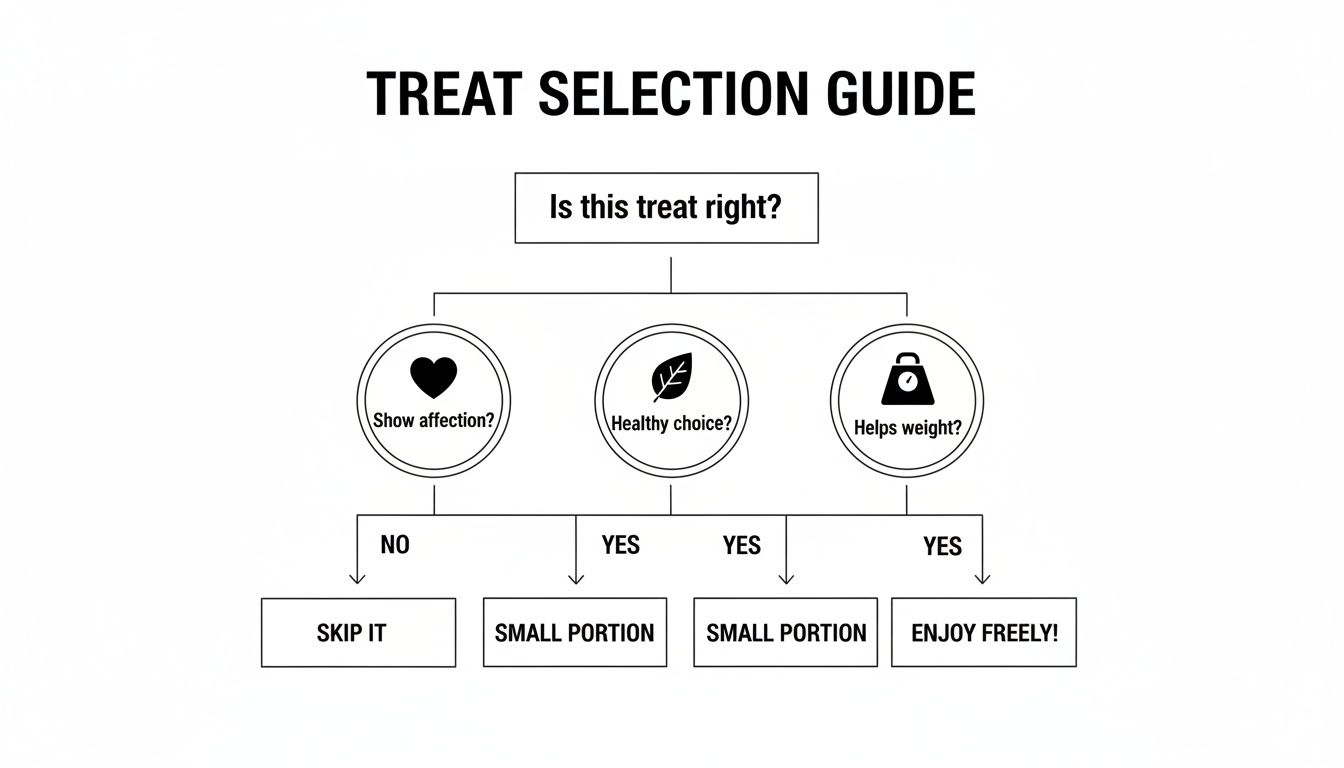
As you can see, the best treats manage to do all three things at once: strengthen your bond, contribute to good health, and keep your dog at a healthy weight.
Understanding Calories and Portion Size
Here’s a little insider secret: the term "low calorie" isn't officially regulated for pet food. That means it’s up to us, the pet parents, to do a little digging. The calorie count, usually listed as "kcal per treat" or "kcal per kg," is your most powerful tool for keeping your dog's weight in check.
So, how do manufacturers make low calorie dog treats? They get clever by using lean proteins, adding fiber from ingredients like pumpkin to help dogs feel full, and cutting back on fats and sugars. Most commercial training treats are tiny, landing in the 1–10 kcal range, while bigger reward-style treats might have 20–50 kcal. Knowing the difference lets you reward your dog frequently during a training session without accidentally sabotaging their diet.
Always remember the 10% Rule. This is a golden rule recommended by veterinarians everywhere. It simply means that treats should make up no more than 10% of your dog's total daily calories. So, if your dog eats 500 calories a day, a maximum of 50 of those should come from treats.
This principle makes portion size just as important as the ingredients. A treat can be made of the best stuff on earth, but if it's packed with calories and you're a little too generous, it can still lead to weight gain. Always check the suggested serving size on the package and adjust it for your dog’s specific size, age, and activity level.
Ultimately, learning to read a label is all about giving you confidence. When you focus on whole-food ingredients, understand the calorie count, and stick to the 10% Rule, you can feel good knowing every treat you give is a little token of love that's also helping your dog live a healthier, happier life. For more tips on finding the perfect snack, check out our guide on what goes into truly wholesome dog treats.
Finding the Best Ingredients for Healthy Treats
Stepping into the pet food aisle can feel like navigating a maze. Every package is plastered with appealing claims, but the real story is always in the ingredient list. Learning to quickly spot the good, the bad, and the just plain unnecessary is the single most powerful skill you can develop to ensure you're giving your dog truly healthy, low-calorie dog treats.
Think of it like building a healthy meal for yourself. You instinctively reach for whole, recognizable foods like lean chicken, fresh vegetables, and fruits. You also know to steer clear of mysterious additives, artificial colors, and excessive sugars. Applying this same simple logic to your dog’s treats will transform you into a confident and informed shopper.
Ingredients to Look For
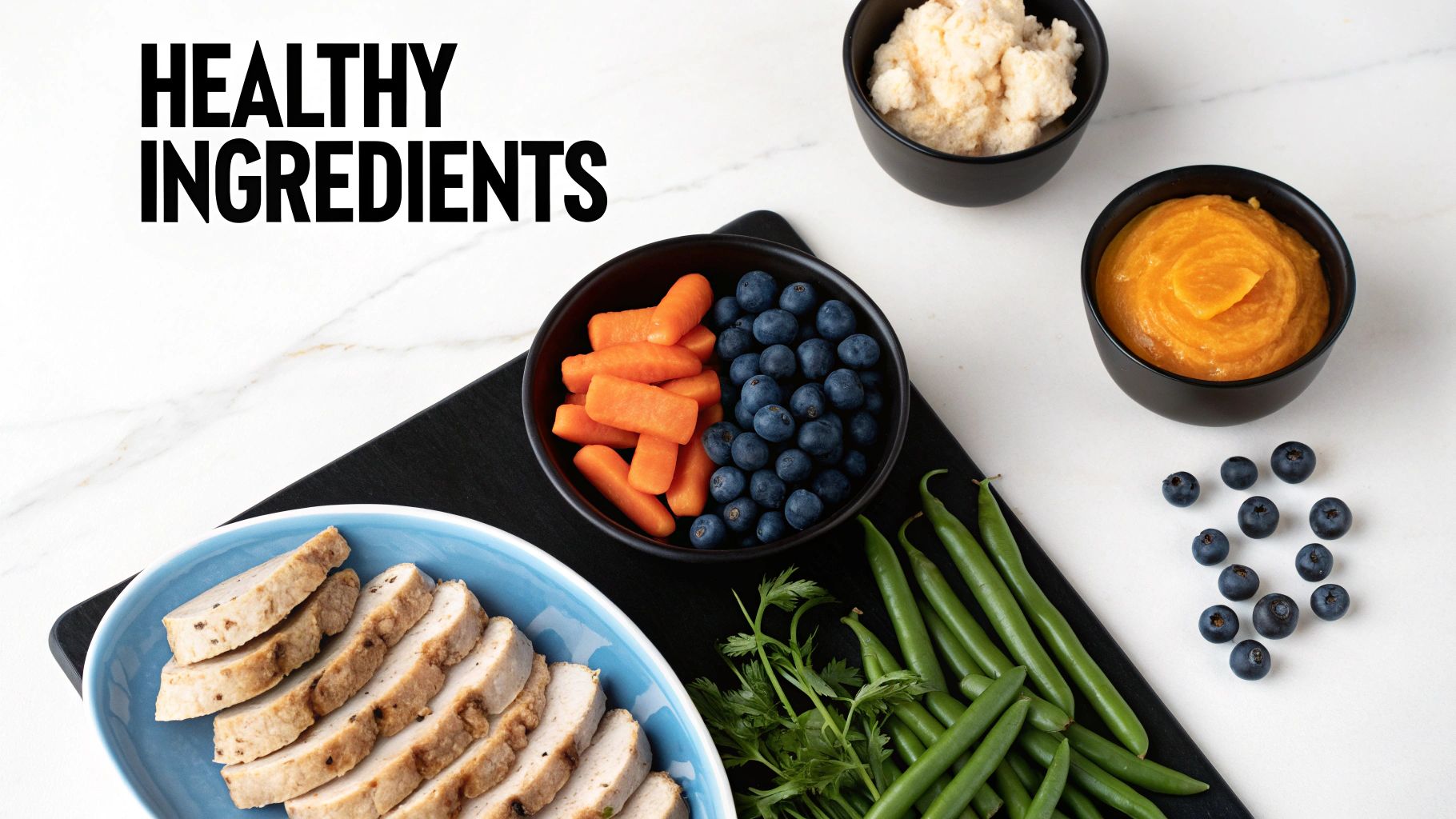
The best dog treats are built on a foundation of simple, nutrient-dense ingredients. These are the powerhouse components that provide real nutritional value without packing on empty calories. Your goal is to find treats where these items are featured prominently at the top of the ingredient list.
Here are a few excellent choices to see on a label:
- Lean Proteins: Look for named proteins like chicken, turkey, or fish. These are fantastic for muscle maintenance and help your dog feel full and satisfied. Boiled chicken, for example, is often recommended by vets for its high-protein, low-fat profile.
- Nutritious Vegetables: Veggies like carrots, green beans, and sweet potatoes are wonderful low-calorie additions. Carrots provide a satisfying crunch and are rich in beta-carotene, while pumpkin is a fiber superstar that aids digestion.
- Beneficial Fruits: Fruits like blueberries and apple slices (with seeds and core removed, of course) are packed with antioxidants and vitamins. They offer a touch of natural sweetness without resorting to processed sugars.
A short, clean ingredient list is a sign of a high-quality product. If you can recognize and pronounce everything on the list, you’re on the right track. This philosophy is exactly why at JoyFull, we focus on clean, straightforward formulas—because our pets deserve the same high-quality nutrition we seek for ourselves.
Ingredients to Avoid
Just as important as knowing what to look for is knowing what to leave on the shelf. So many commercial treats are loaded with fillers, artificial additives, and vaguely sourced ingredients that offer little to no nutritional benefit. These are the red flags that signal a product is designed for shelf appeal, not for your dog’s well-being.
Keep an eye out for these common culprits:
- Vague Meat Terms: Ingredients like “meat by-products” or “poultry meal” are intentionally non-specific. This means the source can be a mix of low-quality animal parts, and you have no way of knowing what’s actually inside.
- Artificial Additives: Synthetic colors (like Red 40 or Yellow 5), artificial flavors, and chemical preservatives (such as BHA, BHT, and ethoxyquin) have been linked to health concerns and should always be avoided.
- Harmful Sweeteners: Sugars like corn syrup, sucrose, and dextrose add empty calories and can contribute to weight gain and dental problems. And you should never give your dog anything containing xylitol, an artificial sweetener that is extremely toxic to them.
- Cheap Fillers: Ingredients like corn, wheat, and soy are often used as cheap fillers to bulk up treats. While not inherently bad for all dogs, they offer limited nutritional value and are common allergens.
Good vs. Bad Ingredients in Dog Treats
To make shopping even simpler, we've put together a quick comparison table you can refer to next time you're in the store. It’s a handy cheat sheet for separating the good from the bad at a glance.
| Ingredient Category | Look for These (The Good) | Avoid These (The Bad) |
|---|---|---|
| Proteins | Whole, named sources like chicken, turkey, fish, or beef. | Vague terms like "meat by-products" or "poultry meal." |
| Carbohydrates | Nutrient-rich options like sweet potato, pumpkin, oats, or brown rice. | Low-nutrient fillers like corn, wheat gluten, or soy. |
| Sweeteners | Natural sources like fruit purees (e.g., applesauce) in moderation. | Corn syrup, sucrose, dextrose, and especially the toxic xylitol. |
| Preservatives | Natural options like Vitamin E (mixed tocopherols) or rosemary extract. | Artificial chemicals like BHA, BHT, and ethoxyquin. |
| Colors & Flavors | Natural colors from fruits and vegetables; natural flavors. | Synthetic dyes (e.g., Red 40, Yellow 5) and artificial flavors. |
For an even more in-depth look at what makes a superior snack, you can explore our full breakdown of the best ingredients for dog treats in our detailed guide.
By prioritizing treats with high-quality, recognizable ingredients, you’re not just giving a reward—you're contributing to your dog’s overall health and vitality with every single bite.
Choosing the Right Treat for Your Unique Dog
Just like people, no two dogs are the same. They’ve all got their own quirks, preferences, and—most importantly—unique nutritional needs. Picking the right low-calorie dog treat isn’t about grabbing the first bag you see. It's about playing matchmaker between the treat and your dog's specific life stage, lifestyle, and overall health.
Think about it this way: you wouldn't serve a toddler the same dinner as a pro athlete. The toddler needs specific nutrients to grow, while the athlete needs high-performance fuel. It’s the exact same logic with our dogs. A treat that’s perfect for a hyperactive Border Collie puppy is probably all wrong for a senior Pug who has mastered the art of napping.
Tailoring Treats to Age and Size
A dog’s calorie and nutritional needs shift quite a bit as they get older. What fuels a puppy won’t be right for an adult, and senior dogs are in a league of their own.
- Puppies: These little dynamos are growing like weeds and need more calories to build strong bodies. But they're also in heavy training mode, which means they get a ton of treats. Small, low-calorie training treats are your best friend here, allowing you to reward good behavior frequently without overdoing it.
- Adult Dogs: For your grown-up dog, the treat game is all about maintenance. You want to match their treats to their weight and activity level. Portion control is everything.
- Senior Dogs: Older pups tend to slow down, and their metabolism follows suit, making them prime candidates for weight gain. They might also have sensitive teeth, so softer, easy-to-chew low calorie dog treats are often a much better and more comfortable choice.
Size is a huge factor, too. A Great Dane’s daily calorie budget is worlds away from a Chihuahua’s. A single treat that’s a small snack for a big dog could blow the entire daily treat allowance for a tiny one. Always pick a treat that’s the right size for your dog to prevent choking and keep calories in check.
Matching Treats to Activity Level
Take a look at your dog's daily schedule. Are they a fetch champion who lives for the dog park, or more of a professional couch warmer?
An active dog who joins you for runs, hikes, or swims is burning way more calories than a sedentary one. While they can handle a slightly more substantial treat, you still want to stick with healthy, low-calorie options to fuel their adventures without piling on extra fat.
For the resident couch potato, on the other hand, every calorie counts. Since their energy output is lower, their treat budget is much smaller. This is where single-ingredient veggie treats like baby carrots or green beans really shine—they’re a fantastic, guilt-free way to share a snack.
When in doubt, always chat with your veterinarian. They are your best resource for figuring out your dog's specific daily calorie needs and can give you personalized advice based on a full health check. This is the best way to make sure your treating strategy is both safe and effective.
Considering Special Health Needs
Many dogs live with health conditions that require careful management, and treats are a big piece of that puzzle. The right treat can support their health, but the wrong one can easily set them back.
- Allergies: If your dog has food sensitivities, you’ll want to become an expert label-reader. Look for limited-ingredient treats that steer clear of their known triggers. Treats with a single source of protein are often a great, safe choice.
- Dental Issues: For dogs with sore teeth or gums, hard, crunchy biscuits can be painful. Soft or freeze-dried treats are much kinder on their mouth. On the flip side, for dogs with healthy teeth, certain dental chews can actually help scrape away plaque and tartar.
- Weight Management: When a dog is on a mission to lose weight, their treats need to be extremely low in calories. A pro tip? Use a few pieces of their regular kibble as a "treat." It feels like a reward to them but doesn't add any extra calories to their daily total.
By taking a moment to consider your dog’s whole picture—their age, size, energy, and health—you stop being just a snack dispenser. You become a partner in their wellness, choosing treats that not only make their tail wag but also contribute to a long, happy, and healthy life.
Simple Homemade Low Calorie Dog Treat Recipes
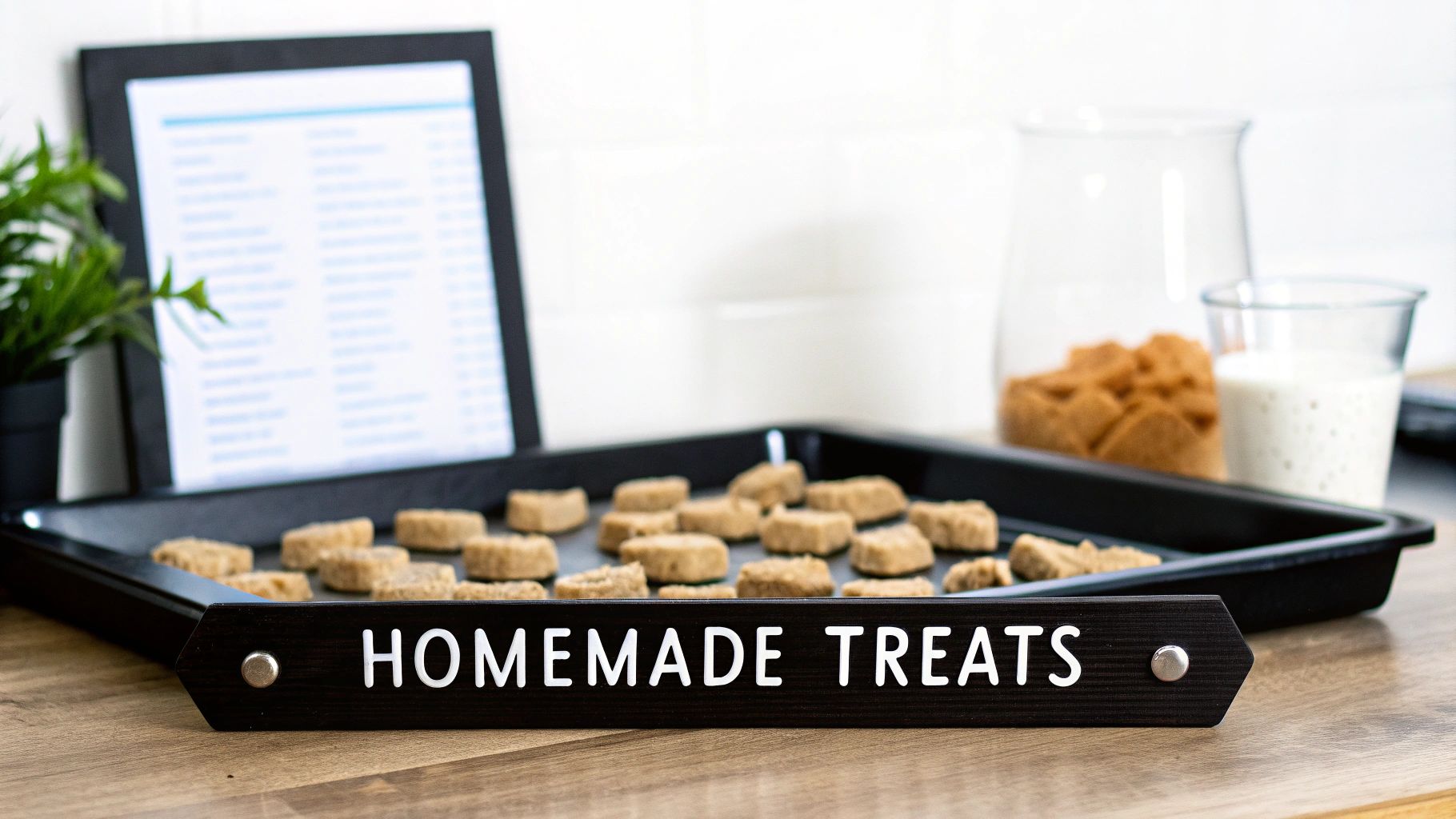
There's something incredibly rewarding about becoming your dog's personal chef. Making your own low calorie dog treats at home puts you in complete control, letting you skip all the artificial additives, fillers, and sneaky sugars common in store-bought options. It’s the best way to give your pup a fresh, wholesome reward that’s perfectly suited to their tastes and dietary needs.
Plus, let's be honest—the smell of treats baking is a reward in itself. Just ask your dog, who will likely be supervising your every move from the kitchen floor!
Crunchy Sweet Potato Chews
It doesn't get much simpler than this. Sweet potatoes are a powerhouse of nutrition for dogs, loaded with fiber and vitamins, and they have a natural sweetness most dogs go crazy for. This single-ingredient recipe creates a satisfyingly chewy snack that's also great for helping to clean their teeth.
Ingredients:
- One large sweet potato
Instructions:
- Preheat your oven to a low 250°F (120°C).
- Give the sweet potato a good scrub. No need to peel!
- Slice the potato into thin, even rounds, about 1/4-inch thick.
- Lay the slices out in a single layer on a baking sheet lined with parchment paper.
- Bake for 2-3 hours, flipping them over halfway through. The longer you bake them, the crunchier they’ll get.
- Let them cool completely before serving—they'll get harder and chewier as they cool.
Estimated Calorie Count: Approximately 5-7 kcal per chew.
Savory Pumpkin Bites
Every dog owner knows pumpkin is a go-to for digestive support. When you mix it with fiber-rich oats and a bit of applesauce, you get a soft, chewy treat that’s perfect for dogs of all ages, especially seniors with sensitive teeth. They're packed with flavor, not fat.
Ingredients:
- 1 cup pumpkin puree (make sure it’s 100% pure pumpkin, not pie filling)
- 1/2 cup rolled oats
- 1/4 cup unsweetened applesauce
- 1 egg
Instructions:
- Preheat your oven to 350°F (175°C).
- In a bowl, mix the pumpkin puree, oats, applesauce, and egg until a thick dough forms.
- Drop small, teaspoon-sized dollops onto a parchment-lined baking sheet.
- Bake for 20-25 minutes, or until the treats are firm and dry to the touch.
- Let them cool completely on a wire rack before treat time.
Estimated Calorie Count: Approximately 4-6 kcal per bite.
Chef's Tip: Homemade treats don't have preservatives, so storage is key. Keep them in an airtight container in the fridge for up to a week. To make them last, you can freeze them for up to three months!
Frozen Berry Pupsicles
When the weather heats up, nothing beats a cool treat. These frozen pupsicles are a fantastic way to keep your dog hydrated and happy. They blend the natural sweetness of berries with creamy yogurt for a totally guilt-free reward.
Ingredients:
- 1/2 cup plain, unsweetened Greek yogurt (double-check it contains no xylitol)
- 1/4 cup mixed berries (blueberries and strawberries are great choices)
- A small splash of water
Instructions:
- Toss the Greek yogurt, berries, and a little water into a blender.
- Blend until everything is smooth and combined.
- Pour the mixture into an ice cube tray or fun silicone molds.
- Freeze for at least 4 hours, or until they're solid.
- Pop one out whenever your dog deserves a cool-down.
Estimated Calorie Count: Approximately 3-5 kcal per pupsicle (depending on the size of your mold).
Making treats at home is a simple act of love that elevates your dog's health and happiness. By trying out these easy recipes, you're giving your best friend the freshest rewards possible. If you're feeling inspired and want to get even more creative in the kitchen, check out our full collection of healthy dog treat recipes.
Got Questions About Healthy Dog Treats? We've Got Answers.
Deciding to switch to healthier, low-calorie dog treats is a great move for your pup, but it's totally normal to have a few questions. You're not the first to wonder about the details, and we're here to clear things up.
Let's dive into some of the most common questions we hear from pet parents just like you. Think of this as a quick guide to help you feel confident and ready to treat your dog the right way.
How Many Low-Calorie Treats Can I Give My Dog Each Day?
This is easily the most-asked question, and luckily, there’s a simple rule of thumb that veterinarians recommend: the 10% rule.
It’s a straightforward guideline: treats should make up no more than 10% of your dog's total daily calories. This keeps their main meals as the primary source of balanced nutrition.
First, you'll need to know your dog's daily calorie target. Your vet can help you figure this out based on their age, weight, and how active they are. For instance, if your dog's daily goal is 500 calories, then treats should account for 50 calories, max.
So, if you're using tiny 5-calorie training treats, you could give up to ten of them. Just remember to check the package for the "kcal per treat" and do a little mental math throughout the day.
Are Grain-Free Treats Always a Low-Calorie Choice?
Not always, and this is a huge point of confusion. The "grain-free" label simply means the treat doesn't have grains like wheat, corn, or soy. That’s great for dogs with actual grain allergies or sensitivities.
However, to replace those grains, companies often use other calorie-dense ingredients like potatoes, peas, or lentils. Because of this, some grain-free treats can actually pack more calories and fat than their grain-inclusive counterparts.
Your best bet is to ignore the flashy claims on the front of the bag. Flip it over and look at the guaranteed analysis. The actual calorie count (kcal/treat) is the only number that tells the real story.
Is It Okay to Just Use Fruits and Veggies as Treats?
Absolutely! In fact, many fresh fruits and vegetables are fantastic, natural, and inherently low-calorie dog treats. They're a wonderful way to mix things up and add some extra vitamins, minerals, and fiber into your dog's day.
Some great, dog-safe choices include:
- Baby carrots for a satisfying crunch.
- Green beans (raw or steamed) are super low-cal.
- Cucumber slices, which are refreshing and hydrating.
- Apple slices, but always be sure to remove the core and seeds first.
The crucial part is knowing which foods are off-limits. Grapes, raisins, onions, garlic, and macadamia nuts are toxic to dogs and should be avoided at all costs. Whenever you introduce a new food, start slow with small, bite-sized pieces to make sure it agrees with your pup.
What's the Difference Between Freeze-Dried and Dehydrated Treats?
Both are excellent ways to preserve whole foods, creating healthy, shelf-stable treats. The real difference is in how they're made, which affects the final nutritional punch.
Dehydration uses low, gentle heat over a long time to draw out moisture. It works well, but that heat can sometimes degrade some of the more delicate, heat-sensitive vitamins and nutrients.
Freeze-drying is a bit more high-tech. The food is frozen solid, then placed in a powerful vacuum that turns the ice directly into vapor. This process, called sublimation, is amazing at locking in the food’s original nutrition, flavor, and color. That’s why you’ll often see single-ingredient freeze-dried proteins positioned as a more premium, nutrient-dense treat.
At JoyFull, we don't think finding healthy, clean-ingredient options for your dog should be complicated. Our treats are made with the same care and quality you'd expect for your own food because a healthy life isn't just for humans. See what our no-BS approach to pet wellness is all about at https://joyfullpet.com.