


A Guide to How to Transition Cat Food Without Stomach Upset
The key to a successful cat food transition is to do it slowly. You'll want to take 7-10 days to gradually mix the new food into their old stuff. If you switch them over cold turkey, you’re practically asking for digestive problems like vomiting and diarrhea. A good starting point is a mix of about 75% old food to 25% new food.
Why a Gradual Food Transition Is Essential for Your Cat

It’s tempting to think of cat food as just... food. You finish one bag, open the next, and fill the bowl. But a cat's digestive system is a finely tuned machine, and sudden changes can throw it into total chaos. Understanding why is the first step to getting the switch right.
Deep inside your cat's gut is a whole ecosystem of bacteria—the gut microbiome. This community is perfectly adapted to break down the specific ingredients in their current diet. When you abruptly introduce a completely different formula, these specialized bacteria are caught off guard. They can't process the new ingredients, which leads to all sorts of trouble.
The Consequences of a Rapid Switch
I see this all the time. A well-meaning owner, let's call her Sarah, decides to upgrade her cat Milo's food from a standard chicken kibble to a premium fish formula. She does her research, buys the best food she can find, and swaps it out overnight. The next day? Milo has diarrhea and vomits up his breakfast. Now he won't even go near his bowl.
This story is incredibly common. The sudden change shocked Milo's system, causing the exact issues a slow transition prevents. Sarah's good intentions ended up with a sick cat, a mess on the carpet, and a vet bill just to be safe.
The goal is simple: a gradual transition gives the good gut bacteria time to adjust. It allows the microbes that can handle the new ingredients to multiply while the old ones fade away, preventing a total system meltdown.
It's More Than Just Tummy Aches
Beyond the immediate upset stomach, a fast switch can create bigger headaches down the road. The stress from feeling sick can lead to food aversion—your cat starts to associate that new food with feeling awful and flat-out refuses to eat it. This is really dangerous, since a cat that stops eating for even a couple of days can develop serious conditions like hepatic lipidosis, also known as fatty liver disease.
A proper transition works with your cat's biology, not against it. It's not an optional step; it's a critical process for their health and comfort. Taking your time avoids a whole list of problems:
- Vomiting and Diarrhea: These are the classic signs that the change was too fast.
- Food Refusal: A cat that feels sick after eating will quickly learn to avoid that food.
- Litter Box Problems: Digestive discomfort can sometimes lead to messes outside the litter box.
- Increased Stress: Forcing a new food on a cat can cause anxiety, which only makes digestive issues worse.
Ultimately, knowing how to switch your cat's food is about more than just avoiding messes. It’s about protecting their health, maintaining trust, and keeping mealtime a happy, stress-free part of their day.
Your 10-Day Cat Food Transition Schedule
Alright, you know why a slow switch is crucial. Now, let's talk about the how. I've found this 10-day plan to be the sweet spot for most cats, giving their digestive system a chance to catch up without any drama. Rushing is the number one mistake I see people make, but this roadmap takes the guesswork out of it and helps you sidestep a world of tummy troubles.
Just remember, this is a blueprint, not a strict command. If you’ve got a cat with a notoriously sensitive stomach or one who turns their nose up at anything new, don't be afraid to stretch each phase out for a few extra days. The most important thing is to watch your cat, not the calendar.
Stage One: The Introduction (Days 1-3)
The first few days are all about a gentle introduction. We're just trying to get the new food on their radar without spooking their senses or their gut. A tiny amount is all it takes to let their body start recognizing the new ingredients.
Start with a mix of 75% old food to 25% new food. This little bit of "new" is usually enough to pique a curious cat's interest but not enough to cause a major revolt. For the really stubborn ones, this small ratio makes it much harder for them to meticulously eat around the new bits.
A Little Tip for Success:
I highly recommend using a kitchen scale, especially if you feed small meals. Trying to eyeball 25% of a tiny portion is next to impossible. Precision here really does help create a smooth, consistent start. Just weigh the total meal, then do the simple math for each food.
Stage Two: The Adjustment (Days 4-7)
By this point, your cat’s system has had a little time to get acquainted with the new formula. Now we can get a bit bolder and move to an even split. This is really where you’ll start to see how well they’re handling the change.
For the next few days, mix their meals to a 50% old food and 50% new food ratio. Think of this as the main trial period. Keep a close eye on everything—their appetite, their energy, and, of course, what's happening in the litter box. A few minor changes in stool are normal, but we're watching for anything that seems off.
This slow-and-steady method isn't just a suggestion; it's backed by a lot of experience and data. Switching a cat's food too fast can lead to digestive upset in up to 70% of them. It's why vets and nutritionists are always championing the 7-10 day method. In fact, a large survey of 5,000 US cat owners found that 82% had a successful transition when they did it gradually, a huge jump from the 45% who had success when trying to switch overnight. You can see more on these trends by exploring insights from the cat food market.
An Insider Trick: If you're switching between wet foods, try warming the new food just a tiny bit. A few seconds in a microwave-safe bowl can release the aroma and make it far more tempting for a skeptical cat.
Stage Three: The Final Switch (Days 8-10)
You're on the home stretch! Your cat should now be eating the mixed food happily, without any digestive complaints or hunger strikes. In this final stage, we're making the new food the star of the show and phasing out the old stuff for good.
Now you'll flip the ratio to 75% new food and 25% old food. Your cat is mostly on their new diet, with just a little bit of the old, familiar food left. If everything is still looking good after a couple of days at this ratio, you can confidently go to 100% new food. You did it!
To make things even easier, here's a simple chart you can reference.
Sample 10-Day Cat Food Transition Schedule
This day-by-day table is a great visual guide to keep on the fridge. It breaks down the ratios and reminds you what to look for at each step of the journey.
| Days | Old Food Ratio | New Food Ratio | Key Observation Points |
|---|---|---|---|
| Days 1-3 | 75% | 25% | Watch their initial reaction. Are they curious? Sniffing? Any immediate refusal or vomiting? |
| Days 4-7 | 50% | 50% | This is the main test. Check stool consistency, energy levels, and make sure their appetite is strong. |
| Days 8-9 | 25% | 75% | Look for continued good signs. This is your final checkpoint before making the full switch. |
| Day 10+ | 0% | 100% | Confirm your cat is happy, healthy, and eating their new food without any issues. |
Ultimately, patience is your best friend here. By following this measured 10-day plan, you’re not just changing their food—you’re respecting your cat's sensitive biology and setting them up for great digestive health in the long run.
How to Read Your Cat's Reaction During the Switch
Your cat is the ultimate expert on how the food transition is going. While they can't tell you what they think, they’ll give you plenty of signals through their behavior, appetite, and what you find in the litter box. Your job is to become an expert observer, learning to spot the difference between a minor hiccup and a real problem.
Knowing how to read these signs is the key to a successful switch. It tells you when to keep going, when to slow down, or when you might need to pause and rethink things. By paying close attention, you can guide the process with confidence and keep your cat happy and healthy every step of the way.
The timeline below gives you a great visual for a standard transition, showing how you'll gradually increase the new food over several weeks.
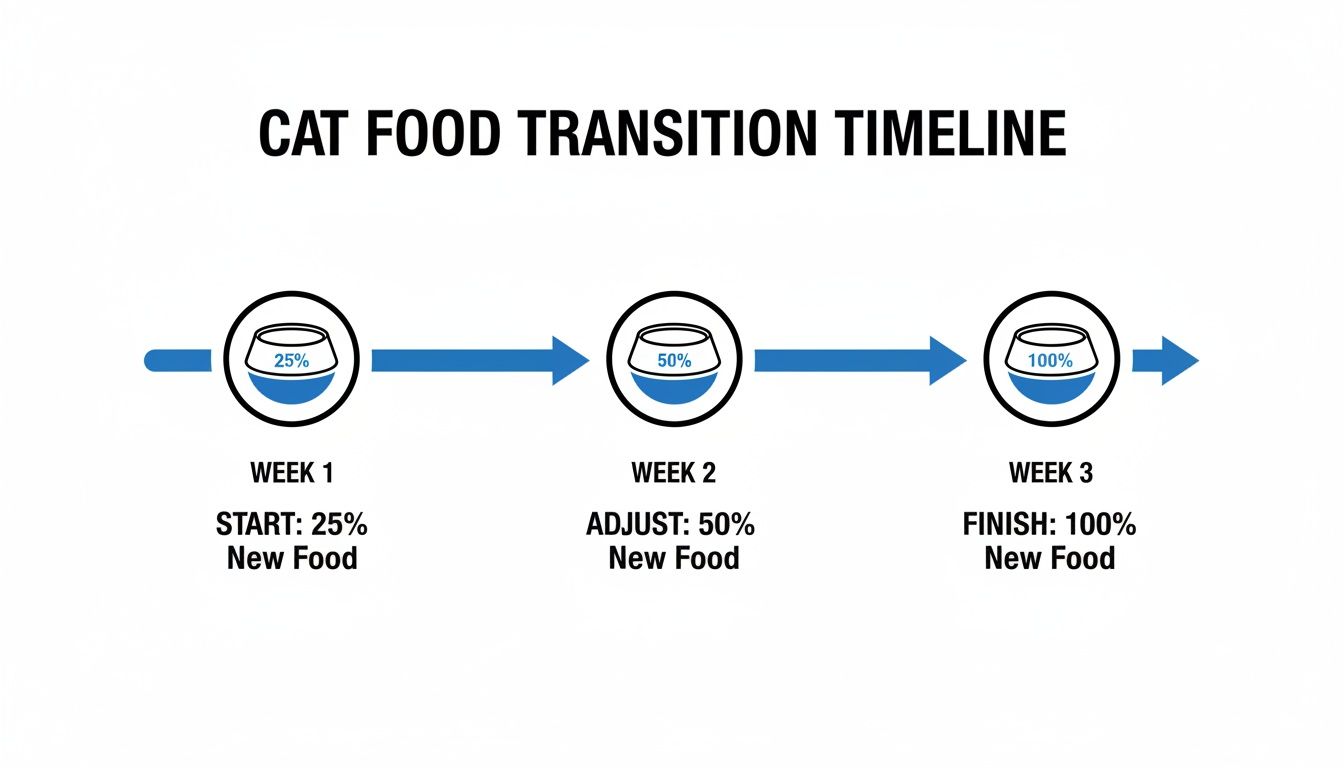
As you can see, you start with just a small amount of the new food and slowly make it the main event by the end of the process.
Green Flags: Everything Is Going Well
When a food transition is on the right track, the signs are usually subtle—which is exactly what you want. A smooth switch often means you won't notice much of a change at all. These are the positive indicators, or "green flags," to look for.
- Consistent Appetite: Your cat eats their mixed meals with the same excitement they had for their old food. They aren't leaving bits behind or acting hesitant around their bowl.
- Normal Energy Levels: They're just as playful, curious, and active as always. A happy cat will stick to their usual routine of napping, playing, and exploring.
- Healthy Stools: The litter box is your best source of intel. Well-formed, solid stools that aren't unusually smelly are the gold standard. A slight change in color is normal, but it shouldn't be dramatic.
- Shiny Coat and Clear Skin: While this is more of a long-term benefit, you shouldn't see any negative changes like dandruff, dull fur, or new skin irritations popping up during the switch.
If you're seeing these signs, you can confidently stick to your transition schedule. Your cat is telling you they're adapting well.
A successful transition is often a quiet one. The absence of negative symptoms is your biggest green flag, indicating that your cat's digestive system is adjusting as it should.
Red Flags That Signal a Problem
It’s just as important to recognize when something is wrong. Red flags are your cat's way of saying, "Hey, this isn't working for me." Seeing one of these signs means you need to slow down the transition or possibly get your vet involved.
Don't panic over a minor issue. A single slightly soft stool isn't a disaster. But persistent or severe symptoms are a clear signal to take action.
Common Red Flags to Watch For:
- Persistent Diarrhea: A loose stool for more than 24 hours is a sign their gut is not happy. This can lead to dehydration and means the transition is either too fast or the food isn't a good fit.
- Vomiting: An occasional hairball is normal, but vomiting up food more than once or twice is a huge red flag. It shows the new diet is causing immediate digestive distress.
- Lethargy or Hiding: If your normally social cat suddenly becomes withdrawn, tired, or spends all their time under the bed, it could be a sign of discomfort or nausea.
- Sudden Itchiness or Skin Issues: Excessive scratching, licking, or bald patches could point to a food intolerance or allergy. To learn more, check out the common signs of food allergies in cats and what to look for.
- Complete Food Refusal: If your cat stops eating entirely—even with the old food mixed in—it's a serious problem. A cat that doesn't eat for more than 24-48 hours is at risk for dangerous health issues like hepatic lipidosis.
If you see any of these red flags, hit the brakes. The best immediate action is to go back to the previous ratio of old-to-new food that your cat was tolerating well. Stay at that stage for a few days until the symptoms clear up before trying to move forward again, but this time at a much slower pace.
Troubleshooting Common Food Transition Problems
Even with the best-laid plans, you can hit a few bumps in the road. Think of a food transition as a negotiation—and sometimes, your feline business partner has very strong opinions. Knowing how to handle these common challenges can keep things moving forward without turning mealtime into a battle.
The trick is to respond calmly and consistently. Most of these hiccups are temporary and just need a small tweak to your strategy. The main goal is always to get back on track without stressing out you or your cat.
Your Cat Eats Around the New Food
Ah, the classic move of a discerning (and often stubborn) cat. They meticulously pick out their old, familiar kibble and leave the new pieces behind like tiny monuments of protest. It’s frustrating, sure, but it’s also a clear message: they haven't accepted the new food's taste or texture just yet.
When this happens, you have to make it impossible for them to be so picky. Don't give up—just get a little more clever.
- Crush the New Kibble: Take a small amount of the new dry food and grind it into a coarse powder. Mix this powder thoroughly with their old food. Now, they can't avoid the new flavor; it becomes part of every single bite.
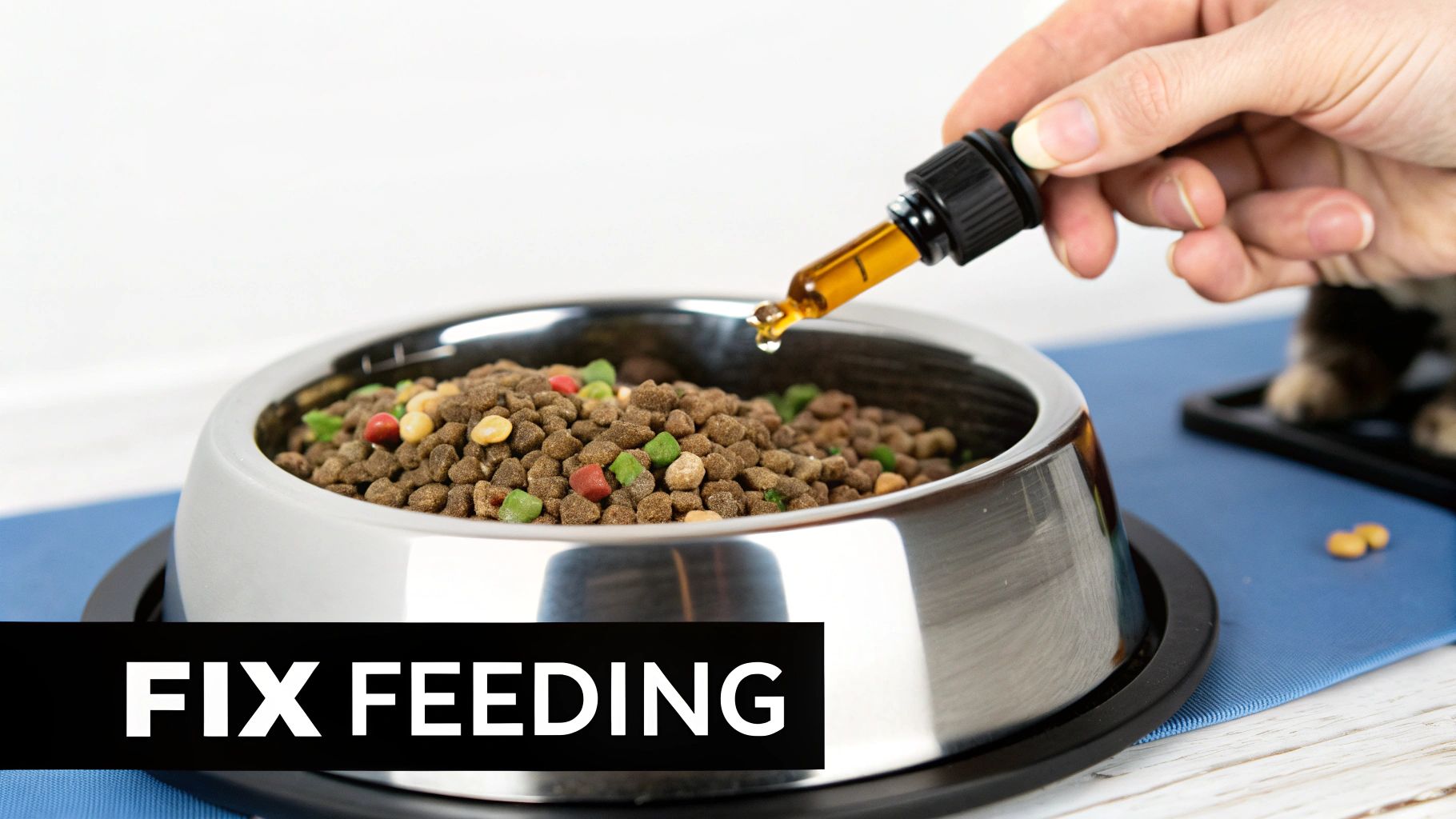
- Add an Appealing Topper: A little drizzle of salmon oil, a sprinkle of nutritional yeast, or even a splash of warm water can help blend the scents of the two foods. This makes the new stuff smell less foreign and much more interesting.
- Mix Wet Foods Completely: If you’re transitioning between wet foods, make sure you’re mixing them together until they're fully integrated. A quick stir won't cut it. You want every spoonful to be consistent.
Your Cat Refuses to Eat Altogether
Okay, this one is more serious and needs your immediate attention. When a cat stops eating entirely, they're sending a loud and clear signal that something is very wrong. It could be the transition speed or the new food itself. A cat that goes without food for more than 24 hours is at risk for serious health issues.
Do not try to "wait it out." Forcing the issue can create a dangerous food aversion that’s incredibly hard to reverse. Instead, your first move should be to retreat.
If your cat stops eating, immediately go back to the last mixing ratio they were eating without a problem. If that doesn't work within one meal, offer 100% of their old food. The most important thing is that they eat something.
Once their appetite is back on track with the old food, you can try restarting the transition. This time, however, go much, much slower. I'm talking a tiny amount—think 10% new food to 90% old—and stay at that stage for several days before even thinking about increasing it. For some cats, especially those with sensitive systems, this super-slow approach is the only way forward. You can find more tips on this by reading about the best cat food for sensitive stomach issues.
Minor Digestive Upset Occurs
So what happens if you see a slightly softer stool, but your cat seems happy and is eating well? This isn't a red flag that demands a full stop, but it is a yellow light telling you to slow down. It means their digestive system is working hard to adapt but is feeling a bit overwhelmed.
Instead of pushing forward with the schedule, just hit pause. Stay at the current mixing ratio for an extra two or three days. This gives their gut microbiome the time it needs to catch up and stabilize. Once their stools have been back to normal for at least 24 hours, you can resume the transition. This patient approach is often all it takes to prevent a minor issue from becoming a major one.
Adapting the Transition for Your Cat's Unique Needs
That standard 10-day transition schedule we talk about? It's a fantastic starting point, but let's be real—cats aren't one-size-fits-all. Their age, health history, and general fussiness can mean you need a more customized game plan. Learning to adapt is the real secret to a smooth, stress-free switch.
A tiny kitten and a senior cat have completely different worlds going on inside their bodies. Their nutritional needs and digestive systems are miles apart. If you ignore these differences, you can turn a simple food change into a frustrating mess for both of you.
Tailoring the Transition for Kittens
Kittens are little whirlwinds of energy, but their digestive systems are still under construction. Their gut microbiome isn't fully established yet, making them extra vulnerable to tummy upset from new foods. Because of this, going even slower is always the safest bet.
Instead of the standard 10-day plan, think about stretching the process out to 14 days. All this means is spending a bit more time at each mixing ratio—maybe 3-4 days at each stage instead of just a couple. This gentle pace gives their growing bodies plenty of time to get used to the new ingredients without causing issues like diarrhea, which can be much more serious for a small kitten.
Special Considerations for Senior Cats
Our older feline friends bring their own unique set of challenges to the dinner table. Many seniors are dealing with age-related issues that can make switching foods a bit more complicated. It’s crucial to keep these potential hurdles in mind.
- Dental Issues: It's a sad reality that many senior cats have dental problems, which can make crunching on hard kibble downright painful. If you're moving to a new dry food and notice they're hesitant, pain could be the real culprit. This might be a good time to consider a softer wet food.
- Waning Appetite: A reduced sense of smell and taste is common in older cats, which often leads to a weaker appetite. To make the new food more tempting, try gently warming up their wet food to release more of its aroma. A splash of low-sodium chicken or bone broth can also work wonders.
- Health Concerns: Senior cats are far more likely to have conditions like chronic kidney disease. You should never switch a senior cat to a new food—especially a therapeutic diet—without clear instructions from your veterinarian.
When you're changing food for a senior cat, comfort and patience are everything. Their systems are less resilient, so a slow, supportive approach helps them accept the new diet without any extra stress.
Managing Transitions for Sensitive Stomachs
For cats with a known history of IBD, food allergies, or just a generally finicky stomach, the standard timeline is almost always too fast. Trying to rush it with these cats is just asking for a flare-up.
These sensitive kitties often need a much longer transition, somewhere in the 14 to 21-day range, and sometimes even longer. The trick is to make incredibly small, gradual changes. You might start with a tiny 10% new food to 90% old food mix and just hold it there for a few days before making another tiny adjustment. This "micro-dosing" approach gives their reactive system the best shot at adapting. Before you even start, it's a good idea to understand how to choose cat food that's actually right for their specific needs.
The global pet food market has grown by 5.9% from 2019-2024, flooding the shelves with specialized diets. This includes everything from prescription formulas to plant-based options, which saw a 20% bump in demand. With an estimated 25% of cats having some digestive sensitivity, introducing these novel foods requires extra care. For the 30% of US homes with more than one cat, experts even suggest staggering food transitions so one cat's pickiness doesn't influence the others. You can read more about the global trends in the cat food market.
At the end of the day, your cat is the one who sets the pace. By paying close attention to their life stage, health, and reactions, you can create a personalized plan that works for them and keeps them happy and healthy for the long run.
Answering Your Top Questions About Changing Cat Food
Even the most carefully planned food transition can leave you with questions. That's perfectly normal. Having the right answers handy can turn a potentially stressful process into a smooth and confident one for both you and your cat.
Let's dive into some of the most common questions I hear from cat owners who are navigating a diet change.
How Long Does It Really Take for My Cat to Adjust?
This is the big one, and the answer isn't as simple as you might think. There are two timelines to consider.
First, there's the physical food swap. This is the 10-day period where you're gradually mixing the new food into the old. By the end of this phase, your cat should be eating 100% of the new diet without any major digestive issues like vomiting or diarrhea.
But the internal adjustment? That takes a lot longer. Your cat's gut microbiome—that complex world of bacteria essential for digestion—needs time to adapt. This can take several weeks, sometimes up to six weeks, for their system to fully get on board with the new ingredients. You might notice small changes in their stool consistency or energy levels during this time.
That's why it's so important to keep a close eye on your cat even after the official 10-day transition is done. A few extra weeks of observation will confirm their system has truly settled in.
Do I Still Need to Transition Between Different Flavors of the Same Brand?
Yes, absolutely. This is a common oversight that can lead to an upset stomach. It's easy to assume that switching from, say, "Ocean Whitefish & Tuna" to "Chicken & Salmon" within the same product line doesn't require a transition. While the core formula might be similar, the protein sources and other ingredients are different enough to be a shock to your cat's system.
For these smaller switches, you don't need the full 10-day plan, but a shorter transition is definitely a good idea.
A quick plan for same-brand flavor swaps:
- Follow an accelerated 3 to 5-day schedule.
- Day 1: Mix 75% of the old flavor with 25% of the new.
- Day 2-3: Shift to a 50/50 mix.
- Day 4: Move to 25% old and 75% new.
- Day 5: Serve 100% of the new flavor.
This little bit of effort is usually enough to prevent any unwelcome digestive surprises.
What if I Accidentally Run Out of the Old Food?
It happens to all of us. You reach into the bag and realize you have less of the old food than you thought. The first instinct might be to just pour a bowl of the new food, but that's the last thing you should do. A sudden switch is a recipe for an upset stomach.
You've got a couple of much better options to handle this little emergency.
Whatever you do, don't force an abrupt change. It can cause digestive distress and even make your cat associate the new food with feeling sick, which will only make your job harder.
Your best bet is to make a quick trip to the store for the smallest bag of their old food you can find. This lets you get right back on track with the gradual transition.
If you can't get to the store right away, a temporary bland diet can bridge the gap. Plain, boiled chicken (no skin, bones, or seasoning) mixed with just a tiny bit of the new food is much gentler on their digestive system for a day or so.
At Joyfull, we're passionate about making a healthy life accessible for all pets. Our recipes feature clean ingredients and top-tier proteins, with every formula reviewed by our veterinary advisor to give your cat the best. See what we have to offer at Joyfull Pet and treat your cat to genuine wellness.