


Grain Free Dog Food Benefits for a Healthier Pup
The real benefits of grain-free dog food usually come down to better digestion and fewer allergic reactions, especially for dogs with sensitive systems. By swapping out common grains like corn and wheat for alternative carbohydrate sources, these formulas can be much easier on a dog’s gut. The result? Healthier skin, a shinier coat, and more predictable energy levels.
What Grain Free Actually Means for Your Dog
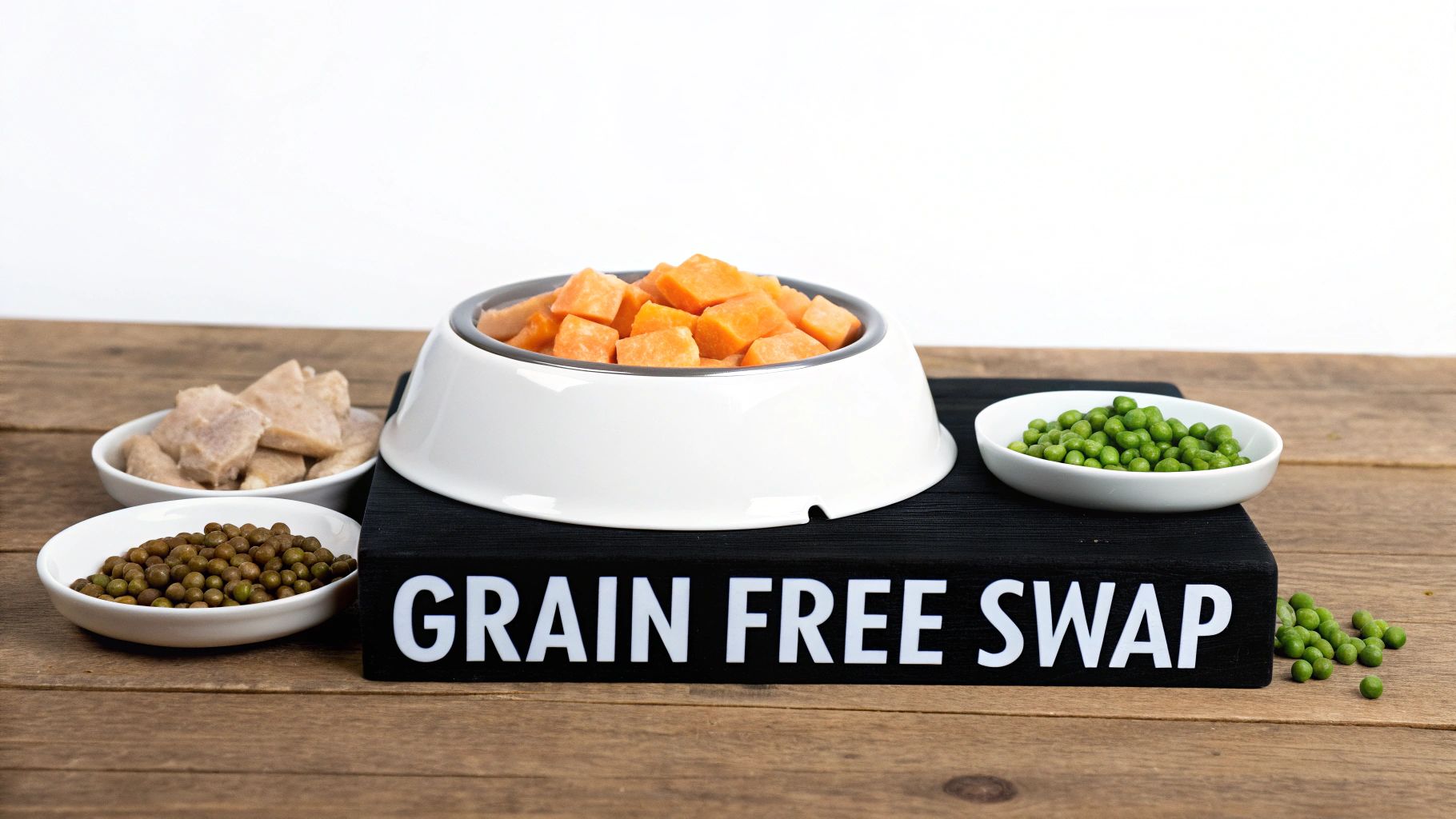
When you see “grain-free” on a bag of dog food, it’s natural to think it means “carb-free.” But that’s one of the biggest myths out there. A grain-free diet isn’t about getting rid of carbohydrates; it’s about making a strategic ingredient swap.
Think of it like choosing between different types of bread for yourself. You might find that sourdough is easier on your stomach than a standard whole wheat loaf. Both are sources of carbs, but one just agrees with you better. It’s a similar idea with dogs. Grain-free food simply replaces carb sources like corn, wheat, and soy with different options.
The Great Carbohydrate Swap
Instead of those traditional grains, these formulas turn to other nutrient-packed ingredients to give your dog the energy and fiber they need. This simple change is the key to unlocking the real benefits of going grain-free.
Common carbohydrate sources in grain-free formulas include:
- Sweet Potatoes: A fantastic source of dietary fiber, vitamins, and minerals that supports a healthy gut.
- Peas and Lentils: These legumes are rich in both protein and fiber, which helps dogs feel full and keeps their energy levels stable.
- Chickpeas: Another great source of protein and fiber that helps create a balanced nutritional profile.
This swap is a game-changer for dogs who struggle with sensitivities to the proteins found in certain grains. For these pups, ingredients like corn or wheat can be tough to digest, often leading to annoying skin irritation, constant itching, or an upset stomach.
The core idea behind a grain-free diet is not to demonize all carbohydrates. It’s about providing energy from sources that are often more in sync with a dog’s natural digestive system, which can reduce the chances of a bad reaction.
By choosing high-quality, easily digestible carbs, a grain-free diet aims to deliver sustained energy without triggering those sensitivities. It’s really a more focused approach to nutrition, zeroing in on what works best for your individual dog.
A Quick Look at Grain Inclusive vs Grain Free Ingredients
To really see this swap in action, it helps to put the ingredient lists side-by-side. This quick comparison shows you exactly what’s being taken out and what’s being put in, making the different nutritional philosophies crystal clear.
| Ingredient Category | Common in Grain Inclusive Food | Common in Grain Free Food |
|---|---|---|
| Primary Carbohydrates | Corn, Wheat, Soy, Barley, Rice | Sweet Potatoes, Peas, Lentils, Chickpeas |
| Formulation Focus | Uses traditional, energy-dense grains | Relies on alternative, often nutrient-dense vegetables and legumes |
| Primary Benefit | Cost-effective and provides essential nutrients for most dogs | Can be easier to digest for dogs with grain sensitivities |
As you can see, both types of food aim to provide energy, but they get there by using very different toolkits. Grain-free just offers another path for dogs who don't thrive on the traditional route.
The Core Health Benefits of a Grain-Free Diet

Once you understand what a grain-free diet is, the natural next question is why you might choose one. Pet parents aren't just jumping on a trend; they're looking for real, tangible improvements in their dog's day-to-day health. The main benefits of grain-free dog food come from taking out potential dietary triggers and swapping them with high-quality, easily digestible ingredients.
For the right dog, this simple switch can set off a cascade of positive changes. It’s not just about what you remove from their bowl—it's about what the new ingredients add to their overall well-being. From a calmer tummy to a more vibrant coat, the right grain-free formula can make a world of difference.
Soothing Digestive Distress
One of the first things owners often notice is a huge improvement in their dog's digestion. Think of your dog’s gut as a sensitive engine. While most dogs run perfectly fine on grains, for others, common ingredients like corn and wheat are like a low-quality fuel that causes sputtering and poor performance.
That "sputtering" usually shows up as chronic gas, loose stools, or just a generally upset stomach. By replacing harder-to-digest grains with gentle carbohydrate sources like sweet potatoes, a grain-free diet helps that engine run a whole lot smoother. This means better nutrient absorption, firmer stools, and a happier, more comfortable pup.
Calming Food Sensitivities and Allergies
While a full-blown grain allergy is pretty rare, sensitivities to the proteins in grains like wheat and corn are more common than you might think. These sensitivities can put a dog’s immune system on high alert, leading to a host of nagging issues that are tough to pin down.
The symptoms often pop up in ways you wouldn't immediately link to their food bowl:
- Persistent Itching: Is your dog constantly scratching, chewing their paws, or rubbing their face on the carpet?
- Chronic Ear Infections: Do they suffer from recurring inflammation and infections in one or both ears that just won't clear up?
- Skin Irritation: Are you battling redness, rashes, or hot spots that cause discomfort and keep coming back?
A well-formulated grain-free diet removes these potential triggers from the equation. When the ingredients causing the immune response are gone, the body can finally calm down, leading to a dramatic drop in these frustrating symptoms.
Think of it like this: If you have a mild lactose intolerance, you might feel bloated or just "off" after drinking milk. Cutting dairy out brings relief. It's the same idea for a grain-sensitive dog—removing the specific grain can stop the internal irritation that leads to external problems like constant itching.
This is where the power of a grain-free diet really shines. Many owners and vets are seeing how grains like wheat and corn can disrupt a sensitive dog's system, leading to itchy skin, endless ear infections, and low energy. Vets often note that grain-free options can mean better digestion for the 10-15% of dogs with these sensitivities, which helps lower inflammation and improve how they absorb nutrients.
Research even suggests that dogs on these diets can maintain their ideal weight more easily, with some studies showing 20-30% less fat accumulation because of the higher protein content. If you want to dive deeper into market trends and canine health, you can review the full report on grain-free dog food analysis at DataIntelo.com.
Achieving Healthier Skin and a Radiant Coat
A dog's skin and coat are a window to their internal health. A dull, flaky coat or dry, irritated skin is often one of the first signs that something is off balance in their diet.
Grain-free diets tackle this in two main ways. First, by getting rid of potential allergens, they reduce the inflammation that causes all that scratching and irritation. When a dog isn't constantly digging at their skin, it finally has a chance to heal, allowing fur to grow back stronger and healthier.
Second, top-tier grain-free foods are typically loaded with omega-3 and omega-6 fatty acids. These essential fats, often from ingredients like fish oil and flaxseed, are the building blocks for strong skin cells and the natural oils that give a coat its beautiful shine. The right balance of these fatty acids nourishes the skin from the inside out.
Promoting Better Energy and Weight Management
Finally, let's talk about fuel. A huge benefit of many grain-free diets is their focus on high-quality protein and nutrient-dense carbohydrates, which has a major impact on a dog’s energy and body condition.
Traditional grain-heavy foods can sometimes cause blood sugar to spike and then crash, leading to uneven energy levels—think bursts of hyperactivity followed by a nap. In contrast, the complex carbs from ingredients like sweet potatoes and peas provide a slow, steady release of energy. This helps keep your dog's energy stable all day long, which is a big win for active pups.
What’s more, since grain-free diets are usually higher in animal protein, they do a better job of supporting lean muscle. Muscle burns more calories than fat, even when your dog is just lounging around. This powerful combo of quality protein and complex carbs can make it much easier for a dog to maintain a healthy weight, giving them the fuel they need for a joyful, active life.
Navigating the DCM Conversation with Confidence
It’s impossible to talk about grain-free dog food without addressing the elephant in the room: the concern over Dilated Cardiomyopathy (DCM). This topic has understandably caused a lot of anxiety for pet parents. Let's cut through the noise, look at the facts, and turn that worry into confident, informed action.
The whole conversation kicked off when the FDA announced it was investigating reports of DCM in dogs eating certain diets, many of which happened to be labeled "grain-free." This immediately forged a link in people's minds: grain-free equals heart risk. But as we've learned more, the science points to a far more complex issue that has little to do with simply removing grains.
The Real Culprit: Formula Quality
The heart of the matter has never been about what’s missing (the grains), but rather what’s in the food and how well it’s all put together.
Think of it like building a house. You can leave out a decorative window (grains) and still have a perfectly strong, sound structure. But if you replace the main support beams with cheap, low-quality materials (poorly chosen ingredients), the entire house becomes unstable. That’s a much better way to think about this issue.
Early investigations found that many of the diets in question were packed with legumes like peas and lentils, often used as the main protein sources. The working theory is that these ingredients, when used improperly or in massive quantities, might interfere with how a dog's body uses taurine—an amino acid absolutely essential for a healthy heart.
The problem wasn't the peas themselves, but the overall nutritional science—or lack thereof—behind the entire recipe.
The takeaway is simple: A well-formulated, scientifically balanced grain-free diet from a reputable company is a world away from a poorly crafted one that cuts corners. Your focus should always be on nutritional completeness, not just a "grain-free" sticker.
How to Separate Fact from Fear
This is where you, as a loving pet parent, can take back control. Instead of swearing off an entire category of food out of fear, you can become a savvy label-reader. Knowing what to look for empowers you to choose a food that delivers on its promises safely.
Here are the critical checkpoints to look for when you're evaluating any dog food, especially a grain-free option:
- AAFCO Nutritional Adequacy Statement: This is non-negotiable. Find the statement on the bag that says the food is "formulated to meet the nutritional levels established by the AAFCO Dog Food Nutrient Profiles." This is your baseline assurance that the food is complete and balanced.
- Commitment to Research: Does the brand have veterinary nutritionists on staff? Do they conduct feeding trials to test their formulas? Brands that invest in real science show a commitment to your dog’s health that goes way beyond slick marketing.
- Ingredient Sourcing and Quality: Look for brands that are open about where their ingredients come from. High-quality, named animal proteins should always be at the top of the ingredient list.
The grain-free market has grown up a lot since the initial DCM scare. The surge in popularity last decade brought a flood of new brands, but the industry has since adapted. Responsible companies now often add supplemental taurine to their formulas as an extra measure of safety.
The key is to choose AAFCO-compliant foods and be wary of recipes that list peas, lentils, or other legumes as the first few ingredients.
Ultimately, navigating this is about shifting your perspective. Instead of asking, "Is grain-free bad?" the better question is, "Is this specific food well-formulated, backed by science, and nutritionally complete?" By focusing on quality over catchphrases, you can confidently explore the grain free dog food benefits without the risk.
How to Know if a Grain-Free Diet Is Right for Your Dog

While many dogs thrive on a grain-free diet, it’s definitely not a one-size-fits-all solution. The real trick is learning to recognize the subtle—and sometimes not-so-subtle—clues your dog might be giving you. These signs often point to an underlying sensitivity to common grains like corn or wheat, and spotting them is the first step toward a productive chat with your vet.
It's amazing how many owners get used to these chronic issues, chalking them up to just being "normal" for their particular dog. But often, these nagging problems are your dog's way of telling you that what’s in their bowl isn't working for them. Learning to connect their behavior to their diet is the key to making a positive change.
The Tell-Tale Signs of Grain Sensitivity
Think of your dog's body as a communication system. When an ingredient doesn't agree with them, the system sends out warning signals—usually through their skin, ears, or digestive tract.
If you find yourself nodding along to a few items on this checklist, a grain sensitivity could be the culprit:
- Relentless Paw Licking and Chewing: Is your dog constantly gnawing at their paws, leaving them red and irritated? This is a classic hallmark of food allergies or sensitivities.
- Chronic Ear Infections: If you feel like you're always at the vet for yeasty, smelly, or inflamed ears that just won't clear up, their food is a prime suspect.
- Constant Itching and Skin Issues: Does your dog spend half the day scratching, rubbing against the couch, or developing painful hot spots? Widespread skin irritation is one of the most common reactions to a dietary trigger.
- A Dull, Flaky Coat: A healthy dog should have a shiny, vibrant coat. If their fur is brittle, dry, or full of dander despite good grooming, their diet might be missing key nutrients or contain an irritant.
- Persistent Digestive Upset: Chronic gas, loose stools, or intermittent vomiting are clear signs their digestive system is struggling to process something in their food, very possibly grains.
This isn't just about their comfort; these chronic problems can seriously impact your dog's quality of life. Getting to the root cause is essential for their long-term health and happiness.
Breeds and Predispositions
While any dog can develop a food sensitivity, some breeds just seem to have more trouble with them. Their genetics can make them more likely to have an immune system that overreacts to certain proteins, including those found in grains.
It's important to remember that breed predisposition is just a clue, not a diagnosis. Your individual dog's symptoms are always the most important factor.
Breeds that owners and vets often keep a close eye on for signs of food sensitivities include:
- German Shepherds
- Golden Retrievers and Labrador Retrievers
- Cocker Spaniels
- Boxers
- West Highland White Terriers
If your dog is one of these breeds and is showing symptoms, it just adds another piece to the puzzle. The goal is to gather all the clues—your dog’s behavior, their physical symptoms, and their breed—to build a clear picture. With this information in hand, you and your vet can decide if exploring the grain-free dog food benefits is the right next step for your best friend.
How to Choose a High-Quality Grain-Free Food
Walking down the pet food aisle can feel pretty overwhelming, can't it? With so many brands shouting about their benefits, it’s tough to know what’s genuinely good for your dog and what’s just clever marketing. Choosing a top-notch grain-free food isn't about grabbing the fanciest bag—it’s about learning to read the label like a pro.
This skill has become essential. Grain-free diets have seen a huge surge in popularity as owners look for ways to improve their dogs' gut health and provide allergy relief. When you see your best friend struggling with non-stop scratching or an upset stomach, you want a solution, and fast. In fact, owner surveys show that grain-free recipes, which use ingredients like peas, lentils, and sweet potatoes, can bring relief to up to 70% of sensitive dogs. It's no wonder pet specialty stores are now the go-to for premium, vet-recommended options. You can dive deeper into this trend by exploring the grain-free pet food market insights on towardsfnb.com.
Start with the Star Player: Protein
Here’s the number one rule I always tell people: look at the very first ingredient. For any truly high-quality dog food, that first ingredient should always be a named, whole animal protein.
Think of it this way—the ingredient list is ranked by weight, from most to least. You want the heaviest, most important ingredient to be the one that builds and maintains your dog's strong muscles.
You should see specific sources listed right at the top, like:
- Deboned chicken
- Beef
- Lamb
- Salmon
Be a little skeptical of vague terms like "meat meal" or "animal by-product meal." While specific meals like "chicken meal" can be a great concentrated source of protein, you want to avoid anything that sounds mysterious or generic.
A clear, named protein source as the top ingredient is the first and most reliable sign that a brand prioritizes quality nutrition over cheap fillers. It’s a non-negotiable starting point for any food evaluation.
Evaluate the Supporting Cast: Carbohydrates and Fats
Okay, once you've found a solid protein, your eyes should move to the next few ingredients. These are typically the carbohydrates that provide energy and fiber. In a great grain-free formula, you're looking for nutrient-packed, whole-food options.
Good signs are wholesome ingredients like sweet potatoes, peas, pumpkin, and chickpeas. These are complex carbs, meaning they provide a slow, steady release of energy without the quick sugar spikes that some simple grains can cause. At the same time, look for healthy fats like chicken fat or fish oils (especially salmon oil), which are absolutely vital for healthy skin and a shiny coat.
Check for Essential Supplements and Guarantees
A truly exceptional food goes beyond just protein, carbs, and fats. The best formulas are boosted with extra nutrients that support your dog's overall wellness from nose to tail.
Scan the label for these critical additions:
- Omega Fatty Acids: Ingredients like flaxseed and salmon oil provide the omega-3 and omega-6 fatty acids needed for healthy skin and a beautiful coat.
- Taurine: This amino acid is a powerhouse for heart health. While most dogs make it on their own, seeing it added is a huge green flag that the company is thorough and conscientious.
- Probiotics: These are the good guys—beneficial bacteria that support a healthy gut, which means better digestion and more efficient nutrient absorption.
Finally, and this is a big one, always look for the AAFCO nutritional adequacy statement. This is your official guarantee that the food is "complete and balanced" for your dog’s specific life stage, whether that’s a growing puppy or an adult. Without it, there’s no real proof that the food meets your dog's basic nutritional needs.
Becoming a label-reading expert is the best skill you can have as a pet parent. We walk you through every step in our complete guide on how to read dog food labels.
Decoding the Dog Food Label: What to Look For
To make things even easier, I've put together a simple checklist you can use next time you're comparing bags. This table breaks down what separates a high-quality label from a questionable one.
| Label Component | What a High-Quality Label Shows | Red Flags to Watch For |
|---|---|---|
| First Ingredient | A named, whole animal protein (e.g., "Deboned Chicken," "Beef"). | Vague terms like "meat" or generic by-products. |
| Carbohydrate Sources | Nutrient-dense veggies (e.g., "Sweet Potatoes," "Peas," "Pumpkin"). | Low-quality fillers or a long list of starchy ingredients. |
| Fat Sources | Named, healthy fats (e.g., "Chicken Fat," "Salmon Oil"). | Unspecified fats like "animal fat" or unhealthy oils. |
| Key Supplements | Added Taurine, Omega-3s, and Probiotics. | Missing these key health-supporting supplements. |
| AAFCO Statement | A clear statement of nutritional adequacy for a specific life stage. | No AAFCO statement, or a vague one like "intermittent feeding." |
Think of this table as your cheat sheet. With a quick glance, you can confidently sort through the options and find a food that truly nourishes your dog from the inside out.
Making a Smooth Transition to a New Diet
After all your careful research and selecting the perfect new food, the final step is introducing it properly. Just swapping their old food for the new one is almost guaranteed to cause an upset stomach. The trick is to go slow, giving their digestive system a chance to get used to the new ingredients.
Think of it as a gradual handover over 7-10 days. This slow-and-steady method is the best way to avoid digestive problems like vomiting or diarrhea, making sure the whole experience is positive for your pup. Rushing it can make your dog associate the new food with feeling sick, and nobody wants that.
Your Step-by-Step Transition Plan
Here’s a simple schedule that works wonders. You'll slowly increase the amount of new food while phasing out the old, which helps your dog's gut bacteria adapt without getting overwhelmed. For an even more in-depth guide, take a look at our post on how to transition your dog to a new food.
A typical 7-day transition schedule looks like this:
- Days 1-2: Mix 75% of their old food with 25% of the new food.
- Days 3-4: Go for a 50/50 mix.
- Days 5-6: Shift the ratio to 25% old food and 75% new food.
- Day 7: Serve 100% of the new food.
Making the right choice in the first place is crucial, and this visual breaks down the process into three core checkpoints.
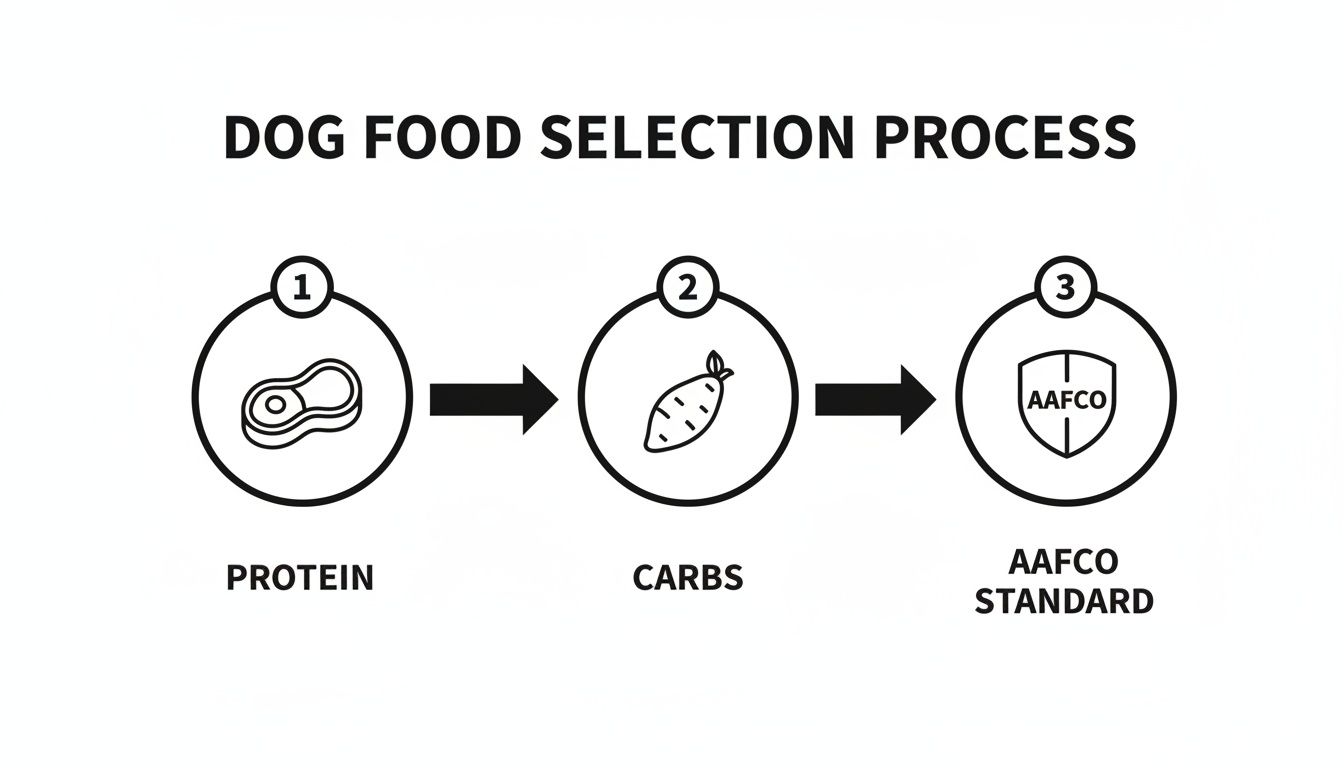
As you can see, a great diet starts with high-quality protein, is supported by nutrient-dense carbohydrates, and is always verified to meet AAFCO standards for a complete and balanced meal.
What to Watch For and When to Pump the Brakes
As you transition, don't be surprised if you see small changes in your dog's stool. A slightly softer stool for a day or two is pretty normal as their body adjusts.
But ultimately, your dog's reaction tells you everything you need to know. If you see persistent diarrhea, vomiting, or a lack of interest in their food, that's their body saying, "Too fast!"
If that happens, just ease up. Go back to the previous food ratio where they were doing fine and hold steady there for another day or two before trying to increase the new food again. Every dog is different, and a successful switch is all about listening to their body and moving at their pace.
Your Grain-Free Questions, Answered
Alright, we've covered a lot of ground. It's totally normal to still have a few questions swirling around as you weigh the pros and cons. Let's tackle some of the most common ones that pop up for pet parents.
Is a Grain-Free Diet Right for My Puppy?
This is a fantastic question, and the answer is: it can be, but you have to be extra careful. Puppies are growing machines, and they need a very specific nutritional blueprint to build strong bones, muscles, and organs. Think precise levels of calcium, phosphorus, and high-quality protein.
If you're considering a grain-free food for your little one, flip the bag over. You must find a statement confirming it meets AAFCO nutritional standards for "growth" or "all life stages." This is non-negotiable and ensures the food is properly balanced for a developing pup.
Will Switching to Grain-Free Help My Dog Lose Weight?
It’s easy to see why people think this, but "grain-free" doesn't automatically mean "low-calorie." While many grain-free foods are higher in protein—which is great for maintaining lean muscle—they often use ingredients like sweet potatoes or lentils, which can pack a caloric punch.
The real secret to weight management isn't about ditching grains; it's about managing total calories and serving the right portion size. Check the feeding guide on the bag and, even better, chat with your vet to nail down the perfect daily amount for your dog’s size and activity level.
Do All Dogs Really Need to Go Grain-Free?
Nope, not at all. The truth is, the majority of dogs do just fine with grains. High-quality whole grains can be a great source of essential nutrients and fiber. Think of a grain-free diet as a specific tool in your nutritional toolkit. It’s most impactful for dogs who genuinely have a sensitivity or allergy to a particular grain.
At the end of the day, the best diet is simply the one that makes your dog look and feel fantastic. And for many owners, showing love goes beyond the food bowl, often leading them to find special personalized gifts for pet lovers to celebrate their bond. Whether your dog's ideal food contains grains or not, their well-being is always the top priority.
At Joyfull, we’re all about creating clean, scientifically-backed recipes that meet your pet's individual needs. If you think a carefully formulated diet is what your dog needs to thrive, we invite you to explore our full line of recipes at https://joyfullpet.com.