

Finding Dog Foods Without Chicken Products Your Pet Will Love
Dog foods made without chicken are exactly what they sound like: recipes that swap out chicken for other high-quality proteins like lamb, beef, fish, or duck. They're designed specifically for dogs who just can't handle chicken, providing all the nutrition they need without the ingredients that cause them trouble.
Why Chicken-Free Dog Food Is Becoming So Popular
Take a walk down the pet food aisle, and you'll see chicken in just about everything. For decades, it's been the default protein for dog food companies because it's packed with protein and relatively inexpensive. But for a surprising number of dogs, that staple ingredient is the source of chronic health issues, making life miserable for them and their owners.
If you're dealing with a dog that's always scratching, battling ear infections, or has a perpetually upset stomach, you're in good company. Countless owners are starting to realize these stubborn problems are directly linked to their dog's food, with chicken often being the number one suspect. This growing awareness is why so many people are now searching for dog foods without chicken products.
It's Often a Sensitivity, Not a Full-Blown Allergy
Think of a chicken sensitivity in dogs like lactose intolerance in humans. A person who is lactose intolerant might not have a life-threatening allergic reaction to a glass of milk, but they'll likely feel bloated, gassy, and generally unwell. It’s a similar story for dogs with a chicken sensitivity—the constant exposure leads to a state of low-grade, chronic inflammation that can really take a toll.
This kind of inflammation can show up in ways that you might not immediately connect to their food bowl.
- The Never-Ending Itch: Is your dog constantly licking their paws or scratching at their skin, even when you know they don't have fleas?
- Recurring Ear Infections: Those gunky, yeasty ear infections that just won't stay away are a classic sign of a food sensitivity.
- Tummy Troubles: This can range from consistently soft poop and terrible gas to random bouts of vomiting.
- Dull, Flaky Coat: A dog's skin and coat are often the first places you'll see signs of an internal issue.
It's worth noting that a true food allergy is a specific immune system response and is actually less common than a food sensitivity or intolerance. But from your dog's perspective, the label doesn't matter—both can make them feel awful, and changing their diet can be a game-changer.
Trying to figure out pet food labels can feel like learning a new language, but finding a great chicken-free food is easier than you think. In this guide, we'll break down everything you need to know, from spotting hidden chicken ingredients to choosing the best protein alternatives, so you can confidently pick a food that will have your dog feeling fantastic again.
2. How to Read the Label and Spot Hidden Chicken
Have you ever stood in the pet food aisle feeling completely overwhelmed? You’re not alone. Trying to find a truly chicken-free dog food can feel like a mission impossible, especially when labels seem designed to confuse. Chicken has a way of sneaking into ingredient lists under all sorts of vague names. It’s a lot like trying to find hidden sugar in your own food—you have to become a bit of a detective.
This is a real problem for a growing number of dog owners. The global dog food market is already huge and is expected to grow from USD 51.27 billion in 2025 to a massive USD 91.82 billion by 2035. A big part of that growth comes from owners seeking out special diets for their pets. With an estimated 10-15% of dogs having a sensitivity to chicken, the demand for dog foods without chicken products is higher than ever.
The image below highlights the classic signs that your dog might be reacting to chicken in their diet.
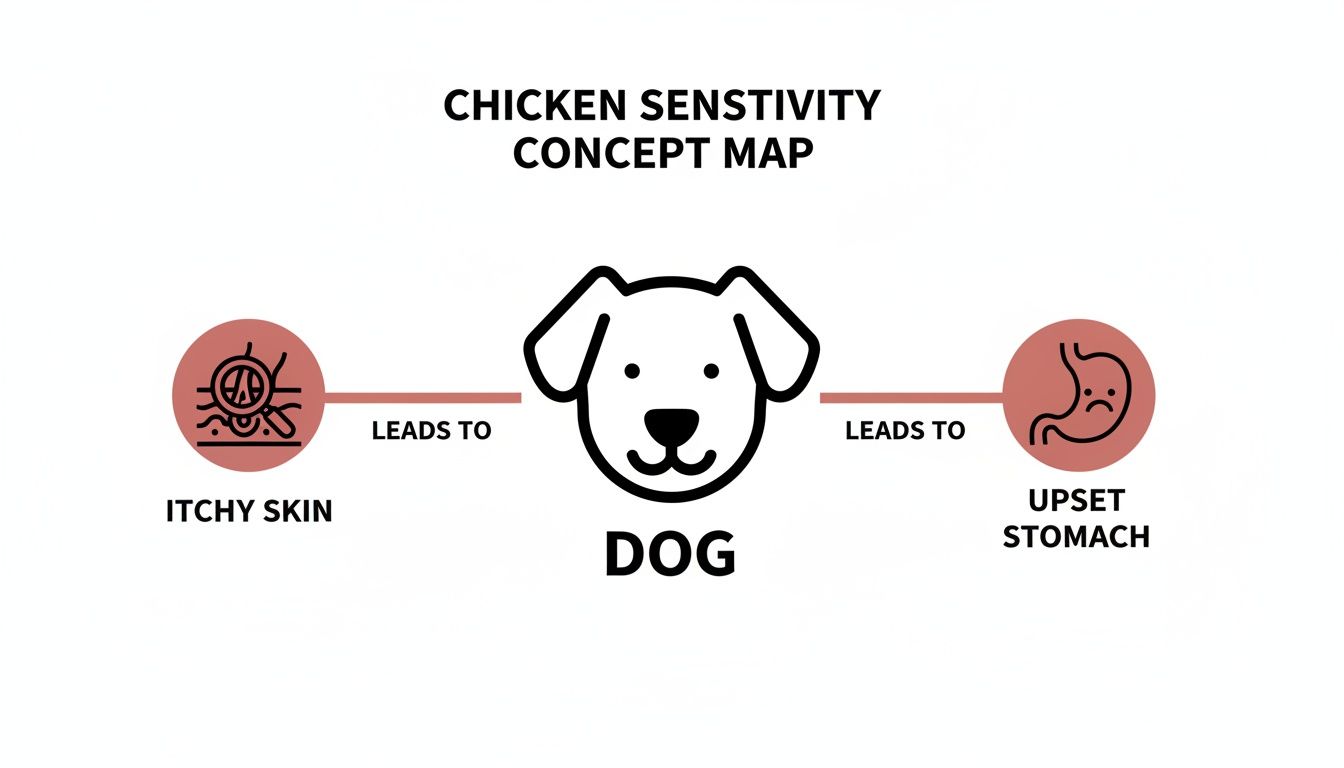
As you can see, that relentless scratching or those frequent tummy troubles could be pointing directly to a food sensitivity, with chicken being a very common culprit.
Looking Beyond the Obvious
Of course, the first thing you'll look for is the word "chicken." But that's just the start. Chicken protein can be disguised under a variety of other names that aren't so obvious.
To help you out, here’s a quick reference table of some of the most common sneaky terms you might find on an ingredient list.
Common Hidden Chicken Ingredients on Dog Food Labels
| Ingredient Name | What It Means | Is It Chicken? |
|---|---|---|
| Poultry | A generic term for any domesticated bird. | Almost always. Unless a specific bird like "turkey" is named, assume it contains chicken. |
| Animal By-Products | A mix of non-rendered animal parts. | Potentially. The source is vague, so it could easily include chicken. It’s best to avoid this anyway. |
| Hydrolyzed Protein | Protein broken down into smaller pieces to be less allergenic. | Potentially. The original source could be chicken. If it's not specified, it's a risk. |
| Natural Flavors | Flavorings derived from animal or plant sources. | Very likely. Chicken is a common and cheap source for "natural flavor" to make food tastier. |
| Animal Fat | Fat rendered from unspecified animal tissues. | Potentially. If the label doesn't say "beef fat" or "pork fat," it could be from chicken. |
Basically, if you see a vague term on the label, it’s a red flag. Reputable brands that care about transparency will tell you exactly what’s in their food—no guessing games required.
A Quick Guide to Reading the Ingredient List
You don't need to be a nutritionist to get the hang of reading a dog food label. Just focus on a few key things, and you'll be able to spot chicken in no time. For a deeper dive, you can always check out our complete guide on how to read dog food labels.
Here’s a simple four-step process to follow in the store:
- Scan for "Chicken" and "Poultry": Start with the easy ones. Look for any mention of chicken, chicken meal, chicken fat, or the catch-all term "poultry." If you see it, put the bag down.
- Look for Vague Animal Terms: Next, hunt for those ambiguous ingredients like "animal fat," "animal digest," or "meat and bone meal." These are signs of a lower-quality food and a potential source of hidden chicken.
- Check for "Natural Flavors": This is one of the sneakiest culprits. If you see this on the list, the food isn't guaranteed to be chicken-free. If you really like the food otherwise, you may need to contact the company to confirm the source.
- Glance at the Guaranteed Analysis: Remember, this section only tells you the percentage of protein, fat, and fiber—it won't tell you the source. It's about nutritional breakdown, not ingredients.
By using this method, you can confidently look past the flashy marketing on the front of the bag and get to the truth on the back. It’s the best way to ensure the food you choose is genuinely one of the best dog foods without chicken products on the shelf.
Exploring the Best Alternative Protein Sources
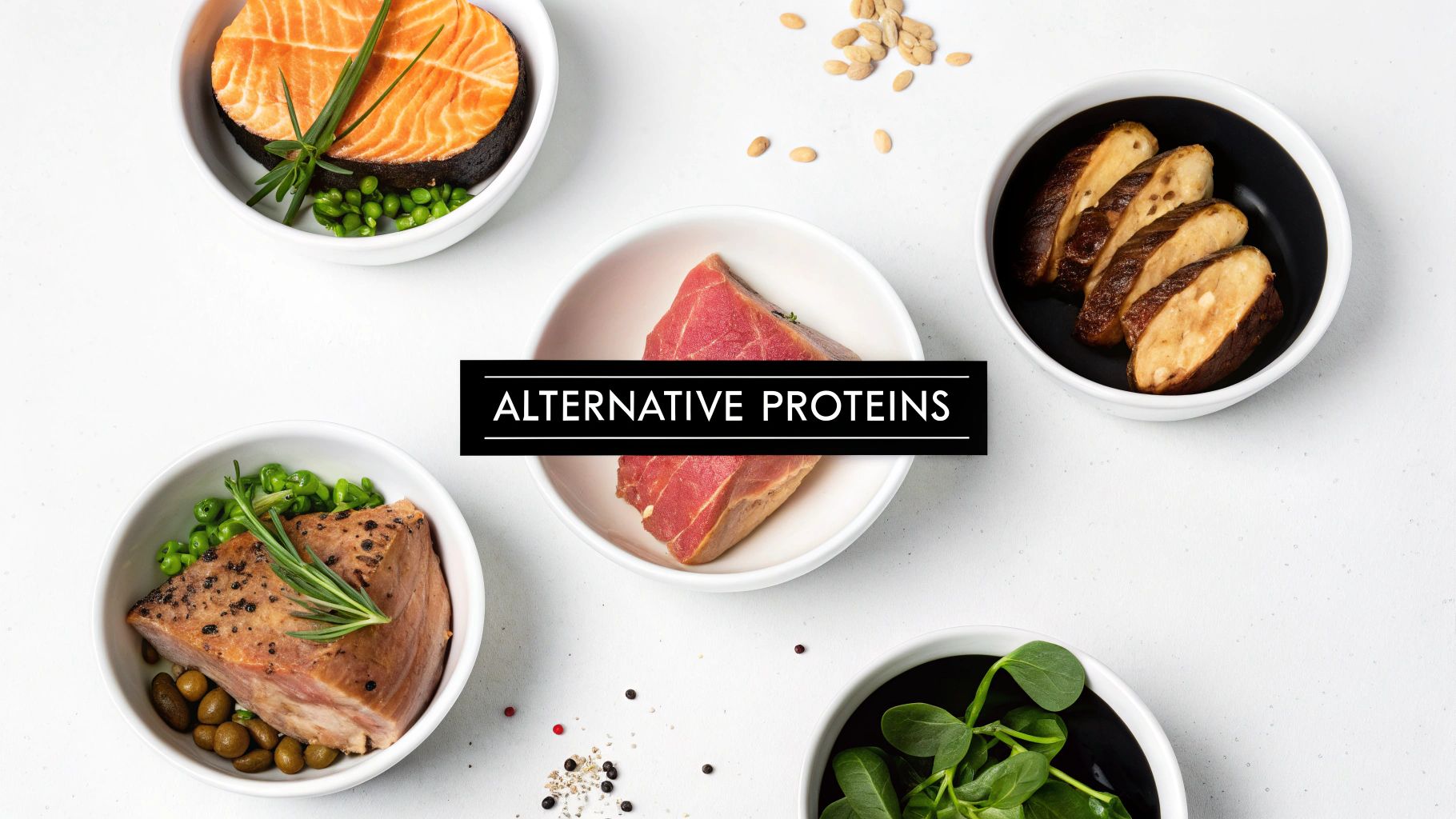
So, you've gotten pretty good at spotting hidden chicken on an ingredient list. The next logical step is to dive into the fantastic world of alternative proteins. Making the switch to a dog food without chicken products doesn't mean you're sacrificing quality or taste. In fact, you're opening up a whole new menu for your dog, full of options that can tackle specific health issues and keep mealtime exciting.
This isn't just a niche trend, either. The demand for chicken-free recipes is growing fast. A huge driver behind the booming dog food market is owners just like you looking for better options. We're seeing this especially with the 66% of dog owners who feed raw or freeze-dried diets; they're often dodging chicken because of the digestive upset it can cause in up to 20% of dogs.
Let's walk through some of the best and most popular proteins you'll find in high-quality, chicken-free dog food.
Reliable Red Meats
For many owners moving away from poultry, red meats are the natural first stop. They're packed with nutrients, dogs usually go crazy for the taste, and they deliver the essential amino acids needed for strong muscles and all-day energy.
- Beef: It's a classic for a reason. Beef is loaded with iron, zinc, and B vitamins—all critical for energy and a healthy immune system. It's a hearty, satisfying protein that most dogs adore.
- Lamb: Often the go-to for dogs with tummy troubles, lamb is known for being highly digestible. It's also a great source of vitamin B12 and niacin, which help support healthy nerve function.
While both are excellent choices, keep in mind that some dogs sensitive to chicken might eventually develop issues with other common proteins like beef. It’s always smart to watch your dog closely whenever you introduce a new food. For a deeper dive, check out our guide on the best protein sources for dogs.
Omega-Rich Fish Options
Fish-based foods are nutritional powerhouses, particularly when it comes to skin and coat health. They are brimming with anti-inflammatory omega-3 fatty acids, making them a brilliant choice for dogs struggling with itchy skin or achy joints.
Ever seen "whitefish" on a label and wondered what it is? It's not a single species, but a catch-all term for mild, white-fleshed fish like cod, haddock, or pollock. They're fantastic low-fat protein sources that are also rich in phosphorus and B vitamins.
- Salmon: Famous for its high levels of omega-3s (specifically EPA and DHA), salmon is a superstar for everything from brain health to a shiny coat. It’s a delicious, high-quality protein with serious anti-inflammatory perks.
- Whitefish: As a category, these fish offer a lean protein that’s easy on the digestive system. This makes them a great pick for dogs that need to watch their weight or have sensitive stomachs.
Honestly, choosing a fish-based diet is one of the most direct ways you can support your dog’s skin, coat, and joints from the inside out.
Exciting Novel Proteins
What if your dog seems to react to everything? If you've tried the common proteins without much luck, it's time to explore novel proteins. A novel protein is simply a protein your dog has probably never eaten before.
The logic is simple: you can't be allergic to something your immune system has never encountered. These less-common meats offer a "clean slate" for a sensitive dog.
Here are some of the top novel proteins to consider:
- Duck: Yes, it's technically poultry, but duck has a different protein structure from chicken, so many chicken-sensitive dogs do just fine with it. It's also rich in iron and amino acids.
- Venison: An incredibly lean, low-allergen meat. Venison is full of B vitamins and important minerals like zinc and iron, making it a prime choice for dogs with multiple food allergies.
- Rabbit: Another lean and highly digestible option. In traditional food therapy, rabbit is even considered a "cooling" protein, which is thought to be gentle on the digestive tract.
- Bison: Rich in protein and lower in fat and cholesterol than beef, bison is a nutrient-dense and flavorful alternative that many dogs find irresistible.
By exploring these options, you can find the perfect dog food without chicken products that not only sidesteps your dog's sensitivities but also delivers targeted nutrition to help them truly thrive.
Comparing Chicken-Free Dog Food Formats
Okay, so you've nailed down the right protein for your dog. That's a huge step, but we're not quite done. The form the food comes in—kibble, canned, raw—is just as important for your dog's health, your daily routine, and your wallet. Deciding on the format for dog foods without chicken products is all about balancing top-notch nutrition with real-world practicality.
This whole conversation is part of a bigger shift I've seen in pet care over the years. People are focusing more on health and premium ingredients, which is pushing the whole dog food market forward. Chicken-free options are a huge part of this, as more owners are looking for solutions to allergies. While dry food is still king in terms of sales, there's a clear move toward less-processed wet and raw foods as pet parents prioritize what's truly best for their dogs. You can actually see some of the data behind this trend over on Research and Markets.
Let's walk through the most common formats so you can find the perfect fit.
Dry Kibble: The Convenient Classic
There's no denying it—dry kibble is the go-to for most dog owners. It’s convenient, it lasts forever on the shelf, and it’s generally the most affordable option out there. That crunch isn't just for show, either; it can help scrape away some plaque and tartar as your dog chews, which is a nice little dental bonus.
But that convenience comes with a trade-off. Kibble is a highly processed food, and the high-heat cooking process it undergoes can unfortunately zap some of the natural nutritional value from the ingredients. A lot of kibbles also lean heavily on carbohydrates to get that classic crunchy shape, which isn't always the ideal diet for every dog.
Wet (Canned) Food: The Palatability Champion
Got a picky eater on your hands? Wet food might just be your best friend. The rich smell and soft, meaty texture can tempt even the fussiest of pups. Plus, it has a much higher moisture content than kibble, which is fantastic for keeping your dog hydrated and giving their kidneys a little extra support.
The flip side is that wet food usually costs more per meal than kibble does. Once you open a can, the clock starts ticking—it needs to be refrigerated and used up quickly. And since it's soft, it doesn't provide any of the teeth-cleaning action you get from a crunchy kibble.
Pro Tip: I often recommend a "mixed feeding" approach. Try topping your dog's kibble with a spoonful of wet food. You get the cost-effectiveness and dental benefits of kibble, with the bonus moisture and flavor boost from the wet food. It's a win-win.
Freeze-Dried and Raw Diets: The Nutritional Powerhouses
For owners who want to get as close to a natural diet as possible, freeze-dried and raw are the top contenders. These options are all about minimal processing, preserving the nutrients of the whole-food ingredients just as nature intended.
-
Freeze-Dried Food: This stuff is pretty clever. Raw ingredients are flash-frozen and the moisture is removed under a vacuum. This process locks in nearly all the original nutrients and flavor without any cooking. It’s lightweight, completely shelf-stable, and gives you the benefits of raw with the convenience of a dry food. You just add a bit of water to rehydrate it before serving.
-
Raw Food: This is the real deal—uncooked meat, organs, bones, and sometimes fruits and veggies, usually sold frozen or fresh. People who feed raw often rave about the incredible changes they see in their dog's coat, skin, and energy levels. But it’s not for the faint of heart; it demands serious commitment to safe food handling to avoid bacteria, and you have to be certain the diet is properly balanced.
So, which one is right for you? It really boils down to what you prioritize. Here’s a quick-glance table to help you compare.
| Food Format | Key Pros | Key Cons |
|---|---|---|
| Dry Kibble | Convenient, affordable, long shelf life, helps dental health. | Highly processed, lower moisture, often high in carbs. |
| Wet Food | Highly palatable, high moisture content, great for hydration. | More expensive, shorter shelf life, requires refrigeration. |
| Freeze-Dried | Excellent nutrition, shelf-stable, great for travel. | High cost, requires rehydration before serving. |
| Raw Food | Highest nutritional integrity, minimally processed. | Requires careful handling, potential for bacterial risk. |
How to Safely Transition Your Dog to a New Food
So, you’ve done the research, found the perfect dog foods without chicken products, and you're ready to go. But hold on—switching your dog's food isn't like flipping a switch. Just dropping the new kibble into their bowl is a surefire way to cause digestive chaos.
Think of your dog's gut as a sensitive ecosystem. A sudden change can throw that system completely out of whack, leading to an upset stomach, diarrhea, and a miserable pup. The secret to success is a slow, gradual transition that gives their body time to adjust.
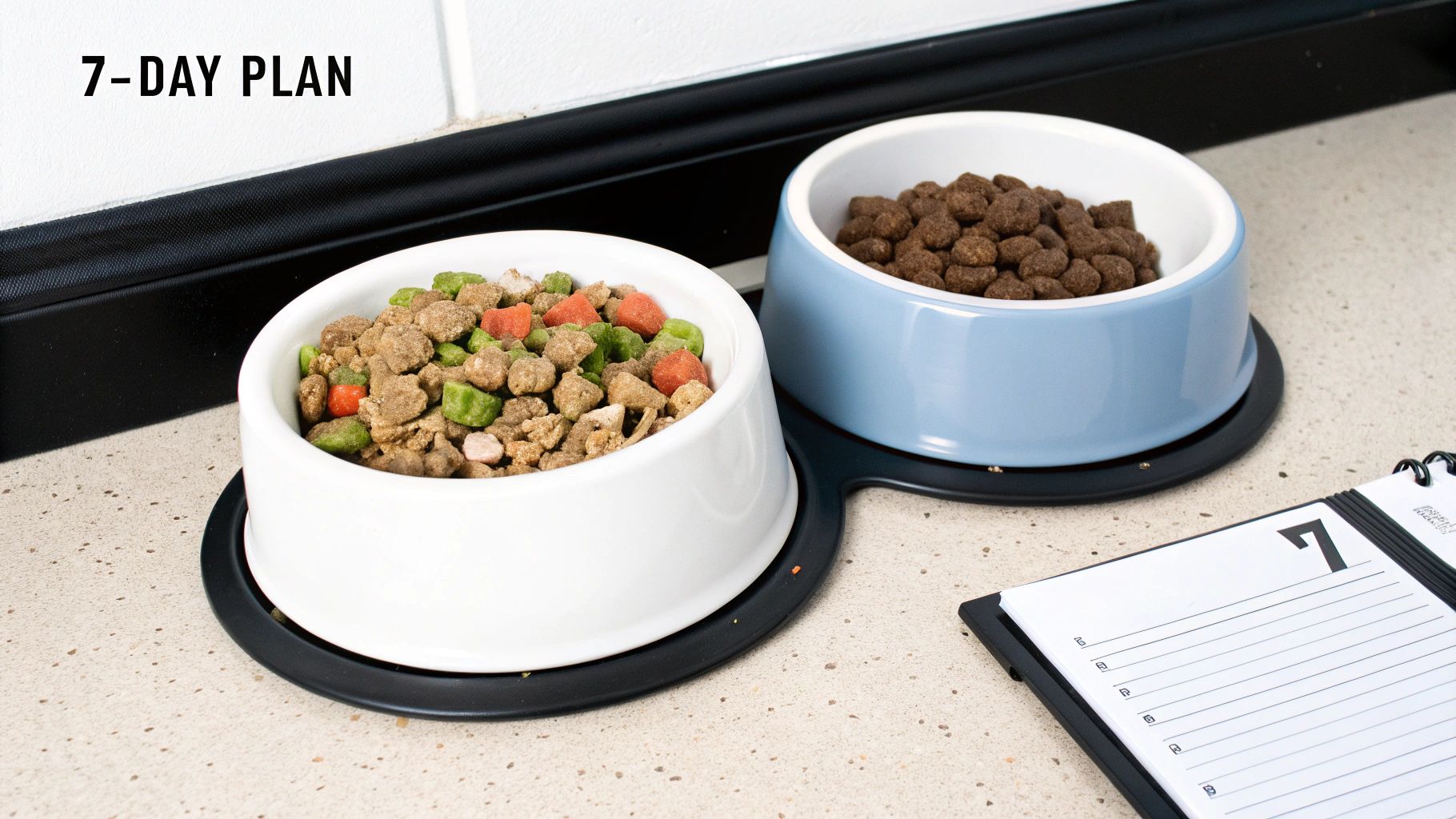
The Foolproof 7-Day Transition Plan
This simple, step-by-step schedule is the gold standard for switching foods. The key is to keep the total amount of food you serve each day the same; you’re just tweaking the ratio of the old food to the new.
- Days 1-2: Start by mixing 75% old food with 25% new food. This is a gentle introduction, letting your dog's digestive system get acquainted with the new formula.
- Days 3-4: Shift to a 50/50 split of old and new food. You're at the halfway point now. Keep a close eye on your dog’s stool and energy levels.
- Days 5-6: Time to tip the scales to 25% old food and 75% new food. By now, your dog should be getting used to the new protein and other ingredients.
- Day 7 and Beyond: You did it! You can now serve 100% of the new chicken-free food.
To make it even easier to follow, here's a simple table to guide you through the week.
A 7-Day Food Transition Schedule
This is a sample schedule showing the recommended ratio of old food to new food. It's designed to ensure a smooth dietary transition for your dog.
| Day | Old Food Ratio | New Food Ratio |
|---|---|---|
| 1-2 | 75% | 25% |
| 3-4 | 50% | 50% |
| 5-6 | 25% | 75% |
| 7+ | 0% | 100% |
Following this gradual process is the best way to avoid digestive problems. For an even more detailed guide, check out our post on https://joyfullpet.com/blogs/news/how-to-transition-dog-to-new-food.
What to Watch For During the Switch
During this week-long transition, you need to be an extra-observant pet parent. Your dog's body will give you clear signals about how things are going.
Pay close attention to these key signs:
- Stool Consistency: This is your number one indicator. Their poop should stay firm and well-formed. A little softness can be normal, but persistent diarrhea is a red flag.
- Appetite and Enthusiasm: Is your dog still excited for mealtime? A sudden lack of interest might mean they don't like the taste or that it's causing some discomfort.
- Vomiting or Gas: While a little gas can happen, excessive gassiness, bloating, or any vomiting means you need to slow down the transition.
- Energy Levels: Your dog should have their usual playful energy. If they seem lethargic or unusually tired, the new food might not be agreeing with them.
If you notice any significant digestive upset, don't panic. Just take a step back to the previous ratio (for example, go from 50/50 back to 75/25) for another day or two before trying to move forward again.
You can also give your dog's digestive system a little extra support during this time. Things like natural probiotics for dogs can help maintain healthy gut bacteria and make the switch even smoother. By following this careful plan, you’re setting your dog up for a happy, successful move to their new diet.
Common Questions About Chicken-Free Diets
Making the switch to a new food is a big deal, and it's totally normal to have a few questions rattling around in your head. You're trying to do the best thing for your dog, and you want to be sure you're on the right track with dog foods without chicken products. Let's clear up some of the most common things we hear from pet parents.
Getting solid, straightforward answers can make all the difference. We’ll walk through everything from confusing label lingo to the real-world cost, so you can feel confident moving forward.
Is a Chicken-Free Diet the Same as Grain-Free?
This is probably the number one point of confusion, and it’s a critical one to get right. The short answer is no, they’re two completely different things. A dog food can be chicken-free, grain-free, both, or neither.
Here’s an easy way to think about it: "chicken-free" is all about the protein source, while "grain-free" is all about the carbohydrate source.
- Chicken-Free: This just means the food uses a different protein—like beef, fish, or lamb—instead of chicken. It can absolutely still contain healthy grains like brown rice or oatmeal.
- Grain-Free: This means the food skips common grains like corn, wheat, and soy. Instead, it uses alternative carbs like sweet potatoes, peas, or lentils. But watch out—it could very well still use chicken as its main protein.
You'll find plenty of foods that are both chicken-free and grain-free, which is great for dogs with multiple sensitivities. The main takeaway is to always, always read the full ingredient panel to see what’s actually in the bag.
How Can I Be Sure My Dog Has a Chicken Allergy?
It can be tough to pinpoint a food allergy for certain because the symptoms—itchy paws, ear infections, upset stomach—overlap with so many other issues. While you might see at-home test kits, the gold standard recommended by vets is an elimination diet.
This is a carefully controlled process where you feed your dog a diet with just one protein and one carbohydrate they've never eaten before (like venison and potato) for a full 8-12 weeks. This means no other treats, no table scraps, not even flavored medications. You have to be super strict for it to work.
If your dog’s symptoms clear up dramatically during this trial, you’ve got a strong clue that their old food was the problem. To confirm it's specifically chicken, the next step is to "challenge" their system by reintroducing only chicken and watching to see if the symptoms come roaring back.
It takes patience, but it’s the most accurate way to get a real answer. Your vet is the best person to guide you through this, ensuring you do it safely and correctly. For owners committed to managing their dog’s health, planning extends to all aspects of life, including travel and finding places like these Pigeon Forge pet friendly cabins for your dog.
Are Chicken-Free Foods Always More Expensive?
Most people assume that any "special" diet will automatically cost more, but that's not necessarily true. When it comes to the price of dog food, a lot more goes into it than just one missing ingredient.
Cost is usually driven by things like:
- Overall Ingredient Quality: Foods with high-quality, named meats like "deboned lamb" will cost more than foods with vague "meat by-products," no matter what the protein is.
- Brand Reputation: Premium brands that pour money into nutritional research and sourcing will naturally have higher prices.
- The Type of Protein: Yes, some exotic proteins like bison or kangaroo are more expensive to source. But common alternatives like beef, turkey, or fish can be very competitively priced.
So, while some specialty formulas might break the bank, you can find plenty of affordable, high-quality dog foods without chicken products. It's less about the chicken and more about comparing the overall quality and brand.
Can My Dog Still Have Chicken-Flavored Treats?
This is a big one, and the answer is a hard no. If your dog has a true allergy or sensitivity to chicken, you have to cut it out completely. That includes treats, dental sticks, and anything they might sneak off the floor.
Your dog’s immune system doesn’t know the difference between chicken in their dinner bowl and chicken in a chewy treat. Even a tiny amount is often enough to set off a reaction and undo all the good work you’ve done with their new diet.
This is where your label-reading skills become your superpower. You’d be surprised how many "beef" or "bacon" flavored treats quietly use chicken fat or "natural chicken flavor" to make them tastier and cheaper to produce. Always flip the bag over and scan that ingredient list before you buy.
At Joyfull, we understand that a healthful life isn’t just for humans. That’s why we create formulas with clean ingredients and high-quality proteins, reviewed by our in-house veterinary advisor, to ensure your pets get the very best. Explore our better-for-you options at https://joyfullpet.com.