


Choosing Dog Food With Real Ingredients A Pet Parent Guide
We’ve all seen the phrase "dog food with real ingredients" plastered on bags and cans. But what does that actually mean? Think of it this way: it’s the difference between a fresh, home-cooked stew and a highly processed snack with a chemical-sounding ingredient list. Formulas built on real ingredients put recognizable, whole foods like chicken, sweet potatoes, and blueberries front and center, instead of leaning on vague by-products and fillers.
Why "Real" Matters More Than Ever
Over the last decade, there’s been a huge shift in how we think about our dogs' diets. Many of us are looking for the same quality of food for our pets that we want for ourselves—a trend some call "pet humanization." This isn't about putting a party hat on a Golden Retriever; it's about finally recognizing that our dogs thrive on high-quality, minimally processed nutrition.
This movement is a direct response to decades of confusing marketing that often made it impossible to know what was really in that bag of kibble. The call for "real ingredients" is about cutting through the noise and focusing on what genuinely fuels a dog's health and happiness.
Defining "Real" in a World of Marketing Fluff
So, how can you tell a truly "real" ingredient from a clever marketing gimmick? It all comes down to transparency and traceability. A real ingredient is something you can easily picture in its whole, natural form.
Here’s a simple way to think about it: "Deboned chicken" tells you exactly what you're getting—a clear, specific source of protein. On the other hand, a term like "meat and bone meal" is a mystery box. It’s a generic rendered product that could come from various animals and is often inconsistent in quality. That’s where so many lower-quality foods hide their secrets.
Choosing dog food with real ingredients is about nourishing your pet with identifiable, whole foods. These ingredients are kept as close to their natural state as possible, providing nutrients that are easier for your dog's body to absorb and use.
This approach is all about nutritional integrity, not just cutting costs or taking manufacturing shortcuts, which is often why less-desirable components end up in the bag. To learn more about what shouldn't be in their bowl, check out our guide on finding dog food without fillers for a cleaner diet.
The Hallmarks of a Real Ingredient Dog Food
When you're scanning a label, a few key things signal that a brand is committed to quality. These are the non-negotiables of a truly great diet.
- Named Protein Sources: Look for a specific animal protein, like 'beef,' 'salmon,' or 'turkey,' listed first. You want to see that, not a vague term like 'meat meal.'
- Whole Fruits and Vegetables: Real, whole foods like carrots, spinach, and blueberries provide natural vitamins and antioxidants—a far cry from synthetic nutrient packs added in later.
- Healthy, Complex Carbs: If the food contains grains or starches, they should be nutrient-rich powerhouses like brown rice or sweet potatoes that provide slow-release energy.
- No Artificial Junk: A clean label is free from artificial colors, flavors, and chemical preservatives like BHA or BHT. Those things have zero nutritional benefit for your dog.
Once you know what to look for, you can cut through the marketing clutter with confidence. It empowers you to see past the flashy bags and choose a food that will genuinely support your dog’s health for years to come.
How To Read and Understand Dog Food Labels
Trying to decipher a dog food label can feel like reading a foreign language. It's often packed with confusing terms and industry jargon. But once you learn a few basic rules, you can cut through the marketing noise and spot a genuinely high-quality food in seconds.
The single most important thing to remember is this: ingredients are listed by weight, with the heaviest ones coming first.
This means the first few ingredients on the list make up the bulk of what’s in the bag. As a savvy pet parent, you should zero in on the first five ingredients. They give you the clearest picture of the food's nutritional foundation. A formula built on real ingredients will always feature them right at the top.
The First Five Ingredient Rule
Think of the ingredient panel as a recipe. The items listed first are the main event, while the ones at the very end are more like a pinch of seasoning.
Seeing a high-quality, named protein like 'deboned chicken' or 'salmon' listed as the very first ingredient is a fantastic sign. It tells you the recipe is built on a solid protein base. On the other hand, if fillers like corn, wheat, or soy—or vague terms like 'meat by-products'—are crowding the top spots, it’s a good indication that the nutritional quality might not be what you’re looking for.
This simple flowchart can help you decide if what you're looking at is a real, whole food or just clever marketing.
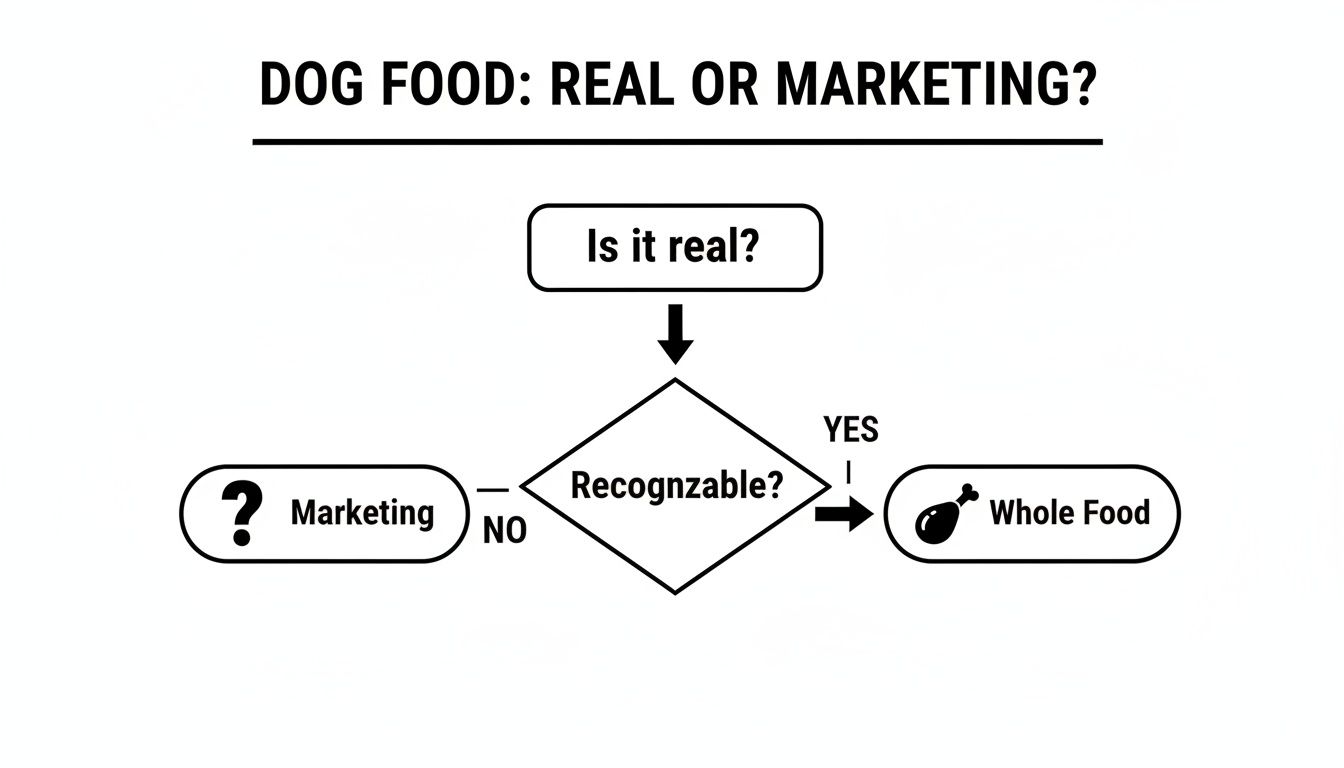
It all comes down to one simple question: is the ingredient something you can recognize as a whole food? Making that distinction is the key to separating real nutrition from empty filler.
Decoding Common Terms On a Dog Food Label
Navigating the ingredient list can be tricky, as many terms are designed to sound better than they are. This table breaks down some of the most common phrases you'll encounter and helps you understand what they really mean.
| Ingredient Term | What It Usually Means | What to Look For Instead |
|---|---|---|
| "Meat Meal" | An unnamed, rendered protein source. The animal isn't specified, so quality can vary dramatically. | A named protein meal, like 'chicken meal' or 'lamb meal,' which is a good, concentrated protein source. |
| "Meat By-Products" | Leftover parts after the prime cuts are removed. Can include some nutritious organs but also less digestible parts like bone or beaks. | Whole, named animal proteins like 'deboned chicken,' 'beef,' or 'turkey.' |
| "Natural Flavor" | A proprietary powder (often from animal digests) sprayed on kibble to enhance taste and mask less palatable ingredients. | A simple, clean ingredient list. Food made with real, tasty ingredients doesn't need artificial flavor boosters. |
| "Grain-Free" | A marketing term indicating the food doesn't contain common grains. It's often replaced with other starches like potatoes or legumes. | Wholesome grains like brown rice or barley, or a focus on vegetable-based carbohydrates like sweet potatoes. |
Knowing the difference between these terms empowers you to look past the marketing and focus on what truly nourishes your dog.
Spotting Quality Protein: Named vs. Unnamed
Protein is the cornerstone of your dog’s diet, but not all protein is created equal. The most important factor is specificity.
- Named Proteins: This is what you want to see. Terms like 'beef,' 'lamb,' and 'turkey' refer to a specific animal, which guarantees transparency and quality. 'Deboned chicken' is even better, as it tells you exactly what part of the animal is being used.
- Unnamed or Generic Meals: Be wary of vague phrases like 'meat meal' or 'animal meal.' These are intentionally non-specific, meaning the source can change from batch to batch and is often of a much lower quality.
A named 'chicken meal' can be a concentrated and high-quality protein source. But an unnamed 'meat meal' is a big red flag for ambiguous, low-quality ingredients. Always choose transparency.
This push for clarity is changing the entire industry. The global pet food ingredients market is expected to jump from $60.1 billion in 2023 to $96.1 billion by 2033, all driven by pet parents demanding real meats and sustainable sources. In the U.S. alone, pet food manufacturers used over 2.2 million tons of chicken last year, showing just how much high-quality, named proteins now dominate the market.
By-Products and Flavors: What Are They Hiding?
Two of the most confusing (and concerning) terms on a label are 'by-product meal' and 'natural flavors.'
A 'by-product meal' is made from the leftover parts of an animal after the prime cuts of meat have been removed. While some by-products like organ meats can be nutritious, the term is unregulated and often includes less digestible parts like bone and beaks. It’s a gamble.
'Natural flavors' is another purposefully vague term. It’s usually a proprietary powder sprayed onto kibble to make it more enticing to dogs, which is often a way to mask the taste of bland or unpalatable base ingredients. Food made with genuinely delicious, real ingredients shouldn’t need any artificial help to taste good.
For an even deeper dive into decoding labels, you can explore our complete guide on how to read dog food labels. Once you learn to spot these key differences, you'll have the confidence to choose a food that truly nourishes your dog from the inside out.
The Building Blocks of a Truly Healthy Dog Food
Think of a genuinely healthy dog food with real ingredients less like a generic kibble and more like a carefully crafted meal. Every single component has a job to do, backed by solid science. We're not just trying to fill a bowl here; we're assembling the nutritional foundation that fuels everything from strong muscles to a gleaming coat.
To get it right, we have to understand the key components of a balanced diet. This isn't about marketing buzzwords—it's about the blueprint for total-body wellness and knowing what each ingredient actually does for our dogs.
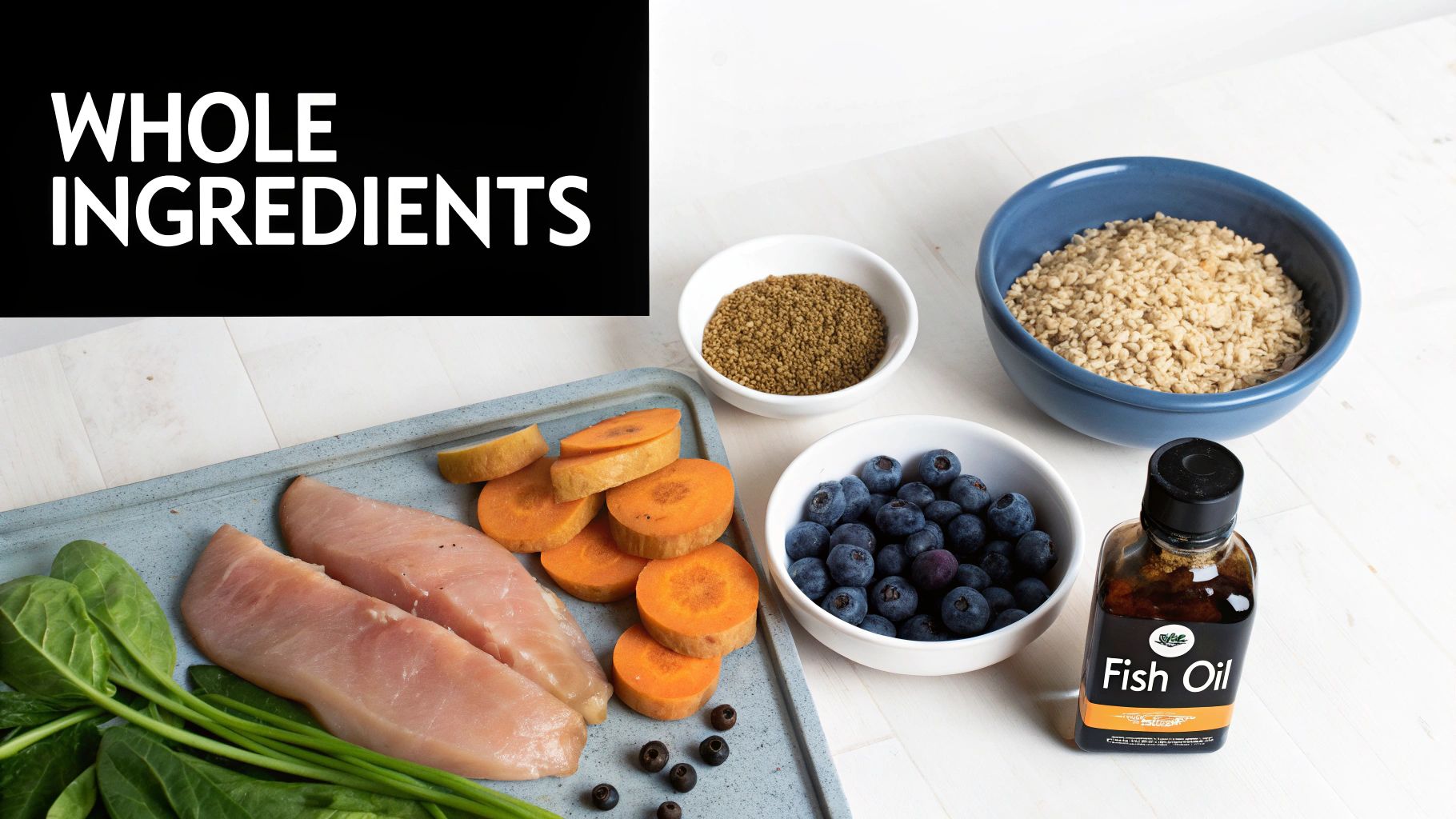
High-Quality Proteins: The Muscle Makers
Protein is the cornerstone of your dog's diet. Period. It's the essential fuel for building muscle, repairing tissue, and keeping their immune system in fighting shape. But here’s the crucial part: not all protein is created equal. The source is what truly separates the good stuff from the rest.
The gold standard? Named animal proteins. We’re talking about ingredients you recognize, like deboned beef, whole fish, or cage-free chicken. These provide a complete profile of amino acids in a form that’s easy for your dog’s body to absorb and put to work. This clarity and quality are a world away from vague "meat meals," giving you peace of mind that your dog is getting powerful, clean fuel.
Complex Carbohydrates: The Energy Providers
Carbs often get a bad name, but for our dogs, the right kind of carbohydrates are absolutely essential for long-lasting energy. It’s like the difference between a sugar rush from a candy bar and the steady fuel you get from a bowl of oatmeal. One gives you a quick spike and a hard crash, while the other keeps you going all day.
That’s why you’ll find complex carbs from whole foods in top-tier recipes.
- Brown Rice: This isn't just a filler. It’s a fantastic source of fiber and essential minerals that supports gut health and provides that slow-burn energy.
- Sweet Potatoes: Forget empty calories. These are packed with nutrients like beta-carotene and powerful antioxidants.
- Peas and Lentils: These little powerhouses deliver energy, plant-based protein, and fiber, making for a well-rounded, satisfying meal.
These ingredients give your dog the stamina they need for a long hike or an enthusiastic game of fetch, without the ups and downs that come from simple sugars. To learn more about what goes into a superior formula, check out our guide on the best ingredients for dog food.
A thoughtfully formulated food does more than just meet basic nutritional requirements. It actively supports total-body wellness by incorporating ingredients that serve a specific functional purpose, from gut health to cognitive function.
Healthy Fats and Functional Superfoods
Healthy fats do so much more than just provide calories. They are critical for brain development, absorbing key nutrients, and maintaining healthy skin and a beautiful, shiny coat. The real superstars here are fats rich in omega-3 and omega-6 fatty acids.
Ingredients like flaxseed and fish oil are brilliant for this. They help reduce inflammation and support cognitive function as your dog ages. These healthy oils are often the secret behind that soft, glossy coat and can even help soothe dry, itchy skin from the inside out.
Going a step further, the best foods also weave in functional ingredients—superfoods that deliver targeted health perks. Antioxidant-rich fruits like blueberries help protect cells from damage, while gut-supporting probiotics and prebiotics foster a healthy digestive system. These smart additions turn a simple meal into a proactive tool for your dog's long-term health.
Observable Health Benefits of a Whole Food Diet
Making the move to a dog food with real ingredients is about so much more than just a clean label. Think of it as an investment that pays you back in visible, tangible ways—in your dog's health, their energy, and their happiness. When you swap out highly processed kibble for nutrient-packed whole foods, the positive changes can happen faster than you might think.
And it’s not just a niche trend. The demand for natural pet food is exploding, with projections showing the market growing from $15.3 billion in 2025 to a massive $23 billion by 2035. Dogs are expected to make up over 53% of that market. This isn't just marketing hype; it's a movement driven by pet owners who are seeing the incredible difference a clean diet makes with their own eyes.
A Glossier Coat and Calmer Skin
One of the first things you'll probably notice is a change in your dog's coat. A dull, flaky coat or skin that's constantly itchy is often a tell-tale sign that their diet is missing key nutrients, especially essential fatty acids.
Foods that feature whole ingredients like fish and flaxseed are loaded with omega-3 and omega-6 fatty acids. These aren't just filler; they're the fundamental building blocks for healthy skin and a vibrant coat. It's like moisturizing from the inside out. These good fats help soothe inflammation, calm irritation, and give your dog's fur that deep, healthy shine you can't fake.
When a dog's diet provides all the necessary nutrients in a highly absorbable form, their body can stop just surviving and start truly thriving. The outward signs, like a shiny coat and bright eyes, are direct reflections of this inner wellness.
Better Digestion and Tidy Pick-Up Duty
Okay, let's talk about something every dog owner knows well: poop. It might not be dinner-table conversation, but your dog's stool is one of the best indicators of their digestive health. A diet heavy on fillers, by-products, and hard-to-digest proteins often leads to tummy trouble and, frankly, big, messy cleanups. That's because their body just can't absorb and use what it's being fed.
On the flip side, a formula built around digestible proteins and fiber-rich veggies does wonders for their gut.
- Smaller, Firmer Stools: This is a great sign! It means your dog’s body is efficiently absorbing the nutrients, so there's simply less waste coming out the other end.
- Reduced Gas and Bloating: Real, whole foods are much gentler on the digestive tract, which usually translates to a more comfortable—and far less gassy—dog.
This shift in digestion is clear proof their body is finally getting maximum value from every meal.
More Energy and a Stronger Immune System
Have you noticed your dog seems a little more sluggish lately? Before blaming it on age, take a closer look at what's in their bowl. Just like a car runs poorly on cheap gas, a dog's energy is directly linked to the quality of their diet.
Nutrient-dense foods provide steady, sustained energy from clean proteins and complex carbs. You get rid of the sugar highs and subsequent crashes that come from cheap fillers. Better yet, whole fruits and vegetables—like blueberries and spinach—are bursting with antioxidants, which are crucial for building a strong immune system.
A well-supported immune system helps your dog fight off bugs and bounce back faster when they do get sick. For anyone passionate about animal wellness, from owners to those exploring vet assistant courses, understanding the powerful link between diet and health is absolutely fundamental.
Busting Common Myths About Real Dog Food
Trying to pick the right dog food can feel like navigating a maze. There's so much conflicting advice out there, and marketing buzzwords just add to the noise. Let's cut through the confusion and tackle a few of the biggest myths about dog food with real ingredients. That way, you can make choices from a place of confidence, not second-guessing.
Myth #1: All Grains Are Bad "Fillers"
This one is everywhere. The grain-free trend really took off, convincing many that any grain in dog food is just cheap filler. But that's a huge oversimplification.
The real story is about quality, not just the presence of grains. Wholesome, intact grains like brown rice and barley are actually fantastic sources of fiber, B vitamins, and steady energy. The problem isn't the grain itself, but the highly processed, low-nutrient stuff like corn, wheat, and soy that are often used to bulk up cheap formulas without adding much real value. It’s not about going grain-free; it's about choosing the right grains.
Myth #2: "By-Products" Are Always Mystery Meat
The word "by-product" definitely has an image problem. It makes people think of beaks, feathers, and other junk you'd never want your dog to eat. And sometimes, that's not far from the truth—vague terms like "meat by-products" can signal low-quality, inconsistent ingredients.
But here's the thing: not all by-products are bad. In fact, some are nutritional gold. Organ meats like liver and heart, which technically fall into this category, are packed with essential vitamins and minerals. The key is transparency. You want to see named sources on the label, so you know exactly what's in the bowl.
A lot of people believe that dog food with real ingredients is just too expensive. While the price on the bag might be higher, these foods are often so nutrient-dense that you feed smaller portions. A bag can last a lot longer than you'd expect.
Think of it this way: a high-quality diet can also mean fewer vet trips for things like skin allergies or upset stomachs, saving you a lot of money and worry down the road. It's an investment in your dog's long-term health.
Myth #3: Sustainable Ingredients Are Just Scraps
There's a lot of talk about sustainable and "upcycled" ingredients lately, and it's easy to mistake this for using cheap leftovers. Nothing could be further from the truth. This is actually a smart, innovative way to make pet food more nutritious and less wasteful.
Upcycled ingredients are high-quality foods—like nutrient-rich animal organs, bones, and perfectly good ingredients from human food production—that get a new purpose in pet food. It's a win for your dog and a win for the planet. In 2024, a whopping 44% of all pet food ingredients were upcycled, with over 3 million tons used in dog food alone. These aren't scraps; they're key components that provide complete nutrition while making our food system more efficient.
You can learn more about this trend and the $51.7 billion pet food ingredient market in the 2025 Pet Food Ingredient Report. By leaving these myths behind, you can finally focus on what really matters: feeding your dog a diet built on transparency, quality, and solid nutrition.
Your Checklist for Selecting the Best Dog Food
Alright, let's put everything we've talked about into practice. The pet food aisle can feel like a minefield of confusing claims and flashy packaging, but with the right game plan, you can cut through the marketing fluff and get right to what matters. This is your practical guide to making a confident, informed choice for your dog.
Think of the following steps as your in-store cheat sheet. It’ll help you quickly evaluate any bag of food and decide if it truly meets the "real ingredient" standard.
Your 5-Point Real Ingredient Food Checklist
Here’s a simple table you can pull up on your phone at the store. It breaks down the most critical checkpoints for identifying a genuinely high-quality food.
| Check Point | What to Look For | Why It Matters |
|---|---|---|
| 1. The First Ingredient | A named, whole animal protein like 'deboned chicken,' 'beef,' or 'salmon' is listed first. | The first ingredient is the most plentiful. This ensures the food's foundation is high-quality, muscle-building protein. |
| 2. Recognizable Foods | The list includes ingredients you know, like sweet potatoes, carrots, blueberries, and whole grains (if used). | Whole foods provide nutrients in their natural, most bioavailable form, far superior to synthetic additives. |
| 3. No Vague Language | Avoid terms like 'meat meal,' 'animal by-products,' or 'natural flavors.' | Transparency is key. Vague terms often hide lower-quality, inconsistent, or less desirable ingredients. |
| 4. Clean Preservatives | Look for natural preservatives like mixed tocopherols (Vitamin E) or rosemary extract. | This avoids unnecessary and potentially harmful artificial chemicals like BHA, BHT, or ethoxyquin. |
| 5. Life Stage Appropriate | The bag is clearly labeled for your dog's specific life stage (e.g., puppy, adult, senior, all life stages). | Nutritional needs change drastically with age. This ensures the right balance of protein, fat, and calories. |
By running through these five points, you can quickly filter out the subpar options and focus only on the foods that will genuinely nourish your dog.
A Few More Tips When You're in the Aisle
Beyond the checklist, a couple of final considerations will help you nail the perfect choice.
First, always match the formula to your dog's specific needs. A high-energy Border Collie needs a different calorie and protein profile than a less-active Basset Hound. A growing puppy's nutritional demands are a world away from a senior dog's. Always check that the food is formulated for their correct age, breed size, and activity level.
Second, once you've found the winner, remember that switching foods requires a little patience. A sudden change can easily lead to an upset stomach.
The best approach is a slow and steady transition over about ten days.
- Days 1-3: Start with a mix of 75% old food and 25% new food.
- Days 4-6: Move to an even 50/50 split.
- Days 7-9: Increase to 75% new food with just 25% of the old stuff.
- Day 10: Your dog should be ready for 100% of their delicious new food!
Following this simple plan gives your dog's digestive system time to adapt, making the switch a positive experience for everyone.
Frequently Asked Questions
Even when you feel confident about what to look for, a few questions always pop up when switching your dog's food. Let's tackle some of the most common ones so you can feel good about your choice.
How Can I Tell If My Dog Is Thriving on Their New Food?
You know your dog better than anyone, and you don't need a veterinary degree to see the signs of great health. While a glossier coat and better poops are usually the first things people notice, keep an eye out for the smaller, more subtle shifts.
Do they have steady, happy energy all day long, instead of just short bursts? Are their eyes bright and their breath a little fresher? A dog that’s truly thriving on their food just seems more vibrant and full of life. It’s a glow that comes from the inside out when their body is getting everything it needs.
Does Grain-Free Automatically Mean High-Quality?
Not by a long shot. “Grain-free” has become a huge marketing buzzword, but it’s not a stamp of quality. It simply means the food doesn't contain ingredients like wheat, corn, or rice. Many formulas just swap those grains for other starchy fillers like potatoes, peas, and lentils.
A top-tier food is built around high-quality animal protein, not what it leaves out. Whether it includes healthy grains or not, the real test is the quality of the ingredients at the top of the list.
It's not about what's excluded (like grains), but what's included. A food centered on named, digestible animal proteins will always be better than one loaded with starchy fillers—grain-free or not.
Are Fresh and Freeze-Dried Foods Better Than Kibble?
They can all be fantastic options. It really comes down to your dog, your lifestyle, and your budget. Fresh and freeze-dried foods are often less processed, which can help preserve the integrity of the nutrients and make them easier for some dogs to absorb. Plus, picky eaters often go crazy for them.
But don't count out kibble. A modern, high-quality kibble made with real, whole ingredients offers outstanding nutrition. It also brings the major advantages of being convenient, shelf-stable, and more budget-friendly. The "best" food is the one your dog does well on, that's made with transparently sourced ingredients, and that you can feed consistently.
At Joyfull, we believe great nutrition shouldn't be complicated. Our formulas are crafted with clean, high-quality ingredients to support your pet's wellness from the inside out. Discover the difference real food can make at https://joyfullpet.com.