


Boost Your Dog with dog food for skin and coat: A Quick Guide
The secret to a truly healthy, glossy coat and comfortable skin isn't found in a bottle of shampoo—it's in your dog's food bowl. The best dog food for skin and coat is packed with high-quality proteins, a precise balance of omega-3 and omega-6 fatty acids, and key vitamins and minerals like biotin and zinc. These aren't just ingredients; they are the fundamental building blocks for a strong skin barrier and a beautiful, resilient coat. They work from the inside out to tackle common frustrations like dryness, constant itching, and even excessive shedding.
Your Dog's Diet Is the Secret to a Healthy Coat
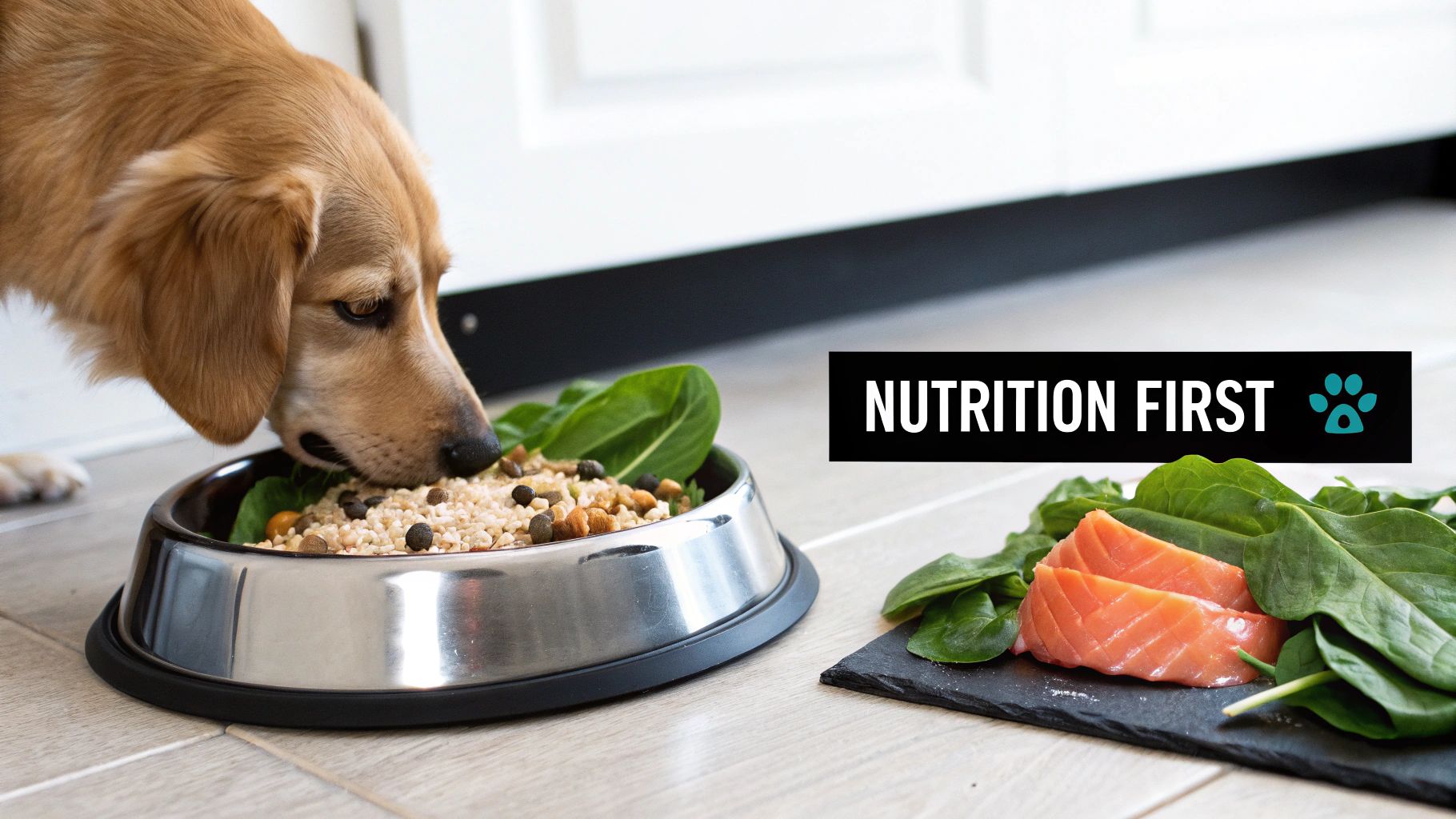
When you spot a dull, lifeless coat or catch your dog scratching relentlessly, your first instinct might be to reach for a special brush or shampoo. While grooming helps, the real key to skin and coat health lies much deeper. Think of your dog's diet as the internal construction crew for their skin and fur; the right ingredients provide the essential tools they need to build a strong, vibrant exterior.
This guide will help you connect the dots between what your dog eats and how they look and feel. We'll cut through the confusion and show you exactly how nutrition impacts your dog's skin, empowering you to make the best choice for your furry companion.
Why Nutrition Is the First Step
Making nutrition the priority isn't just a passing fad. It represents a smarter, more proactive way of caring for our pets. More and more, we're realizing that what looks like a surface-level problem often starts with a dietary issue.
Your dog's skin is their largest organ. It’s in a constant state of renewal, and that process demands a steady supply of high-quality nutrients to defend against allergens, irritants, and environmental stress. When the diet is lacking, the first signs often appear as a dull coat, flaky skin, or non-stop itching.
The pet food industry has certainly taken notice. Formulas designed specifically for skin and coat health are no longer a niche product; they’re a huge part of the premium dog food market. This shift is driven by owners like you, who prioritize wellness and seek out clean, transparent recipes over mass-market formulas.
In fact, industry analysis shows that skin and coat support is one of the top three reasons pet parents switch to a specialized diet. You can find more insights on this growing trend from industry experts at Pet Food Processing.
Why Your Dog's Skin and Coat Are Showing Distress Signals
When your dog can't stop scratching, their skin is flaky, or that once-shiny coat has turned dull and brittle, it's not just a cosmetic issue. It's a distress signal. Getting to the root of the problem is the only way to find a real, lasting solution.
I like to think of a dog's skin as a protective brick wall. In a healthy dog, that wall is strong, keeping moisture locked in and nasty irritants out. The skin cells are the bricks, and the mortar holding it all together comes directly from the nutrients in their diet. When that nutritional mortar starts to crumble, the wall gets weak, and that's when you start seeing problems.
Nutritional Gaps Are the First Suspect
More often than not, a poor coat or itchy skin comes down to a simple nutritional deficiency. If your dog’s food is missing key ingredients, their body simply doesn't have the raw materials to build and maintain that protective wall. It’s the most common culprit behind those classic skin and coat troubles.
So, what’s often missing?
- Omega Fatty Acids: Think of these as your dog's internal moisturizer. A diet low in high-quality omega-3 and omega-6 fatty acids is a fast track to dry, flaky skin and a coat that feels like straw.
- Poor-Quality Protein: Hair is almost 100% protein. If the protein source in their kibble isn't easily digestible, their body can't access the amino acids it needs to grow strong, resilient fur.
- Vitamin and Mineral Shortages: Essential micronutrients like Zinc and Biotin are the unsung heroes of skin health. They're critical for cell repair and turnover. A shortage can bring the whole skin-healing process to a screeching halt.
When these crucial building blocks are absent, you’re not just looking at a "bad hair day." You’re seeing the direct consequence of a diet that can't support the body's largest organ. This is always the first place I tell people to look when they're searching for dog food for skin and coat health.
Environmental Triggers Can Worsen the Problem
While nutrition lays the foundation, the outside world can throw a lot of stress at your dog's skin. These environmental triggers can take a small, manageable issue and turn it into a miserable, full-blown problem.
For instance, dry winter air can suck the moisture right out of their skin, leading to more flaking and itchiness. Then you have allergens like pollen, dust mites, and mold, which can trigger an inflammatory response that leads to non-stop scratching and red, irritated skin. It's not just about what they eat; external factors like pet dander and allergies can play a huge role in your dog's overall comfort and skin health.
Just like a small crack in a wall gets a lot worse during a heavy rainstorm, a nutritionally weak skin barrier is far more vulnerable to environmental attacks.
The Role of Food Sensitivities and Allergies
Finally, we have to consider that sometimes the issue isn't what’s missing from the food, but what's in it. A food sensitivity or an outright allergy happens when your dog's immune system mistakenly identifies an ingredient—usually a protein—as a threat and goes on the attack.
Common culprits are often proteins like chicken, beef, and dairy, though some grains can also cause issues. This immune reaction creates system-wide inflammation that shows up as intense itching, painful hot spots, and even chronic ear infections. A nutritional gap weakens the skin's structure from the outside in, but an allergy actively attacks it from the inside out. Figuring out and removing that trigger ingredient is often the key to breaking the cycle of persistent skin problems.
The Power Nutrients That Build a Radiant Coat
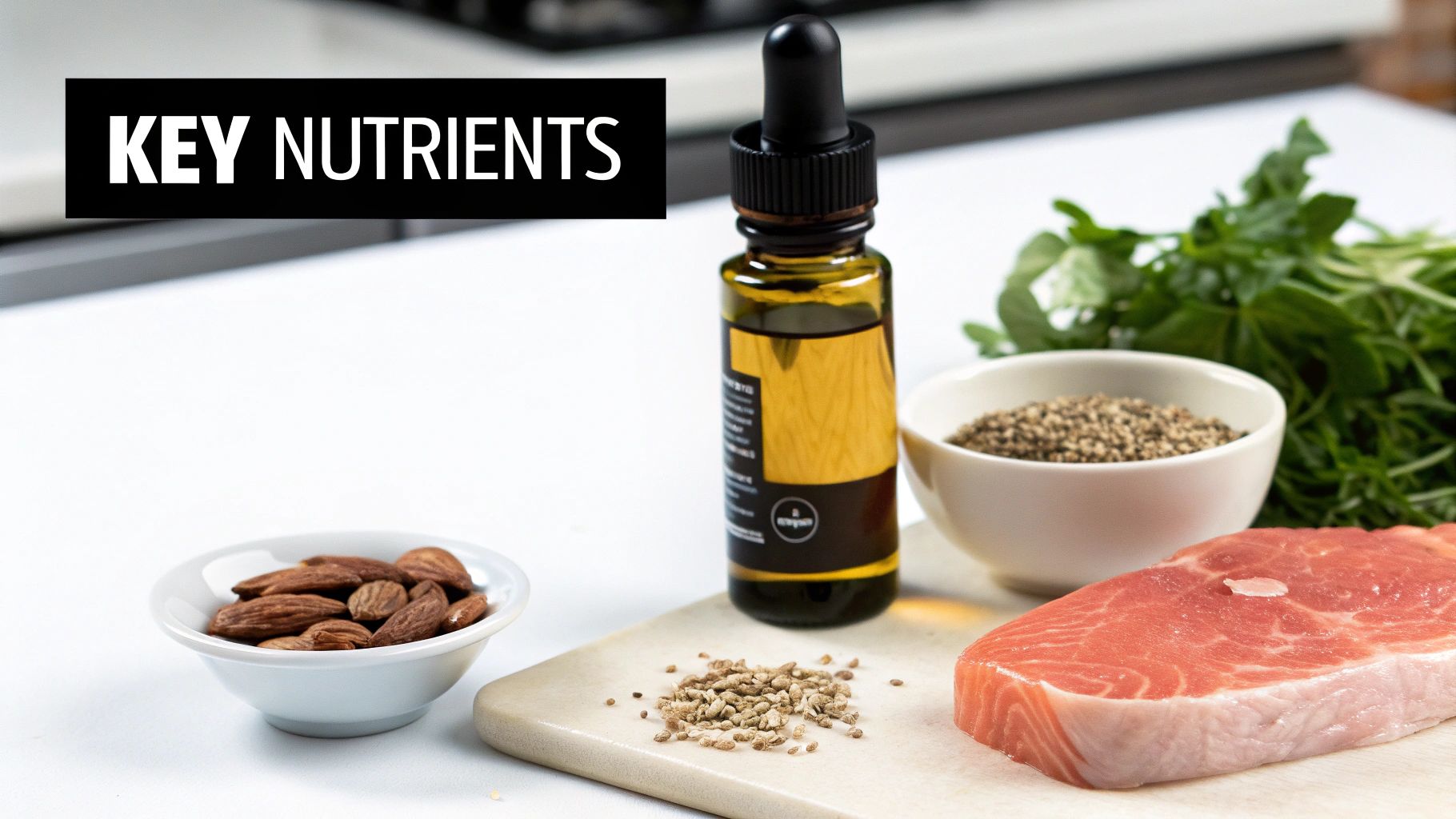
To build a healthy, vibrant coat from the inside out, your dog's body needs a specific toolkit of nutritional all-stars. These aren’t just trendy buzzwords; they're the actual building blocks for strong skin and gorgeous fur. Any dog food for skin and coat worth its salt will be packed with these powerhouse nutrients.
Think about trying to water your garden with a leaky hose. Sure, some water gets to the plants, but a lot is lost along the way. In a similar sense, certain fats are absolutely essential for delivering moisture to your dog's skin cells. They act as an internal moisturizer, stopping dryness before it even starts.
The Omega Fatty Acid Dynamic Duo
When it comes to skin health, Omega-3 and Omega-6 fatty acids are the undisputed champions. These essential fats are vital for maintaining the skin's lipid barrier—that "mortar" we talked about that holds moisture in and keeps irritants out.
- Omega-3 Fatty Acids: Known for their incredible anti-inflammatory properties, omega-3s (like EPA and DHA) are fantastic for calming down irritated, itchy skin. They work by telling the body to chill out on its inflammatory response to allergens.
- Omega-6 Fatty Acids: These fats, especially linoleic acid, are all about structure and function. They play a massive role in creating that glossy shine on a healthy coat and keeping the skin barrier strong.
But here’s the secret: it's not just about having these fats in the food, it's about the balance between them. Too much omega-6 without enough omega-3 can actually stoke the fires of inflammation. A properly formulated food ensures this ratio is dialed in to soothe, not agitate. You can go even deeper into the science in our detailed guide to fatty acids for dogs.
High-Quality Protein: The Building Blocks of Fur
Here's a fact that might surprise you: your dog's hair is made of roughly 95% protein. That one stat makes it crystal clear why the quality and digestibility of the protein in their food matter so much. It is the literal raw material for every single strand of fur.
Of course, not all proteins are created equal. Highly digestible sources like salmon, lamb, or duck provide the specific amino acids the body needs to construct strong, resilient hair. On the flip side, low-quality or poorly rendered protein sources are much harder for a dog's system to break down and use, leaving fewer resources available for keeping that coat in top shape.
Think of it like building a house. Using high-quality bricks (digestible protein) gives you a solid, stable structure. Using crumbling, low-grade bricks (indigestible protein) results in a weak building that can’t handle the elements. Your dog’s coat is no different.
Choosing a food with a named, high-quality animal protein as the very first ingredient is one of the single most impactful decisions you can make for their skin and fur.
Essential Vitamins and Minerals: The Supporting Crew
While omegas and protein get most of the attention, a whole team of vitamins and minerals is working behind the scenes. They support the entire process of skin cell turnover and hair growth. Without them, the star nutrients just can't do their jobs properly.
This nutrition-first approach is gaining serious traction. Pet parents are more informed than ever, with U.S. pet spending projected to hit around US$150.6 billion in 2024. A huge chunk of that goes toward premium foods that deliver visible results, like a shinier coat. In fact, the market for foods targeting skin and coat health is growing by 5–7% annually. For brands like Joyfull, which are built around clean, science-backed ingredients, this trend shows a powerful shift in how we care for our pets.
So, who are these vital supporting players?
- Zinc: This mineral is a true workhorse for the skin. It’s absolutely critical for cell division and repair, helping to heal minor irritations and maintain the skin's structural integrity.
- Biotin: A B-vitamin famous for its role in hair and nail health, biotin is essential for metabolizing the fats and amino acids needed for a healthy coat.
- Vitamin E: This powerful antioxidant helps shield skin cells from the oxidative stress caused by daily life. It works hand-in-hand with omega-3s to support overall skin resilience.
Learning to spot these key nutrients on a dog food label is the first step to turning your dog's coat from dull to dazzling. To make it easier, we've broken down what to look for in the table below.
Essential Nutrients for Your Dog's Skin and Coat
This table highlights the most important nutrients for your dog's skin and coat, explaining what they do and where you can find them in high-quality ingredients.
| Nutrient or Ingredient | Its Role in Skin and Coat Health | High-Quality Food Sources |
|---|---|---|
| Omega-3 Fatty Acids | Reduces inflammation, soothes itchy skin, and supports the lipid barrier. | Salmon oil, fish meal, flaxseed, chia seeds. |
| High-Quality Protein | Provides the essential amino acids needed to build strong, healthy hair follicles. | Deboned salmon, lamb meal, duck, turkey. |
| Zinc | Crucial for skin cell renewal, wound healing, and maintaining a strong skin barrier. | Red meats, fish, legumes, and zinc proteinate. |
| Biotin (Vitamin B7) | Aids in metabolizing fats and proteins, directly supporting healthy hair and skin. | Liver, eggs, salmon, sweet potatoes. |
Knowing these key players and their roles empowers you to choose a diet that will truly nourish your dog's skin from the inside, leading to a coat that doesn't just look good, but feels great, too.
How to Decode a Dog Food Label Like a Pro
Ever feel overwhelmed in the dog food aisle? You're not alone. The bags are plastered with beautiful pictures and bold promises, but the real story of what’s inside is always in the fine print on the back. Learning how to read that label is probably the most powerful thing you can do for your dog’s health.
This isn't about becoming a pet food scientist or memorizing a bunch of long, complicated words. It’s about learning to spot the good stuff, sidestep the junk, and see right through the flashy marketing. Once you know what to look for, you'll be able to tell a truly high-quality food from one that's mostly cheap fillers.
The First Five Ingredients Tell All
When you pick up a bag of food, go straight to the ingredient panel and focus on the first five listed. Ingredients are listed by weight, starting with the heaviest. This means the first few ingredients make up the vast majority of what your dog is actually eating.
For a food that’s genuinely good for skin and coat, you want to see a specific, named animal protein right at the top. Think "Deboned Salmon," "Lamb," or "Duck." That tells you the food is built on a foundation of real, high-quality protein—the essential building block for a healthy coat.
But if the first ingredient you see is something like corn, wheat, or soy? That’s a big red flag. It means the formula is based on cheap fillers instead of the protein-rich diet your dog was meant to eat.
Spotting the Good, the Bad, and the Itchy
Once you've got the first-five rule down, the next step is to recognize the common troublemakers that often lead to skin issues, and to identify the champions of skin health.
Common Red Flags to Avoid:
- Vague Proteins: Terms like "meat meal" or "animal by-products" are deliberately vague. You have no idea what animal they came from, which is a huge problem if your dog has a sensitivity to a specific protein like chicken or beef.
- Cheap Fillers: Ingredients like corn, wheat, and soy add bulk but offer very little nutritional value. They are also among the most common triggers for food allergies that show up as itchy, irritated skin.
- Artificial Junk: There is absolutely no reason for artificial colors, flavors, or chemical preservatives like BHA and BHT to be in your dog's food. They offer zero health benefits and can cause reactions in sensitive dogs.
It's clear that dog owners are catching on. People are demanding cleaner labels and better ingredients, and it's changing the entire pet food industry. In fact, the global dog food market is expected to jump from about US$51.27 billion in 2025 to around US$91.82 billion by 2035. This shows a huge shift towards investing in premium foods, especially those that help with skin and coat health. You can read more about this trend from the experts at Future Market Insights.
Think of an ingredient label like a recipe. If the first ingredients are salmon and sweet potatoes, you know you're making a healthy meal. If they're corn and by-product meal, you're basically making junk food.
Label Showdown: A Side-by-Side Look
Let's make this really simple. Seeing a great label next to a not-so-great one is the best way to make these concepts stick.
| Feature | High-Quality Label (The Goal) | Low-Quality Label (The Red Flag) |
|---|---|---|
| First Ingredient | Named protein like "Deboned Salmon" | Vague term like "Meat and Bone Meal" |
| Carbohydrates | Nutrient-dense like sweet potatoes or peas | Low-cost fillers like corn or wheat gluten |
| Fat Source | Specific, beneficial oil like "Salmon Oil" | Generic fat like "Animal Fat" |
| Additives | Natural preservatives like mixed tocopherols | Artificial colors and chemical preservatives |
Just by knowing these simple rules, you can walk down that pet food aisle with total confidence. If you want to dive even deeper, be sure to check out our complete guide on how to read dog food labels. This knowledge turns you from a regular shopper into your dog’s personal health advocate.
Managing Food Allergies with an Elimination Diet
So, you've tried everything—special shampoos, supplements, maybe even medications—but your dog is still scratching relentlessly. When you hit this point, a food allergy is often the sneaky culprit behind those chronic skin problems. It’s a frustrating cycle, but figuring out the exact ingredient causing the reaction is the only real path to lasting relief.
It’s also helpful to know the difference between a true allergy and a food intolerance. An intolerance is more of a digestive issue, causing things like gas or an upset stomach. A real food allergy, on the other hand, kicks the immune system into overdrive, leading to intense itchiness, inflamed skin, and sometimes even recurring ear infections.
This is exactly where an elimination diet comes in. Under the guidance of your vet, it’s the gold standard for diagnosing a food allergy and pinpointing what’s really bothering your dog.
How an Elimination Diet Works
The idea behind an elimination diet is pretty straightforward. You strip your dog’s diet down to the basics, feeding them just one protein and one carbohydrate source they’ve likely never had before. This is often called a "novel" protein—think duck, venison, or rabbit instead of common ingredients like chicken or beef.
By simplifying the menu, you give your dog's immune system a much-needed break from whatever has been triggering it. The goal is simple: to see their itching and skin inflammation finally calm down.
This flowchart breaks down the process of finding a food that truly works for your dog, from reading the label to spotting the good stuff.
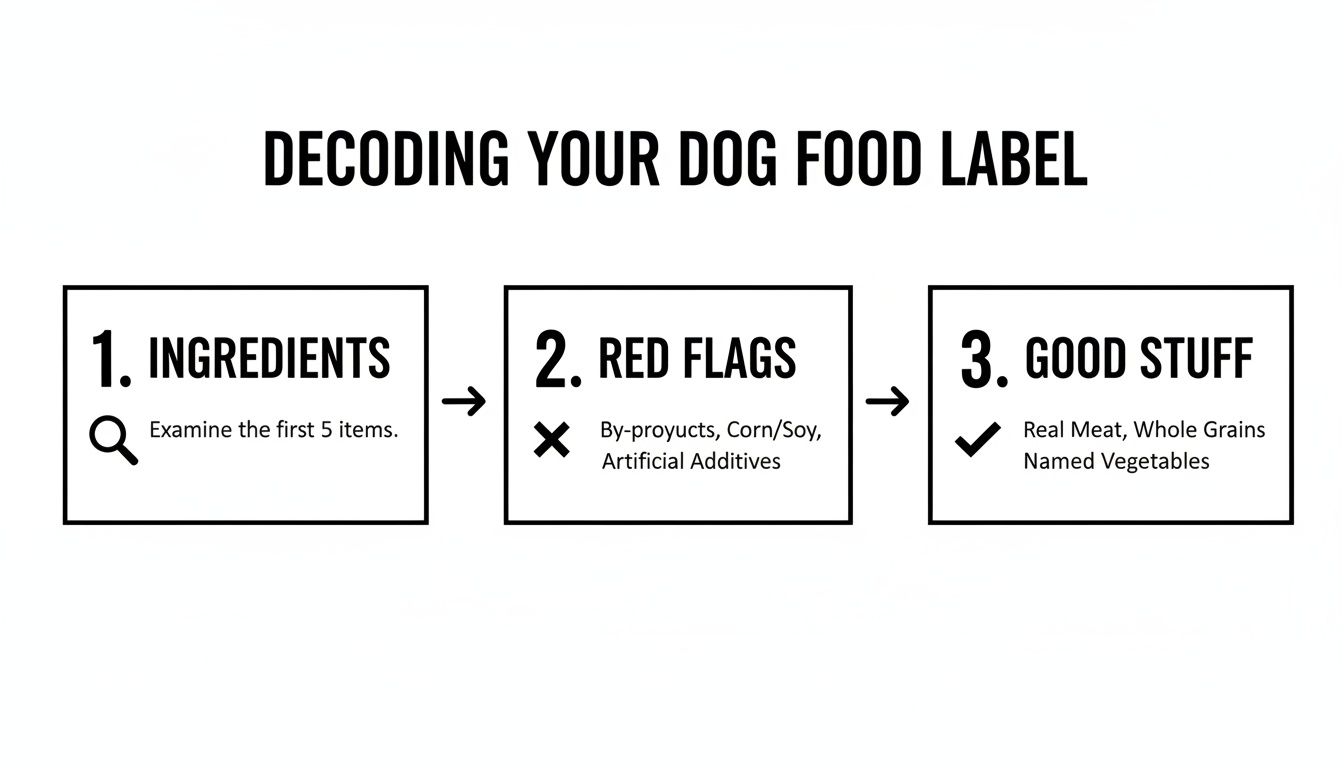
As you can see, identifying those red-flag ingredients while focusing on beneficial ones is at the heart of managing your dog's skin health through their food.
An elimination diet isn't a quick fix; it's a careful investigation. A standard trial runs for 8 to 12 weeks. You need that much time for the old inflammatory proteins to fully clear out of your dog’s system and for their skin to have a real chance to heal.
During this trial period, you have to be incredibly strict. That means no treats, no dental chews, no flavored toys, and definitely no table scraps—unless they’re made from the exact same novel ingredients. One little slip-up can fire up the immune response all over again, and you'll have to start the clock from day one.
The Reintroduction Phase
Let's say you get to the end of the trial and your dog’s symptoms are gone or dramatically better. Success! You’ve confirmed a food allergy was the problem.
The next step, always done with your vet, is to slowly reintroduce old ingredients, one by one. You might add chicken back into their diet for two weeks and watch closely. If the itching comes back, you’ve found a trigger. If nothing happens, chicken is probably fine, and you can move on to testing the next ingredient, like beef or wheat.
It takes patience, but this process gives you a clear roadmap to your dog's specific dietary needs. To go even deeper, you can learn more about what causes food allergies in dogs in our detailed guide.
Once you know what to avoid, choosing a high-quality food, especially a Limited Ingredient Diet (LID), makes life so much easier. These recipes are formulated with fewer ingredients to minimize the risk of a reaction, helping you keep your best friend happy, comfortable, and finally, itch-free.
Creating a Holistic Plan for Healthy Skin
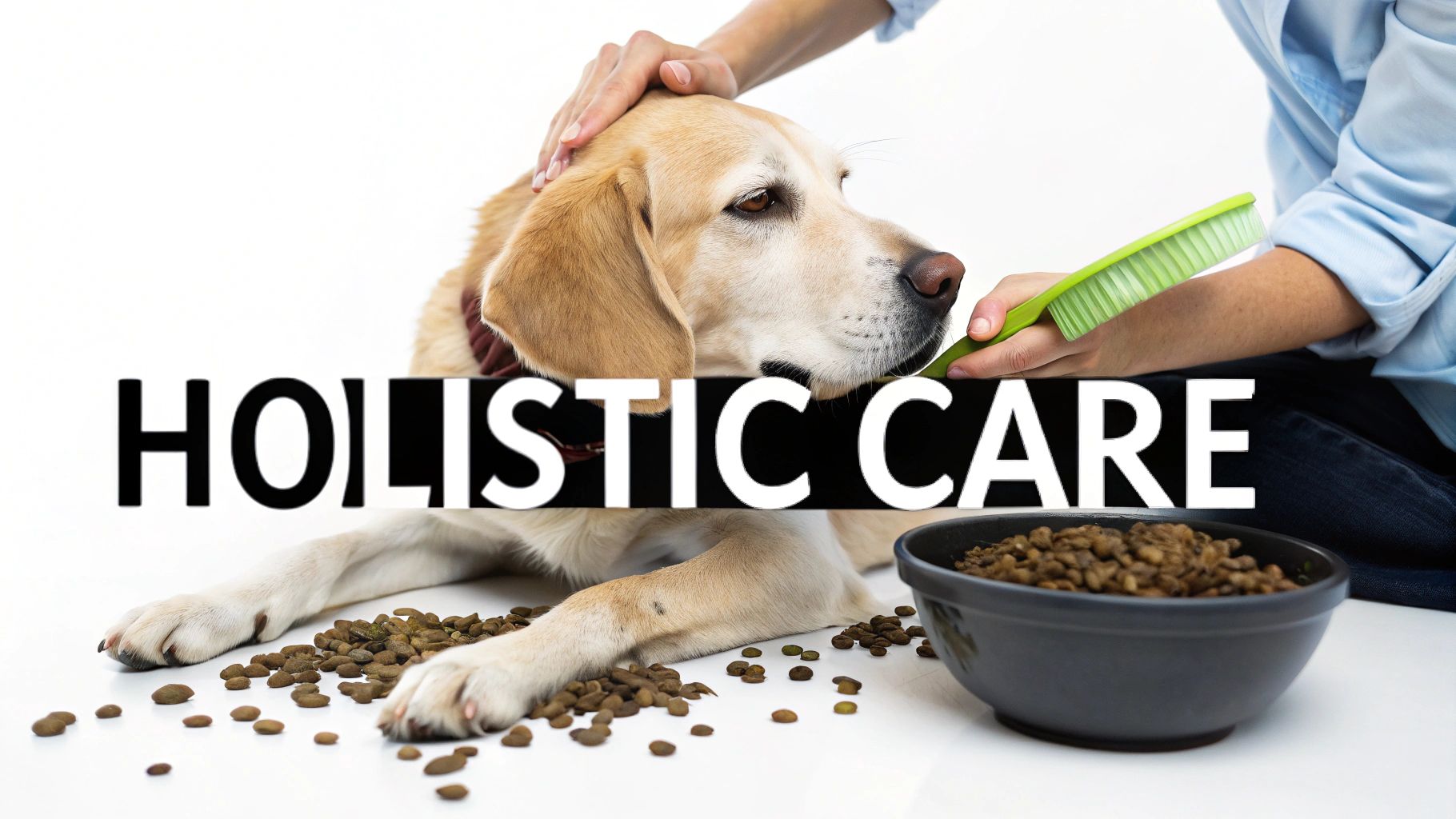
Getting that glowing skin and coat for your dog goes beyond just what's in their bowl. While a top-notch diet is absolutely the cornerstone, the best results come from a complete plan that pairs great nutrition with smart daily care.
Think of it this way: a healthy diet is critical for our own well-being, but we also need to stay hydrated, practice good hygiene, and sometimes take a multivitamin to feel our absolute best. It’s the exact same for our dogs. The best dog food for skin and coat will work wonders, but its effects are magnified when you support it with a solid care routine.
Here’s a final checklist to tie everything together, giving you a full toolkit to support your dog's long-term health from the inside out.
Transitioning to a New Food Slowly
Switching your dog's food cold turkey is a recipe for digestive upset, which can ironically make skin issues flare up temporarily. A gradual switch gives their gut bacteria time to adapt to the new ingredients, preventing any unnecessary stress.
Slow and steady wins the race here.
- Days 1-3: Mix 75% of their old food with 25% of the new food.
- Days 4-6: Adjust the ratio to a 50/50 split.
- Days 7-9: Now, you can shift to 75% new food and 25% old food.
- Day 10: Your dog is ready for 100% of their new, healthy food!
The Importance of Hydration and Grooming
It’s easy to overlook, but proper hydration is vital for skin elasticity. When a dog is dehydrated, their skin can become dry, flaky, and much more susceptible to irritation. Always make sure they have a bowl of fresh, clean water available.
Regular grooming is just as crucial.
Brushing your dog isn't just about managing shedding. The act of brushing stimulates blood flow to the skin and helps distribute their natural oils (called sebum) across the coat. This sebum is nature's own conditioner, keeping their fur moisturized and protected.
For most breeds, a good brushing session a few times a week is all it takes to keep their skin in great shape and their coat looking fantastic.
When to Consider Targeted Supplements
Even with the best diet, some dogs just need a little extra support. This is especially true for those with a history of severe skin problems or during peak seasonal allergy times. The right supplement can deliver a concentrated dose of specific, helpful nutrients.
A couple of options you might discuss with your vet are:
- Fish Oil Capsules: These are a fantastic, direct source of anti-inflammatory omega-3s (EPA and DHA) that can help calm down red, itchy skin.
- Probiotics: A healthy gut is tied to a healthy immune system. Supporting their digestion with good bacteria can, in turn, have a majorly positive effect on their skin.
Ultimately, choosing a food with clean, transparently sourced ingredients is the single most powerful step you can take. When you combine that foundation with these simple, practical habits, you're not just feeding your dog—you're creating an entire ecosystem of care that lets them be the healthy, comfortable, and vibrant companion they were meant to be.
Frequently Asked Questions
When you're trying to get your dog's skin and coat back on track, a lot of questions pop up. Let's walk through some of the most common ones we get from dog owners just like you.
How Long Until I See Results from a New Dog Food?
I know you want to see your dog feeling better yesterday, but when it comes to diet, patience is a virtue. You'll likely spot some early signs of improvement—maybe a little less scratching or a bit more softness in their fur—within the first 2 to 4 weeks.
But the real magic happens over time. Think about it: your dog's body needs to grow brand new skin cells and push out a healthy, glossy coat from the follicle up. That's a biological process that can't be rushed. To see the full, glowing transformation, you really need to give it a solid 8 to 12 weeks. Sticking with the new food consistently is the most important thing you can do.
Is Just Adding Fish Oil to My Dog's Food Enough?
Adding a good fish oil supplement is a great step for boosting omega-3s, but it's rarely the whole solution. It’s a bit like taking a vitamin C tablet while still eating fast food every day—it helps, but it can’t make up for a poor foundation.
A supplement can't counteract the negative effects of a diet built on low-quality proteins, inflammatory fillers, or hidden allergens. The foundation of your dog's health must always be a balanced, nutrient-dense diet. A great food provides the complete nutritional toolkit, not just one tool.
A truly healthy coat comes from a diet that’s complete and balanced from the start.
Are Grain-Free Diets Always Better for Skin Issues?
This is probably one of the biggest myths out there. While it's true a small number of dogs are sensitive to grains like wheat or corn, they aren't the universal villain they're often portrayed to be. More often than not, the real culprit behind food-related skin problems is actually the protein source—think common culprits like chicken or beef.
If you fixate only on finding a "grain-free" food, you might completely miss the real trigger. A diet with a novel protein (like lamb or fish) and a simple, quality carbohydrate (like sweet potatoes) often works wonders for skin issues, far more than a grain-free formula that still uses the same old protein your dog is reacting to. It’s the quality and type of ingredients that count, not just the absence of grain.
If you have other questions about your furry friend's well-being, you might find some helpful answers in our general dog care FAQs. The more you know, the better you can advocate for your dog's health.
At Joyfull, we believe that a healthy, vibrant life isn't just for humans—our pets deserve it, too. Our formulas are crafted with clean ingredients and high-quality proteins to nourish your dog from the inside out. Discover the difference a truly wholesome diet can make at https://joyfullpet.com.