
A Guide to the Best Clean Dog Food Brands
When you're on the hunt for the best clean dog food brands, you're really looking for something simple: food made from whole, recognizable ingredients. Think of it like grocery shopping for yourself—you prioritize fresh, real food over heavily processed snacks. The same logic applies here. We want to see named meats like chicken or lamb, whole veggies, and zero artificial junk.
What Does Clean Dog Food Actually Mean?
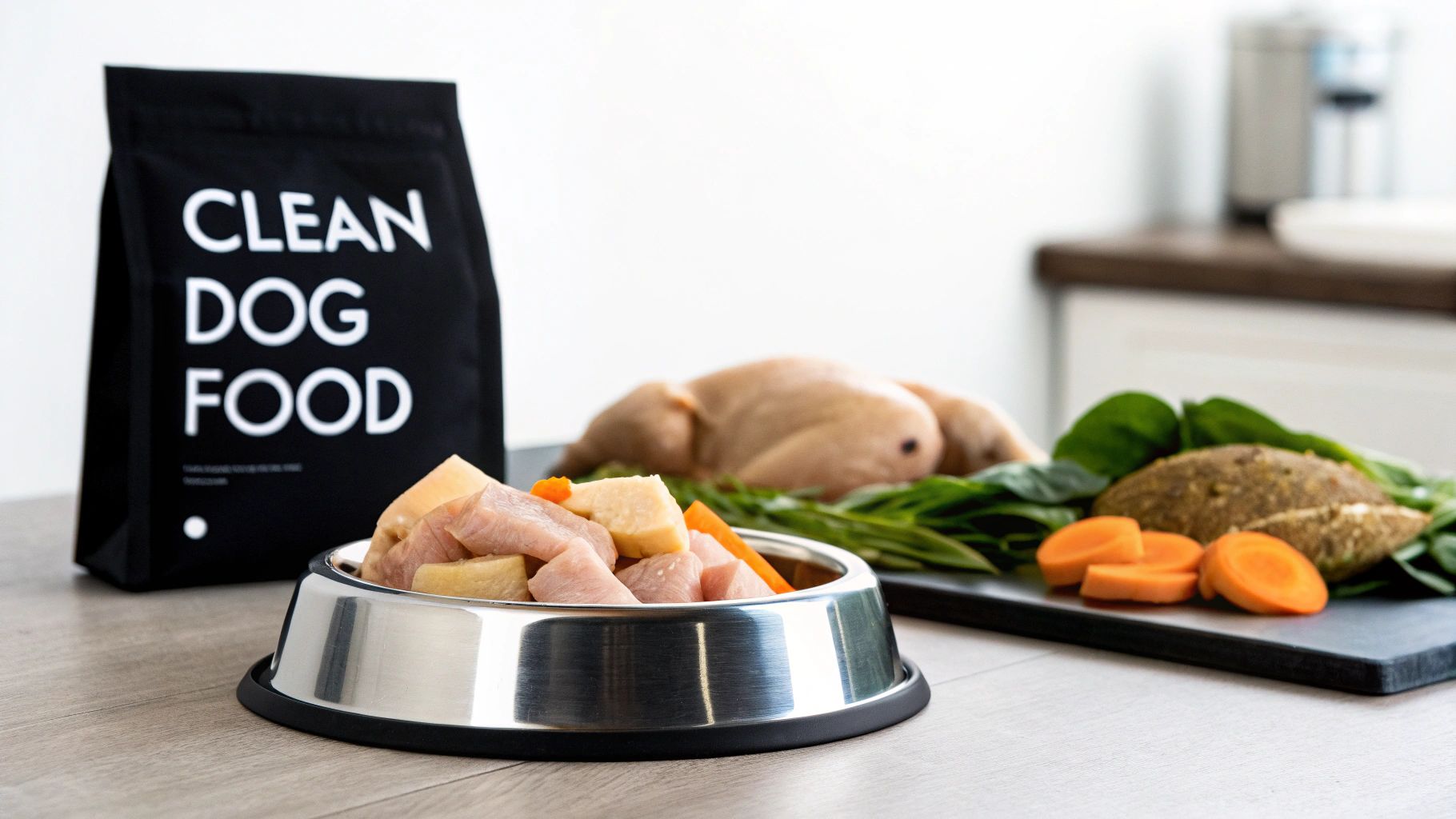
Stroll down any pet food aisle, and you’ll get hit with a tidal wave of buzzwords—"natural," "premium," "holistic." "Clean" has recently joined that list, but it's important to know what it isn't. Unlike "organic," "clean" isn't an official term regulated by the AAFCO (Association of American Feed Control Officials).
Instead, "clean" is more of a philosophy—a standard set by dog owners who are demanding better for their pets. It’s all about getting back to basics and feeding our dogs food that's as close to its natural state as possible. This means ditching the cheap fillers, mystery "meat by-products," and synthetic chemicals that have sneakily become the norm in so many commercial kibbles.
This isn’t just a passing trend; it's a massive shift in how we think about pet nutrition. The demand for transparent, high-quality ingredients is reshaping the entire industry. Consider this: global pet food sales hit around USD 133.9 billion in 2023, and the organic dog food market alone was valued at USD 9.60 billion. That's a clear signal that people are reading labels and voting with their wallets.
The Foundation of a Clean Diet
So, what does this philosophy look like in your dog's bowl? A truly clean diet is built on a few core principles that you can spot right on the ingredient list.
-
Whole, Recognizable Ingredients: The first few ingredients should read like a shopping list, not a science experiment. Look for things like deboned chicken, sweet potatoes, blueberries, and spinach.
-
No Artificial Additives: This is a big one. It means a total ban on artificial colors, flavors, and preservatives. Common culprits to avoid include BHA, BHT, and ethoxyquin, which are added to extend shelf life but do nothing for your dog’s health.
-
Minimal Processing: Clean food is often gently cooked, freeze-dried, or air-dried. These methods help preserve the natural nutrients in the ingredients. In contrast, traditional kibble is often made using extreme heat, which can destroy sensitive vitamins and minerals.
The idea of "clean" eating naturally ties into a holistic view of pet wellness, where you consider every aspect of your dog’s health. Our detailed guide explains what is holistic dog food and how it all fits together for a happier, healthier pup.
Quick Guide to Identifying Clean Dog Food
To make things even clearer, here’s a quick comparison to help you spot the difference between clean and conventional dog foods at a glance.
| Attribute | What to Look For (Clean Food) | What to Avoid (Conventional Food) |
|---|---|---|
| Protein Source | Named meats (e.g., deboned chicken, grass-fed beef) | Vague terms (e.g., "meat by-products," "poultry meal") |
| Carbohydrates | Whole grains, vegetables, and legumes | Corn, wheat, soy, and fractionated grains |
| Preservatives | Natural options like Vitamin E (tocopherols) | Artificial preservatives (e.g., BHA, BHT, ethoxyquin) |
| Additives | Functional supplements like probiotics and antioxidants | Artificial colors, flavors, and sweeteners |
| Processing | Gently cooked, baked, freeze-dried, or raw | High-heat extrusion (most common for kibble) |
| Sourcing | Transparent sourcing information, often from local farms | Undisclosed or international sources of unknown quality |
This table serves as a great starting point, giving you a solid framework for quickly sizing up a bag of dog food on the shelf.
Ultimately, choosing a clean dog food brand is a conscious decision to nourish your pet with high-quality, safe, and nutrient-dense ingredients. And remember, the 'clean' lifestyle goes beyond the food bowl. It also means creating a safe environment with things like pet-safe cleaning products to support their overall well-being.
A 5-Point Checklist for Finding Genuinely Clean Dog Food
When you're trying to cut through the marketing noise, it helps to have a reliable framework. Think of this as a five-point inspection for your dog's food, where each point is crucial for performance and safety. By running a brand through these five pillars, you can systematically sort the truly great from the merely well-marketed.
This method gives you a repeatable process, turning what feels like a confusing gamble into a clear, confident choice. Let’s break down exactly what to look for in each category.
1. Ingredient Quality and Sourcing
The entire foundation of a clean dog food rests on the quality of its raw ingredients. The best brands aren't just using "good" stuff; they're using exceptional ingredients and are genuinely proud to tell you where they come from. It's the difference between a generic chain steakhouse and a farm-to-table restaurant that can name the exact farm where the cattle were raised.
Here’s what that looks like in the real world:
- Human-Grade Ingredients: This is a big one. It means the ingredients meet FDA standards for human consumption, a massive leap from "feed-grade" materials, which can legally include parts from diseased or dying animals.
- Whole-Food Proteins: The label should be specific. Look for named proteins like "deboned chicken" or "grass-fed beef," not murky, generic terms like "meat and bone meal."
- Non-GMO Produce: Top-tier brands often go the extra mile to use non-genetically modified fruits and vegetables, keeping the ingredients as close to their natural state as possible.
2. Nutritional Philosophy
A brand’s nutritional philosophy is its core belief system about what dogs truly need to thrive. Truly clean brands don’t just fill a bag with cheap calories; they build their recipes around a species-appropriate diet that respects a dog's biology.
The philosophy of a truly clean brand is simple: create food that nourishes, not just fills. Every single ingredient should have a purpose, from antioxidant-rich blueberries to fiber-packed sweet potatoes, all contributing directly to your dog's health.
This commitment to purposeful nutrition is a dead giveaway that a brand puts health ahead of profits. They formulate recipes based on what a dog's body is actually designed to digest and use for energy, muscle repair, and a strong immune system.
3. Manufacturing and Safety
How the food is made is just as important as what's in it. Even the best ingredients can be ruined by harsh, high-heat processing. Clean dog food brands are meticulous about their manufacturing, focusing on methods that preserve nutrients and guarantee safety.
Look for these markers of quality control:
- Small-Batch Cooking: Making food in smaller quantities allows for much better temperature control and consistency. This simple step helps preserve the integrity of fragile vitamins and minerals that would otherwise be destroyed.
- Gentle Cooking Methods: You’ll often see techniques like slow baking, freeze-drying, or air-drying. These are all designed to maintain the bioavailability of the nutrients.
- Safety Certifications: Reputable brands often make their food in facilities with serious certifications, like SQF (Safe Quality Food), or in kitchens that meet strict USDA standards.
This level of care during production is what separates the best from the rest.
4. Company Transparency
In this industry, transparency is the ultimate currency of trust. A brand that’s open and honest about its practices clearly has nothing to hide. This pillar is all about a company's willingness to pull back the curtain and show you the journey from farm to your dog’s bowl.
This is completely non-negotiable for clean dog food brands. You should be able to find clear answers to these questions with minimal digging:
- Sourcing Locations: Where, specifically, do they get their chicken, beef, or kale? Honest brands will tell you.
- Recall History: Has the brand ever had a recall? If so, they should be upfront about it and explain the concrete steps they took to prevent it from ever happening again.
- Customer Service: Is it easy to contact them? When you do, can you get a clear, knowledgeable answer from a real person?
5. Expert Formulation
Finally, the best clean dog food brands are built on science and expertise, not just good intentions. A beautiful list of ingredients is only helpful if it's properly balanced to meet a dog's complex nutritional needs.
That's where the professionals come in. Look for recipes that were developed or at least reviewed by a qualified expert, like a board-certified veterinary nutritionist (DACVN) or a Ph.D. in animal nutrition. Their involvement ensures the food meets AAFCO's standards for a "complete and balanced" diet, providing everything your dog needs to thrive.
This commitment to expert oversight is a powerful sign that a company is serious about animal health. And it's something pet owners are paying more attention to than ever. One study found that 43.6% of over 2,100 owners prioritize their pet's food health even over their own. You can dive deeper into what drives these decisions by reviewing the complete market analysis from Mordor Intelligence.
How to Read a Dog Food Label Like a Pro
Forget the flashy marketing on the front of the bag. The real story of your dog’s food is told on the back, in the ingredient panel and guaranteed analysis. Learning how to read that label is the single most important skill you can have when you're trying to find a truly clean dog food.
Think of it as looking under the hood of a car. What you see on the label tells you exactly what’s powering your pup.
The most revealing part is the ingredient panel. By law, ingredients are listed by weight before cooking. This means the first five or so ingredients are the most important—they make up the bulk of the recipe. If you see a whole, recognizable protein source like "deboned chicken" or "grass-fed beef" right at the top, that’s a fantastic start.
This quick flowchart can help you size up a food at a glance, hitting the big three: ingredient quality, sourcing ethics, and processing methods.
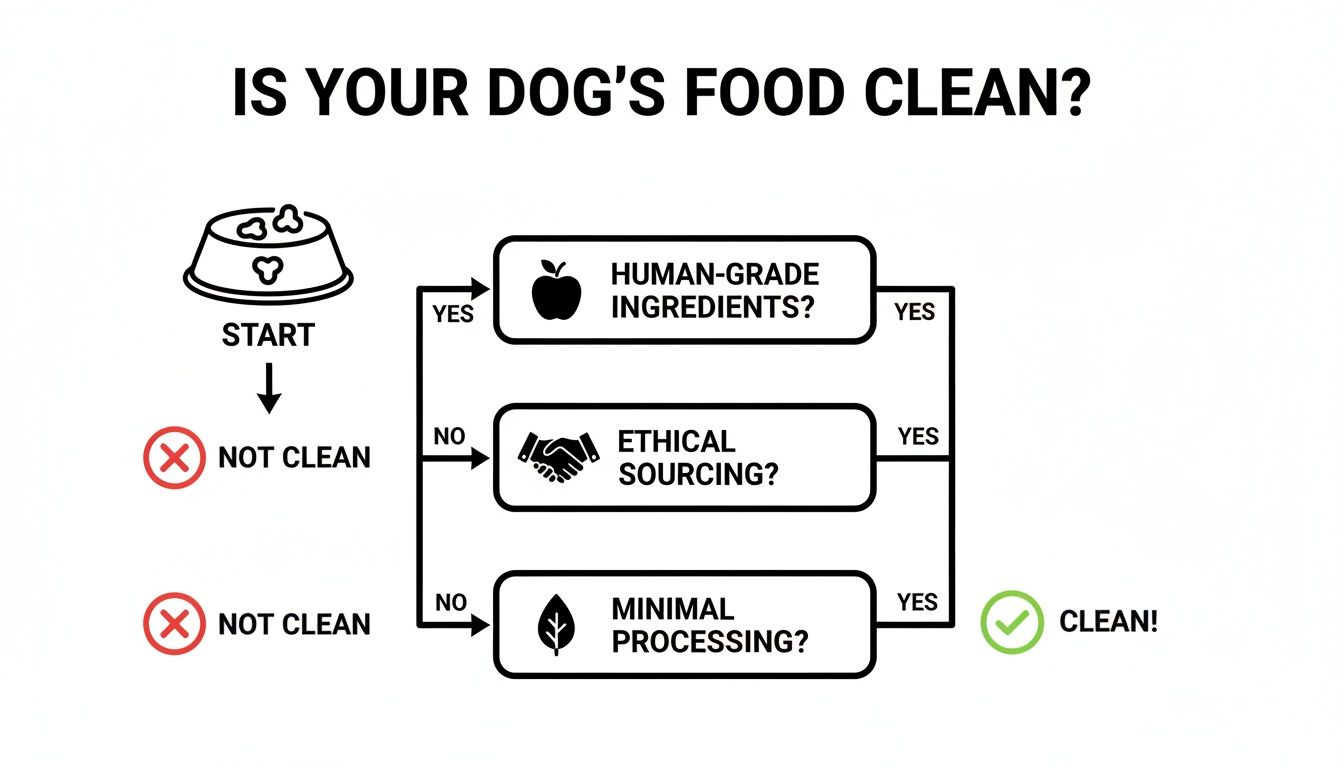
As the chart shows, a great food isn’t just about one thing. It's about a commitment to quality from the farm all the way to your dog's bowl.
Spotting the Red Flags on the Ingredient List
Knowing what you don't want to see is just as important as knowing what you do. So many conventional dog foods are packed with cheap fillers and vaguely named ingredients to keep costs down. Your job is to spot these red flags and move on.
Here's what I always watch out for:
- Vague Meat Descriptions: Terms like "meat meal," "animal by-products," or "poultry meal" are intentionally mysterious. You have no idea what animal it came from, which is a huge red flag for quality control. Stick with named sources, like "chicken meal" or "beef."
- Cheap Fillers: Corn, wheat, and soy are classic fillers. They bulk up the food and add calories, but they offer little nutritional value and are common culprits behind allergies and digestive upset. Look for nutrient-rich carbs like sweet potatoes, peas, or brown rice instead.
- Artificial Preservatives: If you see BHA, BHT, or ethoxyquin on the label, put the bag down. These chemical preservatives are used to give the food an unnaturally long shelf life but have been tied to health issues. Clean brands use natural alternatives like mixed tocopherols, which is just a form of Vitamin E.
Looking for these red flags is a crucial step in separating the good from the bad. The table below breaks down some of the most common offenders and gives you a clear idea of what a healthier swap looks like on an ingredient panel.
Common Red Flag Ingredients and Their Healthier Alternatives
| Red Flag Ingredient | Potential Concern | Healthier Alternative |
|---|---|---|
| Corn, Wheat, or Soy | Common allergens, low nutritional value | Sweet potatoes, peas, quinoa, brown rice |
| Meat and Bone Meal | Vague, low-quality, mystery protein source | Named protein meal (e.g., "Chicken Meal") or whole meats |
| Animal By-Products | Can include undesirable parts of an animal | Whole meats, organ meats (e.g., "Chicken Liver") |
| BHA, BHT, Ethoxyquin | Artificial preservatives linked to health risks | Mixed tocopherols (Vitamin E), rosemary extract |
| Artificial Colors (Red 40) | Unnecessary additive, can cause sensitivity | No added colors needed |
| Artificial Flavors | Used to make low-quality food more palatable | Natural flavor derived from real food sources |
By keeping an eye out for these swaps, you can quickly tell if a brand is prioritizing your dog's health or their own bottom line. A clean label should read like a recipe, not a science experiment.
Making Sense of the Guaranteed Analysis
Next to the ingredients, you'll find the Guaranteed Analysis. This is the nutrition facts box for dog food, and it's required by the Association of American Feed Control Officials (AAFCO). It lists the minimum percentage of protein and fat, and the maximum percentage of fiber and moisture.
Here’s the catch: you can't compare foods directly using these numbers alone. A dry kibble with 10% moisture has very different nutrient concentrations than a fresh food with 75% moisture. A "30% protein" kibble is not the same as a "30% protein" canned food.
To get a true, apples-to-apples comparison, you have to convert the nutrients to a "dry matter basis," which removes the water from the equation. It's a bit of math, but it's the only way to really know what you're looking at. We walk you through how to do this in our detailed guide on how to read dog food labels.
A Tale of Two Labels
Let's see this in action. Imagine you're comparing two bags of food.
Label A (Clean & High-Quality):
Deboned Chicken, Chicken Meal, Sweet Potatoes, Peas, Blueberries, Flaxseed, Chicken Fat (preserved with Mixed Tocopherols), Natural Flavor, Fish Oil...
Label B (Low-Quality):
Corn, Meat and Bone Meal, Soybean Meal, Animal Fat (preserved with BHA), Wheat Middlings, Artificial Beef Flavor, Red 40...
The difference is night and day. Label A is built around high-quality, named proteins and nutrient-packed fruits and veggies. Label B leads with cheap fillers, uses a mystery "meat" source, and relies on artificial chemicals for preservation and flavor.
Once you know what to look for, you'll be able to see this difference in seconds. This is how you cut through the marketing noise and make a confident choice for your dog.
Spotting Clean Dog Food Brands in the Real World
Alright, so we've talked theory. But what does this look like on a crowded store shelf or a busy website? It's one thing to know what "clean" means, and another thing entirely to spot the brands that actually walk the walk.
Instead of just giving you a list of "good" brands, let's connect our five pillars to a few real-world examples. This way, you’re not just memorizing names—you're training your eye to see the signals of true quality. Think of it as learning to read the language of a truly great dog food.
The pet food aisle is an interesting place. While giants like Mars Petcare and Nestlé Purina still dominate, the most exciting stuff is happening with smaller, independent companies. In fact, the fastest-growing part of the market belongs to these clean-label newcomers. The big players have noticed, and they're now scrambling to acquire or copy them to get a piece of the action. You can learn more about the top pet food company dynamics and what it means for consumers.
Pillar in Action: Ingredient Quality and Sourcing
Let's start with a company like The Farmer's Dog. Their entire business is built on our first pillar: exceptional ingredient quality. They use human-grade ingredients, which is a game-changer. It means the chicken, beef, and carrots in their recipes have to meet the exact same safety and quality standards as the food you'd buy for yourself at the grocery store.
This is a world away from the "feed-grade" ingredients found in most conventional kibble. The Farmer's Dog also makes a point to tell you they cook their food in USDA-inspected kitchens. That detail gives you a clear chain of custody and an undeniable stamp of quality control.
Now, look at a brand like Open Farm. They take sourcing transparency to a whole other level. They’re all about humane farming and sustainable fishing, but they don't just ask you to take their word for it.
On their website, you can literally punch in a lot code from your bag of food and trace its ingredients back to the exact farms they came from. This is the gold standard for Pillar 4 (Company Transparency) and it builds an incredible amount of trust.
When a company is this open, it’s a powerful sign they have absolutely nothing to hide and are incredibly proud of their supply chain.
Pillar in Action: Expert Formulation and Manufacturing
Fresh food brands like Nom Nom and Ollie are great examples of our formulation and manufacturing pillars in action. Their recipes aren't just thrown together; they’re developed by board-certified veterinary nutritionists. This is a critical point. It ensures the food is not just full of good stuff, but is scientifically complete and balanced for your dog's long-term health.
This commitment to expert formulation (Pillar 5) is what separates well-intentioned brands from ones that provide scientifically sound nutrition.
On top of that, these companies use gentle cooking methods, often in small batches. This careful manufacturing process (Pillar 3) is designed to protect the nutrients that get destroyed by the high-heat, high-pressure extrusion process used to make kibble. The final product is more nutrient-dense and much easier for your dog to digest.
Pillar in Action: Nutritional Philosophy
Finally, let's consider a brand like Canidae PURE. Their focus on limited ingredient diets (LID) is a perfect example of a clear nutritional philosophy (Pillar 2). They’ve built their brand on the understanding that many modern dogs struggle with food sensitivities and allergies.
So, they build their recipes around a handful of simple, high-quality ingredients. No confusing, 50-item ingredient lists here. Their whole philosophy is about reducing the digestive burden on your dog and minimizing the risk of an adverse reaction. You’ll see clean proteins like salmon or lamb paired with whole foods like sweet potatoes and peas. It’s a purposeful, problem-solving approach that puts the dog’s individual needs first.
Here’s a quick summary of what these examples teach us to look for:
- Look for Human-Grade: This term isn't just marketing fluff; it signals a significantly higher standard of ingredient safety.
- Demand Sourcing Transparency: Can the brand tell you where its chicken or carrots came from? The best ones are proud to.
- Check for Expert Formulation: Search the "About Us" page for veterinary nutritionists or PhDs in animal nutrition.
- Prioritize Gentle Cooking: Brands that bake, air-dry, or gently cook their food are focused on preserving nutrients.
By using these real-world benchmarks, you can start evaluating any brand with confidence. You now have the tools to look right past the flashy packaging and marketing claims to find the companies that are genuinely committed to making outstanding food for your best friend.
Transitioning Your Dog to a New Food Without Drama
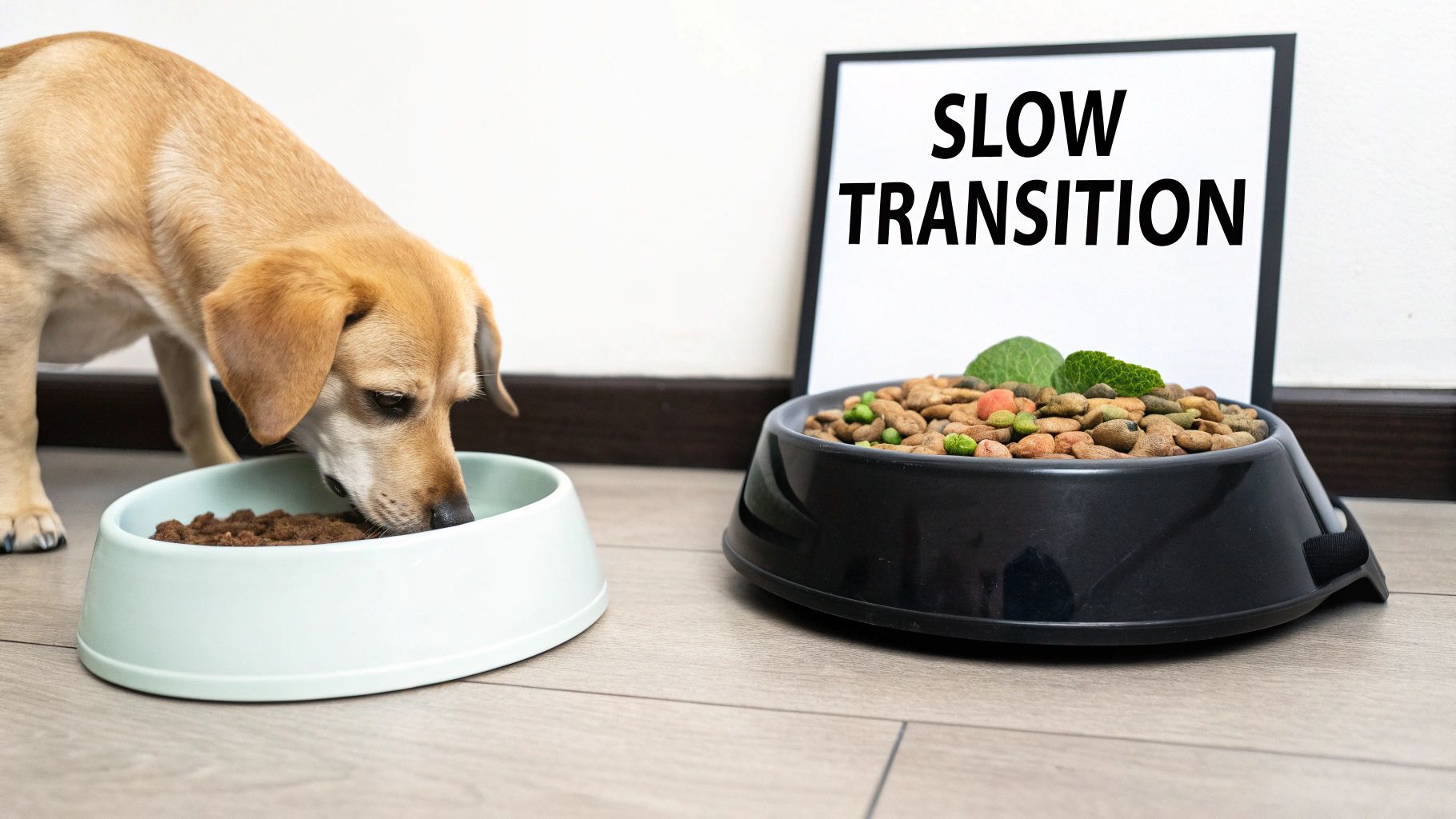
You’ve put in the work, sifted through the options, and finally picked out one of the best clean dog food brands. Now for the last—and most important—step: making the switch.
Just swapping out the old food for the new one is a recipe for disaster. Think of it like this: your dog’s gut is a finely-tuned ecosystem of bacteria that’s perfectly adapted to their current diet. A sudden change throws that whole system into chaos, often leading to an upset stomach, diarrhea, and a miserable pup.
That’s why a slow, steady transition is non-negotiable. It gives their digestive tract time to adjust, produce the right enzymes, and get used to the new ingredients.
The 7-10 Day Transition Plan
Patience is your best friend here. A gradual switch over 7-10 days is the gold standard for preventing digestive drama. While every dog is unique, this schedule is a great roadmap for most healthy adult dogs.
Here’s how to do it:
- Days 1-3: Start small. Mix 75% of the old food with just 25% of the new food. This is just an introduction, letting their system get a small taste of what's to come.
- Days 4-6: If the first few days went smoothly, it’s time to move to a 50/50 split of old and new food. You're halfway there!
- Days 7-9: Now, you can tip the scales. Increase the new food to 75% while keeping the old food at 25%. This is the home stretch.
- Day 10 and Beyond: If your dog’s poop is firm and they seem happy, you can officially make the full switch to 100% new food. Success!
Remember, this is a guideline, not a hard-and-fast rule. If you know your dog has a sensitive stomach, don't be afraid to stretch each stage out for a few extra days. The goal is a happy gut, not a race to the finish line.
Monitoring Your Dog During the Switch
During this transition, you’ll need to put on your detective hat. Keep a close eye on your dog for any signs that the change isn't sitting well with them.
The best indicator of a successful transition is your dog’s poop. It should stay firm and well-formed. A little softness can be normal as they adjust, but persistent, watery diarrhea is a clear sign to slow things down.
A few other things to watch for:
- Vomiting or Gas: An unusual amount of gas or any vomiting means you should pull back.
- Appetite and Energy: Is your dog still excited to eat? Are they as playful as usual?
- Itchiness: Keep an eye out for any new scratching, skin redness, or irritation.
If you spot any of these red flags, simply drop back to the previous ratio for a couple more days before trying to move forward again. For a deeper dive, check out our complete guide on how to transition dog to new food. And of course, if any issues continue, it’s always best to give your vet a call.
Your Final Checklist for Choosing the Best Food
I know the world of dog food can feel like a maze, but you're now armed with the right information to make a great decision. Let's boil it all down into a quick checklist you can use while you're shopping. It'll help you cut through the marketing fluff and get right to what matters.
Think of this as your five-point inspection before you put anything in your cart. If a food can tick all these boxes, you can be pretty confident you're looking at a genuinely high-quality option.
The Clean Food Quick Check
Use this simple list to spot a truly clean food in just a few seconds.
-
Check the First 5 Ingredients: The very first things on the list should be whole, named proteins. Look for "deboned chicken" or "grass-fed beef," not vague terms like "meat meal" or "poultry by-products."
-
Scan for Artificial Additives: A quick scan of the ingredient list should show a complete absence of artificial colors, flavors, or chemical preservatives. Red flags include things like BHA, BHT, or ethoxyquin. Quality brands use natural preservatives like mixed tocopherols, which is just a form of Vitamin E.
-
Look for Company Transparency: Hop on the brand’s website. Is it easy to find out where they get their ingredients? Good companies are proud of their sourcing and don't hide it.
-
Find the AAFCO Statement: Every bag should have a nutritional adequacy statement. You want to see the words, "formulated to meet the nutritional levels established by the AAFCO Dog Food Nutrient Profiles." This is your baseline for a complete and balanced meal.
-
Confirm Expert Formulation: Does the brand mention that its recipes were developed with veterinary nutritionists or PhDs in animal nutrition? This is a huge sign that they're committed to science-backed formulas.
A truly holistic approach to your dog's health extends beyond the bowl. Your final checklist should also include ensuring their outdoor spaces are safe, perhaps by consulting a comprehensive pet-safe lawn care guide.
By keeping these key points in mind, you’re ready to look past the slick packaging and choose the best, cleanest food for your dog.
Got Questions? We've Got Answers
Stepping into the world of clean dog food can feel like learning a new language. You’ll see terms thrown around that sound great, but what do they really mean for your dog? It’s completely normal to have questions, and we're here to clear things up.
Think of this as your go-to cheat sheet for decoding labels and making confident choices for your best friend. Let's dig in.
Natural vs. Organic: What’s the Real Difference?
It's easy to see these two words on a bag and think they mean the same thing, but they’re worlds apart. "Natural" is a fairly loose term. The Association of American Feed Control Officials (AAFCO) says it means the ingredients come from plants, animals, or minerals. The catch? They can still be heavily processed.
"Organic," however, is the real deal. It’s a legally regulated term with strict rules. For a dog food to wear the USDA Organic seal, at least 95% of its ingredients must be grown and handled without synthetic pesticides, fertilizers, or GMOs.
Here's the bottom line: all organic food is natural, but not all natural food is organic.
Are Grain-Free Diets Automatically "Clean"?
Not at all. This is one of the biggest misconceptions out there. Just because a food is grain-free doesn't mean it's high-quality. A grain-free formula can still be packed with cheap fillers like potato starch, questionable "meat meals," and a laundry list of artificial preservatives.
A clean diet is all about the quality and sourcing of every single ingredient, not just cutting out one category. A food made with wholesome, intact grains like brown rice or quinoa is a far cleaner choice than a grain-free recipe filled with junk.
Always go back to the full ingredient list and apply the principles we've covered. It’s also important to know that grain-free isn't right for every dog. Some studies have linked these diets to a heart condition called canine dilated cardiomyopathy (DCM), so it’s critical to talk with your vet before making a switch.
How Much More Does Clean Dog Food Really Cost?
Let's be honest—you're going to see a higher price tag. Clean dog food brands almost always cost more than the mass-produced kibble you see stacked high in grocery stores. You're paying for better ingredients (often human-grade), ethical sourcing practices, safer manufacturing, and the expertise that goes into formulating the food.
The price jump can be anywhere from a modest 20-30% to more than double the cost, particularly for fresh-cooked or raw food subscriptions.
Many dog owners see it as an investment in their dog's future. A highly nutritious, clean diet can help head off common health problems, which could mean fewer vet bills and more happy, healthy years together.
Can I Just Make My Own Clean Dog Food at Home?
While it might sound like the purest path, DIY dog food is incredibly difficult to get right. Formulating a meal that is genuinely "complete and balanced" according to AAFCO standards is a complex science. It's dangerously easy to create nutritional deficiencies or excesses that can cause serious health problems over time.
If you’re determined to go this route, it is absolutely essential that you work with a board-certified veterinary nutritionist. They have the specialized training to help you create a safe, balanced recipe tailored to your dog's specific needs.
For the vast majority of us, choosing a reputable commercial clean dog food is a much safer and more practical way to go.
At Joyfull, we take the guesswork out of finding clean, high-quality nutrition for your pets. Every formula is made with transparently sourced ingredients and is rigorously reviewed by our veterinary advisors. Discover the difference that truly clean ingredients can make at https://joyfullpet.com.