


Finding the Best Wet Cat Food Brands in 2024
When you start digging into the best wet cat food brands, you’ll likely come across names like Tiki Cat, Wellness CORE, and Nulo Freestyle. There's a good reason for that. These brands focus on what cats truly need: high-quality animal protein and plenty of moisture. Getting this choice right from the start can set your cat up for a long, vibrant life.
Why Wet Food Is a Superior Choice for Your Cat
The debate between wet and dry food goes far beyond your cat's personal taste. It’s really about their fundamental biology. Cats are obligate carnivores, which is a scientific way of saying their bodies are built to run on animal-based protein.
Just as importantly, our domestic cats evolved from desert-dwelling ancestors. This means they have a naturally low thirst drive and are designed to get the bulk of their water directly from their food—think mice and birds, not a water bowl.
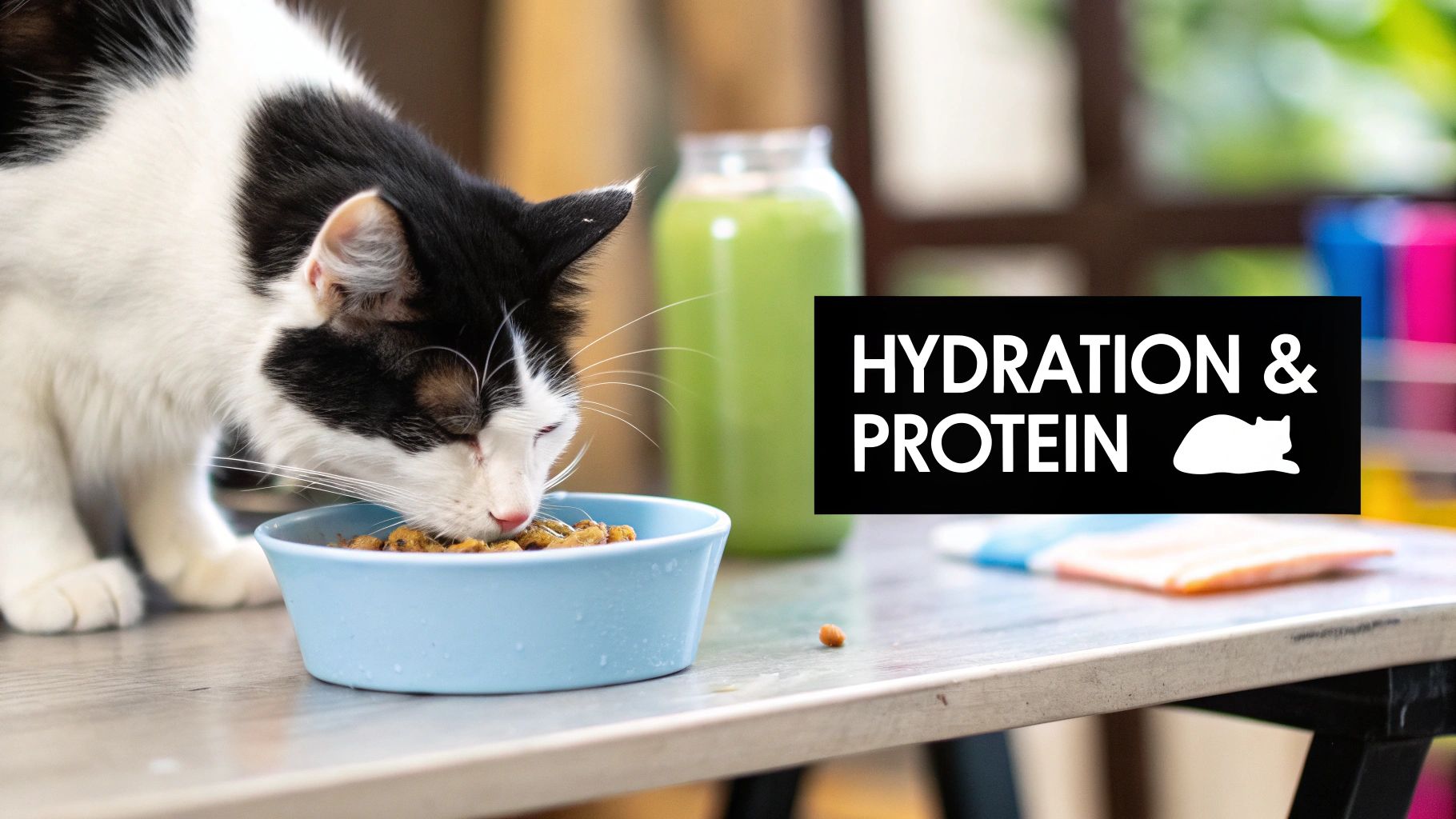
This is precisely where wet food proves its worth. With a moisture content often reaching 75% or more, it’s a game-changer for supporting healthy kidney function and preventing common urinary tract problems. A cat eating only dry kibble can easily live in a state of chronic, low-grade dehydration, no matter how often you see them at the water dish. If you want to dive deeper, we break it all down in our guide on wet vs. dry cat food.
Aligning with a Cat's Natural Diet
Beyond just hydration, the very composition of wet food better mirrors a cat’s ancestral diet. The best wet foods are packed with protein and have far fewer carbohydrates than most dry foods. This nutritional profile is exactly what they need to build and maintain lean muscle, manage a healthy weight, and stay energetic.
A species-appropriate diet is the cornerstone of feline wellness. Wet food delivers two of the most critical elements: abundant moisture and high-quality animal protein, directly addressing a cat's fundamental biological needs.
Navigating the Crowded Market
It's clear that more and more cat owners are recognizing these benefits. The global wet cat food market is expected to hit USD 10.9 billion by 2032, and brands are constantly innovating with formulas that target specific health needs.
This boom means you have more options than ever, from the brands you see at the grocery store to premium, specialized diets. Understanding why wet food is so beneficial is the first step in sorting through the noise and finding the perfect food for your cat.
How to Decode a Wet Cat Food Label Like an Expert
Walking down the cat food aisle is enough to make anyone’s head spin. Every can and pouch makes big promises, but the real story isn't on the flashy front label—it's in the fine print on the back. Learning to read that ingredient list is the single best skill you can have as a cat parent.
The law requires ingredients to be listed by weight, starting with the heaviest. That simple fact is your best guide. You’re looking for high-quality, named animal protein right at the top of that list.
The Power of Named Proteins
Glance at the first five ingredients. You want to see words like “chicken,” “turkey,” “salmon,” or “beef.” These are clear, specific protein sources that give your little carnivore exactly what their body is built for. This is non-negotiable for a high-quality wet food.
On the flip side, vague terms are a major red flag. Phrases like “meat by-products” or “poultry by-products” are catch-all terms that can include less digestible parts like beaks and feathers. While not necessarily harmful, they’re a sign of a lower-quality formula that prioritizes cost over nutrition.
Expert Tip: The very first ingredient should always be a named animal protein. If you see corn, wheat, or some generic "by-product" listed first, just put the can back on the shelf.
Identifying Fillers and Carbohydrates
Here’s a simple truth: cats have no biological need for carbohydrates. They’re designed to get their energy from protein and fat, not plants. Yet, ingredients like corn, wheat, soy, and potatoes are common because they’re cheap fillers.
These carb-heavy ingredients often contribute to weight gain and can cause digestive upset or allergies in sensitive cats. While a small amount of something like pumpkin or carrots is usually fine, the overall carbohydrate content should be as low as possible. The best wet foods get less than 10% of their calories from carbs.
Must-Have Nutrients and Textural Appeal
Beyond protein, there are a few other critical components to look for. Taurine is an essential amino acid that cats can't make enough of on their own, so it must be included in their food. It’s crucial for their heart, vision, and overall health. Any good wet food will have taurine on its ingredient list.
Of course, none of this matters if your cat won't eat it. Texture is a huge deal for our feline friends, and they often have strong opinions. You might need to experiment a bit to find their favorite.
- Pâté: This is a smooth, consistent texture that’s great for cats who like to lick their meals. It’s also super easy to mix with a little extra water for more hydration.
- Shreds or Flakes: These are tender, small pieces of meat, usually in a broth or light gravy, that closely mimic the texture of natural prey.
- Chunks in Gravy: For cats who like a heartier bite, these bigger pieces of meat in a thick sauce can be a huge hit.
Getting a handle on these details is the first step to making a smart choice for your cat. For an even deeper dive, our comprehensive guide on how to choose cat food covers every angle. Once you master the label, you can shop with confidence, knowing you’re picking a food that will support your cat’s health for years to come.
Your Essential Wet Cat Food Evaluation Checklist
Now that you know how to read an ingredient label, it's time to put that knowledge to work. Picking the best wet food for your cat can feel overwhelming, but it gets much easier when you have a clear set of criteria.
This checklist breaks down the seven most important factors to look at. Think of it as a methodical way to cut through the marketing noise and find what truly matters for your cat’s health.
1. Primary Protein Source And Quality
First things first: protein. We’ve already touched on this, but it’s worth repeating—the first few ingredients on the label tell you the most. You want to see specific, named animal proteins right at the top, like “chicken,” “salmon,” or “turkey.”
But don't stop there. The quality and diversity of that protein matter, too. For instance, a food that lists "chicken" followed by "chicken broth" and "chicken liver" is offering a much richer, more complete protein profile than one that just lists "chicken" and then immediately pivots to fillers. It shows a more thoughtful approach to formulation.
2. Moisture Percentage For Optimal Hydration
The whole point of wet food is hydration, so this one is a no-brainer. Flip the can over and find the "Guaranteed Analysis" section on the label.
You're looking for a moisture content of at least 75%. Honestly, the higher, the better. Many of the best brands offer formulas with 80% or more moisture, which is fantastic for supporting kidney and urinary tract health. This is especially critical for cats who turn their noses up at their water bowl.
Key Takeaway: High moisture content isn't just a nice bonus—it's a core benefit of wet food. A cat eating a diet with 78% moisture is getting a world of hydration compared to one eating kibble with only 10% moisture. It's a simple switch that helps prevent chronic dehydration.
This diagram breaks down how to quickly decode a cat food label, focusing on the big three: protein, fillers, and essential nutrients like taurine.
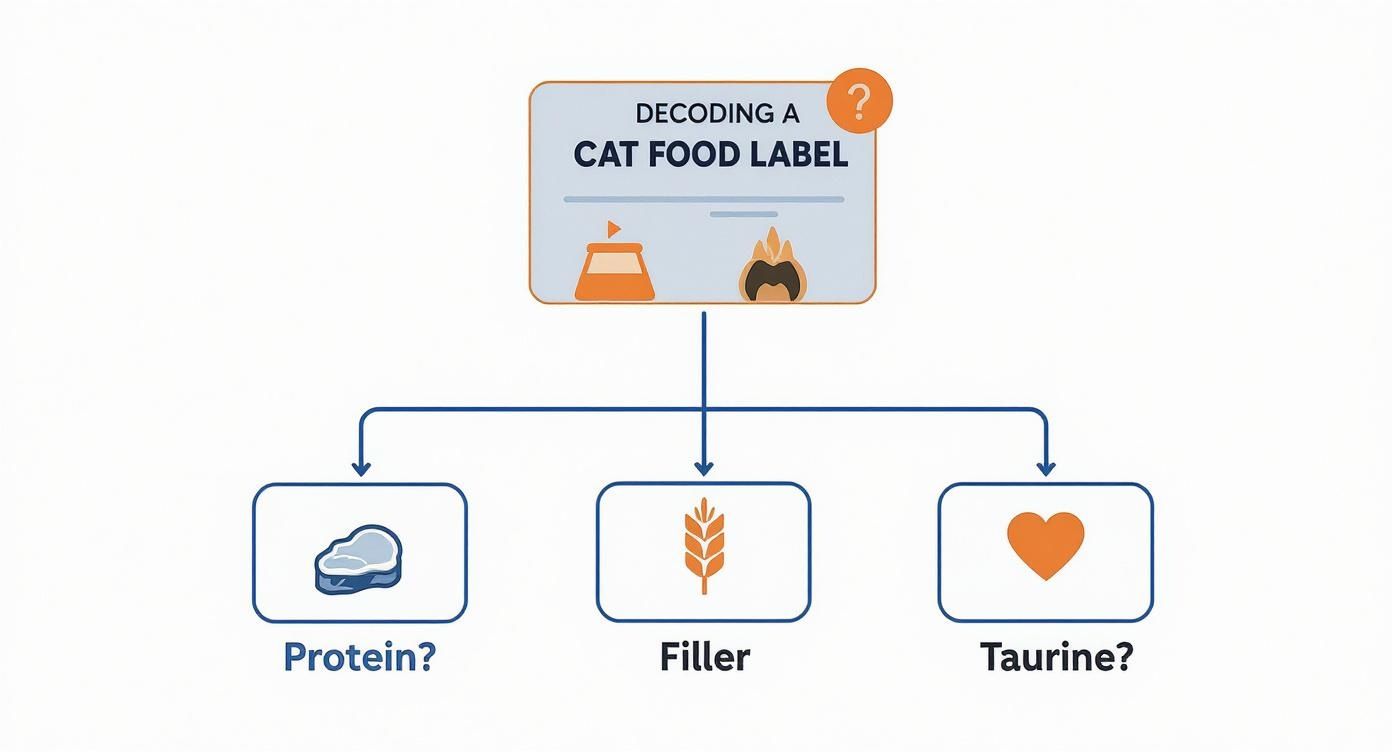
It’s a great visual reminder: always start with a high-quality, named protein source. Everything else comes second.
3. AAFCO Nutritional Adequacy Statement
This little block of text is your seal of approval. The AAFCO (Association of American Feed Control Officials) statement is your guarantee that the food is nutritionally balanced for your cat's stage of life.
Look for these key phrases:
- Growth: Formulated specifically for kittens.
- Maintenance: Formulated for adult cats.
- All Life Stages: Suitable for both kittens and adults.
If you see a label that says "for intermittent or supplemental feeding," put it back on the shelf. That food isn't a complete meal and won't provide the core nutrition your cat needs to thrive.
4. Life Stage And Special Health Needs
Are you feeding a tiny, energetic kitten, a laid-back adult, or a senior who's slowing down? Your cat’s age and lifestyle matter immensely. Always pick a food that’s designed for their current life stage.
Kittens need a ton more calories and specific nutrients for healthy development. Senior formulas, on the other hand, might have added joint support or be formulated for easier digestion.
Also, think about any specific health issues. Many brands now offer specialized formulas for things like weight management, sensitive stomachs, or urinary health. For example, a long-haired cat prone to hairballs could really benefit from a formula with a bit of extra fiber.
5. Ingredient Quality And Unwanted Additives
Once you've confirmed the main ingredients are solid, do a quick scan for things you don't want to see. The best foods steer clear of artificial colors, flavors, and sketchy preservatives like BHA or BHT.
Also, keep an eye out for excessive fillers. Sure, a small amount of something like pumpkin can be great for digestion, but ingredients like corn, wheat, and soy offer next to no nutritional value for an obligate carnivore. They're just cheap filler.
6. Brand Recall History
A brand's track record says a lot about its commitment to quality control. Before you commit, do a quick online search for "[Brand Name] cat food recalls."
A single, isolated incident from years ago might not be a dealbreaker, but a pattern of repeated recalls is a massive red flag. It suggests there are systemic problems with their sourcing or manufacturing, and it’s just not worth the risk.
7. Price Per Ounce Value Analysis
Finally, let's talk about cost. The price on the can can be deceiving. To figure out the real value, you need to calculate the price per ounce.
It's simple: just divide the total cost by the total number of ounces in the can or package. This gives you a true apples-to-apples comparison between different can sizes and brands, helping you find the highest quality food that actually fits your budget.
To make this even easier, I've created a simple template. Use it to compare a few different brands side-by-side so you can see exactly how they stack up.
Wet Cat Food Brand Comparison Template
| Evaluation Criteria | Brand A | Brand B | Brand C |
|---|---|---|---|
| 1. First 3 Ingredients | |||
| 2. Moisture % | |||
| 3. AAFCO Statement | |||
| 4. Price Per Ounce ($) | |||
| 5. Any Artificial Additives? | |||
| 6. Any Major Recalls? |
Jot down the details for each brand you're considering. Having the data right in front of you makes the best choice for your cat and your wallet much more obvious.
A Look at the Different Tiers of Wet Cat Food
Walking down the cat food aisle feels like navigating a maze. To make sense of it all, it helps to think of wet food as falling into three general tiers. Each one caters to different priorities, budgets, and, most importantly, feline needs. The difference isn't just about price; it's about the entire philosophy behind how the food is made, from ingredient sourcing to nutritional formulation.
Figuring out where each brand fits can help you find that sweet spot between what’s perfect for your cat and what’s practical for your wallet. Let’s break down what you can expect from each level.
The Big Names: Supermarket Brands
This is the tier everyone recognizes, home to household names like Fancy Feast and Sheba. You can grab them at almost any grocery store, which makes them incredibly convenient and usually the most affordable option on the shelf. Their biggest selling point is sheer variety—they offer a dizzying array of flavors and textures, which is a lifesaver if you have a finicky cat.
But that convenience often comes with a compromise. Many formulas from these brands use less specific protein sources, like "meat by-products" or "poultry by-products," which can vary in quality. To keep costs low, they might also include fillers like wheat gluten or corn starch. While not necessarily harmful, these ingredients don't offer much nutritional value to a carnivore and can sometimes cause sensitivities.
This tier is a solid choice for owners on a tight budget or as a supplemental meal, but it pays to be a label detective. You can find better-quality options within their massive product lines if you know what to look for. The global popularity of these brands is undeniable. In fact, the European wet cat food market is projected for significant growth, largely driven by industry giants like Mars Petcare (Sheba) and Nestlé Purina (Fancy Feast) who are responding to a rising consumer demand for premium ingredients. Digging into these market dynamics can give you a better sense of the industry's direction.
The Up-and-Comers: Premium Pet Store Brands
Take a step up, and you'll find premium brands like Wellness, Tiki Cat, and Nulo, which you'll usually see in specialty pet stores or online. These companies stake their reputations on using high-quality, often human-grade, ingredients and steering clear of controversial additives. Their formulas are built to be species-appropriate, which means they put named animal proteins first and keep the carb count way down.
When you flip over a can from a premium brand, the first few ingredients will almost always be things you recognize, like deboned chicken, salmon, or turkey liver. They also tend to offer unique proteins such as duck or rabbit, making them a fantastic choice for cats who have developed allergies to common proteins like chicken or fish.
When to Make the Switch: If your cat is dealing with food sensitivities, digestive upset, or is just plain picky about lower-quality foods, premium brands are often the answer. The investment in better ingredients usually pays off with better overall health and, yes, a less stinky litter box.
The main hurdle here is the price. It's smart to calculate the cost per ounce, as it can easily be double or even triple that of the supermarket brands. Still, for many cat parents, the peace of mind that comes from providing top-tier nutrition is worth every penny.
The Specialists: Veterinary and Prescription Diets
This is the most specialized category, featuring brands like Royal Canin and Hill's Science Diet. Think of these foods less as meals and more as nutritional therapy, specifically formulated to manage medical conditions. You'll typically need a vet's recommendation or a prescription to buy them.
These diets are precisely engineered to tackle specific health problems, such as:
- Chronic Kidney Disease (CKD): These formulas contain carefully controlled levels of high-quality protein and restricted phosphorus to ease the burden on the kidneys.
- Urinary Health: They’re made to manage mineral levels and adjust urine pH, helping prevent the formation of painful crystals and stones.
- Diabetes: These recipes are extremely low in carbohydrates to help keep blood sugar levels stable.
- Gastrointestinal Issues: They use easily digestible ingredients, sometimes with added prebiotics, to support a healthy gut.
The ingredient list on a prescription diet can look less "natural" than a premium brand's because they often use very specific nutrient isolates to hit an exact dietary target. The philosophy here isn't about whole foods; it's about targeted medical nutrition. While they are the most expensive option, for a cat with a serious health condition, they are often non-negotiable.
How to Successfully Transition Your Cat to a New Food
So, you’ve done the hard work. You've gone through the checklist, compared different brands, and picked out what you believe is the best wet food for your cat. That’s a huge win, but the job isn't quite done.
Just swapping their old food for the new one is a recipe for disaster. You're likely to end up with digestive upset and a full-blown food strike from a suspicious cat. The real key to success is a slow, methodical transition.
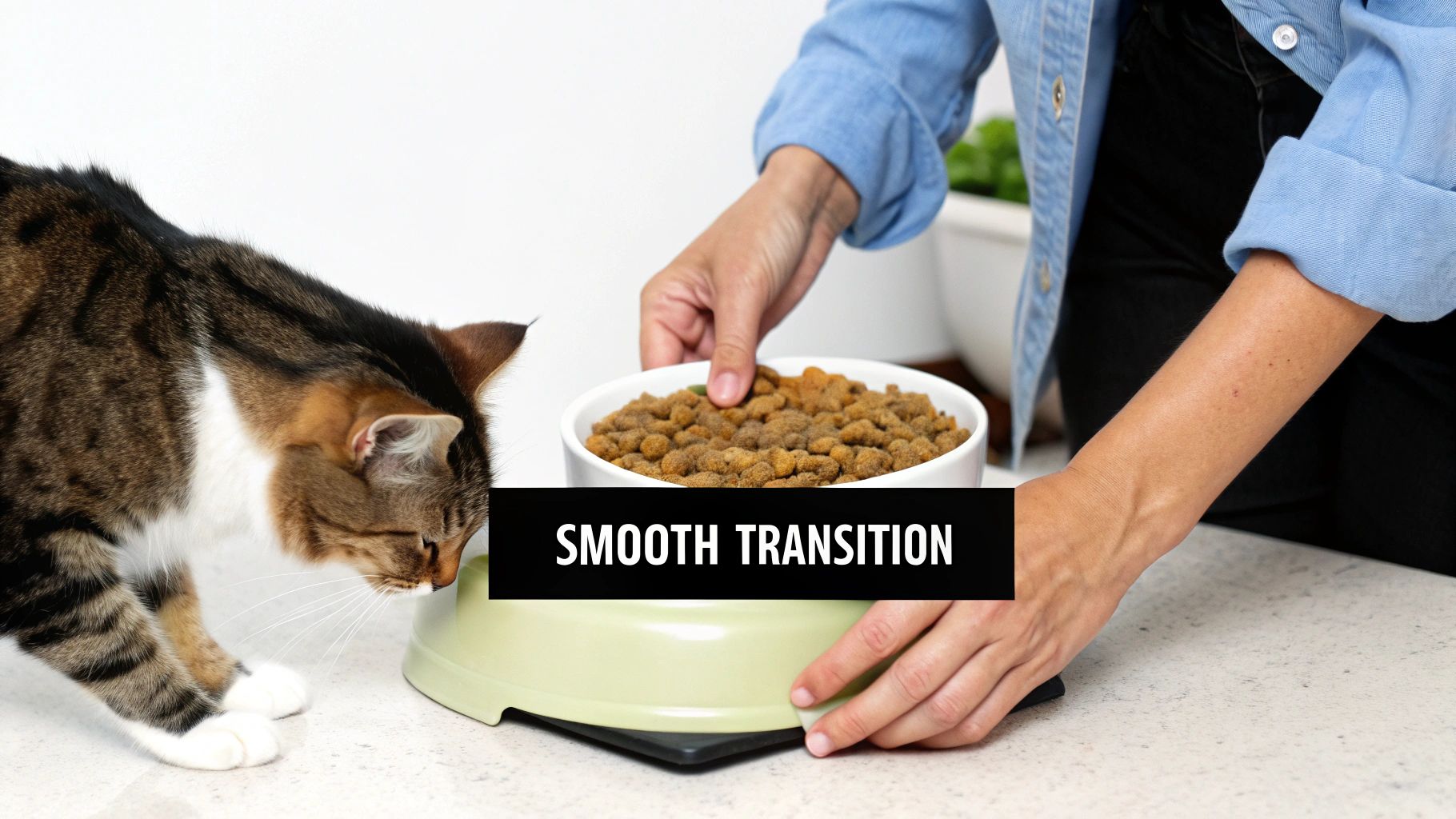
Cats are creatures of habit, and their digestive systems can be surprisingly sensitive. A gradual switch gives their gut bacteria time to adapt, which helps prevent issues like vomiting or diarrhea. It also gives your cat a chance to accept the new food's taste and texture without feeling forced. The goal here is to make the change so subtle they barely even notice.
The 7 to 10-Day Transition Schedule
Patience is everything during this process. For most cats, a standard 7 to 10-day transition period works perfectly. But don't hesitate to slow things down if your cat is especially picky or has a sensitive stomach. The idea is simple: gradually increase the amount of new food while decreasing the old.
Here’s a sample schedule to get you started:
- Days 1-2: Mix 75% old food with 25% new food. Make sure it's blended well.
- Days 3-4: Move to a 50/50 split. By now, your cat should be getting used to the new taste.
- Days 5-6: Time to tip the scales to 25% old food and 75% new food. Almost there!
- Day 7 and beyond: You've made it to 100% new food.
Keep a close eye on your cat the whole time. You'll want to watch their appetite, energy levels, and, of course, what's happening in the litter box. If you see any signs of an upset stomach, just dial it back to the previous ratio for another day or two before trying again.
Pro Tip: Never try to switch foods when your cat is stressed or sick. A calm, stable environment makes a world of difference. If you've just moved, brought home a new pet, or your cat is recovering from an illness, it’s best to wait.
Navigating a Picky Eater's Resistance
What happens if you follow the schedule perfectly, but your cat just sniffs the bowl and walks off? It’s a common problem, especially with cats who have eaten the same food for years. Don't give up—just get a little creative.
First, try warming up the new food. A few seconds in a microwave-safe dish or sitting the can in a bowl of warm water can really bring out the aroma, making it much more appealing to your cat’s powerful sense of smell.
If that doesn’t do it, a little bit of bribery might be needed. Sprinkling a tiny amount of a high-value "topper" on the food can work wonders. Think a few crushed pieces of their favorite treat, some plain boiled chicken, or a drizzle of water from a can of tuna (the kind packed in water, not oil). For more ideas, check out our guide on finding the best cat food for picky eaters.
Ultimately, a smooth food transition comes down to patience and paying attention. If you take it slow and listen to your cat's cues, you can introduce a healthier diet that will support them for years to come.
Common Questions About Wet Cat Food Answered
Navigating the world of cat food can feel like a full-time job. Even after you’ve done your research and picked what you think is the best option, new questions always seem to pop up. Don't worry, that's completely normal.
This section is all about tackling those common questions head-on. From finicky eaters to portion sizes, let's clear up some of the most frequent concerns cat parents have.
Is Wet Food Truly Better Than Dry Food for Every Cat?
For the vast majority of cats, yes, it absolutely is. The single biggest reason comes down to one thing: moisture. Cats are notorious for not drinking enough water, and a high-moisture diet does the heavy lifting for them, supporting kidney and urinary tract health from the inside out. This simple factor helps prevent the chronic, low-grade dehydration that can lead to serious problems later in life.
Beyond hydration, wet food's nutritional profile is typically a much better match for a cat's biology. It's usually higher in protein and lower in carbohydrates than kibble, which is exactly what an obligate carnivore needs. That said, some cats might benefit from a mixed-feeding approach, perhaps using a dental-focused dry food alongside wet. A quick chat with your vet is always the best way to tailor a diet to your specific cat.
How Much Wet Food Should My Cat Eat Per Day?
There's no magic number here. The right amount hinges on your cat’s age, weight, activity level, and the specific food's calorie count. The feeding guidelines on the can or pouch are your best starting point.
As a general rule of thumb, an average adult cat weighing around 10 pounds usually needs about one 5.5-ounce can or two 3-ounce cans per day. It's best to split this into two meals—one in the morning and one at night—to keep their metabolism humming and their tummy happy.
Important Reminder: Feeding guides are just that—guides. The best way to know if you're feeding the right amount is to check your cat’s body condition. You should be able to feel their ribs under a thin layer of fat, but not see them sticking out. Adjust portions up or down to keep them at a lean, healthy weight.
What Should I Do if My Picky Cat Refuses to Eat Wet Food?
Ah, the picky eater. It’s a frustratingly common problem, especially for cats who've grown up on the super-flavorful, crunchy texture of dry kibble. The key here is patience and a bit of strategy.
First off, never switch foods cold turkey. A slow transition over 7 to 10 days is crucial to let their palate and digestive system adjust. You can also try a few tricks to make the new food seem more appealing:
- Try different textures: Some cats turn their nose up at pâté but go crazy for shreds in gravy. Grab a few different styles and see what clicks.
- Warm it up: A few seconds in a microwave-safe dish (just until it's lukewarm, not hot) can release the food's aroma and make it far more enticing.
- Add a tempting topper: A sprinkle of their favorite crushed-up treat or a tiny bit of plain, cooked chicken mixed in can be all it takes to get them interested.
What Does the AAFCO Statement Mean?
Think of the AAFCO (Association of American Feed Control Officials) statement as a seal of nutritional approval. When you see a label that says the food is "formulated to meet the nutritional levels established by the AAFCO Cat Food Nutrient Profiles," you can breathe a sigh of relief.
It means the food is "complete and balanced" for a particular life stage, containing all the essential vitamins, minerals, and nutrients your cat needs to thrive. Be cautious with foods labeled for "intermittent or supplemental feeding," as they aren't meant to be the main course. If you have questions about keeping your cat’s diet consistent while on the move, you can find further insights into pet travel that might help.
Making an informed choice about your cat's food is one of the most important things you can do for their long-term health. By understanding these common hurdles, you can feed your cat with confidence and give them the best care possible.
At Joyfull, we believe that giving our pets a healthy life shouldn’t be complicated. Our formulas are built on clean ingredients and high-quality proteins, each one scientifically reviewed by our in-house veterinary advisor to meet the highest standards. See the difference that thoughtfully sourced, no-BS nutrition can make by exploring our products at https://joyfullpet.com.