


Finding the Best Treats for Senior Cats
Finding the perfect treat for your senior cat isn't just about what they like—it's about supporting their unique needs as they age. The best options will have soft textures for sensitive teeth, be lower in calories to help manage their weight, and often include beneficial ingredients for things like joint or digestive health. A cat's dietary needs change over the years, and that makes a thoughtful approach to treats more important than ever.
Navigating Treats for Your Senior Cat
As your cat gets older, their treats become more than just a simple reward. They’re a real part of their overall wellness plan. It helps to think of it less like giving them candy and more like offering a targeted, tasty supplement. The right choices can actively support their health, while the wrong ones might accidentally contribute to common senior issues like weight gain or dental problems.
This shift in thinking is key. Every treat you give them is an opportunity to provide a little extra joint support, boost their hydration, or just make their day more enjoyable without messing with their specialized diet.
A Framework for Smart Choices
To make things easier, it helps to have a mental checklist for evaluating any potential treat. Before you toss something into your shopping cart, run through these core pillars of senior cat nutrition.
- Texture and Dental Health: It's no secret that senior cats often struggle with dental sensitivities, gum disease, or even missing teeth. A hard, crunchy treat might be too difficult or even painful for them to chew.
- Caloric Content: An older cat's metabolism naturally slows down, making them more prone to obesity. That extra weight puts a lot of strain on their aging joints, so low-calorie options are a must.
- Functional Ingredients: You'll see many senior-specific formulas include beneficial additives. Think glucosamine for joints, omega-3s for brain health, or probiotics to keep their digestion running smoothly.
- Digestibility: An aging digestive system isn't always as efficient as it used to be. Highly digestible proteins and gentle ingredients are your best bet to help prevent an upset stomach.
This growing demand for health-focused snacks is a huge trend. In fact, the global cat treats market is projected to hit USD 5.1 billion by 2033, largely because pet owners are looking for premium, functional options for their furry family members. You can find more details on this in our general guide on what are good cat treats.
Choosing the best treats for senior cats is about more than just taste; it’s about providing targeted support that enhances their quality of life. Each treat should serve a purpose, whether it's easing joint stiffness or simply being gentle on their teeth.
To give you a quick reference tool, here's a simple table summarizing what to look for.
Key Factors for Selecting Senior Cat Treats at a Glance
| Consideration | Why It Matters for Senior Cats | What to Look For |
|---|---|---|
| Texture & Softness | Older cats often have sensitive gums, dental disease, or missing teeth, making chewing painful. | Soft chews, lickable purees, pâté-style treats, or freeze-dried options that soften. |
| Calorie Count | Slower metabolism increases the risk of obesity, which strains joints and vital organs. | Clearly labeled low-calorie formulas; treats that are 1-2 calories each. |
| Ingredient Quality | Aging digestive systems need high-quality, easily digestible nutrients to avoid upset. | Real meat (chicken, fish) as the first ingredient; limited fillers like corn or soy. |
| Functional Additives | Can provide targeted support for common age-related issues like arthritis or cognitive decline. | Glucosamine, chondroitin (joints), omega-3s (skin/coat/brain), probiotics (digestion). |
| Hydration Support | Senior cats are prone to dehydration, which can worsen kidney issues. | Moisture-rich treats like lickable purees or broths. |
Think of this table as your cheat sheet for reading labels at the pet store. By keeping these factors in mind, you can confidently choose treats that truly benefit your senior companion.
Understanding Your Senior Cat’s Dietary Needs
As our feline friends step into their golden years, their bodies change in subtle but important ways. Just like a classic car needs a specific type of fuel to keep running smoothly, an older cat requires a diet fine-tuned to their new stage of life. This is the key to choosing treats that do more than just reward—they actively support your cat's long-term health.
One of the biggest shifts is in their daily routine. Those wild kitten acrobatics are often replaced by long, luxurious naps in a favorite sunbeam. This natural slowdown directly affects their metabolism.
The Metabolism Slowdown and Calorie Control
A quieter lifestyle means your senior cat is burning far fewer calories. Their internal engine, their metabolic rate, naturally shifts into a lower gear. If you keep feeding them the same amount of food and treats as you did when they were a young adult, that extra energy has to go somewhere—and it gets stored as fat.
This is why low-calorie treats are not just a nice-to-have; they’re a necessity. Extra weight is a serious problem for older cats, putting a heavy strain on aging joints and making conditions like arthritis much worse. It also raises the risk of diabetes and heart disease. A treat that’s only one or two calories might not seem like a big deal, but those little extras add up quickly and can make all the difference in keeping your cat at a healthy weight.
By carefully managing calories from both meals and treats, you're doing one of the best things you can to protect their mobility and overall health for years to come.
The Critical Role of High-Quality Protein
While we need to watch the calories, we absolutely cannot skimp on protein. It’s the cornerstone of a healthy feline diet at any age, but it’s especially vital for seniors. Cats are obligate carnivores, meaning they are built to get their nutrients from meat. As they get older, their bodies can become less efficient at digesting and using protein.
This creates a tricky balancing act. Senior cats need plenty of protein to maintain their lean muscle mass and fight off sarcopenia, the age-related muscle loss common in older pets. Strong muscles are what support their joints and keep them moving comfortably. But the protein has to be the right kind—highly digestible.
Here’s what that looks like on an ingredient label:
- Easily Digestible Sources: Look for clearly named meats like chicken, turkey, or fish. An older cat's digestive system can break these down easily, getting all the benefits without putting stress on their kidneys.
- Avoiding Low-Quality Fillers: Vague ingredients or plant-based proteins are harder to digest, offer little real nutrition, and can sometimes cause an upset stomach.
Choosing treats with top-notch protein ensures your cat gets the essential building blocks they need to stay strong, without making their internal systems work overtime. To get a better handle on this, check out our detailed guide on the best protein for cats.
Supporting Senior Systems with Functional Ingredients
Thankfully, modern pet nutrition has come a long way. The market for pet snacks is booming, largely because pet parents are looking for options that solve the specific problems our aging cats face. In fact, the cat treat market is projected to grow at a compound annual growth rate of 19.9% between 2025 and 2034. You can learn about the pet snacks market from Precedence Research to see just how much this area is expanding.
A big reason for this growth is the rise of functional ingredients—additives that deliver specific health benefits beyond just basic calories and protein. These ingredients can turn a simple treat into a tiny, tasty wellness boost.
Common functional ingredients to look for in senior cat treats include:
- Omega-3 Fatty Acids: Usually from fish oil, these are incredible anti-inflammatories. They help soothe achy joints, keep skin and coat healthy, and even support brain function.
- Glucosamine and Chondroitin: These are the natural building blocks of cartilage. Adding them to a diet can help cushion stiff joints and improve mobility for cats with arthritis.
- Antioxidants: Ingredients like Vitamin E and C help protect the body's cells from damage, which is crucial for supporting a strong immune system in an older cat.
- Probiotics and Prebiotics: A healthy gut is the foundation of overall health. These ingredients promote good gut bacteria, which helps with digestion and ensures your cat is absorbing all the nutrients from their food.
By picking treats with these kinds of extras, you’re giving your senior cat targeted support where they need it most, helping them stay comfortable, happy, and sharp.
How to Read Cat Treat Labels Like an Expert
Walking down the pet food aisle can be dizzying. The bags are plastered with pictures of happy cats and claims of perfect health, but turn one over, and the ingredient list looks like a chemistry final. The good news? Learning to decipher that label is the single best skill you can have to pick out the right treats for your senior cat.
Think of an ingredient panel as a recipe where the ingredients are listed by weight. The first one is the most prominent. You're looking for a high-quality, recognizable protein source right at the top of that list. That’s your first clue that the treat is built on a solid foundation of what your little carnivore actually needs.
Green Flags: Great Ingredients to Spot
When you’re scanning a label, some ingredients should give you a good feeling. These are the “green flags” that tell you the manufacturer put real thought into the formula, creating something that’s actually good for an older cat instead of just being full of cheap fillers.
Here are a few of the best things to see:
- Named Meat Sources: You want to see specific proteins like “deboned chicken,” “salmon,” or “turkey” as the very first ingredient. It’s clear, it’s specific, and it means the treat is based on high-quality, easily digestible protein.
- Beneficial Supplements: Add-ins like glucosamine, chondroitin sulfate, or omega-3 fatty acids (usually from fish oil) are fantastic. This means the treat is designed to do more than just taste good—it’s built to support aging joints or help maintain cognitive function.
- Natural Preservatives: Look for things like tocopherols (a form of Vitamin E) or rosemary extract. These are natural ways to keep treats fresh without resorting to a bunch of artificial chemicals.
Spotting these ingredients is a great sign. It shows the treat is more than just empty calories; it's a small way to contribute to your senior cat’s daily well-being. This focus on animal-based protein is crucial, something we dive into deeper in our guide to high-protein cat treats.
This chart can help you quickly match your cat's needs with the right kind of treat.
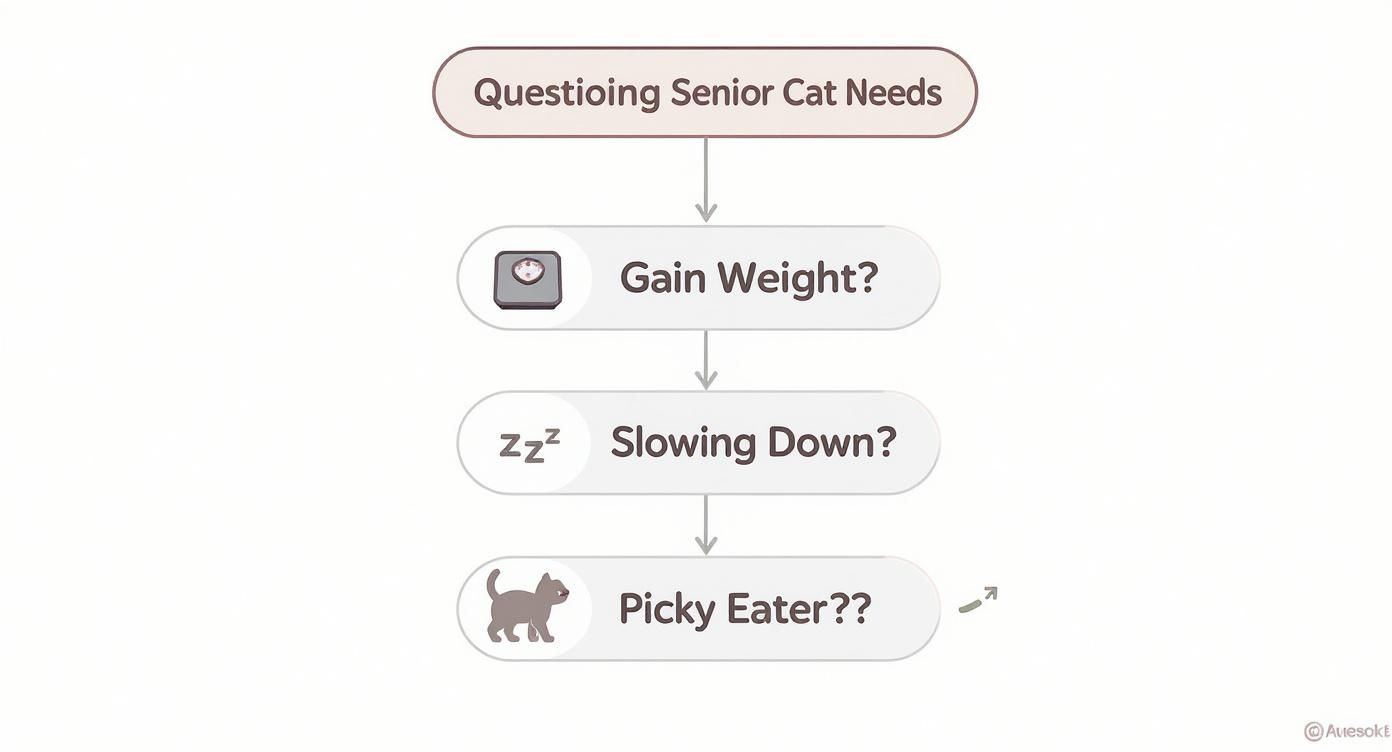
As you can see, different behaviors or challenges in senior cats can point you toward very different solutions.
Red Flags: Problematic Ingredients to Avoid
Knowing what to look for is only half the battle. You also need to know what to run away from. Some ingredients are major red flags, signaling a low-quality product that offers little nutritional value and might even upset your senior cat's sensitive stomach.
A high-quality treat is defined by what it includes and, just as critically, by what it leaves out. Vague terms and artificial additives are often used to cut costs at the expense of your cat's health.
Keep an eye out for these troublemakers on the ingredient panel:
- Vague Meat Terms: Words like “meat by-products” or “animal digest” are intentionally vague. You have no idea what animal it came from or which parts were used. This almost always points to low-grade, less digestible protein sources.
- Artificial Additives: Chemical preservatives like BHA, BHT, and ethoxyquin are completely unnecessary. The same goes for artificial colors (like Red 40) and fake flavors, which do nothing for your cat but add chemicals to their diet.
- Excessive Fillers: It’s one thing to have a little rice or potato, but if corn, wheat, or soy are near the top of the list, they’re being used as cheap fillers. Cats are carnivores; they get very little nutritional value from these.
- Added Sweeteners: There is absolutely no reason for a cat treat to contain corn syrup or molasses. These add empty calories that can lead to weight gain and dental issues—two things senior cats are already prone to.
Becoming a label detective gets easier with practice. Once you learn to spot the good stuff and sidestep the junk, you can cut through all the marketing fluff and feel confident that you’re choosing treats that genuinely support your older cat in their golden years.
The Best Types of Treats for Older Cats
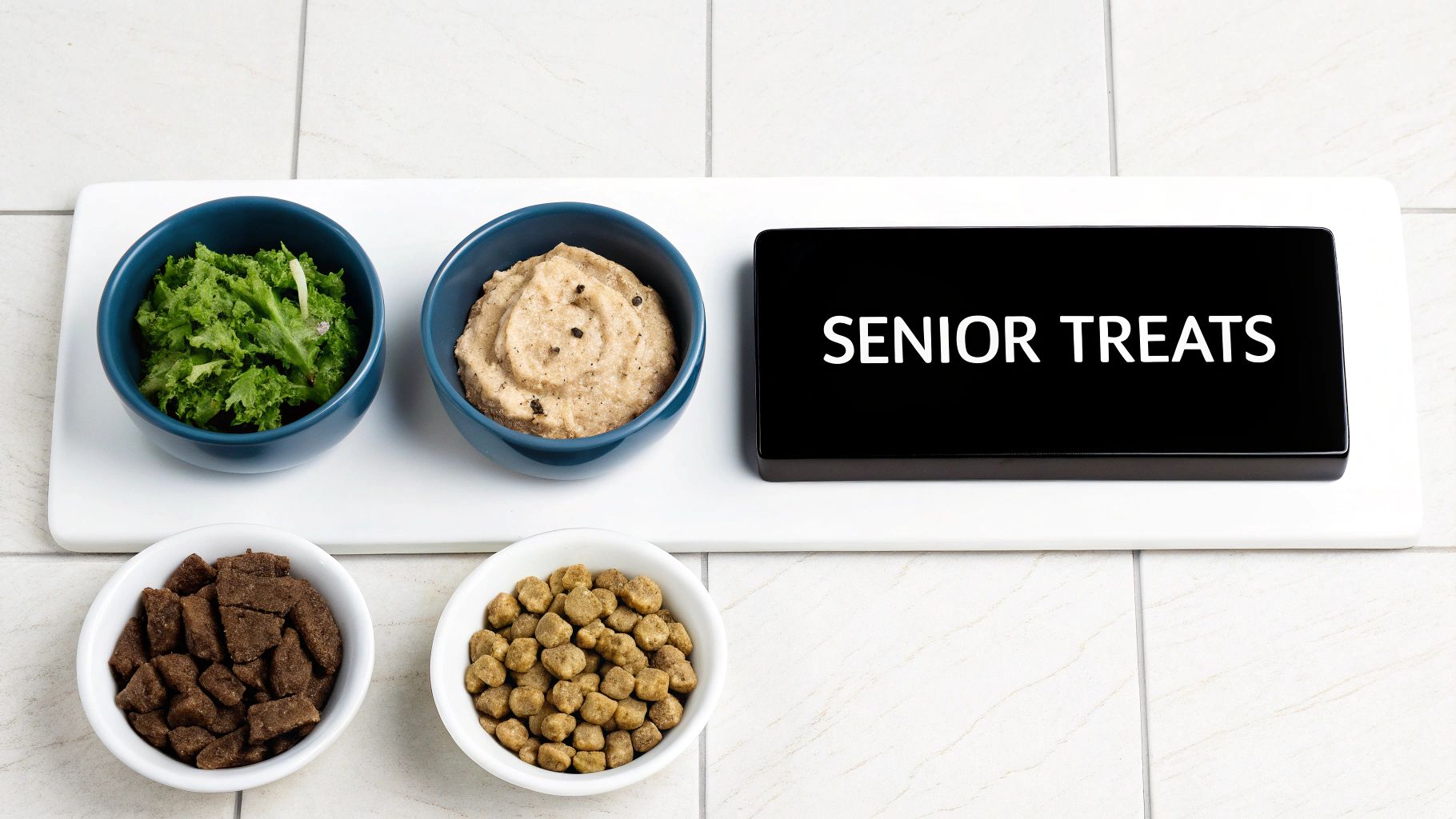
When it comes to our senior cats, not all treats are created equal. The pet store aisle can be overwhelming, but most options fall into a few key categories. Figuring out these types helps you move beyond just giving a tasty snack and into choosing something that truly supports your cat's specific needs at this stage of life.
Think of it like picking the right tool for a job. You wouldn’t use a hammer to tighten a screw, right? In the same way, a hard, crunchy treat is a poor choice for a cat with sensitive teeth, and a high-calorie snack won't do any favors for a cat struggling with their weight. The real secret is matching the treat to the individual cat.
Soft and Semi-Moist Treats for Dental Comfort
For many older cats, dental issues are just a part of life. Years of chewing, gum sensitivity, or even missing teeth can turn mealtime into a painful chore. This is where soft and semi-moist treats really shine, giving your cat a rewarding experience without the "ouch."
These treats have a chewy, pliable texture that’s much easier for senior mouths to handle. A good rule of thumb: if you can press your fingernail into it and leave an indent, it's probably soft enough. Their gentleness is their biggest perk, letting your cat enjoy a snack without aggravating sore gums or struggling with a rock-hard texture.
They’re a fantastic choice for any cat showing signs of dental trouble, like dropping food, chewing on only one side of their mouth, or suddenly avoiding their dry kibble. A softer option ensures treat time stays a happy, pain-free bonding moment for you both.
Lickable and Mousse Treats for Hydration and Palatability
Keeping senior cats hydrated is critical. They're often prone to dehydration, which can make health issues like kidney disease much worse. Lickable treats, usually found in tubes or pouches, are an ingenious way to sneak extra moisture into their diet.
These puree-style treats are basically a delicious, hydrating gravy. Their high moisture content gives a direct boost to kidney function and overall wellness. Another huge plus is their intense aroma and flavor, which can tempt even the most finicky eater. This also makes them the perfect disguise for crushed pills or liquid meds, turning a dreaded task into a welcome reward.
The versatility of lickable treats is unmatched. They can be served on a plate, used as a food topper to entice a reluctant eater, or offered directly from the tube for a special moment of connection with your cat.
While you're finding the perfect treats, you might also want to explore a broader range of cat and pet supplies to cover all of your feline friend's needs.
Functional Treats for Targeted Health Support
Functional treats are designed to do double duty: they’re a delicious reward that also delivers specific health benefits through added ingredients. This category changes how we think about treats—they’re not just empty calories anymore, but a small, meaningful part of a daily wellness routine.
The demand for these beneficial snacks is growing fast. According to market research, the rising population of senior cats has fueled demand for formulas enriched with ingredients like glucosamine and chondroitin, reflecting a more preventative approach to elder pet care. These additions can turn a simple treat into a proactive step for your cat’s health.
Here are some of the most common types of functional treats you'll find:
- Joint Support Treats: Often packed with glucosamine and chondroitin, these ingredients help maintain cartilage and lubricate joints, which can ease the stiffness that comes with arthritis.
- Cognitive Health Treats: Look for treats with omega-3 fatty acids (like DHA from fish oil) and antioxidants. These are known to support brain function and help keep your senior cat mentally sharp.
- Digestive Support Treats: Formulated with probiotics and prebiotics, these treats help promote a healthy balance of gut bacteria, which is vital for absorbing nutrients and preventing tummy troubles.
- Skin and Coat Treats: Rich in omega fatty acids, these help nourish the skin from the inside out, promoting a glossy, healthy coat and reducing dryness or flakiness.
By choosing a functional formula, you can tailor your treats to address your cat’s most pressing age-related challenges, making every single bite count.
Portion Control and How to Safely Introduce New Treats
Finding that perfect treat is a wonderful way to spoil your senior cat, but how much is too much? It’s a classic dilemma. Even the healthiest snacks can lead to weight gain if you're a little too generous. Getting a handle on portion control and introducing new treats the right way is key to keeping your cat’s diet balanced and their golden years happy.
Think of your cat's daily food as a carefully planned nutritional budget. Their main meals cover all the essential "bills," while treats are the fun money. They're great to have, but you don't want them to mess up the whole budget. This is where a simple, vet-approved guideline comes in handy: the 10% rule.
The 10% rule is a straightforward concept recommended by veterinarians: treats should make up no more than 10% of your cat’s total daily calories. The other 90% needs to come from their complete and balanced main meals.
Following this rule helps ensure that those extra goodies don't throw their diet off-kilter or contribute to weight gain, which is a very real concern for our less-active older kitties.
Putting the 10% Rule into Practice
You don't need to be a mathematician to figure this out. Most good treat packages list the calories per piece, which makes your job a lot easier. For instance, if your cat's daily diet is around 200 calories, their treat allowance is just 20 calories. That might look like a small handful of one-calorie crunchies or a single, more indulgent snack.
Here are a few practical ways to manage treat portions without the headache:
- Break 'Em Up: A single, larger treat can easily be broken into smaller pieces. This stretches out the reward and makes your cat feel like they're getting more, all without adding extra calories.
- Adjust Their Meals: If you went a little overboard with treats one day (it happens!), just shave a little bit off their dinner portion to even things out. The goal is to keep their total daily intake consistent.
- Go for Low-Calorie: Choosing treats that are only one or two calories each gives you way more opportunities to reward your cat throughout the day without tipping the scales.
This mindful approach ensures you can offer the best treats for senior cats without ever compromising their long-term health.
How to Introduce New Treats Without the Drama
As cats get older, their digestive systems can get a bit more sensitive. Tossing a brand-new food into the mix can sometimes lead to an upset stomach, so a slow-and-steady approach is always the safest bet. Sudden changes can cause vomiting or diarrhea, making patience your best friend here.
Follow these simple steps to introduce a new treat safely:
- Start Tiny: Offer just a small crumb of the new treat—way smaller than a full serving. Let them have a good sniff and a little taste without any pressure.
- Wait and Watch (24-48 Hours): After they've had that first taste, give it a day or two. Keep a close eye on their behavior, appetite, and what's happening in the litter box. Any signs of trouble—like vomiting, diarrhea, or even excessive scratching (which could point to an allergy)—mean you should stop.
- Increase Slowly: If all is well after the initial test, you can offer a slightly bigger piece next time. Continue this gradual increase over the next several days.
- Keep an Eye on Things: Even after a treat becomes part of their regular routine, continue to monitor their weight, skin, and coat over the coming weeks to make sure it truly agrees with them.
This careful method gives their system time to adjust and lets you spot a potential problem long before it becomes serious. By managing portions and introducing new things with care, you make treat time a safe, healthy, and genuinely joyful part of their day.
Your Vet Is Your Best Ally in Choosing Treats
While you can become a pro at reading labels, nothing beats the personalized advice of your veterinarian. Think of them as the ultimate insider—they have the complete picture of your cat's health history and can translate general nutritional guidelines into a plan that’s built just for your cat.
This partnership is especially critical for senior cats, who often have silent or managed health issues. A treat that’s a great choice for one kitty could spell trouble for another dealing with kidney disease, diabetes, or a sensitive stomach. Your vet helps ensure the treats you give are actually supporting their health, not working against it.
Questions to Ask at Your Next Vet Visit
To get the most out of your next appointment, come prepared with a few questions. This turns a routine check-up into a powerful strategy session for your cat's diet and happiness. A little prep work helps you pinpoint the best treats for senior cats that truly fit their specific needs.
Here are a few great conversation starters for your vet:
- Calorie Budget: "Considering my cat's weight and how much (or little) they move, what’s a safe daily calorie limit for them, including treats?"
- Ingredients to Avoid: "With my cat's health history (kidney issues, arthritis, etc.), are there any specific ingredients we should steer clear of completely?"
- Helpful Supplements: "Would any functional ingredients be a good idea? I'm thinking of things like glucosamine for joints or certain omega-3s."
- Best Texture for Their Teeth: "Based on their last dental check, what kind of treat texture would be best? Soft? Lickable? Something else?"
Your vet’s advice cuts through all the noise. They're not swayed by slick marketing or trendy ingredients; their recommendations are grounded in science and your cat’s actual medical records.
Asking these kinds of questions gives you a clear, personalized roadmap. Suddenly, choosing a treat isn't just about what's on the shelf—it's about making a thoughtful, vet-approved decision that contributes to your cat's comfort and health in their golden years.
Answering Your Questions About Senior Cat Treats
As our cats enter their golden years, it's natural to have questions about how to best care for them—and that includes picking out the right treats. It’s easy to get lost in marketing hype or rely on old advice that doesn't quite fit our aging companions.
Let's cut through the confusion. This section tackles the most common questions and concerns I hear from fellow cat owners. The goal is to help you feel confident that you're choosing treats that are not just a nice little indulgence, but are genuinely safe, appropriate, and even beneficial for your senior cat.
Can I Still Give My Senior Cat Adult Cat Treats?
It's tempting to stick with what they've always loved, but it's really best to switch to formulas made for seniors. An occasional "adult" treat probably won't hurt, but they're built for a completely different life stage. Think of it like this: a young athlete and a retiree have different nutritional needs, and the same goes for our cats.
Adult cat treats often lack the targeted support seniors benefit from, like glucosamine for stiff joints. More importantly, they're usually packed with more calories to fuel a younger, more active cat. Giving these to a senior day after day can easily lead to weight gain, which puts extra strain on their aging bodies. Sticking with senior-specific treats means you're giving them nutrition that fits their current reality.
Are Grain-Free Treats Automatically Better for Seniors?
Not necessarily. "Grain-free" has become a huge buzzword in the pet food world, but actual grain allergies in cats are surprisingly rare. For most senior cats, what matters most is the quality of the protein and how easily they can digest the treat, not whether it contains grains.
Instead of focusing on what's been taken out, look at what’s actually in it. A treat with a high-quality, named meat (like "chicken" or "salmon," not just "meat by-products") as the first ingredient tells you a lot more about its quality than a "grain-free" stamp on a bag full of other starchy fillers.
The bottom line for a senior cat's nutrition is a formula that's easy to digest, lower in calories, and packed with high-quality animal protein. Unless your vet has specifically diagnosed a grain sensitivity, there's no real advantage to going grain-free.
How Can I Tell if a Treat Is Too Hard?
Dental issues and sensitive gums are incredibly common in older cats. A great little trick to check a treat's texture is the "fingernail test." Simply try to press your fingernail into it. If you can't leave a small indent, it’s probably too hard for a cat with a sore mouth or brittle teeth.
Your cat will also give you clues. Watch out for these signs:
- They try to chew the treat but end up dropping it.
- They chew awkwardly, using only one side of their mouth.
- They suddenly seem uninterested in a hard treat they used to love.
If you have any doubt, it's always safer to go with softer options. Things like semi-moist chews, lickable purees, or even freeze-dried treats that you can soften with a bit of water are all great choices.
How Do I Get a Picky Senior to Try New Treats?
Patience is key here. Senior cats are often creatures of habit, and their hesitation is less about being fussy and more about a lifetime of routine. A gentle approach works best.
Start small. Offer a tiny piece of the new treat right next to one of their old favorites. This helps them build a positive connection. Another great trick is to crumble the new treat and sprinkle a little over their regular meal, letting them get used to the smell and taste in a familiar setting. For soft or lickable treats, warming them up just a tiny bit can make the aroma much more enticing. The most important thing is to keep it a positive, low-pressure experience—never force it.
At Joyfull, we believe that a healthful life isn’t just for humans. Explore our range of clean, high-protein snacks designed with your pet’s well-being in mind at https://joyfullpet.com.