

Finding the Best Omega 3 for Cats A Complete Owner's Guide
When you're searching for the best omega 3 for cats, you're really looking for a top-notch, marine-based oil loaded with EPA and DHA—the good stuff from fish or krill. These specific fats are non-negotiable because cats just aren't built to convert plant-based omegas into the active forms their bodies need to keep their joints, skin, and brain healthy.
Why Your Cat Needs an Omega 3 Supplement
Before you even start comparing bottles, it's worth understanding why most cats can't get enough omega-3 from their food alone. Think of omega-3s, especially eicosapentaenoic acid (EPA) and docosahexaenoic acid (DHA), as the essential maintenance crew for your cat's body. They’re working 24/7 behind the scenes, keeping everything in top shape.
This biological "maintenance crew" handles a ton of critical jobs. They cool down inflammation, keep joints moving smoothly, support brain and nerve function, and give your cat's coat that beautiful, healthy shine. When these fats are in short supply, problems can pop up that you might otherwise write off as just normal aging or quirky breed issues.
The Conversion Problem in Cats
Here’s the thing: cats are obligate carnivores, and their metabolism is pretty unique. Unlike us or even dogs, their bodies are incredibly bad at turning plant-based omega-3s—like the alpha-linolenic acid (ALA) in flaxseed—into the usable EPA and DHA.
This means that even if their food has plant oils, your cat gets almost none of the anti-inflammatory perks. This biological quirk makes supplementing directly with a fish or krill oil a necessity, not just a nice-to-have extra.
Adding a supplement is one of the best proactive steps you can take for your cat's long-term health. It can help head off or manage common issues like:
- Dry, itchy, or flaky skin
- A dull, brittle coat and way too much shedding
- Stiffness and discomfort in older, arthritic joints
- Keeping senior cats sharp by supporting cognitive function
By adding a potent source of EPA and DHA to their diet, you are directly providing the tools their body needs to combat inflammation and maintain cellular health, which is a cornerstone of preventing chronic disease.
It's not just a hunch; pet owners everywhere are catching on. The global omega-3 pet supplement industry was valued at around USD 1,280.7 million in 2024, and supplements for skin and coat health made up a whopping 38% of that market. This huge trend shows just how many cat owners are seeing real, visible results from these powerful fatty acids.
Once you get the why, choosing the right product becomes much easier. Taking a look at the best supplements for cats can also give you a bigger picture of how smart nutrition boosts their overall vitality.
Decoding Marine vs. Plant-Based Omega 3 Sources
When you start looking for an omega-3 supplement for your cat, you'll see they come from two main places: the sea or the soil. It might not seem like a big deal, but for our feline friends, this difference is everything. The source is what separates a truly effective supplement from a well-marketed one that doesn't deliver.
Think of it like building a house. Marine-based omega-3s from sources like fish, krill, or algae are like giving your cat perfectly formed, ready-to-use bricks. These are the EPA (eicosapentaenoic acid) and DHA (docosahexaenoic acid) their body can put to work immediately.
Plant-based sources like flaxseed or chia, on the other hand, are like handing your cat a pile of clay and expecting them to fire their own bricks. Cats are obligate carnivores, and their bodies just aren't built to efficiently convert the plant-based omega-3, alpha-linolenic acid (ALA), into the active EPA and DHA they desperately need. This is where bioavailability—how easily a nutrient can be absorbed and used—comes into play.
The Bioavailability Gap: Why Marine Sources Always Win
For cats, the bioavailability of EPA and DHA from marine sources is incredibly high. Their bodies recognize these fatty acids and get them right to work reducing inflammation, supporting brain function, and nourishing their skin and coat. It’s a direct delivery system that makes fish oil such a powerhouse for feline health.
Plant-based sources, however, offer next to nothing in terms of bioavailability for a cat. Research has shown that a cat's ability to convert ALA into EPA and DHA is so poor that it's considered nutritionally insignificant. Relying on flaxseed oil to help your cat's achy joints is like trying to put out a fire with an eyedropper—the intent is there, but the results just aren't.
This is why a direct source of these marine-based fats is so fundamental to supporting your cat's entire body.

As you can see, providing these essential fats is key to supporting multiple body systems all at once.
Comparing Omega 3 Sources for Cats
To make this crystal clear, let's break down the key differences between marine and plant-based options in a simple table.
| Source Type | Primary Omega 3 | Direct EPA & DHA? | Effectiveness for Cats | Common Examples |
|---|---|---|---|---|
| Marine | EPA & DHA | Yes | High | Fish oil, krill oil, algae oil |
| Plant | ALA | No | Extremely Low | Flaxseed oil, chia seeds, canola oil |
The takeaway here is pretty straightforward: a cat's biology is designed to get its essential fatty acids from animal sources, not plants.
Meet the Key Players: EPA, DHA, and ALA
To pick the best supplement, it helps to know what each of these fatty acids actually does. Think of them as specialists on a team, each with a very specific job.
-
EPA (Eicosapentaenoic Acid): This is the team's anti-inflammatory expert. EPA is the "firefighter" that helps soothe itchy skin, calm aching joints, and manage other inflammatory issues.
-
DHA (Docosahexaenoic Acid): This one is the "brain builder." DHA is a critical structural component of the brain, eyes, and central nervous system. It's vital for kitten development and helps keep senior cats sharp.
-
ALA (Alpha-Linolenic Acid): This is the plant-based precursor. While it can be useful for humans and other omnivores, it offers almost no direct benefit to cats because of that conversion problem we talked about.
The most effective omega-3 supplements for cats are the ones that deliver EPA and DHA directly, as these are scientifically proven to support skin health, reduce inflammation, and enhance cognitive function. The market backs this up, with animal-based omega-3 products seeing major global growth due to their superior results. You can read more about this trend in a market forecast on ResearchAndMarkets.com.
When you buy an omega-3 supplement, what you're really paying for are the active ingredients that will actually help your cat. By focusing on products that clearly state their EPA and DHA content from a marine source, you can be sure you're making a real investment in your cat’s health. The evidence is clear: for our feline friends, the sea provides what the soil simply can't.
How to Read an Omega 3 Supplement Label
Walking into the pet supplement aisle can be completely overwhelming. Every bottle seems to scream promises from the shelf. But the secret to finding the best omega 3 for cats isn't in the flashy marketing on the front—it's in the fine print on the back. Once you know how to decode that label, you go from being a guessing consumer to a confident, empowered pet parent.
First things first: ignore the giant number that says "Total Fish Oil." This figure is almost always misleading. Think of it like buying a container of fruit salad that only says "16 ounces of fruit." You have no idea if you're getting a tub of cheap melon filler or the antioxidant-rich berries you actually wanted.
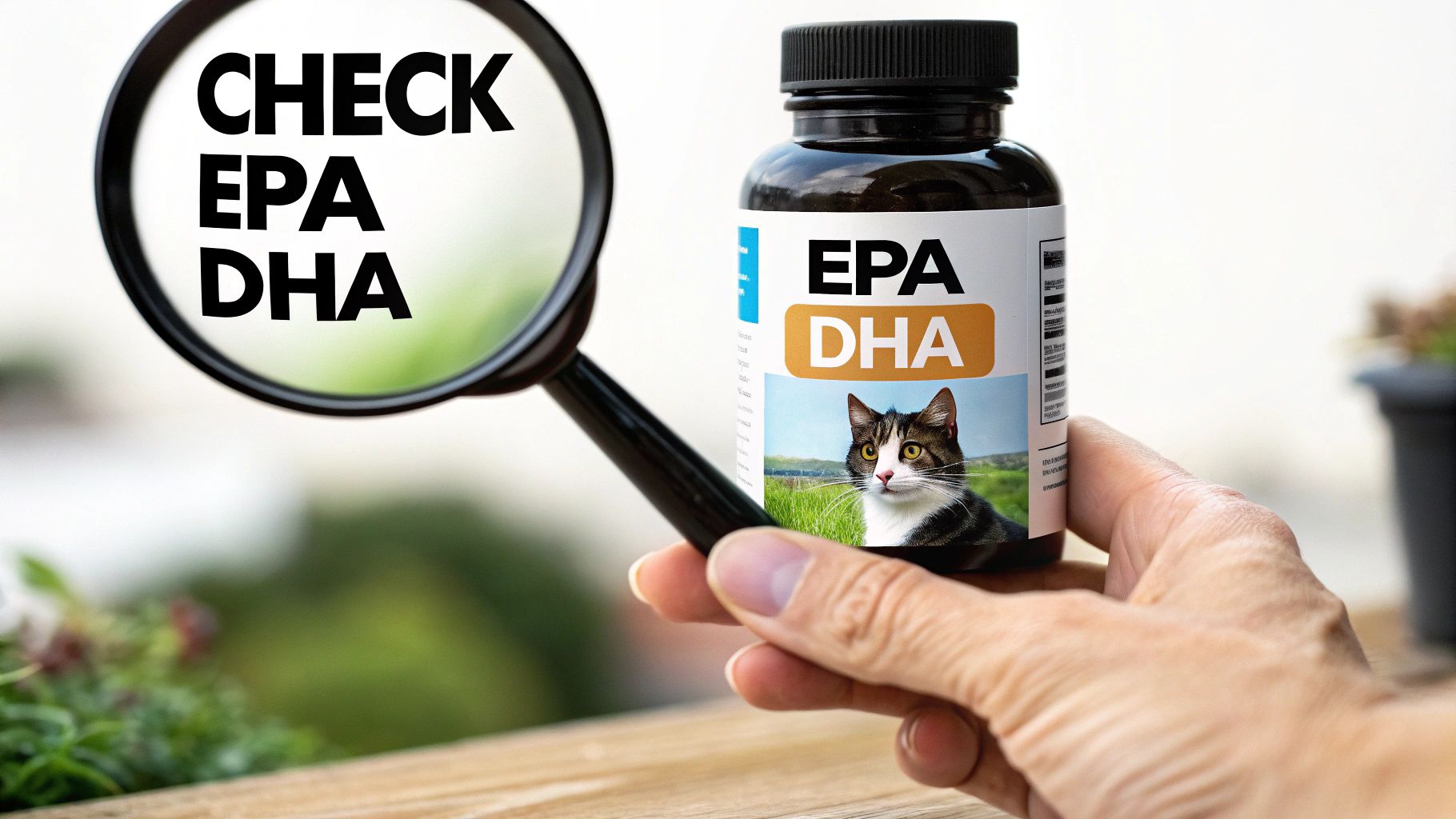
It’s the same with fish oil. That total amount includes all the fats in the oil, not just the good stuff. You need to dig deeper and find the specific amounts of the active ingredients: EPA and DHA. These are the two powerhouse fatty acids that do all the heavy lifting for your cat’s health.
Focus on the EPA and DHA Content
The true value of any omega-3 supplement is right there in its EPA and DHA numbers, which should be clearly listed in milligrams (mg) per serving. This is the only way to make a fair, apples-to-apples comparison between products.
For example, a big bottle bragging about 1000 mg of fish oil might only deliver 300 mg of combined EPA and DHA. Meanwhile, a smaller 500 mg capsule could pack in 400 mg. That second option is far more potent and a much smarter buy.
Here's a quick rundown of what you're looking for:
- Eicosapentaenoic Acid (EPA): This is the master anti-inflammatory. If your cat deals with joint stiffness, itchy skin, or other inflammatory issues, this is the number to watch.
- Docosahexaenoic Acid (DHA): This fatty acid is all about brain and eye health. It's especially vital for developing kittens and for senior cats who need extra cognitive support.
A quality brand will be completely transparent about these amounts. If a label is vague or makes you hunt for these numbers, consider it a major red flag. This kind of transparency is a non-negotiable, whether you’re learning how to choose cat food or picking a supplement.
Look for Purity and Freshness Guarantees
Potency is only half the battle; safety is everything. Fish can absorb environmental toxins like heavy metals (mercury) and PCBs from the ocean. You absolutely need to know that the oil your cat is getting is pure and free from these nasty contaminants.
This is where third-party testing becomes critical. Good companies don't just say their product is pure—they prove it by sending their batches to independent labs for analysis.
The most trustworthy supplements will feature a seal or statement confirming they've been third-party tested for purity and potency. Keep an eye out for certifications from organizations like the International Fish Oil Standards (IFOS) program. This seal is your guarantee that the product meets the absolute highest global standards for safety.
Freshness is just as important. Omega-3 oils are very delicate and can go rancid (oxidize) when exposed to light, heat, or air. A rancid oil isn't just useless; it's actively harmful and can cause the very inflammation you're trying to fight. Top-tier manufacturers prevent this by adding a natural preservative like Vitamin E (often listed as mixed tocopherols), which works as an antioxidant to keep the oil fresh and stable.
Check the Fish Source and Form
Finally, take a moment to see where the oil actually comes from. The best omega-3s for cats are sourced from small, wild-caught, cold-water fish. Think sardines, anchovies, and mackerel. Because they have short lifespans and are low on the food chain, they accumulate far fewer toxins than larger predators like salmon or tuna.
You'll also want to check the form of the omega-3s. High-quality fish oils come in their natural triglyceride form. This version is more stable and, crucially, up to 70% more bioavailable to your cat's body than the cheaper, semi-synthetic ethyl ester form. The label should state which form it is. If it doesn't say, you can probably assume it’s the less effective ethyl ester version.
Choosing the Right Form for Your Fussy Feline
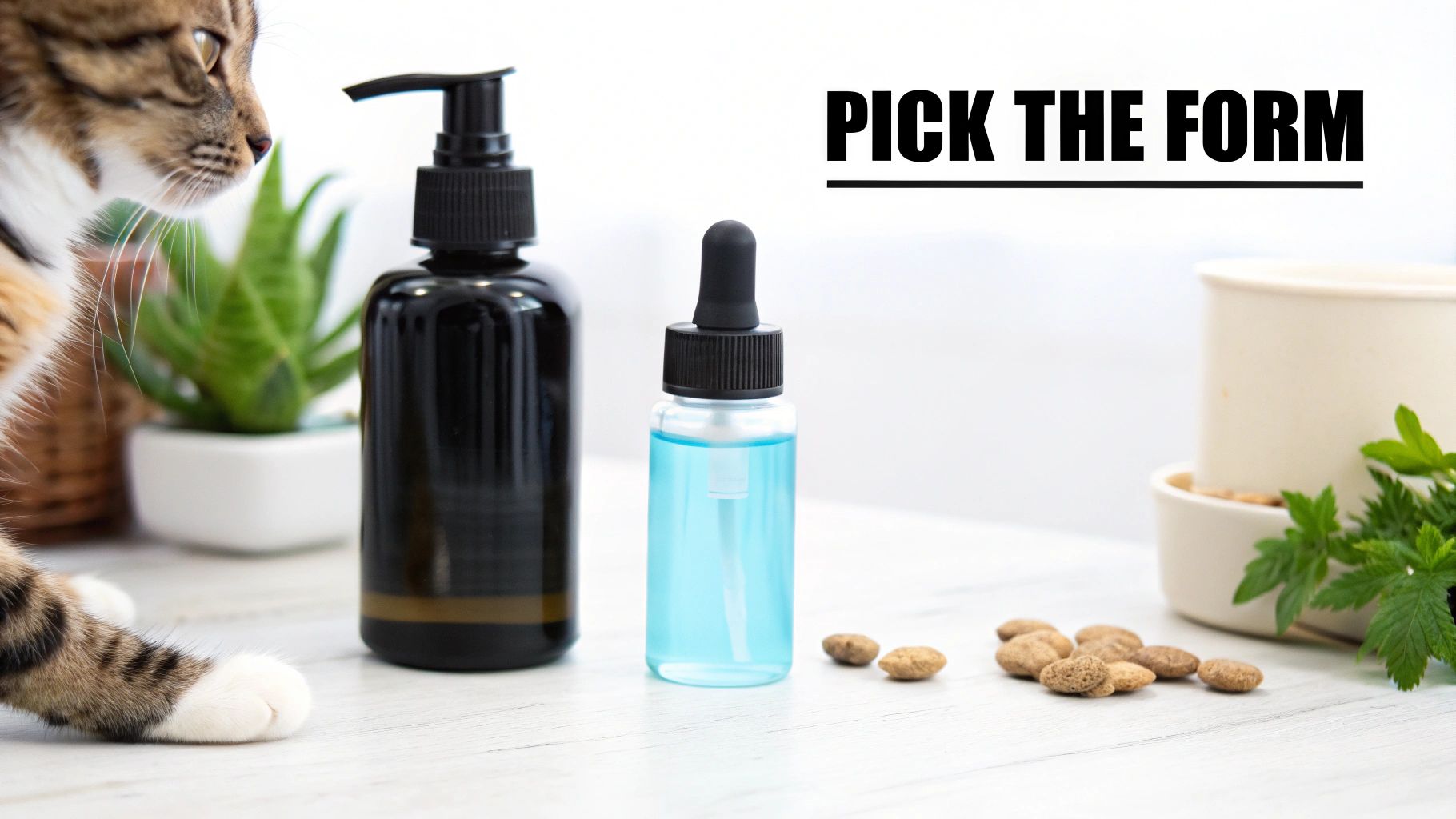
You can find the most potent, pure, and science-backed omega-3 on the planet, but it's totally useless if your cat gives it one sniff and walks away. We all know how picky cats can be, which makes the form of the supplement just as critical as what’s inside.
Ultimately, the best omega-3 for your cat is the one they'll actually take without a daily wrestling match. It's a balancing act between what's easiest for you, what’s tastiest for your cat, and the overall quality of the product. Let's break down the most common options: liquids, capsules, and chews.
The Convenient Liquid Pump
Liquid fish oil, usually in a bottle with a pump or dropper, is a go-to for many cat owners. The biggest win here is just how easy it is. A quick pump mixed into your cat’s wet food, and you're done.
This method works great for cats who aren't too suspicious of new additions to their dinner. It also gives you fantastic control over the dose—perfect for tiny cats or for starting with a smaller amount to let their tummy adjust.
But there's a big catch with liquids: oxidation. As soon as you open that bottle, the oil is exposed to air, light, and heat, which can make it go rancid. Rancid oil isn't just gross; it can actually cause inflammation instead of fighting it. To prevent this, always store liquid oils in a cool, dark place (like the fridge) and use them up within the recommended time, usually about 90 days.
The Precise Capsule
Capsules, or soft gels, give you a perfectly pre-measured dose of omega-3s, sealed up airtight. This makes them the gold standard for freshness and potency. Since the oil isn’t exposed to oxygen until you're ready to use it, the risk of it going bad is practically zero.
This precision is ideal for making sure your cat gets the exact amount of EPA and DHA they need, day in and day out. For cats with specific health issues that require a consistent therapeutic dose, capsules are an excellent choice.
The challenge, of course, is the delivery. Some owners are pros at "pilling" their cats, while others rely on pill pockets or other treats to hide it. A handy trick is to pierce the capsule with a clean pin and just squeeze the oil onto their food. Voila—you’ve got a single-serving liquid dose.
Choosing the right form is a crucial step in ensuring your cat receives the full benefits of supplementation. While liquids offer convenience, their susceptibility to oxidation requires careful handling. Capsules provide a stable, precise dose but may present an administrative challenge for some pet owners.
The Tempting Chew
Omega-3 chews are often the easiest sell for a finicky cat. They’re designed to look, smell, and taste like a treat, turning supplement time into a happy, rewarding moment. Many cats will gobble them up without a second thought.
This high palatability is their main selling point, but it often comes with a trade-off. To make them so appealing, chews frequently contain extra ingredients like fillers, flavorings, and sometimes even sugars or starches—things that aren’t ideal for a strict carnivore's diet.
On top of that, the actual amount of active EPA and DHA in chews can be lower than what you'd find in a dose of pure oil. You really have to read the label carefully to make sure you're giving your cat a helpful supplement and not just a glorified snack.
To help you decide, here's a quick look at the pros and cons of each format.
Which Omega 3 Form Is Best for Your Cat?
| Supplement Form | Pros | Cons | Best For... |
|---|---|---|---|
| Liquid (Pump/Dropper) | Easy to mix into food; dose is highly adjustable. | Prone to oxidation once opened; can have a strong smell. | Cats who eat wet food without fuss; multi-cat households. |
| Capsules (Soft Gels) | Stays fresh and potent; pre-measured, precise dosage. | Can be difficult to administer to some cats. | Cats needing a specific therapeutic dose; owners concerned about freshness. |
| Chews/Treats | Highly palatable and easy to give; no mixing required. | Often contains fillers and extra ingredients; may be lower in EPA/DHA. | Extremely picky cats who refuse other forms; a convenient, treat-like experience. |
Finding the right fit might take a bit of trial and error, but matching the supplement form to your cat's personality is the key to long-term success.
It’s no surprise we have so many options. The human omega-3 market was valued at over USD 52 billion in 2024, and that consumer awareness has trickled down to the pet world. This has led to more choices for our pets, but also a wider range of quality. You can see more data on this market trend at StraitsResearch.com.
Safe Dosing Guidelines and Potential Side Effects
When you see all the good that omega-3s can do, it’s easy to think a little extra might work even better. But with supplements, more is definitely not better. Getting the dose right is the secret to unlocking all those anti-inflammatory benefits without running into any trouble. It’s all about finding that perfect balance.
The right amount isn't some magic number—it's tailored to your cat. Their body weight, specific health needs, and the exact concentration of EPA and DHA in the supplement are all part of the equation. A senior cat with creaky joints will need a different amount than a young, healthy cat just looking for a shinier coat.
Always Start with Your Veterinarian
Before you add even one drop of fish oil to your cat's dinner, your first and most important move is to talk to your vet. They are your absolute best partner in this and can give you advice that’s designed just for your cat.
Your vet will figure out the ideal starting dose based on your cat's health history and current condition. This is especially crucial if your cat has any underlying issues, like a sensitive stomach or a bleeding disorder, as omega-3s can sometimes influence these things. They’ll also make sure the supplement won’t clash with any medications your cat is already taking.
Your veterinarian is the only one who can provide a safe and effective dosing recommendation. They will calculate the right amount of combined EPA and DHA based on your cat's unique weight and health goals, taking the guesswork and risk out of the equation for you.
Proper supplementation is a big piece of the overall wellness puzzle. To see how other nutrients fit in, exploring the best vitamins for cats can give you a more complete picture and help you make smart choices for their care.
Recognizing the Signs of Too Much Omega-3
While side effects are rare when you get the dose right, giving too much can cause problems. Knowing what to watch for helps you catch any issues early. An overdose can overwhelm their digestive system or, at higher levels, interfere with other body functions.
Keep an eye out for these potential signs that the dose is too high:
- Digestive Upset: This is the most common red flag. You might notice diarrhea, loose stools, or vomiting. If you see this, it’s a good sign you’re giving too much, too fast.
- Fishy Breath or Odor: A faint fishy smell on your cat's breath or coming from their skin can mean you're giving a bit more than their body can comfortably process.
- Changes in Blood Clotting: This is a more serious concern that comes with very high doses. Omega-3s have a mild blood-thinning effect. If your cat has surgery coming up or is on blood-thinning medication, fish oil should only be used under strict veterinary supervision.
If you notice any of these symptoms, stop giving the supplement and call your veterinarian right away. They can help you adjust the dose or figure out if something else is going on. By starting with your vet and following their lead, you can help your cat reap the rewards of omega-3s safely for years to come.
Your Final Checklist for Buying Cat Omega-3
Alright, let's cut through the noise. Shopping for pet supplements can feel overwhelming, but with the right know-how, you can easily spot the good stuff. This checklist is your final sanity check before you click "buy" or head to the checkout.
Think of it as your five-point inspection. When you've got a product in mind, just run it through these simple checks. It's the best way to make sure you’re getting a safe, effective supplement that your cat will actually benefit from.
The Five Pillars of a High-Quality Supplement
A top-tier omega-3 supplement will always tick these five boxes. No exceptions.
-
Marine Source with Stated EPA & DHA: Flip the bottle over and look for the specific amounts of EPA and DHA in milligrams (mg). Don't get distracted by the "total fish oil" number—it's the EPA and DHA that do all the heavy lifting. Make sure they come from a marine source like fish or krill.
-
Third-Party Purity Testing: This one is non-negotiable. The label should show proof of independent lab testing for nasty stuff like heavy metals (mercury is a big one), PCBs, and other environmental toxins. A seal from a program like IFOS (International Fish Oil Standards) is the gold standard here.
-
Sustainable Small-Fish Sourcing: The cleanest, highest-quality oils come from small, wild-caught fish. We're talking about sardines, anchovies, and mackerel. Because they're low on the food chain, they don't accumulate nearly as many toxins as larger fish.
-
Natural Preservation and Proper Form: Omega-3s are delicate and can go rancid. Look for a natural antioxidant like Vitamin E (often listed as mixed tocopherols) to keep the oil fresh. You also want to see that it's in the natural triglyceride form, which is what your cat's body is designed to absorb.
-
A Form Your Cat Will Accept: Let's be real—the best supplement in the world is useless if your cat turns their nose up at it. Whether you go for a liquid pump, a capsule, or a tasty chew, pick the format that works for your cat and your routine.
By methodically checking for potency, purity, source, stability, and palatability, you transform from a hopeful buyer into an informed advocate for your cat's health. This empowers you to see past marketing claims and select a product that truly delivers results.
As you finalize your checklist for buying cat omega-3, remember that this is just one piece of the puzzle. Understanding the broader principles of pet wellness, like those taught in a Certificate in Pet Wellness Business, can provide a holistic perspective on your pet's health. Now you're all set to make a smart, safe choice for your furry best friend.
Your Top Questions About Omega-3s for Cats
It’s one thing to read about the science, but it's another to start adding a new supplement to your cat's daily routine. You've done the research, but a few practical questions are probably still floating around in your head. That's completely normal.
Getting clear, straightforward answers is the final step to feeling confident you're doing the right thing for your cat's health. Let's tackle some of the most common things pet owners ask.
Can I Just Give My Cat My Own Fish Oil Supplement?
That’s a definite no-go, and for a couple of really important reasons. First off, human fish oil supplements are often flavored with things like lemon or orange to make them more palatable for us. Your cat will likely find these flavors disgusting and turn their nose up at it immediately.
More critically, the EPA and DHA in your supplement are concentrated for a human-sized body. Trying to eyeball a tiny, cat-safe dose from a human-grade capsule or liquid is a recipe for disaster. It's incredibly easy to give way too much, which can be harmful. Always, always stick to products made specifically for cats to ensure the dose is right and they’ll actually take it.
How Long Until I See Results in My Cat?
This is a long game, not a quick fix. Omega-3s work by building up in your cat's system over time, so you have to be patient and consistent.
- For skin and coat: You'll likely see the first signs here. Expect a softer, shinier coat with less shedding in about 3 to 4 weeks.
- For chronic issues: When you're targeting deeper problems like joint stiffness or persistent skin allergies, it takes longer for the anti-inflammatory benefits to become noticeable. Give it at least 6 to 8 weeks of daily use.
Think of it as a wellness investment. The gradual improvements you see on the outside are a reflection of the powerful work happening on a cellular level inside.
Remember, omega-3s aren't a medication that masks symptoms. They work from the inside out by restoring healthy cell function and calming systemic inflammation. The visible results—a gleaming coat, easier movement—are the outward signs of this deep, internal process.
My Cat's Food Already Has Omega-3s. Do I Still Need a Supplement?
This is a great question, and I hear it all the time. The short answer is almost always yes, a supplement is still the best way to go if you're looking for real health benefits.
Most cat foods that advertise omega-3s include just enough to meet basic nutritional guidelines, not enough to provide a therapeutic, anti-inflammatory effect. It's the difference between eating one blueberry and eating a whole bowl.
Plus, those delicate omega-3 fats are easily damaged by heat and air. The intense cooking process used to make kibble degrades a lot of the fatty acids, so what’s listed on the bag isn’t necessarily what your cat is actually absorbing. A high-quality supplement is the only reliable way to deliver a potent, effective dose of EPA and DHA that can truly make a difference for their joints, skin, and overall health.
Ready to give your feline friend the high-quality support they deserve? Joyfull offers premium, veterinarian-backed supplements made with clean ingredients and total transparency. Invest in your cat’s long-term wellness and see the difference a truly great omega-3 can make. Explore our formulas at joyfullpet.com.