


Why Is My Dog Itching So Much? A Pet Owner's Guide
If you've found yourself wondering, "why is my dog so itchy?" you're not alone. The answer almost always traces back to a handful of common culprits, most often parasites like fleas, allergies to food or the environment, and the skin infections that can follow. Pinpointing the exact trigger is the crucial first step to getting your furry best friend some real relief.
Decoding Your Dog's Itching: A First Look

It’s heartbreaking to watch your dog scratch, bite, and chew at their skin day and night. The constant jingle of their tags can become a frustrating soundtrack, signaling their ongoing discomfort. While every dog scratches now and then, persistent itching is a definite red flag. Think of it as your dog's clearest way of telling you something is wrong and they need help.
The reasons for this itch-scratch cycle can be anything from a simple fix to a more complex medical issue. It’s a bit of a puzzle, but you can start putting the pieces together by understanding the usual suspects:
- Unwanted Guests: Tiny parasites like fleas, ticks, and mites are a leading cause of severe, frantic itching.
- Allergic Reactions: Just like us, dogs can have allergic reactions to ingredients in their food (like beef or chicken) or things in their environment (like pollen, grass, or dust mites).
- Skin Infections: All that scratching can damage the skin's surface, creating the perfect opportunity for bacteria or yeast to move in and cause a secondary infection, which only makes the itching worse.
- Dry Skin: Sometimes, the problem is as straightforward as dry, flaky skin, often triggered by dry weather, a dietary issue, or even certain shampoos.
Understanding the Initial Clues
Your first job is to play detective. Pay close attention to where and when your dog is scratching. Are they constantly chewing their paws and rubbing their face on the carpet? That often points to allergies. Is the scratching focused on their lower back and the base of their tail, maybe with some little red bumps or black specks? That’s a classic sign of fleas.
Keep in mind, you don’t have to see a full-blown flea infestation for them to be the problem. For a dog with a flea allergy, a single bite can set off a massive allergic reaction, leading to days of misery. This is a real condition called flea allergy dermatitis.
To help you start sorting through the possibilities, we’ve put together a quick-glance table. It breaks down the most common causes of itching, the specific symptoms to watch for, and what you can do right now. Use it as your starting point for figuring this out and getting your pup on the path to feeling better.
Common Causes of Dog Itching at a Glance
Use this quick reference table to identify potential reasons for your dog's itching, key symptoms, and your immediate next steps.
| Potential Cause | Key Symptoms | What You Can Do Now |
|---|---|---|
| Parasites (Fleas/Mites) | Intense scratching, biting, red bumps, "flea dirt" (black specks), hair loss, especially near the tail or back. | Check fur with a flea comb. Wash all bedding in hot water. Consult your vet about effective flea and tick prevention. |
| Environmental Allergies | Chewing paws, rubbing face, ear infections, seasonal itching (worse in spring/fall), red or inflamed skin. | Wipe paws after walks. Use an air purifier indoors. Discuss allergy testing or medication with your vet. |
| Food Allergies | Chronic ear infections, gastrointestinal issues (gas, diarrhea), constant itching around the face, paws, and rear. | Talk to your vet about starting a food elimination trial with a novel protein or hypoallergenic diet. |
| Skin Infections | Foul odor, greasy or flaky skin, circular rashes, sores, pustules, or scabs. The itching is often relentless. | Do not wait. Schedule a veterinary appointment immediately, as infections require prescription medications. |
This table should give you a clearer idea of what you might be dealing with. From here, you can take more targeted action and know when it’s time to call in the professionals—your veterinarian.
The Hidden World of Parasites and Pests
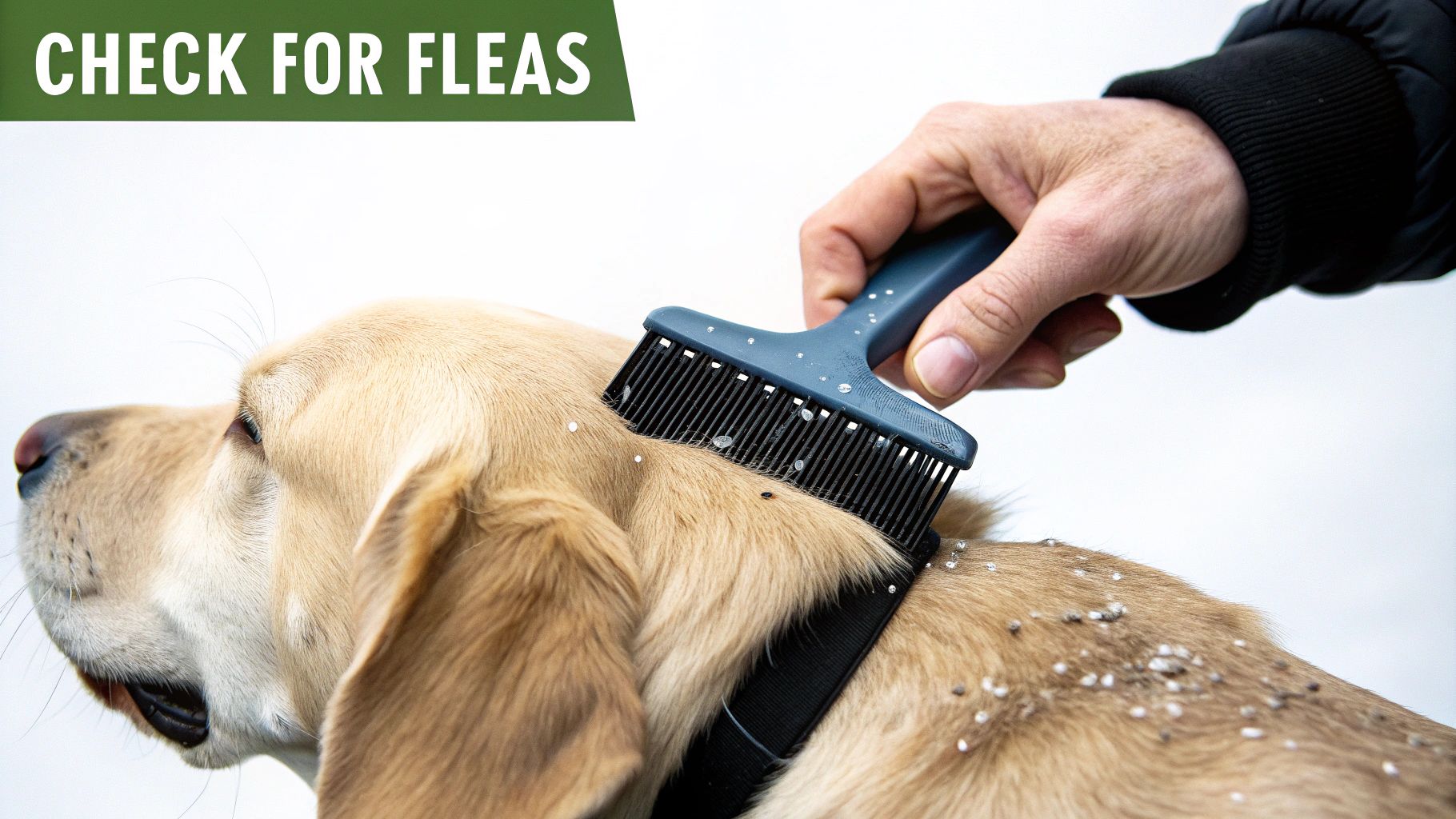
When your dog starts scratching like there's no tomorrow, the most likely culprit is a tiny, uninvited guest. These parasites are the number one reason dog owners find themselves desperately searching for answers to their pet's discomfort. And while fleas get all the attention, they’re just one of several pests that can turn your dog's life into an itchy nightmare.
Think of your dog’s coat as a peaceful neighborhood. When parasites move in, they don’t just disrupt the peace—they throw a wild, destructive party. This invasion leads to non-stop irritation, damaged skin, and sometimes, intense allergic reactions. Getting to know these pests is the first step in winning the war against the itch.
Fleas: The Most Common Culprit
Fleas are everywhere, and they are incredibly good at what they do: multiplying. A single female flea can pop out up to 50 eggs per day, meaning a couple of fleas can become a household infestation before you even know they're there.
You might see these little dark brown bugs scurrying in your dog’s fur, but the real tell-tale sign is "flea dirt." These tiny black specks, often found around the base of the tail or on the belly, are actually flea droppings.
For many dogs, the bite is just the beginning. The real problem is an allergic reaction to flea saliva, a condition called Flea Allergy Dermatitis (FAD). It's one of the most common skin problems veterinarians treat. If your dog has FAD, a single bite can set off a vicious cycle of scratching, chewing, and painful hot spots.
A huge mistake owners make is thinking, "I don't see any fleas, so that can't be it." But for a dog with FAD, all it takes is one stealthy flea to bite and jump off, leaving a trail of misery in its wake.
Mites: Microscopic Menaces
Mites are a whole different beast. Unlike fleas, they're microscopic arachnids that you can't see without a microscope. They burrow deep into your dog's skin or set up camp in their hair follicles, and a vet will need to do a skin scraping to confirm they're there.
Different mites cause different types of mange, each with its own set of clues.
- Sarcoptic Mange (Scabies): This one is caused by the Sarcoptes scabiei mite and is extremely itchy. It's also highly contagious to other dogs and can even be passed to people. Look for crusty sores on the ears, elbows, and face.
- Demodectic Mange: The Demodex mite is a normal resident of your dog’s skin. The trouble starts when their immune system is weak, allowing the mites to multiply out of control. This usually causes hair loss and bald patches but isn't always super itchy at first.
Ticks and Other Biting Pests
We all know about ticks, but they're more famous for the dangerous diseases they carry than for causing an all-over itch. That said, the spot where a tick bites can definitely become red, swollen, and itchy. Always check your dog thoroughly after a romp through tall grass or wooded areas.
It's also worth remembering that other pests in the environment can cause problems. While less common, it can be helpful to know the difference between various bites, such as by learning about identifying bed bug bites, which could affect everyone in the house.
Dealing with these pests is essential for your dog’s well-being. For some quick fixes, our guide on how to soothe an itchy dog has some great at-home tips. But for long-term relief, nothing beats a consistent, year-round parasite prevention plan from your vet.
Cracking the Code on Your Dog's Allergies
So, you've done a thorough parasite check and come up empty. If your dog is still scratching like crazy, allergies are the next big suspect on the list. This is where the mystery can get a little tricky, but it's a puzzle you can definitely solve.
Think of your dog’s immune system as an overzealous security guard. Its job is to protect the body, but sometimes it goes into overdrive, mistaking harmless things like pollen, dust, or even the chicken in their dinner for dangerous intruders. This overreaction is what we call an allergy, and it almost always shows up as relentless, frustrating itching.
That constant scratching and licking isn't just a bad habit—it's your dog's desperate attempt to find relief. Getting to the bottom of what’s triggering their internal alarm system is the key to finally bringing them some peace.
The Invisible Attackers: Environmental Allergies
The most common culprit behind allergic itching in dogs is atopic dermatitis, which is basically a fancy term for an allergic reaction to something in their environment. It’s a lot like hay fever in people. Dogs can react to things they breathe in or simply touch.
These triggers are literally everywhere, which makes them tough to avoid. The usual suspects include:
- Pollen: From trees, weeds, and grasses. If the itching gets worse in the spring or fall, this is a likely cause.
- Dust Mites: Tiny critters that live in carpets, bedding, and furniture.
- Mold Spores: These pop up in damp spots like basements, bathrooms, or even a pile of wet leaves in the yard.
- Dander: Yep, your dog can be allergic to dander from other pets—or even from you!
If you notice your dog’s itching ramps up after a run in the park or seems to calm down in the dead of winter, environmental allergies are a very strong possibility. Telltale signs often include non-stop paw chewing, face rubbing, and ear infections that keep coming back.
Canine atopic dermatitis (CAD) isn't some rare, obscure condition; it's a major reason so many dogs are miserable and itchy. Experts believe it affects 10-15% of all dogs, but some recent studies suggest that number could be as high as 30%. One report from U.S. veterinary hospitals even noted a 30% jump in dog allergy cases in just ten years. It’s a huge and growing problem.
When Food is the Foe
Though not as common as environmental allergies, what your dog eats can absolutely be the source of chronic itchiness. It's helpful to know the difference between a true food allergy (an immune system response) and a food sensitivity (more of a digestive issue). But when it comes to your dog's skin, both can look very similar.
The most common food triggers are often the protein sources dogs eat most frequently. We’re talking about things like:
- Beef
- Chicken
- Dairy
- Lamb
- Wheat
- Soy
The biggest clue for a food-related issue is that the itching is year-round. It doesn’t let up when the seasons change. It also frequently comes with a side of stomach trouble, like gas, loose stool, or vomiting, along with the itchy skin.
How to Play Allergy Detective
Pinpointing the exact trigger takes a bit of detective work, and your vet is the perfect partner for this investigation. They can help you create a plan that is both safe and effective.
For food allergies, the gold standard for diagnosis is the elimination diet. This isn’t about feeding your dog less, but rather feeding them differently. Your vet will likely prescribe a diet with a novel protein—one your dog has never had before, like venison, kangaroo, or fish—and a single carbohydrate. We have a great guide on the best dog food for skin allergies that can help you explore some of these options.
Your dog will eat only this special food for 8-12 weeks. No treats, no table scraps, no exceptions! If the itching dramatically improves or stops, you’ve pretty much confirmed a food allergy. The next step is to reintroduce old ingredients one at a time to see which one makes the itching return. That’s how you nail the specific culprit.
For environmental allergies, your vet might recommend allergy testing, much like the skin tests people get. Once you know what your dog is reacting to, you can manage the problem with things like medication, lifestyle changes, and specialized shampoos. If allergies are the root cause, finding the right shampoo can be a game-changer. This ultimate guide to dog shampoo for allergies is an excellent resource for finding a product that will soothe their irritated skin.
When Itching Is a Symptom of Something More
So, you’ve checked for fleas and switched their food, but your dog is still scratching like crazy. This is where things can get a bit more complicated. Sometimes, the initial problem—whether it's an allergy or a bug bite—is just the tip of the iceberg.
Think of your dog's skin as a fortress wall. All that scratching and chewing creates tiny breaches in its defenses. Once that wall is down, it’s an open invitation for other troublemakers to storm in. This kicks off a nasty cycle: the dog itches from the original issue, which damages the skin, which then leads to new problems that make the itching even worse.
The Vicious Cycle of Secondary Infections
When your dog's skin is raw, irritated, and inflamed, it becomes the perfect breeding ground for bacteria and yeast that normally live on the skin without causing any harm. But when they get a chance to multiply unchecked, they trigger what’s known as a secondary infection, which dials your dog’s discomfort up to eleven.
Here are the two most common culprits you'll see:
- Bacterial Infections (Pyoderma): This is one of the most frequent follow-up problems from non-stop scratching. Keep an eye out for red bumps, pimple-like sores, scabby crusts, or even circular patches of hair loss. The skin might also feel hot and have a noticeably bad smell.
- Yeast Infections (Malassezia Dermatitis): This is caused by a yeast overgrowth and usually results in greasy, oily skin with a very distinct musty smell—some people say it smells like corn chips. You’ll often find it in warm, moist areas like armpits, paws, and ear canals, where the skin can become thick, dark, and incredibly itchy.
The key thing to remember is that these infections aren't the root cause. They're a consequence. Treating the infection with antibiotics or antifungals is essential for relief, but if you don't figure out what started the itching in the first place (like an allergy), the infections will just keep coming back.
Deeper Health Conditions That Can Cause Itching
While it's less common, relentless itching can sometimes be a warning sign of a more serious, internal health issue. These conditions can throw your dog’s entire system out of whack, and their skin is often the first place you see the evidence. In these cases, the itch is a symptom of something happening deep inside the body.
Figuring out the "why" here almost always requires a trip to the vet for some diagnostic tests, as the clues aren't just on the surface.
Hormonal Imbalances
Hormones are the body's little messengers, controlling everything from energy levels to skin health. When they’re out of sync, your dog’s skin and coat often pay the price.
- Hypothyroidism: This happens when the thyroid gland isn't producing enough hormones, slowing everything down. It can cause dry, flaky skin, thinning fur or bald patches (often in a symmetrical pattern on both sides of the body), and skin infections that just won't quit. You might also notice your dog seems sluggish and is gaining weight for no reason.
- Cushing’s Disease: This is the opposite problem—the body is producing way too much cortisol (the stress hormone). Dogs with Cushing's often develop thin, fragile skin, a sparse coat, a "pot-bellied" look, and are magnets for skin infections. A classic giveaway is also a sudden, dramatic increase in thirst and urination.
Autoimmune Disorders
In rare situations, a dog's own immune system can get confused and start attacking its own skin cells. These autoimmune disorders can lead to very severe skin problems that are not only itchy but also painful.
For example, a condition called pemphigus can cause nasty blisters, crusts, and sores on the skin and around the mouth and nose. These are serious medical conditions that need a vet's diagnosis, usually confirmed with a skin biopsy, and often require lifelong specialized treatment to manage.
If your dog's itching is relentless, isn't getting better with basic care, or you're seeing other weird symptoms—like changes in their energy, appetite, or thirst—it's time to call in the professionals. These kinds of underlying problems need a veterinarian’s expertise to diagnose and treat properly.
Knowing When to Call Your Veterinarian
Every dog scratches now and then—that's just part of being a dog. But how can you tell the difference between a normal, fleeting itch and a sign that something is seriously wrong? The first step is to learn how to gauge the severity of your dog's scratching.
Think of it as creating your own mental "Itch Meter." A quick scratch behind the ears a few times a day is probably nothing to worry about. But when the scratching becomes relentless, waking them from a deep sleep or derailing a game of fetch, you're dealing with a much bigger problem. Constant itching is your dog’s way of screaming for help.
And it’s a widespread issue. A recent report from Elanco Animal Health revealed that chronic itching, or pruritus, impacts nearly 9 in 10 dogs in the U.S. That's a staggering 22 million dogs suffering from discomfort, and what’s truly shocking is that over 9 million of them aren't receiving proper veterinary care. You can read the full report about this widespread issue to understand the scale of the problem.
Identifying Red Flags That Require a Vet Visit
While some at-home remedies might offer a little temporary relief, they often just paper over the cracks without fixing the real issue. If you spot any of the signs below, it’s time to stop the guesswork and get your vet on the phone. These are clear signals that you need a professional to get to the bottom of it before things get worse.
Keep a close eye out for these critical warning signs:
- Visible Skin Damage: Are you seeing open sores, scabs, or any kind of oozing or bleeding? This means the skin's natural defenses are down, leaving your dog wide open to nasty infections.
- Significant Hair Loss: Noticing bald patches or a coat that’s thinning out? This can be a symptom of everything from mites and allergies to more complex hormonal problems.
- An Unpleasant Odor: A persistent musty or foul smell coming from your dog's skin or ears is a classic sign of a secondary bacterial or yeast infection taking hold.
- Changes in Behavior: If your usually happy-go-lucky pup is now cranky, listless, or seems withdrawn, it's a huge clue that their discomfort is seriously impacting their quality of life.
This flowchart can help you visualize when an itch goes from a minor issue to something that needs a vet's attention.
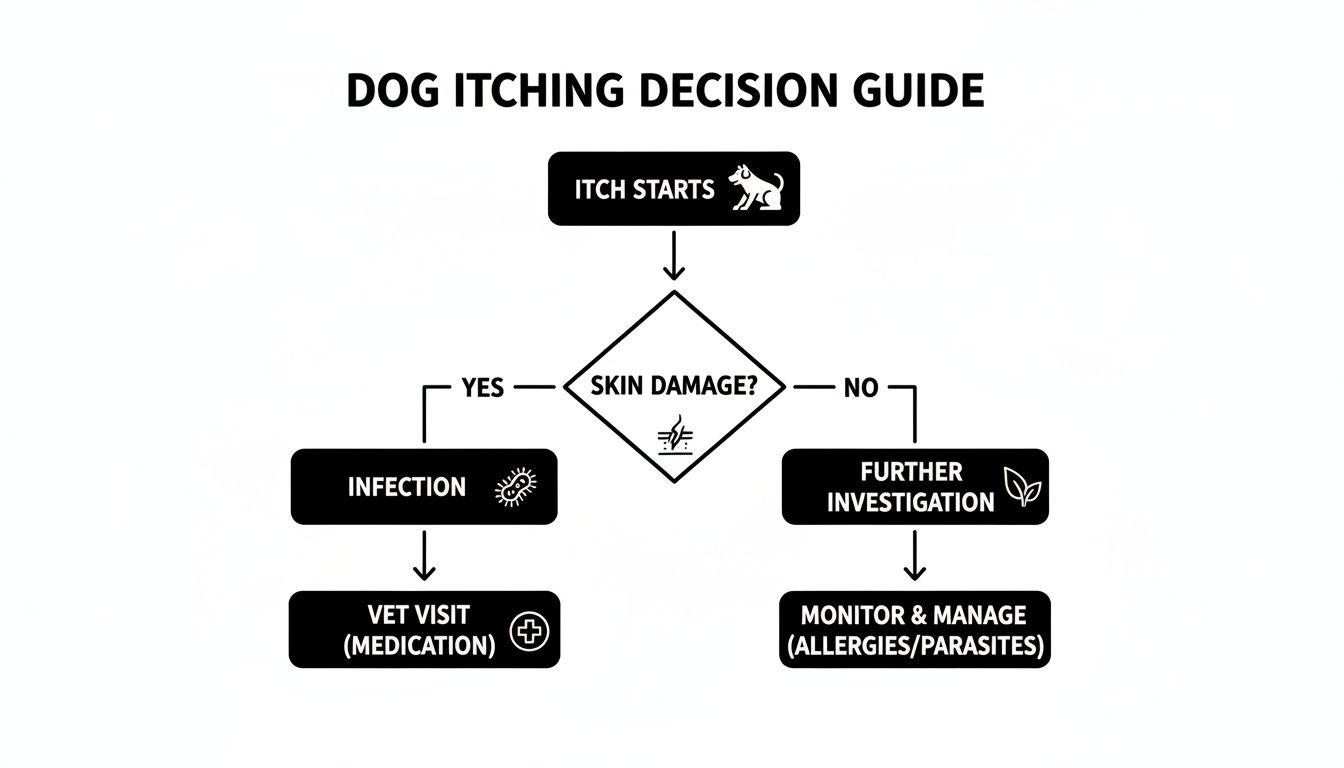
As you can see, the moment you spot real skin damage, the risk of infection shoots up. At that point, a trip to the vet is the fastest way to get your dog some real relief.
The Importance of a Professional Diagnosis
Trying to solve the "why is my dog itching?" mystery on your own can feel like an endless, frustrating cycle. Your vet has the tools—like skin scrapings, cytology, or blood tests—to find the real culprit.
A professional diagnosis isn't just about stopping the itch. It's about finding out why the itch started and treating that underlying cause. This is the only way to break the vicious cycle of itching, skin damage, and secondary infections for good.
Getting the right diagnosis from the start means your dog gets the right treatment, right away. It saves them from weeks of unnecessary misery and saves you from the stress (and cost) of trying one thing after another that just doesn't work. By spotting these red flags and acting fast, you become your dog's best advocate.
Building an Itch-Free Lifestyle for Your Dog
Once you’ve finally gotten to the bottom of your dog's itching and things have calmed down, the real work begins. It’s time to switch gears from frantic treatment to smart prevention. A truly itch-free life isn't about just reacting to flare-ups; it's about creating a proactive wellness routine that builds a strong foundation from the inside out.
Think of your dog’s skin as a fortress wall. When it’s healthy and strong, it easily repels irritants. But a weak wall is easily breached. That strength and resilience start with top-notch nutrition designed to reinforce their natural defenses.
Fortifying Their Skin from Within
A balanced diet is the absolute cornerstone of a healthy skin barrier. The right blend of nutrients can help cool inflammation, lock in moisture, and grow a healthy coat that acts as the first line of defense against whatever the world throws at it. It's funny how many owners ask "why is my dog itching?" when the answer is often sitting right in their food bowl.
To give their skin a real boost, you can focus on a few key nutrients:
- Omega-3 Fatty Acids: These are the superstars of skin health. Found in things like fish oil, they are incredible at reducing inflammation and keeping the skin barrier supple.
- Zinc: This is a workhorse mineral. It's essential for creating new skin cells and keeping the immune system in check. If your dog is low on zinc, you’ll often see dry, flaky, and irritated skin.
- Antioxidants: Vitamins E and C act like bodyguards for skin cells, protecting them from environmental damage and keeping the skin healthier, longer.
Giving your dog's diet a boost with targeted support can make a noticeable difference. Many owners find that adding a high-quality supplement is the easiest way to ensure their pet gets the specific nutrients needed for optimal skin and coat health.
If you’re looking for a simple way to strengthen their diet, checking out the best skin and coat supplement for dogs can be a game-changer for building up that internal defense system.
Creating a Soothing Home Environment
What you feed your dog is huge, but so is their environment. Your daily habits and the space they live in play a massive role in keeping the itchies at bay. A few small, consistent changes can dramatically cut down your dog's contact with common irritants and allergens.
Here are a few practical places to start:
- Establish a Consistent Grooming Routine: Regular brushing is about more than just looking good—it gets rid of dead skin, loose hair, and allergens trapped in their coat. For bath time, stick with gentle, hypoallergenic, or oatmeal-based shampoos that won't strip away their skin’s protective oils.
- Keep Bedding Clean: A dog’s bed can be a five-star resort for dust mites, pollen, and dander. Make it a habit to wash their bedding, blankets, and even soft toys at least once a week in hot water to kill off those invisible troublemakers.
- Purify Your Air: An air purifier with a good HEPA filter is a fantastic tool. It can trap airborne allergens like pollen and dust before they even have a chance to land on your dog and start an itch-fest.
When you combine powerful nutrition from the inside with a calm, clean environment on the outside, you create a lifestyle that keeps itch triggers to a minimum. This proactive approach helps you stop asking "why is my dog itching?" and start confidently giving them the lasting comfort they deserve.
Your Top Questions About Dog Itching Answered
Even after getting a handle on the main reasons dogs itch, you probably still have a few nagging questions. It’s totally normal. When your best friend is miserable, you want clear, straight answers to help you do the right thing. Let's dig into some of the most common questions dog owners ask when they're in the thick of it.
Think of this as a quick-reference guide for those follow-up thoughts that pop up after you’ve left the vet’s office.
Can I Use Home Remedies Like Oatmeal Baths?
Yes, and some can be a real lifesaver for providing temporary relief! An oatmeal bath is a classic for a reason—it’s fantastic for calming down red, angry skin and taking the edge off general itchiness. A little bit of coconut oil can also work wonders on localized dry, flaky spots.
But here’s the important part: think of these as supportive care, not a cure. They'll make your dog feel better in the moment, but they won’t get to the root of a bigger problem like fleas, a brewing skin infection, or a food allergy. It's always a good idea to run any new home remedy by your vet first, just to make sure it’s a safe bet for your dog’s specific situation.
Home remedies are like putting a cool compress on a fever. They provide comfort, but they don't treat the underlying illness causing the symptom.
Are Certain Dog Breeds More Prone to Itching?
They absolutely are. Genetics can really stack the deck when it comes to skin issues, especially for allergic skin disease (atopic dermatitis). It's a lot like how some people are just more prone to seasonal allergies—certain dog breeds are simply wired to have more sensitive skin.
We see this a lot in specific breeds, including:
- Golden Retrievers and Labradors
- French Bulldogs and English Bulldogs
- German Shepherds
- West Highland White Terriers (Westies)
- Boxers
If you have one of these dogs, it pays to be a bit of a detective. Keeping a close eye out for the first signs of trouble—a little extra scratching, pink skin, or constant paw licking—means you can jump on a flare-up before it gets out of hand.
How Do I Know if My Dog Is Itching from Anxiety?
Telling medical and behavioral itching apart can feel like a puzzle, but there are some tell-tale signs. Itching that stems from anxiety, often called acral lick dermatitis, tends to be laser-focused on one spot your dog can easily reach, like the top of a paw or a front leg. You might notice the licking or chewing gets worse during stressful moments, like when a thunderstorm rolls in or you're grabbing your keys to leave.
On the flip side, itching from something medical, like allergies, is usually all over the place. Your dog might be scratching their ears, belly, and feet. You'll often see other clues too, like a rash, redness, or even a yeasty smell. The smartest move is always to have your vet rule out any and all medical causes first. Only then can you confidently say the behavior is the primary issue.
At Joyfull, we’re firm believers that a happy, comfortable life is for every member of the family—especially the furry ones. We craft our formulas with clean ingredients and high-quality proteins to build your pet's health from the inside out. Come see how we can help your best friend live their most joyful life at https://joyfullpet.com.