


What Is Holistic Dog Food Explained
Walk down any pet food aisle, and you’ll see the word “holistic” plastered on countless bags. But what does it actually mean? Here's the truth: holistic dog food isn't an official, regulated term. It's a philosophy centered on whole-body health.
This approach is all about using high-quality, easily recognizable ingredients that work together to support your dog’s overall wellness. The goal is to move beyond just meeting basic survival needs and instead, promote long-term vitality.
What Holistic Dog Food Actually Means

It’s easy to get lost in marketing fluff, but the idea behind a holistic diet is surprisingly straightforward. It treats your dog as a complete system, recognizing that everything—skin health, digestion, joint function, and energy levels—is interconnected. Every single ingredient should have a purpose.
Think about it this way. A person could survive on fast food, but a balanced diet full of fresh, whole foods builds a foundation for better health, more energy, and greater resilience down the road. That’s exactly what holistic dog food aims to do for our canine friends.
The Guiding Principles of a Holistic Diet
This philosophy is built on a few core ideas that go far beyond just filling a bowl. The aim is to nourish the body from the inside out by choosing ingredients not just for their individual stats, but for how they team up to support the entire body.
These formulas almost always put a heavy emphasis on:
- High-Quality Proteins: You'll see named meats like chicken, lamb, or salmon listed first, providing the essential amino acids for strong muscles.
- Nutrient-Dense Carbohydrates: Think whole grains like brown rice or veggies like sweet potatoes for slow-release, sustained energy.
- Functional Ingredients: This is where things get interesting. Ingredients like flaxseed are added for their omega fatty acids (hello, shiny coat!), while blueberries bring antioxidants to support the immune system.
- Digestive Health: Many formulas include prebiotics and probiotics to foster a healthy gut microbiome, which is absolutely critical for absorbing all those great nutrients.
This focus on ingredient quality is driving massive changes in the pet food world. As more owners look for better options, the global market for natural pet foods is expected to climb from USD 15.28 billion in 2025 to a staggering USD 23.05 billion by 2035. This isn't just a fleeting trend; it’s a fundamental shift in how we approach pet nutrition. For a deeper dive, you can explore more data on the natural pet food market's growth and see how consumer demands are shaping the industry.
To put it simply, the holistic philosophy centers on using thoughtfully selected, synergistic ingredients to build a strong foundation for your dog's health.
The Holistic Philosophy at a Glance
| Principle | Description | Example Ingredient |
|---|---|---|
| Whole-Body Wellness | Considers the dog as an interconnected system, not just separate parts. | A balanced blend of proteins, fats, and fiber to support everything from coat to gut. |
| High-Quality Sources | Prioritizes recognizable, minimally processed ingredients over fillers and by-products. | Deboned chicken instead of "meat and bone meal." |
| Synergistic Nutrition | Ingredients are chosen for how they work together to enhance health benefits. | Turmeric (for anti-inflammatory properties) paired with black pepper (to increase absorption). |
| Proactive Health | Aims to prevent health issues through diet, rather than just treating symptoms. | Glucosamine and chondroitin added to support long-term joint health in active breeds. |
Ultimately, a holistic diet is about building a foundation for health that can help prevent problems before they start.
At its heart, the holistic approach believes that a dog's diet is the foundation of its health. By focusing on superior, synergistic ingredients, the goal is to prevent health issues before they start, leading to a more vibrant and joyful life for your dog.
The Building Blocks of a Holistic Diet
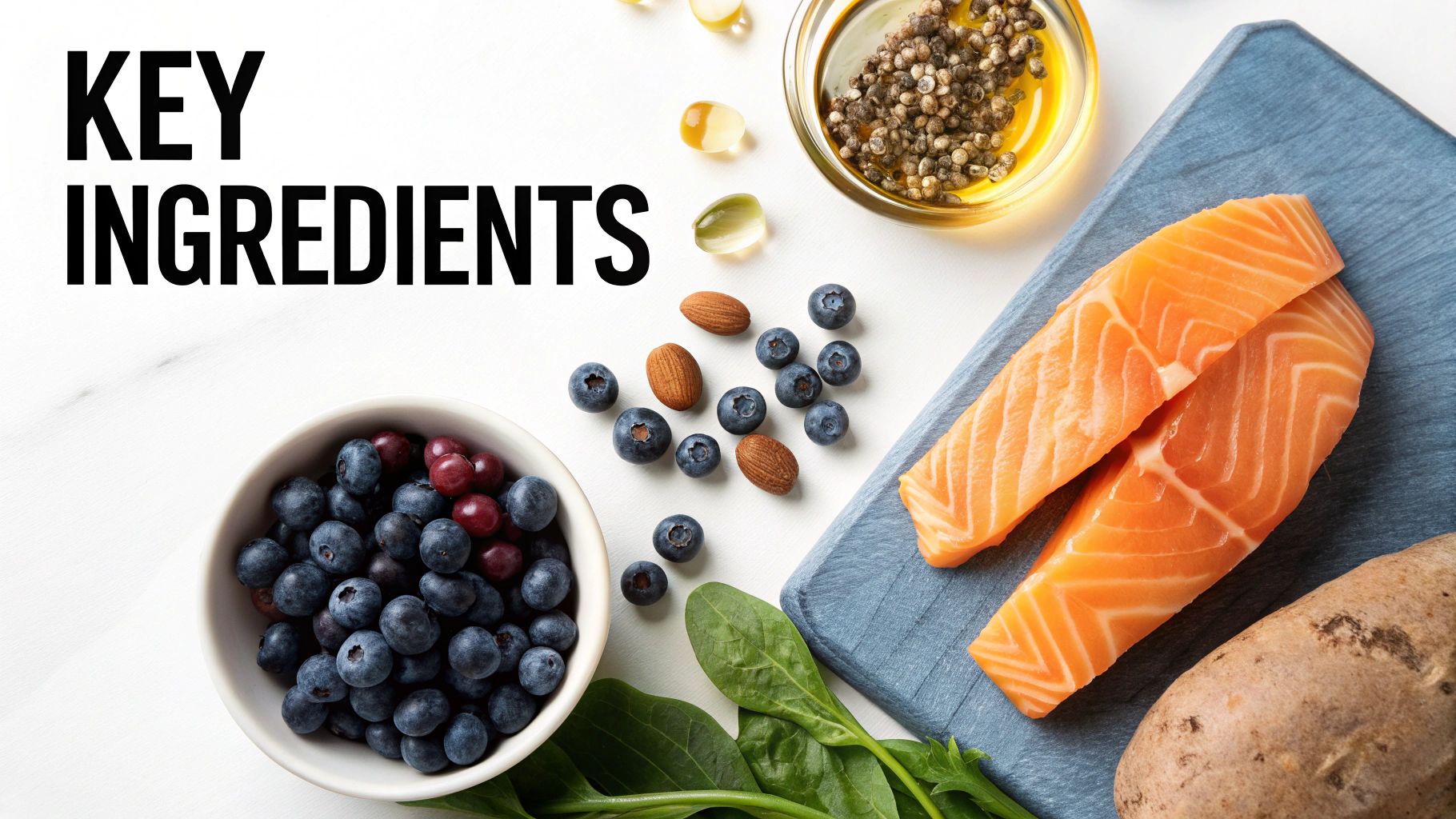
If the "holistic" approach is the philosophy, then the ingredients are its language. When you peel back the label on a bag of holistic dog food, you’re looking at a deliberate strategy where every single component has a job to do. It’s not just about mixing ingredients; it’s about assembling a high-performance team to support your dog's entire body.
Unlike many conventional formulas that might rely on low-cost fillers to bulk up the kibble, holistic brands start with high-quality, recognizable foods. The entire goal is to craft a nutrient-dense meal that truly nourishes, not just fills your dog's stomach.
Let's break down the key players you'll typically find inside the bag.
High-Quality Proteins First
A great dog food always starts with its protein. Always. In a holistic diet, you won't find vague terms like "meat and bone meal" or "meat by-products" at the top of the list. Instead, the bag proudly leads with named, single-source proteins.
These are the powerhouses that build and maintain strong muscles, keep organs functioning properly, and supply the essential amino acids your dog can't produce on their own.
You should be looking for ingredients like:
- Deboned Chicken or Turkey: Lean, easy for most dogs to digest, and packed with protein.
- Lamb or Beef: Fantastic sources of protein and iron, often great for dogs who have sensitivities to poultry.
- Salmon or Whitefish: Not only rich in protein but also loaded with omega-3 fatty acids, which are superstars for skin, coat, and joint health.
The quality of the protein directly affects how well your dog can actually absorb and use these vital nutrients.
Smart Carbohydrates for Sustained Energy
Carbs have gotten a bad rap, but they are a crucial energy source for active dogs. The holistic difference is all about which carbs are being used. You won't find cheap fillers like corn, wheat gluten, or soy that can sometimes trigger sensitivities in dogs.
Instead, these diets choose complex carbohydrates. These ingredients provide a slow, steady release of energy, preventing the sugar rush and subsequent crash that simpler carbs can cause. They’re also packed with fiber, which is absolutely essential for a healthy digestive system.
A holistic diet views carbohydrates as functional fuel, not just filler. Ingredients like sweet potatoes and barley are chosen for their sustained energy release and added nutritional benefits, supporting everything from gut health to stable blood sugar levels.
Examples of these "smart" carbs include sweet potatoes, brown rice, barley, oats, and peas.
Functional Fats and Superfoods
This is where that "whole-body" philosophy really comes to life. Holistic dog foods are often packed with functional ingredients—foods included for their specific, health-promoting properties that go way beyond basic nutrition.
These additions are what elevate a meal from simple sustenance to a proactive wellness tool. Common functional extras include:
- Healthy Fats: Look for sources like flaxseed and fish oil. They provide omega-3 and omega-6 fatty acids, which help reduce inflammation and promote a shiny, healthy coat.
- Antioxidant-Rich Fruits: Ingredients like blueberries, cranberries, and kale help fight cellular damage (oxidative stress) and support a strong immune system.
- Digestive Aids: You'll often see prebiotics (like chicory root) and probiotics added to nourish the good bacteria in your dog's gut, leading to better digestion and nutrient absorption.
This intense focus on ingredient synergy is a huge driver behind the industry's growth. The organic pet food market, a close cousin to the holistic space, was valued at around USD 27.8 billion and is expected to hit USD 48.5 billion by 2032. This shows a real shift in how we view our pets' diets—as a true investment in their long-term health. Learning about the best ingredients in dog food can make you feel a lot more confident when you're standing in that pet food aisle.
By carefully selecting each of these building blocks, a holistic diet aims to create a food that does more than just keep your dog fed—it actively supports their vitality from nose to tail.
Health Claims Versus Scientific Reality
Walk down any pet food aisle, and the marketing promises on "holistic" dog food bags can be incredibly appealing. Shinier coats, perfect digestion, boundless energy—who wouldn't want that for their dog? But it's our job as savvy pet owners to look past the marketing slogans and see what's actually backed by science.
The truth is, "holistic" isn't a regulated term. It's a marketing concept. However, the philosophy behind it often leads brands to use higher-quality, more thoughtfully sourced ingredients. The real benefits don't come from a magical "holistic" label; they come from the nutritional science of those specific ingredients.
Fact-Checking the Benefits
So, let's break down some of the most common promises you'll see and connect them to the real, science-backed ingredients that make them happen. When a food is built with better components, it's only natural that it can lead to better health.
Here’s a look at what's really going on inside the bag:
-
Shinier Coat and Healthier Skin: This is probably the most common and noticeable improvement people see. It’s almost always thanks to a healthy dose of omega-3 and omega-6 fatty acids. Ingredients like salmon oil, flaxseed, and even chicken fat are scientifically proven to nourish the skin barrier, reduce inflammation, and give that coat a beautiful sheen.
-
Improved Digestion: If you're tired of messy clean-ups, this one's for you. Holistic foods often feature highly digestible proteins and fiber sources like sweet potatoes or pumpkin. Many also add prebiotics and probiotics to the mix. Think of these as food for the good bacteria in your dog's gut, which leads to firmer stools and better nutrient absorption.
-
Better Allergen Management: For dogs with itchy skin or upset stomachs, certain holistic diets can be a lifesaver. By focusing on single, novel proteins (like duck or venison) and steering clear of common allergens like wheat, corn, or soy, these foods make it much easier to avoid ingredients that trigger a reaction.
These aren't just happy accidents. They're the direct result of using specific, functional ingredients that are chosen for their proven impact on a dog's health.
The most credible benefits of holistic dog food come from its emphasis on high-quality, digestible ingredients. A formula rich in omega fatty acids, antioxidants, and gut-supporting fibers can genuinely improve a dog's physical well-being, from their skin to their digestive tract.
Where Skepticism is Healthy
While many claims are solid, you still need to keep a healthy dose of skepticism. Be wary of vague promises like "increased vitality" or "total wellness," as these are impossible to measure and aren't tied to any specific scientific standard.
A big one to watch out for is the grain-free trend. Many holistic brands push grain-free formulas as the ultimate healthy choice for every dog. While they are fantastic for dogs with a confirmed grain allergy or sensitivity, there's no scientific proof that all dogs do better without grains. In fact, the FDA has investigated potential links between certain grain-free diets and heart issues in dogs. Before you make the switch, understanding if grain-free dog food is better for your individual pet is a critical conversation to have with your veterinarian.
At the end of the day, a well-made holistic diet can provide real, science-backed advantages, particularly for dogs with specific health needs. But it isn't a miracle cure. The smartest move is to ignore the buzzwords on the front of the bag and instead, turn it over. Focus on the ingredient list and match what you see to your dog's unique needs.
How to Decode Dog Food Labels
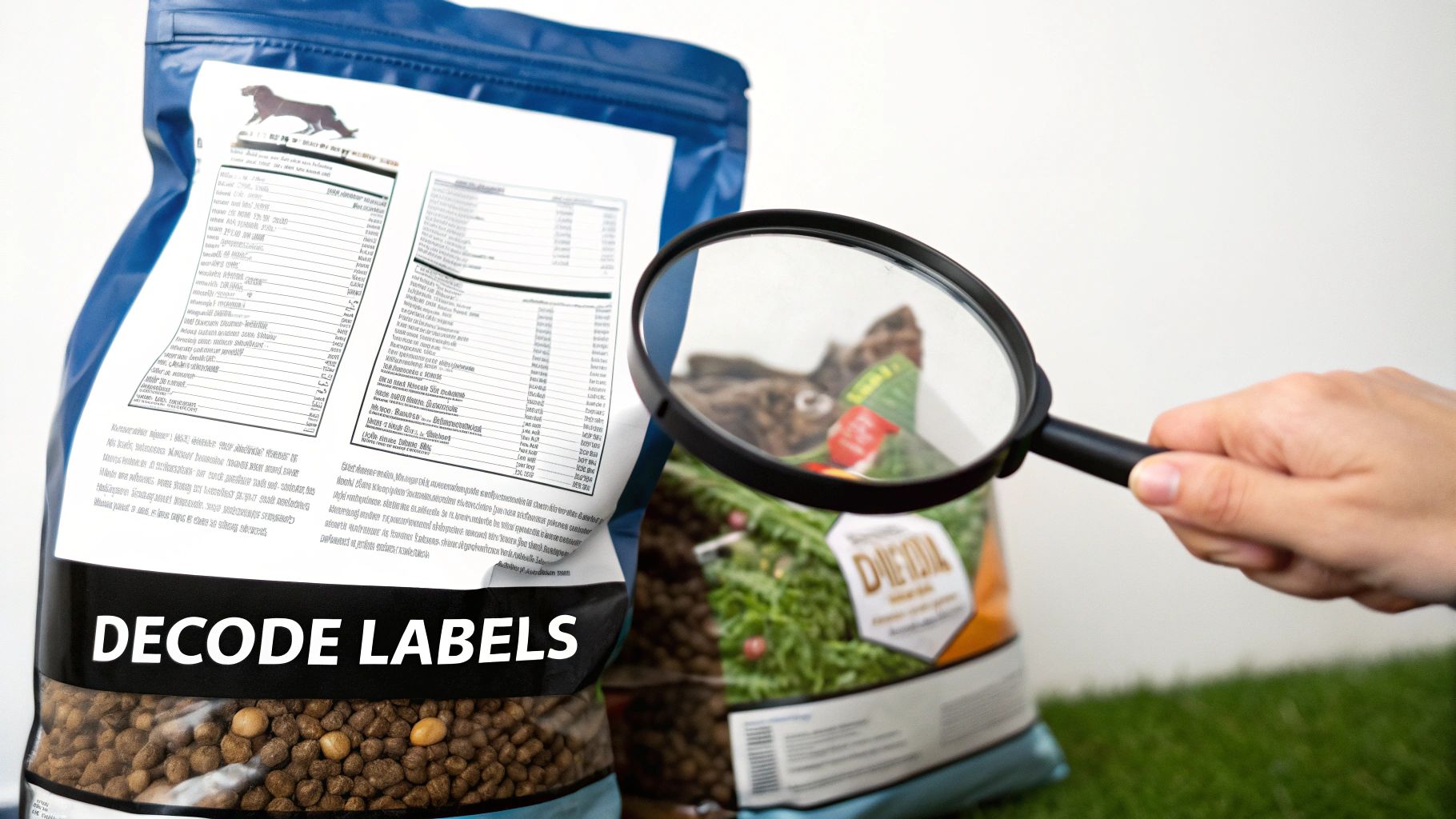
Walking down the pet food aisle can be dizzying. Bags shout appealing words like "premium," "natural," and "holistic" right at you, but what do they really mean for your dog? The surprising answer is that many of them are just marketing fluff.
The term "holistic" isn't actually defined or regulated by organizations like the Association of American Feed Control Officials (AAFCO). This regulatory gap means any brand can slap the word on its packaging without meeting a specific standard. It falls on you, the pet owner, to look past the fancy branding and become a label detective.
To figure out what’s really in your dog's food, you have to ignore the pretty pictures on the front of the bag and flip it over. The ingredient list and the nutritional adequacy statement are where the real story unfolds.
The Power of the First Ingredient
The ingredient panel is your best tool for getting to the truth. Ingredients are listed by weight, so whatever is at the top of the list makes up the bulk of the food. For any food claiming to be high-quality or holistic, this is where you start.
You should always see a named meat source as the very first ingredient. Look for clear terms like "deboned chicken," "lamb," or "salmon." Vague descriptions like "meat and bone meal" or "poultry by-products" are red flags that point to lower-quality, less identifiable protein sources.
Starting the list with real meat ensures your dog gets a solid foundation of highly digestible protein their body can actually use. This focus on recognizable, whole foods is a cornerstone of the holistic philosophy. Learning how to read food labels is the first step toward becoming a more empowered pet parent.
Spotting Fillers and Valuing Transparency
Once you've confirmed a quality protein source, the next step is to scan the list for cheap fillers. These are ingredients used to bulk up the food without adding much nutritional value. Common fillers to watch out for include corn gluten meal, wheat gluten, and soy.
A well-formulated food, on the other hand, will use nutrient-dense carbohydrates like sweet potatoes, brown rice, or peas. These ingredients provide sustained energy and important fiber. The whole ingredient list should read like a recipe you can actually understand, full of recognizable foods. For a deeper dive into this, our guide on how to read dog food labels breaks it down even further.
A truly high-quality dog food tells its story through its ingredient list. It's transparent, easy to understand, and prioritizes named, whole-food sources over vague by-products and cheap fillers.
Understanding Key Label Terms
It's easy to get lost in the jargon on a dog food label. Some terms are carefully regulated, while others are intentionally vague to sound impressive. Let's break down a few of the most common ones you'll encounter.
Decoding Dog Food Labels Marketing vs Meaning
This table cuts through the noise, showing what common marketing terms suggest versus what they actually mean according to regulations.
| Marketing Term | Common Perception | Regulatory Reality |
|---|---|---|
| Holistic | A complete, balanced food made with high-quality, natural ingredients for overall well-being. | Unregulated term. It has no official definition, so it means whatever the brand wants it to mean. |
| Natural | Free from artificial colors, flavors, or preservatives. Made with ingredients from nature. | Defined by AAFCO. The food must be derived solely from plant, animal, or mined sources. |
| Premium / Gourmet | Higher quality, better ingredients, and superior nutrition compared to standard foods. | Purely marketing. These terms have no regulatory definition and are not a guarantee of quality. |
| Human-Grade | So safe and high-quality that a person could eat it. Made in a human food facility. | Regulated term. The finished product must be legally suitable and approved for human consumption. |
Understanding these distinctions is crucial. While a "premium" food might be excellent, the word itself doesn't guarantee it. Always check the ingredients to verify the claims.
One term that has gained a lot of traction is "human-grade." Unlike "holistic," this one has a defined standard. It means the entire product is legally suitable for human consumption and was made under the same strict safety and quality controls as human food.
The rise of human-grade pet food is part of a larger trend of treating our pets more like family. This niche market, valued at USD 2.77 billion, is expected to hit USD 4.58 billion by 2030, showing just how much owners are demanding higher standards. By learning to decode these terms and focusing on the ingredient panel, you can choose a food based on facts, not just clever marketing.
So, How Do You Choose the Best Holistic Food for Your Dog?
If you've spent any time in the pet food aisle, you know the search for the "best" holistic dog food can feel overwhelming. But here's the secret: there isn't one. The best food is whatever is best for your dog. Think of yourself less as a shopper looking for a magic bullet and more as a matchmaker, connecting your dog's unique needs with a truly high-quality diet.
The goal isn't just to buy a bag with "holistic" on the label. It's to find a formula that genuinely supports your dog's specific life stage, breed, and energy level. What works for a senior Basset Hound lounging on the porch is going to be worlds away from what a growing Border Collie puppy needs. When you personalize the approach, you cut through the marketing noise and get down to what really matters: meaningful nutrition.
First, Look at Your Dog, Not the Bag
Before you even start comparing brands, take a good, long look at the furry friend right in front of you. A personalized diet starts with a crystal-clear picture of their individual needs. This is, without a doubt, the most important step in the entire process.
Ask yourself these key questions:
- Age and Life Stage: Is your dog a puppy who needs extra calories for growth? Or a senior who could use more joint support and fewer calories to stay lean?
- Breed and Size: Large breeds like Great Danes have very different skeletal needs than tiny Chihuahuas.
- Activity Level: Is your dog a working breed who's active all day, or a couch potato who lives for naps? The first needs fuel for muscle repair, while the second needs a diet that prevents weight gain.
- Health Concerns: Does your dog struggle with itchy skin, a sensitive stomach, or known food allergies? These issues will immediately point you toward formulas designed to help.
Jotting down the answers creates a "nutritional profile" for your dog. This becomes your roadmap, giving you a clear set of criteria for judging any food you consider.
Your Vet Is Your Most Valuable Resource
Doing your own research is great, but it should always go hand-in-hand with professional advice. Your veterinarian is your best partner in this journey. They're not just experts in canine nutrition; they know your dog’s specific health history inside and out.
Before you switch foods, book a quick consultation. Your vet can provide recommendations based on science, not just marketing claims. They can help you pinpoint potential allergens and make sure the food you're considering is a safe bet for any underlying health conditions. That's a layer of medical expertise you just can't get from reading a label.
Pro Tip: Always look for the AAFCO nutritional adequacy statement on the bag. This little sentence is your proof that the food is formulated to meet the established nutritional levels for a specific life stage, like "growth and reproduction" (puppies and pregnant dogs) or "adult maintenance."
Kibble, Canned, or Something Else?
Holistic dog food isn't a one-size-fits-all format. You'll find it in a few different forms, and the right one for you will be a mix of nutritional quality, convenience, budget, and what your dog will actually eat.
Here’s a quick breakdown of what you'll see:
- Dry Kibble: This is the go-to for convenience and affordability. It's easy to store, easy to measure, and has a long shelf life. On the downside, it's the most processed format.
- Wet (Canned) Food: Dogs love it, making it a winner for picky eaters. It's also packed with moisture, which is great for hydration. It just tends to be pricier and needs to be refrigerated once opened.
- Freeze-Dried or Dehydrated Raw: These options give you many of the nutritional benefits of a raw diet but with the shelf-stable convenience of kibble. They're minimally processed, but they definitely come with a higher price tag.
By putting it all together—your dog's personal profile, your vet’s expert advice, and a little knowledge about food formats—you can confidently navigate the options. You'll be able to choose a holistic food that truly supports your dog's health from the inside out.
Safely Switching Your Dog to a New Diet
So you've decided to upgrade your dog's food. That’s a great move, but jumping straight into a new diet can seriously upset their stomach. The secret to a smooth switch is taking it slow, giving your dog's digestive system plenty of time to get used to the new ingredients.
Think about it this way: you wouldn't go from a lifetime of eating bland porridge to a five-course spicy meal overnight. Your gut would rebel! Our dogs are no different. A slow, methodical transition is the only way to avoid common issues like vomiting, diarrhea, and a pup who suddenly eyes their food bowl with suspicion.
Before you even open that new bag of food, the selection process itself is critical.
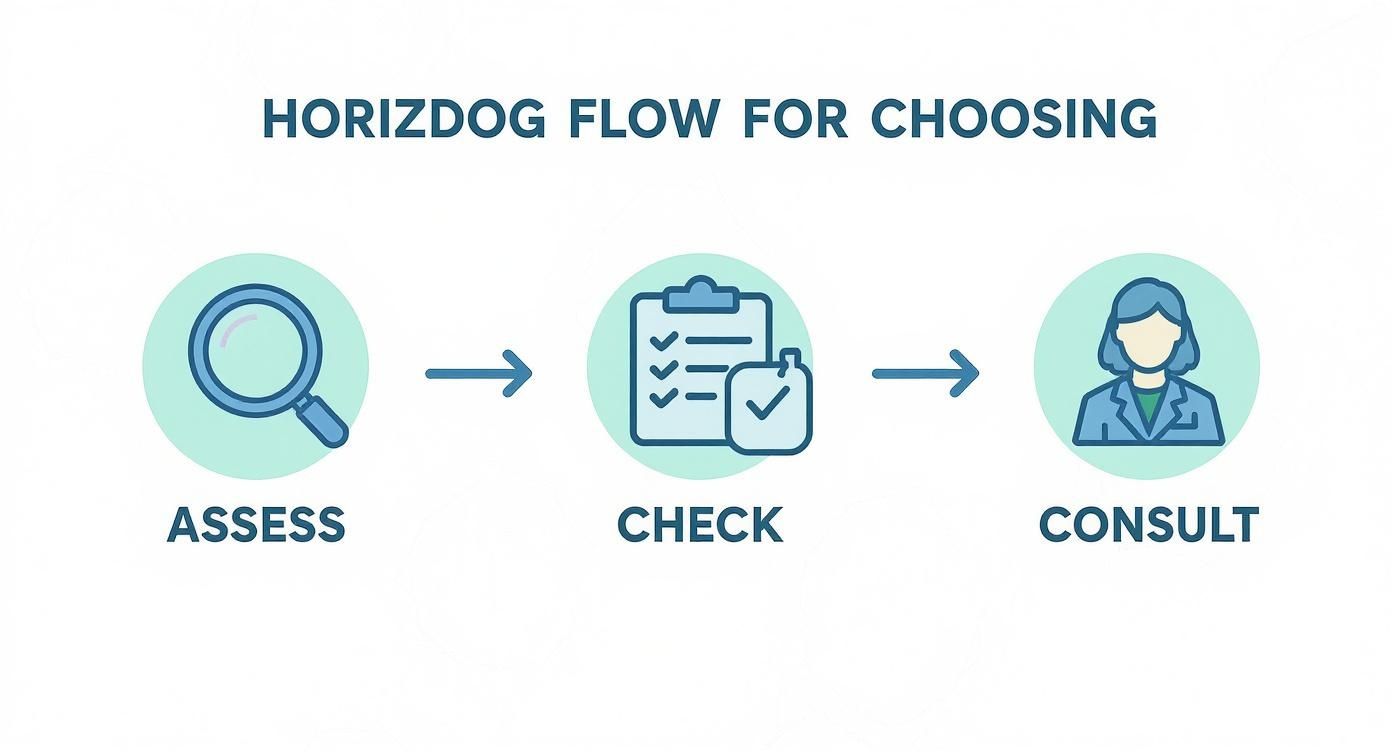
This simple chart really nails it: a successful diet starts by assessing your dog’s unique needs, carefully checking the label, and having a chat with your vet.
The 10-Day Transition Plan
Patience is your best friend here. This 10-day schedule is a time-tested, vet-approved method for introducing new food. The idea is simple: mix the old food with the new, gradually shifting the ratio over time.
- Days 1-3: Start with 75% old food and just 25% new food.
- Days 4-6: Move to a 50/50 split of old and new food.
- Days 7-9: Tip the scales to 25% old food and 75% new food.
- Day 10: If all is well, you can now serve 100% new food.
If you know your dog has a sensitive stomach, don't hesitate to stretch this out. There's no harm in taking 14 or even 21 days if that's what your pup needs. The goal here is a happy gut, not a race to the finish line.
A successful food transition is a marathon, not a sprint. Keep a close eye on your dog's stool quality and energy. If you see any signs of an upset stomach, just dial the ratio back to the previous stage for a couple of days before trying to move forward again.
What to Watch For During the Switch
Your dog's body will give you all the feedback you need. You just have to know what to look for to see if things are going smoothly or if you need to pump the brakes.
Good Signs to Look For:
- Consistent Energy: Your dog is still their happy, playful self.
- Eager to Eat: They're excited at mealtime and cleaning their bowl.
- Solid, Healthy Stools: This is the number one sign their digestive system is on board with the change.
Red Flags That Mean You Should Slow Down:
- Loose Stools or Diarrhea: This is the classic sign you're moving too fast.
- Vomiting: A clear signal to stop and dial it way back.
- Excessive Gas: A rumbling, gurgly tummy means their gut is struggling to adjust.
- Skipping Meals: If your dog suddenly turns their nose up at their food, something's not right.
If you're dealing with a picky eater, sometimes warming the food slightly or adding a splash of warm water can make it more enticing. For any persistent digestive issues, your best bet is to slow the transition way down and give your vet a call. A little patience and observation will make the switch a positive experience for both of you.
Common Questions About Holistic Dog Food
As you start looking into whole-body nutrition for your dog, you're bound to have some questions. The world of dog food can feel a bit like learning a new language, but once you grasp a few key ideas, you'll feel much more confident picking out the right food for your best friend. Let's tackle some of the most common points of confusion.
Are Holistic and Grain-Free the Same Thing?
This is probably the biggest mix-up out there, and the short answer is no, they aren’t. While you'll find plenty of holistic foods that are also grain-free, the two terms describe completely different things.
Here’s a simple way to think about it: "holistic" is the overall philosophy—an approach that aims for total body wellness using high-quality ingredients that work together. On the other hand, "grain-free" is just a specific ingredient rule, meaning the recipe leaves out grains like corn, wheat, and rice.
A truly holistic diet might include healthy whole grains like brown rice or quinoa if they add nutritional value. Likewise, a food can be grain-free but still be packed with cheap fillers and low-grade proteins, making it far from holistic. The key difference is the why versus the what.
Why Does This Food Cost More?
That higher price you see on a bag of holistic dog food almost always boils down to one thing: the quality of what’s inside. It simply costs a lot more to make a food with real deboned chicken, sweet potatoes, and antioxidant-rich blueberries than one based on corn and unnamed meat by-products.
You're paying for a different standard of ingredients, which often includes:
- Premium Proteins: Sourcing real, named meats like duck or lamb is more expensive than using generic "meat meal."
- Functional Ingredients: Adding things like probiotics for gut health, omega-3s for a shiny coat, and extra antioxidants bumps up the production cost.
- Stricter Quality Control: Reputable brands invest more in sourcing and testing their ingredients to ensure they meet high safety and nutritional standards.
Many pet parents see this extra cost as an investment in their dog's future. A diet that supports a strong immune system, healthy joints, and smooth digestion might just mean fewer unexpected trips to the vet down the road, potentially saving you money in the long run.
While the upfront cost is higher, the philosophy behind holistic dog food is that proactive nutritional support can be a powerful tool in maintaining your dog's long-term health and vitality.
Can I Make My Own Holistic Dog Food?
The thought of preparing fresh meals for your dog is really appealing—after all, you'd have complete control over every single ingredient. But before you start cooking, you should know that creating a truly balanced homemade diet is extremely difficult and can be risky if you get it wrong.
A dog's nutritional needs are surprisingly complex, and it takes more than just mixing meat and veggies. Without a scientifically formulated recipe, homemade diets can easily lead to dangerous deficiencies in key vitamins and minerals, causing serious health issues over time.
Nailing the perfect calcium-to-phosphorus ratio or ensuring your dog gets enough taurine isn’t something you can guess at. That’s why, if you’re set on going the homemade route, it's absolutely essential to work directly with a board-certified veterinary nutritionist. They have the expertise to help you formulate a recipe that is complete, balanced, and genuinely safe for your dog.
At Joyfull, we believe that providing your pet with high-quality, beneficial nutrition shouldn't be complicated. Every one of our formulas is crafted with clean ingredients and high-quality proteins, all reviewed by our in-house veterinary advisor to ensure a genuinely healthful life for your pet. Explore our commitment to no-BS pet wellness.