


Signs of Allergies in Cats A Complete Guide
That constant scratching isn't just a quirk. Those little bald patches aren't just from over-grooming. Often, these are the first clues your cat is sending up a flare, signaling an internal battle with an allergen. Learning to read these signs is the first, most important step toward getting them the relief they need.
Is Your Cat Showing These Allergy Warning Signs?
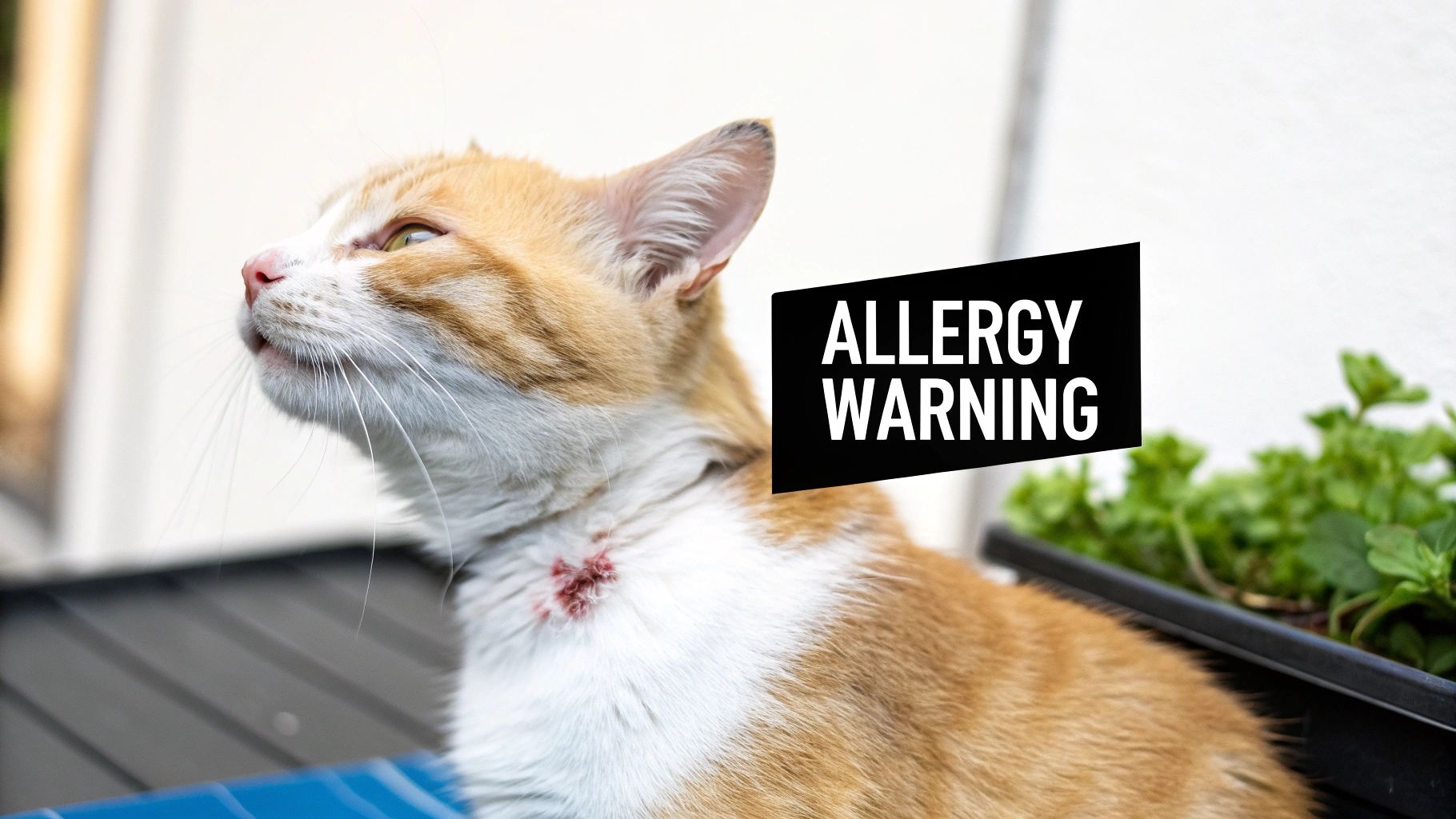
Think of your cat’s immune system as a highly sensitive security system. Its job is to spot and neutralize real threats, like viruses. But in an allergic cat, that system goes into overdrive, misidentifying something harmless—like a protein in their food, pollen in the air, or a flea's saliva—as a dangerous invader. This triggers a full-blown, and very uncomfortable, defense.
The Overactive Immune Response
This immune overreaction is what causes the physical symptoms we see. The body releases chemicals like histamine to attack the perceived enemy, which leads to all that inflammation, itching, and irritation.
Interestingly, the main allergen that bothers humans, a protein called Fel d 1, comes from cat saliva and skin. It’s so pervasive that it's found in detectable levels in over 90% of homes, even those without cats. You can discover more insights about this common allergen and its surprising prevalence in this detailed study.
The signs your cat shows can be surprisingly varied, often affecting their skin, digestive system, or breathing—sometimes all at once.
Spotting the Signs: Skin, Stomach, and Lungs
To figure out what’s going on, it helps to organize the symptoms into a few main categories. This makes it easier to connect the dots between what you're seeing and what might be causing it.
Here’s a quick overview of the most common signs, broken down by which part of the body is affected.
Quick Guide to Common Cat Allergy Symptoms
| Symptom Category | Common Signs to Watch For |
|---|---|
| Skin & Coat | Intense itching and scratching, red or inflamed skin, small scabby bumps (miliary dermatitis), hair loss from over-grooming, sores or "hot spots". |
| Digestive System | Chronic vomiting, frequent diarrhea, noticeable gas or flatulence, lack of appetite, or signs of an upset stomach. |
| Respiratory System | Sneezing, coughing, or wheezing (similar to feline asthma), watery or itchy eyes, and clear or colored discharge from the nose. |
Noticing which of these categories your cat’s symptoms fall into gives your vet a huge head start in diagnosing the root cause of their discomfort. Your observations are one of the most powerful tools you have.
Uncovering the Three Main Allergy Triggers
To figure out what’s making your cat so miserable, we have to put on our detective hats and find the source. Your cat's immune system is basically acting like an oversensitive alarm system, mistaking harmless things for major threats. Let's look at the three most common culprits that set off this false alarm: fleas, food, and something in their environment.
Figuring out which of these categories is the problem is the first real step toward getting your cat some relief. While many allergies look the same on the surface—that constant, maddening itch, for instance—the triggers are completely different.
Flea Allergy Dermatitis
It might be hard to believe, but one of the most severe allergic reactions a cat can have is caused by a tiny flea. It’s not actually the bite that’s the issue; it’s a specific protein in the flea’s saliva. For a cat with a flea allergy, the saliva from just one single flea bite can kick off an intense, body-wide itching frenzy.
This condition has a name: Flea Allergy Dermatitis (FAD). It’s the single most common skin disease we see in cats. You’ll often see the worst of it at the base of the tail, along the back, and around the neck, where cats will scratch and bite themselves raw, leading to major hair loss and angry, irritated skin.
The big takeaway here is that you don't need to see a full-blown flea infestation. One bite is all it takes to trigger a massive allergic reaction in a sensitive cat. This is exactly why year-round, high-quality flea prevention is non-negotiable.
Seriously, a strict flea control program for every pet in your house is the foundation of managing FAD. Without it, everything else is just a temporary fix.
Food Allergies
Next up is something your cat deals with multiple times a day: their food. A true food allergy is when your cat’s immune system misidentifies a common protein—like chicken, beef, or fish—as a dangerous invader. After repeated exposure, the immune system gets primed to attack every single time that ingredient enters their system.
It's important to know this is different from food intolerance, which is more of a digestive problem, not an immune reaction. Real food allergies are famous for causing chronic, year-round itching, especially around the head, face, and neck. They are also a frequent cause of stomach issues like vomiting or diarrhea.
If you suspect your cat's meals are the problem, you can learn more from our in-depth guide covering the common signs of food allergies in cats. It’s essential reading before starting something like an elimination diet.
Environmental Allergies
Last but not least are environmental allergies, which vets often call atopic dermatitis. In this scenario, your cat is reacting to microscopic particles they either breathe in or absorb through their skin. Think of it as the feline equivalent of hay fever in people.
Some of the usual suspects include:
- Pollen from trees, grass, and weeds, which can cause flare-ups that come and go with the seasons.
- Dust mites, tiny critters that live year-round in our carpets, bedding, and furniture.
- Mold spores, which thrive in damp spots like basements and bathrooms.
Unlike flea allergies that often hit the back half of the cat, environmental allergies tend to cause itching on the face, ears, paws, and belly. While some cats might get sneezy or wheezy, itchy skin is by far the most common complaint. Identifying these invisible triggers is a huge part of keeping your cat comfortable at home for the long haul.
Decoding Skin and Coat Allergy Symptoms

When a cat's immune system overreacts to an allergen, their skin often bears the brunt of the attack. Think of their skin and coat as the primary battleground. Unlike people who usually get watery eyes and a stuffy nose, a cat’s allergic reaction most often shows up as intense skin irritation. Learning to spot these dermatological clues is the first step to getting them help.
The single most common sign of allergies in cats is a deep, relentless itch, which veterinarians call pruritus. This isn't just a normal, everyday scratch. It’s an all-consuming need to scratch, lick, and chew that can completely take over your cat's life. This constant irritation often leads to self-inflicted wounds, hair loss, and even secondary skin infections, creating a miserable cycle that’s tough to break without help.
The Tell-Tale Signs of Miliary Dermatitis
One of the classic calling cards of a feline allergy is a condition known as miliary dermatitis. If you’ve ever run your hand along your cat’s back and felt a patch of tiny, crusty scabs, you know exactly what this is. The name comes from their resemblance to millet seeds, feeling like little bumps scattered just under the fur.
These small, red, crusted bumps are a direct sign of skin inflammation. They're incredibly itchy, which drives a cat to lick and scratch nonstop, only making the problem worse. You'll most often find them along the spine and around the neck, but they can pop up anywhere.
Over-Grooming and Symmetrical Hair Loss
Is your cat grooming constantly? While cats are known for being clean, sometimes licking becomes a compulsive way to cope with an itch. This behavior, sometimes called psychogenic alopecia, is a huge red flag for allergies.
All that obsessive licking and chewing can lead to a very specific kind of hair loss. You might notice bald patches that are almost perfectly symmetrical, usually on their belly, the inside of their back legs, or along their sides. The fur isn't just falling out—your cat is literally grooming it away. The hair that’s left behind often feels stubbly and broken from their rough tongue.
A key insight for cat owners is understanding that what looks like a behavioral issue—obsessive grooming—is almost always rooted in a physical problem. The cat isn't just "stressed"; they are trying to relieve a profound, deep-seated itch that they can't escape.
Identifying the Eosinophilic Granuloma Complex
In some cases, a cat's allergic reaction can look much more dramatic. The eosinophilic granuloma complex (EGC) is a catch-all term for three distinct types of skin lesions that often point to an underlying allergy, especially to fleas, food, or something in the environment.
These sores are caused by a flood of eosinophils, a type of white blood cell that goes into overdrive during an allergic response. Here’s what to look for:
- Eosinophilic Plaque: These are angry-looking patches of skin—raised, red, raw, and hairless. They can look moist or ulcerated and are extremely itchy. You'll typically find them on a cat’s belly or inner thighs.
- Eosinophilic Granuloma: These lesions are firm, raised lines of sore-looking skin, often found on the back of a cat's thighs. They can also show up on the chin or even inside the mouth. Sometimes called "linear granulomas," they often have a pink or yellowish tint.
- Indolent Ulcer: Often called a "rodent ulcer," this is a well-defined sore that usually appears on the upper lip. It can look pretty scary, but it's typically not painful or itchy for the cat.
If you spot any of these lesions, it's time for a visit to the vet. While they look serious, they are classic signs of allergies in cats and can be managed once you figure out the trigger. Recognizing these skin-deep clues is the first step toward getting your cat the relief they desperately need.
Looking Beyond the Itch for Other Allergy Clues
When we think of cat allergies, the first thing that comes to mind is frantic scratching. But that's just scratching the surface. An allergic reaction is a full-body event, and if you only focus on the skin, you might miss crucial clues that can lead to a proper diagnosis and get your kitty feeling better, faster.
Sometimes, the most telling signs aren't on your cat’s skin at all. They’re happening inside, affecting their tummy or their breathing. These symptoms can be subtle and are easily mistaken for other health problems.
When Tummy Troubles Signal an Allergy
That chronic case of vomiting or diarrhea you've written off as a "sensitive stomach"? It could very well be a food allergy. If your cat's immune system decides to mistakenly attack a protein in their food—like chicken, beef, or fish—it can trigger serious inflammation all along their gastrointestinal (GI) tract.
This is what makes a true food allergy different from a simple food intolerance. An intolerance is just a digestive problem, but an allergy fires up the entire immune system. It’s a critical distinction because it completely changes how we approach treatment.
During these episodes, supporting your cat's gut health is key. Many vets suggest probiotics to help rebalance the delicate microbiome in their digestive system. You can learn more about how gut health plays a role and explore some of the best probiotics for cats to see if they might help.
Respiratory Signs of Environmental Allergies
Just like environmental triggers can make your cat's skin crawl, they can also mess with their breathing. When a cat inhales allergens like pollen, dust mites, or mold, it can cause a whole host of respiratory issues. Think of it as the feline version of hay fever, but often much more intense.
Keep an eye out for these signs:
- Persistent Sneezing: We're not talking about a cute little sneeze here and there, but frequent, sometimes forceful sneezing fits.
- Watery Eyes: A clear or slightly goopy discharge coming from one or both eyes.
- Nasal Discharge: A runny nose that just won't clear up.
In more severe situations, these inhaled allergens can escalate into feline asthma, which is a chronic inflammation of the airways.
Think of your cat's airways during an allergic reaction like a flexible straw being pinched. The inflammation causes those passages to narrow, making it much harder for air to get through. That’s why you might hear a wheezing sound when they breathe.
Connecting the dots between a sniffle and a potential environmental allergy is a huge step toward understanding the full picture of your cat's health.
Comparing Food vs Environmental Allergy Symptoms
Trying to figure out whether the culprit is something in your cat’s food bowl or something in the air can feel like detective work. The symptoms, especially the skin issues, often overlap. But if you look at all the signs together, you can start to see some patterns that point you and your vet in the right direction.
This table breaks down some of the common differences and similarities.
| Symptom Area | Often Linked to Food Allergies | Often Linked to Environmental Allergies |
|---|---|---|
| Primary Itch Location | Head, face, and neck | Paws, belly, ears, and face |
| Digestive Signs | Very Common: Chronic vomiting, diarrhea | Uncommon: Usually not a primary sign |
| Respiratory Signs | Rare: Not a typical symptom | Common: Sneezing, wheezing, watery eyes |
| Symptom Pattern | Year-Round: Consistent regardless of season | Often Seasonal: Flares up in spring/fall |
Recognizing these less-obvious signs—from an upset stomach to a case of the sniffles—is so important. It means that when you go to the vet, you’re armed with a complete symptom list. That's the first step toward getting an accurate diagnosis and, most importantly, getting your cat some real, lasting relief.
How Your Vet Diagnoses Feline Allergies
Figuring out what’s causing your cat’s allergies isn’t as simple as running a single test. Think of your veterinarian as a detective. They have to carefully investigate the scene, rule out the obvious suspects, and follow the clues to pinpoint the real culprit behind all that itching, scratching, or tummy upset.
The first thing a vet will do is eliminate the most common troublemakers—things like fleas, mites, or even a run-of-the-mill skin infection. These issues can look a lot like an allergic reaction. Once those are cleared, the real investigation into food and environmental allergies begins.
The Gold Standard for Food Allergies
When your vet suspects something in your cat's diet is the problem, the most definitive way to find out is with an elimination diet. This is more intense than just switching to a new bag of food; it's a very strict, controlled trial designed to isolate exactly which ingredient is causing the reaction.
This usually means transitioning your cat to a special food with either a novel protein (like rabbit or venison, something they've likely never eaten before) or a hydrolyzed protein. Hydrolyzed diets are pretty clever—the proteins are broken down into such tiny pieces that your cat's immune system doesn't even recognize them as a threat.
An elimination diet is a team effort between you and your vet. For it to work, you have to be 100% committed for a full 8 to 12 weeks. That means no other food, no treats, no flavored medications, and not even a dropped crumb off the kitchen floor. One little slip-up can derail the whole process, and you'll have to start from square one.
If your cat’s symptoms clear up during the trial, you’re on the right track. The final proof comes from the "re-challenge," where your vet will have you reintroduce old ingredients one by one to see which one makes the symptoms return. It's a slow process, but it's the only way to know for sure.
This diagram helps show how different symptoms can point the investigation in the right direction.
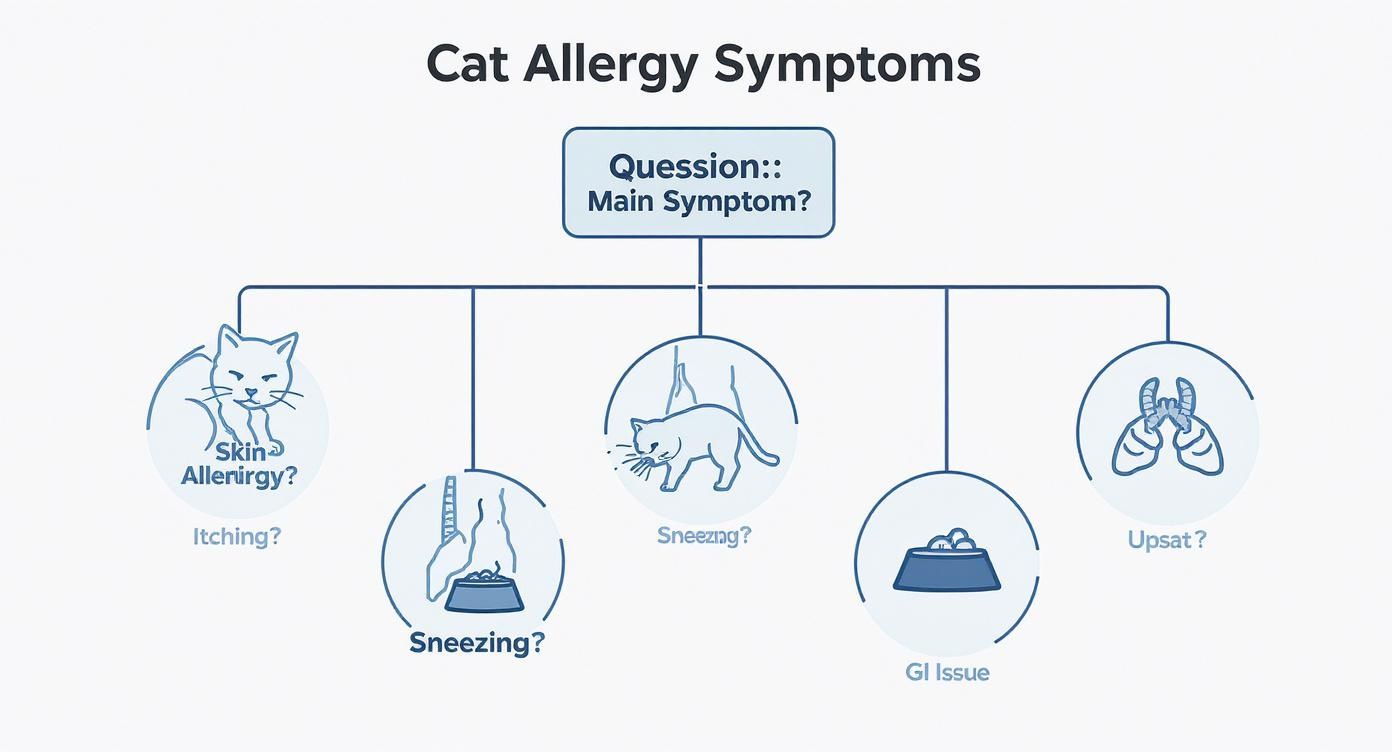
As you can see, persistent itching might make a vet look closer at skin-related allergies, whereas digestive issues often point toward a food intolerance. It helps narrow the focus from the very beginning.
Testing for Environmental Allergies
What if the diet trial doesn't work, or your cat only seems miserable during certain seasons? That’s when the investigation pivots to environmental triggers—things like pollen, dust mites, and mold. There are two main ways to test for these.
- Intradermal Skin Testing: This is considered the most accurate method and is usually done by a veterinary dermatologist. It’s a lot like human allergy testing, where tiny amounts of potential allergens are injected just under the skin to see which ones cause a localized reaction.
- Blood Allergy Tests (Serology): A less invasive option, this just requires a blood sample. The lab then measures the levels of specific antibodies your cat has produced against common environmental allergens. It’s definitely more convenient, but most vets agree it's not quite as reliable as skin testing.
The need for better allergy solutions for our pets is growing fast, which is why the global market for diagnostics and treatments has expanded so much. You can read the full research about this market trend to see just how common this issue has become.
A word of caution: please stick with your veterinarian's guidance and steer clear of at-home allergy testing kits. They are notoriously unreliable and often lead to frustrating, unnecessary diet changes without ever getting to the root of the problem your cat is facing.
Creating an Allergy-Friendly Home for Your Cat

Once your vet has identified what's causing your cat’s allergic reactions, the game plan shifts from diagnosis to daily management. Turning your home into a low-allergen sanctuary is one of the most powerful things you can do to ease their symptoms and give them back their quality of life. The best approach combines your vet’s prescribed treatments with smart, practical strategies at home.
Think of it like this: medical treatments are the targeted "medicines" that calm down an acute problem, while creating an allergy-friendly home is the healthy lifestyle that keeps things in check long-term. You really need both to see the best results.
Veterinary Treatments for Allergy Relief
Your veterinarian is your number one ally in this fight. They have an entire arsenal of tools designed to soothe your cat’s overactive immune system and bring them relief from that relentless itching and inflammation.
Some of the most common medical treatments include:
- Antihistamines: These can sometimes take the edge off mild itching, though they aren't always as effective for cats as they are for people.
- Corticosteroids: As powerful anti-inflammatories, these can stop severe itching in its tracks. However, due to potential side effects, they're usually reserved for managing short, intense flare-ups.
- Immunotherapy: You might know these as "allergy shots." This is a long-term strategy where your cat receives tiny, controlled doses of their specific allergens, gradually teaching their immune system not to overreact.
- Targeted Medications: Newer drugs have come on the market that work by specifically blocking the body's itch signals, offering fantastic relief with fewer side effects than traditional steroids.
Managing Environmental Allergies at Home
If your cat is dealing with atopic dermatitis (environmental allergies), your home can feel like a minefield of triggers. But the good news is you have a lot of control here. Reducing their exposure to things like pollen, dust mites, and mold can make a world of difference.
A multi-layered approach always works best. Start by making your home a safe zone. Keep the windows shut during high-pollen seasons and give your cat a quick wipe-down with a damp cloth when they come inside to remove any pollen clinging to their fur.
By transforming your home into a low-allergen zone, you are not just treating symptoms; you are proactively removing the triggers that cause flare-ups in the first place. This environmental control is a cornerstone of successful long-term allergy management.
High-quality air purification systems can be a game-changer, especially those with HEPA filters. They go way beyond what your standard furnace filter can do, capturing microscopic particles that would otherwise be floating around for your cat to breathe in.
Try to work these habits into your regular cleaning routine:
- Wash Bedding Frequently: Toss your cat’s bedding, blankets, and any soft toys into the wash with hot water at least once a week. This is your best defense against dust mites.
- Vacuum Regularly: Use a vacuum equipped with a HEPA filter. This ensures you're trapping allergens from carpets and furniture instead of just blowing them back into the air.
- Maintain Strict Flea Control: This one is non-negotiable, even if fleas aren't the primary allergy. A single flea bite can send an already sensitive cat into a miserable scratching frenzy. All pets in the house need to be on a vet-approved, year-round flea preventive.
Dietary Strategies for Food-Allergic Cats
If your vet confirmed a food allergy through an elimination diet, the path forward is clear—though it does demand diligence. You have to completely avoid the problem ingredient. This usually involves switching to a special therapeutic diet made for cats with sensitivities.
The two main options for long-term management are novel protein and hydrolyzed protein diets. Novel proteins are simply ingredients your cat has probably never encountered, like rabbit or duck. Hydrolyzed diets take it a step further, breaking down proteins into such tiny pieces that the immune system doesn't even recognize them as a threat.
Many cat parents also have great luck with simpler formulas. You can learn more by checking out our guide to the best limited ingredient cat food for sensitive cats. Ultimately, consistent management that combines medical care with these simple at-home adjustments can dramatically improve your cat’s comfort and well-being.
It’s perfectly normal to still have questions, even after getting a handle on the basics of cat allergies. Let's tackle a couple of the most common ones that pop up for cat parents.
Can a Cat Suddenly Develop Allergies?
It can be really confusing when your cat suddenly starts reacting to a food they've eaten for years, but the answer is a definite yes. In fact, it’s quite common.
Think of an allergy as a tipping point for the immune system. Repeated exposure to a potential allergen—be it a protein in their food or pollen in the air—gradually "primes" their system. Then, one day, it crosses a threshold and starts overreacting. This is why allergies often don't show up until a cat is an adult or even a senior.
Are Certain Cat Breeds More Prone to Allergies?
While you might hear that certain breeds like the Siamese or Devon Rex seem more susceptible, the truth is that allergies don't discriminate much. Any cat, whether a fancy purebred or a beloved mixed-breed, can develop them.
A cat’s individual genetic lottery, health status, and environment are much bigger factors than their breed. So, while genetics can play a part, no breed is guaranteed to have allergies, and none are completely safe from them.
A quick but important distinction: A true food allergy is an immune system meltdown, causing things like relentless itching, skin sores, and sometimes digestive upset. A food intolerance, on the other hand, is purely a digestive problem. The body just can't process a certain ingredient, leading straight to vomiting or diarrhea without the itchy skin.
Getting this difference right is a huge step toward finding a solution that actually works.
At Joyfull, we believe your pets deserve the best. Our formulas are made with clean, high-quality ingredients and are reviewed by our in-house veterinary advisor to ensure they support a healthful life. Discover better-for-you options for your pet at https://joyfullpet.com.