


Rosemary Extract for Dogs Is It Safe and Beneficial
When you scan the ingredient list on your dog's food and spot 'rosemary extract,' it's natural to pause. Is this the same herb I cook with? Is it an essential oil? The answer is no, and understanding the difference is key. In the world of pet food, rosemary extract for dogs isn't just a flavoring; it's a highly specific, purified concentration of the plant's most powerful antioxidant compounds, used to keep your dog's food fresh, safe, and nutritious.
What Exactly Is Rosemary Extract in Dog Food?
Think of it like this: you get Vitamin C from an orange, but a Vitamin C supplement isn't the whole fruit. It's a concentrated, purified form of that one specific, beneficial compound. Rosemary extract is made using a similar principle.
Scientists carefully isolate the powerful antioxidant components from the rosemary plant, but they leave behind the volatile oils that could be problematic for pets. This process yields a stable, food-grade ingredient perfectly suited for its main job: acting as a natural preservative. Beyond any direct health benefits, its primary purpose in dog food is all about maintaining product integrity.
Its main task is to stop oxidation—a fancy term for the process that makes the fats and oils in kibble go rancid. When fats spoil, the food not only smells and tastes awful, but it can also be harmful for your dog. Rosemary extract steps in to halt this process, making sure your dog's meal is as fresh and healthy as it was on the day it was made.
The Guardians of Food Quality
The real power behind rosemary extract comes from two superstar compounds: carnosic acid and carnosol. You can think of these as the tiny, tireless guardians of your dog's food. They are incredibly good at neutralizing free radicals—those unstable molecules that cause both food spoilage and cellular damage.
Here’s a quick look at what they do to protect every meal:
- Stop Spoilage in Its Tracks: They interrupt the chemical chain reaction that causes fats to break down, which dramatically extends the food's shelf life.
- Protect Vital Nutrients: By preventing oxidation, they also shield sensitive vitamins and fatty acids in the kibble from degrading over time.
- Keep Food Tasty: A fresh-tasting meal is one your dog will actually eat. These compounds help ensure the flavor stays just right.
In fact, these compounds are so well-understood that they are the basis for regulatory approval. They are the measurable, active ingredients that confirm the extract’s effectiveness and safety.
What started as a niche herbal remedy has become a mainstream, science-backed component in modern pet nutrition. Its use has grown so much over the last decade that it's now formally recognized by regulatory bodies. For instance, the European Commission officially authorized liquid rosemary extract as an antioxidant additive for dog and cat food. This wasn't a snap decision; it was backed by extensive research, including over 25 years of industry data on its stability and performance. You can learn more about these important regulatory findings that ensure pet food safety.
By seeing it as a concentrated antioxidant, it's clear why rosemary extract is a staple in high-quality dog foods, including those crafted by JoyFull. It’s a natural and effective way to ensure every bowl is as safe and delicious as it should be.
The Hidden Health Benefits of Rosemary Extract
While you’ll often find rosemary extract in your dog's food to keep it from going rancid, that's just scratching the surface of what this incredible ingredient can do. Smart brands don't just use it for shelf stability; they choose it for the profound health benefits it offers your dog from the inside out.
At its core, rosemary extract is a powerhouse of antioxidants. To get a feel for what that means, picture free radicals as tiny, out-of-control sparks flying around inside your dog’s body. They’re a normal side effect of metabolism, but too many of them can damage cells, proteins, and even DNA. This process is called oxidative stress.
Think of it like cellular "rust"—a gradual, internal wear and tear that contributes to aging and a host of chronic health problems. The antioxidants in rosemary extract are like a squad of tiny firefighters, safely putting out these sparks before they can cause any real harm.
A Cellular Shield Against Damage
The real heroes here are compounds like carnosic acid and carnosol, which are especially potent antioxidants found in rosemary. They actively seek out and neutralize those damaging free radicals, essentially protecting your dog’s body on a microscopic level. This isn't just a small bonus; it’s a crucial function for supporting long-term health.
A diet rich in these kinds of antioxidants helps keep your dog's cells healthy, and healthy cells are the foundation of a vibrant, energetic pet. This proactive defense is precisely why rosemary extract for dogs is so much more than a simple preservative.
By fighting oxidative stress head-on, the antioxidants in rosemary extract create a protective layer that supports everything from the immune system to the aging process, helping to keep all of your dog's internal systems humming along nicely.
But this cellular protection is just where the story begins. Rosemary extract has a few more tricks up its sleeve.
More Than Just an Antioxidant
Beyond its antioxidant chops, scientific studies have highlighted other valuable properties that make rosemary a fantastic ally for your dog's health. It’s not a one-trick pony; its natural compounds offer a whole spectrum of support.
Two of its most impressive additional benefits are its antimicrobial and anti-inflammatory effects.
-
Antimicrobial Power: The very same qualities that stop bacteria from spoiling dog food can also help support a healthy gut. These effects can contribute to better digestion and even help with doggy breath by keeping unwanted oral bacteria in check.
-
Soothing Inflammation: We now know that low-grade, chronic inflammation is at the root of many common health issues in dogs, from achy joints to irritated skin. The active compounds in rosemary have been shown to help calm these inflammatory responses, offering a gentle, natural way to support a more balanced system.
This makes rosemary a truly multi-functional ingredient. It works on several different fronts at once, giving your dog’s overall well-being a holistic boost.
What This Means for Your Dog
So, how does all this science translate to your actual dog? When included in a thoughtfully crafted diet, rosemary extract contributes to their daily health in very real ways. The antioxidant, antimicrobial, and anti-inflammatory properties don't work in isolation—they work together.
For instance, by tamping down both inflammation and oxidative stress, rosemary extract can indirectly support the joint health of active puppies and aging seniors alike. At the same time, its antimicrobial nature helps maintain a healthy gut, which is the command center for a strong immune system.
Ultimately, including rosemary extract in a pet food formula is about more than just keeping it fresh. It’s a deliberate choice to add an ingredient that works quietly behind the scenes, providing a steady stream of protective benefits that support your dog’s health from their playful puppy days all the way through their golden years.
Decoding the Safety of Rosemary Extract for Dogs
When it comes to our dogs, their safety is everything. The topic of rosemary extract for dogs often stirs up a bit of confusion, mostly because people mix it up with other forms of the herb. Let's clear the air and look at what the science actually says, so you can feel good about what's in your dog's bowl.
First things first, we need to draw a hard line between food-grade rosemary extract and rosemary essential oil. They are not the same. It’s like the difference between apple juice and a concentrated apple-scented cleaner—both come from apples, but you’d never dream of swapping them.
Rosemary essential oil is a powerful, highly concentrated substance. If a dog ingests it or even inhales too much, it can be toxic, with certain compounds known to harm their nervous system. The rosemary extract used in pet food, on the other hand, is a completely different beast. It's made through a specific purification process that pulls out the beneficial antioxidant compounds and leaves behind those problematic volatile oils.
The Dose Makes the Poison
This is one of the oldest and wisest principles in toxicology, and it’s central to understanding your dog's diet. Even something as pure as water can be dangerous in extreme amounts. What really matters is using the right amount of the right substance. This is where responsible pet food formulation comes in.
For rosemary extract, manufacturers aren’t just winging it. There are well-established safety margins backed by solid research. For instance, a major re-assessment by the European Food Safety Authority's panel on animal feed additives set a clear benchmark. They concluded that a maximum safe concentration for dogs is 300 mg/kg in their complete feed.
This number gives reputable brands a scientifically proven limit to work within, ensuring the extract does its job as a preservative without ever approaching a level that could cause harm.
Putting Safety Levels Into Perspective
So, what does 300 mg/kg actually look like in your dog’s food? It's a minuscule fraction of their total meal. The amount needed for preservation is typically far, far below this maximum safe limit. It's a whisper of an ingredient, not a shout.
Responsible formulation is non-negotiable. Reputable brands like JoyFull don't just add ingredients; they meticulously calculate dosages based on scientific evidence to ensure every component contributes positively to your dog's health without ever compromising their safety.
This is the key takeaway. An ingredient can be safe in theory, but its practical application in a formula is what truly counts.
To really get a feel for the differences, it's helpful to compare the various forms of rosemary you might encounter.
Rosemary Forms and Canine Safety Compared
This table breaks down the crucial distinctions between different forms of rosemary and whether they’re appropriate for your dog.
| Form of Rosemary | Typical Use | Safety for Dogs | Key Consideration |
|---|---|---|---|
| Food-Grade Extract | Natural preservative in pet food and treats | Safe when used at appropriate levels | Purified to contain antioxidants and remove volatile oils. |
| Essential Oil | Aromatherapy, topical repellents (human use) | Unsafe for ingestion; potentially toxic | Highly concentrated; can cause neurological issues if ingested. |
| Fresh/Dried Herb | Culinary seasoning (human use) | Generally Safe in very small, infrequent amounts | Not concentrated; large amounts could cause digestive upset. |
| Rosemary Water | DIY coat rinses | Safe for topical use | Must be properly diluted and should not be ingested. |
Seeing them side-by-side makes it clear that the purified extract used in pet food is a world away from the essential oil that causes most of the concern.
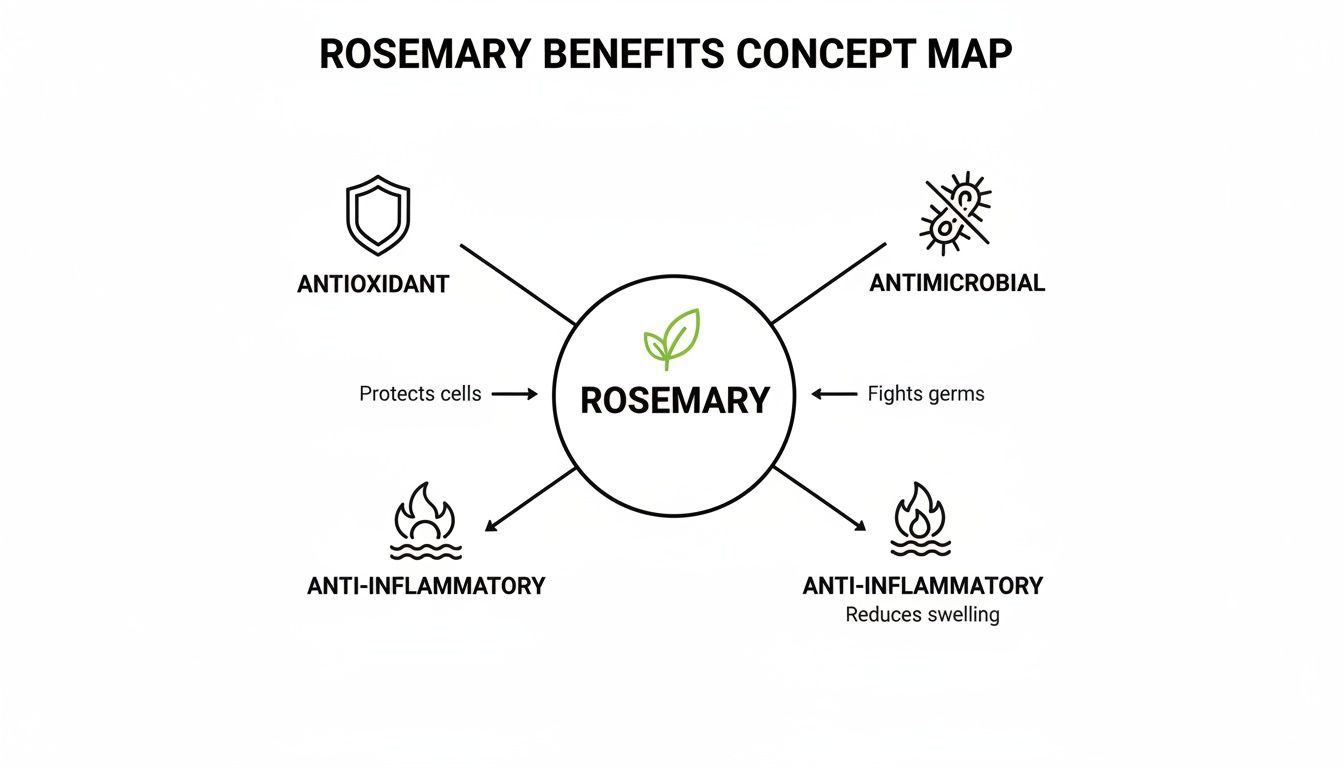
This visual shows how one simple ingredient can offer multiple layers of support, which is exactly why expert formulation is so vital for unlocking these benefits safely.
When to Exercise Caution
While food-grade rosemary extract is widely considered safe, there are a few situations where you’ll want to be a little more careful. The main concern you might have heard about involves dogs with pre-existing seizure disorders. This worry comes almost entirely from the neurotoxic potential of rosemary essential oil, not the purified extract found in food.
Still, if your dog has any known health condition, your veterinarian is your best resource. A quick chat with them is always the smartest first step, as they can interpret any ingredient in the context of your dog's specific health needs.
It's also worth knowing the difference between an ingredient's properties and a genuine food allergy. True allergies to rosemary are quite rare, but sensitivities can pop up with any ingredient. If you're curious about this, check out our guide on what causes food allergies in dogs to learn more about what to look for.
Ultimately, the safety of rosemary extract for dogs is a story of science, precision, and responsible manufacturing. By choosing products from brands that prioritize veterinary oversight and evidence-based formulas, you can trust that this natural ingredient is working for, not against, your dog's well-being. If you're interested in learning more about the safe and effective use of herbs, you might even consider pursuing a Certificate in Herbalism.
The Art and Science of Formulation: Turning an Ingredient Into a Benefit
When it comes to your dog's food, simply having a "natural" ingredient list isn't the whole story. The real magic, the thing that separates a so-so food from a great one, happens during formulation. This is the careful science of figuring out exactly how much of an ingredient to use and how it should work with everything else in the bowl. This precision is what truly unlocks the benefits of an ingredient like rosemary extract for dogs.
Think of it like building a championship sports team. You can't just throw a bunch of all-stars on the field and hope for the best. A great coach knows precisely which position each player excels in and, more importantly, how they all play together to win. Too much of one star player can actually throw the whole team off balance.
The same idea holds true for your dog's nutrition. Veterinary nutritionists are the coaches, meticulously balancing every single ingredient to create a formula that works in perfect harmony.
The Double-Edged Sword of Dosage
Even the most beneficial, natural ingredients have a sweet spot. Go too far above or below that optimal dose, and a helpful component can quickly become a problem. A perfect example of this delicate balance is palatability—in other words, whether your dog will even eat the food. An ingredient might be packed with health benefits, but if the amount is off, your dog might just turn up their nose.
This isn't just a theory. An experimental trial with Rottweilers really drove this point home. Researchers found that a diet containing just 0.05% rosemary powder—a tiny amount!—led to noticeable weight loss and was the most frequently refused food among all the groups in the study. You can dig into the details to see how these findings highlight the need for precise dosing.
It's a critical lesson: the line between helpful and harmful can be incredibly fine. This is why a "DIY" approach to adding supplements can be so risky and why professionally formulated pet foods are so valuable. The experts have already done the complex math for you.
Expert formulation isn't just about including good ingredients; it's about including them at the exact right levels. This precision ensures your dog gets the health benefits while also loving the taste of their food, bowl after bowl.
By getting the dosage just right, formulators can harness all the good stuff while avoiding downsides like poor taste or an upset stomach. It's how a simple ingredient becomes a reliable benefit for your dog. For a deeper dive into how this works for preservation, check out our guide on natural dog food preservatives.
Precision Unlocks Potential
The need for precise formulation gets even more exciting when you look at the frontiers of nutritional science. Beyond just keeping food fresh, rosemary extract is showing real promise in other areas of canine health—but unlocking that potential is all about controlled application.
For example, early research has explored its anti-cancer properties. Lab studies on canine cancer cells found that rosemary leaf extract was a powerful inhibitor of their growth, especially when paired with turmeric root extract. This is incredible news, but it comes with a huge caveat: these effects were seen in a tightly controlled lab setting using a very specific, concentrated dose.
This kind of research highlights two crucial points:
- Synergy Matters: The benefits were boosted when combined with another specific ingredient (turmeric). This shows the power of smart, synergistic formulation.
- Control is Everything: These are not results you can get by just sprinkling some herbs from your spice rack onto your dog's dinner. The concentration and purity of the extract were absolutely vital.
This is exactly why you should trust foods developed by teams who live and breathe this science. At JoyFull, our formulas are created with this level of detail. Our veterinary experts don't just ask what an ingredient is; they focus on what it can do at a specific, safe, and effective level. It’s a meticulous approach that ensures every single component, including rosemary extract, is there for a reason and is truly contributing to your dog's health and happiness.
Reading Pet Food Labels Like a Pro
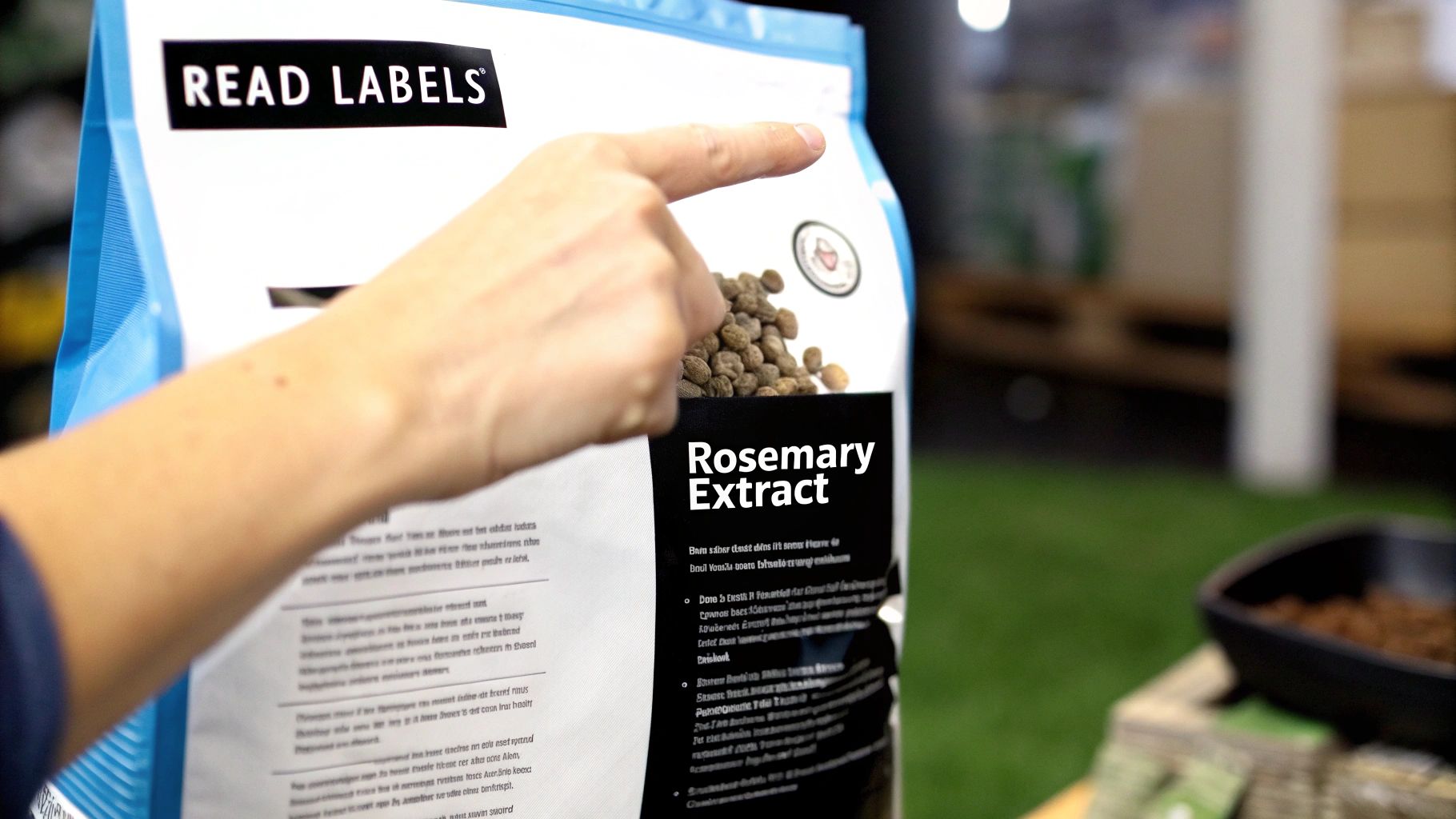
Trying to decipher a pet food ingredient list can feel like you need a secret decoder ring. But once you learn the language, you can make confident, informed choices for your dog. Spotting an ingredient like rosemary extract will become a simple, reassuring task instead of a point of confusion.
First thing's first: ingredients are listed by weight, starting with the heaviest. This is why you'll see primary proteins and carbs—like chicken, lamb, or sweet potatoes—right at the top. Preservatives like rosemary extract are only needed in tiny, precise amounts, so you'll almost always find them near the bottom of the list.
Seeing it down there is a great sign. It confirms its role is purely functional—to keep the food fresh—and not to be a major nutritional component. This placement tells you the manufacturer is using it within the safe, effective levels established by veterinary nutritionists.
Decoding Your Dog's Food Label
As you scan the label, you'll probably come across a few different ways rosemary is listed. They aren't all the same, and knowing the difference helps you understand exactly what you're feeding your dog.
This quick guide will help you decode the ingredient panel.
| Ingredient Listed | What It Likely Means | What to Look For |
|---|---|---|
| Rosemary Extract | The purified, concentrated antioxidant form. This is the gold standard for natural preservation. | This is the specific term you want to see. It signals a precise, functional ingredient is being used for freshness. |
| Natural Flavor | A broad, regulated term for ingredients used to enhance taste. Rosemary might be included, but it's for flavor. | While not harmful, this term doesn't guarantee any preservative benefits. |
| Rosemary | The dried, ground herb itself. While safe in small amounts, it lacks the standardized power of the extract. | This is more of a seasoning. It doesn't offer the same reliable antioxidant protection as the extract. |
Ultimately, a brand that lists "rosemary extract" specifically is showing you its hand—it's using a targeted ingredient for a specific, important job.
Your Label-Reading Checklist
Ready to put this knowledge into practice? The next time you're looking at a bag of dog food, run through this quick mental checklist. If you want to dive even deeper, check out our complete guide on how to read dog food labels.
- Find the Preservative: Scan toward the bottom of the ingredient list. Look for "rosemary extract" or other natural preservatives like "mixed tocopherols" (which is a source of Vitamin E).
- Check for Specificity: Does the label say "rosemary extract"? That's exactly what you want to see for preservation. Vague terms like "natural flavors" don't give you the same confidence.
- Glance at the Top: While you're at it, look at the first few ingredients. Do you see high-quality, named protein sources? This confirms the food has a solid nutritional foundation to begin with.
Following these simple steps turns a potentially confusing chore into an empowering act of care. You’re no longer just buying food; you're actively confirming that every single ingredient, from the main protein down to the hard-working preservative, was chosen with your dog's well-being in mind.
Common Questions About Rosemary Extract in Dog Food
Even when you've done your homework on an ingredient, a few specific questions always seem to pop up. And when it comes to your dog's food, you deserve total peace of mind. Let’s tackle some of the most common questions about rosemary extract for dogs with clear, straightforward answers.
Think of this as your go-to FAQ. We'll clear up concerns about specific health conditions, different life stages, and more, all to help you feel confident about what's in your dog's bowl.
Is Rosemary Extract Safe for Dogs with Seizures?
This is probably the most important question we hear, and it comes from a very valid place. The concern actually originates from rosemary essential oil, not the extract used in food. The essential oil is a highly concentrated product containing volatile compounds like camphor, which can be neurotoxic and are thought to potentially trigger seizures in sensitive dogs.
The food-grade rosemary extract used in pet food, however, is a completely different thing. It goes through a specific purification process that isolates the helpful antioxidants—like carnosic acid and carnosol—and gets rid of those volatile oils.
At the very tiny, standardized levels used to keep dog food fresh, it's widely considered to be safe. The amount is just enough to do its job as a preservative, falling far below any level that would cause concern.
That said, if your dog has a history of seizures, the #1 rule is to talk to your veterinarian. They are your best partner for all things health-related and can give you advice tailored specifically to your dog's medical history.
Can I Give My Dog Fresh Rosemary From My Garden?
While a tiny nibble of a fresh rosemary leaf probably won't hurt most dogs, it's absolutely not a substitute for the standardized extract in their food. The two serve entirely different purposes.
The extract is a concentrated, precisely measured dose of antioxidants, scientifically proven to preserve food. Fresh rosemary from your garden just doesn't have that kind of preservative muscle.
Plus, the potency of a fresh plant can vary a lot. Feeding your dog a larger amount could easily lead to an upset stomach. It's always best to stick with professionally formulated products where every ingredient has a purpose and is used at a safe, controlled level.
Why Do Some Natural Dog Foods Use Other Preservatives?
Rosemary extract is a fantastic natural preservative, but it’s not the only one on the block. It's perfectly normal to see other high-quality, natural preservatives on an ingredient list.
- Mixed Tocopherols: This is one of the most common and effective natural options out there. It's basically a concentrated form of Vitamin E, a powerful antioxidant that does an amazing job of keeping fats from going rancid.
- Ascorbic Acid: You probably know this one as Vitamin C. It also has antioxidant properties and is often used to help maintain the freshness and even the color of pet food.
The choice of preservative really comes down to the food's specific recipe. Different fats and nutrients sometimes need different kinds of protection to stay stable and fresh on the shelf. You might also see some brands marketing themselves as "herb-free" to appeal to owners of dogs with known sensitivities.
The main takeaway here is that not seeing rosemary extract on the label doesn't make a food bad. What really matters is that the brand uses a safe, effective, and clearly labeled preservative system to keep the food fresh and nutritious for your dog.
Is Rosemary Extract Safe for Puppies and Senior Dogs?
Yes, absolutely. When used at the low, regulated levels found in commercial dog foods that follow AAFCO (Association of American Feed Control Officials) guidelines, rosemary extract is considered safe for dogs of all ages—from rambunctious puppies to cherished seniors.
For older dogs, the antioxidant boost can actually be a great thing. The aging process naturally brings on more oxidative stress, and the antioxidants in the extract can help support their overall cellular health.
For puppies, the main focus should always be on a diet formulated for their specific growth needs. As long as you're feeding a high-quality, age-appropriate food from a reputable company, the tiny amount of rosemary extract used for preservation is perfectly safe and won't get in the way of their development.
At JoyFull, we believe you should know and feel good about every single ingredient in your dog's food. Our recipes are carefully developed and reviewed by veterinary experts to ensure everything—from our high-quality proteins to natural preservatives like rosemary extract—is chosen for its safety, benefits, and ability to help your pet live a long, happy life. Explore our commitment to clean, beneficial ingredients at https://joyfullpet.com.