


Prebiotics in Dog Food: prebiotics in dog food for digestive health
You've probably heard the term prebiotics popping up more and more in conversations about dog health, and for good reason. These aren't just another passing fad; they're a cornerstone of modern canine nutrition, backed by solid science.
So, what are they exactly? Simply put, prebiotics are a special type of non-digestible fiber. Their whole purpose is to feed the good bacteria—the probiotics—that are already living inside your dog's gut. They act as fuel, helping the beneficial microbes thrive and supporting everything from digestion to immunity.
Why Your Dog’s Gut Health Depends on Prebiotics

Think of your dog's gut like a bustling garden. To get a beautiful, healthy garden, you need more than just seeds; you need high-quality fertilizer to help everything grow strong. In this scenario, prebiotics are the specialized fertilizer for your dog's internal garden.
Their job isn't to add new bacteria. Instead, they selectively nourish and strengthen the friendly microbes that are already there.
When the good bacteria flourish, they create a balanced, thriving gut microbiome. This healthy environment makes it much harder for harmful pathogens to take hold, building a natural line of defense. A well-fed microbiome is the secret to unlocking health benefits that go way beyond just a happy tummy.
The Foundation of Canine Wellness
A healthy gut truly is the command center for your dog's overall well-being. When you add prebiotics to their diet, you're making a direct investment in this critical system. Here’s what a well-nourished gut really does:
- Improves Digestive Function: Prebiotics are fantastic for regulating bowel movements. This means firmer, more consistent stools and less of that occasional digestive upset.
- Enhances Nutrient Absorption: A balanced gut is way more efficient at pulling essential vitamins and minerals from your dog's food, making sure they get the most out of every bite.
- Strengthens the Immune System: A huge part of your dog's immune system is located in the gut. A healthy microbiome is absolutely essential for helping them fight off illnesses.
- Reduces Inflammation: As prebiotics ferment, they create beneficial compounds that help manage and reduce inflammation throughout the body.
Prebiotics aren't just a "nice-to-have" ingredient; they're a foundational building block for a resilient gut. By fueling the good bacteria, you're setting your dog up for long-term health and vitality.
This is why we're seeing a massive shift in how pet parents think about nutrition. The global pet prebiotics market is expected to hit USD 855.6 million by 2035, which shows just how much their importance is being recognized. This boom is driven by owners who are investing in their dog's wellness with ingredients like inulin and Fructooligosaccharides (FOS). You can read more about these pet prebiotic market trends to see why this is much more than a temporary trend.
At the end of the day, a balanced gut is the key to a happy, healthy dog. By understanding how to support it, you can make smarter choices that truly improve their health from the inside out. For a deeper dive, check out our guide on how to improve dog gut health.
Understanding Prebiotics Versus Probiotics
It’s incredibly common to mix up "prebiotics" and "probiotics." They sound alike, and while their roles in your dog's gut are distinct, they’re also beautifully connected. Think of them as a team working together to cultivate a thriving internal ecosystem.
Getting a handle on this difference is the first step to understanding why prebiotics in dog food are so fundamental to your dog's overall health.
If we stick with our garden analogy, think of your dog's gut as a garden plot.
- Probiotics are the seeds. They are the live, beneficial bacteria that you can add to the garden to help it flourish.
- Prebiotics are the specialized fertilizer. They aren't live organisms. Instead, they are unique dietary fibers that your dog can't digest in their stomach or small intestine. They travel all the way to the colon to selectively feed the friendly bacteria already living there.
The relationship is symbiotic—the good bacteria (probiotics) need the right food (prebiotics) to thrive. One simply can't do its job without the other.
Why the "Fertilizer" Is So Important
So, why the big focus on the fertilizer? While adding new seeds (probiotics) can certainly help, making sure the soil is rich and nourishing creates a much more stable, long-term solution for gut health. This is where prebiotics really shine, especially when we're talking about commercial dog food.
Probiotics are delicate. As living organisms, they are extremely sensitive to heat, moisture, and even air. This makes it tough for them to survive the intense cooking process used to make kibble, not to mention the harsh, acidic environment of a dog's stomach. Many don't make it to where they're needed most.
Prebiotics, on the other hand, are much more rugged. As a type of fiber, they are naturally stable and can easily handle both the food manufacturing process and the long journey to your dog's colon.
The resilience of prebiotic fibers ensures they arrive intact in the large intestine. There, they become a guaranteed food source for your dog's native beneficial bacteria, helping them flourish and multiply all on their own.
This makes a diet rich in prebiotics in dog food a remarkably effective and reliable way to support and maintain a balanced gut microbiome, day in and day out.
Prebiotics vs Probiotics At a Glance
Let's lay out the key differences in a simple chart. This really helps clarify how each one contributes to your dog’s digestive wellness.
| Attribute | Prebiotics (The Fertilizer) | Probiotics (The Seeds) |
|---|---|---|
| What They Are | A non-living, non-digestible fiber that acts as food for good bacteria. | Live, beneficial microorganisms (bacteria and yeasts). |
| Primary Function | To selectively nourish and stimulate the growth of existing good bacteria. | To introduce new beneficial bacteria into the gut ecosystem. |
| Stability | Highly stable. Easily survives food processing, shelf life, and stomach acid. | Fragile. Sensitive to heat, air, and moisture; may not survive to the colon. |
| Found In | Fiber-rich ingredients like chicory root, beet pulp, and inulin. | Fermented foods, supplements, and specially formulated dog foods. |
As you can see, a food thoughtfully formulated with high-quality prebiotics provides a powerful foundation for gut health by strengthening your dog’s own internal army of good microbes. For a deeper dive into how these components work together, you can read more about the interconnected roles of prebiotics, probiotics, and enzymes in maintaining gut health.
Ultimately, both have an important part to play. But by consistently providing the "fertilizer," you empower your dog's gut to sustain its own healthy, diverse, and resilient community of good bacteria for the long haul.
The Science-Backed Benefits for Your Dog
So, we've covered what prebiotics are and how they're different from probiotics. Now, let's get to the good stuff: the powerful, positive results they can deliver for your dog. Adding prebiotics in dog food isn't just about digestion; it kicks off a chain reaction of positive effects that supports your dog's health from the inside out. Think of it as turning their gut into a powerhouse for overall wellness.
This visual helps illustrate the distinct but cooperative roles prebiotics (the fertilizer) and probiotics (the seeds) play in nurturing your dog's gut garden.
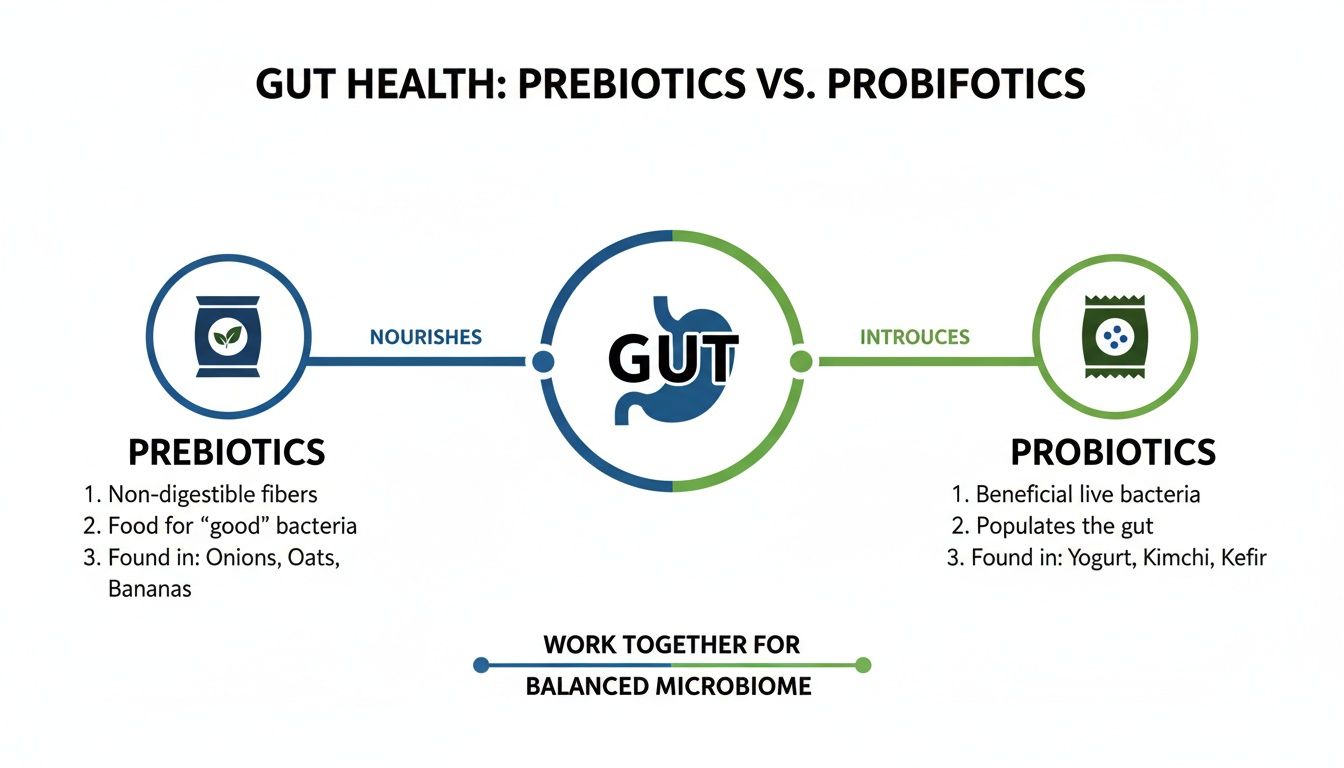
As you can see, prebiotics are the fuel that helps beneficial probiotic bacteria flourish, creating a gut environment that’s balanced, resilient, and ready to get to work.
Igniting the Gut Engine with SCFAs
The real magic of prebiotics happens through a process called fermentation. When these special fibers make their way to your dog’s colon, the good bacteria throw a party and start feasting on them. This process creates some incredibly valuable byproducts called Short-Chain Fatty Acids (SCFAs).
SCFAs are the unsung heroes of your dog’s gut. These molecules—mainly acetate, propionate, and butyrate—are the key that unlocks many of the health benefits we associate with prebiotics.
Butyrate, in particular, is a standout. It’s the primary energy source for the cells lining your dog's colon (called colonocytes). By keeping these cells fueled and healthy, butyrate helps maintain a strong, secure gut barrier.
A strong gut barrier is critical. It acts like a bouncer at a club, letting essential nutrients into the bloodstream while keeping harmful toxins and pathogens out. This helps keep system-wide inflammation in check and supports overall health.
The impact of these ingredients is so clear that demand is soaring. Dogs now account for 78% of the pet biotics market, a trend fueled by solid research showing just how effective prebiotics are for common issues like loose stools. With prebiotics expected to be the fastest-growing segment by 2035, their role in supercharging canine health is no longer a secret. You can discover more insights about the pet biotics market and its impressive growth.
Better Digestion and Nutrient Absorption
Often, one of the first things pet parents notice after switching to a food rich in prebiotics is a dramatic improvement in their dog's digestion. It makes sense—a well-fed microbiome is an efficient one.
Here’s what that looks like in the real world:
- Firmer, More Consistent Stools: By promoting a healthy balance of gut microbes, prebiotics help regulate water in the colon, leading to predictable and well-formed stools. It’s a clear outward sign of a happy internal ecosystem.
- Reduced Gas and Bloating: An out-of-whack gut often produces a lot of excess gas. Prebiotics help the good bacteria outnumber the gas-producers, leading to a much more comfortable (and less gassy) pup.
- Enhanced Nutrient Uptake: The SCFAs produced during fermentation help lower the pH of the colon. This slightly more acidic environment makes it easier for your dog's body to absorb key minerals like calcium, magnesium, and iron from their food. They get more nutritional bang for their buck from every single meal.
In short, prebiotics don't just pass through the system. They actively work to optimize the entire digestive process, ensuring your dog gets the maximum benefit from their diet.
Bolstering the Immune System
Did you know that roughly 70% of your dog's immune system resides in their gut? That makes a healthy gut microbiome one of the most important first lines of defense against illness.
Prebiotics play a huge part in strengthening this defense system. By nourishing beneficial bacteria, they help maintain the integrity of the gut lining, which acts as a physical wall against invading pathogens.
Beyond just being a barrier, a balanced microbiome helps "train" the immune system to respond correctly. It learns to ignore harmless things while launching a swift, strong attack against real threats. This can lead to a more resilient dog that's better equipped to fight off infections and may even have fewer allergy symptoms over time. Every bowl of food containing high-quality prebiotics is a direct investment in your dog's long-term immune strength.
How to Spot Prebiotics on a Dog Food Label
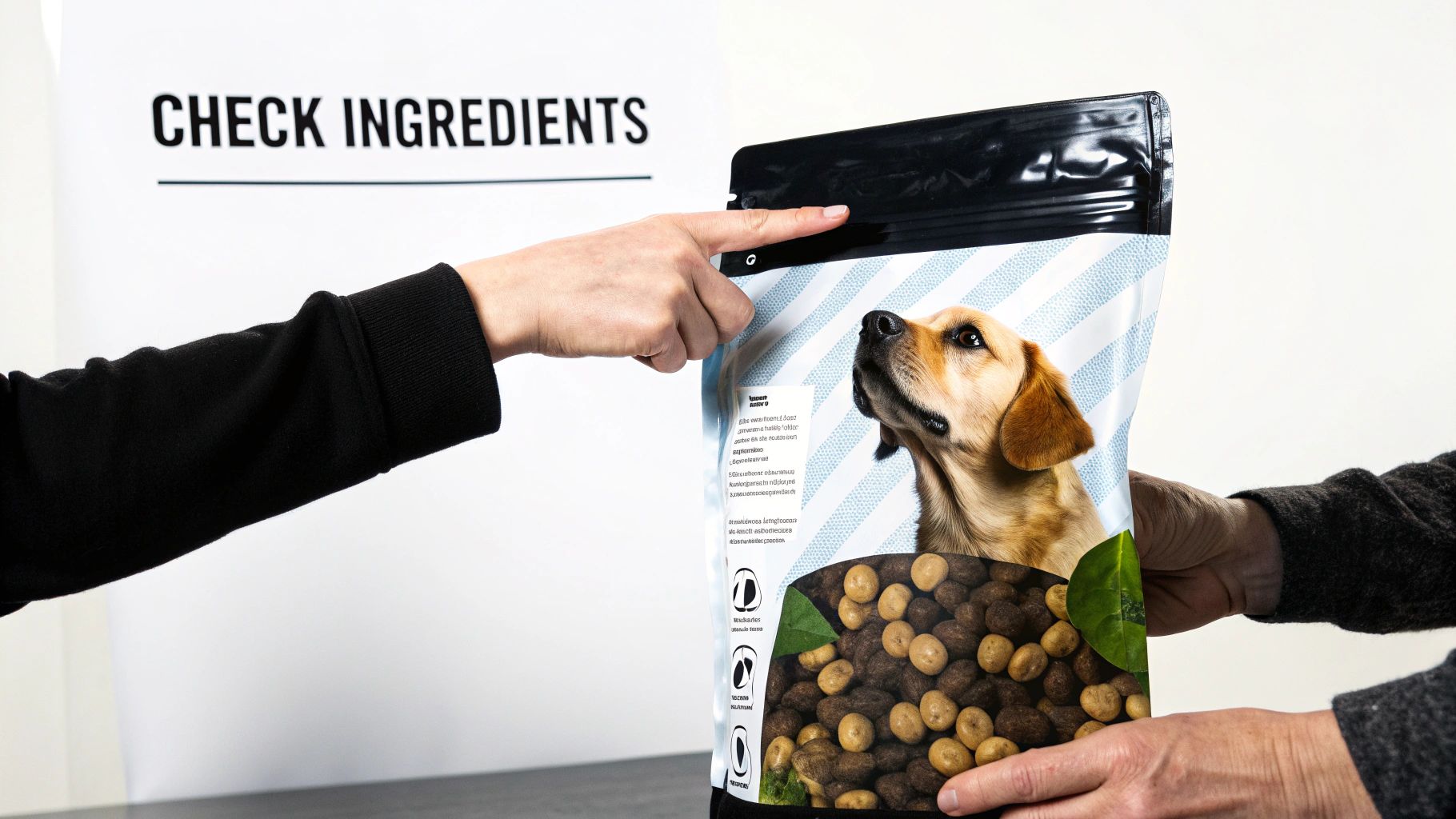
Knowing what prebiotics can do for your dog is the first step. The real magic happens when you can confidently pick out a gut-friendly food at the store. Learning to read an ingredient label can feel like trying to crack a secret code, but it doesn't have to be intimidating.
With a few key things to look for, you can quickly become a pet food detective.
The ingredient list is your direct line of sight into your dog's nutrition. By law, ingredients are listed by weight, meaning what you see at the top makes up the bulk of the food. When searching for prebiotics in dog food, you want to find them listed as intentional, functional ingredients—not just an afterthought buried at the end of a long, confusing list.
Spotting the Prebiotic Powerhouses
When you scan the label of a high-quality, science-backed dog food, a few names should jump out at you. These are some of the most common and effective prebiotic sources. They might sound a bit technical, but their job is simple: feed your dog's good gut bugs.
Here’s a quick reference guide to help you identify the good stuff.
Common Prebiotic Ingredients in Dog Food
| Ingredient Name | What It Is | How It Helps Your Dog |
|---|---|---|
| Chicory Root | A plant root that is a fantastic source of inulin, a powerful prebiotic fiber. | Feeds beneficial bacteria like Bifidobacteria, promoting a healthy gut environment. |
| Fructooligosaccharides (FOS) | Naturally occurring sugars found in plants like chicory. | Supports a balanced microbiome and helps improve your dog's stool quality. |
| Inulin | A specific type of soluble fiber often extracted from chicory root. | Travels undigested to the colon, where it becomes a feast for friendly gut microbes. |
| Mannan-oligosaccharides (MOS) | A compound derived from the cell walls of yeast. | Has a dual action: feeds good bacteria and helps block harmful bacteria from sticking to the gut lining. |
| Beet Pulp | A fiber-rich byproduct of sugar beet processing. | Provides a steady source of energy for colon cells and supports the production of vital SCFAs. |
Seeing these names on an ingredient panel is a great sign. It shows the brand is formulating its food with your dog's digestive health in mind. For a deeper dive into decoding ingredient panels, check out our complete guide on how to read dog food labels.
Why the Right Amount is Everything
Finding these ingredients is one thing, but their effectiveness comes down to precise formulation. This is where science and expertise become non-negotiable.
Simply tossing a pinch of chicory root into a recipe isn’t enough to make a difference. On the flip side, adding too much can easily backfire, leading to gas or loose stools.
The goal of a well-formulated dog food is to hit that nutritional sweet spot—providing a precise, balanced dose of prebiotics that delivers consistent benefits without overwhelming your dog's digestive system.
Reputable companies invest in research and consult with veterinary nutritionists to nail down these inclusion levels. They ensure the prebiotics work in harmony with the proteins, fats, and other nutrients in the food to support your dog’s overall wellness.
The Problem with DIY Guesswork
It might be tempting to try supplementing your dog’s diet with prebiotics on your own, but it’s a risky game. It's nearly impossible for a pet owner to accurately dose these potent fibers at home. You could easily cause the very digestive issues you’re trying to solve.
- Risk of Overdoing It: Too much of a good thing can send the gut bacteria into overdrive, causing uncomfortable bloating, gas, and diarrhea.
- Creating Imbalance: Prebiotics don't work in a vacuum. A professionally formulated food ensures they are balanced with every other nutrient for maximum impact.
- Inconsistent Dosing: Eyeballing a sprinkle of inulin powder at mealtime isn't a reliable strategy for long-term health. Consistency is key.
By far the safest and most effective approach is to choose a food that already includes guaranteed levels of prebiotics. It takes the guesswork completely out of the equation. This science-first philosophy ensures your dog gets a safe, consistent, and beneficial amount in every single bowl—giving you peace of mind and results you can actually see.
Choosing the Best Food with Quality Prebiotics
So, you know what prebiotics are and which ones to look for on an ingredient label. Now comes the fun part: putting that knowledge to work in the pet food aisle.
Choosing the right dog food means becoming a bit of a detective. You have to look past the shiny bags and marketing promises to focus on what really matters—the ingredient list. The goal isn't just to find a food with prebiotics, but to find one that truly supports your dog's gut health for the long haul.
A great rule of thumb is to check for whole-food prebiotic sources high up on the ingredient panel. When you see things like chicory root, beet pulp, or flaxseed listed near the top—before the long list of vitamins and minerals—it’s a good sign they’re included in meaningful amounts. It shows the brand is committed to functional nutrition, not just sprinkling in trendy ingredients.
But remember, prebiotics don’t exist in a vacuum. Their magic is most potent when they’re part of a complete, high-quality diet. Think of it like this: the best fertilizer in the world won’t do much good in a garden that’s already full of weeds and poor soil. The overall quality of the food is just as important.
Look for a Holistic Nutritional Profile
A truly gut-friendly food is built on a solid foundation of high-quality, easily digestible ingredients. Here’s what a well-rounded formula should always include:
- High-Quality Proteins: The first ingredient should be a named protein source, like chicken, beef, or fish. This is crucial for providing the essential amino acids your dog needs for strong muscles and overall vitality.
- Healthy Fats: Look for ingredients like fish oil or flaxseed. These supply the omega fatty acids that are critical for a healthy skin and coat, not to mention brain function.
- No Unnecessary Fillers: Try to avoid foods that lean heavily on low-quality fillers like corn, wheat, and soy. For some dogs, these ingredients can do more harm than good for their digestion.
This growing demand for foods that do it all is a big reason the pet prebiotics market is booming—it's projected to hit USD 1,232.5 million by 2030. Pet parents are catching on, and because prebiotics are so stable, they're much easier to add to dry dog food formulas than their probiotic cousins.
For a deeper dive into what makes a great formula, check out our guide to choosing the best dog food for digestive health.
Red Flags to Watch Out For
Knowing what to look for is half the battle. Knowing what to avoid is the other half. Certain things on a pet food label should give you pause, as they can signal a lower-quality product that won't deliver the digestive support you're after.
A big one? Vague ingredient descriptions. Steer clear of foods with mystery ingredients like "meat by-products" or "animal fat." These non-specific terms can hide a wide range of low-quality sources and suggest a lack of transparency from the manufacturer.
Other red flags include:
- Artificial Additives: Artificial colors, flavors, and preservatives offer zero nutritional value and can sometimes trigger sensitivities in our dogs.
- Excessive Sweeteners: Ingredients like corn syrup or sucrose are completely unnecessary and can throw the gut microbiome out of balance.
- Vague Formulations: If a brand doesn’t explain why it includes certain functional ingredients, it might just be trend-chasing.
When you're comparing foods, it pays to look beyond just prebiotics to the overall ingredient quality. For example, some forward-thinking brands are exploring novel, sustainable proteins, like those discussed in this helpful resource on Black Soldier Fly Larvae for animal feed, which offer their own unique benefits.
Ultimately, the best choice comes down to finding a brand that is transparent, uses high-quality ingredients, and takes a science-first approach to nutrition. That way, you know every bowl you feed is a step toward a healthier, happier dog.
Common Questions About Prebiotics for Dogs
It's one thing to understand what prebiotics are, but it's another to know how they fit into your dog's daily life. It’s completely normal to still have questions—navigating your dog's nutrition can feel like a big responsibility.
Let's walk through some of the most common questions we hear from fellow dog lovers. Our goal is to give you clear, straightforward answers so you can feel confident you're making the best choices for your best friend.
Can I Give My Dog Too Many Prebiotics?
Yes, you can definitely have too much of a good thing. Balance is everything when it comes to fiber, and that includes prebiotics. While they’re incredibly helpful, piling on too many can overwhelm your dog’s digestive system.
An excess of prebiotics essentially gives the good bacteria too much fuel, causing them to go into overdrive with fermentation. The result? Uncomfortable symptoms like gas, bloating, and loose stools. This is precisely why a professionally formulated dog food is the safest route.
A thoughtfully crafted recipe contains a precise, optimal amount of prebiotics to support gut health without causing digestive upset. It takes the guesswork out of the equation, ensuring your dog gets just what they need in every single meal.
If you're thinking about adding a separate prebiotic supplement to your dog's routine, it’s always a good idea to chat with your vet first. They can help you figure out if it’s the right move for your dog’s specific situation.
How Long Until I See Results from Prebiotics?
Patience is a virtue here. The timeline for seeing a change depends on your dog’s individual gut health, their age, and what their diet was like before. But you can generally look for a few milestones along the way.
- Short-Term Changes (1-2 Weeks): Often, the first thing you’ll notice is an improvement in your dog's poop. Within a week or two, you might see firmer, more regular, and more consistent bowel movements.
- Long-Term Benefits (4-8 Weeks): The deeper benefits—like a glossier coat, healthier skin, or a more robust immune system—take a bit longer to show. These changes happen as the gut microbiome truly finds its balance and starts influencing the rest of the body’s systems.
Consistency is everything. A steady, daily supply of prebiotics allows the good gut bacteria to really set up shop and thrive, which is what leads to those lasting wellness benefits.
Are Prebiotics Good for Puppies and Senior Dogs?
Absolutely. In fact, prebiotics are beneficial for dogs at every single life stage, from clumsy puppies to wise old seniors. Their role just shifts a bit to meet the needs of each phase of life.
For puppies, a healthy gut is the bedrock of a strong immune system. Starting them on prebiotics early helps build that foundation right from the get-go, giving their good bacteria a head start.
As dogs enter their golden years, their digestive systems can slow down and become less efficient. Prebiotics can help maintain regularity and even improve nutrient absorption, making sure they get the most out of their food. Just make sure you're feeding a food specifically formulated for their current life stage to cover all their nutritional bases.
Does Every Dog Need Prebiotics in Their Diet?
While any dog will benefit from a well-balanced gut, prebiotics are especially helpful for dogs with sensitive stomachs. If your dog frequently deals with gas, occasional loose stools, or general digestive upset, a diet that includes high-quality prebiotics in dog food can be a game-changer.
For dogs that are already the picture of health, think of prebiotics as a form of proactive wellness. They help maintain that healthy gut balance, support the immune system long-term, and contribute to your dog’s overall vitality. They aren't just for fixing problems—they're a key part of a truly complete, health-focused diet that invests in your dog's future.
At JoyFull, we believe a healthy gut is the cornerstone of a happy life. That's why our formulas are crafted with clean ingredients and high-quality prebiotics to support your pet's wellness from the inside out. Explore our science-first approach to pet nutrition at https://joyfullpet.com.