


A Guide to Ingredients in Pet Food
At its core, pet food is built from six fundamental building blocks: proteins like chicken or fish, fats and oils, carbohydrates from grains or veggies, and a blend of essential vitamins, minerals, and preservatives. Getting a handle on how these pieces fit together is the first real step toward understanding what’s in your pet’s bowl and making sure it's truly a balanced meal.
Why Pet Food Ingredients Suddenly Feel So Complicated
Ever found yourself frozen in the pet food aisle, staring at a wall of brightly colored bags and feeling completely lost? You're not alone. What should be a simple task—feeding your pet—often feels like an impossible pop quiz. So, why did it get this complicated?
It's because our relationship with our pets has fundamentally changed. They aren't just animals living in our homes anymore; they're family. This deep emotional shift, often called "pet humanization," means we now care about what’s in their food bowls just as much as we care about what's on our own dinner plates. We want them to have the same quality and nutrition we demand for ourselves.
The Rise of the Conscious Pet Parent
This change in mindset has sparked a huge industry evolution. In 2023, the global market for pet food ingredients was valued at over $32 billion, and it's easy to see why when you consider that nearly 70% of U.S. households now include a pet. As more of us become pet parents, the demand for better, more transparently sourced ingredients skyrockets. You can see more on the trends driving this at GrandViewResearch.com.
This new reality puts every single word on a pet food label under a microscope. Vague terms that once went unnoticed, like "by-product," "meal," and "digest," now feel like red flags. You might find yourself asking questions like:
- What is "chicken meal," really?
- Are grains a friend or foe for my dog?
- Should I be worried about that long list of chemical-sounding names?
These are exactly the right questions to be asking. We've moved from just filling the bowl to thoughtfully curating a meal, but all the marketing hype and conflicting advice can make it incredibly hard to know what’s right.
This guide is here to cut through all that noise. We’re going to take apart pet food labels, piece by piece, turning confusing jargon into a clear roadmap for your pet’s health.
Our aim is to give you the confidence to make the best choices for your furry family member. By the time we're done, you won't just be grabbing a bag of kibble—you'll be actively investing in a foundation for their long, healthy, and happy life. Let's dive in.
2. Understanding the Macronutrient Building Blocks
Every single pet food formula, whether it's a bag of kibble or a can of wet food, is built on three nutritional pillars: proteins, fats, and carbohydrates. Think of them as the fundamental building blocks of your pet's diet. Getting a handle on what each one does is the first real step to reading an ingredient label with confidence.
Just like a house needs a strong frame, solid foundation, and reliable wiring, your pet's body needs the right mix of these "macros" to thrive. Getting that balance right fuels everything from their energy for a game of fetch to the strength of their immune system.
Proteins: The Body Builders
Protein is, without a doubt, the most important component on that list, especially when we're talking about our carnivorous and omnivorous pets. It’s the bricks and mortar for their entire body. Proteins build and repair everything—strong muscles, healthy skin, a shiny coat, and even vital immune system components like antibodies.
Proteins are made up of smaller units called amino acids. Dogs can make some of these on their own, but there are ten essential amino acids they absolutely must get from their food. Cats, as obligate carnivores, are even more demanding. They need extra amino acids, like taurine, which they can only get from animal-based sources.
A Quick Note on Cats: For felines, a diet without animal protein isn't just a bad idea—it's biologically impossible for them to be healthy. Their bodies are specifically designed to get certain nutrients only from meat. A deficiency can lead to severe health problems, including devastating heart conditions and blindness.
Where that protein comes from is a huge deal. You want to see high-quality, clearly identified sources on the label.
- Excellent Sources: Look for specific, named meats like deboned chicken, beef, lamb, or salmon. Nutrient-packed organ meats like liver and heart are fantastic additions.
- Be Cautious Of: Vague, generic terms like "meat by-products" or "animal digest" are red flags. These are often inconsistent, lower-quality ingredients that don’t tell you what animal they actually came from.
Fats: The Long-Burning Fuel
Fat often gets a bad rap in the human world, but for our pets, it’s a powerhouse of concentrated energy. If carbs are like the kindling for a quick burst of heat, fats are the slow-burning logs that provide steady, sustained energy all day long. In fact, fat provides more than twice the energy per gram compared to protein or carbs.
But it’s not just about fuel. Essential fatty acids—like the famous Omega-3s and Omega-6s—are critical for brain health, keeping inflammation in check, and maintaining that soft, glossy coat we all love.
High-Quality Fats to Look For:
- Chicken Fat (a very common and excellent source)
- Fish Oil (like salmon oil, which is packed with Omega-3s)
- Flaxseed and Sunflower Oil (great plant-based options)
Carbohydrates: The Quick-Energy Source
Carbohydrates are all about providing quick, accessible energy for daily activities, whether it's a walk around the block or a classic case of the "zoomies." In dry pet food, they also serve a very practical purpose: they help form the kibble's shape and texture, holding it all together.
While dogs don't have a strict biological need for carbs, the right ones provide valuable fiber for good digestion, plus other vitamins and minerals. The trick is to spot the difference between healthy, complex carbs and cheap, simple fillers.
- Beneficial Carbs: Sweet potatoes, peas, brown rice, and oats offer slow-release energy and plenty of good fiber.
- Lower-Quality Fillers: Ingredients like corn, wheat, and soy are often used simply because they’re inexpensive. For some pets, they can also be common allergens.
To help you quickly tell the good from the not-so-good, here's a simple breakdown of what to look for on an ingredient panel.
Good vs. Questionable Ingredient Sources
This table is a handy cheat sheet for spotting high-quality ingredients versus the vague, low-quality alternatives you might find on a pet food label.
| Macronutrient | High-Quality Sources (What to Look For) | Lower-Quality Sources (Be Cautious Of) |
|---|---|---|
| Protein | Deboned Chicken, Beef, Lamb, Salmon, Duck, Turkey, Eggs, Liver, Heart | "Meat By-Products," "Animal Digest," "Meat and Bone Meal" (unspecified source) |
| Fat | Chicken Fat, Salmon Oil, Sunflower Oil, Flaxseed Oil | "Animal Fat" (unspecified), Lard, Vegetable Oil (unspecified) |
| Carbohydrate | Sweet Potatoes, Peas, Oats, Brown Rice, Barley, Quinoa, Lentils | Corn, Wheat Gluten, Soy, Potato Product, Artificial Colors, Sugar |
Think of this as a starting point. Seeing ingredients from the "High-Quality" column is a great sign, while a list dominated by the "Lower-Quality" column should give you pause.
The pet food industry itself reinforces this focus on quality. High-value proteins are king, with amino acids alone accounting for a massive 30.9% of the ingredient market share in 2022. Cereals, which provide the carbs, came in second. This trend is driven by pet owners demanding better, more transparent formulas. You can dive deeper into these industry insights in this pet food ingredients market report from PR Newswire.
By understanding these three core macronutrients, you're no longer just reading a list of words—you're seeing the very foundation of your pet's diet.
How to Read a Pet Food Label Like an Expert
Staring at a pet food label can feel like trying to decipher a foreign language. But once you know where to look, it all clicks into place. You only need to focus on two key areas—the Ingredient List and the Guaranteed Analysis—to cut through the marketing fluff and truly understand what’s in your pet’s bowl.
The most important rule to remember is the "rule of weight." Ingredients are always listed in descending order based on how much they weighed before cooking. This simple fact is your secret weapon. It means the first five to seven ingredients make up the lion's share of the formula, giving you a quick, honest look at its foundation.
When you see a real, named protein like "deboned chicken" or "salmon" right at the top, that's a fantastic sign. It tells you the main ingredient is a quality animal source—exactly what your dog or cat is built to eat.
First, Decode the Ingredient List
Before you even glance at the percentages, scan the ingredient list. This list tells you about the quality of the components. The analysis, which we'll get to next, tells you the quantity. You really need both pieces of the puzzle.
Think of it this way: knowing a cake has 30% sugar is one thing. But knowing whether that sugar comes from fresh berries or just a pile of high-fructose corn syrup is what really matters. It’s the same with pet food.
As you scan those first few ingredients, be on the lookout for these signs of a high-quality food:
- Specific Animal Proteins: You want to see "chicken," "beef," or "lamb"—not vague, mysterious terms like "meat meal" or "animal by-products."
- Whole Foods: Ingredients like sweet potatoes, peas, and brown rice are a much better sign than processed fragments like "potato product" or "wheat gluten."
- Named Fats: "Chicken fat" or "salmon oil" are transparent, high-quality sources of essential fatty acids. "Animal fat," on the other hand, is a red flag for ambiguity.
Next, Understand the Guaranteed Analysis
Once you’ve sized up the ingredients, shift your focus to the Guaranteed Analysis. This is the box on the label that gives you the minimum and maximum percentages of the most important nutrients. It's often formatted like a human nutrition label these days, making it a bit easier to read.
You’ll always find these four core values:
- Crude Protein (Minimum %): This is the total protein content. Generally, higher is better, especially for active dogs and pretty much all cats.
- Crude Fat (Minimum %): This shows the fat level, which is a critical source of concentrated energy.
- Crude Fiber (Maximum %): This measures the indigestible stuff that helps keep the digestive system running smoothly.
- Moisture (Maximum %): Pay attention to this one! It shows how much water is in the food, which is essential for making fair comparisons.
So, how does your pet's body actually use these nutrients? It's a pretty smart system.
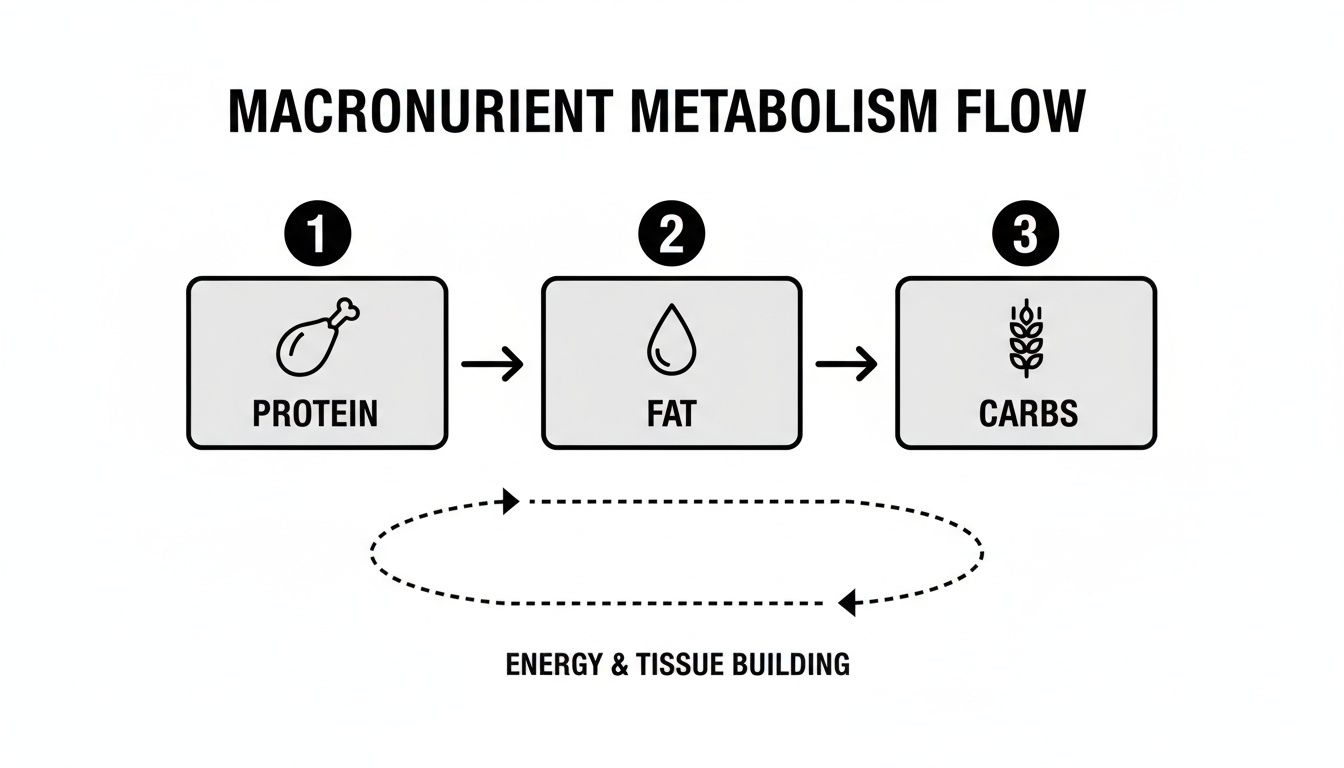
As you can see, the body prioritizes protein for building and repairing tissues, while fats and carbs are the go-to fuels for energy.
The Trick to Comparing Wet and Dry Food
Here’s where many well-intentioned pet parents get tripped up. They try to compare the Guaranteed Analysis of a wet food directly to a dry food, and the numbers just don't line up.
A can of wet food might show 8% protein, while a bag of kibble boasts 30%. The kibble seems like the obvious winner, right? Not so fast. The comparison is misleading because of the huge difference in moisture content.
To get a true, apples-to-apples comparison, you have to look at the nutrients on a dry matter basis (DMB).
Dry Matter Basis Calculation: This is the only way to fairly compare foods with different moisture levels. It essentially removes all the water from the equation so you can see the real concentration of nutrients left behind.
That wet food with 80% moisture has its protein packed into the remaining 20% of dry matter, making it far more concentrated than it appears. Once you do the math, it often has a protein level that rivals or even exceeds that of the kibble.
While you don't need to be a mathematician, understanding this principle is key. For anyone who wants to see the simple steps, our guide on how to read dog food labels breaks it all down.
By using this simple, two-step process—checking the ingredients first, then understanding the analysis—you can demystify any pet food label. You’ll be able to see right past the flashy packaging and make choices based on solid nutritional substance.
Spotting Red Flags and Misleading Marketing Terms
The front of a pet food bag is prime real estate—it's all about marketing, with beautiful pictures and reassuring words. But the real story, the one that matters for your pet's health, is always on the back.
Learning to look past the sales pitch and spot the red flags on the ingredient list is one of the most powerful things you can do as a pet parent. It means knowing what to look for, but also understanding the vague language brands sometimes use to hide lower-quality ingredients in plain sight.
Common Red Flag Ingredients to Avoid
When you’re scanning that ingredient panel, a few words should immediately make you pause. Think of them as shortcuts for identifying a formula that likely prioritizes a low price point over your pet's well-being.
Here are some of the biggest offenders to keep an eye out for:
- Artificial Colors (e.g., Red 40, Yellow 5): These exist for one reason only: to make the food look better to you. Your dog or cat couldn't care less what color their food is, and these synthetic dyes are linked to potential health issues and allergies.
- Chemical Preservatives (BHA, BHT, Ethoxyquin): While dry food needs preservatives to stay fresh, these specific chemicals are highly controversial. Safer, natural alternatives like mixed tocopherols (a form of Vitamin E) and rosemary extract do the job just as well.
- Vague Protein Sources: Terms like "meat by-products" or "animal digest" are deliberately mysterious. This language tells you nothing about the source or quality of the protein. It could be anything from rendered animal tissue to processed scraps. You always want to see a named protein, like "chicken" or "beef."
- Sweeteners (e.g., Corn Syrup, Sugar): Pets don’t need sugar. These are just empty calories that can lead to weight gain and dental problems, often added to make a bland, low-quality food more appealing.
If you want to dig deeper, our full guide details more ingredients to avoid in dog food and gets into the science behind why they're problematic.
Demystifying Popular Marketing Buzzwords
It's not just about the bad ingredients. The pet food world is also swimming in marketing terms that sound fantastic but often mean very little. These buzzwords can create a "health halo" around a product that might not deserve it.
The AAFCO (Association of American Feed Control Officials) does set guidelines for some of these terms, but the definitions can be much looser than you'd expect. A word might have a legal definition, but it might not align with your personal standard of quality.
Let's break down a few of the most common words you'll see plastered on the front of the bag.
Marketing Term Translation Guide
| Marketing Term | What You Probably Think It Means | What It Actually Means (According to AAFCO) |
|---|---|---|
| "Natural" | The food is made from whole, unprocessed ingredients, with nothing artificial added. | Ingredients must come from plant, animal, or mined sources. But the final product can still be heavily processed and contain chemically synthesized vitamins and minerals. |
| "Holistic" | This food is designed for the "whole body," promoting total wellness and balance. | This term has no legal definition. It is pure marketing and can be put on any product without meeting a single specific requirement. |
| "Human-Grade" | The ingredients are the same quality you'd buy for your own family at the grocery store. | This is a tightly regulated term. To use it, every ingredient and the final product must be stored, handled, and made in facilities meeting federal standards for human food. |
Once you learn to see past both the red-flag ingredients and the empty marketing claims, you can cut through the noise. It lets you focus on what actually matters—the nutritional substance of the food—so you can make a choice that truly supports your pet's health for years to come.
The Unsung Heroes: Vitamins, Minerals, and Additives
If proteins, fats, and carbs are the "big three" on the nutrition label, think of vitamins and minerals as the essential crew working behind the scenes. They might be listed in tiny amounts, but they handle hundreds of critical jobs, from building strong bones and teeth to keeping your pet’s immune system firing on all cylinders.
Without these micronutrients, even the most protein-rich diet falls flat. They are the tiny spark plugs that turn food into fuel and keep every biological process running smoothly. Because the high-heat cooking process used to make kibble can degrade some of these delicate nutrients, manufacturers add them back in to ensure the final product is truly "complete and balanced."
Don't Be Scared of the Long, Sciency Names
It's completely normal to see a long, chemical-sounding name on an ingredient list and immediately feel a bit skeptical. But hold on—many of these are just the scientific names for essential vitamins and minerals your pet absolutely needs to thrive.
For instance, you'll almost certainly run into terms like:
- Pyridoxine Hydrochloride: This is simply a common source of Vitamin B6, which is vital for brain health and producing red blood cells.
- Thiamine Mononitrate: A stable form of Vitamin B1, it’s a powerhouse for converting carbs into usable energy.
- Calcium Carbonate: This is just a straightforward, effective source of calcium for strong bones.
Learning to recognize these names helps you separate the good stuff from the genuinely questionable artificial additives we mentioned earlier. A scientific term isn't automatically a red flag; often, it’s a sign that the food is properly fortified.
Good Additives vs. The Ones to Skip
The term "additive" can sound a little scary, but it just means an ingredient was included for a specific purpose beyond basic nutrition, like keeping the food fresh or supporting joint health. This is where a little label-reading savvy goes a long way.
Here’s a simple question to ask yourself: Does this ingredient serve a clear, health-promoting purpose for my pet? If it does, it's probably a valuable part of the recipe. If it's just there for color or to mask low-quality ingredients, you're better off without it.
Preservatives are the perfect example. All dry pet food needs a preservative to stop the fats from going rancid and becoming unsafe. The real difference is in the type of preservative used. Artificial options like BHA and BHT get the job done, but many of us prefer to see natural alternatives. You can learn more about these in our guide to natural dog food preservatives.
Beyond the Basics: Functional Ingredients
This is where great pet foods really start to stand out. Many top-tier brands include "functional" ingredients that offer targeted health benefits, showing they’re focused on proactive wellness, not just basic survival.
Keep an eye out for these fantastic extras:
- Probiotics and Prebiotics: These are champions of gut health, supporting the healthy bacteria that form the foundation of your pet's immune system and digestion.
- Glucosamine and Chondroitin: You'll often find these in formulas for senior pets or large breeds. They're amazing for supporting healthy joints and keeping your pet mobile.
- Antioxidants: Ingredients like blueberries, cranberries, and Vitamin E (often listed as "mixed tocopherols," a natural preservative!) help protect cells from damage.
These are the kinds of ingredients that take a food from just being "complete" to being truly beneficial for your pet's long-term health and vitality.
Choosing the Right Food for Your Unique Pet

So, you’ve learned how to decode labels and see past the marketing hype. What's next? The final step is putting all that knowledge to work for your pet. The truth is, there’s no single “best” food out there. The right choice is always the one that fits your companion’s individual needs. This is where you graduate from label-reader to savvy pet parent.
Every pet is different. You have to consider their age, breed, how active they are, and any specific health issues they might have. A growing puppy's nutritional needs are a world away from a senior dog who spends most of his day napping. Likewise, a high-octane Border Collie will torch calories at a much faster rate than a laid-back Basset Hound.
The quality of ingredients in pet food only matters in the context of the animal eating it.
Dogs vs Cats: A Final Reminder
It’s worth saying one more time: dogs and cats are not the same. Their dietary needs are fundamentally different. Dogs are omnivores, meaning they can get nutrition from both plant and animal sources. Cats, on the other hand, are obligate carnivores. This isn’t a lifestyle choice; it's a biological mandate.
This means your cat’s food absolutely must be built around animal-based protein. It also needs to contain taurine, an essential amino acid they can't make themselves. Without it, cats can develop severe heart conditions and even go blind. That’s why you should never, ever feed a cat food that was made for a dog.
A Practical Checklist for Your Pet
When you’re standing in the pet food aisle, feeling a little overwhelmed, just run through this quick mental checklist. It will help you apply everything you’ve learned.
- Life Stage: Is this food specifically made for a puppy/kitten, an adult, or a senior?
- Protein Source: Look at the very first ingredient. Is it a high-quality, named animal protein like "chicken" or "salmon"?
- Red Flags: Scan the list for vague terms like "animal digest," artificial colors, or chemical preservatives like BHA and BHT. See any? Put the bag back.
- Carbohydrates: Are the carbs from good stuff like sweet potatoes or oats? Or are they cheap fillers like corn and wheat gluten?
- Your Pet's Needs: Does this formula address any of your pet’s unique requirements, like joint support for a big dog or a sensitive stomach blend?
At the end of the day, your pet is the ultimate taste-tester and final judge. The right food will show in their shiny coat, steady energy levels, and healthy, consistent digestion. Always watch how your pet looks and feels after you switch to a new diet.
This guide gives you the tools, but your veterinarian is your most valuable resource. They can give you advice tailored specifically to your pet's health history and needs. By combining your new understanding of pet food with their expert guidance, you can make a decision you feel great about—one that will support a long, happy, and vibrant life for your best friend.
Frequently Asked Questions About Pet Food Ingredients
Even after you get the hang of reading labels, a few specific questions always seem to come up. Let's tackle some of the most common things pet parents ask, so you can feel even more confident when you're standing in that pet food aisle.
Is Grain-Free Food Better for My Dog?
Not always. Grain-free diets had a huge surge in popularity, but the truth is, grains aren't the enemy for most dogs. In fact, high-quality whole grains like brown rice and oats are fantastic sources of essential fiber and nutrients.
The whole grain-free craze was fueled by an FDA investigation (now paused) looking into a potential link with a heart condition called dilated cardiomyopathy (DCM). However, a direct cause was never proven.
So, what's the bottom line? Unless your vet has specifically diagnosed your dog with a grain allergy, there’s usually no medical need to avoid grains. The real focus should be on the overall quality of the food, not whether one ingredient category is in or out.
What Is the Difference Between Meal and By-Products?
This is easily one of the most confusing things on a pet food label. Getting this right is crucial for understanding the quality of the protein your pet is eating.
- Chicken Meal: Think of this as a super-concentrated protein powder. It’s made from rendered chicken tissue, meaning the water and a lot of the fat have been cooked out. A named source, like "chicken meal", can be a very good, high-quality ingredient.
- Chicken By-Products: These are the clean parts of the chicken that aren't the main muscle meat. This can include nutrient-rich organs like the spleen and lungs, but it can also include less desirable bits. It’s a mixed bag.
- Meat By-Products: This one is a major red flag. The term is intentionally vague and doesn't name the animal. This usually points to a low-quality, inconsistent ingredient from mixed, unknown sources.
Takeaway: Specificity is everything. "Chicken meal" tells you exactly what you're getting. "Meat by-products" hides the source. Great pet foods are proud to be transparent.
While keeping your pet healthy is the top priority, managing a home with them also has its challenges. Many owners find practical solutions like waterproof sofa covers for pets to be a lifesaver.
Do Natural Preservatives Actually Work?
Absolutely, and they work very well. It's completely understandable to be wary of artificial preservatives like BHA and BHT. The good news is that high-quality brands use natural alternatives that are just as effective at preventing fats from going rancid and spoiling the food.
Keep an eye out for these on the label:
- Mixed Tocopherols: This is just a natural form of Vitamin E, which is a powerful antioxidant.
- Rosemary Extract: A popular and effective natural preservative.
- Citric Acid: Another common ingredient used to keep food fresh.
Finding these on an ingredient list is a great sign. It shows the company is committed to using high-quality, natural ingredients from top to bottom.
At Joyfull, we believe your pet deserves the best. That’s why we only use clean, high-quality proteins and beneficial ingredients in formulas reviewed by our veterinary advisor. Explore our better-for-you snacks and see the difference real food can make at https://joyfullpet.com.