


How to Improve Dog Gut Health for a Happier Pup
Improving your dog's gut health isn't about one magic fix. It’s a holistic approach that hinges on three key areas: feeding a high-quality diet, strategically using supplements like probiotics, and building consistent lifestyle habits. When you focus on these core pillars, you're not just treating symptoms—you're rebalancing their entire internal ecosystem for better energy, digestion, and immunity.
Why a Healthy Gut Is the Key to Your Dog's Wellbeing
Think of your dog's gut as their body's command center. This intricate system, the gut microbiome, is home to a massive community of trillions of bacteria and other microbes. When it's in balance, everything just works better. But a disruption here can cause a ripple effect of issues that go way beyond a simple stomach ache.
Many common problems we see in dogs—things you might not even think are related to digestion—often trace back to an imbalanced gut.
The Gut's Far-Reaching Influence
A healthy gut directly steers several critical areas of your dog's life:
- Immune System Strength: Did you know that around 70% of your dog's immune system is located in their gut? A balanced microbiome is their first line of defense against pathogens.
- Nutrient Absorption: You can feed the best food in the world, but if their gut isn't healthy, they can't properly absorb all those vital nutrients.
- Skin and Coat Health: Persistent itching, hot spots, and allergic reactions are very often linked to gut imbalances, since the gut plays a huge role in regulating inflammation.
- Mood and Behavior: The gut-brain axis is a real and powerful connection. An unhealthy gut can contribute to anxiety, lethargy, and other behavioral shifts.
When this delicate microbial balance gets thrown off, you'll start seeing the signs: inconsistent stools, awful gas, or that dog who can't stop scratching. These aren't just minor quirks; they're your dog’s way of telling you something is wrong on the inside.
The Growing Focus on Gut Health
It's clear that pet parents are catching on. The demand for products aimed at digestive wellness is booming, with the dog intestinal health supplement market projected to grow from USD 37.8 billion in 2025 to USD 59.9 billion by 2035. This isn't just a trend; it's a reflection of owners realizing that a healthy gut is the foundation for a happy, vibrant dog. You can find more details on this market shift at Future Market Insights.
A dog's gut runs the show more than we realize. A strong belly means better digestion, steady energy, and fewer tummy troubles. Feed it right, give it care, and you'll see your pup's spark come back fast.
To give you a quick overview, here's a simple breakdown of the core areas we'll be diving into.
Quick Guide to Boosting Your Dog's Gut Health
| Pillar of Gut Health | Why It Matters | Your First Actionable Step |
|---|---|---|
| Dietary Foundation | The food your dog eats directly feeds the trillions of microbes in their gut, shaping the entire ecosystem. | Assess their current food for high-quality, whole-food ingredients and appropriate fiber content. |
| Strategic Supplementation | Probiotics and prebiotics introduce beneficial bacteria and provide fuel for them to thrive, helping to rebalance an off-kilter gut. | Choose a multi-strain probiotic specifically formulated for dogs and start with a small introductory dose. |
| Lifestyle & Routine | Consistency in feeding times, managing stress, and ensuring proper hydration all support a stable and healthy digestive system. | Establish set meal times and avoid feeding right before or after intense exercise. |
This guide is designed to walk you through practical, real-world steps to improve dog gut health. By focusing on what goes into their bowl, adding targeted support, and creating a gut-friendly routine, you can restore that crucial internal balance and help your dog feel their absolute best.
Building a Gut-Friendly Diet for Your Dog
What goes into your dog’s bowl is hands-down the most powerful tool you have for shaping their gut health. The right diet does more than just fill their belly; it actively feeds the trillions of microbes in their digestive system, laying the groundwork for their overall well-being. Let's dig into the nitty-gritty of what a truly gut-friendly meal plan looks like.
At the heart of any great diet is protein, but it’s crucial to understand that not all proteins are created equal. You want highly digestible, top-quality proteins that give your dog the amino acids they need without putting a strain on their system. Think of it like putting fuel in a car—clean, high-octane fuel burns efficiently, while the cheap stuff clogs up the engine over time.
Choosing High-Quality Proteins
Take a close look at your dog food label. The very first ingredient should be a named, whole-animal protein source. If you see vague terms like “meat by-products” or “animal meal,” that can be a red flag. These often signal lower-quality, less digestible ingredients that can actually fuel inflammation and gut irritation.
Some excellent choices I often recommend include:
- Lean meats: Chicken, turkey, and fish are usually very easy for most dogs to process.
- Novel proteins: If you suspect food sensitivities, options like duck, venison, or even rabbit can be fantastic alternatives.
- Eggs: A true nutritional powerhouse. Eggs are an incredibly bioavailable source of protein that’s gentle on the gut.
Choosing a commercial dog food can feel overwhelming, I get it. Our guide on the best dog food for digestive health breaks down exactly how to read those ingredient lists so you can pick a formula that will lead to a calm, happy gut.
The Critical Role of Fiber
Fiber is the unsung hero of the digestive world. It's not just "filler" to bulk up food; it's the main course for the beneficial bacteria living in your dog's colon. A healthy gut needs a good mix of both types.
Soluble fiber dissolves in water, creating a gel-like substance. This is great for slowing down digestion, which can help manage diarrhea and make your dog feel fuller for longer.
On the other hand, insoluble fiber doesn't dissolve. It acts more like a broom, adding bulk to the stool and sweeping things along to prevent constipation.
A balanced diet with the right blend of soluble and insoluble fiber is like having a perfectly tuned maintenance crew for your dog's digestive tract. One team slows things down where needed, while the other keeps the assembly line moving smoothly.
Gut-Friendly Foods to Add to Their Bowl
One of the easiest ways to improve your dog’s diet is to add some fresh, whole-food toppers right into their bowl. This gives them an incredible boost of natural fiber, vitamins, and antioxidants that help the good microbes flourish.
A few of my go-to additions are:
- Pumpkin Puree: It's a classic for a reason. Just make sure it's plain, unsweetened pumpkin. It’s packed with soluble fiber and works wonders for both firming up loose stools and easing constipation.
- Steamed Sweet Potatoes: These are a fantastic source of fiber and beta-carotene—a delicious and nutrient-dense treat.
- Leafy Greens: A little bit of finely chopped spinach or kale provides fiber and phytonutrients that good gut bacteria love.
- Carrots: Whether you serve them raw or steamed, carrots are a great low-calorie source of fiber.
Remember to start small. A teaspoon for a little dog or a tablespoon for a big one is plenty to begin with. You want to see how they tolerate any new food before making it a regular thing.
Foods and Ingredients That Harm Gut Health
What you avoid feeding your dog is just as important as what you add. So many commercial pet foods are loaded with ingredients that can throw the gut microbiome completely out of whack. It’s worth the extra minute to be a vigilant label-reader and steer clear of the common offenders.
Here are the top culprits to watch out for:
- Low-Quality Fillers: Ingredients like corn, wheat, and soy are often used to bulk up foods on the cheap. Unfortunately, they can be tough for many dogs to digest and are common culprits behind allergies and sensitivities.
- Artificial Additives: Look out for chemical preservatives (like BHA and BHT), artificial colors, and synthetic flavors. They bring zero nutritional value to the table and can seriously irritate the gut lining.
- Hidden Sugars: You’d be surprised where you find sweeteners like corn syrup. They’re sometimes added to make food taste better, but they’re also the favorite food of harmful gut bacteria, which can lead to dysbiosis.
By making deliberate, informed choices about your dog's food, you are directly investing in their long-term digestive health. A clean, nutrient-dense diet is the most direct path to a balanced gut and a happier, healthier dog.
Getting a Handle on Probiotics, Prebiotics, and Postbiotics
While a foundation of whole foods is non-negotiable, sometimes your dog's gut just needs a little extra help. This is where supplements enter the picture, but the world of "-biotics" can feel like you're trying to read a foreign language. Let’s break it down so you can make the right call for your dog's digestive health.
Think of it like tending a garden. Probiotics are the seeds—the live, beneficial bacteria you want to plant in your dog's gut to help restore balance. Then you have prebiotics, which are the fertilizer. They're special types of fiber that feed those good bacteria, helping them grow strong and multiply.
Finally, postbiotics are the "fruit" of all that labor. They’re the beneficial compounds the good bacteria produce when they munch on prebiotic fiber. These goodies, like short-chain fatty acids, are superstars at nourishing the cells of the colon and tamping down inflammation. If you want to dig a bit deeper, here’s a great resource on understanding prebiotics and probiotics for gut health.
To make it even clearer, here’s a quick-glance table comparing these three gut health allies.
Understanding Your Dog's Gut Supporters
This table helps break down the unique roles of probiotics, prebiotics, and postbiotics, showing how they work together to support your dog's digestive system.
| Supplement Type | Primary Function | Common Sources |
|---|---|---|
| Probiotics | Introduce live, beneficial bacteria to the gut | Yogurt, kefir, fermented foods, high-quality supplements |
| Prebiotics | Fuel the growth of beneficial bacteria | Pumpkin, chicory root, sweet potatoes, asparagus |
| Postbiotics | Provide bioactive compounds that reduce inflammation and support gut lining | Found in fermented foods; produced in the gut, also available in supplements |
Each of these plays a critical part in building a resilient gut microbiome for your dog.
It's All About the Right Strains
Not all probiotics are created equal—not by a long shot. The specific strains of bacteria are what really count. For dogs, a handful of strains have been studied extensively and proven to deliver real benefits. When you're scanning a supplement label, you want to see specific, vet-recommended strains listed.
Two of the heavy hitters to look for are:
- Enterococcus faecium: This one is a champion at helping manage diarrhea and firming up stools.
- Bifidobacterium longum: Beyond just digestive health, this strain has been connected to reducing anxiety in dogs.
The market for these supplements is booming, and it's easy to see why—they get results. In 2022, dogs were the main drivers of the U.S. pet probiotics market, which is on track to hit a staggering USD 329.8 million by 2030. A massive 45% of those sales are aimed at improving digestion, which has pushed research to focus on what matters to pet owners: better stool quality and less gas.
Expert Tip: If your dog is on antibiotics, timing your probiotic is crucial. Antibiotics are indiscriminate; they kill both good and bad bacteria. To give the good guys a fighting chance, administer the probiotic at least two hours before or after the antibiotic dose.
This visual guide breaks down how to choose a food that naturally supports a healthy gut microbiome.
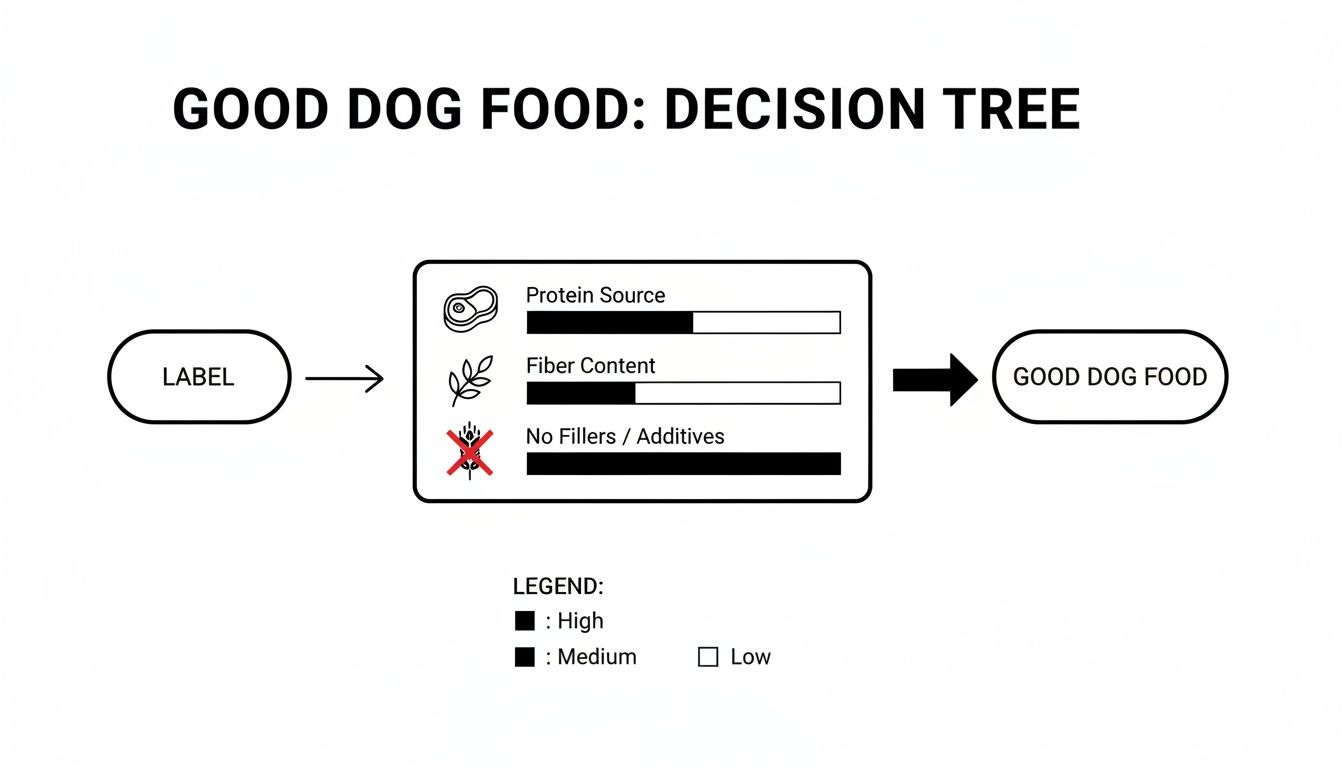
As the chart shows, the core principle is simple: choose foods with high-quality protein and the right amount of fiber, while steering clear of empty fillers.
Checking for Quality and Correct Dosage
Once you've zeroed in on the right strains, the next piece of the puzzle is making sure you're giving the right amount from a reputable source. Probiotic dosage is measured in Colony Forming Units (CFUs), which tells you how many live, viable bacteria are in each serving. For most dogs, a good daily range is between 1 to 10 billion CFUs, but you should always follow the product's directions or your vet's specific advice.
When you're comparing products, keep an eye out for these quality markers:
- Guaranteed Live Cultures: The label should promise a certain CFU count at the time of expiration, not just when it was made. Bacteria can die off over time.
- Strain Diversity: Often, a supplement with several beneficial strains can offer more comprehensive support than one with a single strain.
- Third-Party Testing: This is a big one. It provides independent verification that the product is pure, potent, and actually contains what the label says it does.
Feeling overwhelmed by the options? We've got you. To cut through the noise, take a look at our guide on finding the best probiotics for dogs for more specific recommendations.
Weaving Supplements into Your Daily Routine
Consistency is everything. To see real benefits, you need to make gut support a daily habit, and the easier it is, the more likely you are to stick with it. Luckily, most supplements are made to be tasty. Powders can be sprinkled right onto your dog's food, and many probiotic chews are seen as a special treat.
Don't forget about whole foods, either! You can add a dollop of plain, unsweetened kefir or yogurt to their bowl for a natural dose of probiotics. Foods like pumpkin and sweet potatoes are fantastic sources of prebiotic fiber. By combining a top-notch diet with smart, targeted supplements, you create a powerful one-two punch for building a happy, resilient gut.
Lifestyle Habits That Support a Healthy Gut
While what you put in your dog's bowl is a huge piece of the puzzle, their daily life and surroundings play just as big a role in their digestive health. A dog’s gut isn’t an isolated system; it’s directly linked to their stress levels, how much they move, and even the air they breathe.
Building a stable, gut-friendly lifestyle is how you lock in the benefits of a good diet for the long haul. These small, consistent habits create an internal environment where the good gut bugs can truly flourish.
The Power of a Consistent Feeding Schedule
One of the easiest—and most powerful—things you can do is get your dog on a predictable feeding schedule. A dog's digestive system thrives on routine. When they know food is coming at the same times every day, their body gets a head start, producing the right digestive enzymes and stomach acids right on cue.
This simple act of regulation prevents the gut from getting overwhelmed or caught off guard. The result? More efficient digestion and better nutrient absorption. It also keeps hunger in check and can even sidestep issues like bilious vomiting syndrome (that lovely morning bile throw-up), which often happens when a stomach stays empty for too long.
Keep Them Moving to Keep Things Moving
Regular exercise is about so much more than just burning off zoomies. It's absolutely essential for healthy gut motility—the muscular contractions that move food through the digestive tract.
A sedentary dog often has a sluggish digestive system, which is a recipe for bloating, constipation, and a buildup of unhealthy bacteria. You don't need to run a marathon; just aim for consistent, moderate exercise that fits your dog’s age, breed, and energy level.
- Daily Walks: A brisk walk in the morning and another in the evening is fantastic for stimulating the gut.
- Playtime: A solid game of fetch or tug-of-war gets their whole body working, digestive system included.
- Time It Right: Never feed your dog right before or after a heavy workout. This can seriously increase the risk of bloat, a life-threatening condition, especially in deep-chested breeds. Give it at least an hour on either side of a meal.
Hydration Is Non-Negotiable
Every single digestive process relies on water. It’s what helps break down food, transport nutrients into the bloodstream, and form soft stool that's easy to pass. Dehydration is a surprisingly common culprit behind constipation and puts a massive strain on the whole system.
Always have fresh, clean water available. If your dog isn't a big drinker, try a pet water fountain—the moving water often entices them. You can also sneak more liquids into their diet by adding a splash of water or some warm bone broth to their kibble.
A well-hydrated gut is a happy gut. Proper water intake is the lubricant that keeps the entire digestive assembly line running smoothly, preventing backups and ensuring nutrients get where they need to go.
Minimize Environmental Stressors
Don't forget to look at what's going on around your dog. Chronic stress is a gut-wrecker. It triggers the release of cortisol, a hormone that can throw the gut microbiome out of whack and contribute to problems like leaky gut. A calm, predictable home environment goes a long way toward keeping their internal world balanced.
Beyond emotional stress, think about chemical exposure. The household cleaners and lawn treatments we use can easily end up in our dogs when they lick their paws or chew a toy that's been on the floor. These toxins can wipe out the beneficial bacteria you're working so hard to cultivate.
Whenever you can, switch to natural, pet-safe alternatives. This means looking for organic lawn care options or using pet-safe, non-toxic hardwood floor cleaners. Creating a supportive lifestyle reinforces all the good you’re doing with their diet and supplements.
Tracking Progress and Knowing When to See a Vet

So, you’ve made some thoughtful changes to your dog's diet and lifestyle. What now? The next step is simply to watch and wait. The best part is, your dog will give you plenty of signals—some subtle, some not-so-subtle—that things are moving in the right direction.
I always recommend keeping a simple journal for the first few weeks. Just jot down notes on their appetite, energy, and, most importantly, the daily "poop report." It sounds a bit much, but it really helps create a clear picture of their progress over time.
Positive Signs of a Healthier Gut
When your dog's gut microbiome starts to find its balance, the positive changes are truly rewarding to see. It’s not just about better digestion; a healthy gut radiates wellness through their entire body.
You'll know you're on the right track when you start noticing these things:
- Better Stool Quality: This is your number one indicator. Healthy poop should be firm (think modeling clay), well-formed, and consistently chocolate-brown. It shouldn't be rock-hard or a watery mess.
- Less Gas and Bloating: A noticeable drop in room-clearing gas is a fantastic sign that their digestive system is working much more efficiently.
- Improved Skin and Coat: You might see less scratching and a coat that looks shinier and feels softer. The gut-skin connection is very real.
- More Energy and a Brighter Mood: A dog with a happy gut is often a peppier dog. They’ll seem more engaged, playful, and just generally happier.
Seeing these improvements is your confirmation that the dietary and lifestyle tweaks are genuinely nurturing their internal ecosystem.
When to Consult Your Veterinarian
While you can manage many minor gut issues at home, there are times when you absolutely need professional guidance. Your veterinarian is your most critical partner in your dog's long-term health.
It's time to pick up the phone and book an appointment if you see any of these red flags.
Persistent digestive upset is more than just an inconvenience; it can be a symptom of an underlying health condition that needs a proper diagnosis. Trust your instincts—if you feel something is really wrong with your dog's gut, don't hesitate to seek professional advice.
Here are the key symptoms that warrant an immediate vet visit:
- Persistent Diarrhea or Vomiting: If either of these issues lasts for more than 24-48 hours, it’s time for a professional opinion.
- Blood or Mucus in Stool: These are never normal and always require a vet's examination.
- Sudden Lethargy or Loss of Appetite: A dramatic dip in energy or a sudden refusal to eat is often a sign of a bigger problem.
- Unexplained Weight Loss: If your dog is dropping weight even though they're eating, it could mean nutrients aren't being absorbed correctly.
Some dogs aren't just dealing with a simple imbalance; they might have true food sensitivities or allergies. For a deeper dive into this, check out our guide on navigating a sensitive stomach in dogs.
The industry has certainly taken notice of the need for advanced gut support. Postbiotics—the beneficial compounds produced by good bacteria—are becoming more common. In 2023, dogs made up over 42.5% of the postbiotic pet food market, a sector projected to hit nearly US$1.3 billion by 2033. This boom shows a clear understanding among owners that a balanced microbiome is the key to tackling tummy troubles and boosting immunity.
Ultimately, building a strong relationship with your vet ensures you're making the safest, most informed decisions for your dog. They can help you rule out serious issues and guide you toward the best long-term strategy for a happy, healthy gut.
Got Questions? Let's Talk Dog Gut Health
When you start digging into your dog's gut health, questions are bound to pop up. It's completely normal. You're making changes to their diet, maybe adding new supplements, and you want to know what to expect.
We hear the same questions time and again from caring dog owners just like you. Let's get them answered so you can feel confident you're on the right track.
How Long Does It Take to Improve a Dog’s Gut Health?
This is the big one, and the honest-to-goodness answer is: it depends. Every dog is an individual, and their gut microbiome is just as unique. Still, there's a general timeline you can follow.
You’ll likely see the first positive signs—like firmer, more consistent poop and less gas—within the first one to two weeks. These are the early indicators that your efforts are starting to pay off and their internal ecosystem is rebalancing.
For deeper issues that show up on the outside, like chronic skin problems or a dull coat, you'll need to play the long game. It can take four to eight weeks, sometimes even longer, for the gut lining to truly repair itself. That's when inflammation finally subsides enough for you to see a noticeable improvement in their skin and overall energy.
The real secret is consistency. A spoonful of pumpkin here and a probiotic there won't cut it. Lasting change comes from the daily commitment to a gut-friendly routine that gives the microbiome the time and tools it needs to heal.
A simple trick is to keep a daily journal. Jot down notes on their stool quality, energy, appetite, and any skin changes. If you’ve been consistent for a solid month and aren't seeing any positive shifts, that's your cue to check in with your vet.
Are Human Probiotics Safe for Dogs?
It’s tempting to just share your own supplements, but giving human probiotics to your dog is a bad idea. Why? A dog's digestive system is a completely different world than ours. Their gut has a different pH and is home to entirely different strains of good bacteria.
Probiotics made for dogs are formulated with this in mind, using bacterial strains that are actually proven to work for canines.
- Canine-Specific Strains: Look for products with strains like Enterococcus faecium and Bifidobacterium animalis. These are the heavy hitters in a dog's gut.
- Correct Dosage: Human supplements are dosed for a much larger body. The concentration of Colony Forming Units (CFUs) is often way too high for a dog and can backfire, causing the very digestive upset you're trying to fix.
At best, a human probiotic will do nothing. At worst, it could cause gas, bloating, or diarrhea. To stay safe and get real results, always choose a high-quality probiotic specifically made for dogs.
What Are Some Easy Gut-Friendly Dog Snacks?
Treat time is a huge, often-missed opportunity to support your dog’s gut health. It’s so easy for snacks to be part of the problem, but they can just as easily be part of the solution.
The best gut-friendly snacks are simple, whole foods packed with natural fiber and nutrients.
My Go-To Gut-Friendly Snacks:
- Plain Pumpkin Puree: A classic for a reason. Just a spoonful of plain, unsweetened canned pumpkin is a fantastic source of soluble fiber that helps with both diarrhea and constipation.
- Steamed Sweet Potatoes: Full of fiber and beta-carotene. I just cool them, chop them into small cubes, and they make a perfect, healthy reward.
- Fresh Carrots: Raw or lightly steamed, carrots are a low-calorie, high-fiber favorite. Most dogs love the crunch.
- Plain Kefir or Yogurt: A small dollop of plain, unsweetened kefir or yogurt with live active cultures is a great way to sneak in some natural probiotics.
When you're buying packaged treats, just use the same logic you apply to their food. Flip it over, read the ingredients, and ditch anything loaded with artificial colors, preservatives, or cheap fillers like corn and wheat. Look for limited-ingredient treats that feature a single, quality protein. When snack time supports their gut health, you're reinforcing all the other great work you're doing.
At Joyfull, we believe that true wellness for our pets starts from within. By focusing on clean ingredients and scientifically-backed formulas, we create products that support your dog's health from the inside out, making it easy to build a foundation for a long, happy life together. Discover our better-for-you pet solutions at https://joyfullpet.com.