


How long does dog digestion take: A Simple Timeline & Tips
Ever wondered how long it takes for your dog’s dinner to complete its journey? The whole process, from the food bowl to the backyard, can take anywhere from 4 to 24 hours.
That’s a huge range, and for good reason. Every dog has their own unique internal rhythm, and things like their age, breed, what they eat, and even their activity level can speed things up or slow them down.
Your Dog's Digestive Timeline At A Glance
Trying to nail down a single, perfect digestion time for your dog is like trying to predict the exact arrival time for a cross-country road trip. The final ETA depends on the route, the vehicle, and even the traffic along the way. Your dog's digestive system works in a very similar fashion.
Think of this section as your travel guide. We’ll look at the main factors that influence how quickly that "road trip" happens, so you can get a much better feel for your own dog's personal schedule.
Key Variables in Digestion Speed
So, what are these "traffic conditions" that affect your dog's digestion? While we'll get into the nitty-gritty later on, a few key things have a major impact on how long food sticks around.
- Age: Puppies are little metabolic powerhouses, so they process food much more quickly. On the flip side, senior dogs often have a more leisurely digestive pace.
- Breed and Size: It's a simple matter of distance. A tiny Chihuahua has a much shorter digestive tract to navigate than a giant Great Dane.
- Diet Composition: What’s in the bowl matters. Wet or raw food is high in moisture and tends to move through the system faster than a dense, dry kibble.
Before we dive deeper, here's a handy table to give you a quick snapshot of what to expect. Think of it as a starting point to help you place your own dog in the right ballpark.
Estimated Dog Digestion Times At A Glance
This table provides a quick summary of typical digestion times based on a dog's size/age and the type of food they consume.
| Dog Type | Food Type | Estimated Total Transit Time |
|---|---|---|
| Small Breed / Puppy | Wet / Raw Food | 4-6 Hours |
| Small Breed / Puppy | Dry Kibble | 8-10 Hours |
| Large Breed / Adult | Wet / Raw Food | 6-8 Hours |
| Large Breed / Adult | Dry Kibble | 10-12+ Hours |
| Senior Dog (Any Size) | Any Food Type | 12-24+ Hours |
Remember, these are just estimates! Your dog's individual health, hydration, and activity level will all play a part in their final transit time.
The Journey of a Meal Through Your Dog's Body
To get a real handle on how long your dog's digestion takes, it helps to follow the food's path from the first excited gulp to the... well, you know. Think of it like a highly efficient factory, where each station has a specific job and a timeline to stick to before sending the goods down the line.
The whole thing kicks off the moment your dog starts to chew. While their saliva isn't packed with digestive enzymes like ours, their powerful jaws and sharp teeth are perfectly designed to crush and tear food into smaller chunks, getting it ready for the journey ahead.
From Stomach to Small Intestine
Once swallowed, the food travels down the esophagus and into the stomach, which is basically the main processing plant. Here, powerful acids and enzymes get to work, breaking down proteins and churning the solid meal into a soupy mixture called chyme. This is a pretty critical stage and can take anywhere from 2 to 6 hours, largely depending on what was on the menu.
Next, the chyme is gradually released into the small intestine, the nutrient absorption headquarters. This is where the real magic happens. The body extracts all the good stuff—vitamins, minerals, and energy—from the food. Pancreatic enzymes and bile arrive to break down fats, proteins, and carbs into molecules tiny enough to pass into the bloodstream. This is the longest leg of the journey, usually taking another 3 to 5 hours.
A dog’s digestive system is a marvel of efficiency. The small intestine, with its massive surface area, is designed to absorb the maximum amount of nutrients, ensuring very little goes to waste.
The Final Stages of Digestion
After the small intestine has squeezed out all the nutrients, the leftovers—mostly water, fiber, and indigestible bits—move into the large intestine. The main job here is to absorb water from the waste and form it into a solid stool. This final stop can take a good while, anywhere from 10 to 24 hours.
This simple diagram gives you a great visual of the total transit time for a meal.
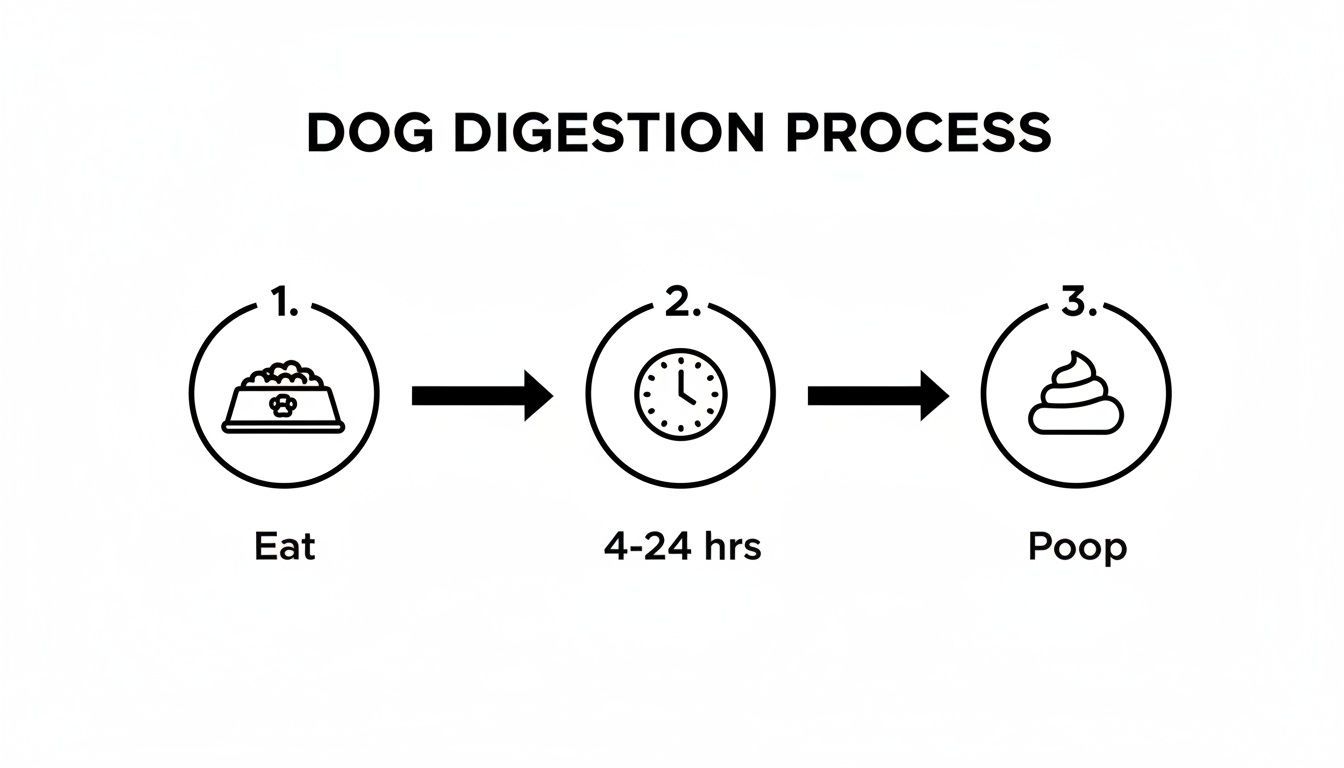
When you add it all up, the entire process from bowl to backyard usually lands somewhere in that wide 4 to 24-hour window, which really highlights how much it can vary.
Interestingly, whether a dog has a full or empty stomach makes a huge difference. If they've just eaten, it can take over 13 hours just for the stomach to empty, pushing the total transit time past 1,671 minutes—that's nearly 28 hours! You can dive deeper into the science behind this by checking out this study on gastrointestinal transit times in dogs. Understanding these stages is the key to seeing why things like diet, age, and breed can lead to such different digestive timelines.
Key Factors That Influence Digestion Speed

When we talk about digestion time, we're really talking about a range, not a single number. Think of your dog's digestive system less like a stopwatch and more like a complex engine, where different inputs and conditions change its performance.
So, what are these "dials" that can turn your dog's digestion up to high speed or slow it down to a crawl? Knowing these variables is the key to understanding your dog's unique internal rhythm, helping you make smarter choices about their food, exercise, and daily routine.
Age and Activity Level
A dog's life stage is a huge piece of the puzzle. Puppies are little metabolic powerhouses. Their bodies are working around the clock to grow, which means their digestive systems are running at top speed. It's not uncommon for a meal to pass through a puppy in as little as four hours.
On the flip side, senior dogs have a much more relaxed pace. Their metabolism naturally slows with age, and their digestive organs might not work as efficiently as they used to. This means food takes a much longer, more leisurely journey through their system.
Then there's activity. An active dog who loves to run and play is constantly stimulating their gut motility—the muscular contractions that push food along. A couch potato, on the other hand, might have more sluggish digestion simply because their internal systems aren't getting that same get-up-and-go signal from exercise.
Breed Size and Body Composition
Sometimes, it really is a matter of simple physics. A tiny Chihuahua has a much shorter digestive tract than a towering Great Dane. It makes sense, right? Food has less distance to travel, so the journey is naturally quicker for smaller breeds.
Large and giant breeds have a much longer road for food to travel down, which automatically extends the total transit time. This is a crucial detail, because a diet that’s perfect for a Yorkie might not be the best fit for a Saint Bernard.
Why Size Matters: A longer digestive tract isn't just about distance. It also means there's more time for fermentation in the colon as food sits there. This is why bigger dogs can sometimes be more prone to gas and softer stools if their diet isn't quite right for their size.
Diet and Hydration
What you put in your dog's bowl is probably the single most important factor of all. The type, quality, and composition of their food directly control how long it takes to process.
- Wet vs. Dry Food: Wet, canned, or fresh food has a ton of moisture, which helps it break down and move through the digestive tract smoothly. Dry kibble is much denser and requires more work from the stomach and intestines, slowing things down.
- Ingredient Quality: Foods made with high-quality, easily digestible proteins and whole-food ingredients are a breeze for a dog's system to handle. In contrast, foods loaded with cheap fillers and complex, low-grade ingredients can put the brakes on digestion and even cause upset. If this sounds familiar, our guide can help you find the right food for a dog with a sensitive stomach.
- Hydration: Never underestimate the power of water! It's vital for every single step of digestion—from breaking down food in the stomach to absorbing nutrients and moving waste out. A well-hydrated dog will always have a more efficient digestive system than a dehydrated one.
The difference can be dramatic. For example, a wet food meal might pass through the system in 4-6 hours, while a very dense, dry kibble could take 8-10 hours or more.
To give you a clearer picture of how these elements work together, here’s a quick breakdown.
How Different Factors Impact Your Dog's Digestion
The table below summarizes how each factor can either speed up or slow down your dog's digestive process.
| Factor | Effect on Digestion Speed | Explanation |
|---|---|---|
| Young Age | Speeds Up | Puppies have fast metabolisms geared for rapid growth, processing food quickly. |
| Senior Age | Slows Down | Older dogs have slower metabolisms and less efficient digestive systems. |
| High Activity | Speeds Up | Exercise stimulates gut motility, helping move food along the digestive tract. |
| Small Breed | Speeds Up | A shorter digestive tract means food has less distance to travel. |
| Large Breed | Slows Down | A longer digestive tract naturally extends the total transit time. |
| Wet/Fresh Food | Speeds Up | High moisture content helps food break down and pass through more easily. |
| Dry Kibble | Slows Down | Denser and requires more digestive effort and fluids to break down. |
| Dehydration | Slows Down | Lack of water hinders every stage of digestion, from breakdown to waste removal. |
As you can see, no single factor works in isolation. A young, active Jack Russell eating wet food will have a far different digestive timeline than a senior, sedentary Mastiff on a dry kibble diet. Understanding these interactions is the first step toward optimizing your dog's gut health.
Practical Ways to Support Your Dog's Digestion
Knowing the theory behind your dog’s digestion is great, but putting that knowledge into practice is what really makes a difference. With just a few simple tweaks to your daily routine, you can help your dog's gut run smoothly and keep them feeling their best. It all boils down to consistency and quality.
A predictable feeding schedule is probably the single most powerful tool you have. When your dog’s body anticipates a meal, it starts preparing the right digestive juices and enzymes ahead of time, which means better nutrient absorption and fewer tummy troubles. Sticking to one or two meals at the same time each day helps keep their whole system in rhythm.
Create a Smart Mealtime Routine
What you do around mealtime is just as critical as the meal itself. Tying walks and exercise to their feeding schedule can prevent serious issues. Specifically, you want to avoid strenuous activity right after they eat, which can increase the risk of bloat—a life-threatening condition where the stomach twists.
- Before Meals: A nice walk before breakfast or dinner can wake up their digestive system and stimulate a healthy appetite.
- After Meals: Give them at least 30 to 60 minutes to rest after eating before you head out for a run or a game of fetch. A quick, calm potty break right after is totally fine, though.
This simple timing adjustment respects your dog's natural digestive process, giving their body the space it needs to do its job without interference.
Creating a predictable schedule for food and exercise isn't just about managing your dog's day. You're actually syncing up with their biology to promote a healthy gut and sidestep digestive upset.
Fuel Their System with the Right Food
It’s no surprise that what you put in the bowl directly affects how well their digestive system works. High-quality, easily digestible ingredients give them the energy they need without forcing their gut to work overtime. When you're picking a food, look for transparency and real, whole-food ingredients.
A good rule of thumb is to look for a named protein source (like "chicken" or "beef," not a vague "meat meal") as the very first ingredient. Easily digestible carbs like sweet potatoes and pumpkin are also fantastic for supporting a happy gut. If you want to dive deeper, we've put together a complete guide on the best dog food for digestive health.
Don't forget that treats are part of their diet, too! So many snacks are loaded with fillers and artificial junk that can throw their digestion completely out of whack. Instead, choose treats with simple, clean ingredients that add to their wellness. A high-quality, protein-forward snack from Joyfull, for example, is a great way to reward your pup while still supporting their digestive health. This kind of thoughtful approach makes sure every bite they take is working for their gut, not against it.
Decoding Your Dog's Poop: What It Reveals
Let's be honest, your dog's poop is more than just waste. It's a daily health report, delivered straight from their gut. By learning what to look for, you can become a bit of a "poop detective," spotting the subtle signs of digestive wellness or distress long before other symptoms show up.
A great way to do this daily check-in is to use the "Four Cs" of stool analysis. Paying attention to these four things can give you a surprisingly clear picture of what’s going on inside your dog's digestive system.
The Four Cs of Stool Analysis
To keep it simple, just remember these four key indicators every time you’re on poop-scooping duty. Each one tells a unique part of the story about how well your dog is digesting their food.
- Color: Healthy dog poop should be a consistent chocolate-brown. Any major changes—like black, red, green, or yellow stools—can mean anything from a simple dietary oops to more serious internal issues.
- Consistency: The ideal poop is firm and log-shaped, easy to pick up without leaving much behind. If it’s overly hard and comes out in little pellets (a sign of constipation) or is soft and watery (diarrhea), it points to an imbalance in their digestive process.
- Content: A quick glance should show a mostly uniform texture. Finding things like undigested food, foreign objects, or worms are clear red flags that something is wrong.
- Coating: A healthy stool shouldn’t have any visible coating. A layer of mucus or a greasy sheen can signal inflammation in the large intestine or a problem with fat digestion.
This daily observation is such a powerful tool because it reflects the entire digestive journey. Total transit time for a dog can range from 21 to 57 hours, and that variability often shows up in their poop. For instance, large breeds tend to have longer colonic transit times, making them more prone to softer stools, while small breeds can be more susceptible to constipation.
By consistently monitoring the Four Cs, you establish a baseline for what's "normal" for your own dog. This makes it so much easier to spot when something is off, allowing you to act quickly.
Changes in their stool are often the very first sign of a problem. For example, if you notice loose stools are also accompanied by a lot of gas, it might point to fermentation issues in the gut. Understanding the cause can help you connect the dots. If you're curious, our article explaining why your dog might have gas offers some great insights. Making "poop patrol" a mindful habit is one of the easiest and most effective ways to stay on top of your dog’s digestive health.
When to Call Your Vet About Digestive Issues
An occasional upset stomach or a bit of gas is just part of being a dog. But sometimes, what seems like a minor issue can be a sign of something more serious. As a dog owner, learning to spot the difference between a simple tummy ache and a real emergency is one of the most important things you can do.
Plenty of things can throw your dog's digestion for a loop, but certain symptoms are clear red flags. If you see any of the signs below, it’s time to stop guessing and get your vet on the phone.
Red Flags for Digestive Distress
Don't brush these symptoms off as simple indigestion. They demand a professional opinion, and catching them early can make all the difference.
- Persistent Vomiting or Diarrhea: A single bout of diarrhea isn't usually a crisis. But if it lasts for more than 12-24 hours or your dog is vomiting repeatedly, they can get dehydrated fast. Of course, when those accidents happen, you'll be focused on cleaning up doggy vomit.
- Blood in Stool or Vomit: This is never normal. Whether you see bright red blood or dark, tar-like stools, it's a signal that something is wrong and needs to be checked out immediately.
- Extreme Lethargy or Weakness: Is your usually playful pup suddenly uninterested in their favorite toys? A dog that seems profoundly tired or weak could be fighting off a significant health problem.
- Signs of Abdominal Pain: Dogs often show pain in subtle ways. Watch for a hunched-over posture, a tight or bloated belly, whining when you touch their stomach, or an inability to get comfortable. These are classic signs of serious discomfort.
- Refusal to Eat or Drink: Skipping a single meal might just mean they aren't hungry. But if your dog turns their nose up at all food and water for more than a day, it’s a major concern.
You know your dog better than anyone. If your gut tells you something is really off with their digestive health, listen to it. It’s always better to be safe and make the call.
Frequently Asked Questions About Your Dog's Digestion
Even after you've got the basics down, it’s natural to have more questions about your dog's digestive quirks. Let's tackle some of the most common things owners ask.
How Long After Eating Does a Dog Poop?
Generally, you can expect your dog to need a potty break about 8 to 12 hours after a meal. This is the average time it takes for their body to process food and move the waste out.
But remember, this is just a ballpark figure. Puppies, for instance, have super-fast metabolisms and might need to go almost immediately. The best thing you can do is learn your own dog's unique rhythm. Once you know their schedule, you can predict when they'll need to head outside.
Is It Safe to Walk My Dog Right After They Eat?
You'll want to hold off on any serious exercise for at least 30 to 60 minutes after your dog finishes a meal. A gentle, short leash walk for a quick bathroom trip is usually okay, but save the running, fetching, and heavy-duty playtime for later.
Why the wait? Vigorous activity on a full stomach can be dangerous, especially for deep-chested breeds like Great Danes, Boxers, or German Shepherds. It raises the risk of bloat (GDV), a life-threatening condition where the stomach twists on itself. A little downtime after dinner is a simple way to keep them safe.
Why Does My Dog's Digestion Seem So Fast Sometimes?
Ever notice your dog's system suddenly shift into high gear? If you're seeing loose stools or diarrhea, it's often caused by something simple. Maybe they snagged a new treat that didn't agree with them or had a little adventure in the garbage can. Stress and abrupt food changes are also common culprits.
If it happens once and your dog seems perfectly fine otherwise, it’s probably nothing to worry about. But if the diarrhea sticks around for more than a day, or if you also see vomiting or sluggishness, that's your cue to call the vet.
For holistic dog wellness, beyond diet and digestion, providing a safe and comfortable living environment is crucial. Information on various types of dog kennels can be a helpful resource for owners.
At Joyfull, we believe that good digestion starts with good food. Our snacks are made with clean, high-quality proteins and simple ingredients to support your dog’s gut health with every bite. Treat them to something delicious that works with their system, not against it. Learn more at https://joyfullpet.com.