

Can Dogs Eat Butternut Squash? A Vet-Approved Guide
Yes, dogs can absolutely eat butternut squash! This popular fall vegetable is not only safe but also a wonderfully nutritious treat for most dogs, as long as it's prepared the right way. The key is to always serve it cooked and plain, making sure to remove the tough skin and seeds first.
A Healthy Fall Treat for Your Furry Friend
When you're in the kitchen and feel those big puppy-dog eyes on you, it's hard not to wonder if you can share. Good news—when it comes to butternut squash, you can! Unlike many "people foods" that are a no-go for our pets, this vibrant gourd is loaded with nutrients that are great for your dog's health.
Think of it as a natural multivitamin wrapped in a sweet, tasty package. However, the secret to keeping it safe lies entirely in the prep work. Raw butternut squash is incredibly fibrous and tough, which can be a serious choking hazard or cause an upset stomach.
This is why veterinarians always recommend feeding cooked squash. The cooking process softens the flesh, making it much easier for your dog’s system to handle and digest. You can learn more about why proper preparation is crucial from veterinary experts.
Do's and Don'ts at a Glance
To make things simple, here’s a quick-reference table to guide you. Following these rules will ensure your dog gets to enjoy this delicious treat safely, without any unwanted side effects.
Quick Guide to Feeding Dogs Butternut Squash
| Guideline | Recommendation | Reason |
|---|---|---|
| Do Cook Thoroughly | Always boil, steam, or bake the squash until it's soft. | Cooking breaks down tough fibers, making it easy to digest and preventing stomach upset. |
| Do Remove Skin & Seeds | Peel the squash and scoop out all seeds before cooking. | The hard skin and seeds are difficult to digest and can pose a choking or blockage risk. |
| Don't Add Seasonings | Serve it completely plain, with no butter, oil, salt, or spices. | Common additives like onions, garlic, and excessive salt are toxic or harmful to dogs. |
| Don't Serve Raw | Never give your dog raw pieces of butternut squash. | Raw squash is hard, difficult to chew, and can lead to serious digestive issues. |
Sticking to these basics is the best way to introduce butternut squash as a healthy, enjoyable snack for your best friend.
A Closer Look at the Nutritional Perks for Your Dog
Now that we know butternut squash is safe for dogs, let's get into the why. This beautiful gourd is far more than just a sweet, seasonal treat. When prepared correctly, it’s a genuine whole-food supplement that can give your dog's health a real boost from the inside out.
Every bite of cooked squash is bursting with goodness. It’s naturally low in calories but packed with nutrients, making it a fantastic choice for dogs watching their weight or for anyone simply looking to add more wholesome ingredients to their pup's bowl.
A Powerhouse of Essential Vitamins
One of the best things about butternut squash is its incredible concentration of Vitamin A. It’s loaded with beta-carotene, the antioxidant that gives it that vibrant orange color, which a dog's body cleverly converts into Vitamin A.
It's also a great source of Vitamin C, another antioxidant that works to protect your dog's cells from everyday damage. Think of these vitamins as your dog's personal support system for their overall health.
Here’s what they do:
- Keeps Vision Sharp: Vitamin A is a key player in maintaining healthy eyesight, especially for navigating in dim light.
- Bolsters the Immune System: Both Vitamin A and C help keep your dog's natural defenses strong and ready for action.
- Promotes Healthy Skin & Coat: These vitamins are essential for cell growth, which translates to a lustrous coat and supple skin.
Butternut squash doesn't stop there. It's also rich in crucial minerals like potassium and magnesium, which are vital for healthy muscle development and proper nerve function—the very things that power your dog's daily zoomies and adventures.
The Magic of Dietary Fiber
Beyond the vitamins and minerals, butternut squash is celebrated for its high fiber content. This fiber acts like a gentle regulator for your dog's entire digestive system. It adds just the right amount of bulk to their stool, helping to keep everything moving along smoothly and promoting regular, healthy bowel movements.
This makes it especially helpful for dogs who struggle with occasional constipation or just have a sensitive tummy. It’s a benefit it shares with its famous cousin, pumpkin. You can learn more about how can dogs eat pumpkin to support digestion in our other guide.
This gentle, tummy-friendly quality is exactly why a spoonful of cooked squash is such a wonderful and safe addition to your dog’s meal, delivering both a delicious taste and some serious health perks.
How to Safely Prepare Butternut squash for Your Dog
When it comes to sharing butternut squash with your dog, how you prepare it is everything. Proper prep is what turns this tasty vegetable into a safe and healthy treat. It's not complicated, but following these steps is absolutely key to making sure your pup gets all the good stuff with none of the risks.
First things first: the tough outer skin and all the seeds have got to go. A dog’s digestive system just isn't built to handle the incredibly fibrous skin. The seeds are even more of a problem—they’re a serious choking hazard and can cause dangerous internal blockages. Think of the skin and seeds as the "off-limits" part of the squash.
Step 1: Give It a Good Scrub
Before you even grab a peeler, give the whole squash a thorough rinse under cool running water. This washes away any dirt, bacteria, or pesticide residue that might be hanging out on the surface. Starting with a clean squash means you don't have to worry about any of that making it into your dog's bowl.
Step 2: Peel the Skin and Scoop Out the Seeds
Grab a good, sturdy vegetable peeler and get to work on that tough outer skin. You’ll want to be pretty thorough here and make sure you get all of it off.
Next, slice the squash in half from top to bottom. Use a spoon to scoop out all the seeds and the stringy, web-like pulp inside. This step is absolutely non-negotiable for your dog's safety.
It's easy to miss a few seeds, but even one can be a choking hazard. I always give the inside a final once-over to make sure it's completely clean before I start cooking. That little double-check offers some serious peace of mind.
Step 3: Cook It Plain and Simple
Now that your squash is prepped, it’s time to cook it. The goal is to get it soft and tender, which makes it super easy for your dog to chew and digest. Never, ever serve it raw—that’s a one-way ticket to an upset stomach.
Here are a few of the best ways to cook it:
- Steaming: Pop the squash chunks into a steamer basket over boiling water until they're fork-tender. This is a fantastic method for locking in most of the nutrients.
- Boiling: You can also just boil the pieces in water until they're soft. When boiling or steaming, it's always a good idea to use quality non-toxic pans as part of a safe cooking routine.
- Baking or Roasting: Toss cubes of squash on a baking sheet and roast them at around 400°F (200°C) until they’re soft. Just be sure to add nothing else!
The number one rule? Keep it completely plain. All those delicious additions we love are a no-go for dogs.
That means no:
- Salt
- Butter or oil
- Sugar
- Nutmeg, cinnamon, or other spices
- Onions or garlic (these are toxic to dogs!)
These ingredients can range from causing mild tummy trouble to severe poisoning. Honestly, the natural sweetness of cooked butternut squash is more than enough to get your dog’s tail wagging. Once it’s cooked, let it cool down completely. Then you can mash it up or serve it in small, bite-sized cubes.
Finding the Right Serving Size for Your Dog
Even with a powerhouse vegetable like butternut squash, you can definitely have too much of a good thing. The key is moderation. Think of it this way: your dog's regular meals are their nutritional foundation, covering all their essential needs. Treats are the fun extras, and they need to be managed so they don't unbalance the entire diet.
A great rule of thumb that veterinarians often recommend is the 10% rule. It’s simple: treats should account for no more than 10% of your dog's total daily calorie intake. Following this guideline is the best way to prevent unwanted weight gain and ensure their main food can still do its job properly.
How Much Squash Is Just Right?
So, what does that 10% actually look like in a bowl? It really comes down to the size of your dog. A Chihuahua’s treat portion is going to be wildly different from a Bernese Mountain Dog’s.
To give you a starting point, we've put together a handy table with general serving suggestions. Remember, these amounts are for a single serving a few times a week—not an everyday snack. When you first introduce squash, always start with a smaller amount to see how your dog's system handles it.
Recommended Butternut Squash Serving Size by Dog Weight
| Dog Size Category | Weight Range | Suggested Serving Amount (per serving) |
|---|---|---|
| Extra-Small | Under 10 lbs | 1 teaspoon of cooked, mashed squash |
| Small | 11-25 lbs | 1 tablespoon |
| Medium | 26-50 lbs | 2 tablespoons |
| Large | 51-90 lbs | 3-4 tablespoons |
| Extra-Large | Over 91 lbs | Up to 4 tablespoons |
These guidelines help keep portions in a safe range, ensuring your dog gets the benefits without any of the downsides.
If you're making a big batch of squash for the whole family (furry members included), knowing how to scale a recipe can be incredibly useful for getting the amounts just right. For a really tailored calculation based on your dog's specific age, weight, and activity level, our dog food portion calculator is the perfect tool.
Of course, before you even worry about portion sizes, proper preparation is non-negotiable.
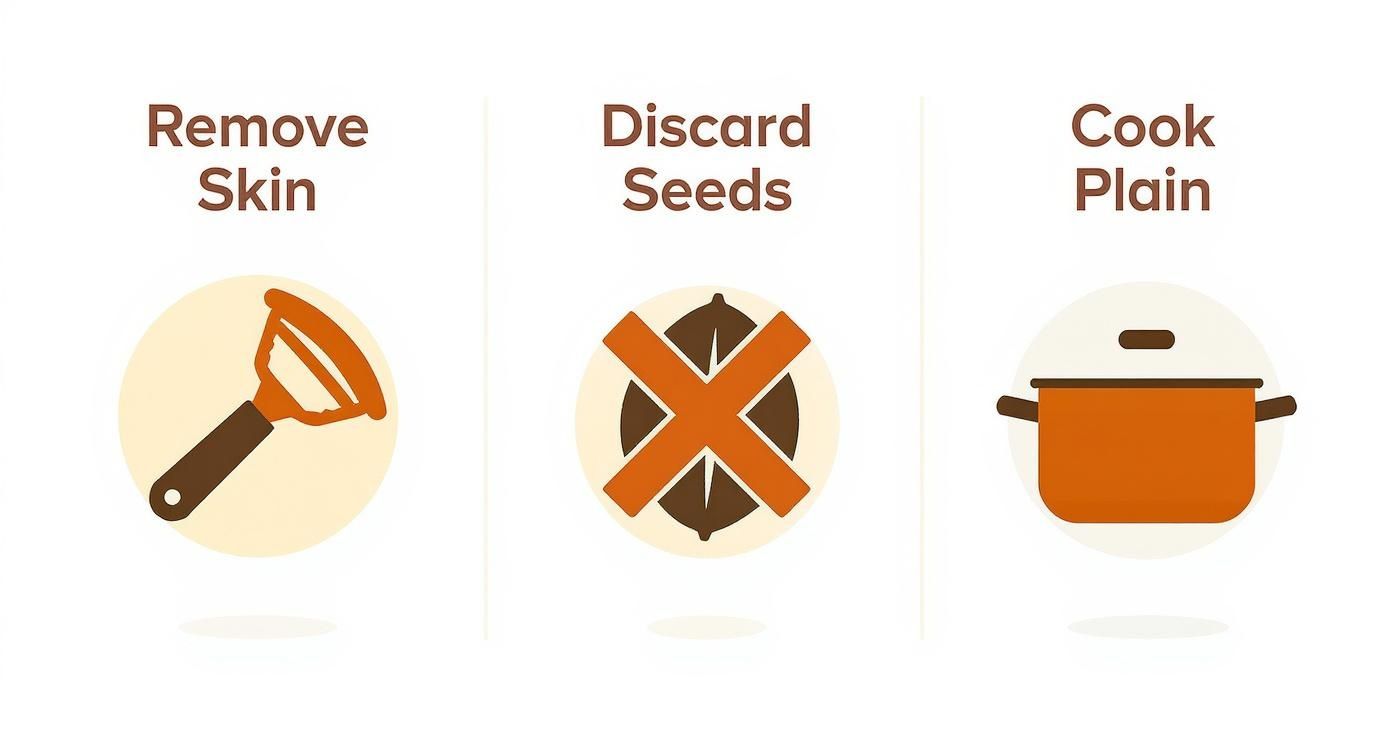
This visual is a great reminder of the three golden rules: peel the skin, scoop out the seeds, and cook it plain. Nailing these steps is what makes butternut squash a safe, healthy, and delicious treat for your dog.
Recognizing Potential Risks and Side Effects
While butternut squash is a fantastic, healthy treat for most dogs, it's always smart to know the full story. Even the best foods can cause a little trouble if you're not careful. Knowing what to watch for helps keep this nutritious snack a happy and healthy experience for your pup.
Honestly, the most common issue we see is simple digestive upset. Think of it this way: fiber is like a workout for your dog's gut. A little bit is great for keeping things moving, but throwing too much at them all at once can be overwhelming. A big helping of squash, especially if your dog’s system isn't used to it, can sometimes lead to some temporary tummy troubles.
Tummy Troubles to Monitor
If your dog has had a bit too much squash, their body will probably let you know. That same high fiber content that’s usually so beneficial can backfire if the portions are too big.
It’s nothing to panic about, but keep an eye out for these tell-tale signs:
- Gas or Bloating: Is your dog suddenly a lot more gassy? That's often the first clue.
- Loose Stools or Diarrhea: This is the classic symptom of too much fiber, too fast.
- Vomiting: It's less common, but some dogs might vomit if the squash just doesn't sit right.
The good news? These issues are almost always mild and clear up on their own once you cut back the portion size. It’s just your dog's way of saying, "Whoa, that was a little too much of a good thing!"
Reinforcing Crucial Safety Boundaries
Beyond a bit of a stomachache from overdoing it, the real risks come from how the squash is prepared. This part is non-negotiable—you have to remember that not all parts of the squash are safe for your dog.
- No Raw Squash: Never feed raw butternut squash. It's incredibly tough and fibrous, which can be a nightmare for your dog to digest and could lead to serious stomach pain or even a blockage.
- Ditch the Skin and Stems: The hard, leathery skin and the woody stem are completely indigestible. They pose a serious choking hazard, so always remove them.
- Scoop Out the Seeds: Just like the skin, the seeds are tough to digest and can create an intestinal blockage, which is an especially high risk for smaller dogs.
While a true food allergy to butternut squash is pretty rare in dogs, it’s not impossible. An allergic reaction usually shows up as skin problems—think excessive itching, hives, or red, inflamed skin. If you notice any of these signs after introducing squash, stop serving it and give your vet a call. Keeping these simple rules in mind is all it takes to share this wonderful vegetable safely.
Healthy and Creative Serving Ideas for Your Pup
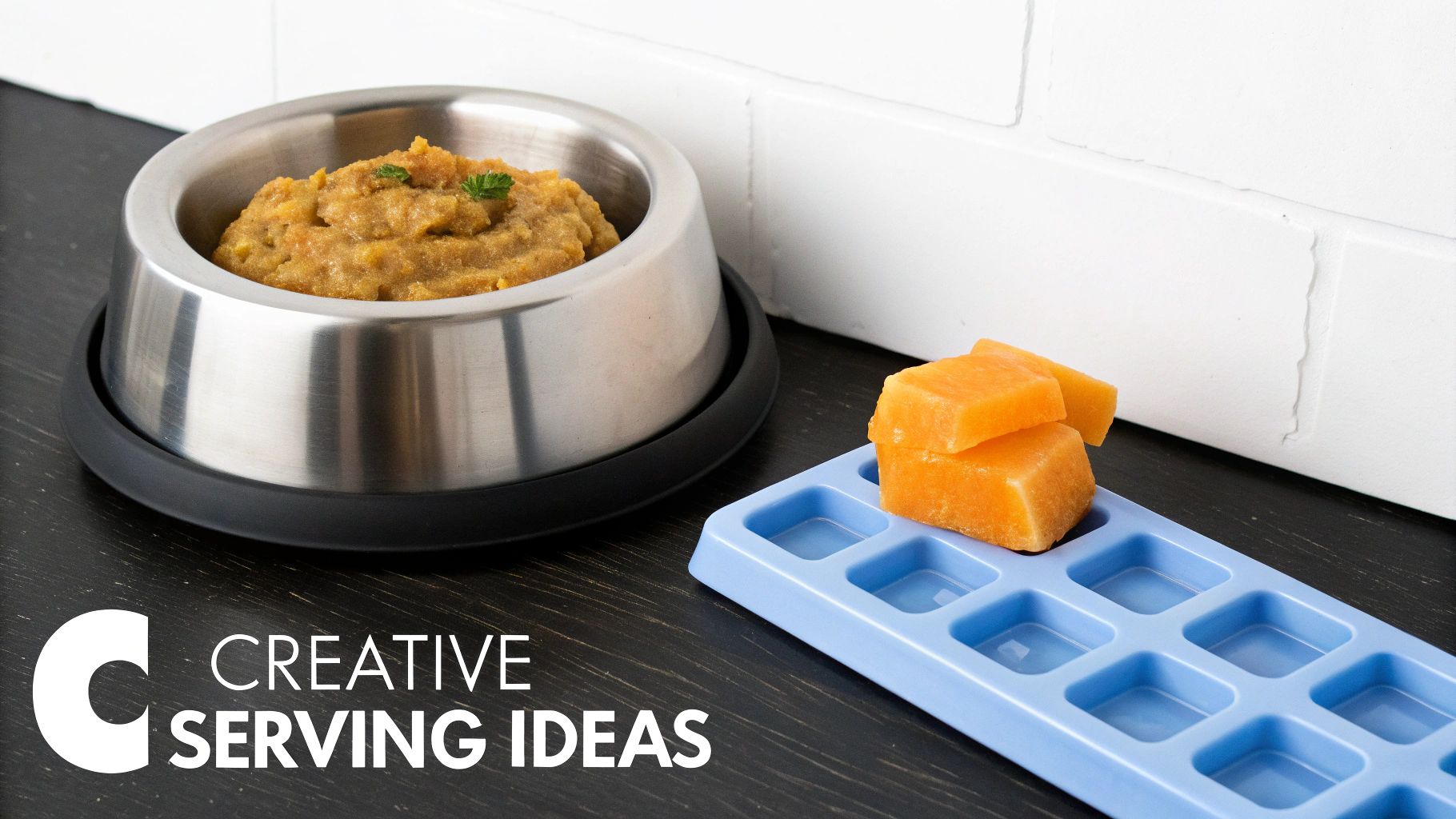
Alright, now for the fun part—turning that plain, cooked butternut squash into a treat your dog will go crazy for. You don't need to be a gourmet chef to make their meals special. A little creativity is all it takes to add a delicious and nutritious boost to their bowl.
One of the simplest and most effective ways to serve butternut squash is as a kibble topper. Just mash up the cooked squash and spoon a dollop right on top of their regular food. This is a great trick for picky eaters; that sweet, earthy aroma is often just the thing to get them interested in their dinner again.
Simple and Refreshing Treats
Looking for a treat that lasts a bit longer, especially on a hot day? Try freezing it. Spoon the puréed squash into an ice cube tray or stuff it into a KONG toy. After a few hours in the freezer, you’ll have a cool, refreshing snack that keeps them busy and mentally stimulated.
You can also get creative by mixing the purée with other dog-safe ingredients you might have in the kitchen.
- Yogurt Swirl: Swirl a spoonful of squash purée into plain, unsweetened yogurt. It creates a creamy, probiotic-packed treat.
- Oatmeal Boost: Stir some mashed squash into a small serving of plain, cooked oatmeal for a comforting, fiber-filled snack.
Think of butternut squash as a versatile base ingredient. Its mild sweetness pairs well with many other healthy foods, allowing you to easily customize treats based on what your dog loves and what you have on hand.
Finding More Inspiration
These ideas are really just the beginning. The simple nature of butternut squash makes it a fantastic ingredient for all sorts of homemade goodies. If you’re feeling inspired to roll up your sleeves, you can find more simple and delicious ideas in our guide to healthy dog treat recipes.
By using these simple serving methods, you can easily work the benefits of this wonderful vegetable into their routine. Whether as a quick meal enhancer or a special frozen snack, these ideas make it easy and enjoyable for you both.
Your Top Questions Answered
Alright, we've walked through the what, why, and how of feeding your dog butternut squash. But I know there are always those lingering questions that pop up. Let's dig into some of the most common ones I hear from other dog parents so you can feel totally at ease.
Can Puppies Eat Butternut Squash?
Yes, they absolutely can, but you'll want to take it slow. A puppy's digestive system is still a work in progress, so it’s much more sensitive. The key is to start incredibly small—we’re talking just a tiny dab, maybe half a teaspoon of cooked, plain purée.
Before you add anything new to your pup's bowl, it's always smart to have a quick chat with your vet. They can give you the green light based on your puppy's specific age, breed, and what’s best for their growing body.
Is It Ever Okay to Serve Raw Butternut Squash?
This one is a hard no. Raw butternut squash is tough, woody, and a major choking risk for dogs. Beyond that, its dense, fibrous texture is incredibly difficult for their digestive system to handle and can cause everything from gas and an upset stomach to a dangerous intestinal blockage.
Here's a simple rule of thumb: If you can't easily mash it with a fork, it's not soft enough for your dog. Cooking is non-negotiable for their safety.
What About the Skin and Seeds?
Think of the skin and seeds as parts you'd remove for yourself—and do the same for your dog. The skin is leathery and indigestible, presenting another risk for choking or internal blockages. The seeds are a similar hazard. Always peel the squash and scoop out all the seeds before you even start cooking.
How Often Can My Dog Have It?
Butternut squash makes a fantastic, nutrient-packed treat, but it shouldn't be an everyday staple. A good rhythm is to offer it two to three times a week. This lets your dog get all the great health perks without disrupting the balanced nutrition they get from their regular food.
Here at Joyfull, we’re all about clean, simple ingredients that truly nourish our pets. If you're looking for more healthy and convenient meal options your dog will go crazy for, check out our vet-approved formulas at https://joyfullpet.com.