


Best Natural Treats for Cats: How to Pick Healthy Snacks
When you're looking for the best natural treats for your cat, the answer is usually simple: single-ingredient or limited-ingredient snacks made from animal protein you can actually recognize. We're talking about things like freeze-dried chicken breast, dehydrated salmon, or even little air-dried minnows. These are the kinds of treats that deliver pure nutrition without all the artificial junk and mystery fillers you find in so many conventional snacks.
What "Natural" Really Means for Cat Treats
Walking down the pet food aisle can feel overwhelming. Every bag seems to scream "natural," "holistic," or "premium." But what do those words actually mean for your cat? The reality is, "natural" shouldn't just be a marketing buzzword; it should be a promise of quality that directly impacts your cat’s well-being.
Think of it like this: if you wanted a healthy snack, you’d probably grab an apple instead of a fruit-flavored candy loaded with sugar and artificial dyes. The apple is simple, whole, and packed with nutrients. The same exact logic applies when you're choosing treats for your cat. A truly natural treat is defined just as much by what it doesn't have as what it does.
The Heart of a Natural Treat
At its core, a natural cat treat should be as close to its original form as possible. It's easy to forget, but our house cats are obligate carnivores. This means their bodies are built to run on animal-based protein, with digestive systems designed to efficiently process meat—not a bunch of carbs or plant fillers.
This is why reading the ingredient list is non-negotiable. A top-tier natural treat will always have:
- Whole, named animal protein as the first ingredient. You want to see "chicken," not vague "meat by-products."
- Minimal processing like freeze-drying or dehydration. These methods lock in nutrients without needing a cocktail of chemical preservatives.
- A short, easy-to-read ingredient list. If it looks like a chemistry textbook, put it back on the shelf.
The whole point is to find a treat that feeds your cat’s inner carnivore, is easy on their digestive system, and genuinely contributes to their health—from a glossy coat to sustained energy.
This move toward cleaner treats isn't just a niche trend. The global cat treats market ballooned to USD 2.5 billion in 2023 and is on track to hit a massive USD 4.5 billion by 2032. This explosive growth is being fueled by cat parents just like you, who are demanding cleaner, healthier ingredients for their pets. You can find more data on this market shift and its drivers over at dataintelo.com.
Why This Matters for Your Cat's Health
Picking natural treats is about so much more than just giving your cat something tasty. When you skip the artificial preservatives, colors, and flavors, you’re cutting down on unnecessary chemicals that can trigger everything from an upset stomach to itchy skin.
Likewise, avoiding cheap fillers like corn, wheat, and soy means your cat gets more of the protein they need to thrive and fewer empty calories that can lead to weight problems. To learn more about this, take a look at our guide on what are good cat treats. At the end of the day, offering a natural treat is a simple yet powerful way to show your love and invest in your cat’s long-term health.
How to Decode Ingredient Labels Like a Pro
Walking into the pet food aisle can feel overwhelming. The flashy bags and marketing claims all blur together, making it tough to know what's actually good for your cat. But here’s the secret: the ingredient label is your best friend. Learning to read it is the single most powerful tool you have to cut through the noise and make a genuinely healthy choice.
Think of an ingredient list like a recipe. The ingredients are listed by weight, so whatever comes first is what the treat is mostly made of. You want that first ingredient to be something you'd recognize as real food.
The All-Stars Your Cat Needs
For a cat—a true carnivore—the "all-stars" are always high-quality, named animal proteins. This is non-negotiable. When you pick up a bag, your eyes should immediately scan the first few ingredients.
- Look for specificity: You want to see words like "chicken," "turkey," "salmon," or "beef." These are your MVPs. Vague terms are a major red flag.
- Embrace whole forms: Ingredients like "deboned chicken" or "whole salmon" are even better. It means the food is closer to its natural state and less processed.
If a specific, high-quality protein is at the top of the list, you're on the right track. It shows the treat is built on a solid, species-appropriate foundation.
The Benchwarmers: Acceptable in Moderation
Next up are what I call the "benchwarmers." These are ingredients that aren't necessarily bad, but they don't offer much nutritional punch for a carnivore. They’re often there to hold the treat together or add a bit of bulk.
These include things like:
- Sweet potatoes
- Peas or chickpeas
- Carrots
- Brown rice
A few of these aren't a dealbreaker, especially if they show up way down the list. But if you see them crowding out the proteins at the top, it’s a sign that the treat is more filler than fuel.
A truly great natural treat keeps its focus on protein. The further you have to read down the list to find the actual meat, the less impressive the treat is.
This hierarchy is a simple way to visualize what you should be looking for. The best options are always the simplest.
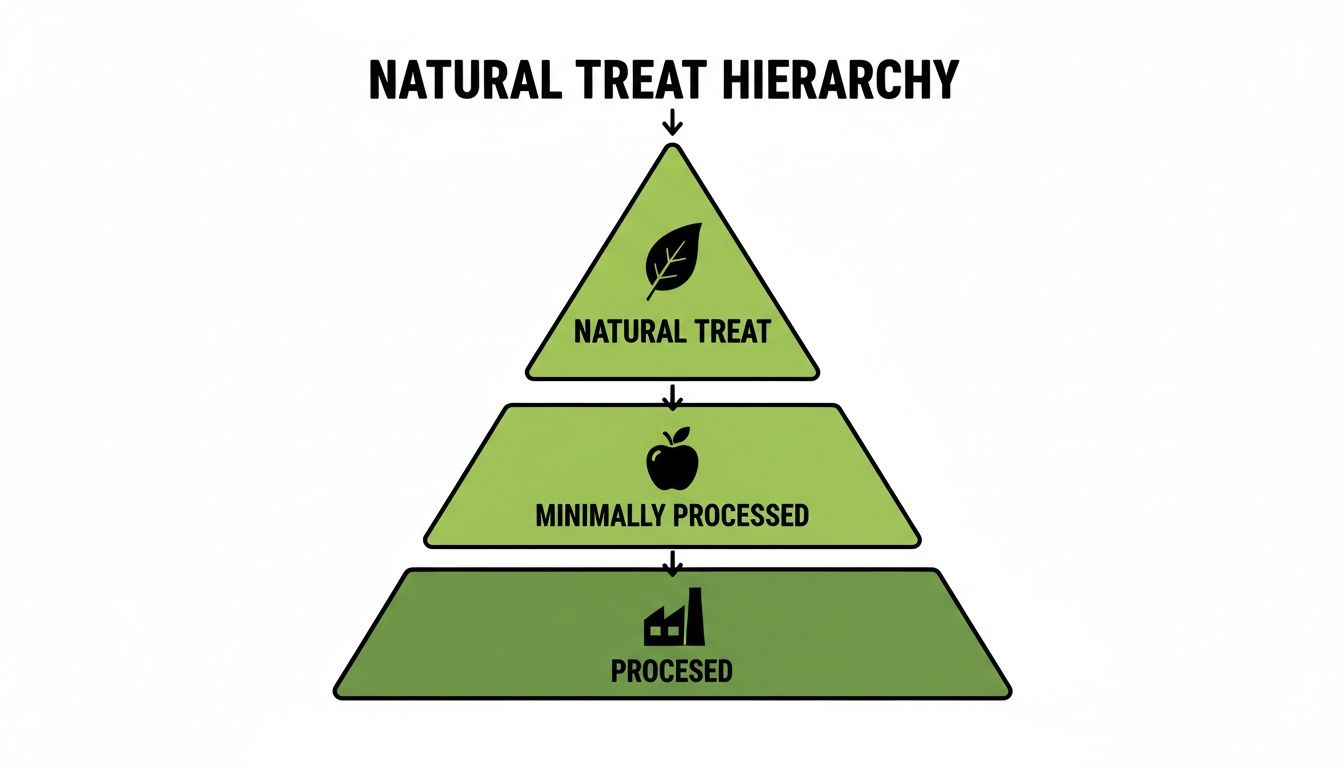
As the pyramid shows, the closer you stick to whole, unprocessed ingredients, the better. Heavily processed treats are almost always packed with the additives you want to avoid.
The Red Flags to Avoid Completely
Finally, there are the ingredients that should make you put the bag right back on the shelf. These offer zero benefit and can contribute to health issues over time. Spotting them is probably the most important skill you can develop as a pet parent.
1. Vague "Meat" or "By-Product" Meals: If you see "meat by-products" or "poultry meal," it’s a hard pass. These terms are intentionally vague and can legally include low-quality parts like beaks, feathers, and feet. Always demand named proteins.
2. Cheap Grain Fillers: Cats have absolutely no biological need for corn, wheat, or soy. These are cheap fillers that can cause digestive upset and trigger allergies in many cats.
3. Artificial Preservatives: Chemicals like BHA, BHT, and ethoxyquin are used to extend shelf life but have been linked to serious health concerns. Natural preservatives like tocopherols (a form of vitamin E) or rosemary extract are far safer choices.
4. Artificial Colors and Flavors: Your cat does not care if their treat is shaped like a fish or colored bright red. Dyes like Red 40 and Yellow 5 are only there to appeal to you, the human buyer. The same goes for fake "tuna flavor"—real tuna is all they need.
To make it even easier, here's a quick checklist you can use next time you're shopping.
Natural Cat Treat Ingredient Checklist
This simple table breaks down what you want to see on a label versus what you should run from.
| Ingredient Type | Look For (Green Flags) | Avoid (Red Flags) |
|---|---|---|
| Proteins | Named whole meats (e.g., chicken, salmon, beef) | "Meat by-products," "poultry meal," unnamed "animal" sources |
| Carbohydrates | Minimal amounts of vegetables (e.g., sweet potato, pumpkin) | Corn, wheat, soy, and other cheap grain fillers |
| Preservatives | Natural options (e.g., mixed tocopherols, rosemary extract) | BHA, BHT, ethoxyquin, sodium nitrite |
| Additives | Nothing artificial | Artificial colors (Red 40, Yellow 5), artificial flavors |
Learning to spot these red flags is a game-changer. For a deeper dive, our guide on cat food ingredients to avoid covers even more harmful additives in detail. By knowing what to leave on the shelf, you can confidently choose treats that are not only delicious but genuinely good for your cat.
The Top 5 Types of Natural Cat Treats
Once you get the hang of reading ingredient labels, picking out a great natural treat for your cat gets a whole lot easier. Most of the good stuff falls into just a few categories, and each one brings something different to the table. Knowing the difference helps you grab the perfect reward, whether it’s for a kitten in training, a picky senior, or just a daily dose of affection.
From super-crunchy, protein-packed morsels to silky, hydrating purees, the options out there are exploding. That's no accident—the pet treats industry is set to jump from USD 30.69 billion in 2025 to USD 42.92 billion by 2030. The cat segment alone is growing at a massive 9% annually through 2029, and it's all because pet parents are demanding better options like moisture-rich tuna flakes and single-ingredient chicken jerky. You can see more details on this market growth on Mordor Intelligence.
So, let's break down the top five types you’ll find on the shelf.
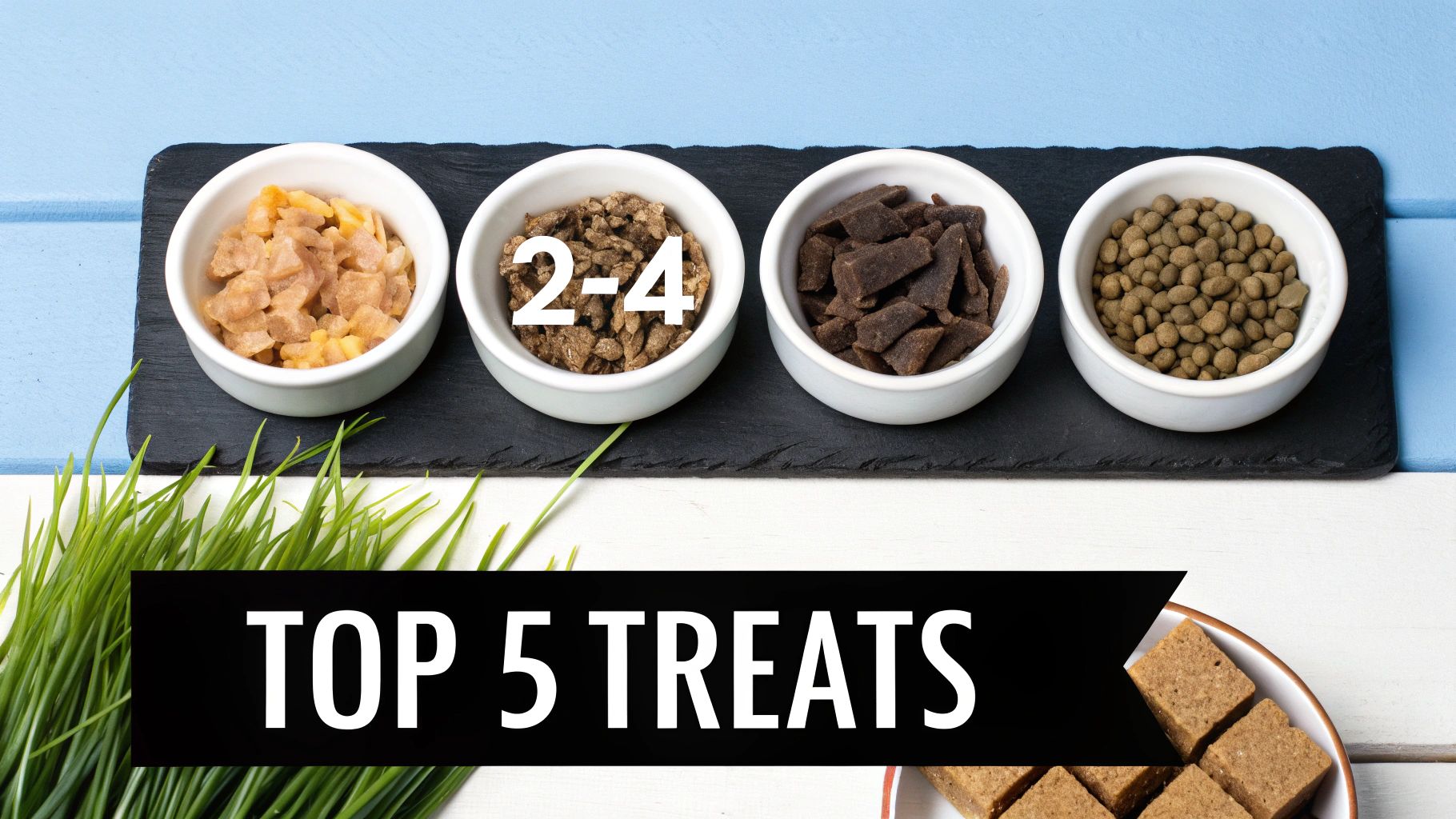
1. Freeze-Dried and Air-Dried Meats
In the world of natural cat treats, freeze-dried and air-dried meats are the gold standard. These are usually just one ingredient—think chicken breast, salmon, or minnows—and they're processed without heat, which keeps all the raw nutrients intact. The process just pulls the water out, leaving behind a shelf-stable treat that’s bursting with flavor.
- Pros: They are pure protein, which makes them irresistible to even the fussiest cats, and you don’t have to worry about weird additives. They’re about as close to a pure protein snack as you can get.
- Cons: These can be on the pricey side, and their brittle texture often means you'll end up with a bag of crumbs. They're too crumbly to provide any real dental cleaning benefits.
- Best For: Cats of all life stages, especially those with food sensitivities or for high-value training rewards.
2. Single-Ingredient Meat Jerkies
Jerky is a close cousin to freeze-dried treats. It’s also made from whole cuts of meat, but it’s slowly dehydrated, giving it a much tougher, chewier texture. You’ll find jerky made from chicken, turkey, or even beef.
The most important thing here is to make sure it's made only for cats. Jerky for humans is a major no-go, as it’s often loaded with seasonings like garlic and onion powder that are toxic to felines.
Cats are obligate carnivores. Their entire biology is designed to run on animal protein. Treats like jerky tap right into this primal need, delivering essential amino acids like taurine that cats can't make themselves.
A good, tough jerky can also give their teeth a bit of a workout. The chewing action helps scrape away a little plaque, but it’s definitely not a replacement for a good tooth-brushing routine.
3. Lickable Purees and Mousse
Those little tubes and pouches of lickable treats have taken the cat world by storm for a good reason. These creamy purees are typically made from blended tuna or chicken in a savory broth, and they are an amazing tool for sneaking extra water into your cat’s diet. We all know how hard it is to get them to drink enough!
- Pros: Fantastic for hydration, a lifesaver for senior cats with sore teeth, and perfect for hiding medication. They’re also a great way to bond—most cats love being hand-fed from the tube.
- Cons: You have to read the labels. Watch out for unnecessary thickeners like starches or gums. The best ones have just a few simple ingredients.
- Best For: Seniors, cats who don’t drink much water, and for turning picky eaters back into happy eaters by using it as a food topper.
4. Cat Grass and Catnip
Okay, so maybe not a "treat" in the food sense, but cat grass and catnip are fantastic forms of natural enrichment. Cat grass—usually oat, rye, or wheat grass—gives them a safe plant to nibble on and provides fiber to help with digestion and passing hairballs.
Catnip, on the other hand, is all about fun. It contains a compound called nepetalactone that sends about two-thirds of cats into a state of playful bliss. A sprinkle of fresh or dried catnip is a calorie-free way to encourage play and give your cat some fantastic mental stimulation.
5. Functional Natural Treats
This is where a snack becomes a supplement. Functional treats are designed to do more than just taste good—they're infused with extra ingredients to target a specific health concern, all while starting with a quality protein base.
You'll commonly find functional treats for:
- Joint Support: Often have glucosamine and chondroitin to help keep senior cats moving comfortably.
- Urinary Health: Might include ingredients like cranberries or D-mannose to support a healthy urinary tract.
- Dental Health: Made with a texture or special ingredients aimed at reducing plaque and tartar.
- Hairball Control: Usually packed with extra fiber to help ingested fur move through the digestive tract smoothly.
When you're looking at functional treats, you really want to stick with a reputable brand. A company like Joyfull, for example, ensures its formulas are backed by science, so you know the additives are actually doing something beneficial. It’s the best way to make sure the treat is not just tasty, but also truly supporting your cat's well-being.
How to Give Treats the Safe and Smart Way
You've found the perfect natural treats for your cat—fantastic! But that's only half the battle. How you give them is just as important as what's in them.
Think of treats as the feline equivalent of dessert. A small, delicious indulgence is a wonderful way to bond with your cat or reward good behavior. But go overboard, and you can easily throw their diet out of balance, which often leads to weight gain and other health headaches down the road.
This isn't about being restrictive; it's about being smart. The goal is to make sure these special snacks add a little joy to your cat’s life without taking away from the nutrition they get from their main meals. It's a balance that's absolutely essential for their long-term health.
The All-Important 10 Percent Rule
If you remember only one thing, make it this: the 10 Percent Rule. It's a simple, vet-approved guideline that works wonders. It just means that treats should never make up more than 10% of your cat's total daily calories.
Your cat's main meals are scientifically formulated to give them everything they need—the right proteins, fats, vitamins, and minerals. When treats start creeping past that 10% mark, they begin to displace those essential nutrients with what are often just empty calories.
You don't need to be a math whiz to figure this out. Just take a quick look at the feeding guide on your cat's food bag. If your cat typically eats around 250 calories a day, their treat budget is a neat 25 calories. A quick mental check like this is all it takes to keep their diet on track.
Practical Tips for Safe Treating
Beyond the calorie count, the way you offer treats matters, too. Keeping your cat safe should always be the top priority.
- Size Them Up: Always make sure the treat is the right size for your cat. Anything too big can be a serious choking hazard, but a treat that’s too tiny might get swallowed whole without a single chew.
- Go Slow with New Things: Just as you would with a new food, introduce new treats one at a time. Offer just a small piece and keep an eye on your cat for the next 24-48 hours. Watch for any signs of an upset stomach, like vomiting or diarrhea.
- Watch for Allergic Reactions: It's less common than in dogs, but cats can have food allergies. If you spot symptoms like obsessive scratching, irritated skin, or tummy troubles after a new treat, stop giving it immediately and check in with your vet.
This mindful approach is more crucial than ever. With cat food being the fastest-growing pet category (projected at a 6% CAGR from 2020-2025), the options are exploding. But with an estimated 59% of cats in the U.S. being overweight or obese, it’s clear that quantity and quality matter. By pairing high-quality natural treats with smart portion control, you're giving your cat the best of both worlds. You can learn more about these insights on the global pet care market and how they're shaping pet health.
At the end of the day, treats are a fantastic tool. They're perfect for training, strengthening your bond, or just making your cat feel special. When you follow these simple guidelines, you can be sure every little snack is a safe, healthy, and happy part of their life.
Simple and Safe DIY Natural Cat Treats
For those of us who love a hands-on approach, making your own cat treats is a fantastic way to connect with your cat's health. When you're the chef, you have absolute control over every ingredient. No more wondering about mysterious fillers or preservatives—just pure, simple goodness. And honestly, it's often easier and cheaper than you might think.
Many of the best natural treats for cats start with just one or two ingredients you probably already have in your kitchen. This is the ultimate way to serve up a pure, protein-packed reward that speaks directly to your cat’s inner carnivore.
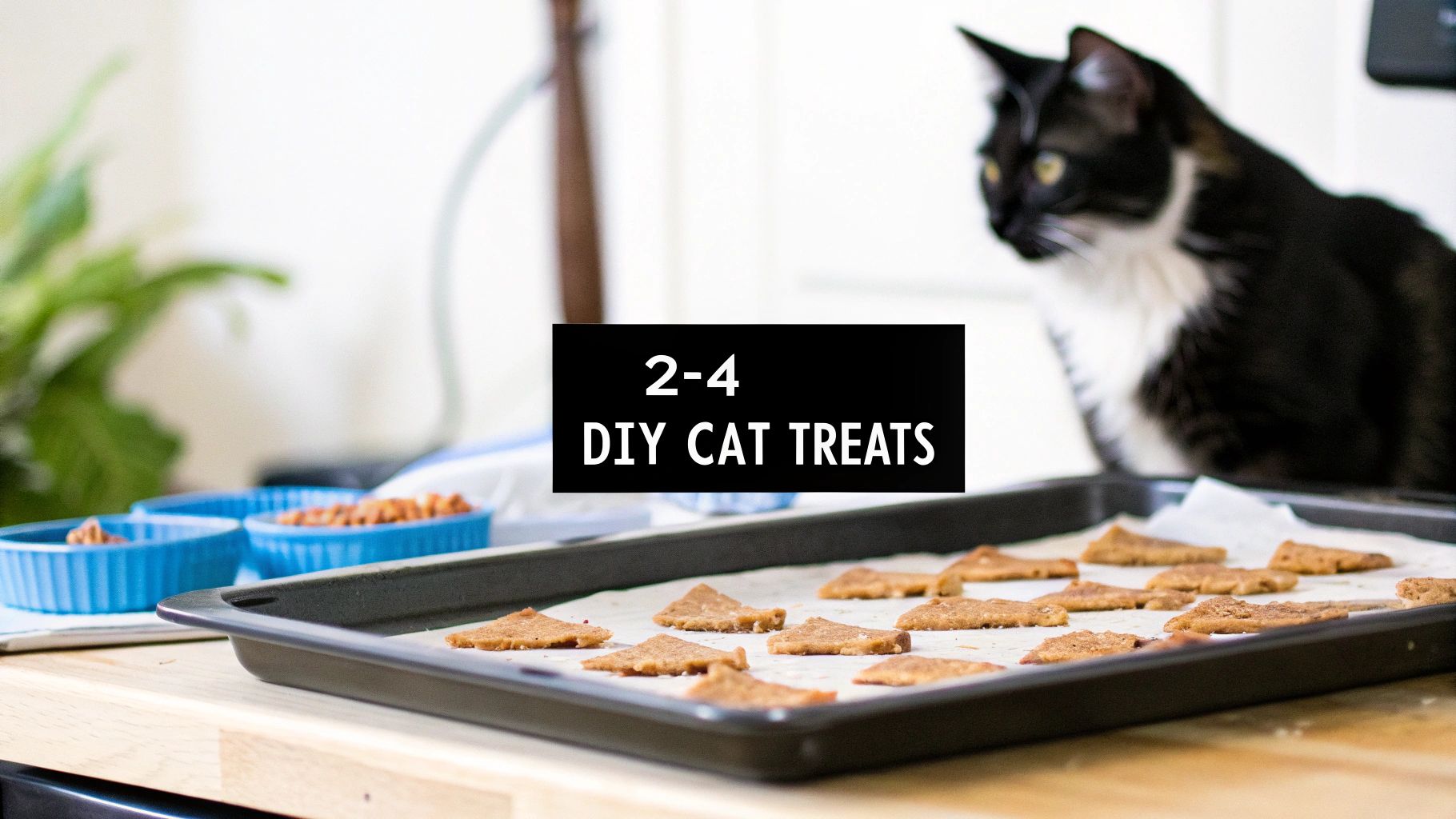
Vet-Approved Homemade Cat Treat Recipes
Ready to roll up your sleeves? Here are a couple of incredibly easy, vet-approved recipes. Each one heroes a single, high-quality protein that cats are naturally drawn to.
1. Baked Salmon Flakes
This one is a game-changer. It turns a simple salmon fillet into irresistible crispy flakes your cat will adore. Plus, it’s loaded with omega-3 fatty acids, which are amazing for promoting a healthy, shiny coat.
- Prep: Start by preheating your oven to 350°F (175°C) and lining a baking sheet with parchment paper.
- Bake: Lay a plain, unseasoned salmon fillet on the sheet. Bake it for about 20 minutes, or until it's cooked through and flakes easily with a fork.
- Flake & Cool: Let it cool down completely, then break it up into tiny, cat-sized flakes. You can keep these in an airtight container in the fridge for up to three days.
2. Easy Chicken Jerky Bites
This simple jerky is a wonderfully chewy snack that gives your cat's jaw a little workout, which can even help clean their teeth as they gnaw.
- Prep: Take a boneless, skinless chicken breast and slice it into very thin strips, around 1/8-inch thick. The thinner, the better!
- Bake: Arrange the strips on a parchment-lined baking sheet, making sure they don't overlap. Bake low and slow at 200°F (95°C) for about two hours, flipping them once halfway through. You’re looking for them to be dry and tough.
- Store: Let the jerky cool completely before popping it into an airtight container. It’ll stay fresh in the fridge for up to two weeks.
Looking for more great ideas? Dive into our guide on other healthy cat treats you can make at home.
Critical Safety Warning: What Not to Feed Your Cat
While getting creative in the kitchen is fun, your cat’s safety has to be the top priority. A surprising number of common human foods are actually highly toxic to felines. Never, ever use these ingredients in your recipes or leave them out where a curious cat might find them.
Warning: Toxic Foods for Cats
Always avoid onions, garlic, chives, grapes, raisins, chocolate, caffeine, alcohol, and anything containing the artificial sweetener xylitol. These ingredients can lead to devastating health problems, from severe stomach upset to kidney failure.
When in doubt, always play it safe. Stick to plain, cooked meats and fish. That way, your homemade efforts will always result in a treat that’s as safe as it is delicious. Your cat gets a high-value reward, and you get the priceless peace of mind of knowing exactly what’s in their snack.
Got Questions About Natural Cat Treats? Let's Clear Things Up.
Even after you've learned to decode labels and spot good ingredients, you might still have a few questions. That's completely normal. Getting those lingering doubts sorted out is the final step to feeling truly confident when you're picking out treats for your cat.
Think of this as your go-to cheat sheet. I’ve rounded up some of the most common questions I hear from cat parents to give you clear, straightforward answers.
Are Grain-Free Treats Automatically Better?
Not always. This is a huge point of confusion, and it’s easy to see why. Cats are true carnivores, meaning their bodies are built to run on animal protein, not grains. But the "grain-free" label has become a marketing buzzword, and it doesn't guarantee a treat is healthy.
Here’s the catch: many companies simply swap out grains for other starchy fillers, like potatoes or peas. These don’t offer much nutritional value for a cat, either. What really matters is that a high-quality, named animal protein is the very first ingredient. A treat with a little bit of a beneficial grain could actually be a better pick than a grain-free one loaded with empty carbs. The whole ingredient list tells the story, not just one claim on the front of the bag.
How Do I Know If My Cat Is Allergic to a New Treat?
The golden rule here is to start slow. Whenever you introduce something new, give your cat just one tiny piece and then keep an eye on them for the next 24 to 48 hours. This lets you catch any potential issues before they escalate.
You’ll want to watch for a few tell-tale signs of a reaction:
- Itchy Skin: Is your cat suddenly scratching, licking, or chewing at one spot over and over?
- Tummy Troubles: Vomiting or diarrhea are clear signs that the treat isn’t sitting well.
- Breathing Changes: While less common, any sudden coughing or wheezing is a red flag.
If you spot any of these symptoms, stop giving the treat right away and give your vet a call. It's also helpful to know that the most common food allergens for cats are actually proteins—like chicken, fish, and beef. So, be extra vigilant when introducing a new protein source.
A slow, patient introduction is the safest way to add variety to your cat’s snack time. It keeps them safe and makes it much easier to identify the culprit if a problem does pop up.
Can Natural Treats Actually Help Clean My Cat's Teeth?
Some can, but let’s be clear: they are absolutely no replacement for brushing and professional dental cleanings. Treats with a tougher, chewier texture—think meat jerkies—can provide a bit of a cleaning effect. The simple act of gnawing helps scrape away some plaque.
However, for a treat to make a real difference in dental health, it needs to be specifically formulated for it. The best ones will have the Veterinary Oral Health Council (VOHC) Seal of Acceptance. This seal is a big deal; it means the product has been scientifically proven to reduce plaque or tartar. Softer treats like freeze-dried bites, while healthy in other ways, just don't have that mechanical cleaning power.
At Joyfull, we believe a healthy life is for every member of the family. That’s why our formulas are crafted with clean ingredients and top-tier proteins, all signed off on by our veterinary advisor. We want your pet to have the absolute best. You can explore our better-for-you snacks at the official Joyfull Pet website.