


The Best Cat Food for Digestion Your Complete Guide
When it comes to your cat’s digestive health, the right food makes all the difference. The best cat food for digestion is built on a foundation of high-quality, animal-based proteins that are easy for their system to process, includes helpful fiber, and skips the common allergens and junk fillers. A great starting point is looking for formulas that list a specific protein, like chicken or turkey, as the very first ingredient and include extras like prebiotics and probiotics to give their gut a boost.
Decoding Your Cat's Digestive Distress
There’s nothing worse than seeing your cat struggle with an upset stomach. It's a frustrating and helpless feeling, especially when one day they’re fine and the next you’re cleaning up messes or watching them mope around. It’s easy to get overwhelmed, but figuring out what’s really going on is the first step to making them feel better.
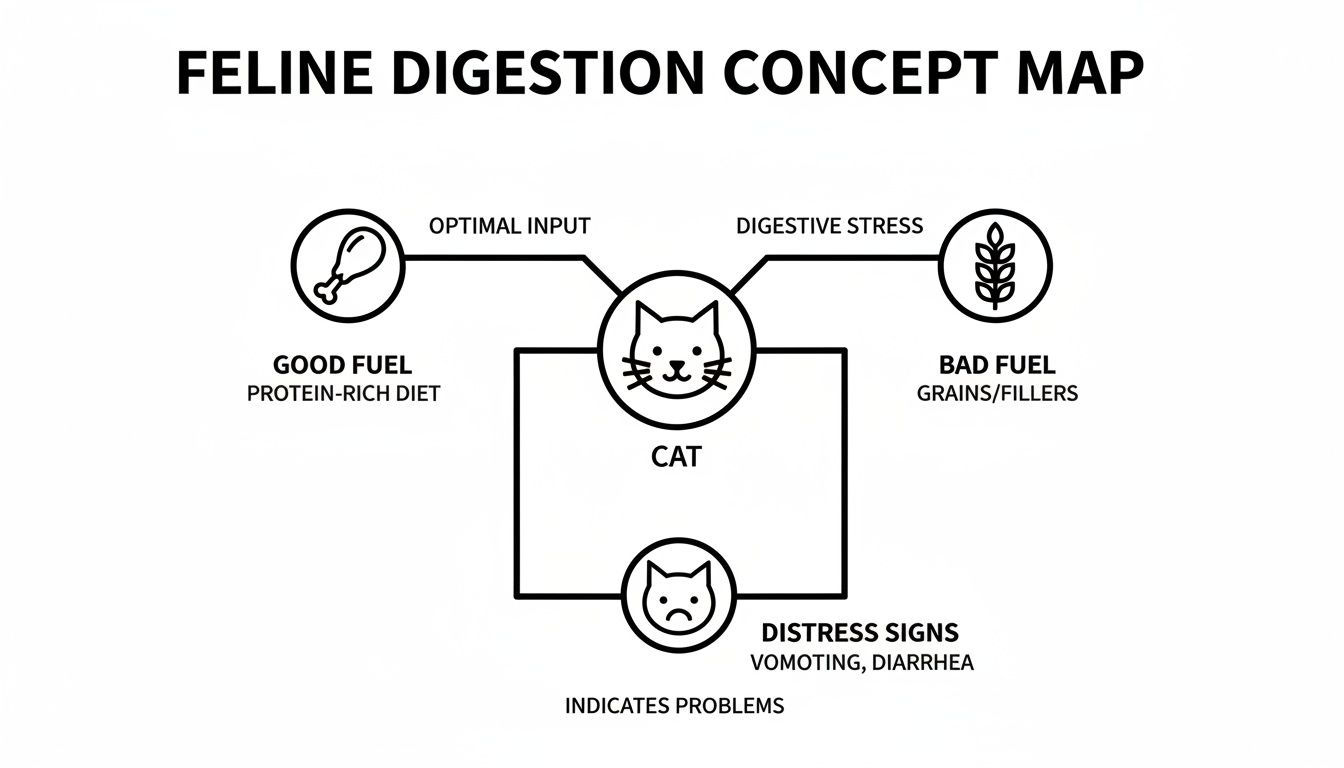
Think of your cat’s digestive system as a finely tuned, high-performance engine. It's built to run on a very specific fuel: easily digestible, animal-based protein. When you put the wrong stuff in the tank—like low-grade ingredients, fillers they can’t digest, or too many plant-based carbs—the engine starts to sputter. The result is digestive distress, which can show up in ways that go far beyond a simple tummy ache.
Recognizing the Subtle Signs of Trouble
Digestive issues aren't always as dramatic as vomiting or diarrhea. Sometimes, the clues are much quieter, like little warning lights on the dashboard signaling something isn't quite right with their internal engine. You have to become a bit of a health detective for your cat, learning to spot these subtle signs and link them back to what they’re eating.
Keep an eye out for these less-obvious indicators:
- A Dull, Flaky Coat: Your cat's skin and coat are a mirror to their internal health. If they aren’t absorbing nutrients properly, their fur can quickly become lackluster, dry, or flaky.
- Unusual Lethargy: Is your normally zippy cat suddenly sleeping all day or ignoring their favorite toys? It could mean their food isn't giving them the energy they need to thrive.
- Changes in Litter Box Habits: Look beyond the obvious. Increased frequency, straining to go, or suddenly avoiding the litter box can all point to digestive discomfort.
- Excessive Gas or Bloating: A little gas is normal, but if it's constant or particularly foul-smelling, it's a huge red flag that their food isn't agreeing with them.
These symptoms are your cat’s way of telling you their current diet just isn’t cutting it. Catching them early can prevent bigger health issues from developing.
Common Culprits Behind Digestive Upset
A few key things can throw a cat's digestive system completely out of whack. While some cats are just born with more sensitive stomachs, many digestive problems are triggered by things you can actually control. For a deeper dive, check out our guide on choosing the best cat food for a sensitive stomach.
Often, the most common cause of digestive upset (that isn't related to a specific illness) is diet. Hard-to-digest ingredients, sudden food switches, or underlying food sensitivities are usually the prime suspects.
Here are a few of the most common dietary offenders:
- Abrupt Food Changes: A cat's gut is home to a whole ecosystem of bacteria that gets used to a specific diet. When you switch foods too fast, you don't give that ecosystem time to adjust, which can lead to total digestive chaos.
- Low-Quality Ingredients: Foods padded out with cheap fillers like corn, wheat, and soy, or mysterious "meat by-products," are incredibly difficult for a cat's carnivorous digestive system to break down and use.
- Food Sensitivities and Allergies: It’s more common than you might think. Cats can develop sensitivities to proteins they've eaten for a long time, like beef, fish, or dairy. This triggers an immune response that can cause chronic gut inflammation and ongoing problems.
Understanding what might be causing the trouble shifts you from feeling confused to feeling empowered. It shows why choosing the best cat food for digestion isn't just about making your cat more comfortable—it’s absolutely critical for their long-term health and happiness. When you give their internal engine the right fuel, you help it run smoothly, ensuring they feel fantastic every single day.
The Building Blocks of a Healthy Feline Gut
To really understand what makes the best cat food for digestion, we have to look past the flashy marketing and get down to the actual ingredients. These are the true building blocks of a happy, resilient gut. Think of it like a master builder choosing the right materials for a strong foundation—a top-tier cat food uses specific nutrients to support digestive wellness from the inside out.
And it all starts with the most important ingredient in any cat's diet: protein.
It All Starts With High-Quality Protein
Cats are obligate carnivores. This is a non-negotiable biological fact. Their digestive systems are short, acidic, and perfectly designed to break down high-quality animal protein, not a bunch of plants. That’s why the very first thing you should see on a cat food label is a named animal protein, like deboned chicken, turkey, or fish.
Be wary of vague terms like "meat by-products" or "poultry meal." These are red flags because the quality can be all over the map, making it impossible to know what your cat is actually getting. When the protein is highly digestible, your cat can easily absorb all the essential amino acids they need for everything from muscle tone to a healthy immune system, without putting unnecessary stress on their digestive tract.
The Dynamic Duo: Soluble and Insoluble Fiber
After protein, fiber is the next major player in your cat's digestive health. But here’s the thing: not all fiber is created equal. A truly healthy gut needs a balanced mix of two different types, soluble and insoluble. I like to think of them as a "sponge and broom" team working together to keep everything moving along just right.
Here’s a quick breakdown of how this team works its magic:
-
Soluble Fiber (The Sponge): This type of fiber does exactly what it sounds like—it absorbs water in the gut and forms a kind of gel. This slows things down just enough to help firm up loose stools, which is a game-changer for cats with diarrhea. It also helps them feel full and satisfied after a meal.
-
Insoluble Fiber (The Broom): This is the stuff that doesn't dissolve. Instead, it acts like a broom, adding bulk to the stool and gently sweeping waste through the intestines to prevent constipation.
When a food includes a thoughtful blend of both—from great sources like pumpkin, beet pulp, or psyllium husk—it provides a complete support system for perfect stool quality and clockwork regularity.
Prebiotics & Probiotics: Tending the Gut Garden
Your cat’s gut is home to a bustling metropolis of trillions of microorganisms, all working together in what’s called the gut microbiome. Keeping this internal "garden" in balance is absolutely critical for digestion, nutrient absorption, and even a strong immune system. That's where prebiotics and probiotics step in.
Prebiotics are the fertilizer, and probiotics are the seeds. You need both to cultivate a flourishing garden of beneficial gut bacteria.
First, let's talk about prebiotics. These are specific plant fibers, like those from chicory root or FOS (fructooligosaccharides), that the good bacteria in your cat's colon love to eat. By feeding these beneficial microbes, prebiotics help them thrive and multiply, effectively crowding out the harmful bacteria and creating a much healthier gut environment.
Then you have probiotics. These are the "good bugs" themselves—live, beneficial bacteria that are added directly to the food. They help repopulate the gut, which is especially important after a disruption from stress, a course of antibiotics, or a poor diet. They actively support digestion and can help ease symptoms like gas and bloating. For a deeper dive, check out our guide on the best probiotics for cats.
To help you spot these crucial components on a food label, here’s a quick reference table of what to look for.
Key Ingredients for Feline Digestive Support
| Ingredient Type | Function in the Digestive System | Examples |
|---|---|---|
| High-Quality Protein | Provides essential amino acids that are easy to absorb, minimizing digestive strain. | Deboned Chicken, Turkey, Lamb, Salmon, Tuna |
| Soluble Fiber | Absorbs water to form a gel, helping to firm up stool and promote satiety. | Pumpkin, Psyllium Husk, Apple Pectin |
| Insoluble Fiber | Adds bulk to stool, aiding regular bowel movements and preventing constipation. | Cellulose, Beet Pulp, Rice Hulls |
| Prebiotics | Feeds the beneficial bacteria in the gut, promoting a balanced microbiome. | Chicory Root, Fructooligosaccharides (FOS) |
| Probiotics | Introduces live, beneficial bacteria to the gut to support digestion and immunity. | Lactobacillus acidophilus, Bifidobacterium lactis |
This growing understanding of gut health is completely reshaping the pet food world. The cat food market, currently valued at $23.38 billion, is expected to hit $32.01 billion in the near future, and a huge chunk of that growth is driven by owners seeking out specialized formulas for digestive issues.
This demand for better options is pushing brands to get serious about creating cleaner, more effective recipes for our sensitive pets. When you ensure your cat's food is built on these foundational pillars—excellent protein, a dual-fiber system, prebiotics, and probiotics—you're giving their digestive system the complete toolkit it needs to thrive.
How to Read Cat Food Labels Like an Expert
Stepping into the cat food aisle can feel like trying to read a foreign language. The bags are plastered with beautiful photos and appealing claims, but the real story is always in the fine print on the back. Learning to decode these labels is the single most powerful skill you can develop to find the best food for your cat’s digestion.

Think of a cat food label just like a nutrition panel on human food. It might look like a confusing block of text at first, but once you know what to look for, you can assess its quality in seconds. The two most important parts are the ingredients list and the guaranteed analysis.
Master the First Five Ingredients Rule
The ingredients list is your window into what's really in the bag. Ingredients are listed by weight before cooking, so the first few items make up the vast majority of the recipe. This is where you can instantly spot the difference between a high-quality food and one packed with cheap fillers.
A simple rule of thumb is to focus on the first five ingredients. For a cat with a sensitive system, you want to see at least two high-quality, named animal proteins in that top group.
Green Flags to Look For:
- Specific Animal Proteins: "Deboned chicken," "turkey," "salmon," or "lamb" are what you want to see. These are clear, highly digestible, and provide the essential amino acids your cat needs to thrive.
- Nutrient-Rich Carbohydrates: Look for gentle, whole-food sources like sweet potatoes or peas that pull double duty by providing valuable fiber and vitamins.
Red Flags to Avoid:
- Vague Meat Terms: Ingredients like "meat and bone meal" or "animal by-product meal" are a huge red flag. They're intentionally ambiguous, so you have no way of knowing the source or the quality of that protein.
- Excessive Fillers: If the first few ingredients are corn, wheat, or soy, it's a clear sign the food is light on the animal protein your carnivorous cat actually needs. These common fillers are often behind digestive upset.
Decoding the Guaranteed Analysis
The guaranteed analysis is the section that lists the minimum or maximum percentages of key nutrients. It can look a bit technical, but it’s really just a quick snapshot of the food's nutritional profile.
The guaranteed analysis isn't just a list of numbers; it's a promise from the manufacturer about the nutritional content inside. It ensures the food meets specific minimums for protein and fat and doesn't exceed maximums for fiber and moisture.
Here’s what to focus on:
- Crude Protein (Min): For adult cats, higher protein is almost always better, especially when it comes from animal sources. Look for dry foods with at least 30% crude protein and wet foods with at least 8%.
- Crude Fat (Min): Healthy fats are a critical energy source. A good range for dry food is typically between 15-20%.
- Crude Fiber (Max): This tells you the total fiber content. For cats with sensitive stomachs, a moderate amount (usually under 10%) is perfect for supporting regularity without causing problems.
- Moisture (Max): This is especially important when comparing wet and dry food. Dry food has very little moisture (around 10%), while wet food is much higher (around 78%), which is fantastic for both hydration and digestion.
When you combine what you see in the ingredients list with the guaranteed analysis, you get the complete picture. You can confirm that a high protein percentage is coming from quality chicken, not low-grade fillers. To get even more confident, dive into our guide on finding the best cat food ingredients for your pet.
With these skills, you can walk down any pet food aisle, cut right through the marketing fluff, and confidently choose a food that offers real nutritional substance. You’ll be picking a food based on facts, not just a pretty picture on a bag.
Transitioning Your Cat to a New Food Smoothly
A cat's digestive system is a finely tuned machine. Think of it like a delicate garden, where the good bacteria have learned to thrive on one particular kind of "soil"—their old food. Suddenly introducing a completely new diet is like upending that garden with a truckload of foreign dirt. It shocks the whole system and can easily lead to vomiting, diarrhea, or gas.
That’s why a slow, gradual transition isn't just a suggestion; it's non-negotiable, especially when you're introducing the best cat food for digestion. The idea is to give your cat's internal ecosystem time to acclimate. This lets the beneficial bacteria adjust to the new ingredients without causing a major rebellion. Patience is truly your best friend here.
The Slow and Steady Transition Plan
The single biggest mistake people make is rushing the switch, which can completely negate the benefits of the new food. A proper transition should take at least 7-10 days. For cats with extra-sensitive stomachs, you might even want to stretch it out to two weeks.
The method is simple: you just gradually increase the amount of new food while decreasing the old.
Here’s a tried-and-true schedule that works for most cats:
- Days 1-3: Start with a mix of 75% old food and 25% new food. This is just a gentle introduction to the new smells, tastes, and textures.
- Days 4-6: Move to a 50/50 mix of old and new. By now, your cat’s system is getting used to the new formula.
- Days 7-9: Time to tip the scales. Serve 75% new food with just 25% old food. This is the home stretch.
- Day 10 and Beyond: If your cat is doing well, you can now feed 100% of the new food. Congratulations, you did it!
Make sure you mix the two foods together thoroughly in the bowl. Otherwise, you might find your clever cat has picked out all their old favorite bits and left the new stuff behind.
A successful transition is about more than just avoiding a tummy ache. It’s about setting your cat up for long-term health on their new, higher-quality diet. If you rush it, your cat might form a bad association with the new food, making mealtimes a battle down the road.
Troubleshooting Common Transition Hurdles
Even with a perfect plan, you might hit a snag. Don't worry, it's completely normal. The most common issues are either a flat-out refusal from a picky eater or some minor changes in the litter box.
If your cat sniffs the new mixture and walks away, just slow things down. Hold steady at the current ratio for a few more days before trying to increase the new food again. Sometimes, the enticing aroma and higher moisture of wet food can also convince a fussy cat to give it a try.
It’s also common to see slight changes in stool consistency as your cat's gut bacteria adjust. As long as it's not severe diarrhea or constipation and your cat is otherwise acting normal, it's likely just part of the process. Keep a close eye on the litter box. If the upset continues or gets worse, it’s always smart to pause the transition and give your vet a call for advice.
Lifestyle Tips for Ultimate Digestive Wellness
Choosing the right food is a huge win for your cat's digestive health, but what happens outside the bowl is just as important. A truly healthy gut is part of a bigger picture. When you combine a great diet with a supportive lifestyle, you're not just feeding your cat—you're creating a complete wellness plan that helps them thrive.
This holistic approach to pet care is becoming more and more common. The global cat food market, valued at around $66.6 billion USD, is set to keep growing, which shows a massive shift in how we think about our cats' health. It’s clear that pet parents are looking beyond basic nutrition and treating their feline family members with the same thoughtful care they give themselves.
Slow Down Mealtimes with Engaging Feeders
Does your cat inhale their food in a flash, only for you to find it on the carpet a few minutes later? This classic "scarf and barf" scenario happens when a cat eats way too fast, overwhelming their stomach. The fix isn't just about what they eat, but how they eat it.
Puzzle feeders and slow-feeding bowls are brilliant for this. They turn mealtime into a bit of a game, making your cat work for their kibble instead of gulping it down. This simple change slows their pace, helps prevent that frustrating regurgitation, and gives their digestive system a chance to do its job properly.
Make Hydration a Priority
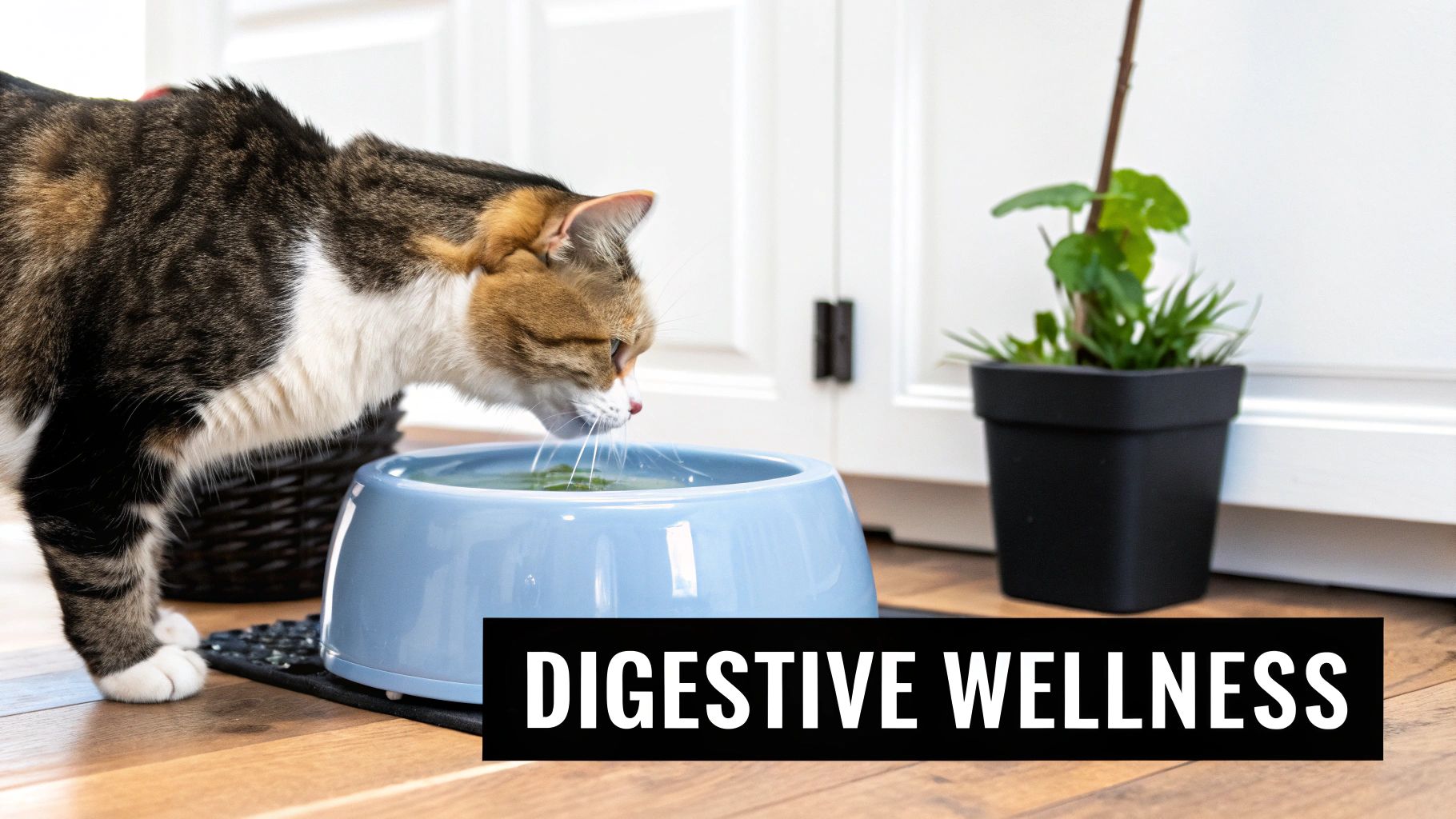
Water is the unsung hero of a healthy gut. It’s essential for breaking down food, absorbing nutrients, and keeping everything moving along smoothly. The tricky part is that cats naturally don't feel very thirsty—it's a throwback to their desert ancestors who got most of their water from the prey they ate.
Here are a few easy ways to encourage your cat to drink more:
- Try a Cat Water Fountain: Many cats are drawn to the sound and motion of running water, finding it much more appealing than a still bowl.
- Use Wet Food Toppers: Mixing a spoonful of high-quality wet food into their dry kibble is a sneaky and effective way to boost their moisture intake.
- Set Up Multiple Water Stations: Place fresh water bowls in a few different spots around the house, not just right next to their food.
A well-hydrated cat is a cat with a healthier gut. Increasing moisture intake is one of the simplest and most effective ways to support their entire digestive system, from preventing constipation to aiding kidney function.
Create a Stress-Free Environment
Never underestimate the powerful link between a cat's brain and its belly. Stress and anxiety can directly cause digestive upset, leading to problems like diarrhea or vomiting. Something as simple as a new pet in the house, a change in your routine, or even loud noises can be enough to throw their sensitive system off kilter.
A calm and predictable environment goes a long way. Make sure your cat has safe, quiet spots where they can retreat, like a tall cat tree or a cozy covered bed. Sticking to a consistent feeding schedule and making time for play can also help them work off any nervous energy. When you reduce their stress, you’re not just calming their mind—you’re actively soothing their stomach.
When It's Time to Call the Vet
Making smart choices about your cat's food can work wonders for their digestion, but it's not a cure-all. It's so important to know when a tummy ache is more than just a tummy ache. This guide is here to help you navigate your cat's diet, but it can never replace the advice of a veterinarian.
Think of it this way: you’re the expert on your cat’s day-to-day life, but your vet is the specialist who can see what's happening on the inside. Partnering with them is the best way to ensure your cat stays happy and healthy for the long haul.
Red Flags: Don't Wait on These Symptoms
If you spot any of the signs below, it’s time to stop troubleshooting with food and pick up the phone. These are non-negotiable symptoms that need a vet’s attention right away to rule out anything serious.
- Vomiting or Diarrhea That Won't Quit: A one-off incident can happen. But if it lasts for more than 24 hours or keeps coming back, something is definitely wrong.
- Blood in Stool or Vomit: This is always a red flag. Whether the blood is bright red or looks dark and tarry, it’s a medical emergency.
- Sudden Weight Loss: If the pounds are just melting off your cat for no reason, it could mean they aren't absorbing nutrients. This often points to a deeper health issue.
- Hiding or Extreme Tiredness: Is your usually playful cat suddenly hiding or too weak to move? Big changes in behavior are often the first sign of serious physical discomfort.
- Straining in the Litter Box: This is a huge one. If your cat is crying out while trying to go, or can't seem to pee or poop at all, it could signal a life-threatening blockage. Get them to a vet immediately.
A vet’s diagnosis is the only way to know for sure what you're dealing with. What you might think is a simple food sensitivity could actually be a more complex condition like Inflammatory Bowel Disease (IBD), pancreatitis, parasites, or even something they swallowed that’s causing a blockage.
Your vet has the tools—like blood work and imaging—to get a clear picture of your cat's internal health. This allows them to recommend the right treatment, whether it’s medication, a special prescription diet, or another type of care.
When you and your vet work together, you're creating the ultimate support system for your cat: the best diet combined with the best medical care.
Common Questions About Cat Digestive Health
When you're trying to solve your cat's digestive issues, a lot of practical questions pop up. Even with a good grasp of the basics, the day-to-day details can feel a bit fuzzy. Let's tackle some of the most common questions we hear from cat parents just like you.
How Long Until I See Improvement on a New Food?
This is probably the number one question we get, and the honest answer is: it depends on your cat. Every little digestive system is different, but you can generally expect to see some positive signs—like better-looking stools and less gas—within the first one to two weeks.
For the bigger, more noticeable changes, like a glossier coat or a real boost in energy, you'll need a bit more patience. It can take six to eight weeks for those high-quality nutrients to really work their magic and show on the outside. The most important thing is a slow, gradual transition over 7-10 days. If things get worse or don't get better after a few weeks, that's your cue to call the vet.
Is Wet or Dry Food Better for Sensitive Stomachs?
Both wet and dry food can be great options, as long as they’re made with top-notch, easy-to-digest ingredients. That said, wet food often has a clear edge for cats with touchy tummies.
The high moisture content in wet food is a huge plus. It’s a natural way to keep your cat hydrated, which is essential for helping things move along smoothly and for keeping their urinary tract healthy.
Wet food is also typically lower in carbs and higher in protein, which is much closer to what a cat would eat in the wild. A high-quality dry food made for digestive care can definitely work, but the built-in hydration of a wet food formula makes it a fantastic choice for many sensitive cats. Ultimately, it comes down to your cat’s individual needs and what they prefer to eat.
Can I Just Add a Probiotic Supplement?
It might seem like a simple shortcut to just sprinkle a probiotic on your cat’s current food, but that approach often fails to address the real problem. Imagine trying to plant a beautiful garden in soil that's full of rocks and weeds—the seeds (the probiotics) just won't have a chance to flourish.
If the food itself contains an ingredient that’s causing irritation or is packed with low-quality fillers, the probiotics are fighting an uphill battle against constant digestive stress. A much better strategy is to switch to the best cat food for digestion that already includes both prebiotics and probiotics. This way, you’re fixing the problem from both angles by providing a clean, high-quality diet and supporting their gut microbiome at the same time. As always, have a chat with your vet before introducing any new supplements.
At Joyfull, we believe your pet deserves the best. Our vet-reviewed formulas are crafted with clean, highly digestible ingredients to support ultimate digestive wellness from the inside out. Give your cat the gift of a happy gut by exploring our recipes at https://joyfullpet.com.